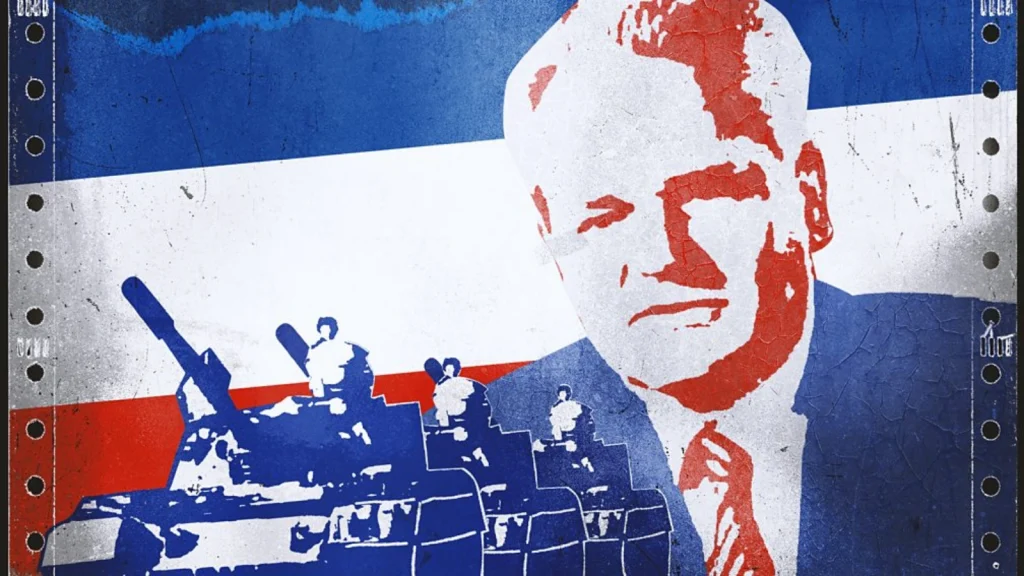
The acclaimed documentary The Death of Yugoslavia provides a chilling, insider account of how calculated political ambition ignited the fires of nationalism, ultimately leading to the violent disintegration of a nation. It chronicles the ascent of Slobodan Milosevic, a man whose embrace of populist fervor is widely blamed for the brutal wars that followed. His journey from a grey party functionary to a nationalist icon reveals how the fragile peace of a multi-ethnic state was deliberately shattered from within. This story serves as a stark reminder of how quickly the foundations of a country can crumble when ethnic hatreds are weaponized for political gain.
The narrative begins in the years following the 1980 death of Marshal Tito, the architect of Communist Yugoslavia. For thirty-five years, Tito had held the country’s six diverse republics together with an iron will. He ruthlessly suppressed any expression of nationalism from Serbs, Croats, Slovenes, or others, enforcing a strict policy he called “brotherhood and unity.” For seven years after his final journey, his successors managed to keep these deeply rooted ethnic tensions buried, maintaining a semblance of the unified state he had created.
This acclaimed documentary focuses on the period when this delicate balance was irrevocably broken. It meticulously traces the actions that transformed simmering resentments into open conflict. The chronicle delves into the specific political maneuvers, the strategic use of media, and the exploitation of historical grievances that characterized this era. At its core, it is the story of how Slobodan Milosevic, an unassuming Communist official, recognized the immense power of nationalism and harnessed it to seize control.
The stage for this dramatic upheaval was Kosovo, Serbia’s poorest province. Kosovo held a sacred place in the Serbian national consciousness as the site of the epic 1389 battle against the advance of Islam. However, by the 1980s, the province was overwhelmingly populated by Muslim ethnic Albanians. This demographic reality created a volatile environment where the small Serb minority felt increasingly marginalized, claiming they were being systematically driven from their ancient homeland. In Serbia proper, wild and unverified stories of Albanian atrocities were widely circulated and readily believed.
Initially, Slobodan Milosevic was a trusted figure within the Serbian establishment, the right-hand man of its president, Ivan Stambolic. In a fateful decision, Stambolic dispatched Milosevic to Kosovo in 1987. His mission was to calm the brewing ethnic conflict between the local Serb nationalists and the Albanian-led Communist authorities. He was sent as an agent of the party’s official policy, which strictly forbade any flirtation with nationalism. He was meant to be a peacemaker, an enforcer of Tito’s legacy.
Instead of quelling the unrest, Milosevic’s visit to Kosovo became the turning point for both his career and the future of Yugoslavia. Breaking with decades of Communist doctrine, he chose to meet directly with the Serb nationalists. This single act was a profound violation of Tito’s central political principle, especially in Serbia’s most sensitive and emotionally charged region. It was a signal that the old rules no longer applied and that a new, powerful force was about to be unleashed upon the political landscape.
The Death of Yugoslavia
The Kosovo Catalyst and the Rise of Milosevic
The transformation of Slobodan Milosevic from party bureaucrat to nationalist savior was sealed during a carefully managed event in Kosovo. While he met with local Serbs, a scuffle erupted outside between protestors and the Kosovan police. Serb television, already under his growing influence, filmed the confrontation. That evening, the broadcast presented a manipulated version of events, portraying Milosevic as the brave defender of his people against oppression. Crucially, Serbian viewers were not shown how the Serb demonstrators had deliberately provoked the police. The Milosevic myth was born from this calculated lie.
This televised spectacle made him a hero overnight. He was seen embracing the cause of the Kosovo Serbs, a move that resonated deeply across Serbia. Now armed with immense popularity, Milosevic had the political capital to challenge his own mentors. He was accused within the party of breaching policy, but he deftly turned the situation to his advantage. Instead of retreating, he consulted his advisers and decided that a swift attack was the best form of defense against the party establishment that sought to rebuke him.
The ultimate showdown occurred at a meeting of Serbia’s top Communists. Milosevic, through relentless canvassing and political maneuvering, managed to oust the key allies of President Ivan Stambolic. This victory was a political coup, neutralizing his former patron and consolidating his own grip on the Serbian Communist Party. He had successfully ridden a wave of manufactured outrage and nationalist sentiment to the pinnacle of power in Serbia, setting a dangerous precedent for the years to come.
Engineering the Anti-Bureaucratic Revolution
With Serbia firmly under his control, Milosevic launched a crusade to dominate the rest of Yugoslavia. His strategy centered on dismantling the political structures Tito had created to keep Serbian power in check. Under Tito’s constitution, Serbia’s two provinces, Kosovo and Vojvodina, had been granted self-government and, critically, their own votes in federal bodies. These votes were often used by republics like Croatia and Slovenia to form a coalition against Serbian interests. Milosevic set out to seize these votes for himself.
His method was a new form of political warfare he termed the “anti-bureaucratic revolution.” He began in Vojvodina, where his “supporters’ club” of Serb nationalists was bussed in from Kosovo. Fueled by a day out with free food and drink, these professional agitators skillfully turned local discontent into a full-blown popular uprising against the province’s established leaders. The grey bureaucrats of the old regime were no match for the fervor of the streets, and it took only a word from Milosevic to complete the takeover.
Vojvodina fell quickly, and the next target was Montenegro, a republic historically and culturally allied with Serbia. The same tactics were deployed. Mass rallies appeared, demanding the resignation of the existing government. The old Montenegrin president found himself powerless against the manufactured popular will, and soon another Milosevic loyalist was installed in his place. By the beginning of 1989, a stunningly short period, Milosevic effectively controlled four of the eight federal votes: Serbia, Kosovo, Vojvodina, and Montenegro. He now commanded half of Yugoslavia.
The Confrontation over Kosovo and The Death of Yugoslavia
Milosevic’s rapid consolidation of power faced its first serious test in Kosovo. The Albanian majority, seeing their autonomy being stripped away, began to resist. Miners led a general strike, demanding the reinstatement of their deposed local leadership and hitting back against the Serbian power grab. This open defiance provided Milosevic with the pretext he needed to escalate his campaign and demand complete control over the rebellious province.
He went before the Yugoslav state council and demanded emergency powers, which would allow him to use the federal army to crush the dissent in Kosovo. This move sent shockwaves through the other republics. The Slovene leader, Milan Kucan, immediately recognized the catastrophic danger this represented for all of Yugoslavia. He understood that giving one republic’s leader control of the federal army to solve a political problem would shatter the country’s founding principles. Kucan walked out of the meeting in protest and returned to Slovenia to warn his people.
Serbian television, now a finely tuned instrument of Milosevic’s will, portrayed Kucan’s principled stand as an anti-Serb attack. The broadcast skillfully edited his speech to inflame nationalist passions, bringing the people of Belgrade onto the streets in a patriotic frenzy. Milosevic then orchestrated a massive rally outside the federal parliament. He presented the Yugoslav president with a stark ultimatum: either grant Serbia the emergency powers it demanded or deal with the furious crowd personally. Faced with what he saw as blatant Serb blackmail, the president caved. The party council gave Milosevic the power to deploy the Yugoslav army in Kosovo.
With emergency powers secured, the Kosovo parliament had no choice but to cede all of its authority to Serbia. The leader of the miners’ strike was imprisoned for counter-revolutionary activity, and all remaining dissent was brutally crushed. Milosevic stood before a cheering crowd in Belgrade, telling them that Kosovo would be theirs again. He had successfully used the threat of mob rule to bend the federal state to his will, a tactic that further eroded the foundations of The Death of Yugoslavia.
The Final Fracture: The 14th Party Congress
The final act in the destruction of the old Yugoslavia was precipitated by the tiny republic of Slovenia. Unwilling to be dominated by Milosevic’s Serbia, the Slovene leadership under Milan Kucan announced it would change its constitution to prevent Belgrade from interfering in its affairs. This act of defiance enraged Milosevic, who once again mobilized his Kosovo Serb supporters for a planned “rally of truth” in the Slovene capital. However, his usual tactic was thwarted when Slovenia’s ally, the Republic of Croatia, refused to allow the protestors to cross its territory.
Blocked from orchestrating a street-level coup, Milosevic chose a different weapon: the Yugoslav Communist Party itself. He called an extraordinary congress, with the clear, unstated purpose of crushing the defiant Slovenes through political means. As delegates from all the republics gathered to sing the hymn to “brotherhood and unity,” they all understood the true nature of the meeting. It was to be a show trial, with Milosevic holding all the power. He had installed a loyalist from Montenegro as the congress chairman, ensuring he controlled the proceedings.
The congress unfolded as a relentless assault on the Slovene delegation. The powerful Serb bloc, bolstered by its allies from Montenegro and the provinces Milosevic now controlled, systematically voted down every single Slovene proposal. Kucan and the Slovenes quickly realized their position was untenable. During a break, they held a crisis meeting. They knew that walking out could blame them for the chaos, but staying meant accepting total submission. In a final, dramatic act of defiance, the entire Slovene delegation rose from their seats and walked out of the hall.
This walkout was the moment the League of Communists of Yugoslavia, the central pillar of Tito’s state, effectively ceased to exist. In a daring final gamble, Milosevic addressed the remaining delegates, urging them to continue the congress and suggesting the party could survive without the troublesome Slovenes. He gambled that he could hold the other delegations in line, but the spell was broken. The departure of the Slovenes had shattered the illusion of unity, signaling the irreversible end of the nation they had all once belonged to.
The Enduring Warning: When Democracy Becomes Theatre
The story of Yugoslavia’s destruction reads like a masterclass in political manipulation—one that feels unnervingly relevant in our current global moment. What makes Milosevic’s rise so chilling isn’t just the scale of the devastation that followed, but how predictably each step unfolded once the guardrails of democratic norms were abandoned.
The documentary’s most haunting insight lies in how effortlessly truth became malleable. That carefully edited footage from Kosovo—showing Milosevic as a heroic defender while concealing how Serb demonstrators had provoked the very confrontation they claimed to be victims of—wasn’t just propaganda. It was a blueprint for manufacturing reality itself. When citizens can no longer distinguish between authentic popular movements and orchestrated political theater, democracy doesn’t just weaken; it becomes indistinguishable from its opposite.
Milosevic’s “anti-bureaucratic revolution” reveals something even more unsettling: how genuine grievances can be weaponized by those who have no intention of actually addressing them. The Kosovo Serbs who felt marginalized weren’t wrong to feel frustrated, but their legitimate concerns became fuel for a political machine that ultimately brought them—and everyone else—far greater suffering than they’d originally experienced. This bait-and-switch between promised relief and delivered catastrophe has become a familiar pattern across the globe.
Perhaps most sobering is how quickly institutions crumbled once their foundational principles were openly violated. Tito’s system wasn’t perfect, but it had maintained peace for decades through careful power-sharing arrangements. Yet when Milosevic began breaking those rules—meeting with nationalists in Kosovo, demanding emergency powers, orchestrating mob pressure on federal institutions—the entire structure collapsed with breathtaking speed. The moment the Slovene delegation walked out of that final party congress, they weren’t just leaving a meeting; they were witnessing the death of a country.
The parallels to contemporary political challenges are impossible to ignore. We’re living through an era where the manipulation of grievances, the strategic use of media distortion, and the gradual erosion of institutional norms have become standard political tools across many democracies. The Yugoslavia story reminds us that these aren’t merely partisan tactics—they’re existential threats to the social contracts that hold diverse societies together.
The ultimate tragedy isn’t just that Yugoslavia died, but how it died: not through external conquest or natural disaster, but through the deliberate choices of leaders who prioritized personal power over collective survival. The people cheering in Belgrade’s streets as Milosevic promised them Kosovo had no idea they were applauding their own future destruction.
For those of us watching similar dynamics unfold in our own time, the documentary offers both warning and wisdom. Democratic institutions aren’t self-preserving; they require constant vigilance and the courage to defend boring procedural norms even when—especially when—violating them might deliver short-term political victories. The price of abandoning that vigilance isn’t just political dysfunction; it’s the unraveling of everything we’ve built together.
The ghosts of Yugoslavia whisper a simple truth: nations aren’t destroyed by their enemies nearly as often as they’re destroyed by their own leaders’ ambitions. That’s a lesson worth remembering before it becomes a lesson we’re forced to live.
FAQ The Death of Yugoslavia episode 1 – Enter Nationalism
Q: What is “The Death of Yugoslavia” documentary about?
A: The acclaimed documentary chronicles the calculated political manipulation that led to Yugoslavia’s violent disintegration. Furthermore, it focuses on Slobodan Milosevic’s transformation from an unremarkable Communist bureaucrat into a nationalist icon who weaponized ethnic tensions for personal power. Additionally, the film reveals how a multi-ethnic state’s fragile peace was deliberately shattered from within through strategic media manipulation and institutional erosion.
Q: Who is Slobodan Milosevic and why is he central to Yugoslavia’s collapse?
A: Milosevic was initially a trusted Serbian Communist official and right-hand man to President Ivan Stambolic. However, his 1987 visit to Kosovo became the pivotal moment when he abandoned Communist doctrine to embrace Serbian nationalism. Consequently, he recognized nationalism’s immense political power and systematically used it to consolidate control, ultimately triggering the wars that destroyed Yugoslavia.
Q: What role did Kosovo play in Yugoslavia’s breakup?
A: Kosovo served as the catalyst for Yugoslavia’s destruction, representing Serbia’s most emotionally charged territory due to the legendary 1389 battle against Ottoman forces. Moreover, by the 1980s, the province was overwhelmingly populated by ethnic Albanians, creating volatile tensions with the Serb minority. Subsequently, Milosevic exploited these grievances, using fabricated stories of Albanian atrocities to manufacture nationalist fervor and justify his political coup.
Q: How did Marshal Tito’s death impact Yugoslavia’s stability?
A: Tito’s 1980 death removed the iron-willed leader who had suppressed nationalism for 35 years through his “brotherhood and unity” policy. Initially, his successors maintained stability for seven years by keeping ethnic tensions buried. Nevertheless, this delicate balance proved unsustainable once ambitious politicians like Milosevic recognized they could exploit nationalism for personal gain, ultimately shattering the unified state Tito had created.
Q: What was Milosevic’s “anti-bureaucratic revolution”?
A: The “anti-bureaucratic revolution” was Milosevic’s strategic method for seizing control of Yugoslavia’s federal votes through manufactured popular uprisings. Specifically, he bused in professional agitators from Kosovo to Vojvodina and Montenegro, providing free food and drink to fuel artificial protests. Consequently, these orchestrated demonstrations appeared as genuine popular movements, enabling him to install loyalists and control four of eight federal votes by early 1989.
Q: How did media manipulation contribute to Yugoslavia’s destruction?
A: Serbian television became Milosevic’s primary weapon for manufacturing reality and inflaming nationalist passions. Notably, the carefully edited footage from Kosovo showed him as a heroic defender while concealing how Serb demonstrators had provoked police confrontations. Additionally, the media systematically distorted events, such as portraying Slovenia’s Milan Kucan’s principled stands as anti-Serb attacks, thereby creating a blueprint for political manipulation that feels unnervingly relevant today.
Q: What happened at the crucial 14th Party Congress?
A: The 14th Party Congress represented Yugoslavia’s final death knell, orchestrated by Milosevic to crush defiant Slovenia through political means. Furthermore, he controlled the proceedings through a loyalist chairman and systematically voted down every Slovene proposal using his powerful Serbian bloc. Eventually, the entire Slovene delegation walked out in dramatic defiance, effectively ending the League of Communists of Yugoslavia and signaling the irreversible collapse of the nation.
Q: Why was the Slovene delegation’s walkout so historically significant?
A: The Slovene walkout marked the precise moment when Yugoslavia’s central political institution ceased to exist, shattering the illusion of unity that had held the country together. Moreover, Slovenia’s courageous stand against Milosevic’s dominance demonstrated that some leaders prioritized principles over political survival. Ultimately, their departure broke the spell of manufactured consensus and revealed the hollow nature of Yugoslav “brotherhood and unity” under authoritarian manipulation.
Q: What lessons can modern democracies learn from Yugoslavia’s collapse?
A: Yugoslavia’s destruction offers critical warnings about how democratic institutions require constant vigilance and principled defense of procedural norms. Additionally, the documentary reveals how genuine grievances can be weaponized by ambitious leaders who have no intention of actually addressing them. Furthermore, it demonstrates that nations are more often destroyed by their own leaders’ ambitions than by external enemies, making institutional safeguards essential for democratic survival.
Q: How rapidly did Yugoslavia’s political institutions crumble?
A: Yugoslavia’s institutional collapse occurred with breathtaking speed once foundational principles were openly violated, demonstrating how quickly democratic structures can disintegrate. Specifically, Milosevic controlled half of Yugoslavia’s federal votes within just two years of his Kosovo visit. Consequently, this rapid deterioration illustrates that democratic institutions are not self-preserving and require leaders committed to maintaining constitutional norms rather than exploiting popular grievances for personal power.