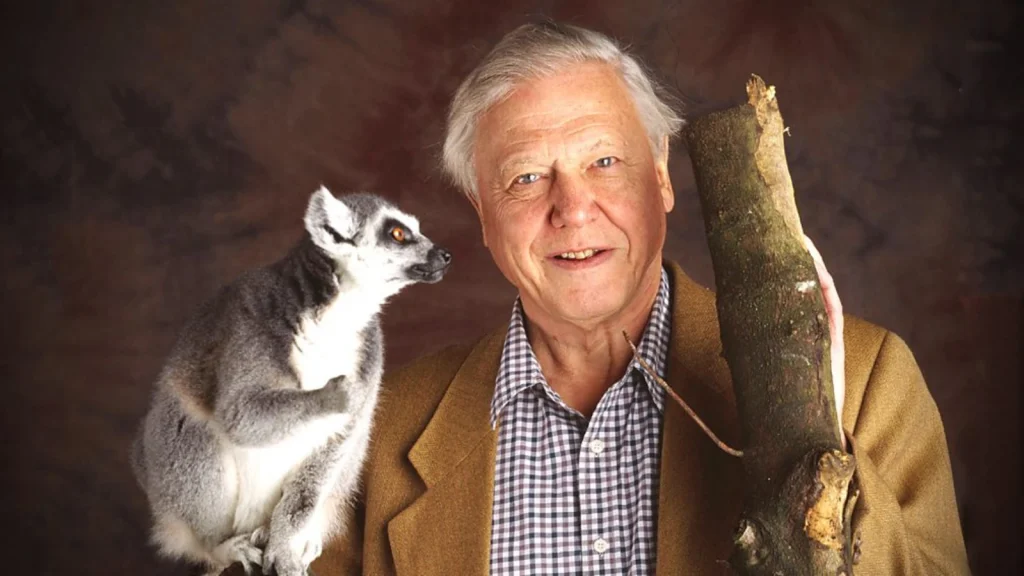
In the documentary The Life of Mammals episode 1, David Attenborough explores the “winning design” that has enabled mammals to become one of the most successful and diverse groups of animals on the planet. This success stems from a few key mammalian characteristics: being warm-blooded, having insulating fur or hair, and producing milk for their young. These traits have allowed mammals to conquer nearly every environment, from the coldest polar regions to the hottest deserts. This exploration of mammalian evolution reveals a story of incredible adaptation and diversification over millions of years.
The journey of The Life of Mammals episode 1 takes us across the globe to witness this variety firsthand. We see how warm-blooded animals thrive in extreme temperatures, a feat made possible by their ability to generate internal heat from food. An arctic fox, for instance, survives temperatures of 50 degrees below freezing thanks to its dense fur coat, a superb example of mammalian adaptation. This internal furnace, fueled by what they eat, is a cornerstone of their design, allowing for complex bodies and behaviors unparalleled in the animal kingdom.
This episode delves deep into the different strategies for mammalian reproduction, which represent major branching points in their evolutionary history. The world of mammals is broadly divided into three distinct groups, each with a unique approach to bringing new life into the world: the ancient egg-laying monotremes, the pouch-bearing marsupials, and the widespread placental mammals. Understanding these differences is key to appreciating the full spectrum of their success and the ancient lineages that still exist today.
Our investigation begins in Australia, a continent that serves as a living museum for some of the earliest forms of mammalian life. Here, we encounter creatures that seem to defy simple classification, acting as a bridge to the distant reptilian past. These animals provide crucial clues about the origins of all mammals, showcasing primitive traits alongside the advanced features that define the group. This unique Australian wildlife provides a window into the deep history of mammalian evolution.
The narrative then contrasts these ancient strategies with those that came to dominate the rest of the world. By examining these varied reproductive methods, The Life of Mammals episode 1 illustrates a dynamic evolutionary story. It’s a tale of divergence, where different groups found unique solutions to the fundamental challenge of nourishing and protecting their young, ultimately leading to the vast and astonishing array of mammals we see across the globe.
The Life of Mammals episode 1
The Ancient Egg-Layers: Monotremes
Australia is home to the most ancient lineage of all, the monotremes, which possess the reptilian trait of laying eggs. The echidna, at first glance resembling a hedgehog or porcupine, is a prime example. Its body is covered in hair, the defining feature of all mammals, with some hairs modified into sharp spines for defense. This coat provides crucial insulation, conserving the body heat generated by its warm-blooded metabolism. The echidna spends its days searching for ants and termites, using its powerful claws to rip open nests and a long, sticky tongue to lick up its meal.
The most peculiar aspect of the echidna is its reproductive process. The female lays a single, marble-sized egg, which she incubates in a temporary pouch on her underside. After the baby hatches, it remains in this protected space for about 50 days until its own spines begin to develop. This method of echidna egg laying provides a living link to the reptiles from which mammals descended over 100 million years ago.
The only other living monotreme is the even more bizarre platypus. With a rubbery, duck-like bill, webbed feet, and a beaver-like tail, early European scientists who first saw a preserved specimen believed it was a hoax. Like the echidna, the platypus is one of the few egg laying mammals. The female platypus lays her eggs deep within a nesting burrow, which can be up to 20 yards long. After hatching, the tiny, blind baby feeds on its mother’s milk. In this primitive mammal, the milk isn’t delivered through a nipple but simply oozes through the skin for the baby to lap up, showcasing another fundamental mammalian characteristic.
The platypus hunts for small invertebrates underwater, but it does so with its eyes, ears, and nostrils tightly shut. Instead, it relies on a remarkable sixth sense: electroreception. Thousands of sensors in its soft bill detect the minuscule electrical fields generated by the muscle contractions of its prey. As it sweeps its head from side to side like a metal detector, it builds a detailed sensory map of the riverbed, allowing it to find food in total darkness. This sensory system has not been found in any other mammal.
Marsupials: The Pouch-Bearing Mammals of Australia
The next great branch of mammalian evolution is the marsupials, a group that dominates the Australian continent. They differ from monotremes in that they give birth to live young instead of laying eggs. However, this birth is unlike any other. The grey kangaroo provides a classic example of kangaroo reproduction. After a short gestation, the mother gives birth to a tiny, underdeveloped creature, weighing less than a lump of sugar. This “joey” is essentially an embryo, blind and with no functional back legs.
Using its surprisingly strong forelimbs, the newborn embarks on a perilous journey, instinctively crawling through its mother’s fur. It navigates by gravity and smell, heading upward toward the safety of the pouch. This three-minute climb is a race for survival. Once inside, the joey latches onto a nipple and begins its first meal of milk, completing its development within the security of the marsupial pouch. The composition of the milk changes as the joey grows, perfectly matching its nutritional needs at each stage. It will be many months before it is ready to emerge and explore the outside world.
Australian wildlife showcases a spectacular diversification of marsupials, each adapted to a specific niche. The koala, for instance, has mastered a highly specialized diet. It feeds almost exclusively on eucalyptus leaves, which are tough, low in nutrients, and toxic to most other animals. To cope, koalas have a slow metabolism and spend up to 20 hours a day sleeping to conserve energy. This dedication to a challenging food source is a hallmark of the koala eucalyptus diet.
Other marsupials have adapted to different challenging environments. In the snowy mountain ranges, the wombat thrives thanks to its incredibly thick fur and powerful burrowing ability. It uses its strong front claws to dig through snow to find grass and roots, showcasing remarkable wombat winter behavior. Its backward-facing pouch is a clever adaptation that prevents dirt and snow from getting on its young as it digs. Meanwhile, in the dry woodlands, the numbat specializes in eating termites. Its long, sticky tongue is the perfect tool for the job, and this strategy of numbat termite feeding allows it to consume up to 20,000 termites a day.
Locomotion and Social Life of Marsupials
The kangaroo family has developed a unique and highly efficient method of travel: hopping. While it appears clumsy at slow speeds, hopping locomotion becomes incredibly effective at high speeds. The tendons in a kangaroo’s large back legs act like giant springs, storing energy on landing and releasing it to power the next leap. This mechanism allows red kangaroos, the largest of the family, to cover vast distances across the Australian desert mammals’ habitat in search of food and water with minimal energy expenditure. A kangaroo at full speed can even outpace a racehorse.
This method of hopping is not limited to open plains. The rock wallaby has adapted this locomotion for life on steep, rocky cliffs. Its success lies in its specialized feet, which have thick, corrugated pads that provide an exceptional grip on any surface. These feet allow the wallaby to bounce confidently through treacherous terrain, finding refuge from predators. They have also adapted to the arid environment by being able to regurgitate fluid from their stomachs to provide a drink for their young.
Many marsupials, like the grey kangaroos, are highly sociable animals. Living in groups, known as mobs, provides safety in numbers but also leads to social complexities. Males often compete for mating rights, leading to ritualized fights that resemble kickboxing. They use their powerful hind legs to kick and their smaller front paws to grapple. The most dominant male is likely to father most of the next generation, making these contests a crucial part of their life cycle. Even young joeys engage in play-fighting, honing the skills they will need as adults.
The Marsupials of South America
While Australia is famous as the land of marsupials, the group also has a significant presence in South America. It is believed that marsupials may have first appeared on the supercontinent Gondwana in the region that would become South America. One of the most elusive of these is the yapok, or water opossum. It is the world’s only aquatic marsupial, perfectly adapted for a life spent hunting in the streams of the Amazon rainforest.
Filmed at night with infrared cameras, the yapok’s secret life is revealed. Its dense fur keeps its skin dry, and its webbed hind feet propel it through the water. It hunts by feeling for fish and crustaceans with its sensitive, unwebbed front paws. Remarkably, the female has a waterproof pouch that she can seal with a strong muscle. This allows her to dive and hunt without drowning the babies inside. This adaptation showcases the incredible versatility of the marsupial design.
Beyond the unique yapok water opossum, the rainforest canopy of Central and South America is teeming with other marsupial species, primarily nocturnal opossums. Scientists using canopy cranes have discovered a rich biodiversity of these tree-dwelling mammals. Most are generalists, with a broad diet of fruit, flowers, and insects. Like their Australian relatives, they give birth to tiny, underdeveloped young that cling to the mother’s underside, often in a less-developed pouch, to complete their growth. In some parts of the rainforest, these marsupials may outnumber any other kind of mammal.
Placental Mammals: The Dominant Design
Across the rest of the world, from the plains of Africa to the high Arctic, a different kind of mammal dominates: the placental mammals. This group, which includes humans, has a fundamentally different reproductive strategy. Instead of an egg or a pouch, the baby develops inside the mother’s womb, nourished by a remarkable organ called the placenta. The wildebeest of the African savanna provides a powerful example of placental vs marsupial reproduction.
The placenta is a rich network of blood vessels that connects the mother to her developing baby via the umbilical cord. Through this connection, the mother provides a constant supply of nutrients and oxygen directly from her own bloodstream. This allows the baby to grow to a much larger and more advanced state before it is born. The trade-off is that giving birth to such a large baby is a strenuous and risky event for the mother.
However, the advantage of this strategy becomes clear within minutes of birth. A newborn wildebeest calf, though wobbly, can get to its feet and run in a remarkably short time. In an environment filled with predators, this ability is crucial for survival. The early months of development, spent in the protected environment of the womb, give these babies an invaluable head start in life. This advanced state at birth is a key reason why placental mammals have been so successful in colonizing the globe and diversifying into the myriad of forms we see today.
The Enduring Legacy of Nature’s Most Successful Experiment
Standing in that frozen Arctic landscape where we began this journey, watching an arctic fox navigate temperatures that would kill most life forms in minutes, it becomes clear that we’re witnessing something extraordinary. This isn’t just another animal surviving—it’s the culmination of 100 million years of evolutionary refinement, a testament to what happens when nature stumbles upon a truly winning design.
The story of mammalian evolution is ultimately a story about solutions. When ancient reptiles faced the challenge of surviving in an increasingly complex world, some developed an internal furnace that could run on food, a protective coat that could insulate against any climate, and a revolutionary way to nourish their young. These weren’t just incremental improvements—they were game-changing innovations that would reshape life on Earth.
What makes this story particularly fascinating is how these core mammalian characteristics have been endlessly remixed and refined. The platypus, with its bizarre electroreception and milk-oozing skin, represents one of nature’s earliest attempts at the mammalian blueprint. The kangaroo’s energy-efficient hopping and the koala’s toxic leaf diet showcase how the same basic design can be tweaked for radically different lifestyles. Meanwhile, placental mammals like ourselves represent the most recent iteration—one so successful that it has colonized every corner of the globe.
Perhaps most remarkably, this diversification continues today. In Australia’s rainforests, scientists using canopy cranes are still discovering new marsupial species. In the Amazon, the yapok water opossum demonstrates that even after millions of years, mammals are still finding innovative ways to exploit new ecological niches. The mammalian story isn’t just about the past—it’s very much about the present and future.
For those inspired by David Attenborough’s groundbreaking footage of the platypus burrow or the intimate glimpses into marsupial life, there’s never been a better time to explore the world of mammals further. Whether you’re planning an Australian wildlife tour to see these remarkable creatures firsthand, diving deeper into nature documentaries, or simply observing the mammals in your own backyard with fresh eyes, the opportunity to witness this evolutionary masterpiece is all around us.
The next time you watch your cat methodically groom its fur, see a mother nursing her baby, or simply feel the warmth of your own body on a cold day, remember that you’re experiencing the legacy of that ancient winning design. We are all part of this remarkable mammalian success story—warm-blooded, hair-bearing, milk-producing descendants of creatures that refused to let a changing world defeat them.
In a time when biodiversity faces unprecedented challenges, understanding and celebrating the incredible adaptability of mammals offers both hope and responsibility. Their story reminds us that life finds a way, but it also underscores our role as the most successful variation of the mammalian design in protecting the remarkable diversity that millions of years of evolution have produced.
The mammalian design didn’t just win—it transformed our planet. And that transformation continues every day, with every breath we take.
FAQ The Life of Mammals episode 1
Q: What makes mammals different from other animals?
A: Mammals possess three key characteristics that distinguish them from all other animals: they are warm-blooded, have hair or fur for insulation, and produce milk for their young. These mammalian characteristics enable them to regulate their body temperature internally, survive in extreme environments from Arctic tundra to desert heat, and provide complete nutrition to their offspring. Additionally, this winning design has allowed mammals to become one of Earth’s most successful and diverse animal groups.
Q: What are the three main types of mammals?
A: Mammalian evolution has produced three distinct groups with different reproductive strategies. Monotremes are ancient egg-laying mammals like the platypus and echidna. Marsupials give birth to underdeveloped young that complete growth in a pouch, including kangaroos and koalas. Furthermore, placental mammals develop babies fully inside the womb using a placenta, representing the most widespread group that includes humans and most familiar mammals worldwide.
Q: What are monotremes and why are they unique?
A: Monotremes are the most ancient mammalian lineage, retaining the reptilian trait of laying eggs while possessing true mammalian characteristics. Only two monotreme species exist today: the platypus and echidna, both found in Australia. These egg-laying mammals provide crucial evolutionary links to the reptilian ancestors from which all mammals descended over 100 million years ago. Remarkably, their milk oozes through skin rather than emerging from nipples, showcasing primitive mammalian features.
Q: How does platypus electroreception work?
A: Platypus electroreception represents a unique sensory system found in no other mammal. Thousands of specialized sensors in the platypus’s rubbery bill detect minuscule electrical fields generated by muscle contractions of underwater prey. When hunting, the platypus closes its eyes, ears, and nostrils completely, sweeping its head like a metal detector. Consequently, it builds a detailed sensory map of the riverbed, allowing precise prey location in total darkness—a remarkable adaptation for aquatic hunting.
Q: What makes marsupial reproduction so unusual?
A: Marsupial reproduction involves giving birth to incredibly underdeveloped young that complete growth externally. For instance, kangaroo joeys weigh less than a sugar lump and lack functional back legs at birth. These embryonic creatures instinctively crawl through their mother’s fur to reach the marsupial pouch, where they latch onto a nipple. Subsequently, the milk composition changes to match each developmental stage, providing perfectly tailored nutrition until the joey can survive independently.
Q: Why are kangaroos such efficient hoppers?
A: Kangaroo hopping locomotion utilizes a brilliant energy-recycling system that makes them incredibly efficient travelers. Large tendons in their back legs function like giant springs, storing energy during landing and releasing it to power the next leap. This mechanism allows red kangaroos to cover vast distances across Australian desert habitats with minimal energy expenditure. Moreover, a kangaroo at full speed can outpace a racehorse, demonstrating the effectiveness of this unique mammalian adaptation.
Q: What’s remarkable about the koala’s eucalyptus diet?
A: The koala eucalyptus diet represents one of nature’s most challenging feeding strategies, as these leaves are tough, low in nutrients, and toxic to most animals. Koalas have evolved specialized digestive systems and extremely slow metabolisms to process this difficult food source. Consequently, they spend up to 20 hours daily sleeping to conserve energy. This dedication to such a nutritionally poor diet demonstrates the remarkable adaptability of Australian wildlife to exploit unique ecological niches.
Q: How do placental mammals differ from marsupials?
A: Placental vs marsupial reproduction represents fundamentally different strategies for mammalian development. Placental mammals nourish their young internally through a placenta—a rich network of blood vessels providing nutrients and oxygen via the umbilical cord. This allows babies to develop fully before birth, emerging ready to walk and run. In contrast, marsupials give birth to underdeveloped young that complete growth in pouches. Therefore, placental mammals have advantages in predator-rich environments requiring immediate mobility.
Q: Where can you find marsupials in the world today?
A: Marsupials primarily inhabit Australia, where they dominate the mammalian landscape with species like kangaroos, koalas, and wombats. However, South America also hosts significant marsupial populations, including the remarkable yapok water opossum—the world’s only aquatic marsupial. Scientists believe marsupials first appeared on the ancient supercontinent Gondwana in what became South America. Today, Australian wildlife showcases the greatest marsupial diversity, while South American rainforests contain numerous nocturnal opossum species.
Q: What did David Attenborough’s mammal discoveries reveal?
A: David Attenborough’s groundbreaking work in The Life of Mammals provided unprecedented insights into mammalian behavior and evolution. His team achieved the first-ever filming inside a platypus breeding burrow, revealing intimate details of this mysterious creature’s reproductive cycle. Additionally, the documentary showcased the incredible diversity of mammalian adaptations across different environments. These discoveries demonstrate that mammals continue evolving and adapting, with scientists still finding new species and behaviors that expand our understanding of nature’s most successful design.