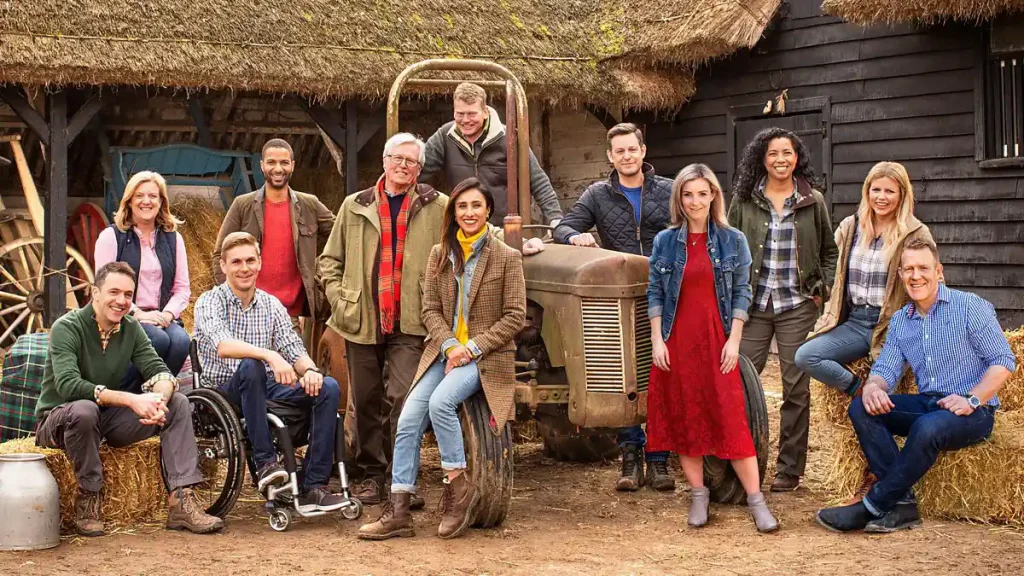
Countryfile – Wisley Bees – In the verdant surroundings of RHS Wisley in Surrey, the spotlight shines on one of nature’s marvels—the indispensable bee. Hamza Yassin, alongside Sammi Kinghorn, delves into the vibrant world of these vital pollinators, celebrating their crucial role in our ecosystem. The adventure begins with Hamza, who is given an introductory lesson in beekeeping by the seasoned beekeeper at RHS Wisley. Eager to deepen his understanding, he ventures into a research lab, where he collaborates with a scientist studying the microbiomes of honeybee hives.
This research aims to pinpoint the markers of hive health, providing crucial insights into maintaining thriving bee populations. Adding an artistic dimension to the day, Hamza meets with a multifaceted artist and sculptor who is in the process of installing an innovative artwork. This piece is designed not only for aesthetic appreciation but also to serve as a new nesting ground for solitary bees, highlighting the intersection of art, science, and conservation.
Meanwhile, Sammi immerses herself in the world of early-season bumblebees. She observes these industrious insects up close, identifying their preferred nectar sources. Her findings contribute valuable data to a national biodiversity study. Her journey continues in a community garden that champions a bee-supportive philosophy. There, she learns the nuances of caring for solitary bees and has the unique opportunity to assist a honeybee rescuer who is diligently nursing a swarm back to health. This hands-on experience underlines the importance of community efforts in sustaining bee populations.
Elsewhere, Adam Henson is equally engaged with the world of bees. With his orchard’s apple trees in full blossom, he is eager to scatter wildflower seeds. Adam is enthusiastic about learning how strategic support for bee populations can not only foster environmental health but also enhance his apple yield, underlining the symbiotic relationship between agriculture and natural pollinators.
Further afield, Joe Crowley takes on a more investigative role, probing into the contentious issue surrounding a particular pesticide known to be harmful to bees. His inquiry sheds light on the broader implications of pesticide use, sparking conversations on the delicate balance between agricultural practices and wildlife conservation.
“Countryfile – Wisley Bees” not only celebrates the beauty and utility of bees but also emphasizes the interconnectedness of our actions and their impact on these essential creatures. Through a blend of education, art, and science, this episode invites viewers to consider how even small contributions can lead to significant environmental benefits.
Countryfile – Wisley Bees
The day culminates with Hamza and Sammi reuniting amongst the buzzing hives at RHS Wisley. They share their experiences, marveling at the diversity within the bee world. Hamza is captivated by the intricate dance of communication that honeybees use to share information about food sources, while Sammi expresses her newfound respect for the solitary bees, each species with its own unique nesting habits.
Their conversation is interrupted by a delightful discovery. A bee hotel, meticulously constructed by volunteers, is teeming with activity. Various solitary bee species are busily creating their nests, each meticulously lined with pollen and nectar to nourish their offspring. This tangible symbol of human support for bee populations serves as a fitting finale to their exploration.
As the sun begins to set, casting a warm glow on the vibrant gardens, Hamza and Sammi reflect on the day’s learnings. They acknowledge the challenges bees face – habitat loss, disease, and pesticide use – but emphasize the power of collective action. From the dedicated research at RHS Wisley to the community efforts in the bee-friendly garden and the creative solutions offered by the artist, there are numerous ways to contribute.
The episode concludes with a call to action. Appearing alongside a local beekeeping association, Hamza and Sammi encourage viewers to explore beekeeping themselves (on a small scale, if desired) or simply plant bee-friendly flowers in their gardens. Every action, no matter how small, can contribute to a healthier environment for bees and, by extension, for ourselves.
Weaving throughout the episode are glimpses into the lives of viewers who have been inspired by “Countryfile – Wisley Bees.” A young girl, armed with a magnifying glass, observes bees in her backyard, documenting their behavior in a notebook. A group of friends gather in a community garden, planting a vibrant wildflower meadow. A beekeeper proudly displays a thriving hive, buzzing with healthy bees. These vignettes serve as powerful testaments to the ripple effect of the program, showcasing the potential for widespread community involvement.
“Countryfile – Wisley Bees” is more than just a nature documentary. It’s a celebration of the vital role bees play in our world, a call to action for responsible environmental stewardship, and a testament to the power of collective action. By igniting curiosity, fostering a deeper appreciation for these essential creatures, and inspiring viewers to take an active role in their conservation, the episode contributes to a more sustainable future for all.
F.A.Q. about Countryfile – Wisley Bees
Q.: What is the main focus of the “Countryfile – Wisley Bees” episode?
A.: The “Countryfile – Wisley Bees” episode primarily focuses on the critical role of bees in our ecosystem. Filmed at RHS Wisley in Surrey, the episode explores various aspects of bee life, their ecological importance, and conservation efforts, featuring interactions with beekeepers, scientists, and artists dedicated to bee support and preservation.
Q.: Who are the main presenters in this episode, and what unique perspectives do they offer?
A.: The episode features Hamza Yassin and Sammi Kinghorn as the main presenters. Hamza is involved in learning beekeeping and engaging with scientific research on bee microbiomes, while Sammi explores early-season bumblebees and their nectar sources, contributing to a national biodiversity study. Their different activities provide a comprehensive insight into both the practical and scientific aspects of bee conservation.
Q.: What are some of the educational elements highlighted in the episode?
A.: The episode highlights several educational elements, such as the importance of bees in pollination, the health of bee hives, and the role of solitary bees. Viewers learn through practical demonstrations like beekeeping, observing bee behavior, and participating in community conservation efforts. Additionally, the integration of art and science emphasizes innovative approaches to supporting bee habitats.
Q.: Can you explain the involvement of community and artistic projects in bee conservation as shown in the episode?
A.: In the episode, community and artistic projects play a pivotal role in supporting bee populations. A key feature is the installation of an artwork at RHS Wisley, designed to serve as a nesting ground for solitary bees, which highlights how art can intersect with ecological conservation. Community gardens and the creation of a bee hotel by volunteers also illustrate the impactful role of community efforts in enhancing bee habitats and education.
Q.: What challenges facing bees are discussed, and what solutions does the episode propose?
A.: The episode discusses several challenges, including habitat loss, diseases, and the impact of pesticides on bees. To address these issues, it proposes solutions like planting bee-friendly flowers, engaging in small-scale beekeeping, and community participation in conservation efforts. The importance of scientific research in understanding and mitigating threats to bee health is also emphasized, alongside promoting sustainable agricultural practices that benefit both the environment and bee populations.
Q.: How does the “Countryfile – Wisley Bees” episode inspire viewers to take action?
A.: The episode inspires viewers by showcasing the practical steps individuals and communities can take to support bees. By presenting a blend of informative content, personal stories, and hands-on activities, it encourages viewers to explore beekeeping, participate in local conservation projects, and adopt bee-friendly practices in gardening. The call to action is clear—every small effort counts towards creating a healthier environment for bees and enhancing biodiversity.