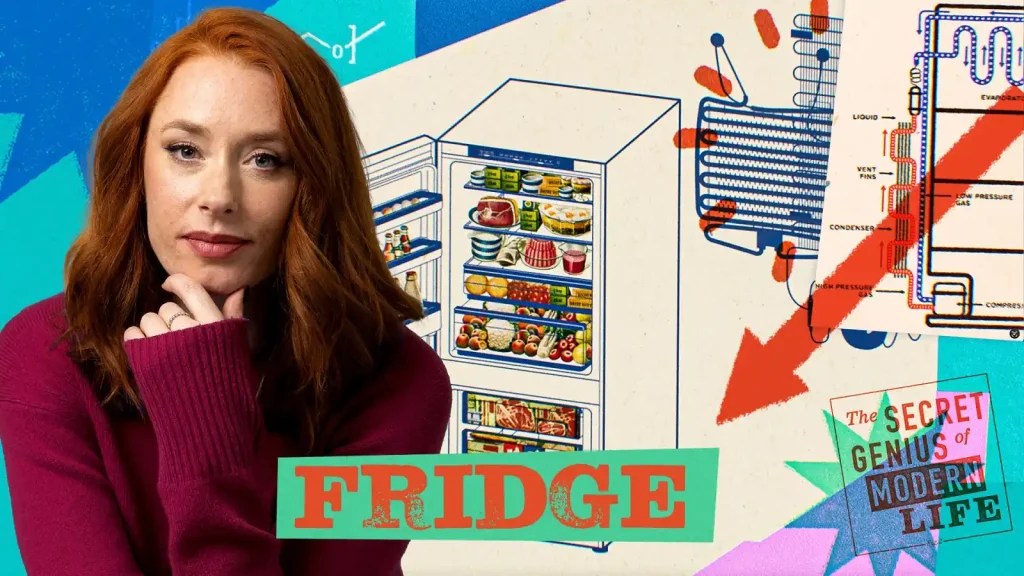
The Secret Genius of Modern Life episode 14 – Fridge
Isn’t it funny how some of the most important things in our lives simply fade into the background? Take your refrigerator, for instance. It sits there in the kitchen, a silent sentinel, humming quietly day and night. For over a century, this unassuming box has been the unsung hero of our homes, diligently keeping our food fresh and safe. Yet, how often do we truly stop and appreciate this marvel of modern engineering? Most of us likely open its door countless times a day without a second thought, grabbing milk for our coffee or ingredients for dinner. We simply expect it to be there, doing its crucial job.
But what if we paused for a moment? What if we peeked behind that cool exterior? We would uncover a rich history, fascinating science, and a profound impact on how we live. In episode 14 of “The Secret Genius of Modern Life,” host Hannah Fry embarks on precisely this journey. She invites us to explore the hidden world inside our fridges, revealing the innovation and ingenuity packed within. Furthermore, she peels back the layers of time to show us how this essential appliance came to be. Prepare to see your trusty fridge in a completely new light.
Hannah’s quest for understanding takes her right to the source: the bustling production lines of appliance giant Bosch. Imagine the scene – a symphony of machinery, the precise ballet of robotic arms, and the steady assembly of components. Here, amidst the organized chaos, Hannah seeks the very essence of refrigeration. She wants to find the “lifeblood” pulsing at the heart of every single fridge. This vital element, the refrigerant, undergoes a constant, magical transformation, enabling the cooling process we rely on. Subsequently, understanding its journey is key to understanding the fridge itself.
While at Bosch, Hannah Fry also gets a rather unusual, yet illuminating, lesson involving carrots. Yes, carrots. It’s a lesson in “carrot droop,” which sounds quirky, but actually demonstrates crucial principles of food preservation. Proper cooling, humidity control, and air circulation all play vital roles in keeping produce fresh and crisp. Consequently, learning about carrot droop highlights the subtle science refrigerators employ to extend the life of our food, preventing waste and maintaining nutritional value. It’s a tangible example of the thoughtful engineering involved.
However, the story of the fridge doesn’t begin on a modern assembly line. Its roots stretch back much further, woven through centuries of human ingenuity and the persistent quest to conquer heat. Hannah Fry takes us on a captivating historical tour, a long, cool look back in time. We journey back to an era long before electric cooling, a time when preserving food was a constant, often challenging, battle against nature. People relied on methods like salting, drying, smoking, or burying food in cool cellars. Wealthier households might have had ice houses, filled with blocks harvested from frozen lakes in winter. Still, food spoilage remained a persistent threat.
Then, figures began to emerge from the mists of history, their curiosity sparking the first glimmers of artificial cold. One such character was a French monk with an unexpected talent for chemistry. This wasn’t just any monk; Ferdinand Carré was an inventor whose work in the mid-19th century led to early absorption refrigeration systems. These systems used heat to drive a cooling process, a concept that seems counterintuitive but proved revolutionary. His work laid crucial groundwork, demonstrating that chilling could be achieved through clever chemical manipulation, not just harvested ice. Therefore, his contributions were pivotal.
Intriguingly, the path to the modern fridge also winds through an unexpected place: the world of 17th-century chicken incubators. It sounds bizarre, doesn’t it? Yet, early experiments in controlling temperature precisely, essential for hatching eggs, involved principles later applied to cooling. Scientists and inventors like Cornelius Drebbel tinkered with thermostats and controlled environments. These efforts, though aimed at nurturing life with warmth, inadvertently advanced the understanding of temperature regulation itself. Thus, even attempts to create artificial warmth contributed, indirectly, to the eventual mastery of cold.
The narrative then shifts across the globe to Australia, where another crucial piece of the puzzle falls into place. Here, an “explosive invention,” metaphorically speaking, changed everything. James Harrison, a Scottish immigrant involved in the printing and later the brewing industries, needed a reliable way to cool beer during fermentation. Consequently, in the 1850s, he developed and patented one of the first practical vapor-compression refrigeration systems using ether. His invention was groundbreaking, moving beyond chemical absorption to a mechanical process. It was so effective, breweries quickly adopted it, marking the dawn of commercial mechanical refrigeration. This development proved truly transformative.
Imagine these disparate threads: a chemically-minded monk in France, early temperature control for hatching chicks, and a brewer’s cooling needs in Australia. Each represents a step, a discovery, a solution to a specific problem. Over time, these innovations converged. Inventors built upon previous discoveries, refining techniques, experimenting with different refrigerants (some dangerously flammable in early days!), and improving efficiency. It wasn’t a single Eureka moment, but rather a gradual, persistent process of innovation. As a result, the journey towards the modern, reliable kitchen fridge was long and filled with fascinating twists.
So, how does this marvel actually work its magic? At its core, a fridge is a clever heat mover. It doesn’t create cold; instead, it pumps heat from the inside of the box to the outside. Think of it like a tireless heat custodian, constantly escorting warmth away from your groceries. The “lifeblood” Hannah investigates, the refrigerant, is the key player. This special fluid circulates through a closed loop of coils. Inside the fridge, it evaporates into a gas at a very low temperature. This evaporation process absorbs heat from the surrounding air, much like sweat evaporating from your skin cools you down.
Next, a compressor, the humming heart of the fridge, squeezes this low-pressure, heat-laden gas. Compressing the gas significantly increases its temperature and pressure. This hot, high-pressure gas then flows into coils located on the outside of the fridge, usually at the back or bottom. Here, the hot gas releases its absorbed heat into your kitchen air. As it cools down, the refrigerant condenses back into a high-pressure liquid. Finally, this liquid passes through an expansion valve, which dramatically lowers its pressure and temperature, making it icy cold again. The cycle then repeats, continuously pumping heat out and keeping the inside wonderfully chilled. It’s a beautifully simple, yet incredibly effective, thermodynamic dance.
The arrival of the domestic refrigerator, becoming widespread in the mid-20th century, wasn’t just a convenience; it fundamentally reshaped daily life. Suddenly, food could be kept safely for days, even weeks. This dramatically changed grocery shopping habits. People no longer needed to shop daily for perishable items. Furthermore, diets diversified as fresh produce, dairy, and meat became readily available year-round, regardless of season or local availability. Leftovers could be saved, reducing food waste significantly. Consequently, kitchens themselves were redesigned around this central appliance.
The Secret Genius of Modern Life episode 14 – Fridge
Moreover, the impact rippled outwards, transforming the entire food industry. Large-scale refrigerated transport via trucks and trains became possible. This development allowed food to travel vast distances, connecting farms to distant cities. Supermarkets, with their rows upon rows of refrigerated and frozen goods, could now exist. The cold chain, an unbroken network of refrigeration from farm to table, became essential for public health and food safety. Indeed, the humble fridge played a critical role in modernizing our food supply system.
Today, the refrigerator continues to evolve. Manufacturers constantly strive for greater energy efficiency, responding to environmental concerns. Designs become sleeker, incorporating new materials and features. We now have “smart” fridges that can track inventory, suggest recipes, or even order groceries online. Yet, despite these advancements, the core principle remains the same: that ingenious cycle of heat transfer pioneered over a century ago. The quiet hum continues, a constant reminder of the hidden genius residing in our kitchens.
So, the next time you open your refrigerator door, perhaps you’ll pause for just a second. Think about the journey – from curious monks and chicken incubators to Australian breweries and high-tech production lines. Consider the science, that clever manipulation of pressure and temperature, tirelessly working to keep your food fresh. Appreciate the profound impact this appliance has had on your health, your convenience, and the very structure of modern society. It truly is a secret genius, hiding in plain sight. Hannah Fry’s exploration reminds us that even the most familiar objects have extraordinary stories to tell, if only we take the time to listen. Therefore, let’s give this cool companion the recognition it deserves.
The Cool Companion: A Conclusion
The refrigerator stands as one of humanity’s most transformative inventions, yet we rarely acknowledge its profound impact. Throughout history, this remarkable appliance has evolved from primitive ice houses to sophisticated smart devices, fundamentally changing how we live. Indeed, the journey from Ferdinand Carré’s chemical experiments to today’s energy-efficient models represents an extraordinary saga of human ingenuity.
Moreover, the science behind refrigeration showcases our ability to harness natural principles for practical purposes. The elegant thermodynamic cycle—evaporation, compression, condensation, and expansion—continues to operate in even the most advanced models. Consequently, this basic principle has proven remarkably durable despite a century of technological advancement.
When we open our refrigerator door, we’re actually peering into a portal that connects us to a global food network. Furthermore, this seemingly simple appliance has revolutionized nutrition, food safety, and culinary possibilities worldwide. Our diverse diets and reduced dependence on seasonal availability stem directly from reliable refrigeration technology.
The refrigerator also tells a broader story about innovation. Rather than emerging from a single breakthrough, it developed through countless incremental improvements across continents and centuries. Therefore, its evolution reminds us that great innovations often result from collaborative human effort spanning generations.
As we look toward the future, refrigeration technology continues to advance. Manufacturers now focus on sustainability, developing units that consume less energy while maintaining optimal performance. Meanwhile, smart features enhance convenience, though the core cooling function remains unchanged.
Perhaps the most remarkable aspect of the refrigerator is its ability to fade into the background of our lives. Despite its essential role, we notice it only when something goes wrong. This quiet reliability makes it the quintessential example of technology at its best—solving fundamental problems without demanding attention.
The next time you reach for a cold drink or store fresh groceries, take a moment to appreciate this unsung hero. Behind its humble exterior lies a marvel of engineering that has quietly transformed human society. In essence, the refrigerator exemplifies how seemingly ordinary objects can have extraordinary impacts when we pause to understand their secret genius.
FAQ The Secret Genius of Modern Life episode 14 – Fridge
Q: How does a refrigerator actually work?
A: A refrigerator works as a heat transfer system rather than a cold generator. The process begins when refrigerant evaporates inside the fridge, absorbing heat from food items. Subsequently, a compressor squeezes this heat-laden gas, raising its temperature and pressure. This hot gas then flows through external coils where it releases heat into your kitchen. As it cools, the refrigerant condenses back into a liquid before passing through an expansion valve, which dramatically lowers its pressure and temperature. Consequently, this continuous thermodynamic cycle effectively moves heat from inside to outside, maintaining the cool environment necessary for food preservation.
Q: Who were the key historical figures in refrigeration development?
A: Several innovators played pivotal roles in refrigeration history. Ferdinand Carré, a French monk with chemistry expertise, developed early absorption refrigeration systems in the mid-19th century. His work demonstrated that cooling could be achieved through chemical manipulation rather than harvested ice. Additionally, Cornelius Drebbel contributed through his work with temperature control for chicken incubators. Furthermore, James Harrison, a Scottish immigrant in Australia, created one of the first practical vapor-compression refrigeration systems in the 1850s. His invention, initially designed for beer fermentation, marked the beginning of commercial mechanical refrigeration. Therefore, refrigeration emerged not from a single inventor but through collaborative innovation across continents and centuries.
Q: What is refrigerant and why is it essential?
A: Refrigerant serves as the “lifeblood” of every refrigerator, enabling the entire cooling process. This specialized fluid circulates through a closed system of coils, undergoing constant phase changes. Inside the refrigerator, it evaporates at very low temperatures, effectively absorbing heat from surroundings like a sponge soaking up water. After compression, this heat-laden gas travels to external coils where it releases absorbed heat. The refrigerant’s unique thermodynamic properties allow it to efficiently transfer heat away from food items. Early refrigerants were often flammable or toxic, whereas modern versions are designed with both efficiency and environmental impact in mind.
Q: How did refrigeration transform food shopping habits?
A: Refrigeration revolutionized how people shop for food by breaking the daily shopping cycle. Before widespread refrigeration, families needed to purchase perishable items daily to ensure freshness. However, with home refrigeration becoming common by the mid-20th century, weekly shopping trips became practical. Moreover, consumers could suddenly buy in bulk during sales, storing items for extended periods. Fresh produce, dairy, and meat became accessible year-round regardless of season. As a result, meal planning expanded beyond daily necessities to weekly or even monthly schedules. This transformation consequently led to the rise of supermarkets with their extensive refrigerated sections, fundamentally altering consumer behavior.
Q: What is ‘carrot droop’ and why does it matter for food preservation?
A: ‘Carrot droop’ refers to the wilting phenomenon that occurs when vegetables lose moisture and crispness. This concept illustrates the crucial principles of proper food preservation in refrigerators. Modern fridges combat carrot droop through precise humidity control, optimal cooling, and strategic air circulation. These factors work together like a harmonious orchestra to maintain the perfect preservation environment. Furthermore, understanding carrot droop highlights how refrigerator design addresses the distinct needs of different food types. For instance, crisper drawers typically provide higher humidity levels specifically for fruits and vegetables. Therefore, this seemingly quirky concept actually demonstrates the thoughtful engineering behind effective food storage systems.
Q: How did early food preservation methods compare to modern refrigeration?
A: Early food preservation methods required considerable effort and yielded inconsistent results compared to modern refrigeration. Ancient techniques included salting, smoking, drying, and fermenting foods to extend their usability. Wealthy households sometimes maintained ice houses, where winter ice was packed in sawdust for summer use. Nevertheless, these methods often altered food flavors significantly and couldn’t prevent all spoilage. Modern refrigeration, in contrast, preserves food’s original taste and nutritional value while requiring minimal effort from users. Additionally, today’s refrigeration provides consistent temperatures year-round regardless of seasonal changes. Consequently, modern methods offer unprecedented convenience, effectiveness, and food safety that historical preservation techniques simply couldn’t match.
Q: What impact did refrigeration have on the global food industry?
A: Refrigeration transformed the global food industry by creating an unbroken “cold chain” from farm to table. This innovation enabled the safe transport of perishable goods across vast distances, connecting rural farms to urban centers. As a result, regional food specialties became globally available. Furthermore, the food production industry expanded dramatically, with producers able to reach international markets. Refrigerated shipping containers revolutionized global trade, allowing tropical fruits to appear in northern supermarkets year-round. Additionally, food processing facilities could operate at larger scales with refrigerated storage capabilities. Therefore, the entire structure of food production, distribution, and retail fundamentally shifted around this technology, creating our modern global food networks.
Q: How have refrigerators evolved in recent decades?
A: Modern refrigerators have evolved dramatically while maintaining their core cooling principles. Energy efficiency has improved substantially, with today’s models using up to 75% less electricity than units from the 1970s. Additionally, design aesthetics have transformed from utilitarian boxes to sleek, customizable kitchen centerpieces available in various finishes. Smart technology integration now allows features like inventory tracking, recipe suggestions, and remote monitoring via smartphone apps. Furthermore, environmental concerns have driven changes in refrigerant types to reduce ozone depletion and greenhouse effects. Interior organization has also improved with specialized drawers for different food types. Nevertheless, despite these advancements, the fundamental thermodynamic cycle remains essentially unchanged from earlier models.
Q: Why do refrigerators have different compartments and settings?
A: Refrigerators feature different compartments and settings because various foods require specific storage conditions for optimal preservation. The main refrigerator section typically maintains temperatures between 37-40°F (3-4°C), ideal for most foods. Meanwhile, freezer compartments keep foods at 0°F (-18°C) or below to extend shelf life significantly. Crisper drawers, often found at the bottom, provide higher humidity levels perfect for keeping fruits and vegetables fresh. Some models include special compartments like deli drawers that maintain slightly warmer temperatures for meats and cheeses. Moreover, adjustable shelving allows customization based on specific storage needs. These specialized zones work together like distinct ecosystems, each optimized for specific food preservation requirements.
Q: How does refrigeration contribute to reducing food waste?
A: Refrigeration significantly reduces food waste through several mechanisms. Primarily, it slows bacterial growth that causes spoilage, extending food shelf life from days to weeks. Additionally, proper refrigeration preserves nutritional value and flavor, making leftovers more appealing for later consumption. Modern refrigerators with clear visibility and organized storage make it easier to track food items before they expire. Furthermore, temperature-controlled drawers provide optimal conditions for different food types, extending their usability. Meal planning becomes more flexible with refrigeration, allowing people to prepare larger batches and store portions for future meals. Consequently, households can buy in economical quantities without fear of waste. Therefore, refrigeration serves as a powerful tool in the global effort to reduce the estimated one-third of food that would otherwise go to waste.