A Garden in Snowdonia episode 3: Have you ever stepped into a place that feels truly magical? A place where time seems to slow down. Bodnant Garden in north Wales is exactly like that. It is a jewel nestled in the dramatic landscape of Snowdonia. This historic garden is a tapestry of vibrant colour and stunning views. However, this paradise faces hidden, constant dangers.
The remarkable series A Garden in Snowdonia takes us deep inside. Episode 3 reveals a dramatic, poignant year. We join the team as they fight for this garden’s very life. It is a powerful story of beauty, dedication, and resilience. This episode truly captures the heart of modern gardening.
Bodnant is not just any garden, you see. It is a world-famous horticultural masterpiece. It’s a living dream woven into the Welsh hills. Imagine vibrant, sun-drenched terraces. They cascade down the hillside like a colourful waterfall. Picture the deep shadows of towering pine trees. Listen to the sound of water rushing through ‘The Dell’. This garden is a symphony for the senses. For generations, people have poured their lives into this space. Consequently, it has become a sanctuary. It’s a haven for nature and for the human soul. A Garden in Snowdonia perfectly captures this seasonal magic. We watch the garden shift from spring’s hopeful blush to autumn’s fiery goodbye.
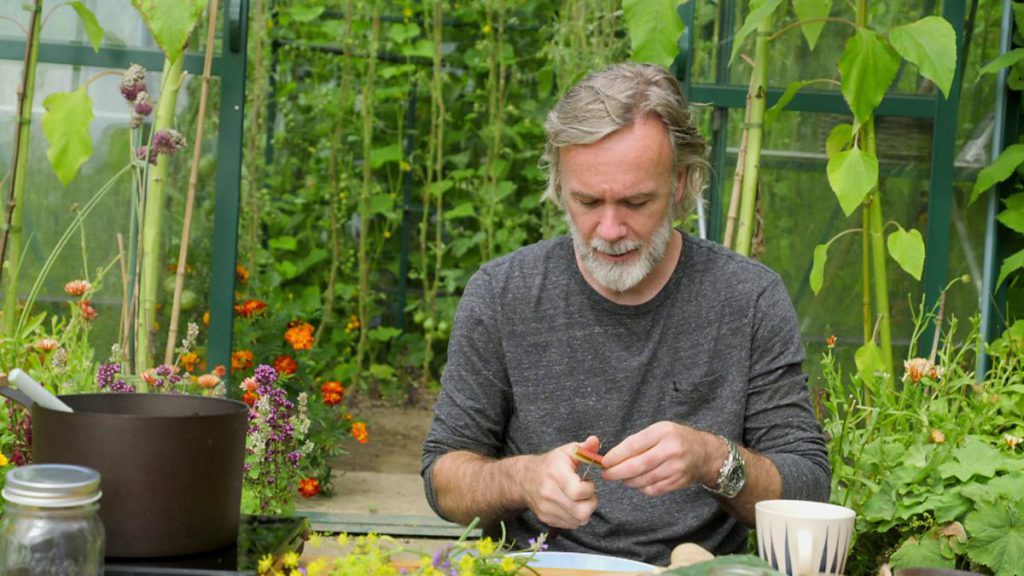
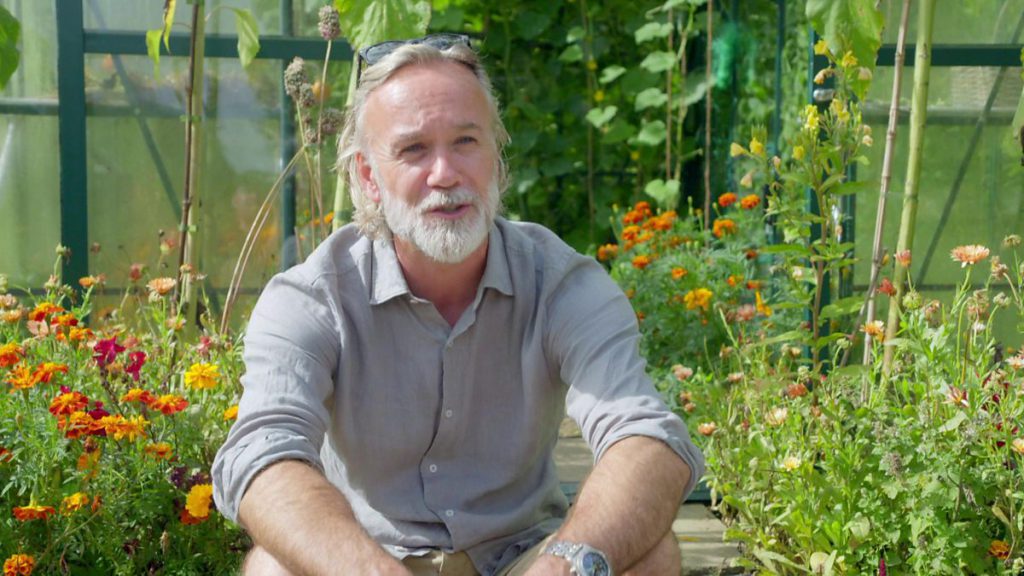
At the heart of this intimate story is Troy Scott Smith. He is the dedicated Head Gardener at Bodnant. But the title “gardener” feels far too simple. He is more like a custodian of living history. A guardian of priceless, fragile treasures. Troy carries an immense responsibility on his shoulders every single day. Indeed, his deep passion for the garden is clear in every scene. He understands the soil, the plants, and the unpredictable weather. He feels the rhythm of the seasons in his bones. His job is a constant, demanding balancing act. Moreover, this episode follows his personal and professional struggle.
Bodnant’s magnificent collection of rhododendrons is legendary. In fact, it is one of the largest in the entire country. These are not the small, tidy bushes you might imagine. Instead, they are towering, structural giants. Some are over a century old. In late spring, they erupt in a riot of colour. They create breathtaking tunnels of pink, purple, and red. Walking beneath them is like being in a natural cathedral. These plants are truly priceless. Many are rare species, collected by intrepid explorers decades ago. Therefore, losing even one is like losing a vital piece of history. This collection is the garden’s beating heart.
The first major challenge, however, is time itself. Many of these precious, historic plants are simply old. Like cherished grandparents, they are growing frail. Their branches become brittle over time. They become more vulnerable to a harsh winter or a dry summer. Troy and his team face an incredibly delicate task. This is where the true art of gardening becomes crucial. They must carefully prune and propagate. They try to take cuttings from the ancient stems. They hope to grow new, young plants from the old. It is a painstaking race against the inevitable clock. This process requires patience and immense skill.
Unfortunately, age is not the only threat. A far more sinister shadow looms over Bodnant. It is a disease with a frightening, clinical name. ‘Sudden oak disease’ is actually a water mould. This devastating pathogen does not just affect oaks. In fact, it is lethal to many other plants, including rhododendrons. It spreads quietly on the wind and in the rain. It can wipe out entire sections of the garden. The team is, therefore, on constant high alert. They tirelessly patrol the garden. They search for the first subtle, telling signs. Finding it is absolutely heartbreaking for the entire team.
This devastating disease creates a terrible ripple effect. This fight is about more than just the plants. A garden as vast as Bodnant is a complex, thriving ecosystem. It is a vital sanctuary for local wildlife. Countless birds nest in the ancient trees. Bees and butterflies feast on the abundant nectar. Small mammals find shelter in the dense undergrowth. This delicate balance of nature depends entirely on a healthy garden. When the plants are threatened, the wildlife suffers, too. Consequently, Troy’s battle is also a fight for this hidden, vulnerable community. The local wildlife here depends on his ultimate success.
A Garden in Snowdonia episode 3
A Garden in Snowdonia does not shy away from the hard realities. This episode, in particular, shows Troy facing impossible choices. What do you do when a rare, century-old plant is sick? Do you try to save it and risk spreading the infection? Or do you make the painful decision to remove it? We watch the team as they fell infected trees. They must destroy diseased rhododendrons. This is done to create a firebreak against the disease. These decisions weigh heavily on everyone. It is a truly emotional and gut-wrenching journey to witness.
This episode also excels at showing the human side of gardening. It is not just about techniques and Latin names. It is fundamentally about passion. We see the team’s unwavering dedication. We feel their anxiety during the long inspections. We also share in their small, precious victories. For example, a successful cutting brings immense, quiet joy. A new, healthy bloom offers a powerful glimmer of hope. This garden is not maintained by machines. It is cared for by people who love it deeply. Their connection to this patch of nature is powerful and inspiring. They are fighting for something they truly believe in.
Despite the tough challenges, this is not a story of defeat. On the contrary, it is a story of incredible resilience. Troy and his team are true innovators. They are blending traditional gardening wisdom with modern science. They are working closely with experts. They are tirelessly experimenting with new, resistant plant varieties. The ultimate goal is to build a Bodnant that can survive. They are ensuring this magical garden will exist for future generations. This fight is fueled by a powerful, stubborn hope. It is a testament to the human spirit.
Episode 3 of A Garden in Snowdonia is truly captivating television. It is a powerful, honest look at the reality of conservation. It reminds us that nature is both beautiful and deeply fragile. This garden is a living museum. And like any museum, it requires passionate guardians. Troy’s struggle is a moving testament to that dedication. You will certainly leave with a new appreciation for the gardening world. You will finally understand the quiet, daily fight to protect our natural heritage. It is a story that stays with you.
A Garden in Snowdonia episode 3 review
A Garden in Snowdonia episode 3 introduces viewers to Bodnant Garden, a spectacular property managed by the National Trust. Tucked away in the mountains of Snowdonia, this historic garden is a true work of art. Generations of gardeners crafted it over the course of a century. It represents a living tapestry of horticultural passion and expertise.
However, this Welsh jewel, part of the larger A Garden in Snowdonia landscape, faces a precarious future. In recent times, the garden has seen visitor numbers decline while operational costs have escalated. Consequently, the garden has suffered from a period of neglect. This lack of resources has had a visible impact on the collection.
Many of its plants have become old and tired, struggling to thrive. Some specimens date back to the late 1920s or early 1930s. These aging plants now grow in very compacted soil. This makes it difficult for their root systems to expand and absorb nutrients.
Furthermore, soil has eroded around them over the many decades. This erosion has left the plants sitting on small mounds. As a result, the soil around them has been hoed and raked off over the years. Each year, these historic plants struggle a little bit more to survive. The team in A Garden in Snowdonia episode 3 must now confront this horticultural decline.
Compounding this problem is a critical lack of information. Troy Scott Smith, the head gardener, is struggling to preserve a collection that is not properly documented. The garden contains literally thousands of plants that no-one can even identify. This presents a massive challenge for conservation and future planning.
This knowledge gap has become a crisis due to a new and devastating threat. A new plant disease is sweeping through the region, posing a very real danger to Bodnant’s collection. This combination of an aging, undocumented collection and a new, aggressive disease creates the toughest conservation challenge in the garden’s long history. The scale of the gardening mystery is immense, with an estimated 50,000 different plants at Bodnant. Labels have been lost over the years, knocked off by animals, snapped by gardeners, or simply buried under leaf-litter.
The Hunt for Lost History
To solve Bodnant’s mysteries, the gardening team must employ ingenuity. Troy and his colleague Graham are using a metal detector to hunt for metal tags that disappeared long ago. This technique allows them to search for clues without resorting to indiscriminate digging. It is a compromise between finding useful information and avoiding damage to the delicate root systems of the old plants.
When metal detectors fail, Troy must rely on horticultural detective work. The records of Bodnant’s extensive plant-breeding activities have been lost. Therefore, Troy often has to examine the plants themselves for clues. He looks closely at the flower type and leaf structure to identify a plant’s potential parentage.
He can then show other plants in the garden from which he believes some of its “blood” may come. After forming a hypothesis, he consults books to see which hybrids have been bred from those parent plants. This process, however, is painstakingly slow. Troy estimates it might take several years to identify just one mystery plant. Meanwhile, they have 25,000 other ones to identify as well.
The Aberconway and Puddle Legacy
The garden’s present state is the result of a partnership between two dedicated families. The Aberconway family provided the passion and vision, while the Puddle family supplied generations of technical expertise. The garden was given to the National Trust in 1949, but Bodnant Hall remains the Aberconway family home. Michael McLaren, whose mother is Lady Aberconway, currently manages the garden for the Trust.
Michael’s grandfather, Henry McLaren, the second Lord Aberconway, had a huge role in shaping the garden. He built the great terraces and was deeply passionate about the collection. In the late 19th and early 20th centuries, it was an exciting time for horticulture. Henry McLaren financially supported plant-hunting expeditions, which sent back wonderful rhododendron seeds from places like China. He grew these seeds, and the garden became famous for its resulting collection. This connection to the wild origins of plants is a key part of its link to nature.
This passion continued with Michael’s father, Charles McLaren, the third Lord Aberconway. Charles was a leading industrialist whose company, John Brown Shipyards, built the famous QE2. Beyond business, he was also at the helm of the British gardening establishment as president of the Royal Horticultural Society.
Throughout the 20th century, the Aberconways indulged their passion for plants. The technical expertise, however, was supplied by their head gardeners. Remarkably, all of them were members of the same family: the Puddles. The dynasty began with Fred Puddle, who worked from 1920 to 1947. He was very skilled and enthusiastic about propagation, particularly hybridising rhododendrons. The tradition was then continued by Fred’s son, Charles, and his grandson, Martin.
Unfortunately, much of the invaluable knowledge built up by the Puddles and the Aberconways has disappeared over time. This loss of information and documentation is what has created the identification crisis the garden faces today.
Unlocking the Archive: A Garden in Snowdonia episode 3 Reveals a Treasure Trove
A significant breakthrough in this mystery comes from an unlikely source. Michael McLaren’s family papers are stored in dusty old boxes. He remains sceptical about their value, believing his father’s claim that they were just “frightfully boring” 19th-century business deals. Nonetheless, he grants gardeners Alison Clarke and Fiona Braithwaite access, making them the first Bodnant gardeners to see the archive.
Within minutes of opening the first files, they strike gold. They find lists from Frank Kingdon-Ward, the “Indiana Jones” of plant-hunters. The gardeners had always known there were links between Bodnant and his important expeditions to the Far East. Now, for the first time, they have direct evidence.
The documents provide precise information about exactly which plants he and other hunters sent back. They find a letter to “Harry,” the family nickname for Henry McLaren. The letter, from a 1930 expedition, is a request for more funds. This directly proves the financial investment the family made in these plant-hunting ventures.
The archive’s treasures do not end there. The gardeners also find personal correspondence from other legendary plant-hunters, including George Forest, Reginald Farrer, and Joseph Rock. The sheer historical importance of these papers is immense.
This discovery is transformative for the garden’s conservation. Alison, who works as Bodnant’s taxonomist, explains the archive’s new role. The starting point for identifying the garden’s vast, unknown plant material is knowing what originally came to the garden. Her job, she explains, is to marry up the information from these papers with the plants currently growing in the garden.
The Core Collection and Its Hybrids
At the heart of Bodnant Garden is its unique collection of rhododendrons. This collection is one of the great glories of Bodnant. Many of the most famous names in plant-hunting history are linked to it. They sent rhododendrons to Bodnant from the four corners of the Earth.
What makes the collection truly unique, however, are the hybrids. Starting in the 1920s, Bodnant’s gardeners, led by the Puddle family, created hundreds of new varieties of rhododendron. It was a significant feat of horticulture.
To create over 300 plants that were ultimately named and registered must have meant sorting through many thousands of “rubbish ones.” This represents an incredible dedication from the head gardeners and the owners. It is therefore vital that these unique plants are protected. If these hybrids are lost from Bodnant, they are lost forever.
A New and Devastating Threat: Phytophthora
This unique collection now faces a clear and present danger. A devastating plant disease, Phytophthora or sudden oak disease, threatens Bodnant’s very character. Troy Scott Smith describes it as the “MRSA of plants.” It is particularly dangerous because it affects the plants so important to Bodnant, especially rhododendrons.
Troy worries that the garden could lose 20, 30, or even 80 percent of its mainstay collection. Such a loss would destroy the special character of the historic garden. It also means potentially losing plants that are very rare. Bodnant has plants that may be the only one of their kind. If that one plant gets Phytophthora, it is gone forever.
Troy calls in Paul Barber, a government expert, to investigate some concerning plants. An initial inspection of a rhododendron brings relief; Paul does not think its symptoms are typical of the disease.
Just around the corner, however, a group of newly-planted viburnums is causing concern. Paul examines one and finds the tell-tale signs: a “foxy, reddy brown” discoloration tracking back up the stem. He explains this is very symptomatic of Phytophthora tracking up from the root system and killing the plant.
Of the 16 viburnums in the batch, eight have now been affected. Paul states that if the sample comes back positive for the quarantine-level disease, the garden will be ordered to remove the remaining plants. They must then be destroyed by incineration. The disease has officially arrived at Bodnant.
The news soon gets worse. Phytophthora is found in one of the Rhododendron ponticum plants. This species is a natural host for the disease and is extremely common throughout Bodnant. Graham Jones and his fellow gardeners are ordered to destroy the infected plant and everything around it.
This means a hell of a lot of work. The team must incinerate everything from the cleared area. The Rhododendron ponticum they are clearing was about 20 feet high, and the cleared area is massive. The team must now get rid of this common host plant wherever they can. They even have to remove ponticum that hasn’t got the disease yet. This proactive clearing is the only way to prevent it from spreading to the rarer plants they do not want to infect. The great fear is that one day, the garden’s unique, irreplaceable hybrids will have to be consigned to the flames.
Learning to Be Proactive (A Garden in Snowdonia episode 3)
To learn how to manage this crisis, Troy travels to Cornwall. He visits Trengwainton Gardens, another National Trust property that has been devastated by Phytophthora. There, he meets Ian Wright, a National Trust adviser on the disease. Ian explains that Trengwainton, where the disease was found in 2005, has experienced many losses.
However, Ian feels they have turned a corner. They have shifted from being reactive to proactive. This proactive response, as shown in A Garden in Snowdonia episode 3, is what Ian hopes to share.
At Trengwainton, this proactive strategy involves removing high-risk plants before they get infected. Ian shows Troy a large gap in the canopy where an enormous, healthy Drimys winteri once stood. They made the difficult decision to take it out. Research from the Central Science Laboratory had identified Drimys as one of the major spore-producing plants. To protect other valuable specimens, like a nearby Magnolia campbellii, the healthy Drimys was sacrificed.
Troy also asks about managing the public and the disease. Ian explains they have been very open, focusing on awareness and education. Visitors, he says, can play a part in how the disease is managed. When Troy asks about the foot-baths he has seen at Scottish gardens, Ian is dismissive. He states that the foot-bath scenario isn’t the right message and “doesn’t work very well.”
Troy leaves Cornwall with a thought-provoking new perspective. He realizes they must think of the disease as an opportunity. The gaps created by removing plants are not necessarily bad. They create new views through to the countryside. More importantly, they create new spaces to introduce new plants. Troy notes that while large gardens seem to have endless space, he is actually short of space at Bodnant and has many new plants he wants to bring in.
Saving the “Mikado”: The Last Chance Saloon
Disease is not the only conservation challenge facing Bodnant. Some of the garden’s rare plants have proven impossible to propagate by normal methods. One such plant is a stunning pink rhododendron called the ‘Mikado’.
This creates a critical problem because, as far as Troy knows, it is the only ‘Mikado’ plant in the entire garden. Alison, the taxonomist, is responsible for propagating the garden’s plants. She tries all plants from cuttings first. If she gets no result, she must look at other methods.
For the ‘Mikado’, they have decided to try a process called micropropagation. Alison describes it as “kind of like IVF for plants” or “test-tube plants.” This high-tech solution is the “last chance saloon” for the ‘Mikado’.
The process is not something that can be done in an average potting shed. They must send cuttings to a hi-tech laboratory at Duchy College in Cornwall. The lab takes just a few cells from the apical meristem, which is the very tip of the plant. From just those few cells, they can grow whole plants. The process is expensive, costing £1,000 per plant, but Bodnant secured a grant from the Royal Horticultural Society.
Six months after sending the cuttings, Troy and Alison return to Duchy College for a progress report. Ros Smith, the scientist in charge, explains that it was initially difficult to get contaminate-free material. They must clean the outside of the plant material with a bleach solution to prevent contamination in the sterile lab.
Despite the difficulties, the process is working. Ros shows them tiny shoots regenerating in pots of nutrient jelly. Each tiny speck is a potential plant. Ros is promising and estimates that in two or three years, Bodnant should get 30 or 40 new ‘Mikado’ plants back from the material they sent.
The Living Legacy of Bodnant
The Aberconway family’s deep, personal link to Bodnant continues to this day. Lady Aberconway points to oak trees she grew from acorns on her dressing table many years ago for her grandchildren. She notes that one was eaten by a rabbit, a common problem from local wildlife, but she is growing another one to replace it.
Lady Aberconway is also the guardian of the family mausoleum, built in the 1880s in a secluded part of the garden. The building is currently being restored. Her husband, his father, his mother, and the first Lord and Lady Aberconway are all buried there.
She visits regularly to place fresh flowers on her husband’s sarcophagus. She notes there is a space reserved for her. She finds it a lovely, peaceful place to be buried, with the constant sound of water from the surrounding nature.
Her son, Michael McLaren, continues the family’s involvement, managing Bodnant for the National Trust on an unpaid basis. He is clear that his family has no right to be involved in the future. He believes the Trust appointed him after his father died because they knew he understood horticulture, was enthusiastic about gardening, and was passionate about Bodnant.
Head gardener Troy Scott Smith shares this forward-looking perspective. When he looks around at the garden, he sees the deep sense of history in the 60, 70, and 80-year-old trees. He is fully confident Bodnant will be here for another 100 or 200 years. His philosophy is simple: he plants for the future. He admits it is a real challenge to think so many years ahead, but it is also a great privilege and one that he absolutely loves.
FAQ A Garden in Snowdonia episode 3
Q: What is A Garden in Snowdonia episode 3 primarily about?
A: Episode 3 focuses on the conservation challenges facing Bodnant Garden in north Wales. The episode follows Head Gardener Troy Scott Smith as he battles aging plant collections, devastating disease threats, and the loss of historical documentation. Moreover, it reveals how the team employs both traditional wisdom and modern science to preserve this horticultural masterpiece. The narrative captures the emotional weight of making impossible decisions about rare, century-old specimens while maintaining hope for future generations.
Q: Why is Bodnant Garden’s rhododendron collection so significant?
A: Bodnant houses one of Britain’s largest rhododendron collections, featuring towering specimens over a century old. Many plants originated from legendary plant-hunting expeditions to China and the Far East, financially supported by the Aberconway family. Furthermore, the Puddle family gardeners created over 300 unique hybrid varieties throughout the 20th century. These hybrids exist nowhere else on Earth. Consequently, losing even one plant means permanently erasing a piece of irreplaceable horticultural history and genetic diversity.
Q: What is Phytophthora, and why does it threaten Bodnant?
A: Phytophthora, also called sudden oak disease, is a devastating water mould that spreads through wind and rain. Troy Scott Smith describes it as the “MRSA of plants” because it proves particularly lethal to rhododendrons and other key species. The disease could potentially destroy 20 to 80 percent of Bodnant’s core collection. Additionally, it forces the team to incinerate infected plants and even healthy specimens nearby to prevent further spread. This quarantine-level pathogen represents the most serious threat in the garden’s long history.
Q: How did Bodnant lose track of its plant collection records?
A: Over decades of management changes and natural deterioration, critical documentation simply disappeared. Metal identification tags were knocked off by animals, snapped by gardeners, or buried under accumulated leaf litter. The extensive plant-breeding records maintained by the Puddle family gardeners have been lost entirely. Consequently, Troy now struggles to identify an estimated 25,000 plants without proper documentation. This knowledge gap becomes a crisis when combined with urgent disease management, as the team cannot determine which specimens are truly irreplaceable.
Q: Who were the Puddle family, and what was their role at Bodnant?
A: The Puddles formed a remarkable gardening dynasty spanning three generations at Bodnant. Fred Puddle served as head gardener from 1920 to 1947, excelling at propagation and rhododendron hybridisation. His son Charles and grandson Martin continued this tradition throughout the 20th century. Together with the Aberconway family’s passion and financial support, they created hundreds of named rhododendron varieties. Unfortunately, much of their invaluable horticultural knowledge disappeared after their tenure ended, creating today’s identification crisis.
Q: What did the Aberconway family archive reveal?
A: When gardeners Alison Clarke and Fiona Braithwaite examined dusty family papers for the first time, they discovered transformative historical evidence. The archive contained plant lists from legendary explorers like Frank Kingdon-Ward, George Forest, and Joseph Rock. Personal correspondence proved the Aberconways’ direct financial investment in plant-hunting expeditions. These documents now provide the starting point for identifying Bodnant’s mysterious specimens. By matching archival records with living plants, the team can finally begin reconstructing the garden’s botanical heritage.
Q: How does Troy Scott Smith identify mystery plants without labels?
A: Troy employs creative detective methods combining technology and traditional horticultural expertise. He uses metal detectors to locate buried identification tags without damaging delicate root systems. When that fails, he examines flower structures and leaf characteristics to hypothesize potential parent plants. Subsequently, he consults historical breeding records to match plants with documented hybrids. However, this painstaking process can take several years to identify just one specimen. With 25,000 unidentified plants remaining, the task feels almost overwhelming.
Q: What is micropropagation, and why was it used for the Mikado rhododendron?
A: Micropropagation represents the “last chance saloon” for plants that resist traditional propagation methods. Described as “IVF for plants,” this laboratory technique extracts just a few cells from the plant’s growing tip. Scientists then culture these cells in sterile conditions, generating entire plants from minimal material. For Bodnant’s sole Mikado specimen, this £1,000-per-plant process offers the only hope for survival. Within two or three years, the garden expects to receive 30 to 40 new plants, effectively saving this unique variety from extinction.
Q: What proactive strategies did Troy learn from Trengwainton Gardens?
A: At Trengwainton, Troy discovered that effective disease management requires removing high-risk plants before infection occurs. Ian Wright demonstrated how they sacrificed a healthy Drimys winteri because research identified it as a major spore producer. This difficult decision protected nearby valuable specimens like rare magnolias. Additionally, Troy learned to reframe the crisis positively. The gaps created by removing diseased plants actually provide new opportunities for introducing fresh specimens and creating better views through the landscape.
Q: How does episode 3 balance scientific information with emotional storytelling?
A: The episode masterfully weaves technical conservation details with deeply human narratives. Viewers witness the team’s anxiety during disease inspections and their quiet joy when a cutting succeeds. The program shows gardeners wielding metal detectors and examining archival documents alongside heartbreaking scenes of destroying infected specimens. Furthermore, Lady Aberconway’s personal reflections about the family mausoleum and oak trees grown from acorns add intimate depth. This approach transforms complex horticultural challenges into a compelling story about dedication, loss, resilience, and hope for preserving natural heritage.