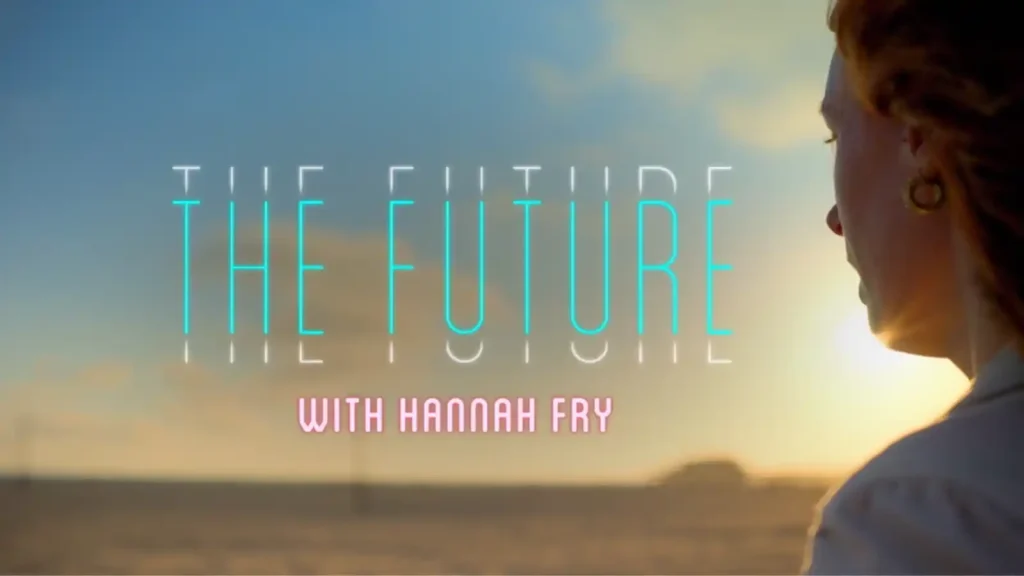
The Future with Hannah Fry episode 6 follows the mathematician and broadcaster from the abandoned towns of Fukushima to the redwood forests of Northern California, asking one urgent question: can rewilding heal the environmental wounds humanity has carved into the planet? Across Japan, the United States and the United Kingdom, Hannah Fry investigates whether handing land back to nature is a genuine path to recovery, or whether the answer lies somewhere more complicated. The episode confronts collapsing animal populations, vanished forests, indigenous knowledge and the strange beauty of a city swallowed whole by the wild.
The stakes are enormous. More than 4,000 animal species have seen their populations fall by two-thirds in the last fifty years, and that destruction is accelerating. The Future with Hannah Fry episode 6 places that crisis at the centre of the story, examining how ploughing land for food and excavating the earth for fuel has gutted the planet’s biodiversity. Against that backdrop, rewilding emerges as a radical proposal: return vast swathes of land to a wild, pre-cultivated state and let natural systems rebuild themselves.
What makes the episode so compelling is its refusal to treat rewilding as a simple fix. Fry moves between the eerie wilderness reclaiming Fukushima, the salmon rivers of the Yurok tribe, a humble green roof in the City of London, and a community-owned valley in southern Scotland. Each location tests a different theory about how humans and nature should coexist. By the end, the question shifts entirely, from how much land we should surrender to whether separation from nature was ever the right idea at all.
The episode opens in the silent towns near the Fukushima nuclear power plant, abandoned for over a decade after the 2011 catastrophe. In 2011, tens of thousands of people fled their homes to escape radioactive contamination from the plant, which had been severely damaged by a tsunami. They left so suddenly that everyday objects remain frozen in place. The sight of slippers still sitting where their owners stepped out of them lands as quietly devastating.
What happened next reveals something startling about the planet’s capacity to recover. As humanity retreated from these towns, plants and animals advanced, turning streets and homes back into wilderness. The balance between buildings and nature has flipped in a landscape that was once thoroughly urban. Fry describes the effect vividly: it is like watching a place being swallowed by nature, engulfed and absorbed until the human world barely registers.
This accidental experiment offers a glimpse of what the Earth looks like when people are removed from the equation. The Future with Hannah Fry episode 6 frames Fukushima as both a warning and a strange source of hope. It poses a haunting choice, asking whether this is a vision of a future with humanity all but eliminated, or whether something about its wild resurgence might serve as genuine inspiration.
The Future with Hannah Fry episode 6
The Trophic Cascade That Explains Why Single Species Matter So Much
Before travelling further, Fry uses her mathematician’s instinct for patterns to explain why ecosystems are so vulnerable. Species never exist in isolation. They perform an intricate, finely balanced dance with one another, and removing even one participant can trigger consequences that ripple across the entire web of life. Ecologists call this a trophic cascade, and the concept sits at the heart of the episode.
She illustrates it with a real collapse from a Utah national park in the first half of the twentieth century. A surge of new visitors damaged the local cougar population. With fewer predators, deer numbers exploded, and because deer graze on almost everything in sight, the diversity of greenery collapsed. That single shift then rippled outward to harm butterflies, birds and reptiles. One disturbance near the top of the food chain cascaded all the way down.
Yet the same delicate network that looks fragile can also be a source of resilience. Certain keystone species, when reintroduced at the right time and place, can send positive effects cascading both upwards and downwards through an ecosystem. This insight reframes the entire rewilding debate. Recovery does not always require rebuilding everything at once; sometimes restoring one carefully chosen species can revive an entire system.
Why the Yurok Tribe’s Salmon Rivers Reveal a Deeper Vision of Rewilding
In Northern California, Fry meets members of the indigenous Yurok tribe, who are using heavy diggers to restore the habitat of the local salmon. Here, salmon are a keystone species, functioning as both predator and prey, and their decline carried catastrophic consequences. After European settlers arrived, they logged the redwood forest to build new towns and cities, clearing an estimated 90 to 95 percent of the old-growth redwoods. The scale of that loss stops Fry mid-sentence.
The damage went beyond the trees. Settlers straightened the creek to make shipping logs easier, turning a living, meandering river into little more than a canal. Frankie Myers, vice chairman of the Yurok tribe, explains the impact in plain terms: instead of miles of healthy habitat where juvenile salmon could thrive and spawn, the fish had almost nothing, and the population began collapsing immediately. The Yurok had always depended on salmon for food and income, and as the fish vanished, the community faced disaster.
The human cost was brutal. Frankie’s ancestors were forced into the logging industry simply to survive, joining the very trade that was destroying their landscape. He recounts his grandmother working in a restaurant that fed the logging crews, describing it as heartbreaking work undertaken because no other options existed. It was, in his words, change or die, and many Yurok did die, with a third of the tribe lost during the tuberculosis era. The land’s wounds and the people’s wounds became impossible to separate.
Restoring the Creek and the Return of the Salmon
The Yurok response to that history is now reshaping the river itself. Rather than maintaining one straight, fast-moving stream, the restoration recreates natural meanders that produce dozens of tiny habitats with varied water speeds. Juvenile salmon are small and need small homes scattered everywhere, and rebuilding those bends is the only way to provide them. The work is slow, deliberate and rooted in an understanding of what the fish actually require.
The results arrived almost instantly. As one excavator operator carved out a side channel, a pair of adult salmon waited nearby, ready to spawn the moment he finished and cleared the creek. That image, of fish queuing for their restored habitat, captures the speed at which nature can rebound when given the right conditions. The Future with Hannah Fry episode 6 returns repeatedly to this theme of rapid recovery.
Nature also proves it has its own plans. After the tribe replanted native species along the banks, elk arrived within a week and ate almost everything down to the roots, leaving only droppings as evidence. Frankie laughs it off as a collaboration with nature rather than a setback, and on cue a bull elk wanders into view during filming. For the Yurok, this is not a problem to be solved but a relationship to be honoured. Elk, deer, salmon and condor all have roles, and so do humans.
The Yurok Philosophy That Challenges Western Ideas of Wilderness
The most provocative idea in this section is philosophical rather than ecological. The Yurok plan to remove obsolete hydroelectric dams on the Klamath River so salmon can travel far upstream, and to bring back the condor, an apex scavenger they consider sacred. But the deeper motivation reframes the entire purpose of conservation. They undertake these projects because they believe humans were placed on Earth to keep the balance of the world around them.
Frankie articulates a worldview that directly contradicts the Western instinct to fence nature off from people. Just as salmon, elk, deer and condor each have a role in the ecosystem, he argues, humans have a role too. Humans are part of this world and are supposed to be here. His most striking claim turns the conventional definition of wilderness on its head: a true wilderness, he insists, only exists if humans also exist within it.
Fry is visibly moved by the inseparability of the Yurok and their river. What happened to the land happened to the people, until the land itself almost seems to speak through them. The encounter leaves her with an unsettling personal question about all the places worldwide that have no community to champion them. She wonders aloud where her own patch of land is, the one she should be fighting for, and that question carries her back toward the city.
Why Urban Rewilding Could Matter More Than Bison and Wolves
Returning to her urban world, Fry confronts a demographic reality that reshapes the rewilding conversation. More people now live in cities than outside them, and that figure is projected to reach 70 percent of humanity by 2050. If most of us live in cities, then the future of biodiversity may depend on what happens in concrete landscapes rather than remote wilderness. The episode takes this idea seriously.
Cities already contain ambitious green schemes, from the vertical forest in Milan to the High Line in New York City, built on an abandoned railway viaduct, and the Supertree Grove in Singapore’s Gardens by the Bay. These are bold and beautiful, but they are also expensive and resource-hungry. Ecologist Dr Nathalie Pettorelli, meeting Fry on the largest green roof in the City of London, is unconvinced that spectacle equals value. Rewilding, she argues, is not about being pretty or aesthetic; it is about function, about making ecosystems work better and deliver more.
Her demonstration delivers a gentle blow to Fry’s own efforts. The weedy, unglamorous green roof costs almost nothing to maintain, runs by itself and quietly provides shelter and food for numerous species. Fry admits she spent two thousand pounds installing a tiny engineered green roof on her own house, only to learn she could have achieved similar results with little more than mud. The lesson is that meaningful conservation can come from doing very little, and that high-tech solutions often waste resources for marginal gain.
The Hidden Biodiversity Thriving in London’s Back Gardens
Pettorelli’s argument carries a surprising statistic about the capital. In London, nearly a quarter of all land is made up of private gardens, a vast green resource before you even count parks, railway tracks and other overlooked spaces. These scattered patches, if better connected, could make a real difference for the wider European ecosystem. The land worth fighting for, in this view, might be our own back yards.
The city turns out to be far richer in wildlife than its reputation suggests. London is a hotspot for the stag beetle, a species struggling across northern Europe yet thriving in the capital. It also supports healthy populations of hedgehogs and badgers, not merely the familiar urban fox. Fry is genuinely astonished to learn badgers roam London, and the revelation reinforces a counterintuitive truth: some cities harbour more rare and important biodiversity than landscapes considered far more rural.
This reframing matters because it democratises rewilding. Our wellbeing and livelihoods rely on connection with countless other species, and from pollination to water purification, everything that defines a liveable environment rises and falls with nature. Rewilding, therefore, is not only about distant bison and wolves. It applies to every ecosystem, including the urban one, which means ordinary people in ordinary neighbourhoods have a direct stake in the outcome.
Inside the Tarras Valley Rewilding Project Transforming Southern Scotland
The final journey takes Fry to the degraded moors of southern Scotland, where heavy agricultural land use, pesticides and machinery have driven a steep decline in species worldwide. The untamed beauty of the landscape is deceptive. For over a century, this land was owned by a single family and used mainly for grouse shooting, a business that drained bogs, burned bracken and suppressed predators until biodiversity collapsed.
When even the grouse began to decline, the loss of jobs hit the nearby town of Langholm hard. The community responded with extraordinary ambition, raising six million pounds to buy what is now the Tarras Valley, a 10,000-acre stretch of community-owned land. The project insists that nature restoration and economic survival can coexist, generating sustainable income through grazing animals, ecotourism, adventure tourism experiences and potentially carbon credits earned through restoration work.
Fry probes the human tension at the core of the scheme, asking how people who have worked this land their whole lives feel when outsiders arrive declaring everything must change. The answer lies in a deliberately democratic model of ownership that invites the community into difficult conversations rather than imposing decisions. Crucially, the money generated flows back to the community rather than into private hands, providing benefits for a far wider group of people than grouse shooting ever did.
What Nature’s Rapid Recovery in Tarras Valley Proves About the Future
The early signs of recovery in Tarras Valley are striking. The project has planted native trees, created havens for wildlife and blocked drainage ditches so that peat bogs can recover. After roughly ten years, the landscape is shifting into a mosaic of habitats, with pockets of returning trees mingling among heather and bracken. Nature, given space, is steadily reclaiming ground that had been managed into barrenness.
The clearest evidence comes from the skies. The team has received numerous reports of golden eagles visiting the valley, a moment that genuinely thrills Fry. Insects, birds and larger wildlife are returning as the habitat diversifies. It will take many years before Tarras Valley becomes a truly healthy and diverse environment for both its people and its wildlife, but the trajectory is unmistakable, and the central lesson is that nature can recover at speed when given a real chance.
The Future with Hannah Fry episode 6 reinforces this point through Fukushima’s wildlife. Ecologist Dr Akira Yoshioka monitors the restricted zone with careful attention to radiation levels, limiting visits to an hour at a time. His camera traps reveal a boom in dragonflies, and studies confirm a surge in mammals. Wild boar, macaques, raccoons, badgers and even bears are flourishing with people removed from the equation, offering vivid proof of nature’s resilience and capacity to revive.
The Surprising Conclusion That Reframes the Entire Rewilding Debate
By the end of her journey, Fry arrives at a conclusion that overturns the question she started with. Fukushima forced humans and nature completely apart, and that separation initially seemed like the purest form of rewilding. But she comes to see a dangerous habit in how we think, the assumption that tarmac roads and concrete buildings are somehow distinct from nature rather than part of it. Treating ourselves as separate, she argues, is a fundamental mistake.
This is where the episode’s title question finds its real answer. Simply handing land back to nature and abandoning it may not be the right way to confront the crises we face. We can help nature rebuild and find a new balance, but there are limits to what walking away can achieve. The Yurok understood this all along: humanity and nature are not separate, and a wilderness without humans may be no true wilderness at all.
The Future with Hannah Fry episode 6 closes on a quietly radical idea. Humanity and nature are not opposing forces to be kept apart, because we are of this Earth. Fry suggests that only by recognising ourselves as part of the planet’s ecosystem, rather than its masters, can we secure a lasting place within it. Rewilding, in the end, is less about retreating from the natural world than about finally rejoining it.
FAQ The Future with Hannah Fry episode 6
Q: What is rewilding and how does it work?
A: Rewilding returns large areas of land to a wild, pre-cultivated state and lets nature take the reins again. Instead of intensive management, it restores natural systems so ecosystems can repair themselves and wildlife can return. The goal is function rather than appearance, making ecosystems work better and undoing damage humans have inflicted on the environment.
Q: What happened to nature in Fukushima after the nuclear disaster?
A: After tens of thousands of people fled radioactive contamination in 2011, plants and animals reclaimed the abandoned towns. The balance between buildings and nature flipped, with greenery engulfing the once-urban landscape. Wild boar, macaques, raccoons, badgers and even bears now thrive there, proving nature can recover quickly once people leave the equation.
Q: What is a trophic cascade in an ecosystem?
A: A trophic cascade happens when a change near the top of the food chain ripples through every level below it. In a Utah national park, declining cougars let deer numbers explode, which stripped greenery and harmed butterflies, birds and reptiles. Removing a single species can therefore trigger consequences across an entire living network.
Q: Why are keystone species so important for rewilding?
A: Keystone species hold ecosystems together, so reintroducing just one at the right time and place can revive an entire system. Their effects cascade both upwards and downwards through the food chain. This means recovery does not always require rebuilding everything at once, making targeted reintroduction one of rewilding’s most powerful tools.
Q: How are the Yurok tribe restoring their salmon rivers?
A: The Yurok use heavy diggers to recreate the river’s natural meanders, replacing one straight, fast stream with dozens of small habitats at varying speeds. Juvenile salmon need these tiny homes to survive and spawn. The results were immediate, with adult salmon waiting beside excavators to spawn the moment the work finished.
Q: What caused the salmon population to decline in Northern California?
A: European settlers logged 90 to 95 percent of the old-growth redwoods to build towns and cities. They also straightened the creek to ship logs, turning a living river into little more than a canal. This destroyed the spawning habitat juvenile salmon needed, so the population began declining almost immediately.
Q: How does the Yurok view of wilderness differ from Western ideas?
A: The Yurok believe humans were placed on Earth to keep the balance of the world around them. Rather than fencing nature off from people, they argue humans have a role in the ecosystem just like salmon, elk and condor. In their view, a true wilderness only exists if humans also exist within it.
Q: Can rewilding work in cities and not just remote wilderness?
A: Yes, urban rewilding may matter more than ever, since 70 percent of humanity is expected to live in cities by 2050. Nearly a quarter of London’s land is private gardens, and connecting these patches benefits the wider ecosystem. London already supports stag beetles, hedgehogs and badgers, sometimes outperforming rural areas for biodiversity.
Q: Are expensive high-tech green spaces worth the cost?
A: Often not, according to ecologist Dr Nathalie Pettorelli. Rewilding is about function, not appearance, and a simple weedy green roof can shelter and feed many species while costing almost nothing to maintain. Costly engineered solutions use up resources for marginal gain, whereas meaningful conservation can come from deliberately doing very little.
Q: How is the Tarras Valley rewilding project transforming southern Scotland?
A: The community raised six million pounds to buy 10,000 acres once used for grouse shooting. They plant native trees, block drainage ditches to recover peat bogs and create wildlife havens. After roughly ten years, golden eagles are returning and income flows back to the community through ecotourism, grazing and carbon credits.