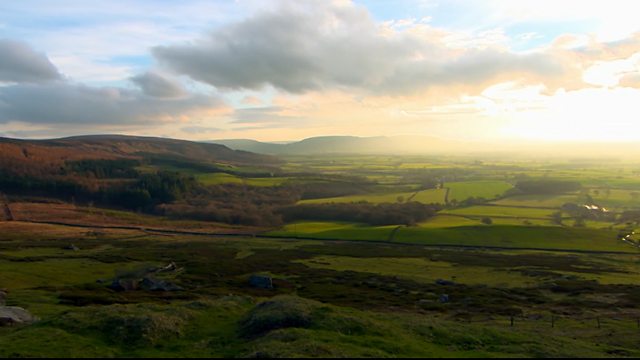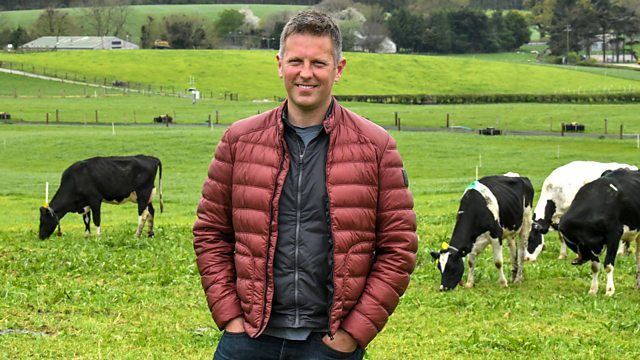
Countryfile – Hampshire’s Secret Wild Side pulls back the curtain on a county most people only know for its ports and harbours, revealing ancient woodlands, heathland, chalk streams and river valleys where rare wildlife quietly thrives. Matt Baker and Charlotte Smith travel beyond the world-famous New Forest to meet the rangers, photographers, ecologists and volunteers chasing some of Britain’s most elusive creatures.
Across a single day, they track returning sand martins, hold Britain’s rarest snake, find one of the country’s scarcest beetles, and watch a restored river breathe new life into wild brown trout. Alongside this, Charlotte investigates how looming visa changes threaten British sheep shearing and the welfare of more than a million animals.
This is countryside television built around patience and reward. The wildlife here rarely announces itself. Instead, it hides in sandbanks, decaying beech, deep heather and the canopy of mixed woodland, surfacing only for those who know exactly where and how to look.
What emerges is a portrait of a fragile, dynamic landscape held together by quiet expertise. Every encounter in Countryfile – Hampshire’s Secret Wild Side underlines the same truth: the wilder side of this county survives because dedicated people refuse to let it disappear.
Tucked behind Blashford Lakes Nature Reserve sits an old sandpit that locals treat as an ordinary spot for a day out. Few realise that a genuine wildlife comeback is unfolding within its shifting banks. After roughly 25 years away, sand martins have reclaimed the site and begun nesting again.
People and wildlife ranger Jim Day was the first to spot them. Working the busy May bank holiday weekend, he noticed birds slipping in and out of the sandbank partway through the morning. The discovery mattered because these martins had not nested there for decades. Natural erosion, not human intervention, made it possible. The slope had worn away into a sheer face, exactly the profile sand martins seek.
That detail captures a recurring theme across Hampshire’s secret wild side. Wildlife often returns when habitats are simply allowed to change. Sand martins have been declining locally, so their reappearance on such a busy bank, surrounded by sledges and visitors, feels remarkable. The birds, it turns out, do not mind the crowds at all.
Weighing barely more than a £2 coin, these tiny travellers fly thousands of miles from Sub-Saharan Africa to breed in the New Forest. Their return is only the first hurdle. Raising young in an exposed sandbank is a far harder test, and survival is never guaranteed.
Countryfile – Hampshire’s Secret Wild Side
A Wildlife Photographer Captures Evidence of New Life in the Sandbank
To prove the colony was breeding, local wildlife photographer Steve Laycock set up at a commanding vantage point above the pit. His patience offered Matt a masterclass in reading the birds. Watching the holes closely, Steve counted around 12 nesting pairs, with roughly six very active burrows suggesting chicks inside.
The proof arrived in motion. As martins ferried damselflies in, they carried faecal sacs out, cleaning the nest in a continuous cycle. That waste removal, unglamorous as it sounds, confirmed live chicks. Each active hole might hold four to five young, with a second brood pushing the season’s total to eight or ten chicks per pair.
The numbers are sobering. Around 80% of young sand martins do not survive their first year. This high mortality rate makes every successful fledgling precious, and every breeding season a small victory against long odds.
Then came an unexpected guest. A white-tailed eagle drifted into view, drawing buzzards that rose to mob it. The moment was rare and electric. This female, released on the Isle of Wight in 2021, was only the second of her kind known to cross the Channel. For Steve, encounters like this feed an endless curiosity. The more he learns, he says, the more he realises how much remains unknown, and that never-ending learning curve keeps him coming back.
Restoring the River Test Gives Wild Brown Trout Room to Thrive
To the north of the New Forest, the River Test flows through the Mottisfont estate, carrying one of the planet’s rarest habitats. Chalk streams are globally scarce, and the Test is among the most characteristic. To the untrained eye its surface looks empty, yet beneath it lurks a master of camouflage: the wild brown trout, a living indicator of the river’s health.
National Trust countryside manager Dylan Everett is working to return the Test to a more natural state. He explains that brown trout depend on different parts of the river at different life stages. Young fry need slow margins and cover from predators. As they grow, they require faster, oxygen-rich water where they can feed on the insect life above and within the stream. He calls the species a miracle of evolution, perfectly adapted to chalk-stream conditions.
The problem lies in the river’s history. In the 17th century, this stretch was straightened into a man-made channel to supply the estate with water. Pretty, perhaps, but uniform in width and edged with hard revetments. Such channels offer little of the wet-and-dry margin that water voles, fly life and fish all rely on. Against mounting threats of pollution, abstraction, rising temperatures and falling water levels, restoring natural complexity has become essential.
The transformation is striking. In 2023, the National Trust and Wessex Rivers Trust began rebuilding the channel, adding bends, installing gravels and strategically placing large amounts of woody debris. The team remapped the river’s course, putting in deliberate wiggles so the water itself drives the dynamism. Sourced locally, the debris looks as though it has rested there forever, yet most has been in place for under a year. The river, in Dylan’s words, is in charge again.
Volunteers and Rangers Keep the Restored Chalk Stream Healthy
Maintaining this improved habitat falls to Mottisfont’s volunteers, overseen by ranger Alex. Their work is hands-on and often unglamorous. One key task is removing monkeyflower, a pretty but invasive North American plant that escapes from gardens and lodges its seeds in features along the river. It is easiest to spot in June, once it flowers, so crews wait and then pull out as much as they can.
The pace of change astonishes even those doing the work. Logs placed only two years earlier already host a wealth of plants, proof of how quickly a dynamic landscape responds. Alex points to the most visible rewards: more birds, more herons, ducklings sheltering in fresh vegetation, and a rising abundance of insect life from bumblebees to mayflies along the water’s edge.
The trout will take longer. Alex is patient, trusting the old principle that if you build the habitat, the wildlife will come. The goal is a river capable of supporting every stage of the fish’s life cycle, and the early signs suggest the strategy is working.
This blend of agricultural life, conservation and community labour sits at the heart of country life along the Test. The river thrives not by accident but through steady, repeated effort from people who care deeply about the water.
The Fishing Hut Where Frederic Halford Shaped Modern Fly Fishing
The Test has long drawn people to its banks, and few spots carry as much history as the Oakley beat. Former riverkeeper Neil Swift, now with the Wessex Rivers Trust, guides Charlotte to a modest-looking fishing hut that holds outsized significance in the angling world.
The hut was built for Frederic Halford, known affectionately as the High Priest of the Dry Fly. A celebrated angler and author, Halford popularised and codified much of how anglers fly fish today, especially the upstream dry-fly technique. His approach demanded a deep understanding of both the fish and the insects they feed on, using a range of flies designed to imitate whatever is hatching above the river on a given day.
Neil offers Charlotte a bankside lesson before letting her into the water, hook removed for safety. Her casting is uneven and self-deprecating, but the setting is glorious. Fishing here is strictly catch and release. Any trout would be brought to the net and unhooked in the water, never lifted out, before being sent on its way.
Charlotte catches nothing, and admits she got cocky too soon. Yet the experience captures what makes this place special. It is a gloriously rich habitat, rare in global terms, and watching it change in response to careful restoration is its own reward. The fishing community and the wildlife share the same waters, and both depend on the river staying healthy.
Deadwood and Rare Beetles Reveal the New Forest’s Hidden Micro-World
Across the New Forest National Park, fallen trees become something far more valuable than waste. As deadwood decays, it transforms into a hidden micro-world. The forest holds some of Britain’s finest deadwood habitats for insects and some of Europe’s most important deadwood fungi communities. To appreciate them, you have to get close.
Professor Russell Wynn, chair of the New Forest Biodiversity Forum, explains the shift in thinking. In recent decades, policy has favoured leaving most deadwood in place. Beech woodland is especially valuable, described as ecological gold dust for biodiversity. A fallen beech, rotted from the inside by fungi, becomes home to birds, bats and insects, while standing dead trunks shelter voles and feed the slow work of decomposition. Pine martens, now back in the forest, even use the fallen timber as runways to pounce on rodents below. The wood, as Matt puts it, has a second life in death.
The Biodiversity Forum is a £1 million charity-funded initiative training volunteers to become citizen scientists. They learn to identify and record the forest’s insect life, building the data needed to manage the landscape wisely. Helping sharpen their skills is ecologist Dr Paul Brock, who has spent a lifetime studying Britain’s insects.
The finds are spectacular. Paul shows the group Ampedus cinnabarinus, a nationally rare beetle whose larvae develop in dead beech, its colour vivid and unmistakable. Volunteers then roll a log to reveal a large female stag beetle, nationally scarce and uncommon in such spots. The day’s showstopper is a noble chafer, one of Britain’s rarest beetles, able to survive only where ancient trees and deadwood are left to flourish. These insects are saproxylic, dependent on deadwood, a group numbering around 2,000 species in the UK.
Citizen Scientists Build a Living Record of the Forest’s Future
Surveys like these are not occasional outings. At peak season, the Biodiversity Forum runs roughly one event a week, blending training days with group surveys of restored habitat. Every record feeds a growing dataset that shapes how the forest is managed for conservation in the future.
Russell frames the stakes in long terms. The New Forest is the most biodiverse landscape in the country, yet it is not immune to the pressures squeezing the wider countryside. Right now, the forest sits at peak deadwood for the fungi and invertebrates that love it. In 50 or 100 years, the picture could look entirely different, and some species thriving here today may shift north toward Scotland.
That is why the team refuses to view the forest as an island. As species come and go, conservationists are already thinking about how the New Forest connects to the wider landscape, and how wildlife can move safely through the countryside. The data being gathered now is what makes that planning possible.
This is country life as careful stewardship. An army of volunteers, recording insects week after week, gives the forest a measurable heartbeat. Without them, managers would be guessing. With them, every decision rests on evidence drawn directly from the ground.
How Visa Rule Changes Threaten British Sheep Shearing and Animal Welfare
Away from Hampshire, Charlotte investigates a very different countryside crisis. In East Sussex, third-generation farmer Frank Langrish faces the enormous task of shearing around 4,000 Romney and Romney-cross sheep. The job is one of the most important in the sheep-farming calendar, vital for keeping flocks healthy through summer.
The timing is brutal. Carrying heavy fleeces, sheep that lie down can struggle to rise and may die within a short time. Flystrike compounds the danger, as hotter, humid weather draws flies that can leave animals eaten alive by maggots. Getting wool off quickly is a matter of life and death, yet shearing only works when the sheep are dry, making the short window even tighter. Every year, around 15 million sheep across Britain need shearing, usually between May and July.
Most of that work falls to British shearers, often farmers fitting it around other duties. But for large flocks at pace, farmers like Frank rely on a small specialist workforce from Australia and New Zealand. These professionals, working around their own longer seasons, can shear hundreds of sheep a day. Frank recalls a 24-year-old shearing 400 daily on his farm. Their fitness is exceptional, often likened to running three marathons every day, and the economics make sense.
Antipodean shearers have been a fixture of British farming for decades, their speed and technique long admired. When visa rules changed in 2011, the Government introduced a concession scheme so overseas shearers could keep working. That support is now under threat for British sheep farming, with major consequences for the wider agricultural life of the countryside.
Inside the Welfare Crisis Facing 1.5 Million Sheep
In February, the Government announced it would not allow foreign shearers to work over the summer, ending 14 years of concessions and expecting British shearers to fill the gap. The warning signs were stark. Before a Westminster committee, Liberal Democrat MP Alistair Carmichael pressed Defra’s most senior civil servant, Paul Kissack, on contingency plans for up to 1.5 million sheep that might go unshorn. The candid reply was that no plan was known.
Less than a week later, the Government reversed course with a temporary reprieve, allowing overseas shearers in for one final summer. The concession now carries a visa fee of nearly £700, paid by three New Zealanders on one shearing gang. British contractor Ian Lucas, who has employed overseas shearers for over 20 years, calls it the best of a bad job. His team of five expects to shear around 50,000 sheep across a three-month stay.
The training problem is real and stubborn. You cannot, as Ian notes, send someone from the Jobcentre to learn shearing overnight. With only a three-month domestic season, becoming professional can take three to five years, and learners shearing 30 or 40 sheep a day earn little on per-sheep pay. According to the National Association of Agricultural Contractors, only 50 to 75 overseas shearers came last year, yet between them they handle up to 1.5 million sheep.
Association CEO Jill Hewitt accepts the sector has failed to train enough professionals over 14 years, but argues the maths is unforgiving. A single professional can shear perhaps 20,000 sheep in a season. The short season, the travel demands of the world circuit, and the difficulty of building a family around it all deter newcomers. She simply wants the current arrangement extended, since it appears to work. Frank, meanwhile, fears for smaller farmers who may not secure any shearers at all, warning that the welfare impact could be huge.
Tracking the Lesser-Spotted Woodpecker, One of Britain’s Most Elusive Birds
Back in Hampshire, the secret wild side offers one of its hardest quarries: the lesser-spotted woodpecker. Living high in the New Forest canopy, this red-listed bird is so scarce that most birdwatchers have never seen one. For much of the year it is effectively invisible in the treetops, betrayed only by its call.
Retired ornithologist Ken Smith and his wife Linda have run the Woodpecker Network for 12 years. Their self-funded project tracks how many chicks successfully leave the nest, building a clearer picture of how this internationally recognised threatened species is faring. Around 50 volunteers now monitor nests across the UK, all working under British Trust for Ornithology guidelines to minimise disturbance.
Their results are striking. Since starting, they have monitored 200 nests, almost as many as the combined efforts of ornithologists since the Second World War. The New Forest is a clear stronghold, its mixed deciduous woodland providing abundant spring food for feeding chicks. Yet warming springs bring earlier caterpillars, and the birds are finding it increasingly hard to keep pace.
The final nest of the season holds the day’s tension. Ten days earlier, five chicks had dropped to two. Using a nest-inspection camera Ken designed about 15 years ago, a slim probe with a tiny camera and LED lights, he threads the lens into a one-inch hole. The Wi-Fi feed reveals two surviving chicks, well grown, one male and one female. They have made it. The couple’s ultimate aim is simple and urgent: to secure the future of lesser-spotted woodpeckers in Britain so they remain for everyone.
Holding Britain’s Rarest Snake on the Heathland Frontier
The day’s final mission carries Matt onto a sea of heather and gorse, a habitat rarer than rainforest and one of the last strongholds of the smooth snake. This is Britain’s rarest reptile, so secretive that most people never see one. With National Trust ranger Cat Hadler and reptile expert Howard Inns, Matt sets out to change that.
The heathland offers everything a smooth snake needs: open ground to bask, dense heather to hide beneath, sandy substrate to burrow through and plenty of lizards to hunt. To monitor reptiles, rangers survey a network of refugia, black corrugated sheets that absorb heat and shelter wildlife beneath. The only missing ingredient is sunshine. Under grey skies, sheet after sheet turns up nothing, logged as vacant.
Then the luck turns. Lifting one final refugium, the team finds a smooth snake. Its eyes are clouded blue, a sign it is preparing to shed, as fluid builds beneath the old skin behind permanently fixed eyelids. Its dark underbelly marks it as female, and at a reasonable size she is close to fully grown. Under strict supervision and wearing a glove, Matt holds her, feeling the muscle of a constrictor that squeezes rather than poisons its prey.
The species is a study in efficiency. Non-venomous and cold-blooded, smooth snakes eat surprisingly little, perhaps fewer than ten meals a year, since they do not burn energy heating their bodies. Their survival depends on keeping heathland open and connected, clearing invading pine and birch, and continuing research that takes more time than conservationists fear they have. Holding Britain’s rarest snake, Matt sees plainly how precious this fragile landscape is.
Why Hampshire’s Hidden Wildlife Deserves Our Attention
Taken together, the encounters in Countryfile – Hampshire’s Secret Wild Side tell a single, connected story. Returning sand martins, recovering trout, rare beetles, surviving woodpecker chicks and a basking smooth snake are not isolated wonders. They are signs of a landscape that responds, sometimes quickly, when habitats are protected, restored or simply left to follow their own dynamic course.
The human thread is just as important. Rangers, photographers, ecologists, riverkeepers and self-funded volunteers form the backbone of this fragile world. Their patience, expertise and willingness to record what they find give the countryside a voice it could not otherwise have. Conservation here is not abstract. It is sandbanks watched on a bank holiday, monkeyflower pulled from a river, beetles counted under deadwood and cameras threaded into woodpecker nests.
The visa story sharpens the wider point. Whether protecting rare reptiles or shearing 4,000 sheep before flystrike strikes, the modern countryside depends on skilled people and the systems that sustain them. Remove that support, and animal welfare and biodiversity both suffer.
Ultimately, Countryfile – Hampshire’s Secret Wild Side rewards those willing to look closer. Beyond the famous ports and harbours lies a quieter, wilder county, alive with nature and wildlife that most visitors walk straight past. Once you know what hides in the sandbanks, the heather and the canopy, this landscape becomes impossible to ignore, and impossible to take for granted.
FAQ Countryfile – Hampshire’s Secret Wild Side
Q: Why did sand martins return to Blashford Lakes after 25 years?
A: Natural erosion, not human intervention, brought them back. The slope of an old sandpit wore away into a sheer vertical face, creating exactly the profile sand martins need for nesting. Ranger Jim Day first spotted birds slipping in and out during the busy May bank holiday weekend. Their return is significant because the species had not nested there for decades and has been declining locally across Hampshire.
Q: How do you know sand martin chicks are alive in a nest?
A: Watch the activity at the holes. Adults carry food such as damselflies into the burrow and remove faecal sacs on the way out, cleaning the nest in a constant cycle. That waste removal confirms live chicks inside. Wildlife photographer Steve Laycock counted around 12 nesting pairs at the sandpit, with roughly six very active holes signalling chicks.
Q: What makes chalk streams like the River Test so rare?
A: Chalk streams are globally scarce, and the River Test ranks among the most characteristic. They support wild brown trout, which act as living indicators of the river’s health. However, the streams face mounting threats from pollution, water abstraction, rising temperatures and falling water levels, making restoration essential to keep their specialised wildlife thriving.
Q: How was the River Test restored for wild brown trout?
A: In 2023, the National Trust and Wessex Rivers Trust rebuilt a straightened 17th-century channel. They remapped the river’s course, added deliberate bends, installed gravels and placed large amounts of woody debris strategically. Sourced locally, the debris looks as though it has always been there, yet most was added within a year. The result restores natural flow variety that brown trout depend on across every life stage.
Q: Why is deadwood so important in the New Forest?
A: Decaying wood creates a hidden micro-world of life. The New Forest holds some of Britain’s finest deadwood habitats for insects and Europe’s most important deadwood fungi communities. Fallen beech, described as ecological gold dust, shelters birds, bats and insects, while standing dead trunks feed slow decomposition. Around 2,000 UK insect species are saproxylic, meaning they depend entirely on deadwood to survive.
Q: What rare beetles live in the New Forest’s deadwood?
A: Several nationally scarce species rely on it. Ampedus cinnabarinus, a vividly coloured rare beetle, develops as larvae inside dead beech. Volunteers also found a large female stag beetle, uncommon in such spots, and a noble chafer, one of Britain’s rarest beetles. The noble chafer survives only where ancient trees and deadwood are allowed to flourish undisturbed.
Q: Why are visa changes threatening British sheep shearing?
A: The Government is ending 14 years of visa concessions that let skilled Australian and New Zealand shearers work in the UK. Although only 50 to 75 overseas shearers come each year, they handle up to 1.5 million sheep between them. Without them, farmers warn of a serious animal welfare crisis, since untreated heavy fleeces and flystrike can kill sheep within a short time.
Q: How long does it take to train a professional sheep shearer?
A: With only a three-month British season, becoming professional typically takes three to five years. Trainees shearing just 30 or 40 sheep a day earn little on per-sheep pay, which discourages newcomers. By contrast, a professional can shear around 20,000 sheep in a season. British Wool reported that out of roughly 900 trainees last year, only 14 reached gold-seal standard.
Q: Why is the lesser-spotted woodpecker so hard to see?
A: It is Britain’s smallest woodpecker and spends most of the year high in the treetops, effectively invisible. Red-listed due to decline, it is disappearing across many parts of England and Wales, so most birdwatchers have never seen one. The New Forest remains a stronghold, where Ken and Linda Smith’s Woodpecker Network has monitored 200 nests to track how the threatened species is faring.
Q: What makes the smooth snake Britain’s rarest reptile?
A: The smooth snake survives only on rare heathland, a habitat scarcer than rainforest, and stays hidden in deep heather and sandy burrows. Non-venomous, it is a constrictor that squeezes prey such as lizards and small mammals. Being cold-blooded, it eats surprisingly little, often fewer than ten meals a year. Survival depends on keeping heathland open, connected and free of invading pine and birch.