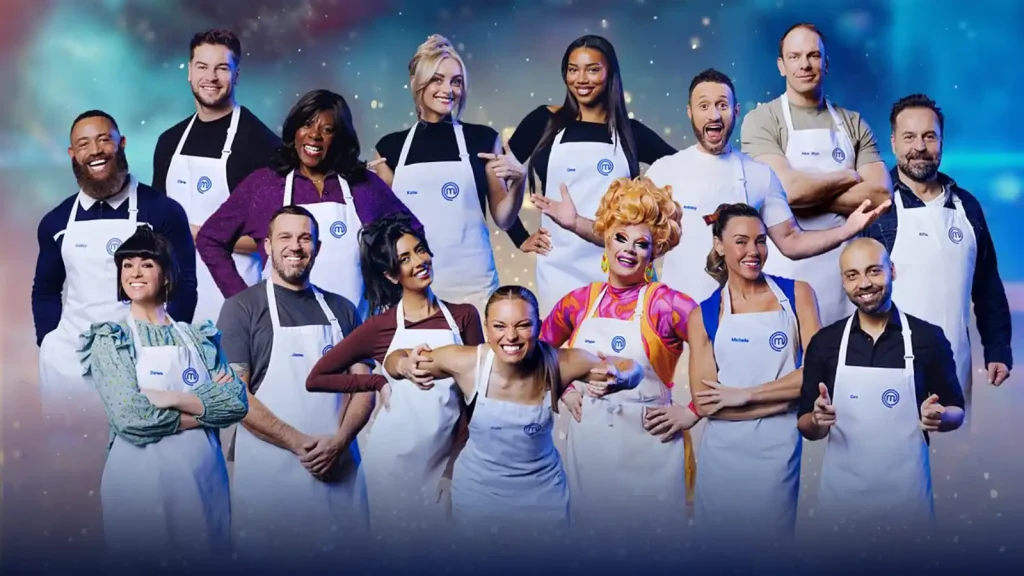
Celebrity MasterChef 2025 Episode 11 marks the intensifying stage of the semi-finals where only the seven best cooks remain to battle for culinary supremacy. The atmosphere in the kitchen has shifted perceptibly, evolving from the initial excitement of the heats into a serious test of skill, endurance, and gastronomic creativity. As the competition narrows, the remaining celebrities are acutely aware that one mistake could end their journey, yet the promise of the finals looms tantalizingly close. The pressure ramps up significantly as the contestants face two distinct challenges designed to test their ability to interpret heritage and convey emotion through food.
This stage of the competition requires more than just following a recipe; it demands that the cooks pour their hearts onto the plate. The judges, John Torode and Grace Dent, are looking for dishes that tell a story and evoke genuine feeling. To test this capacity for emotional cooking, the semi-finalists are first introduced to an Italian culinary icon whose career spans over half a century. The challenge is not merely technical but spiritual, requiring the celebrities to respect humble ingredients while executing complex techniques. Following this masterclass, the safety net is removed, and the remaining cooks must rely on their own instincts to save themselves from elimination.
The first challenge of the episode revolves around the concept of “heart,” a central theme in Italian cuisine. The celebrities are tasked with recreating recipes provided by a guest chef who embodies the warmth and history of Italy. These are not standard restaurant dishes but recipes deeply rooted in family tradition and regional history. The complexity lies in the deception of simplicity; while the ingredients—cabbage, aubergines, chestnuts—appear modest, the methods required to transform them into competition-worthy plates are exacting. This is a test of the celebrities’ ability to listen, learn, and execute under the watchful eye of a master.
Survival in this round offers a significant reward: the “Cook of the Day” will bypass the second challenge entirely, securing an automatic place in the next stage of the competition. This immunity adds a layer of competitive tension, as the celebrities are not just fighting to stay in but fighting to skip the jeopardy of the elimination round. For those who do not secure the top spot, the kitchen becomes a battleground where they must produce a dish inspired by a place they love. From the streets of New York to the coast of Scotland, the second challenge allows the cooks to showcase their personal culinary identities.
However, before they can transport the judges to their favourite destinations, they must first master the art of Italian cooking. The guest chef brings a menu that ranges from savoury stuffed pastas to unusual vegetable-based desserts. Each celebrity is assigned a specific dish that challenges a different aspect of their culinary repertoire, whether it be butchery, pastry work, or the delicate handling of seafood. The margin for error is non-existent, and the feedback from the judges in Celebrity MasterChef 2025 Episode 11 will prove crucial in determining who thrives and who falters.
The presence of a legend in the kitchen elevates the stakes, forcing the celebrities to confront their own insecurities. Some, like actor Jamie Lomas and opera singer Alfie Boe, openly admit to their nerves, while others, like Dawn O’Porter, face the daunting task of preparing a dessert technique they have never attempted before. The dynamic in the kitchen oscillates between focused silence and frantic activity as clocks tick down. John Torode and Grace Dent observe every move, noting who handles the pressure with finesse and who begins to crack under the weight of expectation.
Ultimately, this episode is a celebration of food as a vessel for memory. Whether it is the guest chef’s childhood recollections of gathering chestnuts in the mountains or a contestant’s homage to a family holiday, the narrative threads are woven through the ingredients themselves. The judges emphasize that at this stage, technical proficiency is assumed; what separates the good from the great is the ability to make the diner feel something. As the episode unfolds, we see the transformation of celebrities into chefs, each plate offering a glimpse into their personal journeys and their growing command of the kitchen.
Celebrity MasterChef 2025 Episode 11
The Arrival of Gennaro Contaldo in Celebrity MasterChef 2025 Episode 11
The kitchen doors open to reveal a special guest who is described as Italian cooking royalty: Gennaro Contaldo. With a career spanning over 50 years, Gennaro is widely known for mentoring a young Jamie Oliver and for his passion for authentic Italian cuisine. He has published 15 chart-topping cookbooks and run his own award-winning restaurant, making him one of the UK’s best-loved chefs. His philosophy is simple yet profound: Italian food is about respecting the ingredients. He shares stories of his childhood on the Amalfi Coast, where the sea was his swimming pool and the mountain his garden, emphasizing that his recipes come directly from his heart.
Gennaro’s presence brings an infectious energy to the kitchen, but also a sense of immense responsibility for the celebrities. He explains that they will be cooking recipes that hold deep personal significance to him, dishes filled with history and emotion. The brief is clear: execute these recipes with love and passion. The celebrities are visibly starstruck, with Dawn O’Porter noting the pressure of cooking for such a maestro, and rugby legend Alun Wyn Jones admitting that while he is good at eating Italian food, cooking it is a different matter entirely. The challenge is set: one hour and thirty minutes to recreate Gennaro’s dishes, with the best cook securing immediate safety.
Mastering the Art of Vegetable Desserts
Dawn O’Porter is assigned one of Gennaro’s more unusual creations: a dessert centred around a vegetable. She is tasked with making chocolate aubergines, a dish that might sound strange to the uninitiated but is a regional speciality where Gennaro comes from. The recipe involves slicing aubergines thinly, frying them until slightly crispy, and then layering them with a rich mixture resembling a chocolate mousse. It is described as being similar to a tiramisu but with aubergines replacing the sponge fingers. This dish requires a delicate balance; the aubergines must be cooked perfectly to avoid becoming greasy or soggy.
The technical difficulty of this dish lies in the treatment of the aubergine. As Gennaro points out, aubergines have a habit of soaking up oil like a sponge. If fried at the wrong temperature or for too long, they can become mushy and greasy, reminiscent of cotton wool. Dawn must fry the slices, batter them, and fry them again, a double-frying process that risks retaining too much oil. To accompany this rich, chocolaty stack, she must also prepare an amaretto ice cream. Dawn admits she has never made ice cream before and is aware of the pitfalls, specifically the need for the custard base to be thick and rich before churning to ensure a smooth, creamy texture.
Alun Wyn Jones and the Humble Cabbage
Rugby legend Alun Wyn Jones faces a challenge that celebrates one of the humblest ingredients in the pantry: the cabbage. His task is to prepare a whole stuffed cabbage, a dish born out of necessity and typical of Italian “farmers’ food.” The recipe involves blanching a whole cabbage, carefully taking it apart, and stuffing it with a mixture of pork mince, old salami, and spices. The goal is to ensure that between every leaf lies the correct amount of meat filling to provide maximum flavour. Once reassembled and tied, the cabbage must be boiled, a process that takes time and precision to ensure tenderness without the vegetable falling apart.
This dish is deceptively technical. While the ingredients are rustic—mince, salami, cabbage—the construction requires patience and dexterity. Alun Wyn is described as being “up to his armpits” in cabbage leaves and stuffing, navigating a process he has never attempted before. He notes that he is used to stuffing meat with vegetables, not the other way around. Alongside the cabbage, he must prepare small chicken bites wrapped in cured ham, utilizing leftover pieces of chicken to ensure no wastage. The judges watch closely, noting that cabbage can be tough if undercooked, but the aim is a dish where everything is tender and can be shared family-style.
A Twist on Classic French and Italian Flavours
Katie McGlynn is tasked with a dish that represents Gennaro’s Italian twist on a French classic: duck breast with limoncello. Instead of the traditional duck à l’orange, this recipe utilizes the sweet, sharp lemon liqueur to cut through the richness of the meat. Katie must marinate the duck in limoncello—using a generous amount, as noted by the judges—before cooking it. The technical challenge here is timing and temperature. The duck breast must be rendered so the skin is crispy, but the meat itself must remain tender and pink. Overcooking will result in a tough texture, while undercooking leaves the fat unrendered and the meat raw.
To accompany the duck, Katie must prepare a celeriac and carrot puree and a sauce made from the limoncello reduction. The sauce is critical; it requires reducing the liqueur with the pan juices to create a balance between sweet, sour, and savoury. Katie expresses anxiety about the cooking time for the duck, fearing she might burn it or leave it raw. She decides to delay cooking the meat until the last possible moment to preserve freshness, a risky strategy that adds to the time pressure. Gennaro emphasizes the need for the duck to be rested properly so that blood does not run across the plate when sliced.
Nostalgic Pastries and Technical Custards
Actor Jamie Lomas is given a recipe that evokes deep nostalgia for Gennaro: sweet chestnut-filled pastries. Reminiscent of Gennaro’s childhood spent collecting chestnuts in the mountains, this dessert resembles a mince pie but with a distinct Italian flair. The filling consists of chestnuts, sugar, cocoa powder, rum, and raisins. The pastry itself is the primary hurdle; it must be handled gently. John Torode warns that if Jamie kneads the dough too much, it will become tough and fall apart. The pastry needs to be short and crumbly, requiring a “light hand” during preparation.
Jamie’s challenge is compounded by the accompaniment: a coffee zabaglione custard. This traditional Italian dessert sauce is made by whisking egg yolks and sugar over heat until foamy and light, flavoured here with a drop of coffee. The risk lies in the cooking of the eggs; if undercooked, the flavour of raw egg yolk remains, but if overcooked, the mixture scrambles. Jamie appears visibly stressed, admitting that desserts are not his forte and that the pastry seems to have “a mind of its own.” He struggles with time management, rushing to get his pastries into the oven to ensure they are fully baked before the clock runs out.
The Complexity of Stuffed Pasta and Gnocchi
Two contestants, Ginger Johnson and Alfie Boe, are assigned pasta-based dishes, each presenting unique difficulties. Ginger is tasked with making agnolotti, a type of filled ravioli containing a mixture of beef and pork mince. The dough must be rolled thinly enough to be delicate but sturdy enough to hold the filling without bursting. Ginger needs to produce enough uniform pieces for three portions, a repetitive and fiddly task that tests her dexterity. She serves this with a rustic sweet tomato sauce, which must strike a balance between acidity and sweetness, requiring finesse despite its simple components.
Alfie Boe, whose love for Italian food is well-documented, takes on gnocchi. However, rather than the traditional potato dumplings, he must create discs of gnocchi dough filled with asparagus and courgettes, sealed into parcels. The technical challenge here is twofold: the potato dough must be soft and fluffy, not gluey, and the vegetable filling must be cooked al dente before being encased. If the filling is too hot when placed on the dough, the mixture will melt and disintegrate. Alfie is visibly shaking with nerves, desperate to impress his hero, Gennaro. He focuses on sealing the parcels tightly to prevent them from splitting during the boiling process, finishing the dish with a butter, balsamic, and sage sauce.
Ashley Cain’s Saltimbocca Challenge
Reality star and athlete Ashley Cain is given the task of reimagining a classic saltimbocca. Traditionally made with veal, Gennaro’s version uses lamb cutlets. Ashley must debone and butterfly the lamb cutlets, flattening them out to create a surface for stuffing. The filling is a mixture of Parma ham, cheese, sage, parsley, and basil. This stuffing must set in the fridge before being placed between the cutlets, which are then sealed. The butchery required to butterfly the lamb demands precision, and Ashley is encouraged by Gennaro to be bold and not fear the meat as he tenderizes it.
The cooking of the lamb is the critical variable for Ashley. It must be seared and cooked until the meat is tender but not overdone. If cooked too long, the meat dries out and the cheese filling leaks into the pan; if undercooked, the fat remains unrendered and the meat chewy. Ashley pairs the lamb with garlic and rosemary sautéed potatoes. Throughout the cook, Ashley battles with time, admitting it has never been his friend in the kitchen. He rushes to get the lamb into the oven, hoping the residual heat will finish the meat to a perfect pink.
The Verdict: Selecting the Cook of the Day
As the time runs out, the celebrities present their dishes to Gennaro, John, and Grace. The standard is exceptionally high, with several cooks impressing the judges. Alfie Boe’s gnocchi is praised for its light texture and the “marvellous” combination of butter and sage, earning a “well done” from Gennaro. Ginger’s agnolotti receives accolades for the “porky smokiness” of the filling and the “singing” basil in the tomato sauce, though Gennaro notes the pasta is slightly thick at the edges. Dawn O’Porter’s chocolate aubergines are a triumph; Gennaro is transported back to his childhood, praising the crispy yet spongy texture of the aubergine and the “unbelievable” amaretto ice cream.
However, not everyone succeeds. Katie McGlynn’s duck is undercooked due to her timing issues, though her sauce is praised for its flavour. Ashley Cain’s lamb is deemed “a bit dry” and overcooked, a disappointment given the excellent flavours of the stuffing. The decision for the Cook of the Day becomes a tight race between Alun Wyn Jones, whose cabbage was cooked to perfection, Dawn O’Porter, and Jamie Lomas.
Ultimately, it is Jamie Lomas who takes the title. His chestnut pastries are described as a “work of art” with pastry that crumbles perfectly, and his zabaglione is hailed as a “class act.” Gennaro tells Jamie he has made him proud, and Jamie is granted immunity, leaving the remaining six to face the elimination round in Celebrity MasterChef 2025 Episode 11.
The “Places We Love” Brief
With Jamie Lomas safely through to the next round, the remaining six celebrities face the second and final challenge of Celebrity MasterChef 2025 Episode 11. The atmosphere shifts from the warm, nostalgic glow of Gennaro Contaldo’s masterclass to the sharp reality of elimination. John Torode and Grace Dent set a brief that demands personal storytelling: the cooks must create a dish inspired by a place they love. This could be a holiday destination, a family home, or a specific city that holds emotional resonance. The objective is to transport the judges to that location through the medium of flavour, showing off the skills and finesse learned throughout the competition.
The stakes are absolute; at the end of this ninety-minute cook, one celebrity will be eliminated, missing out on the final six. The judges emphasize that they want to feel “joy on the plate.” This challenge is an opportunity for the contestants to cook food that excites them personally, moving away from assigned recipes to menus of their own design. The variety of inspirations is vast, ranging from the frantic energy of New York City to the rugged coastlines of Scotland and the sun-drenched hills of the South of France.
Global Inspirations: New York and The South of France
Ginger Johnson chooses to take the judges to New York City, specifically Koreatown. She describes a perfect day in the city involving shopping, cocktails, galleries, and a late-night visit to a Korean restaurant. Her menu consists of bao buns filled with lemon pepper beef, a non-fermented kimchi, and cheesy corn. The workload she sets for herself is immense; she decides to make the bao buns from scratch, a task that requires the dough to prove and steam within a tight timeframe. The judges watch with a mix of admiration and concern as Ginger operates like a “machine” in the kitchen, juggling multiple components in a workspace cluttered with steamers and bowls.
Alun Wyn Jones draws inspiration from the South of France, where he lived and finished his rugby career. His dish is a lobster linguine with a sauce featuring lemongrass, ginger, chilli, and star anise. This is a significant step up in ambition for Alun Wyn, involving the preparation of a live lobster and the creation of fresh pasta. He uses the lobster head to create a rich stock, building layers of flavour for the sauce. The judges note the complexity of his plan, acknowledging that lobster pasta can easily become bland or rubbery if not executed with precision. Alun Wyn admits that prepping a lobster on national television adds a layer of pressure he hadn’t anticipated.
Regional UK Dishes: Lancashire and Scotland
Katie McGlynn stays closer to home, dedicating her dish to her native Lancashire. She prepares a “Lancashire Hotpot,” but with a deconstructed, refined approach intended to prove that the humble dish can be elegant. Her version involves cooking the components separately: a cannon of lamb, lamb mince, and vegetables, brought together with a red wine sauce. To elevate the dish further, she bakes her own soda bread and churns her own butter, serving it with crispy rendered lamb fat. The judges praise her ambition but express concern over her time management, particularly regarding the cooking of the lamb cannon, which needs to be tender. Katie is determined to combine “flavour and good looks,” representing her northern roots with pride.
Dawn O’Porter transports the kitchen to Scotland, her birthplace and home to her father. She recalls childhood memories of fishing for mackerel and eating pickled cockles in the car. Her menu is a “fish feast” comprising pan-fried mackerel, clapshot (a Scottish mash of swede and potatoes), a pickled cockle escabeche, and a Cullen skink sauce. The dish is packed with strong, competing flavours—smoked haddock, vinegar, salty cockles, and oily mackerel. Grace Dent questions whether the combination might be overpowering, noting the sheer volume of elements Dawn is attempting to plate. Dawn acknowledges the risk, admitting that a failure here would be devastating given the personal connection to the food.
The Amalfi Tribute
Inspired by the earlier masterclass and his own travels, Alfie Boe chooses to return to Italy for his inspiration, specifically the Amalfi Coast. He recalls a visit to a kitchen called Mamma Agata’s and attempts to recreate a lemon chicken dish he ate there. His method is rustic and theatrical: he wraps the whole chicken in a thick layer of hay before baking it, intending to infuse the meat with smoky, farmyard aromatics. This technique presents a significant gamble; by cooking the chicken whole inside a cocoon of hay, Alfie cannot easily check if the meat is cooked through until the very moment of serving.
To accompany the hay-baked chicken, Alfie prepares a salsa verde rich with anchovies, capers, and Parmesan, along with purple sprouting broccoli and a chicken sauce. The success of the dish rests entirely on the chicken being cooked to the bone. Under-cooked poultry would be an immediate failure in the competition. Alfie appears more relaxed than in the first round, cracking jokes with the judges, but the tension remains as he waits to carve the bird. He states clearly that he wants the chicken “super done,” prioritizing safety and texture over the risk of pink meat.
The Caribbean Challenge
Ashley Cain draws on his heritage for his dish, inspired by his family’s roots in St Vincent and the Grenadines. He describes the Caribbean as his “happy place” and sets out to cook jerk chicken served with flatbreads and a salad of orange, pineapple, and sesame seeds. He pairs this with a lime and coriander yoghurt sauce. The key to a successful jerk chicken, as noted by the judges, is the “kick”—a judicious use of Scotch bonnet peppers to create a sauce that is both rich and zinging with heat. Ashley is passionate about representing the culture, but he worries about the time constraints, particularly for cooking the flatbreads and ensuring the chicken is flavorful.
As the cook progresses, Ashley struggles with the flatbreads, burning one and noting they might be dry. His focus is on delivering a complete plate that reflects the vibrancy of Caribbean cuisine. The judges observe that while he is pushing himself, the combination of fruit salad and flatbread with jerk chicken is unconventional, raising questions about whether the elements will cohere into a harmonious dish or result in a dry, disjointed eating experience.
Judging the “Places We Love”
The tasting begins with Ginger Johnson’s New York-inspired bao buns. The feedback is glowing. John Torode praises the buns for being “lovely and soft and pillowy light,” a difficult texture to achieve. The filling of lemon pepper beef with pickled ginger is hailed as “very, very clever,” and the cheesy corn is described as a delicious “plate of stodge.” Ginger is overwhelmed with relief, realizing her gamble to make everything from scratch paid off.
Alun Wyn Jones also receives high praise for his South of France lobster linguine. The judges describe the sauce—built on lemongrass, ginger, and star anise—as “outstanding” with real depth. The pasta is cooked perfectly, avoiding the trap of becoming bland, and Alun Wyn is commended for his skill.
Dawn O’Porter’s Scottish tribute is equally successful. Despite the initial concerns about overpowering flavours, the judges find the balance “inspired.” The sharp sweetness of the escabeche cuts through the rich, oily mackerel, and the creamy Cullen skink sauce ties the elements together. Grace Dent calls the dish “bonny” and praises Dawn for making big, bold flavours “dance quite nicely together.” Alfie Boe’s hay-baked chicken is a triumph of rustic cooking. Upon carving, the meat is moist and perfectly cooked, infused with a woody smokiness from the hay. The salsa verde is so good that Grace Dent remarks she could eat it on toast by itself. Alfie’s risk pays off, cementing his place in the competition.
The Final Elimination Decision
The decision for elimination narrows down to two contestants: Katie McGlynn and Ashley Cain. Katie’s Lancashire Hotpot receives mixed reviews. Visually, it is described as a “work of art,” far removed from a traditional rustic hotpot. The red wine sauce is exquisite, and the homemade butter and soda bread are praised. However, the technical execution of the lamb fails; the cannon is overcooked and chewy. While the flavours are there, the texture of the main protein is a significant flaw.
Ashley Cain’s Caribbean dish also falls short on execution. While the presentation looks the part, the tasting reveals a lack of the essential “fire and oomph” expected from jerk chicken. The judges cannot taste the chilli, a fundamental component of the dish. Furthermore, his flatbreads are overcooked and dry. The refreshing fruit salad is praised for working well with the chicken, but the central element of the dish—the spicy, punchy jerk flavour—is missing.
In the final deliberation of Celebrity MasterChef 2025 Episode 11, John and Grace compare the two errors: Katie’s tough lamb versus Ashley’s lack of spice and dry bread. Ultimately, they decide that Ashley Cain is the celebrity leaving the competition. The judges thank him for taking them to his happy place, but the execution did not match the ambition. Ashley leaves with his head held high, expressing gratitude for the confidence he has gained in the kitchen. The remaining five celebrities—Jamie, Ginger, Alun Wyn, Dawn, and Alfie—join together, celebrating their survival and looking ahead to the final challenge of the semi-finals, where they will fight for a place in Finals Week.
FAQ Celebrity MasterChef 2025 Episode 11
Q: What makes Celebrity MasterChef 2025 Episode 11 particularly challenging for contestants?
A: This semi-final episode intensifies pressure through two demanding challenges that test emotional cooking and personal storytelling. First, contestants recreate Italian recipes from Gennaro Contaldo that require technical precision with humble ingredients like cabbage and aubergines. Subsequently, only six celebrities face elimination by creating dishes inspired by places they love, forcing them to balance ambition with flawless execution. The stakes escalate dramatically as one mistake eliminates a cook from reaching the final six.
Q: Who is Gennaro Contaldo and why does he appear in this episode?
A: Gennaro Contaldo is Italian cooking royalty with over 50 years of culinary experience, renowned for mentoring Jamie Oliver and authoring 15 chart-topping cookbooks. He brings authentic Amalfi Coast recipes that hold deep personal significance, testing whether celebrities can execute dishes filled with heart and heritage. His philosophy centres on respecting ingredients, transforming simple components into emotionally resonant plates. Furthermore, his presence elevates the competition by demanding both technical skill and genuine passion from participants.
Q: What is the Cook of the Day reward in Celebrity MasterChef Episode 11?
A: The Cook of the Day receives immunity from the elimination challenge, automatically advancing to the next competition stage. This coveted prize creates intense competitive tension as celebrities strive not merely to survive but to bypass the jeopardy round entirely. Jamie Lomas ultimately earns this distinction through his exceptional chestnut pastries and coffee zabaglione, praised as a work of art with perfectly crumbly pastry. Consequently, while his fellow contestants face elimination, Jamie progresses stress-free to the next semi-final challenge.
Q: Why are Dawn O’Porter’s chocolate aubergines considered technically difficult?
A: Aubergines absorb oil like sponges, creating significant risk of greasy, cotton wool-textured results if fried incorrectly. Dawn must execute a double-frying process, first frying slices, then battering and frying again without retaining excessive oil. Additionally, she faces the challenge of making amaretto ice cream for the first time, requiring a thick custard base before churning. The dish resembles tiramisu structurally, substituting aubergines for sponge fingers while maintaining delicate balance between crispy texture and rich chocolate layers.
Q: What challenges does Alun Wyn Jones face with the stuffed cabbage dish?
A: This humble farmers’ food demands surprising technical precision despite rustic ingredients. Alun Wyn must blanch a whole cabbage, carefully disassemble it, then stuff every leaf with pork mince and old salami before reassembling and tying the vegetable. The boiling process requires perfect timing to achieve tenderness without disintegration. Moreover, this reverses his usual cooking approach, as he typically stuffs meat with vegetables rather than the opposite. The judges emphasize that undercooked cabbage becomes unpleasantly tough while proper execution creates tender, shareable family-style dining.
Q: How does the Places We Love challenge differ from the Gennaro Contaldo masterclass?
A: While Gennaro’s challenge requires following prescribed recipes with technical accuracy, the Places We Love brief demands original creativity and personal narrative. Contestants design their own menus inspired by meaningful locations, from New York’s Koreatown to Scotland’s rugged coast. This shift removes the safety net of instructions, requiring celebrities to demonstrate complete culinary autonomy while transporting judges through flavour to beloved destinations. The judges seek joy on the plate, evaluating both technical proficiency and emotional storytelling capacity simultaneously.
Q: What makes Ginger Johnson’s New York bao buns particularly ambitious?
A: Ginger decides to make bao buns completely from scratch within ninety minutes, requiring dough proving and steaming alongside multiple accompaniments. Her Koreatown-inspired menu includes lemon pepper beef filling, non-fermented kimchi, and cheesy corn, demanding simultaneous coordination of numerous components. The judges watch with admiration as she operates like a machine, juggling steamers and bowls in a cluttered workspace. Successfully achieving lovely, soft, pillowy light buns demonstrates exceptional time management and technical skill, earning glowing praise for very clever flavour combinations.
Q: Why does Alfie Boe’s hay-baked chicken present such significant risk?
A: Wrapping a whole chicken in thick hay layers creates a rustic cocoon that prevents checking doneness until the moment of serving. This Amalfi Coast-inspired technique aims to infuse woody, farmyard aromatics into the meat through theatrical presentation. However, undercooked poultry would result in immediate competition failure, making this gamble extraordinarily high-stakes. Alfie cannot easily verify internal temperature, relying entirely on timing and experience. Fortunately, his risk pays off spectacularly when carving reveals moist, perfectly cooked meat with remarkable smoky depth throughout.
Q: What execution errors lead to Ashley Cain’s elimination?
A: Ashley’s Caribbean jerk chicken fundamentally lacks the essential fire and oomph that defines the dish, with judges unable to detect chilli flavour whatsoever. Additionally, his flatbreads are overcooked and dry, compromising the eating experience despite a refreshing fruit salad component. While his presentation looks authentic and honours his St Vincent heritage beautifully, the missing spicy kick represents a critical failure in delivering the dish’s core identity. Consequently, these execution shortcomings prove more damaging than Katie McGlynn’s overcooked lamb, ultimately ending Ashley’s competition journey.
Q: How does Dawn O’Porter balance competing flavours in her Scottish fish feast?
A: Despite initial concerns about overwhelming combinations, Dawn successfully orchestrates smoked haddock, vinegar, salty cockles, and oily mackerel into inspired harmony. Her pan-fried mackerel pairs with clapshot, pickled cockle escabeche, and Cullen skink sauce, creating layers of contrasting yet complementary flavours. The sharp sweetness of escabeche cuts through rich mackerel oil while creamy sauce ties disparate elements together seamlessly. Grace Dent praises how these big, bold Scottish flavours dance quite nicely together, validating Dawn’s risky approach to representing her birthplace through emotionally significant childhood fishing memories.


