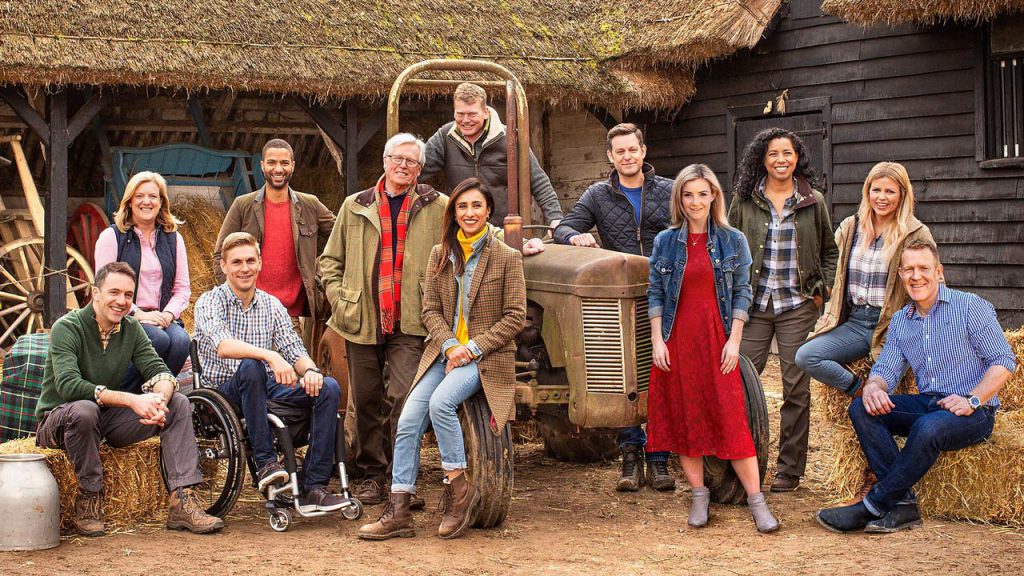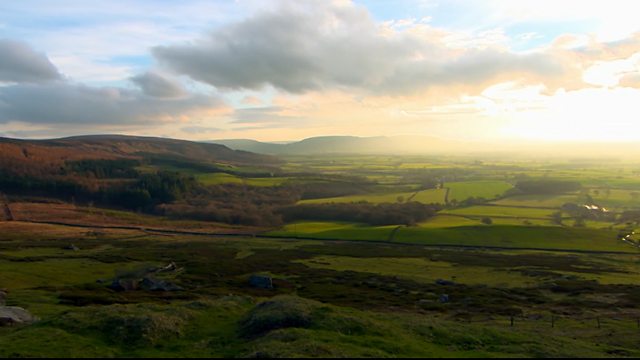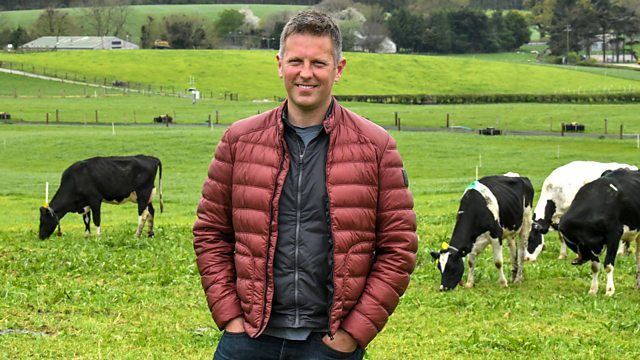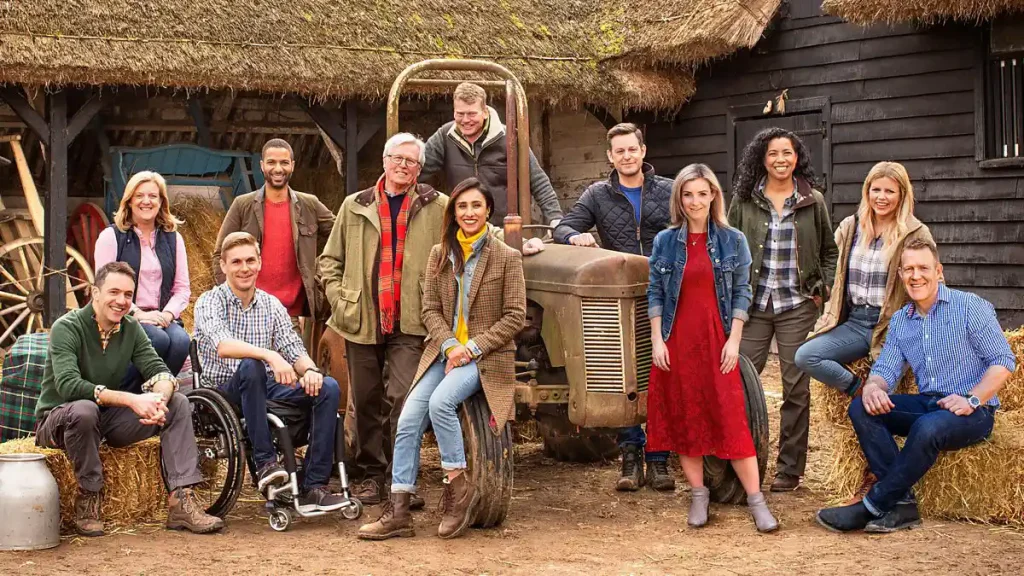
The Countryfile – A Tale of Two Ciders episode offers a compelling look into Herefordshire, the heartland of the UK’s cider industry, contrasting traditional craftsmanship with large-scale commercial production. Despite challenging weather conditions that have created significant problems for many arable farmers, cider producers are experiencing a potentially remarkable year. The season has delivered an early and abundant crop of apples. Although the hot, dry weather resulted in smaller fruit, the sheer volume promises a bountiful harvest. This situation raises important questions about the journey from orchard to glass. Moreover, it prompts an exploration of what different production methods mean for the landscape, the economy, and the future of this popular beverage.
This exploration matters deeply in a nation that stands as the world’s foremost consumer of cider, with sales reaching 342 million pints in the last year alone. In Herefordshire, cider is more than a drink; it represents a major rural industry and a long-standing tradition that shapes the local countryside. The process of transforming countless apples into a finished product involves a complex interplay of agriculture, technology, and philosophy. Therefore, understanding the different approaches to cider making provides valuable insight into the pressures and opportunities facing modern food production. It reveals how choices made at the press can have far-reaching effects on biodiversity and heritage.
The scope of the investigation in Countryfile – A Tale of Two Ciders is twofold, presenting a fascinating parallel between two distinct worlds. On one hand, it examines the operations of a large, family-run business that processes thousands of tonnes of apples through highly efficient, modern methods. On the other, it highlights a small, artisan producer dedicated to preserving traditional techniques, hand-picking rare apple varieties from ancient orchards. This juxtaposition of scale and methodology provides a comprehensive overview of the contemporary cider landscape. Consequently, it illuminates the trade-offs between volume and variety, consistency and character, and efficiency and heritage.
The background for this tale is set within a rich history. In Herefordshire, making cider has been a staple of farm life for centuries, evolving from a local craft into a significant commercial enterprise. The countryfile feature delves into this evolution by visiting two producers at opposite ends of the spectrum. One is Westons Cider, a company founded in 1880, while the other is Artistraw, a small-batch operation run by first-generation makers. Their stories encapsulate the broader narrative of the UK’s cider industry, a sector that balances deep-rooted traditions with the demands of a global market.
Meanwhile, a parallel narrative unfolds off the coast of Scotland, shifting the focus from the orchard to the ocean. Here, another form of large-scale production—offshore wind power—is expanding at an unprecedented rate. Britain is a world leader in this renewable energy sector, with ambitious plans to quadruple its capacity. This rapid development is crucial for meeting climate targets. However, it also raises urgent questions about the potential costs to marine ecosystems and coastal communities. This segment explores the scientific efforts to understand these impacts.
Thus, the journey through Herefordshire’s apple harvest and the deep waters of the North Sea reveals common themes of scale, sustainability, and the intricate relationship between human industry and the natural world. Both cider making and wind farming represent vital sectors of the UK economy, yet their expansion presents complex challenges. Scientists, producers, and conservationists are all grappling with how to balance economic necessity with environmental stewardship. Their work provides a crucial context for understanding the future of both our land and our seas.
Countryfile – A Tale of Two Ciders
The Industrial Heartbeat of Commercial Cider
At the core of Herefordshire’s large-scale cider production is Westons Cider, a family firm established in 1880 by Henry Weston. Today, his great-granddaughter Helen manages an operation that presses 40,000 tonnes of locally sourced apples each year. The business began when Henry, a tenant farmer, made such excellent cider that his neighbours encouraged him to produce it commercially. This humble origin has since grown into a major enterprise, yet the family connection remains strong. Helen recalls a childhood spent on-site, helping with every aspect of the business from loading lorries to picking apples during school holidays.
The agricultural side of this vast operation is managed by Tom Churchill, who oversees 200 acres of modern “bush” orchards and 50 acres of traditional, organically farmed “standard” orchards. The bush orchards are designed for maximum efficiency. They primarily contain just two apple varieties, Michelin and Dabinett, planted in blocks to simplify harvesting. This approach is a form of monoculture, which differs significantly from older, more diverse orchards. The primary reason for this is practicality; it allows the harvesting team to collect an entire orchard at once when the fruit is perfectly ripe.
However, this industrial efficiency does not come at the complete expense of ecological considerations. Westons actively works to support local wildlife within its modern farming system. Farm managers leave areas of wild growth around the field headlands to provide habitats for various species. Furthermore, they maintain beehives to aid in pollination and encourage the presence of beneficial insects like ladybirds and earwigs. These natural predators help control pests, which in turn allows the farm to limit its use of insecticide sprays. This integrated approach demonstrates a commitment to balancing productivity with environmental responsibility.
From Apple to Aisle: The Science of Consistency
The journey from tree to bottle at a large commercial producer is a marvel of modern engineering. The harvest at Westons is highly mechanized, utilizing a purpose-built shaker that clamps onto tree trunks to dislodge the fruit. Afterwards, a sophisticated harvester sweeps up the apples, capable of collecting a staggering 75 tonnes in a single day. Unlike eating apples, cider apples can be handled more roughly, as bruising is not a concern. From the orchard, trailers deliver the fruit to the mill, which processes around 600 tonnes of apples daily during peak season.
Inside the mill, the process is equally impressive. The pressed apple juice is pumped through a network of pipes into vast fermentation vats. The facility uses a combination of traditional oak vats, some of which are original to Henry Weston’s time, alongside modern stainless-steel tanks. To initiate fermentation, large ten-kilo bags of yeast are added to the fresh juice. The mixture then matures for approximately six months. Following this period, the cider undergoes a rapid filtration process using a cross-flow system that can clarify 10,000 litres per hour, transforming the cloudy liquid into a bright, clear product.
The final and most crucial stage is blending, overseen by a master cider maker in a dedicated lab. The process begins with a strong, dry, and flat base cider, which can have an alcohol content of over 10%. To create the final consumer product, this base is carefully diluted with water to the desired strength. Subsequently, liquid sugar is added to restore sweetness, and malic acid is introduced to balance the overall flavour profile. This scientific approach ensures that every bottle tastes exactly the same, providing the consistency that supermarket consumers expect.
Reviving Tradition in the Countryfile – A Tale of Two Ciders
In stark contrast to the industrial scale of Westons, Artistraw represents the artisan soul of cider making. Run by husband-and-wife team Tom Tibbits and Lydia Crimp, this small-batch operation is a passion project born from a shared love for the planet and quality drinks. Leaving behind careers in renewable energy and costume design, they embraced traditional methods. Their approach is fundamentally different, starting with the source of their apples. Rather than cultivating their own orchards, they seek out ancient and often long-abandoned orchards scattered across the Herefordshire countryside.
Their method for finding fruit is delightfully analogue. They drive through rural lanes, peering over hedges to spot neglected trees, and then knock on farmhouse doors to ask for permission to harvest. In exchange for the fruit, they offer payment or, more often, their services in pruning and replanting the old orchards, helping to regenerate these beautiful and valuable habitats. This practice not only provides them with unique apples but also contributes to the preservation of the region’s agricultural heritage. It is a slow, symbiotic relationship with the land and its history.
This commitment to tradition extends to their harvesting techniques. Unlike commercial producers, they do not shake the trees. Instead, they wait patiently for the fruit to ripen and fall naturally. This means they must return to the same tree eight or nine times throughout the harvest season to collect the apples by hand from the ground. This painstaking method ensures every apple is at its peak ripeness. It also allows them to work with a much wider range of rare and heritage varieties, such as the Red Foxwhelp and Knotted Kernel, which are often unsuited for commercial production due to their size or temperament.
The Artisan’s Craft: A Process of Patience and Purity
The pressing process at Artistraw is as traditional as the harvest. Tom and Lydia use a vintage, all-in-one travelling press that was originally built in France in the mid-1980s. This remarkable machine was designed to be moved from farm to farm. It combines crushing and pressing into a single unit. To extract the juice, they build what is known as a “cheese.” This involves layering crushed apple pulp, called pomace, inside porous cloths, which are then stacked between wooden racks. The entire stack is then slowly compacted under the press, yielding a pure, golden juice.
The fermentation philosophy at Artistraw is one of minimal intervention. The fresh juice is left to ferment naturally, a process that can take anywhere from 18 months to three years. They produce very small batches, sometimes creating as few as 40 bottles from a single tree. The final product contains nothing but the hand-picked fruit, resulting in a cider that expresses the unique character of the apple variety, the specific orchard, and the particular conditions of that year. No two batches are ever exactly the same, a quality they celebrate as the essence of their craft.
This dedication to purity creates a philosophical debate between the two makers about the future of their business. Lydia is staunchly anti-growth, believing that expanding would compromise the art and joy of their work. For her, the reward is in the process and the creation of something unique. Tom, on the other hand, hopes to scale up modestly—perhaps doubling their output—to build a more sustainable business and secure a pension. However, they both agree that their operation will always remain at a human scale, guided by their hands and their passion for tradition.
The Ecological Value of Traditional Orchards
Beyond producing unique cider, traditional orchards serve a vital ecological function. According to Toby Fountain, a Nature Recovery Officer for the Herefordshire Wildlife Trust, these man-made agricultural spaces are among the most biodiverse habitats in Britain. Their value has only been fully recognized in the last few decades. The complex mosaic of old trees, grassland, and decaying fruit creates a rich environment that supports a wide array of species throughout the year.
The life cycle of the orchard provides a continuous food source for wildlife. In autumn, fallen and rotting apples become a feast for insects like bees and butterflies, including the rare migratory clouded yellow. These insects, in turn, attract birds and mammals. The orchards are particularly important for birds, providing nesting sites for summer breeders like the redstart and a critical food source for winter migrants from Scandinavia, such as fieldfare and redwing thrushes. These birds flock to the orchards to feed on the sugary windfall fruit.
Perhaps the most crucial feature of a traditional orchard is the presence of standing deadwood. Decaying branches and hollow trunks are exploited by wood-boring invertebrates, such as beetle larvae. This resource is essential for one of Britain’s most mysterious and threatened birds: the lesser spotted woodpecker. This tiny, sparrow-sized bird is unable to excavate harder, live wood. It relies completely on the soft, crumbly deadwood found in old orchards to access its food. Recognizing this importance, the orchard at Bodenham Lake Nature Reserve has now been officially designated as a protected local wildlife site, securing its future for generations.
A New Industrial Revolution: Britain’s Offshore Wind Expansion
While Herefordshire’s orchards represent a traditional form of land use, the waters off Scotland’s coast are witnessing a new industrial revolution. The UK’s push for renewable energy has made it a global leader in offshore wind power. Ambitious government targets aim to quadruple production, which could see the number of wind farms soar from 45 to over 120. This rapid expansion is a cornerstone of the nation’s strategy to achieve net-zero emissions. However, this green energy boom is not without its controversies, as scientists and coastal communities raise concerns about the environmental costs.
Professor Beth Scott of the University of Aberdeen has been studying the issue for a decade. Her research suggests that the impacts of wind farms are more complex than previously understood. The physical presence of turbines can alter how the ocean mixes, which can affect water temperature, oxygen levels, and the distribution of plankton at the base of the food web. These changes could have cascading effects, altering fish populations, which in turn would impact seabirds, marine mammals, and the fishing industry.
A key concern is that current environmental assessments may be falling short. According to Professor Scott, these assessments often focus on isolated impacts, such as the risk of birds colliding with turbine blades or the effect of construction noise on whales and dolphins. They fail to consider the cumulative, ecosystem-wide effects of hundreds of new structures. She likens it to studying a farm by looking only at the soil and the birds, while completely ignoring the crops themselves—in this case, the entire water column and its intricate biological processes.
Balancing Green Energy with Marine Ecology in the Countryfile – A Tale of Two Ciders
The potential impacts of this expansion are a source of great anxiety for both conservation groups and the fishing industry. Aedan Smith of RSPB Scotland highlights the threat to seabirds from massive new projects like the Berwick Bank wind farm. Projections suggest tens of thousands of birds could be killed annually through direct collisions or displaced from vital feeding grounds. The Scottish Fishermen’s Federation echoes these concerns, worried about the loss of productive fishing areas and the unknown long-term effects on fish and shellfish stocks, calling the rapid rollout a “high-risk strategy.”
In response, the renewable energy industry insists it is committed to environmental stewardship. Kat Route-Stephens of RenewableUK argues that developers are actively trialling “nature-inclusive design.” This involves creating textured foundations on turbines to encourage colonization by seaweed and crustaceans, effectively creating new artificial reefs that could enhance biodiversity. They also point to the overriding urgency of the climate crisis as justification for the rapid pace of development. The industry maintains that it works closely with fishing communities through dedicated liaison officers to mitigate conflict.
To address the knowledge gaps, a major government-funded research expedition is underway aboard the RRS Discovery. A multi-disciplinary team of scientists is collecting data to build more accurate predictive models of the long-term effects. Early findings have already produced a surprising result: the turbulence created by turbines may actually increase the growth of plankton. This could potentially counteract the expected decline in North Sea productivity caused by climate change. This complex and evolving science will be crucial for navigating the trade-offs between clean energy and a healthy marine environment.
The Threads That Bind: Heritage, Progress, and the Price of Tomorrow
The journey through Herefordshire’s orchards and Scotland’s wind-swept seas reveals a fundamental truth about modern Britain: we’re constantly negotiating between preservation and progress, between honoring what came before and embracing what must come next. Whether it’s Tom and Lydia waiting patiently for apples to fall or engineers erecting turbines in the North Sea, each choice ripples outward, touching ecosystems, economies, and communities in ways we’re only beginning to understand.
What makes these parallel stories so compelling is how they illuminate the false simplicity of our environmental challenges. It would be easy to paint Westons’ industrial efficiency as soulless or Artistraw’s artisan methods as impractical romanticism. Similarly, we could dismiss offshore wind farms as ecological recklessness or celebrate them as uncomplicated climate solutions. But the reality, as always, is far more nuanced. Helen’s family business supports biodiversity through integrated pest management while feeding Britain’s massive cider appetite. Tom and Lydia’s hand-harvested bottles preserve rare apple varieties and regenerate forgotten orchards, but at a scale that can never satisfy widespread demand. Wind turbines may disrupt seabird colonies, yet early research suggests they might actually boost plankton growth in warming seas.
The common thread weaving through both narratives is the urgent need for what we might call “conscious scale”—an understanding that how we produce matters as much as what we produce. The traditional orchards at Bodenham Lake prove that agricultural spaces can be sanctuaries for lesser spotted woodpeckers and winter thrushes. Westons demonstrates that commercial operations can incorporate wildlife corridors and natural pest control. The offshore wind debate shows us that renewable energy and marine conservation aren’t inherently opposed, but neither are they automatically compatible. Each approach requires deliberate design, continuous monitoring, and the humility to adapt when evidence demands it.
For those of us raising our glasses of cider or switching on lights powered by offshore turbines, these stories offer more than interesting contrasts—they present a blueprint for engagement. We can seek out small-batch producers whose methods protect heritage varieties and support biodiversity. We can demand that commercial operations maintain transparency about their environmental practices. We can insist that renewable energy developers fund rigorous, independent research like the RRS Discovery expedition, ensuring decisions are guided by science rather than expediency.
The future of Britain’s landscapes and seascapes won’t be determined by choosing between tradition and innovation, between small and large, between economic vitality and ecological health. Instead, it will be shaped by our collective willingness to embrace complexity, to celebrate diversity in our production methods, and to recognize that sustainability isn’t a destination but an ongoing conversation between what we need, what we value, and what we’re willing to protect. The cider makers and wind farm engineers are showing us the way forward—now we must decide which elements of each approach deserve our support, our scrutiny, and our voice.
FAQ Countryfile – A Tale of Two Ciders
Q: What makes Herefordshire the heartland of Britain’s cider industry?
A: Herefordshire has been producing cider for centuries, with the tradition deeply woven into the fabric of rural life. The region’s climate and soil conditions prove ideal for cultivating cider apple varieties like Michelin and Dabinett. Furthermore, the county hosts both large-scale commercial operations such as Westons Cider, established in 1880, and artisan producers like Artistraw who preserve heritage methods. This diverse ecosystem supports Britain’s position as the world’s largest cider consumer, with 342 million pints sold annually.
Q: How does Westons Cider balance industrial efficiency with environmental responsibility?
A: Westons processes 40,000 tonnes of apples yearly while maintaining ecological considerations throughout their operation. The company leaves wild growth areas around field headlands to provide wildlife habitats and maintains beehives for pollination support. Additionally, they encourage beneficial insects like ladybirds and earwigs that naturally control pests, significantly reducing insecticide dependency. Their approach demonstrates that large-scale commercial production can integrate environmental stewardship through thoughtful farm management and integrated pest control strategies.
Q: What distinguishes artisan cider production at Artistraw from commercial operations?
A: Artistraw founders Tom Tibbits and Lydia Crimp employ entirely traditional methods, starting with hand-harvesting naturally fallen fruit from ancient, often abandoned orchards. Unlike commercial producers who shake trees, they return to the same location eight or nine times per season to collect perfectly ripe apples. Their vintage French press from the 1980s produces small batches—sometimes just 40 bottles from a single tree—that ferment naturally for 18 months to three years, creating unique expressions of specific apple varieties and growing conditions.
Q: Why are traditional orchards considered ecologically valuable habitats?
A: Traditional orchards rank among Britain’s most biodiverse man-made agricultural spaces, supporting numerous species throughout the year. The complex ecosystem of old trees, grassland, and decaying fruit provides food for insects like bees and rare clouded yellow butterflies, which attract birds and mammals. Notably, standing deadwood becomes essential habitat for the threatened lesser spotted woodpecker, a sparrow-sized bird that relies exclusively on soft, crumbly decaying wood to access food. Consequently, sites like Bodenham Lake Nature Reserve have earned protected wildlife status.
Q: How does commercial cider production ensure consistent taste across millions of bottles?
A: Large producers like Westons employ a scientific blending process overseen by master cider makers in dedicated laboratories. The process starts with a strong, dry base cider exceeding 10% alcohol content, which is carefully diluted with water to the desired strength. Subsequently, liquid sugar restores sweetness while malic acid balances the flavor profile. Advanced cross-flow filtration systems clarify 10,000 litres hourly, transforming cloudy liquid into bright, clear cider that delivers the identical taste experience supermarket consumers expect every time.
Q: What environmental concerns surround Britain’s offshore wind farm expansion?
A: Britain’s ambitious plan to quadruple offshore wind capacity from 45 to over 120 farms raises complex ecological questions. Professor Beth Scott’s research reveals that turbines alter ocean mixing patterns, potentially affecting water temperature, oxygen levels, and plankton distribution at the food web’s base. Conservation groups worry about seabird collisions and displacement from feeding grounds, with projections suggesting tens of thousands of annual bird deaths from projects like Berwick Bank wind farm. However, current environmental assessments may overlook cumulative ecosystem-wide impacts across hundreds of new structures.
Q: How do monoculture bush orchards differ from traditional standard orchards?
A: Modern bush orchards prioritize efficiency by planting just two apple varieties—typically Michelin and Dabinett—in uniform blocks that simplify mechanical harvesting. This monoculture approach allows teams to collect entire orchards simultaneously when fruit reaches peak ripeness, with sophisticated harvesters gathering up to 75 tonnes daily. Conversely, traditional standard orchards feature diverse heritage varieties across larger trees with greater spacing, supporting significantly higher biodiversity but requiring more labor-intensive hand harvesting. Westons maintains both systems, with 200 acres of bush orchards and 50 acres of organic standard orchards.
Q: What surprising benefits might offshore wind turbines provide to marine ecosystems?
A: Early research from the government-funded RRS Discovery expedition has revealed unexpected positive impacts. The turbulence created by turbine structures appears to increase plankton growth, potentially counteracting declining North Sea productivity caused by climate change. Moreover, the renewable energy industry is trialing nature-inclusive design, creating textured foundations on turbines that encourage colonization by seaweed and crustaceans. These artificial reef structures could enhance biodiversity in previously barren seabed areas, demonstrating that renewable energy infrastructure might offer ecological opportunities alongside environmental challenges.
Q: Why does Artistraw refuse to expand their cider production significantly?
A: Co-founder Lydia Crimp maintains a staunchly anti-growth philosophy, believing expansion would compromise the art and joy inherent in their traditional craft. Their painstaking process—hand-collecting naturally fallen fruit, using vintage equipment, and allowing 18-month to three-year natural fermentation—cannot scale without fundamentally altering their approach. Although partner Tom Tibbits hopes to modestly double output for business sustainability, both agree their operation must remain at human scale. This philosophy prioritizes creating unique, unrepeatable batches that express specific orchards and growing conditions over commercial volume.
Q: How does the Countryfile episode connect cider production to renewable energy development?
A: The episode draws compelling parallels between Herefordshire’s cider industry and Scotland’s offshore wind expansion, exploring how both sectors navigate tensions between scale, sustainability, and environmental impact. Both industries face similar challenges: balancing economic necessity with ecological stewardship, managing cumulative environmental effects, and reconciling traditional practices with modern demands. Whether preserving heritage apple varieties in ancient orchards or deploying turbines while protecting seabirds, producers and scientists alike grapple with complex trade-offs. These parallel narratives ultimately reveal common themes about conscious scale and the intricate relationship between human industry and the natural world.