Gardening Australia 2025 Episode 26: Have you ever looked at your garden and felt a mix of joy and overwhelm? You see the potential for a lush paradise. However, you also see the work and the cost involved. This week, we dive into a special episode that speaks directly to that feeling. In Gardening Australia 2025 Episode 26, we celebrate ingenuity. The theme is “Grow it Yourself,” focusing on thrifty and clever ideas. This episode proves that a stunning garden is not about a big budget. Instead, it is about big imagination. It’s a heartfelt reminder of why we love Australian gardening.
The journey begins in an unexpected place: the office. Costa Georgiadis steps away from the traditional backyard plot. He explores a coworking space that has been utterly transformed by nature. Imagine an office where trailing ivy cascades down bookshelves. Picture vibrant ferns nestled between desks. This is a masterclass in biophilic garden design. Costa reveals how living greenery can boost creativity and reduce stress. Furthermore, it shows us how to bring the garden indoors. This segment inspires us to rethink our own spaces. It proves that a touch of green can make any environment feel alive.
Next, we join Tammy Huynh as she tackles a common gardener’s challenge. Starting seeds can be a delicate dance with the elements. A sudden cold snap or harsh sun can undo all your hard work. Tammy, however, has a wonderfully thrifty solution. She crafts brilliant mini greenhouses from everyday recycled materials. This simple project protects delicate seedlings, giving them the best possible start. It’s a powerful lesson in resourcefulness. Consequently, Tammy reminds us that the most effective tools are often the ones we create ourselves. Her segment is a testament to the hands-on spirit of gardening australia.
From tiny seedlings, we move to a much larger challenge with Hannah Moloney. She confronts a steep, tricky slope that many would simply ignore. A hillside garden can seem like an impossible puzzle. Erosion and access are major concerns. Yet, Hannah sees it as a canvas for opportunity. She expertly demonstrates how to terrace the land. Then, she selects the perfect plants to anchor the soil. Her use of hardy native plants is particularly inspiring. These plants are naturally adapted to our climate and thrive on tough terrain. In the end, Hannah transforms a problem area into a breathtaking, multi-layered feature.
Gardening Australia 2025 Episode 26
Following this, Jerry Coleby-Williams shifts our focus to the productive garden. He explores a topic of growing importance: cultivating your own protein. When we think of homegrown food, we often picture salads and herbs. Jerry, however, encourages us to think bigger. He showcases a variety of protein-rich plants like beans, lentils, and peas. Growing these not only enriches your diet but also your soil. Legumes are fantastic nitrogen-fixers, naturally improving garden fertility. Jerry’s segment is a practical guide to creating a more self-sufficient and sustainable lifestyle. It is a core principle of thoughtful Australian gardening.
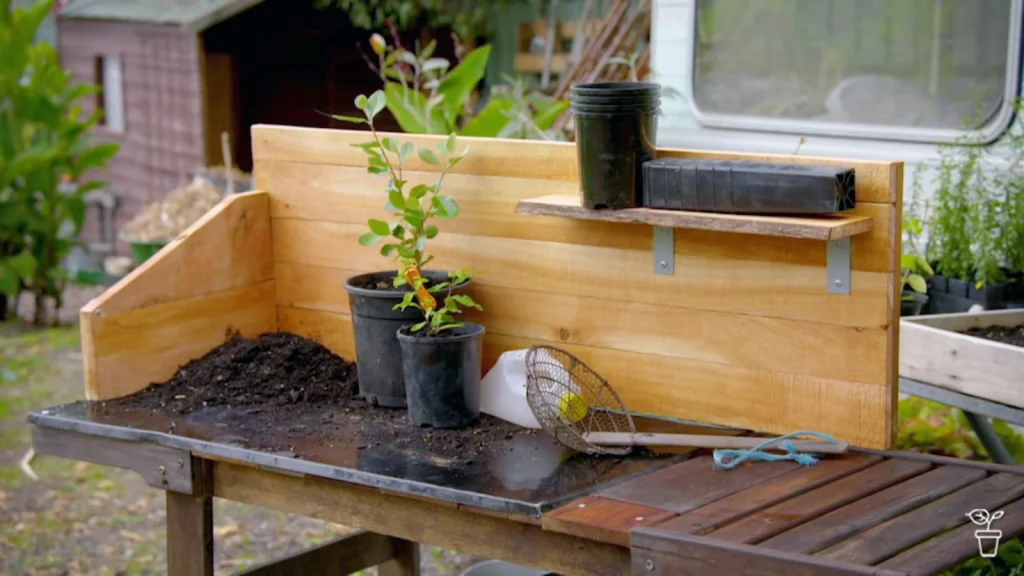
Then, the spotlight turns to pure creative genius with Millie Ross. She finds a rusty, forgotten barbecue destined for the scrap heap. Where others see junk, Millie sees a new beginning. With a bit of elbow grease and a lot of vision, she upcycles it. The old BBQ becomes a stylish and incredibly functional potting bench. Its lid provides shelter from the elements. Additionally, its side trays are perfect for holding tools. This project is the heart of the episode’s thrifty theme. It’s a joyful celebration of repurposing, proving that great garden design can be found anywhere.
Finally, the episode introduces us to an artist with a unique connection to the garden. This sculptor doesn’t work with clay or stone. Instead, their materials are the discarded scraps of garden life. Old, rusted tools and leftover building materials are given a new soul. They are transformed into stunning sculptures that tell a story. This segment beautifully blurs the line between gardening and art. It reminds us that creativity is all around us. Indeed, beauty can be cultivated from the most humble and overlooked beginnings, a philosophy every gardener understands deep down.
In conclusion, Gardening Australia 2025 Episode 26 is more than just a collection of tips. It is a powerful narrative about connection, creativity, and resilience. Each story, from Costa’s green office to Millie’s repurposed bench, reinforces a single, beautiful idea. A magnificent garden comes from the heart, not the wallet. This episode will leave you feeling inspired and empowered. You will look at your own space with fresh eyes. You will see not problems, but possibilities waiting to be grown. It’s a true celebration of what makes gardening australia so special.
Gardening Australia 2025 Episode 26 review
The special episode Gardening Australia 2025 Episode 26 provides a wealth of low-cost and creative solutions to help gardens thrive. This week focuses on thrifty ideas, from upcycling discarded materials into functional garden items to propagating plants for free. It explores how a mindset of resourcefulness can transform not only our outdoor spaces but also our approach to consumption and sustainability. By embracing do-it-yourself projects and clever hacks, gardeners can achieve beautiful and productive results without significant financial outlay.
This emphasis on thrifty gardening is particularly relevant in the context of modern challenges. With growing concerns about environmental responsibility and household budgets, finding ways to reduce waste is more important than ever. The principles of upcycling and repurposing offer a direct path to a more sustainable lifestyle. This approach to Australian gardening transforms potential landfill into valuable assets, whether turning an old barbecue into a potting bench or rescuing abandoned plants to create a lush indoor oasis.
The scope of Gardening Australia 2025 Episode 26 covers a broad range of practical applications for this thrifty mindset. The episode demonstrates how to build protective collars for vulnerable seedlings and how to construct miniature greenhouses from household recyclables. Furthermore, it delves into cultivating plant-based proteins at home and offers innovative solutions for managing difficult terrain and conserving water. Each segment provides clear, actionable steps that empower viewers to implement these ideas in their own gardens.
At its core, this approach is about a fundamental shift in perspective. It encourages looking at everyday objects and seeing their hidden potential. An old wooden pallet is not just shipping material; it is a tool for stabilizing a steep slope. Discarded tools are not junk; they are unique and functional door handles. This philosophy of creative garden design encourages gardeners to become makers and innovators, finding beauty and utility in the overlooked and undervalued.
This ethos of self-sufficiency extends beyond materials and into the plants themselves. Learning to propagate from cuttings or seeds is the ultimate way to get something for nothing. The ideas presented in gardening australia show how to create ideal growing conditions using simple, repurposed containers. This not only multiplies a plant collection for free but also deepens a gardener’s understanding of the plant life cycle, fostering a more intimate connection with their garden.
Ultimately, these thrifty solutions offer a pathway to a more engaged and rewarding gardening experience. They prove that a stunning and productive garden does not depend on expensive products but rather on creativity, knowledge, and a willingness to see the world differently. By adopting these low-cost strategies, anyone can cultivate a space that is both beautiful and deeply personal, built with their own hands and ingenuity.
The Philosophy of Upcycling in Creative Garden Design
A powerful theme is the art of transforming waste into functional and beautiful garden features. This is vividly illustrated by Monique Caldow, who operates a shared workspace in Marrickville called Stick n Stone. She built the entire space herself using recycled, saved, and reclaimed materials. Her work is a testament to the belief that we do not need to constantly buy new, poorly made items. Instead, she champions giving people the knowledge to create their own sustainable and meaningful things. Her space, which was once a hot, concrete car park, is now a green sanctuary filled with plants she rescued from roadsides and building sites.
This philosophy of reuse extends to the smallest details. For instance, Monique repurposed leftover old tools as bracing and functional door handles, creating features that are more effective and visually interesting than store-bought alternatives. Her hands-on approach, born from a childhood on a country farm, now inspires a new community of creative makers. Her space also hosts Sydney’s first commercial indoor farm, which supplies microgreens to local restaurants, further integrating sustainability into an urban environment. This demonstrates how a commitment to upcycling can foster community and new enterprise.
Another practical example of upcycling is turning a discarded barbecue into a mobile potting bench. Many old barbecues are thrown out when their metal burners rust, but their hardwood trolleys are often still in excellent condition. By removing the barbecue unit for steel recycling, the trolley becomes a sturdy base. Salvaged timber, such as old jarrah floorboards or Merbau offcuts, can be used to construct a new top. A clever design feature is a removable section in the benchtop, allowing potting mix to be easily swept into a container below. The old barbecue lid can even be repurposed as a durable, weatherproof work surface.
Beyond the purely functional, repurposing can also be an act of artistic expression. Roger McKindley’s Antares Iron Art Garden in Newstead is a landscape built from found objects. He transforms pieces that people consider rubbish—twisted metal, old wood, glass, and bones—into intricate patterns and sculptures. He believes everything has a place, no matter how broken, and arranges items into “family” groups. His garden changes with the seasons, with the rust appearing more vibrant in summer and the metal pieces becoming coated in frost in winter, creating a dynamic and living art installation.
Propagation and Plant Care for the Thrifty Gardener
Creating new plants from existing ones is the ultimate form of thrifty gardening. Simple DIY greenhouses can be made from everyday plastic containers to provide an ideal microclimate for seeds and cuttings. An undercover area with stable temperatures and protection from wind already acts like a large-scale greenhouse. This environment traps moisture from plant transpiration, increasing humidity. This principle can be replicated on a smaller scale using clear plastic containers, which must be cleaned and sterilized before use. Small air holes provide essential ventilation to prevent mould, while drainage holes allow excess water to escape.
For sowing seeds, a light and friable seed-raising mix is ideal. Microgreens, such as kale or coriander, are a quick and rewarding crop that can be grown in these mini-greenhouses and harvested in as little as two weeks. Once seedlings develop their second set of leaves, known as true leaves, they are ready to be transplanted. For striking cuttings, a larger plastic storage container can serve as a hothouse.
A 50/50 mix of perlite and premium potting mix provides an excellent medium. When taking cuttings, such as from an angel-wing begonia, it is crucial to cut below a node, as this is where new growth will form. Removing flowers and reducing the size of large leaves helps the cutting direct its energy into root development.
Before any planting or propagation, it is essential to reuse old plastic pots responsibly. Over time, gardeners accumulate a large collection of these pots. Rather than discarding them, they can be cleaned for reuse. The process involves scrubbing away all old soil with fresh water. An environmentally friendly method avoids harsh detergents and instead relies on solarisation. After scrubbing, placing the pots in the sun to dry helps kill any remaining bacteria or pathogens. For a final layer of protection, a light spray of eucalyptus oil acts as a natural disinfectant before the pots are filled with new mix.
Protecting young seedlings from pests is another critical aspect of care. Ground-dwelling insects like slaters and earwigs can quickly destroy a new planting. A simple and effective solution involves creating protective collars from old plastic pots. By cutting the bottom off a pot, it can be placed around a seedling like a fortress. To deter snails and slugs, a strip of copper tape can be applied around the top rim, as these pests dislike crossing it. The collar should be pushed a few centimeters into the soil for stability, with at least seven centimeters remaining above ground to provide adequate protection during the plant’s most vulnerable early weeks.
Gardening Australia 2025 Episode 26: Solutions for Water and Terrain
Gardening on a steep slope presents significant challenges, primarily water runoff that carries away valuable nutrients. While terracing with stonework is an ideal solution, it is often prohibitively expensive. A creative, low-cost alternative is to use heat-treated recycled pallets. It is vital to find pallets stamped with “HT,” indicating they are heat-treated and free of harmful chemicals. The process involves preparing the slope by clearing away grass and nestling the pallet directly into the bank. The pallet is then secured with timber pegs, which will eventually rot away as the plants’ root systems take over to stabilize the soil.
Once the pallet is in place, it is packed with soil and topped with compost. The various nooks and crannies within the pallet structure create small pockets that trap water and nutrients, allowing plants to establish themselves effectively. Hardy, spreading native plants like creeping boobialla are an excellent choice for this type of planting. Their foliage will eventually drape over the pallet, completely concealing it and creating a lush, green bank. This method transforms a difficult gardening problem into an opportunity for innovative and sustainable garden design.
Conserving water is another critical issue, especially in a drying climate. Greywater reuse is an underutilized resource that can significantly reduce a garden’s reliance on mains water. Greywater is household wastewater from showers, baths, and laundries, but should not include water from kitchens or toilets. The simplest reuse method is manual bucketing, but this is labor-intensive. A more efficient approach is a direct diversion system, where a plumber installs a valve to direct greywater to a slotted drainage pipe laid in a shallow, mulched trench. While effective for a small area, this system has limited distribution.
For broader water distribution, a pumped system is superior. These systems use a surge tank with a filter to catch coarse materials and a pump to pressurize the water. This allows the greywater to be distributed over a large area via a dedicated drip-line irrigation system, identifiable by its purple piping. When using greywater, it is important to use plant-friendly detergents and avoid applying the water to edible crops where it might contact the parts you eat. Since detergents are alkaline, they will raise soil pH over time, so greywater should not be used on acid-loving plants like azaleas. Regular additions of compost and mulch will help buffer the soil’s pH.
Cultivating Plant-Based Protein in the Home Garden
For those seeking to supplement their diet with plant-based protein, the garden offers a surprising number of options. A key nutrient for human health, protein can be cultivated at home through a variety of legumes, seeds, nuts, and even some leafy greens. Legumes are an excellent choice, and for maximum protein content, their seeds should be dried before consumption. The warm-season mung bean, for example, is a quick grower that can be harvested in just six weeks. Its young pods can be eaten like French beans, or the seeds can be harvested from mature pods.
The sword bean is another high-protein legume, offering a subtropical alternative to the broad bean. It provides between 16 and 35 grams of protein per 100 grams, putting it in the same category as soy. As a perennial, it offers a high yield from a very small footprint in the garden. For a smaller but still potent option, sesame seeds contain 17 grams of protein per 100 grams. This ancient, drought-tolerant crop is easy to grow during the warm seasons, and its seeds can be stored in an airtight container for at least a year.
Nuts are another valuable source of homegrown protein. Bunya nuts, highly valued by Indigenous Australians, have a flavor like pine nuts and a starchy texture similar to a potato. They contain 11 grams of protein per 100 grams and can be harvested from fallen cones in summer. The Chilean wine palm drops nuts year-round that taste like coconut, though they have a more modest protein content of 3.3 grams.
Even leafy greens can contribute to protein intake. La Lot is a perennial Asian groundcover that thrives in shady, frost-free climates. Its leaves can be used raw in salads or as wrappers for other foods. Surprisingly, this leafy green contains 3 grams of protein per 100 grams. By cultivating a diverse range of these plants, gardeners can create a satisfying and well-rounded diet directly from their own backyard.
A Guide to Seasonal Tasks in Australian Gardening
Maintaining a thriving garden involves timely tasks tailored to the specific climate zone. In cool areas, magnolias are beginning to flower, making it a good time to check for slugs and snails that eat the buds. Feijoas should be fed with a balanced fertiliser and compost to support healthy flower formation. Preparation for pumpkin planting can also begin by creating a hot compost mound of straw, manure, and compost that will be ready for seeds by late spring.
In warm areas, now is the time to sow honeywort seeds, an annual adored by bees. The trailing groundcover Grevillea thyrsoides can also be planted in a sunny, sheltered position. To support hungry insects waiting for spring flowers, a small section of lawn can be left unmowed to create a “pollen patch.”
Subtropical gardeners can plant Brightwell blueberries, which are resistant to fungal disease and grow well in pots or acidic soil. This is also a good time to trim back creeping boobialla and use the cuttings to propagate more plants. For those with crowded cymbidium orchids, they can be divided using a bread knife, ensuring each new clump has at least five healthy bulbs before repotting into orchid bark mix.
In tropical areas, galangal rhizomes can be divided or planted with the buds facing up in a protected, moist spot. It is also a good time to check on beets, harvesting them when they are smaller than a cricket ball for a sweeter taste. Black pepper vine, a tropical scrambler, can be planted now against a trellis in a sunny spot with plenty of compost.
Finally, in arid areas, Diplolaena are currently blooming and will benefit from a low-phosphorus native fertiliser and mulch. A haircut for a hopbush hedge, along with a feed of blood and bone, will encourage a flush of fruit and attract butterflies. Fast-growing natives like Felicia australis can be planted from seeds or cuttings in a full-sun position with well-drained soil.
Your Garden Revolution Starts with What You Already Have
The beauty of Gardening Australia 2025 Episode 26 lies not in what it asks you to buy, but in what it teaches you to see. Every rusty barbecue becomes a potential potting bench, every steep slope transforms into terraced possibility, and every plastic container holds the promise of a mini greenhouse. This isn’t just gardening advice—it’s a masterclass in creative vision that extends far beyond the garden gate.
What makes this episode truly revolutionary is how it reframes scarcity as abundance. When Monique Caldow rescued plants from roadsides and building sites to create her green sanctuary, she wasn’t just saving money—she was demonstrating that the most valuable garden resources are often hiding in plain sight. Her repurposed tools-turned-door-handles and Roger McKindley’s sculptural landscapes built from “rubbish” prove that limitation breeds innovation in the most beautiful ways.
The practical wisdom here runs deeper than clever DIY hacks. When Jerry Coleby-Williams shows us how to grow protein-rich legumes, or Hannah Moloney tackles that impossible slope with heat-treated pallets, they’re teaching us to think like ecosystems—where nothing is wasted, everything has purpose, and problems become opportunities for elegant solutions. The mung beans that can be harvested in six weeks, the greywater systems that turn waste into irrigation gold, the copper tape that protects seedlings—these aren’t just techniques, they’re building blocks for a more sustainable relationship with our environment.
Perhaps most importantly, this episode reveals gardening as a deeply democratic art form. You don’t need a trust fund or a landscape architect to create something extraordinary. Tammy Huynh’s recycled mini greenhouses and Millie Ross’s barbecue transformation prove that ingenuity trumps budget every time. The message is clear: your creativity is your greatest gardening tool, and it costs absolutely nothing to use it.
As you step into your own garden space—whether it’s a sprawling backyard, a tiny balcony, or even a windowsill—carry this episode’s spirit with you. Look at that broken pot with fresh eyes. Consider what that unused corner could become. Ask yourself not “What do I need to buy?” but “What stories are waiting to be written here?”
The real magic happens when you realize that every great garden is essentially a love letter written in soil and seasons, creativity and care. Gardening Australia 2025 Episode 26 doesn’t just teach us how to garden more thriftily—it teaches us how to see the world more hopefully, transforming the overlooked into the essential, one resourceful idea at a time. Your garden revolution doesn’t require a revolution in spending; it requires a revolution in seeing. And that transformation starts the moment you pick up your first discarded treasure and imagine what it could become.
FAQ Gardening Australia 2025 Episode 26
Q: What makes Gardening Australia 2025 Episode 26 different from typical gardening shows?
A: This special episode focuses entirely on the “Grow it Yourself” theme, emphasizing thrifty and creative solutions rather than expensive purchases. Furthermore, it demonstrates how resourcefulness and imagination can create stunning gardens without significant financial investment, proving that great garden design comes from the heart, not the wallet.
Q: How can I create effective mini greenhouses from household materials?
A: Simply clean and sterilize clear plastic containers, then add small air holes for ventilation and drainage holes at the bottom. Additionally, use a light seed-raising mix and place containers in an undercover area with stable temperatures. This method traps moisture from plant transpiration, creating ideal conditions for seedlings and cuttings.
Q: What’s the best way to garden on a steep slope without expensive terracing?
A: Use heat-treated recycled pallets stamped with “HT” to create affordable terracing. Moreover, secure the pallet with timber pegs, pack it with soil and compost, then plant hardy spreading natives like creeping boobialla. The pallet’s structure creates water-trapping pockets while the plants’ roots eventually stabilize the slope.
Q: How can I transform a broken barbecue into garden furniture?
A: Remove the rusted barbecue unit for steel recycling while keeping the hardwood trolley as your base. Subsequently, construct a new top using salvaged timber like jarrah floorboards, incorporating a removable section for easy potting mix disposal. The original lid becomes a durable, weatherproof work surface.
Q: Which plants provide the highest protein content for home cultivation?
A: Sword beans offer exceptional protein levels between 16-35 grams per 100 grams, rivaling soy beans. Meanwhile, sesame seeds provide 17 grams per 100 grams and store well for a year. Additionally, mung beans can be harvested in just six weeks, offering versatility as both fresh pods and dried seeds for maximum nutrition.
Q: How do I properly protect seedlings from pests using recycled materials?
A: Cut the bottom off old plastic pots to create protective collars around seedlings. Then, apply copper tape around the rim to deter snails and slugs, pushing the collar several centimeters into soil for stability. This fortress-like protection shields vulnerable plants during their critical early weeks while costing virtually nothing.
Q: What’s the most effective way to implement greywater systems for garden irrigation?
A: Install a pumped system with a surge tank and filter for broad water distribution via purple-piped drip irrigation. However, avoid applying greywater to edible crops or acid-loving plants like azaleas, since detergents raise soil pH over time. Regular compost and mulch additions help buffer pH changes naturally.
Q: How can I properly clean and reuse old plastic pots safely?
A: Scrub away all old soil with fresh water, avoiding harsh detergents that harm the environment. Instead, place cleaned pots in direct sunlight for solarization, which kills bacteria and pathogens naturally. Finally, spray with eucalyptus oil as a natural disinfectant before filling with fresh potting mix.
Q: What seasonal gardening tasks should Australian gardeners prioritize right now?
A: Cool-climate gardeners should check magnolias for pests and feed feijoas with balanced fertilizer. Conversely, warm-area gardeners can sow honeywort seeds and plant trailing Grevillea thyrsoides. Subtropical regions benefit from planting Brightwell blueberries and dividing cymbidium orchids, while tropical areas suit galangal division and black pepper vine planting.
Q: How does this episode’s philosophy apply beyond just gardening techniques?
A: The “Grow it Yourself” philosophy promotes a fundamental shift toward seeing potential in overlooked materials and spaces. Consequently, this approach reduces environmental waste while fostering creativity and self-sufficiency. It demonstrates that limitation breeds innovation, encouraging gardeners to become makers who find beauty in the discarded and undervalued.


