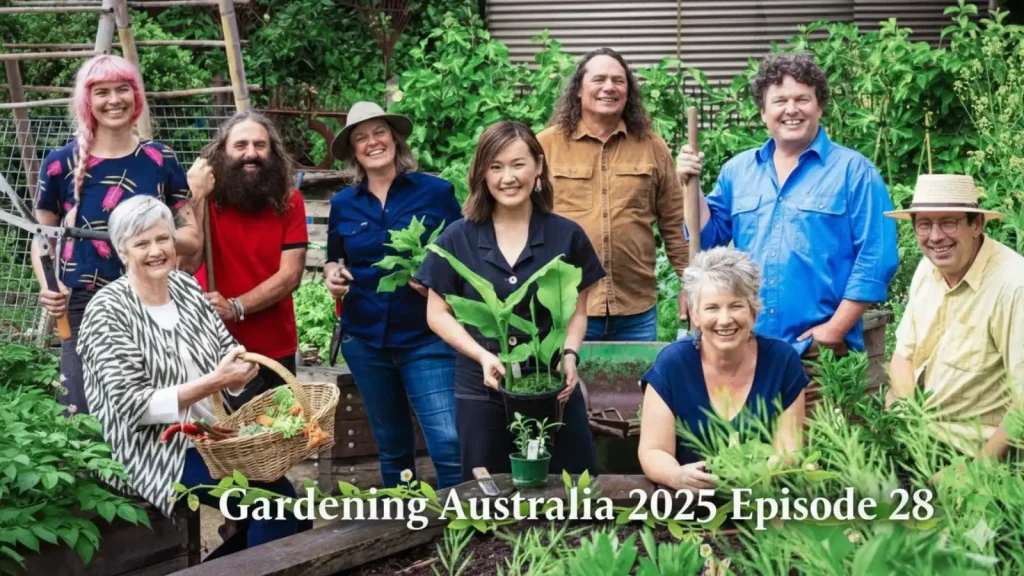
Gardening Australia 2025 Episode 28: Welcome to a garden of dreams in the latest journey with Costa and the team. This week on Gardening Australia 2025 Episode 28, we dive deep into stories that cultivate both the earth and the soul. Prepare to be swept away by a sea of vibrant poppies. Furthermore, you will witness the culmination of a long-held dream with a stunning greenhouse reveal. The episode is a beautiful tapestry of inspiration, practical tips, and heartwarming community spirit. It truly celebrates the very essence of Australian gardening 🌼💮. So, grab your favorite cup of tea, settle in, and let’s explore the incredible gardens waiting for us.
Imagine stepping into a landscape painted with the most delicate brushstrokes. This week, Tammy takes us on a breathtaking tour of a poppy-filled paradise. It is a garden that feels less like a plot of land and more like a living masterpiece. Rivers of crimson, pink, and white silk flowers sway gently in the breeze. In addition, the owner shares the secrets behind this stunning display of seasonal color. We learn how careful planning and a deep love for these ephemeral beauties can create a truly magical space. This segment is a masterclass in garden design, demonstrating how to use mass plantings to create an unforgettable emotional impact.
Have you ever dreamt of a special place to nurture your plants year-round? Hannah has, and in this episode, her dream finally takes shape. We join her for the highly anticipated unveiling of her brand-new greenhouse. This is more than just a structure of glass and steel; consequently, it represents a new chapter in her gardening adventure. Hannah walks us through her thoughtful setup, from ventilation to shelving. Her project serves as a fantastic source of inspiration for anyone considering a similar undertaking. It’s a powerful showcase of ambitious diy gardening, proving that with passion and planning, you can build your very own horticultural sanctuary.
Gardening, in its purest form, is about connection and growth. Costa Georgiadis explores a project that embodies this spirit perfectly. He visits an inspiring initiative that uses gardening to tackle homelessness. Here, hands in the soil are helping to rebuild lives, one seedling at a time. The garden provides not only fresh produce but also a sense of purpose and community for its participants. Costa’s journey reveals the profound therapeutic power of nature. Moreover, it highlights how shared green spaces can foster dignity and create pathways to a brighter future. This story is a poignant reminder of the incredible impact gardening australia can have beyond our back fences.
For those eager to get their hands dirty, Millie is back with timely advice. She focuses on refreshing spring crops for a continuous and bountiful harvest. With her characteristic enthusiasm, Millie shares some brilliant garden hacks to maximize your veggie patch’s potential. She demonstrates simple techniques for succession planting and choosing the right varieties for the season. Therefore, you can ensure your kitchen is stocked with fresh greens and vibrant vegetables for months to come. Her segment is packed with practical, easy-to-follow tips. It’s perfect for both seasoned gardeners and those just starting their edible garden journey.
Gardening Australia 2025 Episode 28
Our gardens should be a sanctuary for all our loved ones, including our furry friends. This week, Josh tackles a common dilemma for pet owners. He designs and builds a creative and functional cat run. This brilliant diy gardening project ensures his feline companions can enjoy the outdoors safely. Importantly, it also protects local wildlife from curious paws. Josh shows us how to integrate the structure seamlessly into the garden. He uses climbing plants and pet-safe greenery to create a stimulating and beautiful enclosure. His project is a wonderful example of how to create a harmonious space for the entire family.
Finally, we zoom in to appreciate the smaller, often overlooked, residents of our gardens. We meet a remarkable set of twins with a passion for entomology. Their fascinating research focuses on the intricate lives of native snails and weevils. They explain the vital role these tiny creatures play within their ecosystem. Their work underscores the importance of biodiversity and the delicate web of life that native plants support. This segment is a captivating look at the hidden world beneath the leaves. It encourages us all to become more observant and appreciative of the complex ecosystems thriving in our own backyards.
In conclusion, Gardening Australia 2025 Episode 28 delivers a rich and varied bouquet of stories. From the artistic flair of a poppy paradise to the practical brilliance of garden hacks, there is something for everyone. The episode beautifully balances awe-inspiring garden design with achievable diy gardening projects. Most importantly, it reminds us that gardening is a journey of discovery, community, and connection. It’s about creating beauty, nurturing life, and sometimes, even changing lives. This installment is a true celebration of the passion that defines Australian gardening. You will surely be left feeling inspired to head outside and cultivate your own piece of paradise.
Gardening Australia 2025 Episode 28 review 🌿🇦🇺✨
Gardening Australia 2025 Episode 28 showcases the boundless creativity and profound connections that blossom when people engage with the natural world. This edition explores the vibrant transition into spring, a season marked by energetic growth and ambitious new projects. It highlights how thoughtful engagement with our environment can yield stunning beauty, practical solutions, and a deeper appreciation for the intricate ecosystems around us. The principles of effective Australian gardening, which demand adaptability to diverse and often challenging climates, are a central theme. From sprawling floral canvases to compact urban sanctuaries, the approaches featured demonstrate a blend of artistry, science, and heartfelt dedication.
The scope of Gardening Australia 2025 Episode 28 is impressively broad, offering insights for gardeners of every skill level and interest. It journeys from the Blue Mountains to the heart of Melbourne, revealing how green spaces can be crafted for aesthetic joy, personal well-being, and ecological benefit. The episode emphasizes that a garden is more than just a collection of plants; it is a dynamic system. It can be a productive pantry, a safe haven for pets, or a living laboratory for scientific discovery. This multifaceted perspective underscores the power of hands-on participation in the cycles of nature.
Central to these stories is the interplay between vision and execution, where innovative garden design meets the practical realities of climate and resources. We see how a bare paddock can be transformed into a tapestry of colour through careful planning and seasonal work. Similarly, an unused urban rooftop becomes a thriving community hub, providing both nourishment and a sense of home. These examples champion a spirit of resourcefulness and creativity, proving that impactful green spaces can be cultivated in almost any setting. This resourceful spirit is a hallmark of dedicated gardeners.
Furthermore, the episode delves into the importance of ecological stewardship. It tackles the significant impact of domestic pets on local wildlife, offering a constructive and stylish solution that benefits both cats and native animals. The focus extends beyond the cultivated garden to the wilder, often overlooked corners of our environment. By exploring the crucial roles of tiny, understudied creatures, the program encourages a more holistic view of biodiversity. This perspective reminds us that even the smallest organisms contribute to the health of the ecosystems that sustain us all.
This deep respect for nature is woven through each segment, linking personal passion projects to broader environmental principles. Whether it involves selecting plants to support pollinators or designing structures to work with the elements, the underlying message is one of partnership with nature. This collaborative approach moves beyond simple cultivation to a more profound understanding of our place within the natural world. It transitions us from merely observing the garden to actively participating in its life, a journey we will now explore in detail, beginning with a garden born from an artist’s unrestrained love for colour.
Crafting a Floral Paradise at Hartvale Gardens
In the scenic Central West region of New South Wales, artist and gardener Jennifer Edwards has transformed a five-acre property into Hartvale Gardens, a breathtaking floral masterpiece. Working alongside her partner Pete, a licensed builder, she has cultivated a series of vibrant, maze-like spaces filled with old-fashioned blooms. The garden’s design is a happy combination of their different skill sets, with Pete handling the hardscaping and construction while Jennifer, the artist, brings it to life with flowers. Serpentine garden beds gracefully mimic the topography of the surrounding valley, creating a landscape that feels both intentional and deeply connected to its environment.
The potager garden exemplifies their style, blending a formal structure with a playful, “country Australiana” feel. Here, practical crops like Italian spinach, lettuce, zucchinis, and beetroot grow alongside an abundance of flowers, reflecting Jennifer’s belief that no garden is complete without them. Her favourite blooms include Veronica, double Snapdragons in brilliant yellows and oranges, and the whimsical Aquilegias, or granny’s bonnets, which she feels resemble little fairies’ dresses. Old-fashioned roses and fragrant sweet pea towers add to the garden’s nostalgic charm, often evoking powerful memories for visitors who recall similar plants from their grandparents’ gardens.
A focal point of Hartvale is the spectacular display of poppies, which Jennifer describes as whimsical flowers that seem to float on air and capture the sunlight in their petals. She cultivates a diverse collection, including red and white Flanders, fluffy oriental “pom pom” poppies, pink Peony poppies, and the delicate Angel’s Choir. To manage this stunning annual display, she follows a meticulous cycle of care.
In spring, she deadheads old blooms to prolong flowering. Afterwards, she spends weeks collecting and storing the seeds, which she then sows in designated “poppy nurseries” the following autumn. Throughout winter, she transplants the seedlings, using them to “paint with flowers” across the garden, thoughtfully placing different varieties to create a living work of art.
Adapting to Spring’s Unpredictable Rhythms
For gardeners in cooler climates, spring is a transitional season of inconsistent weather, where sunny days can quickly give way to howling gales and even frost. Success depends on reading the garden every single day and responding to what the season offers. A key trigger for many plants, especially vegetables, is not just warmth but the increasing length of daylight. This signal prompts plants to flower and set seed, a process that can cause a perfect crop to become inedible in as little as a week. For example, a new variety of radicchio that failed to form a dense heart will now bolt directly to flower, meaning it must be harvested immediately for a salad.
A proactive strategy to manage this unpredictability is to employ multiple planting methods. For a lettuce crop, this involves sowing seed directly into the garden bed while also planting more advanced seedlings nearby. This layered approach, a practical form of diy gardening, guarantees a harvest regardless of how the weather behaves. It provides a reliable backup plan, ensuring a steady supply of fresh produce. This technique demonstrates how a little planning can mitigate the risks associated with a fickle season.
Even plants that have passed their edible stage can continue to serve a valuable purpose. Brassicas like broccoli, for instance, become tough once they begin to flower. However, these flowers are rich in nectar and become a vital food source for pollinators during the cooler months. Other plants are intentionally left to complete their life cycle for seed collection. While many brassicas cross-pollinate, making their seed unreliable, some varieties like Spigariello, a sprouting broccoli, are exceptions. After months of harvesting, the plant is allowed to go to seed, receiving extra care to ensure it produces a healthy seed crop for the following year.
Cultivating Community on a Melbourne Rooftop 🏙️🌱🤝
In the heart of the Melbourne CBD, an innovative project called Make Room has transformed a formerly underused council building into a beacon of hope. The six-storey structure was retrofitted to create 50 studio apartments, providing secure, supportive housing for people experiencing long-term homelessness. This initiative, a partnership between council, government, philanthropists, and the non-profit Unison Housing, offers residents a stable home for at least a year. The building provides holistic care and helps residents build essential living skills, addressing a critical need in a city where rough sleepers in other council areas are often fined rather than supported.
The heart of this new home is its 655-square-metre rooftop garden. The garden design includes a barbecue area, social seating, and around 20 raised wicking beds that simplify maintenance. These beds contain a mix of perennial herbs, native plants, fruit trees, and seasonal vegetables like chilli and eggplant. According to program staff, the garden is a favourite feature for new residents, often sparking stories and memories of family. It provides a vital “home connection” and serves as a communal pantry, with a weekly garden group and easy access to fresh ingredients for meals.
For residents, the garden is a space for healing and growth. One resident, Tiff, who learned gardening from her foster dad, finds that it teaches her how things can work together and the importance of caring for what you have. Moving from the street, which has its own community, into a quiet apartment can be isolating. The rooftop garden provides a crucial outdoor space for connection and calm.
To welcome new residents, simple diy gardening projects like potting up housewarming gifts, such as the hardy Chinese Money Plant and Devil’s Ivy, foster a sense of belonging. With nearly a fifth of Melbourne’s office buildings sitting empty, this project offers an inspiring model for creating more housing and restorative green spaces.
Designing Safe and Stimulating Outdoor Spaces for Pets
With pet cats present in a third of Australian households, responsible ownership is more important than ever. Roaming domestic cats kill an estimated 500 million native animals each year, prompting many local councils to implement curfews. To keep cats safely contained while providing them with a happy and stimulating environment, a well-designed cat run is an excellent solution. An example of this was constructed in an alcove on the east-facing side of a house, enclosed with mesh walls and a roof to keep the cats in and other animals out.
This practical garden design incorporates several features to enrich the cats’ lives. A weather-sealed flap in an adjacent window allows them free access, while a gate permits human entry for cleaning and interaction. To maximize the small footprint, vertical space is utilized with timber steps leading to a raised platform. Salvaged materials were used for the steps and platform, while recycled brick plinths were installed to absorb the morning sun, creating warm spots for basking. A salvaged log serves as a natural scratching post, completing the structural elements of the run.
The final flourish is a cat-friendly garden planted with non-toxic, shade-tolerant, and durable species. The sandy soil was improved with compost and fertiliser, and a drip irrigation system was installed for efficient watering. Strappy foliage plants like Lomandra longifolia ‘Lime Tuff’ and Dianella ‘Tasred’ provide a mini-jungle for the cats to explore. A dense shrub, Correa ‘Dusky Bells’, offers a place to hide. Finally, cat grass is grown in a hanging pot, encouraging the cats to reach for it. The ground is covered with a coarse pine bark mulch, topped with a finer grade that is softer on paws.
Extending the Seasons with a Greenhouse: Insights from Gardening Australia 2025 Episode 28
For gardeners in cool climates like Tasmania, a greenhouse can feel like a portal to a warmer world, dramatically expanding the range of crops that can be grown. A thoughtfully constructed greenhouse becomes a permanent garden feature, designed to maximize sunlight and retain warmth. One such project features a six-by-three-metre structure with a recycled hardwood frame built on brick foundations. To capture as much sun as possible during cooler months, the longest side faces north. The south-facing back wall is solid, providing an ideal surface for installing propagation shelves.
This structure’s design incorporates several key features for climate control and ease of use. To prevent overheating, it has cross-ventilation through doors on either end and an automatic roof vent. This vent operates with a “wax strut,” a simple yet brilliant device where wax expands in the heat to push the vent open and contracts as it cools, triggering it to close. The brick garden beds inside also play a crucial role by acting as thermal mass. They absorb heat from the sun during the day and slowly release it into the soil at night, creating a more stable and warm environment for plant roots.
The inaugural crop for this new greenhouse is tropical ginger, a plant that cannot survive outdoors in Tasmania’s chilly climate. Like potatoes, ginger tubers have “eyes” and can be cut into smaller sections to produce more plants, provided the cut surfaces are allowed to form a callus for a few days before planting. The pieces are planted about five centimetres deep with an eye facing up. A significant advantage of ginger is that it does not require crop rotation to prevent soil diseases, meaning it can be grown in the same spot year after year. This allows for the creation of a permanent, productive ginger patch within the protected greenhouse environment.
Exploring Miniature Worlds: The Work of Young Naturalists in Gardening Australia 2025 Episode 28
Beyond the cultivated garden lies a world of staggering biodiversity, often hidden just under a rock or within the leaf litter. In Tasmania, identical twin brothers Bruno and Otto are dedicating themselves to studying this miniature world. Bruno, a malacologist, focuses on land snails, while Otto studies weevils. Their work highlights the incredible diversity and ecological importance of these often-overlooked creatures. Tasmania is home to about 260 species of land snails, 85% of which are native and play a vital role in the calcium cycle by concentrating it in their shells.
Otto’s work on weevils is equally important. These beetles are crucial nutrient recyclers, breaking down dead plant material. Yet, an estimated 85% of weevil species in Tasmania remain scientifically undescribed. This lack of knowledge is a major conservation challenge, as many species are highly specialized and restricted to very small habitats, making them extremely vulnerable to disturbance. The brothers work under a permit from the Tasmanian Museum and Art Gallery, contributing thousands of specimens to its collection and helping to fill critical knowledge gaps that will inform future conservation plans.
Their fieldwork involves using tools like beating sheets to dislodge insects from vegetation and “pooters” to safely collect them. But their contribution extends beyond field collection. They are heavily involved in the citizen science platform iNaturalist, where they identify observations made by others and share their expert knowledge. This platform serves as a social network for naturalists, helping to inspire and educate a new generation. Their work is a powerful reminder that every creature, no matter how small, is connected to the larger ecosystem, and that a deep, innate curiosity is the first step toward understanding and protecting the natural world.
Growing More Than Gardens: The Lasting Legacy of Episode 28
As we step back from the lush imagery and heartfelt stories of Gardening Australia 2025 Episode 28, what lingers is more than admiration for clever design or envy at flourishing blooms. It’s the sense that gardening, in all its forms, is an act of connection—between people, plants, and place. This week’s journey showed us that the true harvest of a garden isn’t measured in kilos of produce or rows of blossoms, but in the resilience, joy, and belonging it fosters.
Think of Jennifer’s poppy fields at Hartvale Gardens: a seasonal spectacle that feels like painting with petals. Beyond their beauty, those flowing waves of colour remind us that a garden can be a living artwork, a story told anew with each season. Then there’s Hannah’s greenhouse—a glasshouse of dreams that proves big visions can be realized step by step, beam by beam. It’s not simply a space to grow ginger; it’s a symbol of possibility, showing how persistence can literally build a warmer future.
Yet, the heart of this episode lies in its celebration of community. On a Melbourne rooftop, a garden became a lifeline—transforming concrete into nourishment, solitude into belonging, and housing into home. That story carries a powerful truth: green spaces don’t just decorate our cities; they can heal them. Similarly, Josh’s thoughtful cat run and the twins’ dedication to the unseen lives of snails and weevils remind us that stewardship must extend to every creature that shares our patch of earth. Gardens thrive not in isolation but as part of an intricate web, where even the smallest snail or a curious pet plays a role in the balance of life.
What ties these threads together is adaptability—the gardener’s superpower. Whether managing fickle spring weather with layered plantings or designing spaces that protect wildlife, this episode highlights how success comes from working with nature rather than against it. Just as daylight nudges crops to bolt or bloom, so too can we learn to read the subtle cues of our environment, responding with creativity and care.
So, what does this mean for us, watching from our own backyards, balconies, or kitchen windowsills? It means the invitation is open. You don’t need acres of land or grand designs to start. Plant a row of lettuce with two sowing methods, add a pot of sweet peas by the door, or join a community group tending herbs on a rooftop. Each small act places you within the same continuum of growth and generosity showcased by Costa and the team.
Ultimately, Gardening Australia 2025 Episode 28 leaves us with a challenge disguised as encouragement: to see our gardens not only as personal sanctuaries but as contributions to a larger, living tapestry. When we sow seeds, we also sow hope. When we care for soil, we care for each other. And when we open our eyes to the hidden worlds buzzing, crawling, and blooming around us, we discover that the act of gardening is really the art of belonging.
Now is the season to step outside, breathe deeply, and begin again. Your garden—no matter how small—can be the next chapter in this story of beauty, resilience, and connection. 🌱
FAQ Gardening Australia 2025 Episode 28
Q: What makes Gardening Australia 2025 Episode 28 unique compared to previous episodes?
A: This episode stands out for its remarkable diversity, spanning from artistic poppy displays to community-focused rooftop gardens. Additionally, it showcases innovative DIY projects like greenhouse construction and cat runs, while highlighting the scientific work of young naturalists studying native snails and weevils. Furthermore, the episode balances aesthetic beauty with practical solutions and ecological stewardship.
Q: How can I create a stunning poppy display like the one featured at Hartvale Gardens?
A: Jennifer Edwards follows a meticulous annual cycle for her spectacular poppy display. In spring, she deadheads old blooms to extend flowering, then spends weeks collecting and storing seeds. Subsequently, she sows seeds in designated ‘poppy nurseries’ during autumn. Throughout winter, she transplants seedlings strategically across the garden, effectively ‘painting with flowers’ to create living artwork using varieties like Flanders, Oriental, and Angel’s Choir poppies.
Q: What are the key features needed for an effective greenhouse in cool climates?
A: Hannah’s greenhouse demonstrates essential design principles for cool climates. The structure faces north on its longest side to maximize winter sunlight, while incorporating cross-ventilation through end doors and automatic roof vents with wax struts. Moreover, brick garden beds provide crucial thermal mass, absorbing daytime heat and releasing it at night. These features collectively create a stable, warm environment that extends growing seasons significantly.
A: The Melbourne rooftop garden at Make Room exemplifies gardening’s transformative power beyond aesthetics. This 655-square-metre space provides secure housing residents with a communal pantry featuring herbs, native plants, and vegetables. Consequently, it fosters community connections, sparks family memories, and offers healing spaces for people transitioning from homelessness. The garden serves as both practical nourishment and emotional restoration, proving that green spaces can literally change lives.
Q: What succession planting techniques help ensure continuous harvests?
A: Millie’s approach involves employing multiple planting methods simultaneously to manage unpredictable spring weather. For lettuce crops, she sows seeds directly into garden beds while planting advanced seedlings nearby. This layered strategy guarantees harvests regardless of weather conditions, providing reliable backup plans. Additionally, reading garden conditions daily and responding to daylight length triggers helps determine optimal planting and harvesting times for maximum productivity.
Q: How can I design a safe outdoor space for my cats while protecting wildlife?
A: Josh’s cat run design offers an excellent solution for responsible pet ownership. The enclosed structure features mesh walls and roofing, weather-sealed window access, and vertical elements like timber steps and platforms. Furthermore, cat-friendly plants such as Lomandra ‘Lime Tuff’ and Correa ‘Dusky Bells’ create stimulating environments. Consequently, this design keeps cats safely contained while providing enrichment, protecting Australia’s native wildlife from the estimated 500 million animals killed annually by roaming domestic cats.
Q: Why should gardeners care about native snails and weevils in their gardens?
A: Bruno and Otto’s research reveals these tiny creatures play vital ecological roles often overlooked by gardeners. Native snails concentrate calcium in their shells, contributing to essential nutrient cycles, while weevils serve as crucial decomposers, breaking down dead plant material. However, 85% of Tasmania’s weevil species remain scientifically undescribed, making them vulnerable to habitat disturbance. Therefore, understanding and protecting these miniature ecosystem engineers supports overall garden biodiversity and health.
Q: What plants work best for creating a country Australiana garden style?
A: Jennifer’s potager garden exemplifies this charming style by blending practical crops with abundant flowers. Her favorites include Veronica, double Snapdragons in vibrant yellows and oranges, and whimsical Aquilegias that resemble fairy dresses. Additionally, old-fashioned roses and fragrant sweet pea towers add nostalgic charm. This approach combines productive vegetables like Italian spinach and beetroot with ornamental blooms, creating spaces that evoke memories of traditional Australian country gardens.
Q: How can I grow ginger successfully in a cool climate greenhouse?
A: Ginger cultivation in cool climates requires understanding its potato-like growing habits and greenhouse conditions. Cut tubers into sections with ‘eyes,’ allowing cut surfaces to callus for several days before planting five centimeters deep with eyes facing upward. Importantly, ginger doesn’t require crop rotation, enabling permanent patches in the same location. The greenhouse’s thermal mass from brick beds and controlled environment create ideal conditions for this tropical crop that cannot survive outdoors in cold climates.
Q: What key principles from this episode can transform any garden space?
A: Episode 28 demonstrates that successful gardening requires adaptability, community connection, and ecological awareness. Whether managing unpredictable weather through layered plantings or designing spaces that protect wildlife, working with nature rather than against it yields the best results. Moreover, gardens thrive as part of intricate ecosystems where every creature plays a role. Consequently, even small spaces like balconies or windowsills can contribute to this living tapestry through thoughtful plant choices and stewardship practices.


