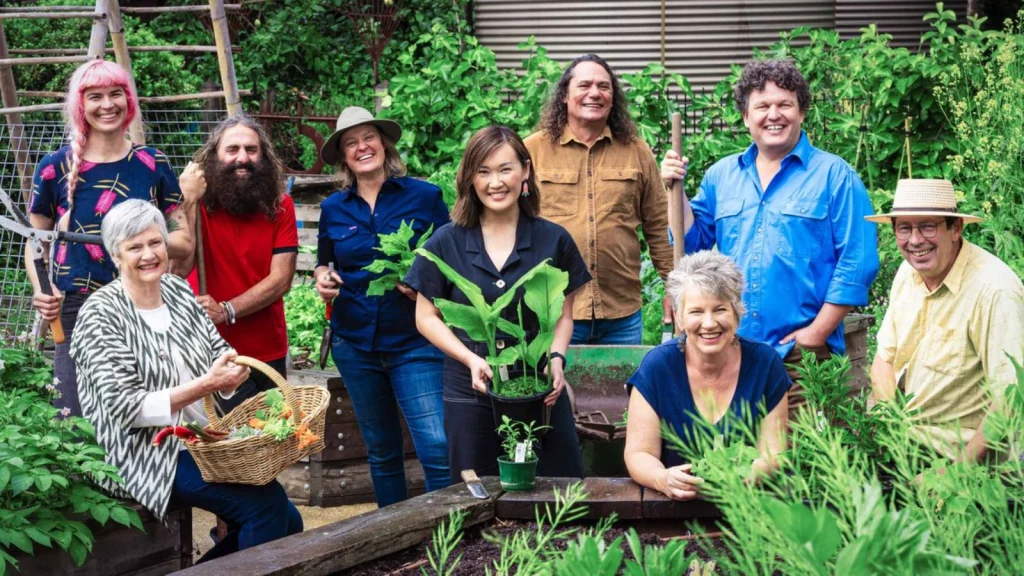
The program Gardening Australia 2025 Episode 38 explores diverse horticultural worlds across the continent. It ranges from large-scale botanic conservation to specialized crop cultivation. The episode features experts visiting Perth’s Kings Park and Botanic Garden for its significant anniversary. It also follows professional growers on a peony farm. Meanwhile, practical segments demonstrate planting summer crops, selecting tough perennials, and a doctor’s passion for tropical plants. This showcases the breadth of modern gardening.
Effective gardening requires adapting to local conditions. This is a central theme. Gardeners face increasingly hot, dry environments. Therefore, water-wise plant selection is more critical than ever. The program addresses this by showcasing perennials suited for survival. In addition, it highlights the crucial work of conservation. Botanic gardens play a vital role in protecting at-risk plant species. This ensures their preservation for future generations.
This exploration, based on Gardening Australia 2025 Episode 38, delves into these varied topics. It examines the botanical science and conservation efforts at major institutions. It also provides a practical guide to establishing a productive summer vegetable patch. The program contrasts large-scale public horticulture with the intense passion of private collectors. These collectors create lush, tropical worlds in small, urban spaces.
The foundation of good Australian gardening involves celebrating native plants. It also relies on practical, hands-on knowledge. The episode balances the ecological importance of our native flora with accessible diy gardening techniques. These techniques empower home gardeners. They learn to solve common problems, from soil preparation to pest management. This blend of inspiration and education is a hallmark of the content.
From the large-scale ecological preservation in Western Australia, the focus shifts. It moves to the detailed garden design principles for specific climates. Viewers learn about creating beautiful, resilient borders using appropriate perennials. The episode also investigates the commercial growing of specific, celebrated flowers. This provides insight into the challenges of cultivating plants like the peony.
The journey also highlights practical solutions for common issues. This includes simple garden hacks to protect crops from pests. Furthermore, it offers formulas for successful container planting. The program demonstrates a deep understanding of horticulture. It covers everything from Indigenous land management to modern propagation techniques. This knowledge helps build a complete picture of gardening today.
Cultural Landscapes and Native Flora: A Kings Park Focus from Gardening Australia 2025 Episode 38
Perth’s Kings Park is a 400-hectare site. It combines preserved bushland with extensive display gardens overlooking the city. Established in the 1890s, it serves as a vital green space. The Western Australian Botanic Garden, located within the park, opened in 1965. It recently celebrated its 60th anniversary. Unlike many botanic gardens, this one focuses exclusively on species local to the region. This mission is crucial for conserving Western Australia’s unique flora.
The site’s history extends back much further, however. The Whadjuk Noongar people have a 60,000-year connection to this land. According to Rickeeta Walley, the area has several traditional names. These include Kaarta Gar-up (spider hill) and Kaarta Koomba (big hill). The ‘up’ suffix in Noongar language signifies ‘place of’. This land remains a significant cultural site. It is a place for teaching, continuing cultural practices, and connecting with bushland in an urban area.
One important cultural feature is Beedawong, a meeting place. Its name means ‘a place to travel, to speak, to share’. The design reflects traditional meeting customs. It is a circle, ensuring everyone is represented. Six large rocks represent the six Noongar seasons. A large rock in the middle symbolizes the fire that people would gather around. This modern space honours the many traditional meeting places that existed in the park.
The park also holds complex, layered histories. The Pioneer Women’s Memorial area, for example, is built on a site of older significance. This area, known as Yorkas Nyinning, was traditionally a special place for women and children. The developers of the memorial were aware of this Noongar women’s heritage. Consequently, the site now has a dual recognition. It acknowledges both the pioneer women and the deep Indigenous heritage of the land.
Near this area, a natural spring is being restored. This spring was historically a resource-rich location. It provided fresh water. It also supported a variety of plants with medicinal purposes. Elsewhere in the park, a large tuart tree stands as a physical marker of history. It is a scar tree, bearing a large cut-out section. This scar signifies its cultural use by ancestors. Such trees were marked for toolmaking or to identify a significant area.
This connection to country remains a living culture. One way this is expressed is through the totemic system, or boorunga. Rickeeta Walley explains that every baby born is given a plant or animal species. This totem is theirs to care for and advocate for throughout their life. Her own totem is the koorlbardi, or magpie. This system creates a deep, familial kinship with the environment. It reinforces the belief that Noongar people are a part of the country, not separate from it.
Summer Crops: Insights from Gardening Australia 2025 Episode 38
As warm weather arrives, gardeners turn their attention to summer crops. A productive vegetable patch requires good preparation and planning. Josh plants five veggie beds, starting with soil enrichment. He works compost and pelletised organic fertiliser through the soil before planting. This provides a strong foundation for hungry summer plants.
The first bed is for cucurbits, specifically cucumbers and zucchinis. Zucchinis are planted in pairs. Josh sows two pairs of two seeds in the front of the bed. Cucumbers, meanwhile, are climbers. They will cover an A-frame trellis, which keeps the fruit off the ground. He plants two seeds every 50 centimetres along this trellis. He will later thin out the weaker seedlings to prevent crowding.
The tomato bed receives special attention. In addition to compost and fertiliser, Josh adds a dressing of potash. Potash is used to encourage abundant flowering and fruiting. He plants two family-favourite varieties. ‘Grosse Lisse’ is a good all-rounder for sandwiches and sauces. ‘Tommy Toe’ is a prolific cherry tomato, perfect for salads. He uses advanced seedlings and deep plants them. This technique encourages a stronger root system.
Crop rotation is a key strategy for success. Josh explains that planting the same family of crops in the same bed season after season increases the risk of pest and disease problems. Therefore, he rotates his crops through five different beds. This year’s legume bed is prepped with compost and fertiliser. He plants ‘Blue Lake’ climbing beans against tepee structures. Two seeds are planted against each stake. The weaker of each pair will be removed as they grow.
Corn is another hungry crop. Its bed is prepped with compost, organic fertiliser, and chicken manure for a quick start. Josh soaks the ‘Early Sweet’ corn seeds overnight in a weak seaweed solution. This simple step helps them germinate much faster. He sows the corn in a block pattern, which is essential for good wind pollination and cob development. Two seeds are planted every 40 centimetres and later thinned to the strongest seedling.
Finally, the last bed is set aside for sweet potatoes. Josh uses runners, or slips, from last year’s crop. He soaked these runners in water for a week until they developed roots. This ensures they will establish quickly once planted. He plants this purple-skinned, white-fleshed variety 40 to 50 centimetres apart. All beds are finished with a layer of mulch to conserve moisture. Regular watering and liquid feeding with fish emulsion will keep the crops thriving.
Selecting Perennials for Dry Climates
Naturalistic perennial borders and meadows are extremely popular in garden design. Social media often features soft drifts of dreamy blooms. However, many of these popular plants are not suited to all Australian climates. Much of the country is becoming hotter and drier. Gardeners must choose plants wisely to create beautiful, long-lasting gardens that do not rely on excessive water.
Salvias are a popular and reliable choice. They perform well in hot climates, respond well to pruning, and produce many flowers. To create a dynamic planting, however, diversity is key. Garden design benefits from a variety of flower forms and aesthetics. Agastaches, for example, are similar to Salvias. They have more upright, clustered clumps of colour. ‘Sweet Lili’ is a tough survivor with pink to apricot flowers, provided the soil has organic matter.
Heuchera maxima offers a different form. It features tall, slender stems of tiny white blooms above lush, low foliage. It is an excellent choice for a dry spot. While other Heucheras are available with bold, colourful leaves, they are not as resilient in harsh, dry climates. For the best effect, Heuchera maxima should be planted en masse. For an interesting spiky-headed flower, Echinops ‘Veitch’s Blue’ is a visual stunner. It thrives in very well-drained soils.
For a reliable, classic flower shape, gardeners can use the true geranium, or cranesbill. These are not the common, brightly-coloured “geraniums,” which are actually Pelargoniums. Hybrid cultivars like ‘Rambling Robin’ are frost and drought hardy. They are great for filling a ground-cover layer with shades of blue or pink. Silver foliage is another key element for dry gardens. Santolina, or cotton lavender, is a gorgeous choice. It has bright silver foliage and vibrant yellow flowers.
Sophie Thomson’s favourite silver-foliage plant is Senecio vira-vira. It has a light, white-silver foliage that remains bright even when wet. While its creamy-white flowers are small, they are beloved by beneficial insects, including bees, hoverflies, and butterflies. For lush foliage, Bergenia cross schmidtii makes a lovely ground cover. It has pretty pink flowers in spring. This cultivar is tougher and more reliable under harsh conditions than many other Bergenias.
Perennial borders do not have to be exclusively exotic plants. Some Australian native plants fit perfectly with the naturalistic theme. Veronica perfoliata, or digger’s speedwell, is one such plant. It has interesting blue-grey foliage and dainty sprays of blue-purple flowers. It is drought-tolerant once established. Native grasses, like Poa, are staples for landscaping. They provide the perfect wispy backdrop for flowers. The key is to plant them with enough space to develop their beautiful tussocky form.
Understanding the Peony: A Grower’s Guide
In cool climates, the peony is one of the most desired flowers. The Macedon Ranges in central Victoria provides a perfect environment for them. The area has a cool climate and deep mountain soil. Virginia and her husband Bernie cultivate peonies on their 36-hectare property. They supply cut flowers to many florists. They primarily grow herbaceous peonies, which are ideal for the cut-flower industry. These types have long stems and large, full-petalled flowers.
Herbaceous peonies require a cold winter. They need frost to help set a flower for the following season. As herbaceous plants, they die completely back to the ground in autumn. In spring, new buds emerge and grow rapidly. The stems can grow from the ground to full height in as little as eight weeks. There are many forms. ‘Red Charm’ is a “bomb centre” variety, with large outer petals and a central explosion of smaller petals. ‘Buckeye Belle’ is a semi-double, with fewer petals but visible golden stamens.
Harvesting peonies for the cut-flower market is a precise operation. The buds must be picked at the right stage for a long vase life. They should not be hard like an avocado pip. Instead, growers wait until the bud feels soft and springy, similar to a marshmallow. This indicates the petals are beginning to loosen. When harvesting, one flower is always left on the plant. This allows the plant’s leaves to die back naturally. This process enriches the rhizome for the following year.
Once picked, the stems are taken to a processing shed. Experienced bunchers like Meg group them into bunches of five. They ensure all heads are aligned and the stems are cut to a uniform length. The bunches are then placed in a cool room. They can be stored there for a couple of weeks. Peonies are a luxurious, showstopper flower. They are very popular for weddings, but their natural season is short. In Australia, they are primarily available in November.
Besides the herbaceous type, there are other peonies for the garden. Tree peonies flower earlier, around October. They are not actually trees but deciduous shrubs. They maintain a woody structure year-round. A third category is the ITOH, or intersectional, peony. This is a cross between a tree peony and a herbaceous peony. ITOHs have foliage and flowers similar to a tree peony. However, they grow in a clump like a herbaceous type. Virginia notes they are tough, fast-growing, and need less frost. This makes them an excellent choice for home gardeners.
The Urban Tropical Collector’s Garden
Passionate gardening can thrive even in the most challenging spaces. In inner-city Sydney, Brendon Wong, a doctor, has transformed a small terrace courtyard. The space was a bare concrete slab when he and his partner, Jason, moved in. Brendon’s interest in aroids, a type of tropical plant, began indoors. As his collection grew, the hobby “exploded.” He started experimenting with growing these tropical plants outside, challenging them in Sydney’s imperfect winter conditions.
Many aroids are climbers. To accommodate them, Brendon used diy gardening skills to build grow poles. He fashioned mesh and zip ties into poles. He then filled them with a media of coco chip and orchid bark. This support structure is critical. As aroids climb, they exhibit a behaviour called ontogeny. This is a change in the plant’s form as it matures. For example, a juvenile Monstera deliciosa ‘Thai Constellation’ has small, solid leaves. As it climbs, it produces enormous leaves with deep fenestrations, or windows.
These windows are an adaptation. In the jungle, they allow wind and rain to pass through the large leaf without damaging it. Brendon has a particular love for variegated plants, like the Alocasia watsoniana. He admires its pink hues and rounded leaves. His garden has become a chemical-free, balanced ecosystem. It attracts wildlife, including a praying mantis, frogs, and blue-banded bees. The bees nest in the brickwork of a wall.
This ecosystem extends to water. Brendon has always been fascinated by biology and breeding fish. He now breeds Japanese rice fish in his courtyard. These fish are very hardy. He encourages them to breed using spawning mops made of synthetic wool. He collects the eggs and hatches them in separate buckets. These fish co-inhabit water pots with his collection of Colocasias. This creates a symbiotic relationship.
Colocasias, or “bog aroids,” are heavy feeders. They live in marshes in the wild. In Brendon’s pots, they feed on the fish waste. This nutrients source allows the Colocasias to thrive. In turn, their roots filter the water, keeping it crystal clear for the fish. He grows stunning varieties like ‘Mojito’, ‘Pharoah’s Mask’, ‘Lemon Lime’, and ‘Milky Way’. He grows them simply in gravel and water.
Brendon’s collection also includes Caladiums. These plants grow from corms and are known for their vibrant, paper-thin leaves. They go through a period of dormancy in late autumn. Brendon removes the spent leaves and stores the pots indoors in a warm, dry place. He brings them out in early October to reshoot. He notes that Caladium leaves change with maturity. A corm in its first year might produce a modest leaf. In year three or four, the same corm will produce a spectacular, brightly coloured leaf.
Practical Techniques for the Home Garden
Beyond large projects, successful gardening relies on practical techniques. Simple garden hacks can solve common problems. For instance, rats can devastate fruit and nut crops. Hannah provides a diy gardening solution to protect trees. She creates a simple tree collar using aluminium flashing, a common roofing material. This material is ideal because it is slippery. Rats cannot get a grip on it to climb the trunk.
To make the collar, measure the flashing around the trunk. Leave about 15 centimetres of overlap. After cutting the flashing, wrap it around the trunk. Fold the two edges over on themselves tightly. Fold it again until it is firm but not constricting. This leaves space for the tree to grow. On tall trunks, two layers may be needed. The top layer must overlap the bottom one. This prevents rats from getting a grip on the bottom edge.
Container planting is another area with simple rules for success. A popular formula for a beautiful composition involves three types of plants: the thriller, the filler, and the spiller. The thriller is the centrepiece, like an Agastache. The filler plants surround the thriller. A Scaevola, or fan flower, works well. The spiller is the final touch. It is planted on the edge to fall over the side. Dichondra ‘Silver Falls’ creates a beautiful curtain of foliage.
Other garden hacks address soil and propagation. When sowing seeds on a freshly prepared bed, soil compaction is a risk. Walking on the soil can undo your work. A tip from a grandfather is to walk on boards. The boards distribute your weight evenly, avoiding compaction. For propagation, understanding the “node” is essential. A node is the bump or joint on a plant stem where leaves, roots, or branches grow. When taking a cutting, always cut just below a node. This node must be submerged for roots to grow.
Finally, plant choice is a critical part of gardening. Some popular garden plants can become environmental weeds. Topped lavender, Lavandula stoechas, is one. It is now widely naturalised in Australia. In the southeast, it can form dense stands that eliminate other ground-level plants. Good alternatives exist. Prostanthera, or bush mint, is a soft, woody, compact native plant. It often has purple or white flowers. Eremophila is another option. Its grafted varieties can be grown outside their ideal range.
Seasonal Management Across Australian Climates
A healthy garden requires constant, seasonally-appropriate management. Unlike the curated plots on some gardening shows, a real garden requires ongoing work. Tasks vary significantly across Australia’s diverse climate zones.
In cool areas, it is time to start radicchio in seed trays. Gardeners can also sow coriander now, encouraging it to set seed. Beetroot seeds benefit from an overnight soak with boron powder before sowing. In arid areas, it is time to plant brussel sprouts. Plant them deeply into compost-enriched soil. Gardeners should also focus on preserving bumper crops of stone fruits. It is crucial to pick up any fallen fruit to avoid fruit-fly infestations.
In warm areas, focus on bushfire preparation. This involves removing all dry, dead material from trees and gutters. It is also time to deadhead roses. Cut a few growing points down the stem to encourage airflow and a new flush of blooms. Blueberries can be harvested. After harvesting, give them a light prune. Fruit is borne on one-year-old wood, so remove older central branches.
Subtropical areas have their own set of tasks. The tips of climbing beans can be pinched. This pushes the plant’s energy into pod production instead of vertical growth. Lemongrass, which grows tall quickly, should be kept contained in a pot. Bindiis can be managed with a solution of iron sulphate. However, this must be applied carefully as it can cause black stains.
In tropical areas, the hot, wet weather brings specific challenges. An organic copper fungicide can prevent crop loss. Mature pepper vines are flourishing and can be harvested. Fish mint, a herb that thrives in this weather, benefits from a fortnightly liquid feed. This overview of regional gardening tasks provides a snapshot of seasonal demands. It is a reminder that gardening australia is not one single activity. It is a diverse and responsive practice.
Growing Beyond Boundaries: Where Culture, Conservation, and Your Garden Converge
The true magic of gardening unfolds not in isolation, but in connection—between past and present, between global ecosystems and backyard borders, between ambitious conservation and the simple joy of watching a tomato ripen. Gardening Australia 2025 Episode 38 reminds us that whether you’re tending 400 hectares of rare Western Australian flora or coaxing aroids up a homemade pole in a Sydney terrace, you’re participating in something far larger than soil and seed.
Kings Park’s story illustrates this beautifully. Here, 60,000 years of Whadjuk Noongar stewardship intersects with modern botanical science, creating a living testament to how deeply culture and horticulture intertwine. When Rickeeta Walley explains the boorunga system—where each person becomes the lifelong guardian of their totemic species—she’s describing something revolutionary yet ancient: kinship with the land rather than dominion over it. This perspective transforms gardening from a weekend hobby into an act of ecological responsibility. Every plant choice becomes a vote for biodiversity. Every garden becomes a potential refuge.
But philosophy needs practicality to take root. That’s where the episode’s hands-on wisdom shines. Josh’s methodical crop rotation isn’t just preventing tomato blight—it’s demonstrating that success comes from working with natural systems rather than against them. Hannah’s aluminium tree collars prove that elegant solutions often cost less than ten dollars and twenty minutes. Brendon’s fish-and-Colocasia ecosystem shows how observation and experimentation can transform a concrete slab into a thriving wetland microcosm. These aren’t professional secrets reserved for the initiated; they’re accessible techniques that empower anyone to grow better.
The episode also confronts a truth many gardeners resist: not every plant belongs everywhere. Those Instagram-perfect perennial meadows wilting in Australian summers teach expensive lessons about ignoring climate reality. Sophie Thomson’s dry-climate alternatives—Salvias, Agastaches, Senecio vira-vira—offer something better than mimicry: beauty that endures because it suits the place. Adaptation isn’t compromise; it’s wisdom. The peony growers in the Macedon Ranges understand this implicitly, working with their cool climate’s advantages rather than fighting its limitations.
Perhaps most inspiring is how passion scales. Virginia’s 36-hectare peony operation and Brendon’s courtyard jungle represent opposite ends of the gardening spectrum, yet both demonstrate the same principle: deep engagement with plants creates abundance. Brendon’s observation about Monstera ontogeny—how climbing transforms leaf morphology—reveals the kind of intimate knowledge that only comes from daily attention. This is the gardener’s reward: the privilege of witnessing transformation.
As climate patterns shift and urban spaces shrink, the gardening approaches showcased here aren’t merely interesting—they’re increasingly essential. Water-wise perennials, productive container gardens, chemical-free ecosystems that support wildlife, and cultural land management practices all point toward a more resilient future. Your garden, regardless of size, contributes to that future.
Start with one technique from this episode: try crop rotation, build a simple trellis, experiment with a new drought-tolerant perennial, or create a water feature that supports both plants and wildlife. Each small action connects you to the larger story of Australian horticulture—a story being written in every season, across every climate zone, by gardeners who understand that cultivation is both inheritance and innovation.
FAQ Gardening Australia 2025 Episode 38
Q: What makes Gardening Australia 2025 Episode 38 different from typical gardening shows?
A: This episode bridges cultural heritage with modern horticultural practice, showcasing everything from Kings Park’s 60,000-year Whadjuk Noongar connection to cutting-edge urban tropical gardening. Rather than focusing solely on decorative techniques, it demonstrates how Indigenous land management, botanical conservation, and practical DIY solutions intersect. Furthermore, the episode spans Australia’s diverse climate zones, offering region-specific advice instead of one-size-fits-all recommendations. This comprehensive approach acknowledges that Australian gardening encompasses vastly different challenges and opportunities depending on location.
Q: How does crop rotation prevent pest and disease problems in vegetable gardens?
A: Crop rotation works by disrupting the lifecycle of pests and pathogens that target specific plant families. When you plant tomatoes in the same bed year after year, soil-borne diseases accumulate and insect populations establish permanent residence. However, rotating crops through different beds means pests wake up to find their preferred host plant missing. Josh demonstrates this technique using five dedicated beds, cycling plant families annually. Consequently, soil nutrients remain balanced since different crops have varying feeding requirements. This sustainable practice reduces chemical intervention while improving overall garden health and productivity.
Q: What is the boorunga system mentioned in the Kings Park segment?
A: The boorunga represents the Whadjuk Noongar totemic system where each person receives a specific plant or animal species as their lifelong guardian responsibility. From birth, individuals become advocates and caretakers for their assigned totem, creating deep familial kinship with the environment. Rickeeta Walley’s totem is the koorlbardi, or magpie, illustrating this personal connection. This ancient practice transforms conservation from abstract concept into intimate relationship. Additionally, the system reinforces that people exist as part of the land rather than separate from it, offering profound lessons for contemporary environmental stewardship and biodiversity protection.
Q: Why are many popular perennial plants unsuitable for Australian gardens?
A: Social media showcases dreamy perennial borders that typically thrive in cool, moisture-rich European climates, yet much of Australia experiences increasingly hot, dry conditions. Plants like certain Heuchera varieties with colorful foliage struggle in harsh, arid environments despite their aesthetic appeal. Therefore, blindly replicating Instagram-perfect gardens leads to disappointing results and excessive water consumption. Sophie Thomson addresses this by recommending drought-tolerant alternatives such as Salvias, Agastaches, and Senecio vira-vira that deliver beauty while respecting climate reality. Choosing regionally appropriate plants isn’t compromise—it’s intelligent design that ensures long-term garden success without constant intervention.
Q: What is ontogeny in aroids, and why does it matter for home gardeners?
A: Ontogeny describes the dramatic transformation in plant form as aroids mature and climb upward. A juvenile Monstera deliciosa produces small, solid leaves, whereas a climbing specimen develops enormous leaves with distinctive fenestrations—the characteristic windows that allow wind and rain to pass through safely. Brendon Wong’s urban tropical garden demonstrates this phenomenon brilliantly using DIY grow poles filled with coco chip and orchid bark. Understanding ontogeny explains why your Monstera might look disappointingly ordinary: it needs vertical support to trigger its spectacular mature growth phase. This knowledge transforms cultivation from guesswork into intentional strategy.
Q: When should herbaceous peonies be harvested for the longest vase life?
A: Professional peony growers wait until buds feel soft and springy like marshmallows rather than hard like avocado pips. This tactile test indicates petals are beginning to loosen inside the bud, ensuring they’ll open beautifully after cutting. Virginia and Bernie, who cultivate peonies commercially in the Macedon Ranges, emphasize leaving one flower on each plant during harvest. This remaining bloom allows foliage to die back naturally, enriching the rhizome for next season’s growth. Additionally, harvested stems store successfully in cool rooms for several weeks, extending the brief November availability period that makes Australian peonies such prized wedding flowers.
Q: How does Brendon Wong’s fish-and-Colocasia system work as a closed ecosystem?
A: This symbiotic relationship mimics natural wetland ecology in a controlled courtyard environment. Japanese rice fish produce waste that provides essential nutrients for Colocasias, which are heavy feeders naturally inhabiting marshes. Meanwhile, the Colocasia roots filter water through biological processes, maintaining crystal-clear conditions ideal for fish health. Brendon grows spectacular varieties like ‘Mojito’ and ‘Pharoah’s Mask’ simply in gravel and water, demonstrating how understanding ecological relationships eliminates the need for chemical fertilizers. Furthermore, this chemical-free approach attracts beneficial wildlife including blue-banded bees and frogs, creating biodiversity in minimal space.
Q: What makes the Western Australian Botanic Garden unique among Australian botanic institutions?
A: Unlike most botanic gardens that showcase global plant collections, this institution within Kings Park focuses exclusively on Western Australian native species since opening in 1965. This regional specialization proves crucial for conserving the state’s unique and often endangered flora. The garden’s 60th anniversary celebration highlights six decades of protecting at-risk plant species while providing public education. Moreover, its location on land with 60,000 years of Whadjuk Noongar cultural significance creates opportunities to integrate Indigenous knowledge with contemporary botanical science. This dual mission of cultural recognition and ecological preservation sets a powerful precedent for conservation institutions.
Q: Why does Josh soak corn seeds overnight before planting?
A: Soaking ‘Early Sweet’ corn seeds in weak seaweed solution overnight dramatically accelerates germination rates compared to direct sowing. This simple pre-treatment softens the seed coat, allowing moisture to penetrate more efficiently and triggering faster sprouting. Additionally, the seaweed solution provides trace minerals and growth hormones that give seedlings a vigorous start. Josh plants corn in block patterns rather than rows because this configuration ensures better wind pollination, which directly impacts cob development and kernel formation. These combined techniques—pre-soaking and strategic spacing—transform a basic crop into a high-yielding harvest with minimal extra effort.
Q: What are ITOH peonies, and why might they suit home gardeners better than herbaceous types?
A: ITOH peonies, also called intersectional peonies, result from crossing tree peonies with herbaceous varieties, combining desirable traits from both parents. They produce tree peony-style foliage and flowers while growing in herbaceous clumps rather than woody shrubs. Virginia notes that ITOHs are tough, fast-growing, and require less winter frost than traditional herbaceous peonies. This reduced chilling requirement makes them suitable for warmer Australian regions where herbaceous types struggle. Furthermore, their earlier flowering period around October extends the peony season beyond the brief November window. For gardeners outside cool-climate zones, ITOHs offer accessibility to peony beauty previously beyond reach.


