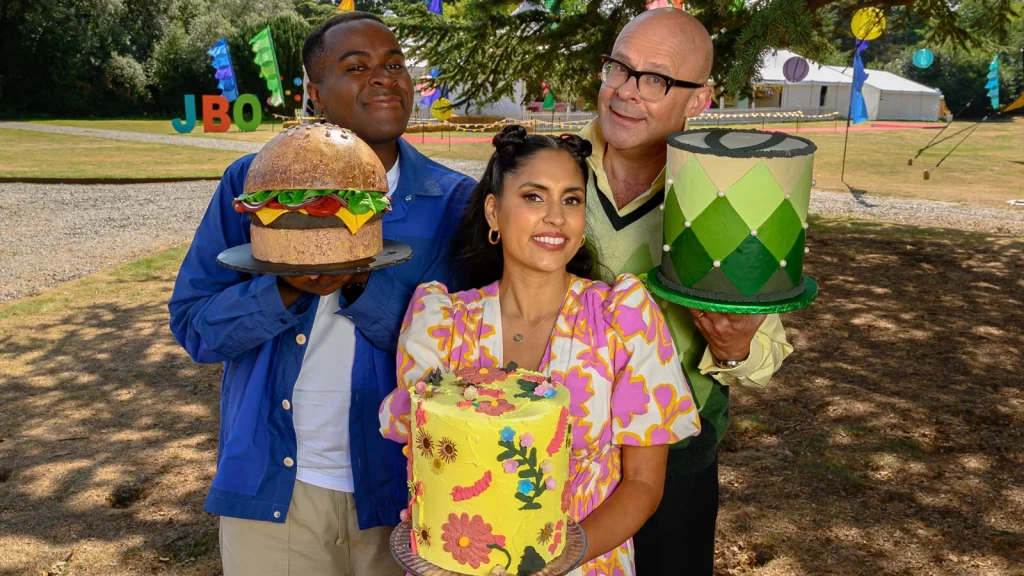
Junior Bake Off 2026 episode 9 brought Dessert Day to the second heat of young bakers, where precision, creativity, and courage under pressure determined who would advance and who would fall short. The episode showcased eight talented contestants navigating two demanding challenges: a Technical that tested their ability to work with temperamental fudge, and a Showstopper requiring them to reimagine childhood treats as sophisticated Pocket Money Cream Pies. Hosts Harry Hill and judges Liam Charles and Ravneet Gill guided the bakers through a day that would separate confident execution from costly mistakes.
Dessert-focused competitions hold particular weight in baking contests because they demand both technical mastery and artistic vision. Unlike bread or pastry challenges that rely heavily on structural integrity and technique, desserts require bakers to balance flavor profiles, textures, and visual appeal simultaneously. For young competitors in Junior Bake Off, dessert challenges represent an opportunity to demonstrate sophistication beyond their years while managing the unforgiving nature of sugar work, cream handling, and precise timing. The stakes intensify when contestants must perform under time constraints that leave no margin for error.
This Junior Bake Off 2026 episode explored how eight bakers—Alix, Coco, Hugo, Finley, Rosie, Maya, Max, and Amelie—approached challenges that rewarded both adherence to established techniques and creative risk-taking. The Technical Challenge stripped away recipe guidance, forcing contestants to rely on instinct and experience with tablet fudge, a traditional confection that punishes hesitation and rewards confidence. The Showstopper Challenge invited personal expression through Pocket Money Cream Pies, where childhood memories and sophisticated execution needed to coexist within miniature desserts that could fit in a pocket yet deliver maximum impact on the palate.
The competition structure for this heat mirrored the format that has made Junior Bake Off compelling viewing: an initial Technical Challenge that levels the playing field by removing advantages of preparation, followed by a Showstopper that allows contestants to showcase their individual strengths. Judges Liam Charles and Ravneet Gill brought complementary perspectives to their evaluations, with Liam focusing on flavor innovation and approachability while Ravneet emphasized technical precision and professional presentation. Their combined assessment would determine which baker earned Star Baker honors and which would leave the tent.
For the eight contestants entering Dessert Day, the challenge represented more than culinary skill testing. Each baker brought distinct strengths to the competition: some excelled at flavor development, others at technical execution, and still others at maintaining composure when circumstances deteriorated. The judges would evaluate not just the finished products but the decision-making processes that led to them, weighing bold choices that succeeded against safe approaches that delivered consistency.
The episode’s progression revealed how young bakers respond when familiar techniques prove inadequate and when time pressure forces difficult choices between completing a flawed vision or pivoting to something achievable. These moments of crisis management often distinguish exceptional competitors from merely competent ones, particularly in dessert challenges where a single miscalculation with temperature, timing, or proportions can cascade through an entire bake.
Harry Hill’s hosting style maintained the energy and encouragement essential to keeping young contestants focused through setbacks. His interactions with the bakers provided moments of levity without diminishing the seriousness of their efforts, creating an environment where mistakes could be acknowledged without devastating morale. This balance proved crucial during the Technical Challenge, when several bakers faced decisions about whether to restart problematic fudge or work with less-than-ideal results.
The broader context of this Junior Bake Off 2026 episode within the competition emphasized how each heat builds understanding of what judges reward. Second-heat bakers had the advantage of observing the first heat’s results, potentially learning from others’ mistakes, but they also faced the pressure of meeting or exceeding the standards already established. The episode would demonstrate whether these young competitors could translate observation into execution under the unique pressures of the tent.
Junior Bake Off 2026 episode 9
The Technical Challenge Demands Precision with Traditional Tablet Fudge
The Technical Challenge for Junior Bake Off 2026 episode 9 required contestants to produce tablet fudge, a traditional Scottish confection that tests a baker’s understanding of sugar chemistry and temperature control. Judges Liam Charles and Ravneet Gill provided minimal instructions, forcing the eight bakers to rely on instinct about cooking times, temperatures, and the precise moment when boiled sugar mixture reaches the correct consistency for beating. Tablet fudge differs from standard fudge through its granular, crystalline texture achieved by deliberately encouraging sugar crystallization rather than preventing it.
The challenge began with contestants measuring ingredients including sugar, butter, condensed milk, and milk. The mixture required heating to a specific temperature range—approximately 116 to 118 degrees Celsius—where sugar molecules would be properly concentrated for the beating phase. However, without explicit temperature guidance in the limited recipe, bakers needed to recognize visual and textural cues indicating readiness. Undercooking would produce fudge that never set properly, remaining soft and sticky. Overcooking would create a mixture too rigid to beat effectively, resulting in a grainy, unworkable mass.
Several contestants struggled with temperature judgment immediately. Coco’s mixture appeared too dark, suggesting excessive caramelization that would compromise both flavor and texture. Hugo worked methodically but cautiously, repeatedly checking his mixture without committing to the beating phase. Finley demonstrated confidence in his temperature assessment, moving decisively from cooking to beating when his mixture showed appropriate consistency. The judges observed that hesitation often proved more damaging than slight miscalculations, as fudge mixture continues cooking even after removal from heat, meaning delayed action compounds initial errors.
The beating phase separated confident bakers from uncertain ones. Tablet fudge requires vigorous, sustained beating to encourage sugar crystallization and create the characteristic granular texture. Insufficient beating produces fudge with larger crystals and coarser texture, while excessive beating can make the mixture too stiff to press into pans before it sets. Alix attacked this phase with determination, her arm movements showing the sustained effort required. Maya appeared more tentative, her beating less aggressive and potentially insufficient to achieve proper crystallization.
Timing complications emerged for multiple contestants. Max’s mixture set prematurely during beating, forcing him to work quickly to press the hardening fudge into his pan before it became unworkable. This common problem occurs when mixture temperature drops too rapidly or when beating begins at slightly too low a temperature. The judges noted that professional bakers sometimes warm their pans to extend working time, but the Technical Challenge’s limited instructions left contestants to discover such strategies independently.
Amelie faced different difficulties as her fudge refused to set after pressing into the pan. This problem typically indicates undercooking—the sugar concentration remained too low to form stable crystalline structures. Without time to restart, she presented soft, unprofessional-looking fudge that lacked the firm, sliceable texture expected. Rosie’s tablet showed better texture but irregular surface finish, suggesting she had struggled to smooth the mixture before it set completely.
The judging revealed wide variation in results. Liam Charles and Ravneet Gill evaluated each tablet on texture, appearance, and flavor. Finley’s fudge demonstrated excellent crystallization with appropriate firmness and clean cutting properties, earning him first place in the Technical. His success reflected both proper temperature management and confident beating. Alix secured second place with tablet showing good texture despite minor surface irregularities. Hugo’s careful approach yielded third place, his fudge technically sound if slightly less refined than the top performers.
Coco’s darker tablet suggested slight overcooking, producing more pronounced caramel notes that, while flavorful, deviated from traditional tablet profile. Max’s prematurely set fudge created working difficulties but ultimately produced acceptable texture. Maya’s less aggressive beating resulted in larger crystal formation and less refined texture. Amelie’s failure to achieve proper set placed her last in the Technical Challenge, a difficult starting position heading into the Showstopper.
The Technical Challenge results established momentum heading into Pocket Money Cream Pies. Finley’s victory demonstrated his technical capabilities and composure under uncertainty. Alix and Hugo showed consistent competence that would serve them well in creative challenges. Meanwhile, Amelie, Maya, and Max needed strong Showstopper performances to overcome their Technical Challenge struggles and remain competitive for Star Baker consideration or even survival in the competition.
Pocket Money Cream Pies Challenge Individual Creativity and Technical Skill
The Showstopper Challenge for Junior Bake Off 2026 episode 9 asked contestants to create Pocket Money Cream Pies—miniature desserts inspired by childhood treats that could theoretically fit in a pocket yet deliver sophisticated flavors and professional presentation. Judges Liam Charles and Ravneet Gill emphasized that successful entries would balance nostalgia with refinement, combining approachable flavors with technical execution befitting the competition level. The challenge awarded creativity in concept while demanding precision in pastry, cream work, and assembly.
Each baker approached the brief differently, drawing from personal memories and preferences to define their interpretations. Alix designed strawberry and cream pies featuring shortcrust pastry, diplomat cream, and fresh strawberries, aiming for classic flavor combinations with professional finish. Her approach represented safe sophistication—unlikely to revolutionize the category but capable of scoring well through solid execution. Coco pursued chocolate and hazelnut pies with chocolate pastry shells, praline cream, and hazelnut decoration, a richer profile that risked heaviness but promised reward if balanced properly.
Hugo conceptualized lemon meringue pies as his pocket money tribute, incorporating lemon curd, Swiss meringue, and sweet pastry cases. This choice demonstrated ambition, as lemon meringue requires managing multiple temperature-sensitive components while maintaining distinct textural layers. Successful execution would showcase versatility, while failure would expose technical limitations. Finley, building on his Technical Challenge success, chose rhubarb and custard pies with sweet pastry and vanilla custard cream, channeling traditional British dessert flavors into contemporary format.
Rosie selected banoffee pies featuring digestive biscuit bases, caramel, banana, and cream, embracing a widely loved combination that judges might find overly familiar unless elevated through exceptional execution. Maya pursued cookies and cream pies with Oreo-based crusts, cookies and cream filling, and chocolate decoration, targeting younger palates while risking accusations of insufficient sophistication.
Max designed raspberry and white chocolate pies combining sweet pastry, raspberry compote, white chocolate cream, and fresh raspberries—a balanced flavor profile requiring careful component preparation. Amelie, needing to recover from her Technical Challenge performance, chose caramel and peanut butter pies with biscuit bases, caramel, peanut butter cream, and chocolate coating, a bold flavor combination that could distinguish her positively or negatively depending on execution.
Pastry preparation immediately tested technical skills. Alix rolled her shortcrust efficiently, achieving even thickness and proper docking to prevent bubbling during blind baking. Her systematic approach suggested experience with pastry fundamentals. Hugo’s sweet pastry showed good handling, though his shell sizing appeared slightly inconsistent across pies. Coco’s chocolate pastry required careful management to prevent overbaking, which would create bitterness amplifying her chocolate-heavy flavor profile.
Blind baking created challenges for several contestants. Max’s pastry shells emerged too dark, suggesting excessive oven time or temperature. Overcooked pastry would provide unpleasant bitter notes competing with his delicate raspberry and white chocolate flavors. Finley’s shells showed proper golden color and structural integrity, continuing his strong performance from the Technical Challenge. Maya’s Oreo-based crusts required less traditional baking management but needed proper pressing and chilling to achieve stability.
Cream and filling preparation revealed varying skill levels with temperature-sensitive components. Alix’s diplomat cream required combining pastry cream with whipped cream at proper ratios and temperatures—too warm and it would destabilize, too cold and it would become lumpy. Her methodical preparation suggested she understood these principles. Hugo’s lemon curd needed cooking to proper thickness without curdling, a delicate balance requiring constant attention and temperature control. His curd appeared smooth and properly thickened, indicating successful egg tempering.
Finley’s vanilla custard cream required similar attention to temperature and consistency. His steady stirring and temperature monitoring produced smooth, properly set custard that would hold shape without becoming rubbery. Coco’s praline cream needed both proper cream whipping and successful hazelnut praline preparation—overcooking the sugar base would create bitter praline, while undercooking would prevent proper crystallization. She managed both components successfully, though time pressure appeared to stress her normally confident demeanor.
Assembly phase separated organized bakers from those struggling with time management. Alix assembled her strawberry pies efficiently, piping diplomat cream attractively and arranging strawberries with consideration for both aesthetics and structural stability. Her finished pies showed professional appearance with consistent sizing and decoration. Hugo faced complications with his Swiss meringue topping, which required proper whisking to achieve stable peaks, then torch work for attractive browning without burning. His meringue showed good stability but slightly uneven browning, suggesting rushed torch technique.
Rosie’s banoffee assembly required layering caramel, banana, and cream without creating unstable structures. Her pies appeared somewhat rustic, with less precision in piping and decoration than top performers. Maya’s cookies and cream pies showed creative decoration with crushed Oreo topping, though judges might question whether the execution matched the competition level expected in later rounds. Max struggled with his white chocolate cream, which appeared slightly split or grainy, suggesting temperature management problems during preparation.
Amelie’s caramel and peanut butter pies demonstrated her determination to recover from Technical Challenge difficulties. Her chocolate coating required tempering or careful melting to achieve proper snap and shine without blooming or streaking. She managed reasonable results despite visible time pressure, her pies showing acceptable finish if not exceptional refinement. The bold peanut butter and caramel combination would either impress judges with its confidence or concern them about balance.
Judging Reveals Triumphs and Shortcomings Across Diverse Approaches
Liam Charles and Ravneet Gill approached tasting with attention to multiple evaluation criteria: flavor balance, technical execution, creativity within the brief, and overall presentation. They emphasized that Pocket Money Cream Pies should evoke childhood pleasure while demonstrating grown-up baking competence. Successful entries would transport judges to nostalgic moments while impressing with professional finish.
Alix presented her strawberry and cream pies confidently. Ravneet Gill praised the diplomat cream’s smooth texture and proper sweetness level, which complemented the strawberries without overwhelming them. Liam Charles noted the shortcrust pastry’s excellent texture—crisp without being dry, sturdy without being tough. The pies demonstrated textbook execution of classic techniques, earning consistent praise even if they didn’t provoke excitement. Judges appreciated that sometimes restraint and precision deserve recognition alongside innovation.
Coco’s chocolate and hazelnut pies generated mixed responses. Liam Charles enjoyed the deep chocolate flavor and the textural contrast from praline pieces, finding the combination satisfying and appropriately rich for small portions. However, Ravneet Gill expressed concern about heaviness, suggesting the pies might benefit from lighter element or brighter flavor notes to prevent palate fatigue. The technical execution earned praise—properly baked chocolate pastry and well-made praline cream—but the judges questioned whether the flavor profile fully succeeded within the pocket money pie concept.
Hugo’s lemon meringue pies impressed with their ambition and mostly successful execution. Ravneet Gill complimented the lemon curd’s perfect balance between tart and sweet, with appropriate thickness for filling without becoming gluey. The Swiss meringue showed proper texture and stability. However, both judges noted the uneven torch marks on meringue surfaces, suggesting rushed final presentation. Liam Charles emphasized that in competitions where margins between contestants narrow, such finishing details become increasingly significant. Despite this criticism, the pies represented strong technical work demonstrating Hugo’s capabilities.
Finley’s rhubarb and custard pies earned enthusiastic responses. Liam Charles particularly enjoyed the nostalgic flavor combination elevated through professional execution. The sweet pastry provided buttery richness without sweetness overwhelming the filling. The vanilla custard cream achieved silky smoothness with appropriate set—firm enough to hold shape, soft enough to feel luxurious. Ravneet Gill praised the rhubarb’s tartness cutting through the cream’s richness, creating balanced bites. The pies’ consistent appearance and decoration reinforced positive impressions, positioning Finley strongly for Star Baker consideration.
Rosie’s banoffee pies received tempered feedback. The judges enjoyed the familiar, crowd-pleasing flavors and noted her caramel showed proper cooking with good depth. However, they identified several areas needing improvement: the digestive base appeared slightly thick and compact rather than light and crumbly, the banana slices showed some browning from oxidation, and the cream piping lacked finesse. Liam Charles suggested that when choosing well-known combinations, execution must be exceptional to justify the safe choice. Rosie’s pies satisfied but didn’t excel, placing her in mid-pack.
Maya’s cookies and cream pies generated concern about sophistication level. While Ravneet Gill acknowledged the flavors would appeal to young tastes and the Oreo base provided appropriate texture, she questioned whether the concept demonstrated sufficient advancement for this competition stage. Liam Charles noted the cream filling could have been lighter and the chocolate decoration more refined. The pies read as competent home baking rather than competition-level work, potentially problematic in a strong heat.
Max’s raspberry and white chocolate pies encountered technical problems affecting judging. The overcooked pastry shells provided bitter undertones that competed with the delicate raspberry and white chocolate flavors. Additionally, the white chocolate cream showed slight graininess, suggesting temperature issues during preparation—likely insufficient warming of chocolate before combining with cream, or overheating causing fat separation. Ravneet Gill acknowledged the flavor concept’s appeal but stressed that technical execution must support creative vision. Max’s difficulties across both challenges placed him in precarious position.
Amelie’s caramel and peanut butter pies represented her effort to recover from Technical Challenge disappointment. The judges appreciated the bold flavor pairing and found the caramel properly cooked with good depth. However, they identified balance issues—the peanut butter cream’s richness combined with sweet caramel and chocolate coating created heaviness without relief. Liam Charles suggested acid or salt could have cut the sweetness, creating more complex flavor profile. The pies showed determination and reasonable technical execution but lacked the refinement needed to overcome her earlier struggles.
Star Baker Recognition and Elimination Decision Reflect Overall Performance
The judges’ deliberation for Junior Bake Off 2026 episode 9 required weighing Technical Challenge results against Showstopper performances, considering both consistency across challenges and standout moments of excellence. Liam Charles and Ravneet Gill evaluated which bakers demonstrated complete skill sets versus those showing strength in single areas while struggling in others.
Finley emerged as the clear Star Baker candidate. His first-place Technical Challenge finish demonstrated technical knowledge and composure with unfamiliar recipes. His Showstopper delivered on concept and execution, with judges praising both flavor development and presentation quality. The consistency across both challenges, combined with his ability to handle pressure without visible stress, positioned him as the deserving recipient of Star Baker honors. Ravneet Gill emphasized that Finley’s performance exemplified the balance between technical precision and creative expression that judges sought.
Alix represented another strong performer, placing second in the Technical and delivering solid Showstopper work. While her strawberry pies didn’t generate the excitement of Finley’s rhubarb and custard, they demonstrated reliable skills and good judgment. Hugo similarly showed consistent competence with his third-place Technical finish and ambitious lemon meringue pies. Both bakers established themselves as serious contenders for advancement, though neither quite matched Finley’s complete performance.
The elimination decision centered on which baker showed the weakest combination of technical ability and creative execution. Maya’s cookies and cream pies raised sophistication concerns, but her Technical Challenge performance, while not exceptional, showed competence. Max struggled across both challenges with his last-place Technical finish and technical problems in his Showstopper. His overcooked pastry and grainy white chocolate cream suggested difficulties managing fundamental techniques under pressure.
Amelie faced the steepest climb, entering Showstopper in last place from her failed tablet fudge. While her caramel and peanut butter pies showed ambition and reasonable execution, the judges questioned whether she recovered sufficiently to justify advancement over competitors with more consistent performance. The bold flavor choices demonstrated confidence, but the execution didn’t fully deliver on the concept’s promise.
Ultimately, the judges eliminated the baker whose performance across both challenges showed the most concerning technical gaps and whose Showstopper failed to demonstrate clear path forward. The decision emphasized that Junior Bake Off rewards not just creativity but also fundamental skills applied consistently under pressure. The remaining seven bakers would continue to the next challenge, each having learned lessons about managing time, trusting instincts, and balancing ambition with achievable execution.
Key Moments Define Success and Failure in High-Pressure Competition
Several critical junctures throughout Junior Bake Off 2026 episode 9 illustrated how small decisions cascade into significant outcomes. The Technical Challenge’s temperature judgment phase determined which bakers would struggle throughout the remainder of that challenge. Contestants who confidently assessed their fudge mixture’s readiness and committed to beating produced superior results compared to those who hesitated, second-guessed, or waited too long before acting. This pattern reinforced fundamental baking truth: decisiveness matters as much as technical knowledge when working with time-sensitive processes.
The Showstopper Challenge highlighted how component preparation sequencing affects final results. Bakers who organized their workflow to complete time-consuming elements first—pastry baking, cream making, compotes cooling—maintained control throughout assembly phase. Those who attempted concurrent preparation of multiple temperature-sensitive components experienced stress and errors. Max’s grainy white chocolate cream and overcooked pastry suggested workflow problems rather than fundamental skill deficiencies, emphasizing that competition baking tests organizational abilities alongside technical capabilities.
Blind baking difficulties demonstrated how vigilance requirements increase under competition pressure. Several contestants who would likely nail blind baking in home kitchens pushed their pastry too far in the tent, creating bitter flavors and textural problems. The difference between home baking and competition environment includes distraction from cameras, time pressure affecting judgment, and simultaneous preparation of other components dividing attention. Successful competitors develop systems preventing such routine tasks from going wrong despite environmental challenges.
Finishing details repeatedly influenced judges’ perceptions and placements. Hugo’s uneven meringue browning, Maya’s less refined decoration, and Amelie’s rushed chocolate coating all prompted judge commentary about polish and professionalism. In competitions where multiple bakers demonstrate solid technical skills, such presentation factors become difference-makers. The judges’ emphasis on these details reminded contestants that complete excellence requires attention to aesthetics alongside flavor and technique.
The Competitive Environment Shapes Young Bakers’ Decision-Making
Harry Hill’s interactions with contestants throughout the episode revealed how hosting style affects competitor confidence and resilience. His approach combined genuine interest in their processes with light humor that relieved tension without trivializing their efforts. When Amelie struggled with her fudge, Harry’s encouragement focused on problem-solving rather than dwelling on disappointment, helping her maintain composure for the Showstopper. When Finley succeeded, Harry’s enthusiasm validated the achievement without creating pressure to maintain perfection.
The tent environment during Showstopper Challenge showed eight bakers working in close proximity yet largely focused on individual tasks. Occasional glances at neighbors’ progress provided context but rarely influenced decisions—each contestant remained committed to their planned approach rather than adjusting based on others’ work. This focus demonstrated maturity and confidence, avoiding the trap of second-guessing solid plans because someone else chose different paths.
Time callouts created visible stress responses across contestants. The thirty-minute warning triggered rushed activity from those behind schedule, sometimes leading to mistakes from hurrying. Max’s pastry problems and Hugo’s uneven torch work both occurred during final push to completion. Conversely, bakers like Alix and Finley who maintained steady pace throughout avoided last-minute panic, producing cleaner results. Time management emerged as separating factor between contestants with similar technical abilities.
The judges’ feedback style combined honest critique with constructive framing. When identifying problems—Coco’s heaviness, Maya’s sophistication concerns, Max’s technical issues—they explained reasoning and suggested improvements rather than simply cataloging failures. This approach maintained educational value while respecting contestants’ efforts and emotional investment. Ravneet Gill particularly emphasized explaining why certain elements succeeded or failed, helping all bakers understand principles applicable beyond specific recipes.
Lessons From Episode Nine Extend Beyond Individual Results
The episode demonstrated several broader principles about competitive baking at junior level. Technical challenges serve as equalizers, testing whether bakers can think critically and apply principles to unfamiliar situations rather than relying on practiced recipes. The wide variation in tablet fudge results showed that some contestants possess deeper understanding of underlying chemistry and physics, while others depend more heavily on recipe guidance. This distinction becomes increasingly important in advanced competition stages where judges expect contestants to troubleshoot problems independently.
Showstopper challenges reveal personality and risk tolerance through creative choices. Safe flavor combinations executed perfectly can succeed, as Alix demonstrated, but they require truly exceptional execution to compete with well-executed bold choices like Finley’s rhubarb and custard. The judges’ responses suggested they value ambition when supported by capability but will penalize interesting concepts undermined by poor execution. This balance encourages contestants to stretch themselves while maintaining technical standards.
The elimination decision reinforced that consistency matters more than single exceptional moments. A strong Technical performance can’t fully compensate for Showstopper weakness, just as creative Showstopper can’t erase Technical failures. Judges seek bakers who demonstrate reliable skills applicable across challenge types and stress levels. This emphasis on well-rounded capability prepares contestants for higher competition levels where consistency becomes essential.
The remaining seven bakers emerged from Dessert Day with clearer understanding of judges’ expectations and their own strengths and weaknesses. Finley established himself as complete competitor capable of handling both technical precision and creative challenges. Alix and Hugo showed reliable competence positioning them as consistent performers. Coco, Rosie, Maya, and the other advancing baker each identified specific areas requiring focus for future challenges. The episode’s lessons would inform their approaches to subsequent rounds, where margin for error would continue narrowing as competition progressed toward crowning the series champion.
FAQ Junior Bake Off 2026 episode 9
Q: What exactly is Junior Bake Off and how does the competition format work?
A: Junior Bake Off is a British baking competition featuring young bakers typically aged 9-15 who compete through multiple heats and challenges. Each episode includes a Technical Challenge, where contestants receive minimal instructions to test their fundamental baking knowledge, followed by a Showstopper Challenge that allows creative expression. Judges evaluate both technical precision and artistic vision, ultimately naming one Star Baker per episode while eliminating contestants who struggle with execution or creativity.
Q: Who are the judges and hosts for Junior Bake Off 2026?
A: Harry Hill serves as the host, providing encouragement and humor throughout the competition. Judges Liam Charles and Ravneet Gill bring complementary expertise to their evaluations. Liam focuses on flavor innovation and approachability, ensuring desserts appeal to broad audiences, while Ravneet emphasizes technical precision and professional presentation standards. Their combined perspectives create comprehensive assessments that balance creativity with fundamental baking skills.
Q: What makes tablet fudge particularly challenging for young bakers?
A: Tablet fudge demands precise temperature control and confident decision-making under pressure. Unlike standard fudge, tablet requires deliberately encouraging sugar crystallization by heating the mixture to 116-118 degrees Celsius, then beating vigorously to create granular texture. Hesitation proves devastating because the mixture continues cooking after removal from heat, meaning delayed action compounds initial errors. Furthermore, undercooking produces fudge that never sets properly, while overcooking creates unworkable, grainy masses that resist proper finishing.
Q: How did Finley earn Star Baker honors in episode 9?
A: Finley demonstrated exceptional consistency across both challenges, placing first in the Technical Challenge with perfectly executed tablet fudge that showed ideal crystallization and texture. His rhubarb and custard Pocket Money Cream Pies impressed judges with nostalgic flavor combinations elevated through professional execution. The silky vanilla custard cream achieved perfect firmness, while tart rhubarb balanced the cream’s richness. Additionally, his consistent presentation and composed demeanor under pressure exemplified the complete skill set judges seek in top competitors.
Q: What are Pocket Money Cream Pies and what makes them unique?
A: Pocket Money Cream Pies are miniature desserts inspired by childhood treats that theoretically fit in a pocket yet deliver sophisticated flavors and professional presentation. The concept challenges bakers to balance nostalgia with refinement, combining approachable flavors with technical execution befitting competition standards. Successful entries transport judges to memorable childhood moments while impressing with grown-up baking competence. Consequently, contestants must manage pastry precision, cream work complexity, and artistic assembly within compact formats that maximize flavor impact.
Q: Why do judges emphasize finishing details in their evaluations?
A: Finishing details become critical difference-makers when multiple bakers demonstrate solid technical skills. Elements like even torch marks on meringue, refined piping techniques, and polished chocolate coatings signal professionalism and complete attention to excellence. Judges repeatedly noted that presentation factors separate good bakers from exceptional ones, particularly in later competition stages where margins narrow. Therefore, contestants must maintain focus on aesthetics alongside flavor and technique, ensuring every element receives appropriate attention despite time pressure and environmental distractions.
Q: What common mistakes did contestants make during Dessert Day?
A: Several recurring errors emerged throughout the episode. Temperature misjudgment plagued multiple bakers during the Technical Challenge, resulting in fudge that either refused to set or hardened prematurely during beating. During the Showstopper, overcooked pastry created bitter undertones that competed with delicate flavors, while inadequate workflow organization led to split creams and rushed finishing. Moreover, some contestants hesitated when decisive action was required, allowing mixtures to overcook or components to destabilize, demonstrating that competition baking demands both technical knowledge and confident execution.
Q: How does blind baking affect the success of cream pies?
A: Blind baking establishes the foundation for successful cream pies by ensuring pastry achieves proper crispness and structural integrity before adding moist fillings. However, competition pressure increases the risk of overcooking, which creates bitter flavors and unpleasant textures that undermine even excellent fillings. Properly blind-baked pastry provides sturdy base without dryness, maintains appropriate golden color, and offers buttery richness that complements rather than competes with cream components. Vigilance during this seemingly routine task separates well-organized competitors from those whose attention becomes divided.
Q: What role does flavor balance play in judges’ decisions?
A: Flavor balance significantly influences judging outcomes, particularly when technical execution meets acceptable standards. Judges praised entries where tartness cut through richness, preventing palate fatigue and creating dynamic eating experiences. Conversely, they criticized desserts where sweetness, richness, or heaviness dominated without relief from acid, salt, or contrasting elements. Successful bakers understood that sophisticated desserts require complexity beyond single-note flavors. Therefore, achieving harmony between complementary and contrasting tastes demonstrates culinary maturity that judges reward, especially in creative challenges allowing personal expression.
Q: What lessons can future contestants learn from episode 9?
A: Episode 9 reinforced that consistency across diverse challenge types matters more than single exceptional moments. Contestants should develop decisiveness when working with time-sensitive processes, as hesitation often proves more damaging than slight miscalculations. Effective workflow organization prevents routine tasks from going wrong despite environmental pressures, while attention to finishing details becomes increasingly important as competition progresses. Furthermore, judges value ambition supported by capability but penalize interesting concepts undermined by poor execution, encouraging contestants to stretch themselves while maintaining rigorous technical standards throughout their baking journey.


