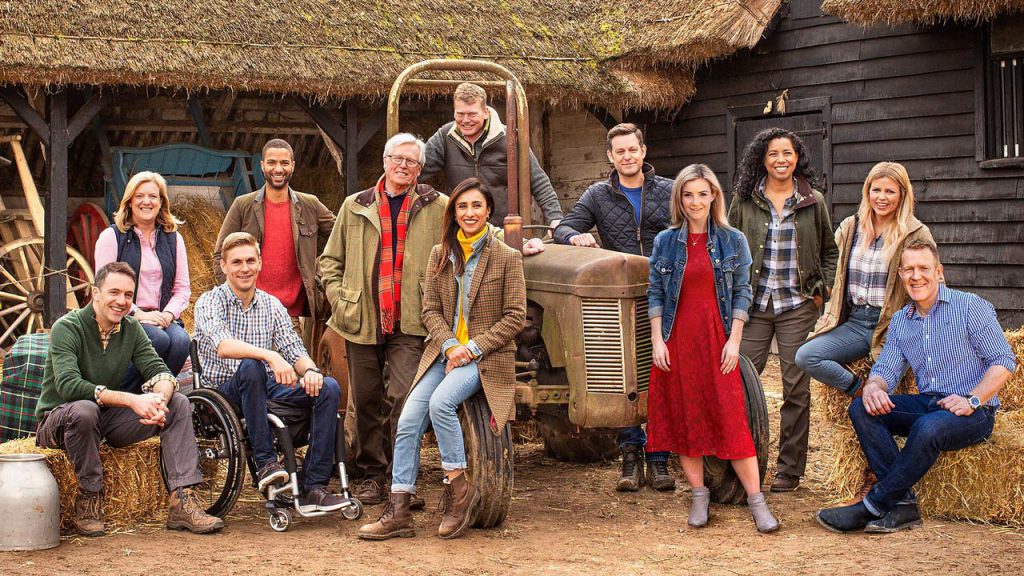
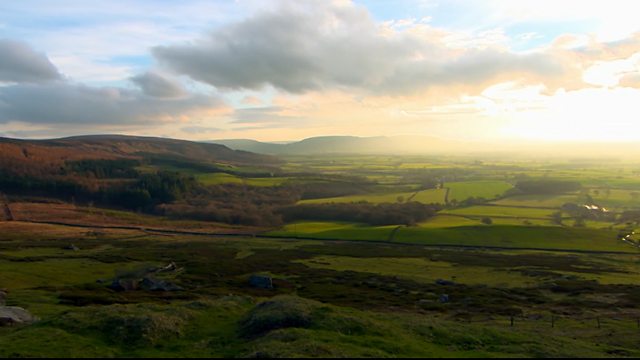
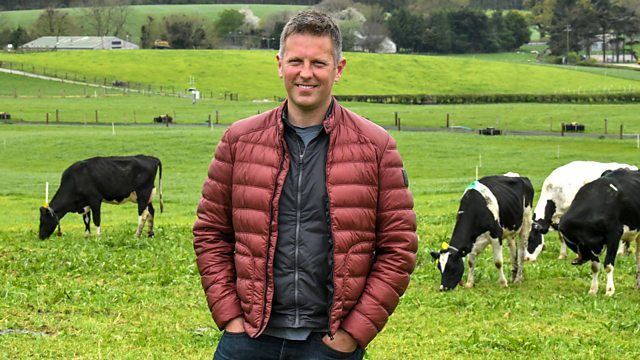
Landward episode 14 2025: As the autumn air begins to crisp and the leaves turn to fire, Landward returns to your screens. They are back to journey through the heart of Scotland’s countryside. This new season promises stories of resilience, community, and tradition. Indeed, Landward episode 14 2025 invites you into a world brimming with life. We will explore the challenges and triumphs that define Scottish country life. Furthermore, this episode captures the unyielding spirit of the people who cultivate and protect this incredible landscape. It is a portrait of a nation deeply connected to its land.
Our journey begins in the bustling Sutherland village of Lairg. Here, Dougie immerses himself in a spectacular display of agricultural life. He is present for the first of the annual autumn lamb sales. The air thrums with an electric energy. Consequently, the auction ring becomes the epicentre of this vibrant community gathering. Dougie joins the dedicated sales team, getting a unique, behind-the-scenes perspective. He witnesses the organised chaos as an astounding 13,000 lambs are presented to eager buyers. This is far more than just a market; it is a vital tradition.
Within the whirlwind of the auction, Dougie discovers the meticulous planning involved. He learns how this unique event is masterfully organised and executed. For instance, every pen and every transaction functions with remarkable precision. The rapid-fire chant of the auctioneer acts like the rhythm of a beating heart. It is a sound that echoes the hopes and hard work of countless farmers. Dougie truly experiences the immense pressure and excitement firsthand. Therefore, he uncovers the deep sense of community that underpins this essential day in the farming calendar.
From the lively hubbub of the sales, we then travel to a landscape of quiet reflection. Shahbaz finds himself in Moray, a region still healing from a deep wound. This past summer, Scotland witnessed its biggest ever wildfire. The flames tore across moorland, peatland, and precious forest habitats. Now, in the aftermath, Shahbaz is there to assess the true impact. He walks through a changed world, where the scent of smoke still lingers on the breeze. He sees firsthand how nature has been scarred. Yet, he also looks for the first tender signs of recovery.
The devastation is stark and deeply moving. Shahbaz talks to local experts and residents about the long road ahead. They discuss the vital importance of peatland restoration and wildlife recovery. Nevertheless, amidst the blackened earth, there are glimmers of hope. Tiny green shoots begin to push through the ash, like small beacons of resilience. This powerful story showcases the fragility of our environment. Moreover, it highlights the incredible strength of both nature and the human spirit to rebuild. It is a narrative of loss and renewal that resonates with anyone who loves the outdoors, much like a powerful story from Countryfile.
Meanwhile, Arlene returns to the beautiful Borders for a moment of truth. After months of care and anticipation, she is ready to help harvest the Landward field. The golden barley shimmers under the autumn sun, a testament to a season’s dedication. The hum of the combine harvester fills the air as it gathers the precious crop. However, the real work is just beginning. The crucial question hangs in the air: will the grain make the grade for malting? This is the ultimate test of quality for any barley farmer.
Landward episode 14 2025
Arlene gets her hands dirty, joining the team in this critical final stage. She learns about the specific standards required by the maltsters. For example, the grain must have the right moisture content and size. Its quality will directly impact the flavour of Scotland’s world-famous whisky. This segment provides a fascinating look into the journey from field to glass. It celebrates the skill and patience central to our nation’s agricultural life. Consequently, we are all on the edge of our seats, hoping for a successful result for the Landward team.
Following this, we shift our focus from the vast fields to a much smaller, magical world. Entomologist Leanna Fernandez joins us to pull back the curtain on the realm of moths. Many people overlook these fascinating creatures. However, Leanna introduces us to their incredible beauty and diversity. She provides a wonderful beginner’s guide to spotting them. Subsequently, she reveals that these velvet-winged dancers of the dusk are more than just drab insects. They are jewels of the night, with intricate patterns and vital roles as pollinators.
Leanna’s passion is truly infectious. She shows us simple techniques to attract and identify moths in our own back gardens. Suddenly, the darkness comes alive with fluttering wonders we never knew existed. This enchanting segment reminds us that the Scottish country life is rich with hidden marvels. It encourages us to look closer and appreciate the delicate ecosystems that thrive all around us. It is a gentle reminder of the magic that awaits when we simply take the time to observe the natural world.
Finally, we return to the familiar rhythm of the farm with Cammy. Just as he did in Landward 2024, he shows us the reality of a farmer’s year. The seasons are turning, and preparations for winter are in full swing. We join him as he finishes the monumental task of shearing this year’s flock. With the sheep now comfortable, his attention immediately turns to another urgent job. He must cut his haylage crop, a vital source of winter feed. This task is crucial for ensuring his animals remain healthy through the cold months ahead.
Cammy’s segment is a grounding and authentic look at the endless cycle of farm work. It is a story of foresight, hard work, and deep responsibility for his livestock. He works against the clock and the changing weather, a familiar challenge for every farmer. His efforts provide a perfect bookend to an episode filled with diverse stories. Ultimately, it reinforces the core values of dedication and perseverance that define Scottish agricultural life. Please join us for this compelling new episode of Landward.
Landward episode 14 2025 review
Landward episode 14 2025 offers a vivid tapestry of Scottish country life, weaving together stories of agricultural gambles, timeless traditions, and nature’s delicate balance. The programme delves into the critical moments that define the rural year, from the culmination of a season’s work in a barley field to the organised chaos of a vital livestock market. It captures a world where ancient practices meet modern pressures, illustrating the profound connection between the people and the land they steward. This exploration provides a comprehensive look at the challenges and triumphs shaping the Scottish countryside.
The significance of these narratives extends beyond simple seasonal updates, offering a window into the economic and environmental realities of modern farming. This look at agricultural life highlights how a single weather event or a fractional difference in crop quality can determine an entire year’s profitability. Furthermore, the episode addresses the profound impact of environmental disasters, examining the long road to recovery after Scotland’s largest recorded wildfire. These stories are not isolated incidents but interconnected threads in the broader fabric of rural existence, a theme often explored in programmes like Landward and its counterparts.
This examination of Landward episode 14 2025 will navigate through these diverse yet linked stories. We will follow the nerve-wracking journey of a barley crop destined for the whisky industry, where success is measured in fractions of a percent. Subsequently, we will step into the bustling pens of the Lairg lamb sale, a cornerstone of the sheep farming calendar. The article will also survey the charred landscapes left by a devastating wildfire, hearing from those assessing the damage and the prospects for regeneration. Finally, we will explore the hidden world of moths and follow a young farmer’s essential summer tasks.
These events are deeply rooted in the rhythm of the seasons, which dictates the pace of country life. As summer wanes, the focus shifts to harvesting and preparing for the winter ahead. For arable farmers, it is the moment of truth when months of effort are judged. For livestock farmers, it is the beginning of the autumn sales, a critical time to realise the value of their stock. The Landward programme adeptly captures this pivotal period, showing how the success of these few weeks underpins the viability of farms throughout the year.
A fascinating contrast emerges between tradition and technology. In one segment, a farmer uses a generations-old “tooth test” to gauge barley moisture before confirming his assessment with a precise digital meter. A state-of-the-art combine harvester steered by GPS navigates the field. Yet, at the bustling Lairg market, the entire, complex operation of penning thousands of sold lambs hinges on one man’s memory and a handwritten ledger. This juxtaposition reveals a world in transition, where practical experience and cutting-edge innovation coexist in the pursuit of efficiency and survival.
Ultimately, these narratives provide a multifaceted portrait of resilience. Whether facing financial disappointment in the field, managing a seemingly chaotic market, or confronting the aftermath of environmental catastrophe, the people featured demonstrate a remarkable capacity to adapt and endure. Their stories showcase the immense skill, hard work, and deep-seated knowledge required to sustain a livelihood in the Scottish countryside. This journey through the heart of rural Scotland offers a compelling insight into the forces that shape this iconic landscape.
The Precarious Economics of the Barley Harvest
The journey of a single field of barley encapsulates the high-stakes nature of modern arable farming. Throughout the year, farmer Neil White in the Borders tended a 20-acre crop, which survived a challenging growing season marked by a lack of rain and the high winds of Storm Floris. The ultimate goal was for the barley to meet the strict criteria for the malting process, a key ingredient for the whisky industry. This single factor creates a stark economic divide; success means a premium price, while failure relegates the crop to lower-value livestock feed.
The difference in value is not trivial. Malting barley can fetch around £220 per tonne, whereas feed barley might only command £140 per tonne. As Neil explained, missing the specification means falling off a cliff edge financially. This can be the difference between turning a profit and merely covering costs, or even making a loss. The critical metric is the nitrogen content, which for this particular contract had to be below 1.65. With two of his neighbouring fields already meeting this magic number, expectations for the final field were high.
After the harvest, a sample was rushed to the maltsters for testing. Despite all the care taken since its sowing in March, the result was a nitrogen level of 1.76. This fractional miss was enough for the crop to be rejected for malting. The financial impact for this one field alone was a shortfall of between £4,000 and £5,000. This outcome serves as a powerful reminder of the jeopardy inherent in farming, where farmers can do everything right, but uncontrollable factors can ultimately determine their success.
The Organized Chaos of the Lairg Lamb Sales
The Lairg lamb sale stands as a pillar of the Scottish sheep farming calendar, kicking off the autumn sales season with a one-day event that sees thousands of animals pass through the ring. While its heyday saw as many as 40,000 lambs in a single day, it remains a vital market, with 13,000 North Country Cheviot lambs sold this year. The event is a whirlwind of activity, presenting a logistical puzzle of how to manage such a vast number of animals efficiently and accurately in a short time.
The system, however, defies conventional logic. According to staff, there is no sequential system for the pen numbering; a pen numbered 1 could be right next to 101. This makes navigating the sprawling market a challenge for the uninitiated. The entire operation relies not on modern technology but on the deep, hands-on experience of the 20 to 25 staff members from United Auctions. Many have worked the sale for decades, possessing an institutional knowledge that makes the seemingly chaotic process run smoothly.
After lambs are sold, the process becomes even more reliant on human coordination. Workers are simply told to find any empty pen for a lot. They then shout the pen number back to a single manager, who records the location in a book. This simple, old-fashioned method is the lynchpin of the entire post-sale organisation. For the farmers, many of whom have been coming for generations, the success of this single day is a make-or-break affair that determines their income from sheep for the entire year.
Ecological Scars and Recovery after Scotland’s Largest Wildfire in Landward Episode 14 2025
In the summer months, Scotland witnessed its biggest wildfire in living memory, an environmental disaster with long-lasting consequences. Two separate fires at Carrbridge and Dava converged and burned for days, ultimately destroying over 11,000 hectares of moorland and forest. The immediate aftermath left vast areas of the landscape blackened and charred, a stark testament to the fire’s ferocity. The cause was attributed to human activity, and it took eleven days to fully extinguish the blaze.
The impact on wildlife was devastating. Land manager Colin McClean described finding the remains of animals like leverets, whose instinct to sit tight in the face of danger proved fatal. He estimated that thousands of animals likely perished, including the chicks of ground-nesting birds such as curlews, black grouse, and red grouse. While some habitats like heather are expected to show signs of recovery within a few years, the damage to others is permanent.
The fire burned with such intensity in some areas that it penetrated metres down into the ground, incinerating thousands of years’ worth of accumulated peat. This loss is irreversible and represents the destruction of a critical carbon sink. Similarly, in the Moray Estate, over 200 hectares of naturally regenerated native pinewood were lost. Woodlands manager Ben Clinch noted that the fire smouldered for weeks, burning away the humus layer around ancient trees and fatally undermining their root systems. The long-term survival of the woodland now depends on whether enough trees have survived to naturally reseed the scorched earth.
Exploring the Nocturnal World of Moths: A Landward Focus
While butterflies often steal the spotlight, Scotland is home to a far greater diversity of moths, with over 1,300 species compared to just 35 species of butterfly. Entomology expert Leanna Fernandez highlighted their critical and often overlooked role in the ecosystem. Moths are “super pollinators,” taking on the “graveyard shift” to pollinate plants at night when bees and other daytime pollinators are inactive. Their work is vital for maintaining biodiversity.
To study these nocturnal creatures, a special moth trap is used. It employs an artificial light that attracts the moths, who are thought to use the moon for navigation and are thus drawn to the light source. They fly towards it and then settle inside a container filled with egg boxes, where they can be safely observed and identified the next morning. The data collected is then uploaded to the National Moth Recording Scheme, a citizen science initiative that helps track moth populations for conservation purposes.
Among the many species found, several stand out. The swallow-tailed moth is unique in the UK for the tails on its hindwings, giving it an exotic appearance. The large poplar hawkmoth is notable for having no mouthparts as an adult; it survives on fat reserves built up during its caterpillar stage solely to find a mate. Finally, the peppered moth serves as a textbook example of evolution by natural selection. Its dark form thrived on soot-covered trees during the Industrial Revolution, while the lighter, speckled form is now more common in cleaner environments like Deeside, perfectly camouflaged against lichen.
A Young Farmer’s Summer: Insights from Landward Episode 14 2025
For young farmer Cammy, the summer was a period of intense and essential work on the farm he purchased at the start of the year. A primary task was shearing his 1,400 sheep, a job now done for animal welfare rather than profit. Removing the heavy fleece is crucial to prevent issues like flystrike, overheating, and sheep getting stuck on their backs. Although the wool from his entire flock only brought in £2,200 the previous year, in a business of tight margins, every little bit helps.
With shearing complete, the next critical job was to make winter fodder while the sun was shining. This involved cutting a field of grass and then tedding it—a process of spreading and turning the grass to allow it to dry evenly. Using a borrowed machine for the first time, Cammy demonstrated the learning curve involved in agricultural life. The goal was to create haylage, a feed that is drier than silage but wetter than hay, making it ideal for sheep.
This haylage is particularly well-suited for sheep because it does not heat up as quickly once a bale is opened, giving the animals more time to eat it before it spoils. This is important because sheep tend to eat more slowly and in smaller quantities than cattle. The process concluded with the grass being gathered into bales, representing the very first winter feed produced on Cammy’s own farm. This work ensures that his sheep and new herd of cattle will be well-fed through the colder months ahead.
The Enduring Rhythm of Scotland’s Countryside
The stories that unfold in Landward episode 14 2025 reveal something profound about the Scottish countryside—it operates on a rhythm entirely its own, where ancient wisdom and modern pressures dance together in an intricate ballet of survival and adaptation. From the nail-biting tension of a barley harvest worth thousands hanging on a fraction of a percent, to the organized chaos of Lairg’s lamb sales where decades of experience trump any digital system, we witness a world where tradition isn’t just preserved—it’s evolved.
Perhaps most striking is how these narratives illuminate the delicate balance between human ambition and natural forces. Neil White’s barley crop, so carefully tended yet ultimately undone by an uncontrollable nitrogen reading, serves as a powerful metaphor for farming itself—a profession where you can do everything right and still face heartbreak. Similarly, the devastating wildfire that consumed 11,000 hectares reminds us that nature operates on scales and timelines that dwarf human planning. Yet in both stories, we see not defeat but resilience—farmers who dust themselves off and prepare for next season, land managers who plant hope in scorched earth.
The hidden world Leanna Fernandez reveals through moth trapping offers perhaps the most hopeful perspective of all. While we focus on the dramatic headlines of agricultural triumphs and environmental disasters, an entire ecosystem of “super pollinators” works tirelessly through the night shift, maintaining the delicate web of life that supports everything else. These nocturnal creatures, evolving before our eyes like the peppered moths adapting to changing environments, remind us that nature’s genius lies not in grand gestures but in countless small adaptations.
Cammy’s journey as a young farmer purchasing his first property captures the essential optimism required to enter this demanding profession. His meticulous preparation for winter—from shearing sheep that barely cover costs to creating his first winter feed—embodies the forward-thinking mindset that has sustained Scottish agriculture through countless challenges. His story suggests that while the economics may be precarious and the work relentless, there’s something irreplaceable about this connection to land and livestock.
What emerges most powerfully from these interwoven tales is agriculture as both an act of faith and a testament to human ingenuity. Whether it’s the institutional memory that guides thousands of lambs through an apparently chaotic market, or the GPS-guided combine harvesters working alongside generations-old testing methods, Scottish farming represents a unique synthesis of old and new knowledge.
For viewers of programmes like Landward, these stories offer more than entertainment—they provide a window into the forces shaping our food security, environmental health, and cultural heritage. As we face an uncertain future marked by climate change and economic pressures, the resilience demonstrated by these farmers, land managers, and researchers becomes increasingly relevant to us all.
The countryside isn’t just a backdrop for picturesque television; it’s a laboratory for sustainability, a repository of practical wisdom, and a testament to the enduring human capacity to adapt, endure, and thrive in harmony with the natural world. In every hedgerow hiding nocturnal pollinators and every field prepared for next year’s planting, Scotland’s agricultural story continues to unfold—one season, one harvest, one generation at a time.
FAQ Landward episode 14 2025
Q: What is Landward episode 14 2025 about?
A: Landward episode 14 2025 explores Scottish countryside life through diverse stories including the Lairg lamb sales, barley harvest challenges, wildfire recovery efforts, moth conservation, and young farmer Cammy’s seasonal preparations. Additionally, the episode captures the resilience and traditions that define rural Scotland’s agricultural community.
Q: Where does the Lairg lamb sale take place and why is it significant?
A: The Lairg lamb sale occurs in the Sutherland village of Lairg and represents a cornerstone of Scotland’s sheep farming calendar. Furthermore, this one-day event sees 13,000 North Country Cheviot lambs sold, making it a vital economic lifeline for farmers whose annual sheep income depends on this single market day.
Q: What made Scotland’s 2025 wildfire so devastating?
A: Scotland’s largest wildfire consumed over 11,000 hectares of moorland and forest, burning with such intensity that it penetrated metres into ancient peat deposits. Consequently, thousands of years of carbon storage were destroyed, while wildlife including leverets, curlews, and grouse chicks perished in the flames that took eleven days to extinguish.
Q: How does barley farming economics work in the whisky industry?
A: Malting barley commands premium prices around £220 per tonne compared to £140 for feed barley, creating a financial cliff edge for farmers. Moreover, success hinges on meeting strict nitrogen content specifications below 1.65, where even fractional misses like 1.76 can cost farmers £4,000-£5,000 per field in lost revenue.
Q: What role do moths play in Scotland’s ecosystem?
A: Moths serve as super pollinators working the night shift when bees are inactive, with over 1,300 species compared to just 35 butterfly species in Scotland. Additionally, species like the peppered moth demonstrate evolution in action, while creatures like the hawkmoth survive solely on caterpillar-stage fat reserves to complete their breeding cycle.
Q: How does the Lairg market system actually work despite appearing chaotic?
A: The Lairg system relies entirely on human experience rather than technology, with pen numbers randomly distributed throughout the market. However, 20-25 United Auctions staff members possess decades of institutional knowledge, while post-sale organization depends on workers shouting pen locations to a single manager with a handwritten ledger.
Q: What challenges does young farmer Cammy face in his first year?
A: Cammy manages 1,400 sheep on his newly purchased farm, where shearing generates only £2,200 annually but remains essential for animal welfare. Furthermore, he must master new equipment like tedding machines while racing against weather to create haylage, a specialized winter feed that prevents spoilage better than traditional options for sheep.
Q: How long will wildfire recovery take in the affected Scottish regions?
A: Heather habitats may recover within a few years, but peat bog destruction represents permanent loss of carbon sinks accumulated over millennia. Meanwhile, the Moray Estate’s 200 hectares of native pinewood face uncertain futures, as woodland survival depends on whether enough trees survived to naturally reseed the scorched landscape.
Q: What modern technology appears alongside traditional farming methods in Landward?
A: GPS-guided combine harvesters work fields while farmers still use traditional tooth tests for moisture assessment before digital confirmation. Similarly, sophisticated moth traps upload data to the National Moth Recording Scheme, yet the massive Lairg operation runs entirely on human memory and handwritten records, showcasing agriculture’s technological transition.
Q: Why is timing so critical in Scottish farming as shown in Landward episode 14?
A: Autumn represents make-or-break moments when harvest quality determines annual profitability and livestock sales realize the year’s investment. Moreover, farmers must complete winter preparations like haylage production while weather permits, as delayed tasks can jeopardize animal welfare and farm viability throughout the harsh Scottish winter months ahead.