Join us again for Landward 2025. Landward episode 19 2025 is a journey into the very heart of Scotland. We will travel from the bright coasts of Fife to the wild, remote islands. The team uncovers powerful stories of resilience. They meet the people shaping agricultural life today. Modern farming faces many pressures. Indeed, the challenges of climate change loom large. But Scottish farmers are innovating. They are adapting with grit and passion. This is country life in 2025. It is a world of tradition and cutting-edge technology.
Our adventure begins in the stunning East Neuk of Fife. Dougie MacLean is here, where the land meets the sea. The coastal light is famously clear. It illuminates a revolution in local farming. He meets two inspiring farming sisters. They have taken their future into their own hands. They made the terrifying leap to stop selling through supermarkets. This decision was not made lightly. It was a conscious choice to reclaim their identity.
They are now doing it entirely for themselves. This means they are marketer, seller, and farmer all in one. Consequently, they are rebuilding the bond between producer and consumer. Their farm shop is a hub of activity. It is a testament to their hard work. Dougie discovers the steep learning curve they faced. However, the sisters also share their immense rewards. They are now in control of their own agricultural life. Their story is a beacon of hope for small farms.
Meanwhile, Cammy Wilson is exploring the future of agriculture. He has his beloved sheepdog Spot by his side. They are meeting a team of pioneering crop scientists. These experts are working on something truly groundbreaking. They are perfecting the robot dog of the future. It is a marvel of modern engineering. This machine, however, is not built for herding sheep. Its purpose is entirely different.
Cammy watches as this robot moves through the fields. It moves with silent, precise steps. Spot, in contrast, seems understandably confused. This robot is a data-gathering powerhouse. It is designed to help farming become more sustainable. For example, it uses sensors to monitor crop health. It can identify pests or drought stress instantly. This allows farmers to use less water and fewer chemicals. This is vital in the fight against climate change.
Cammy reflects on this amazing technology. He sees the clear benefits for large-scale farming. But he also ponders what it means for traditional skills. He and Spot represent generations of shepherding knowledge. Can this old-world expertise coexist with new-world robotics? The scientists believe so. They see it as a tool, not a replacement. It is a fascinating look at the future of country life.
From the high-tech future, Landward journeys deep into the past. Rosie Banks is in picturesque Easter Ross. She is investigating a mystery hidden beneath the water. In the still, dark waters of a local loch lies a lost crannog. These ancient dwellings were built on stilts. They were safe havens for Scotland‘s ancestors. Now, archaeologists are diving to uncover their secrets.
Rosie joins the dive team on the water. She sees how they meticulously map the site. The cold, peaty water has preserved history. It acts like a time capsule. As a result, items lost centuries ago look almost new. They find ancient tools and domestic goods. These artifacts paint a vivid picture. They show us the daily agricultural life of the past. We learn how these early farmers lived. We see how they worked the land around the loch.
This underwater dig is truly incredible. It connects the farming of today with its ancient roots. It proves that Scotland‘s history is deeply tied to the land. Rosie discovers that these early settlers faced their own challenges. They, too, had to adapt to their environment. Their legacy is a core part of Scotland‘s story.
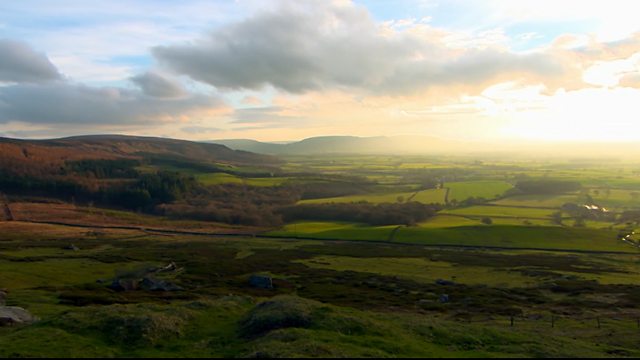
Dougie’s journey continues on Landward 2025. He travels to the sweeping, dramatic landscapes of Caithness. This part of Scotland is known for its big skies. It is also known for its resilient farming communities. Dougie is here to meet the new generation. He finds a young farmer full of passion. She is making her mark on this ancient land.
She decided to build her own herd of cattle. Her choice of livestock was very deliberate. She chose British Blondes. Dougie is keen to find out why. These cattle are a magnificent sight. They stand out against the green fields. But for this farmer, beauty was secondary. The decision was based on pure practicality.
Landward episode 19 2025
She explains that British Blondes are incredibly hardy. Therefore, they are perfect for the challenging Caithness weather. This breed can thrive where others might struggle. Furthermore, they are excellent mothers. They calve easily and care for their young well. This reduces stress for both the farmer and the livestock. Her focus is on sustainable, low-input farming. This breed fits her vision perfectly. Her story is a great example of smart agricultural life.
For the final segment, Anne Lundon embarks on a special trip. She is heading to the wild and remote island of Gometra. This tiny island lies off the west coast of Scotland. It is connected to Ulva only by a small bridge. Gometra is completely off-grid. There are no paved roads and no shops. This is country life taken to its absolute limit.
Anne is here to meet the island’s shepherd. This individual lives a life of profound isolation. Their days are dictated by the weather and the tides. Anne learns what it takes to manage livestock here. The challenges are immense. The work is physically demanding. Yet, the shepherd speaks of a deep connection. They have a bond with the land and the animals.
Anne explores this rugged landscape. She experiences the silence and the beauty. This way of life is not for everyone. However, it holds a unique appeal. This story is a moving portrait of dedication. It is a powerful reminder of the human spirit. It shows the lengths one person will go to. All for the love of farming and a chosen way of life.
This week, Landward 2025 truly shows the diversity of Scotland. We have seen the future of agriculture. We have touched the distant past. We met farming sisters fighting for independence. We also met a shepherd thriving in isolation. These stories define agricultural life in Scotland today.
Much like the popular show Countryfile, Landward celebrates rural living. But Landward focuses solely on the Scottish experience. It tells the unique stories of its people. It highlights the challenges and triumphs. From climate change to market pressures, farming is tough. But the people of rural Scotland are tougher. Be sure to join us for this inspiring episode.
Landward episode 19 2025 review
Landward episode 19 2025 provides a deep look into the heart of modern Scottish farming. It explores a world where tradition and technology meet. The episode reveals the resilience of people working the land. This is a journey from coastal farms to remote islands. The show Landward presents these stories with clarity.
Modern Agriculture faces many significant pressures. Farmers must adapt to find new ways to thrive. This adaptation is crucial for agricultural life in Scotland. This episode highlights innovative solutions to economic challenges. It shows how producers are reclaiming control of their futures.
The full scope of Landward episode 19 2025 covers diverse topics. It examines specialized livestock breeding in Caithness. It also explores archaeological mysteries in Highland lochs. Furthermore, it showcases robotic technology on a Dundee research farm.
The narrative also focuses on the fundamentals of country life. This includes the management of sheep and cattle. It investigates how farmers are changing their methods. They are moving away from old models to create sustainable futures. This involves new approaches to both crops and livestock.
This shift is powerfully illustrated by a story from Fife. Here, one family decided to completely change their business. They sidestepped supermarkets to forge their own path. Their story is one of risk and reward. It began with a simple discussion around the kitchen table.
At Ardross Farm in the East Neuk of Fife, farming sisters are doing it for themselves. Their family has farmed there since 1968. They once grew commercial crops and beef for supermarkets. However, they found it impossible to make ends meet. This led to a “daft idea” to open a farm shop and sell direct.
Reinventing the Family Farm in Fife
The decision made 20 years ago at Ardross Farm proved transformative. The family, led by three sisters and their mother, revolutionized their farming operation. They moved away from the volatile commercial market. Instead, they focused on direct sales to the public. This allowed them to escape the pressures of supermarket contracts.
Claire Sloan, one of the sisters, is heavily involved in the farming operations. She had originally pursued a different career. Claire studied accounts and finance at university. Afterward, she went to work in practice. She soon realized she hated it. She wanted to return to the family farm.
Claire’s return was followed by a significant change. Her father passed away about six years ago. At that point, she took over the farm tenancy. Today, she farms alongside her mother and sister. Her sister, Nikki, runs the retail side of the business. Nikki also returned to the farm 20 years ago after university.
When the shop first opened, farm shops were unusual. Theirs was one of the first in Fife. It began in a small area. They had a calculator, a table, and a tin of red paint for the floor. Initially, it just sold their own beef. It also featured a small table with broccoli and cabbages.
This new model completely changed how they manage the land. Previously, a field would contain one large crop. They grew big quantities of broccoli, cauliflower, or carrots. Now, the farm grows 50 different varieties of vegetables. This includes newer crops for them, like chard.
They now plant “little and often.” This strategy ensures they have fresh vegetables ready every single day. The produce is picked fresh from the farm for the shop. This contrasts with harvesting an entire field at once. This change provides a steady supply for their customers.
The move also allowed them to rethink their livestock. The farm keeps cows, but their approach has changed. Not selling to supermarkets gave them time to breathe. They stepped back and re-evaluated their cattle. They completely changed their breeding priorities.
Their cattle are now bred to be good mothers. They are also bred to stay outside. The focus is no longer on achieving a certain carcase size. This shift reflects a focus on sustainability. The family now spends more time focusing on the soil. They also work to support bugs, bees, and birds.
Ardross is a family farm with four women at the helm. Each brings individual talents to the business. They note that while occasional arguments happen, they are a very close family. Their father, having three girls, once thought he might sell up. He imagined he would sail off into the sunset.
As it turned out, all three daughters were interested in farming. They each cover different aspects of the business. However, everything is anchored by food and farming. This shared passion and a willingness to adapt has been the key to their success.
Uncovering Scotland’s Ancient Loch Dwellers
Thousands of years before this, other residents of Scotland also built resilient structures. Many of Scotland’s lochs are scattered with islands. Not all of them are natural. Some of these islands hide a deep and complex history.
On the banks of Loch Achilty, north-west of Inverness, a team of volunteers is investigating one such structure. The focus is a tiny island just offshore. This is not a natural island. It is a crannog, an artificial island.
Richard Guest and his team are from the North of Scotland Archaeology Society (NOSAS). Their crannogs project is mapping and investigating dozens of these man-made structures. There are around 600 crannogs known across Scotland. Many date from the Iron Age, about 2,500 years ago.
The purpose of crannogs is still debated. Experts think they were used for dwelling. They might have been a status symbol. After all, not everyone could build an artificial island. They could also have been defensive. However, they may not have been very successful. A siege would quickly deplete the inhabitants’ food.
The team at Loch Achilty believes this specific crannog may be different. They suspect it could be a rare, more recent construction. It might date from post 11th century. Their goal is to find its chronology. They want to know when it was built, how long it was used, and when it was abandoned.
They also want to understand its construction. Although it looks like a pile of rocks, there is timber involved. Freelance archaeologist Cathy Dagg is overseeing the work. She explains that ancestors may have arrived on foot. There was possibly a causeway from the mainland.
To investigate, the team is taking a core sample. They are probing down into the structure. The original occupation was not a stony layer. It was likely a platform on piles driven into the lakebed. Over time, as it rotted, more material was added.
This created layers of brushwood, clay, and items people dropped. At some point, they laid down big timbers. Then, they put all the stones on top. The core sample contains sections from these different layers. These layers could represent hundreds of years of history.
Cathy Dagg examines the extracted core. One piece of timber, possibly silver birch, might be 1,500 years old. However, she is most excited by the sludge. This organic matter could contain a wealth of information. It might hold carbonised seeds, telling them what people ate. It could also contain tiny fragments of animal bone or pottery.
The story continues underwater. Mark Beattie-Edwards from the Nautical Archaeology Society leads the dive team. They are looking for the same evidence. They specifically seek organic material, like timber, that can be dated.
The divers can go deeper, which means further back in time. So far, they have moved many rocks. They are starting to feel dense, glutinous mud between the rocks. This should contain trapped organic material. However, they have not yet found new datable timbers from inside the mound.
Based on previous carbon dates, the team thinks this is a medieval crannog. The key question is whether it was an older crannog that was reused. Or, was it actually built in the medieval period? Very few medieval crannogs are known. Most seem to be reuses of older structures.
The Future of Farming: Data-Gathering Robotics
From ancient history, the focus shifts to the cutting edge of modern farming. At a research farm near Dundee, a new type of “working dog” is being trialled. This dog, however, is not for herding. It is a machine designed to gather data.
The robot is also named Spot. Ruth Plant, from the UK Centre for Robotics Research in Edinburgh, demonstrates its abilities. The robot is shaped like a dog for a specific reason. It has four legs to help with stability and balance.
This design allows it to navigate different terrains. It can handle environments where wheeled robots might struggle. Its agility lets it avoid obstacles or move around things in a field. This makes it ideal for use in complex agricultural settings.
This robot is not intended to replace traditional sheepdogs. Its job is to round up data. Its commands are programmed well in advance. Spot can be equipped with different sensors and payloads. It has a LiDAR scanner for mapping. It also has cameras, infrared cameras, microphones, and speakers.
In this trial, Spot is autonomously navigating down raspberry polytunnels. It stops at certain points to capture images. This data is then sent back for the farmer to use. The technology has the potential to detect ripeness. This would help farmers know when harvesting should begin.
It can also detect early signs of any diseases or stress in the berries. With this information, the farmer can add interventions at the right time. This can help with yield and save money. It also saves immense time for the farmer.
A farm might have hundreds of polytunnels. Robotic platforms could go down them all, capturing data. Andrew Christie is trialling the robot at the James Hutton Institute’s research farm. He explains the benefits of removing the human factor.
When a person looks at a crop, their scoring is subjective. It is based on their perception. Robotics, however, can give an objective score. This adds precision to the work. The team is looking at leaf shape and cane presentation. The robot can also stop at individual plants. It can take pictures at different time points to see how the plant develops.
This work is still in its early stages. The next step is to analyze the data. Researchers will see how it can help their breeding programmes. Ruth Plant believes robots like Spot could one day become common. She suggests they could be as familiar on farms as tractors.
New technology is important to farming. Different robotic platforms could serve different functions. They could perform various tasks to help the farmer. The Landward segment shows this is a key area of development. New technologies are being designed for specific tasks where robotic intervention would be most beneficial.
Landward episode 19 2025 and Specialized Livestock
While technology advances, the foundation of farming often lies in livestock. Choosing the right breed for the right environment is critical. In Caithness, farmer Becca Jenkins embarked on a personal mission. She needed to find the perfect pedigree breed for her new herd.
Becca and her family have been at the Ha Farm in Bower for 12 years. They run about 450 commercial sheep. They also have 70 to 80 commercial and mixed cattle. Alongside this, Becca decided to start her own pedigree herd. She now has about 20 pedigree animals.
The breed she chose is the British Blonde. These large, creamy-white cattle are not Charolais. The breed originated in the south of France, in the Aquitaine area. It is a relative newbie, created in 1962. It was formed by merging three older French draught breeds.
When they came to the UK in the 1970s, they were developed into British Blondes. Becca had actually never heard of them before. She started researching them. She quickly decided they were a really underrated breed.
Starting her herd was an adventure. She drove over seven hours to North Yorkshire for her first pedigree cow, Rachel. She only intended to buy one. She ended up coming home with a pedigree bull and two commercial Blondes as well. That expensive trip was the start of her herd.
Four years on, she is a strong advocate for the breed. She is also crossing the Blondes into the farm’s commercial herd. Their large frame and enhanced muscle create big, beefy cattle. But for Becca, their main attributes are temperament and calving.
She finds their nature lovely to work with. They are really quiet, even the calves. But the main reason she picked them was their easiness for calving. Her research showed this was a key trait.
The calves “come out like little sticks.” This is because they develop after they are born. In many other breeds, the calves develop significantly while still inside. This can lead to difficult births. For Becca, finding the calves
already out in the field is a brilliant, key factor.
Becca is happy with her choice. She likes that they are different. Because they are so underrated, she is keen to try and get them out there. For her, they are very special and definitely the right choice.
Landward episode 19 2025: Shepherding on the Edge
From specialized breeding to the hardiest of stock, the final journey goes to a truly remote island. Anne’s segment heads to Gometra in the Inner Hebrides. This is an off-grid island. There are no roads, no shops, and no mains electricity.
The island is mostly populated by a flock of Blackface sheep. Their shepherd is Rhoda Munro. She commutes to work by boat. Each week, she makes the journey from Mull with her dog, Rafa. She is a contract shepherd for the island owners.
Gometra is an island off an island off an island. It is only four square kilometres. While accessible by a narrow bridge, Rhoda prefers the faster way in by boat. Her work here depends on her seafaring skills.
She manages the usual cycle: lambing, shearing, marking, and organizing sales. She also supplies the tups, or rams, for the flock. Every single part of the job involves a boat. The island itself is very rough and ragged.
Rhoda, however, is uniquely familiar with this terrain. She grew up on the nearby island of Ulva. Her parents later moved to Gometra. They were also contract shepherds on the island. After eight years shepherding on the east coast, the Gometra job came up. Rhoda was the ideal candidate and took on her parents’ former role.
She believes this connection is essential. She says the work is “in the blood.” She has seen people come to stay on the island. They think they can handle the isolation, but they cannot. They usually leave after a couple of months. People often tell her they do not know how she does it. She believes you are born and bred to do it.
The island is home to 350 sheep. They are all home-bred Blackface. They are not used to humans. They are quite wild, as they mostly only see Rhoda. This hardy breed is perfectly suited to the environment.
They do not need much looking after, apart from medicines. A good skin is a must for the coarse weather. A sheep with too much wool would just be dragged down.
Rhoda’s efforts and the quality of this hardy flock have been recognized. This year, at the annual autumn sales in Oban, her lambs were champion male lambs. This was a very successful result for Gometra.
For Rhoda, this recognition feels good. It is good to see the hard work paying off. She tries hard to keep improving the flock. She notes they are not her sheep. She is only a contractor. But she is passionate about wanting them to be successful.
It takes a certain type of person to work in this isolated place. Rhoda’s passion is clear. She feels Gometra is a different world. When she comes into the loch on her rib, she feels she is in another place. She likes the challenge. She says she would not have it any other way.
The Enduring Spirit of Scotland’s Rural Heartland
What emerges most powerfully from this journey through Scotland’s agricultural landscape is not simply a catalogue of farming practices or technological advances—it’s a profound testament to human adaptability. From the East Neuk of Fife to the windswept shores of Gometra, we witness a common thread: people refusing to be passive recipients of change, instead becoming its architects.
The farming sisters at Ardross Farm didn’t just open a shop; they fundamentally reimagined their relationship with the land and their customers. Their story illuminates a truth many modern farmers are discovering: sometimes the path forward requires stepping away from systems that no longer serve you. Twenty years ago, their decision seemed radical. Today, it appears prescient. By growing fifty varieties instead of vast monocultures, by breeding cattle for mothering ability rather than supermarket specifications, they’ve created something more valuable than profit margins—they’ve built resilience. In an era of climate uncertainty and market volatility, this kind of diversified, relationship-based farming isn’t nostalgia. It’s survival strategy wrapped in innovation.
Meanwhile, the robot dog methodically patrolling raspberry polytunnels represents the other face of agricultural evolution. There’s an irony in watching Spot the sheepdog observe Spot the robot, but it’s not a bitter one. Technology isn’t erasing traditional knowledge; it’s creating space for it to be applied more strategically. When a robot can objectively monitor thousands of plants for disease or stress, farmers gain something precious: time to apply their irreplaceable human judgment where it matters most. Becca Jenkins, selecting British Blondes for their calving ease and temperament, exemplifies this perfectly. The data can tell you which animals grow fastest, but only experience and intuition reveal which breeds will thrive in Caithness weather while reducing stress for both farmer and livestock.
Perhaps most striking is Rhoda Munro’s solitary work on Gometra. In our hyperconnected age, her weekly boat journey to tend 350 semi-wild Blackface sheep seems almost incomprehensible. Yet her champion lambs at the Oban sales prove that isolation doesn’t mean irrelevance. Her intimate knowledge of that particular four square kilometres, inherited from parents who shepherded the same rocks and heather, produces results that cannot be replicated through apps or advisory services. She embodies what the crannog builders understood millennia ago: deep connection to place creates something enduring.
The underwater archaeologists probing Loch Achilty’s secrets remind us that today’s agricultural challenges aren’t unprecedented. Those Iron Age farmers building crannogs faced their own climate pressures, market uncertainties (in the form of raids and territorial disputes), and the eternal question of how to coax sustenance from difficult land. They adapted. They innovated with the materials and knowledge available to them. Their descendants are doing precisely the same thing—just with different tools.
What Landward episode 19 ultimately reveals is that Scottish agriculture in 2025 isn’t experiencing a crisis of relevance but a renaissance of purpose. Yes, the pressures are real: climate change, economic uncertainty, societal disconnect from food production. But the response isn’t uniformly defensive or nostalgic. It’s creative, it’s diverse, and it’s deeply rooted in understanding that successful farming has always required the marriage of tradition and innovation.
For viewers wondering whether rural Scotland has a future, this episode provides an answer not through statistics but through stories. The future belongs to farmers willing to take calculated risks, to embrace technology where it serves their goals while preserving the wisdom that data cannot capture. It belongs to those who understand that sustainable agriculture isn’t about returning to some imagined pastoral past, but about thoughtfully selecting from all available resources—ancient breeding knowledge, cutting-edge robotics, direct community relationships, and yes, the occasional seven-hour drive for the perfect pedigree cow.
The Scotland portrayed here isn’t frozen in amber or hurtling thoughtlessly toward automation. It’s a living, adapting organism where a woman can shepherd wild Blackface sheep on an off-grid island while researchers program robots to detect berry ripeness. Both represent authentic agricultural life in 2025. Both are essential. And both demonstrate that the spirit sustaining Scottish farming isn’t about resisting change—it’s about ensuring that change serves the land and the people who tend it, not the other way around.
FAQ Landward episode 19 2025
Q: What is Landward episode 19 2025 about?
A: Landward episode 19 2025 explores modern Scottish agriculture through compelling stories of resilience and innovation. The episode journeys from the coastal farms of Fife to remote islands like Gometra, showcasing how farmers balance traditional practices with cutting-edge technology. Additionally, it features farming sisters who abandoned supermarket contracts to sell directly through their own farm shop, demonstrating entrepreneurial spirit. The program also examines robotic farming technology, archaeological discoveries of ancient crannogs, specialized livestock breeding in Caithness, and the remarkable dedication of an off-grid island shepherd.
Q: Who are the farming sisters featured in the Fife segment?
A: The farming sisters at Ardross Farm in the East Neuk of Fife include Claire Sloan and her sister Nikki, who work alongside their mother. Claire manages the farming operations after taking over the tenancy following her father’s death, while Nikki oversees the retail side of their farm shop. Twenty years ago, they made the bold decision to stop selling through supermarkets and establish direct-to-consumer sales. Consequently, they transformed their operation from growing single commercial crops to cultivating 50 different vegetable varieties using a ‘little and often’ approach that ensures fresh produce daily.
Q: What role does the robot dog Spot play in modern farming?
A: The robot dog Spot, developed by the UK Centre for Robotics Research in Edinburgh, serves as a data-gathering platform rather than a livestock herder. Its four-legged design provides stability across various terrains where wheeled robots might struggle. Furthermore, Spot autonomously navigates raspberry polytunnels, capturing images at predetermined points to detect crop ripeness, diseases, and stress indicators. This technology enables farmers to intervene precisely when needed, reducing water usage and chemical applications. The objective data collection removes human subjectivity from crop assessment, ultimately saving time and resources while supporting sustainable agricultural practices.
Q: What are crannogs and why are they significant?
A: Crannogs are artificial islands built in Scottish lochs, with approximately 600 known examples across Scotland dating primarily from the Iron Age around 2,500 years ago. These structures consisted of platforms built on wooden piles driven into lakebeds, potentially serving as dwellings, status symbols, or defensive positions. The North of Scotland Archaeology Society investigates these sites to understand ancient agricultural life and construction techniques. Moreover, the cold, peaty water acts as a natural time capsule, preserving organic materials, tools, and domestic goods that reveal how early Scottish farmers adapted to their environment and worked the surrounding land.
Q: Why did Becca Jenkins choose British Blonde cattle for her Caithness farm?
A: Becca Jenkins selected British Blonde cattle for their exceptional hardiness in challenging Caithness weather conditions and their outstanding calving characteristics. Unlike many breeds where calves develop significantly in utero, British Blonde calves are born smaller and develop afterward, resulting in easier births that reduce stress for both livestock and farmer. Additionally, these cattle exhibit calm temperaments, making them pleasant to work with even as young animals. Their excellent mothering abilities mean they calve independently and care for offspring effectively, perfectly aligning with Becca’s vision for sustainable, low-input farming practices in the demanding northern Scottish climate.
Q: Where is Gometra located and what makes it unique?
A: Gometra is a four-square-kilometre island in the Inner Hebrides, accessible via a narrow bridge from Ulva off Scotland’s west coast. This completely off-grid location has no paved roads, shops, or mains electricity, representing country life at its most extreme. The island is home to 350 home-bred Blackface sheep managed by contract shepherd Rhoda Munro, who commutes weekly by boat from Mull. Therefore, every aspect of shepherding here requires seafaring skills and exceptional resilience. The harsh environment demands hardy livestock with minimal wool to prevent weather-related problems, making it an ideal habitat for the semi-wild Blackface breed.
Q: How did Ardross Farm transform its business model?
A: Ardross Farm underwent a complete transformation when the family realized commercial supermarket contracts made profitability impossible. They established one of Fife’s first farm shops two decades ago, initially operating from a small space with basic equipment and selling only their beef and a few vegetables. The transition required them to become marketers, sellers, and farmers simultaneously, fundamentally changing their land management approach. Instead of harvesting entire fields of single crops, they now grow 50 vegetable varieties with frequent small plantings for continuous fresh supply. Furthermore, they revised cattle breeding priorities to emphasize mothering ability and outdoor sustainability rather than carcase specifications for supermarket requirements.
Q: What challenges does modern Scottish farming face according to Landward 2025?
A: Modern Scottish farming confronts multiple significant pressures, with climate change representing the most pressing concern requiring immediate adaptation strategies. Economic challenges include market volatility, supermarket pricing pressures, and the difficulty of maintaining profitability through traditional commercial channels. Additionally, farmers must balance preserving traditional agricultural knowledge with integrating new technologies like robotic monitoring systems. The episode demonstrates that successful operations require diversification, direct consumer relationships, and careful breed selection suited to specific environments. However, Scottish farmers are responding with innovation, resilience, and creative solutions that honor heritage while embracing sustainable practices for future generations.
Q: Who is Rhoda Munro and what makes her shepherding unique?
A: Rhoda Munro is a contract shepherd managing 350 Blackface sheep on the remote island of Gometra, commuting weekly by boat with her dog Rafa from Mull. Growing up on nearby Ulva where her parents also worked as contract shepherds on Gometra, she inherited both the job and an intimate understanding of the terrain. Her work encompasses lambing, shearing, marking, organizing sales, and supplying rams—all requiring boat transportation and seafaring expertise. Remarkably, her dedication produced champion male lambs at Oban’s annual autumn sales this year. She believes successful island shepherding requires being ‘born and bred’ to handle the profound isolation and demanding conditions.
Q: How does Landward episode 19 2025 compare to shows like Countryfile?
A: While both programs celebrate rural living and agricultural communities, Landward focuses exclusively on the Scottish experience, highlighting unique regional challenges and cultural perspectives. Landward episode 19 2025 presents a comprehensive view spanning technological innovation, archaeological heritage, and human resilience across diverse Scottish landscapes. The show examines specifically Scottish farming practices, from Caithness cattle breeding to Inner Hebrides shepherding, providing context unavailable in broader UK programming. Furthermore, Landward emphasizes the intersection of Scotland’s ancient agricultural history with contemporary sustainability challenges, offering viewers an intimate portrait of how tradition and innovation coexist in Scottish country life throughout 2025.