
In Rick Stein’s Food Stories episode 2, Rick ventures into the breathtaking landscapes of Argyll, a region renowned for its exceptional culinary offerings. Argyll, with its rich natural resources from both land and sea, has long been a paradise for food enthusiasts, and Rick’s visit rekindles his deep appreciation for this Scottish gem.
The episode begins with Rick meeting the talented chef Pamela Brunton, a proud recipient of the prestigious Michelin Green Star. Chef Brunton is celebrated for her innovative approach to cuisine, which emphasizes sustainability and the use of local, foraged ingredients. Her menu is a testament to the bounty of Argyll, showcasing a variety of dishes that highlight the region’s unique flavors. Through her culinary creations, Pamela demonstrates how respecting and utilizing the natural environment can result in extraordinary gastronomic experiences.
Rick’s journey continues as he teams up with Mary Galloway, a former teacher who has found a new calling as a fisherwoman. Together, they venture into the pristine waters of Argyll to catch langoustine, a prized delicacy known for its sweet and delicate flavor. Mary’s expertise and passion for her new profession are evident as she guides Rick through the process, sharing insights into the sustainable fishing practices that are crucial for preserving the marine ecosystem.
One of the highlights of Rick’s exploration is his visit to a smokehouse that has been in operation for over a century. Here, he delves into the traditional methods of smoking fish, a practice that has been passed down through generations. The rich, smoky aromas and the sight of golden-hued salmon and haddock hanging in the smokehouse create a sensory experience that is both nostalgic and enlightening. Rick gains a deeper understanding of how these time-honored techniques contribute to the distinctive taste and quality of Scottish smoked fish.
Inspired by his adventures in Argyll, Rick returns to his kitchen to create dishes that pay homage to the region’s culinary heritage. He prepares arroz rojo, a vibrant and flavorful red rice dish that reflects the fusion of local ingredients and global influences. The rice, infused with tomatoes, peppers, and spices, is a nod to the diverse culinary traditions that have shaped Scottish cuisine over the centuries.
Rick Stein’s Food Stories episode 2 – Argyll
Rick also puts his own spin on a classic Scottish breakfast item: tattie scones. These potato scones, a beloved staple in Scotland, are given a gourmet twist with the addition of rich, smoky Scottish salmon. The combination of the earthy, comforting scones and the luxurious salmon is a perfect representation of Argyll’s culinary landscape – where humble ingredients are elevated through creativity and tradition.
Throughout the episode, Rick’s encounters with the people and produce of Argyll underscore the importance of sustainability, heritage, and innovation in the culinary world. Each segment of his journey is woven together with a narrative that celebrates the connection between the land, the sea, and the food that they provide.
As Rick Stein’s Food Stories unfolds, viewers are invited to embark on a culinary adventure that is as informative as it is inspiring. The episode not only showcases the remarkable flavors and techniques of Argyll but also highlights the stories of individuals who are dedicated to preserving and enhancing their local food culture. Through their passion and expertise, they offer a glimpse into a world where food is not just sustenance but a reflection of history, community, and creativity.
In the end, Rick’s exploration of Argyll leaves a lasting impression, both on him and on the audience. The region’s natural beauty, coupled with its rich culinary traditions, serves as a reminder of the profound impact that local food and sustainable practices can have on our lives. Whether it’s through the innovative dishes of Chef Pamela Brunton, the hands-on experience of catching langoustine with Mary Galloway, or the timeless techniques of the smokehouse, Argyll’s food stories are a source of inspiration and a testament to the enduring power of culinary artistry.
Discovering Argyll’s Hidden Culinary Treasures
Rick Stein’s quest for wild food in Scotland’s rugged west coast
Picture a misty morning on the craggy shores of western Scotland, where the salty air mingles with the earthy scent of heather. It’s here that renowned chef Rick Stein embarks on a culinary adventure, his eyes gleaming with the excitement of a child on a treasure hunt. For over five decades, Stein has been at the forefront of Britain’s gastronomic scene, but his journey to Argyll promises to unveil flavors even he hasn’t experienced before.
As Stein’s boots crunch on the pebbly beach, he’s not just walking; he’s stepping into a world where nature’s pantry meets human ingenuity. The rugged coastline, with its hidden coves and wind-swept cliffs, holds secrets that only the most discerning food enthusiasts can uncover. It’s a landscape that whispers tales of ancient foraging traditions and beckons modern chefs to rediscover its bounty.
Argyll: An undiscovered foodie destination
Argyll may not be the first place that springs to mind when you think of culinary hotspots, but that’s precisely what makes it so enticing. This region is like a well-guarded secret, passed down through generations of food lovers who’ve stumbled upon its riches. As Stein delves deeper into Argyll’s food scene, he uncovers a tapestry of flavors as rich and varied as the land itself.
From the briny depths of its lochs to the verdant forests that carpet its hills, Argyll is a smorgasbord of natural ingredients waiting to be explored. Local chefs and food producers have long known the potential of this land, crafting dishes that sing with the essence of Scotland. Now, as word spreads, food enthusiasts are beginning to turn their attention to this hidden gem, eager to taste the unique offerings that can only be found in Argyll.
The region’s unique geography and its impact on local cuisine
Argyll’s culinary identity is inextricably linked to its geography. The region’s fingers of land stretch out into the sea, creating a coastline that’s both a blessing and a challenge for those who call it home. This unique landscape has shaped not just the availability of ingredients, but the very culture of food in Argyll.
The sea lochs that dot the coastline are natural larders, teeming with some of the finest seafood in the world. Langoustines, scallops, and mussels thrive in these waters, their flavors intensified by the pure, cold currents. Meanwhile, the lush glens and forests provide a bounty of wild herbs, berries, and game. This diverse terrain has given rise to a cuisine that’s both deeply traditional and surprisingly innovative.
As Rick Stein explores this gastronomic wonderland, he’s not just tasting food; he’s experiencing the very essence of Argyll. Each bite tells a story of the land, the sea, and the people who have learned to harness nature’s gifts. It’s a journey that promises to redefine our understanding of Scottish cuisine and put Argyll firmly on the map as a must-visit destination for food lovers from around the world.
From Sea to Table: Argyll’s Sustainable Seafood Scene
Creel fishing for langoustines with local experts
Picture the gentle lapping of waves against a weathered fishing boat as dawn breaks over Argyll’s misty coastline. This is where our journey into the heart of Scotland’s sustainable seafood scene begins. Rick Stein, ever the culinary explorer, finds himself aboard a traditional creel fishing vessel, ready to experience firsthand the art of catching langoustines.
As the boat gently rocks, Rick meets Mairi Galloway and Alistair Mackay, two local experts who have mastered the delicate balance between harvesting the sea’s bounty and preserving its ecosystem. Their weathered hands and sun-kissed faces tell stories of countless days spent on these waters, reading the moods of the sea like an open book.
The art of sustainable langoustine fishing
The creel pots, looking like oversized wicker baskets, are lowered into the depths of Holy Loch. These simple yet ingenious devices are the cornerstone of sustainable fishing in Argyll. Unlike trawling, which can damage the seabed, creel fishing allows for selective harvesting, ensuring only mature langoustines are caught.
As Rick watches the pots being hauled in, he’s struck by the meticulous care taken with each catch. Undersized langoustines and those that have recently molted are gently returned to the water, safeguarding future populations. This practice, passed down through generations, is a testament to the fishermen’s deep respect for the marine environment.
Challenges and opportunities in the local seafood market
Despite the abundance of these prized crustaceans in Argyll’s waters, Rick learns of a bittersweet reality. The majority of this exquisite catch is destined for Spanish dinner tables, rather than gracing local restaurants. This revelation sparks a conversation about the challenges facing Argyll’s seafood industry.
Mairi and Alistair speak passionately about their efforts to promote local consumption. They’ve forged relationships with nearby restaurants and fishmongers, creating a small but growing market for their sustainably caught langoustines. However, the road to changing consumer habits is long and winding, much like the coastline they fish.
Rick’s Spanish-inspired langoustine dish: Arroz Rojo
Inspired by the day’s catch and the Spanish connection, Rick decides to create a dish that bridges cultures and highlights the versatility of Argyll’s langoustines. His choice? A vibrant Arroz Rojo, or red rice, that pays homage to both the Scottish catch and its primary market.
Step-by-step recipe and cooking tips
Back in his kitchen, Rick begins by crafting a rich shellfish stock, the foundation of any great seafood rice dish. He carefully cracks the langoustine shells, extracting every ounce of flavor. The kitchen fills with an intoxicating aroma as he sautés onions, garlic, and smoky paprika, laying the groundwork for a dish that promises to transport diners from Argyll to Andalusia with each bite.
As the rice simmers, absorbing the flavorful stock, Rick shares a crucial tip: resist the urge to stir. This hands-off approach allows the rice to develop the coveted socarrat, a crispy bottom layer that adds texture and depth to the dish. The langoustines, pan-fried to perfection, crown the rice, their sweet flesh a perfect complement to the robust flavors beneath.
The importance of using fresh, local ingredients
Throughout the cooking process, Rick emphasizes the unparalleled quality of Argyll’s langoustines. Their freshness, he explains, is what elevates this dish from good to extraordinary. The sweet, delicate flesh of these crustaceans, harvested just hours ago, needs little embellishment to shine.
As he plates the finished Arroz Rojo, Rick reflects on the journey from sea to table. This dish, he muses, is more than just a meal; it’s a celebration of Argyll’s maritime heritage and a call to appreciate the treasures found in local waters. With each forkful, diners not only savor exquisite flavors but also support sustainable fishing practices that ensure these delicacies will be enjoyed for generations to come.
Foraging and Fine Dining: Argyll’s Innovative Culinary Landscape
Inver Restaurant: A green Michelin star destination
Nestled along the shores of Loch Fyne, Inver Restaurant stands as a beacon of sustainable gastronomy in Argyll. This unassuming eatery, with its weathered wooden exterior, belies the culinary revolution happening within its walls. As Rick Stein approaches, the aroma of wild herbs and smoked fish wafts through the air, hinting at the gastronomic delights that await.
Inver’s coveted green Michelin star is no mere accolade; it’s a testament to Chef Pam Brunton’s unwavering commitment to sustainability. This recognition celebrates not just exquisite flavors, but also the restaurant’s harmonious relationship with its surroundings. Inside, the dining room offers panoramic views of the loch, seamlessly blending the natural world with the culinary one.
Chef Pam Brunton’s sustainable gastronomy philosophy
As Rick sits down with Chef Pam, her eyes light up with passion as she explains her culinary ethos. “Every dish tells a story of Argyll,” she says, gesturing to the landscape visible through the window. Pam’s philosophy is simple yet profound: let nature dictate the menu. This approach not only ensures the freshest ingredients but also minimizes the restaurant’s environmental impact.
Pam’s commitment to sustainability extends beyond the kitchen. She works closely with local farmers, fishermen, and foragers, fostering a network of suppliers who share her vision. This collaborative approach not only supports the local economy but also helps preserve traditional food production methods that might otherwise be lost to time.
Foraging for ingredients along the shoreline
With a wicker basket in hand, Rick joins Pam for a foraging expedition along the rocky shoreline. The chef moves with the grace of a dancer and the precision of a botanist, pointing out edible treasures hidden in plain sight. Sea rocket, with its peppery leaves, peeks out from between pebbles. Nearby, vibrant green sea lettuce sways gently in the shallows, waiting to be harvested.
As they gather nature’s bounty, Pam shares her knowledge of each plant’s unique flavors and traditional uses. She demonstrates how to harvest sustainably, taking only what’s needed and ensuring enough remains for regrowth. This intimate connection with the land, Pam explains, is what gives Inver’s dishes their distinctive character and depth of flavor.
Isle of Bute Smokehouse: Preserving traditional smoking techniques
A short ferry ride from the mainland brings Rick to the Isle of Bute, home to one of Scotland’s most revered smokehouses. As he approaches the weathered building, wisps of fragrant smoke curl into the air, carrying with them the essence of centuries-old traditions. Inside, Rick meets Alister McFadyen, the master smoker whose expertise has made this establishment legendary.
The smokehouse, with its tar-blackened walls and well-worn floors, is a living museum of culinary heritage. Alister’s eyes twinkle with pride as he shows Rick around, explaining how little has changed since the smokehouse’s inception in 1888. This adherence to tradition, Alister believes, is what sets their smoked salmon apart in a world of mass production.
Alister McFadyen’s historic smokehouse and methods
Alister’s tour of the smokehouse is a journey through time. He points out the original kiln, its bricks still bearing the soot of countless smoking sessions. The air is thick with history and the heady aroma of smoldering wood. As Rick watches, Alister demonstrates the art of hanging salmon fillets, a process that requires both strength and delicacy.
The smoking process, Alister explains, is a delicate balance of time, temperature, and intuition. There are no digital thermometers or automated timers here. Instead, Alister relies on his senses, honed over decades of practice, to determine when each batch is perfectly smoked. This human touch, he insists, is what gives their salmon its unparalleled flavor and texture.
The art of whisky-smoked salmon
The crown jewel of Isle of Bute Smokehouse is undoubtedly their whisky-smoked salmon. Alister reveals the secret behind this delicacy: sawdust from old whisky barrels. As he carefully lays down piles of this aromatic wood, Rick is struck by the ingenuity of repurposing these barrels, marrying two of Scotland’s most beloved exports.
The smoking process is a slow dance of flavor infusion. For hours, the salmon bathes in a gentle haze of whisky-tinged smoke, absorbing complex notes of oak and peat. Alister invites Rick to taste the final product, a slice of salmon that melts on the tongue, leaving behind a symphony of smoky, sweet, and slightly peaty flavors. It’s a taste of Argyll’s land and sea, captured in a single, perfect bite.
Rick’s Scottish-inspired recipe: Tattie scones with smoked salmon
Inspired by his culinary adventures in Argyll, Rick returns to his kitchen to create a dish that celebrates the region’s bounty. He settles on a modern twist on a Scottish classic: tattie scones topped with Isle of Bute’s whisky-smoked salmon. As he begins to prepare the dish, the kitchen fills with the comforting aroma of freshly mashed potatoes and the promise of a meal that bridges tradition and innovation.
Rick’s tattie scones are a testament to the beauty of simplicity. He combines hot, riced potatoes with butter, flour, and a sprinkle of spring onions for a subtle kick. As he kneads the dough, he reflects on how this humble potato bread has been a staple of Scottish cuisine for generations. Yet, when paired with Alister’s exquisite smoked salmon, it becomes something truly extraordinary.
The final dish is a visual and gustatory delight. Golden-brown tattie scones provide a warm, comforting base for generous slices of the whisky-smoked salmon. A dollop of crème fraîche, spiked with horseradish, adds a creamy contrast, while a vibrant salad of shaved fennel, radish, and beetroot brings freshness and crunch. As Rick takes a bite, he smiles, knowing he’s captured the essence of Argyll on a plate – a perfect blend of land, sea, and culinary tradition.
Tattie scones with smoked salmon and beetroot salad recipe
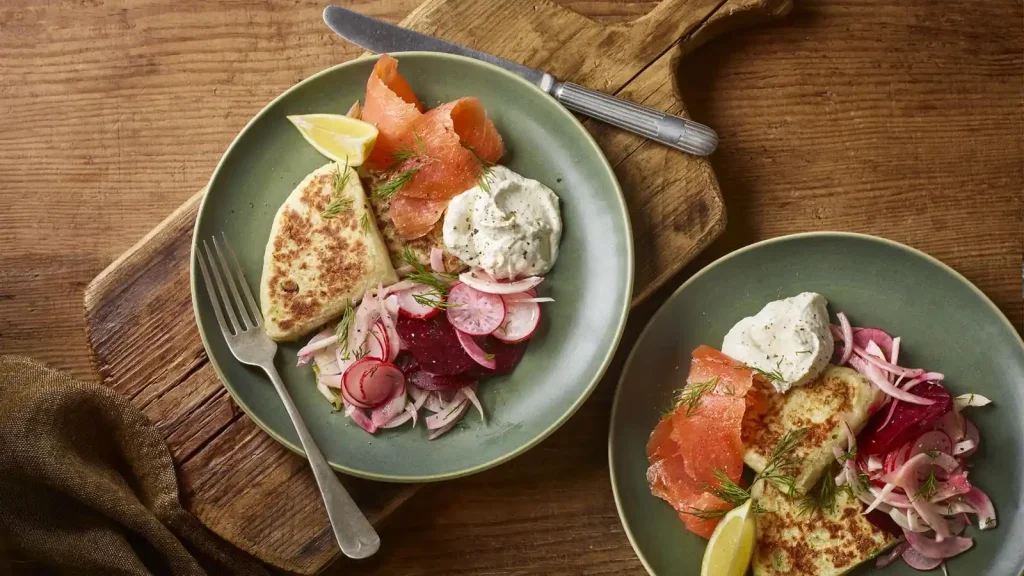
Present Rick Stein’s delightful toasted potato and spring onion scones alongside a vibrant beetroot salad, complemented by generous dollops of fiery crème fraîche. The warm, savory scones perfectly balance the earthy sweetness of the beetroot, while the crème fraîche adds a zesty kick, creating a harmonious blend of flavors and textures. This dish is not only visually stunning but also offers a deliciously satisfying taste experience, making it an ideal choice for a light lunch or an elegant starter.
Ingredients:
For the tattie scones
- 500g/1lb 2oz floury potatoes, such as Maris Pipers or King Edwards, peeled
- 25g/1oz butter
- 2 spring onions, finely sliced
- 100g/3½oz self-raising flour
- salt and freshly ground black pepper
For the beetroot salad
- 1 small raw beetroot, peeled
- 4 radishes, trimmed
- 1 small fennel bulb, save the fronds to serve (optional)
- 2 tbsp cider vinegar
- 1 tbsp sunflower oil
- 1 heaped tsp brown soft sugar
- 1 tsp chopped dill, plus extra to serve (optional)
To serve
- lemon wedges
- 4 tbsp crème fraîche
- 2 heaped tsp creamed horseradish
- 150–200g/5½oz–7oz smoked salmon or trout
Method:
- Serve two tattie scones on each plate, then top with the salad and a dollop of the crème fraiche mixture. Add slices of smoked salmon or trout, a few fennel fronds or dill, if using, and lemon wedges.
- Cut the potatoes into chunks and cook in a pan of salted water until tender. Drain and allow to air dry for a minute or two.
- Mash until lump free, stir in the butter and when it has melted, stir in the spring onions and flour. Season with salt and pepper, then leave the mash until it’s cool enough to handle.
- Put half of the mixture onto a floured board and roll it into a disc about 20–25cm/9-10in in diameter.
- Cut into quarters and, using a fish slice, transfer these to a dry frying pan set over a medium heat – the idea is to toast the scones rather than fry them. Cook for 3–4 minutes per side until golden, then remove and keep warm. Repeat with the remaining mixture.
- To make the beetroot salad, finely slice each vegetable for the salad separately, preferably on a mandolin. Put them in a bowl, mix gently and dress with the cider vinegar, oil, sugar and chopped dill.
- In a separate bowl combine the crème fraiche and horseradish, then season with salt and pepper.
F.A.Q.Rick Stein’s Food Stories Episode 2 – Argyll
Q1: What is the main focus of Rick Stein’s Food Stories Episode 2?
A: The main focus of Rick Stein’s Food Stories Episode 2 is Rick’s exploration of Argyll, a region renowned for its rich natural resources and exceptional culinary offerings. Rick delves into the local food scene, meeting chefs and producers, and discovers the unique flavors that define Argyll’s culinary landscape.
Q2: Who is Pamela Brunton and what is her significance in this episode?
A: Pamela Brunton is a Michelin Green Star-winning chef featured in this episode. She is celebrated for her innovative and sustainable approach to cuisine, using local and foraged ingredients to create dishes that showcase the bounty of Argyll. Her participation highlights the region’s commitment to sustainability and culinary excellence.
Q3: What unique experience does Rick have with Mary Galloway in this episode?
A: Rick joins Mary Galloway, a former teacher turned fisherwoman, to catch langoustines in the pristine waters of Argyll. This segment highlights the sustainable fishing practices employed in the region and provides insight into the local seafood industry, emphasizing the importance of preserving marine ecosystems.
Q4: What traditional method of food preparation does Rick explore during his visit to Argyll?
A: Rick explores the traditional method of smoking fish at a century-old smokehouse in Argyll. This visit offers a nostalgic and enlightening experience, showcasing the time-honored techniques that contribute to the distinctive taste and quality of Scottish smoked fish.
Q5: What dishes does Rick Stein prepare inspired by his visit to Argyll?
A: Inspired by his visit, Rick prepares arroz rojo, a vibrant red rice dish, and a modern twist on tattie scones with Scottish smoked salmon. These dishes pay homage to Argyll’s culinary heritage, combining local ingredients with global influences to create flavorsome and innovative recipes.
Q6: How does Rick Stein’s visit to Argyll emphasize sustainability and local traditions?
A: Rick’s visit to Argyll emphasizes sustainability through his interactions with local chefs and producers who prioritize the use of local, foraged, and sustainably sourced ingredients. His exploration of traditional practices, such as smoking fish and sustainable fishing, underscores the importance of preserving local culinary traditions and natural resources.
Q7: What impact does Rick Stein’s episode have on viewers?
A: Rick Stein’s episode leaves a lasting impression on viewers by showcasing the natural beauty and rich culinary traditions of Argyll. It highlights the importance of sustainability, heritage, and innovation in the culinary world, inspiring viewers to appreciate and support local food cultures and sustainable practices.
A: Argyll is considered a hidden gem for food enthusiasts due to its abundant natural resources from both land and sea, which provide a diverse array of ingredients. The region’s commitment to sustainability, traditional practices, and innovative culinary approaches makes it an exceptional destination for discovering unique and flavorful dishes.
Conclusion: Argyll’s Culinary Renaissance
The growing appeal of Argyll as a food destination
As the mist rolls off the lochs and the sun sets over the rugged coastline, Argyll’s culinary landscape shines brighter than ever. This once-hidden gem is rapidly emerging as a beacon for food enthusiasts and adventurous eaters alike. The region’s unique blend of traditional Scottish fare and innovative gastronomy is captivating palates and imaginations worldwide.
Visitors are flocking to Argyll, drawn by the promise of fresh seafood plucked from pristine waters and wild ingredients foraged from ancient forests. They come seeking authentic experiences, eager to taste the terroir of Scotland in every bite. From cozy fishermen’s pubs serving hearty chowders to Michelin-starred restaurants crafting delicate dishes from foraged herbs, Argyll offers a gastronomic journey like no other.
Preserving tradition while embracing innovation
In Argyll, the old and new dance together in perfect harmony. Traditional smoking techniques, passed down through generations, are finding new life in the hands of young, passionate artisans. Meanwhile, innovative chefs are reimagining classic Scottish dishes, infusing them with modern flair and global influences.
This delicate balance between honoring the past and embracing the future is at the heart of Argyll’s culinary renaissance. Local producers are rediscovering forgotten varieties of heritage vegetables, while cutting-edge aquaculture practices ensure sustainable seafood harvests for years to come. It’s a testament to the region’s resilience and creativity, proving that tradition and innovation need not be mutually exclusive.
Rick Stein’s final thoughts on Argyll’s food scene
As Rick Stein reflects on his journey through Argyll, he’s filled with a sense of wonder and excitement. The region has surprised and delighted him at every turn, challenging his preconceptions and expanding his culinary horizons. He marvels at the passion and dedication of the local food community, from the hardy fishermen braving rough seas to the innovative chefs pushing the boundaries of Scottish cuisine.
Rick’s eyes light up as he recalls the flavors he’s encountered – the briny sweetness of hand-dived scallops, the smoky richness of whisky-infused salmon, the earthy complexity of foraged mushrooms. Each taste is a story, a connection to the land and sea that have shaped Argyll’s culinary identity for centuries.
As he prepares to leave, Rick feels a tinge of sadness, but also a surge of inspiration. He’s confident that Argyll’s star will continue to rise in the culinary world, drawing food lovers from far and wide to experience its unique flavors and warm hospitality. And he knows that he’ll carry a piece of Argyll with him, in his memories and in his cooking, sharing the region’s culinary treasures with the world.
Rick’s parting words are a call to action for food lovers everywhere: “Don’t just dream about tasting Argyll’s bounty – come and experience it for yourself. Let the flavors of this magical place transport you, challenge you, and inspire you. Argyll isn’t just a destination; it’s a journey of culinary discovery that will stay with you long after you’ve returned home.”