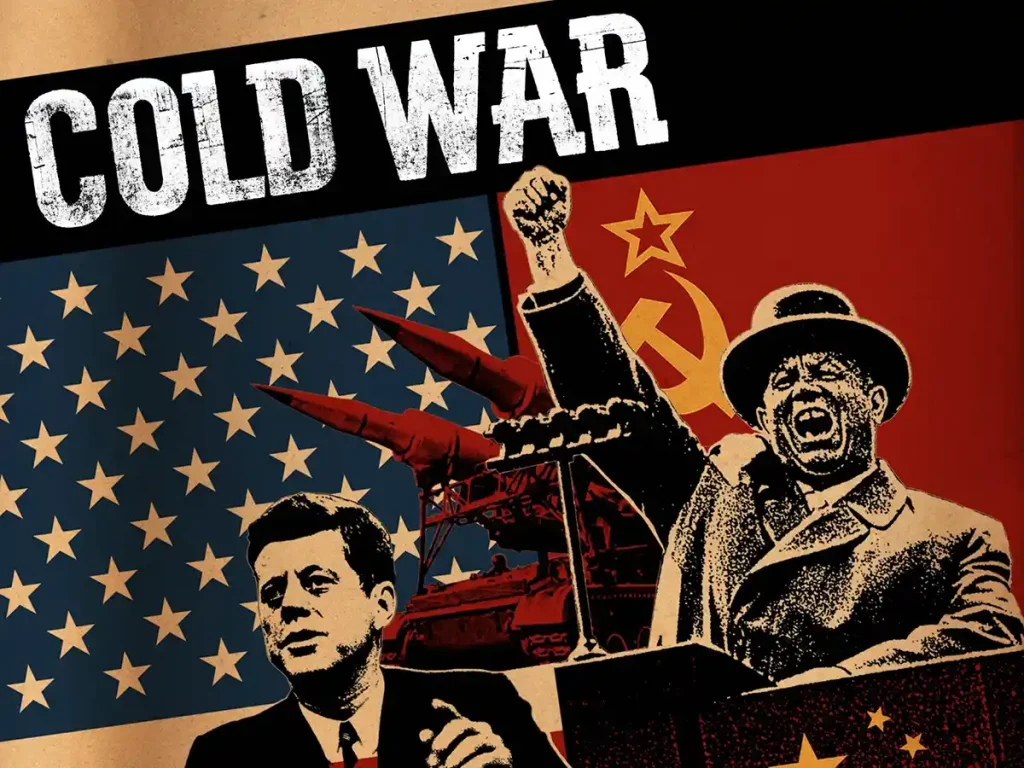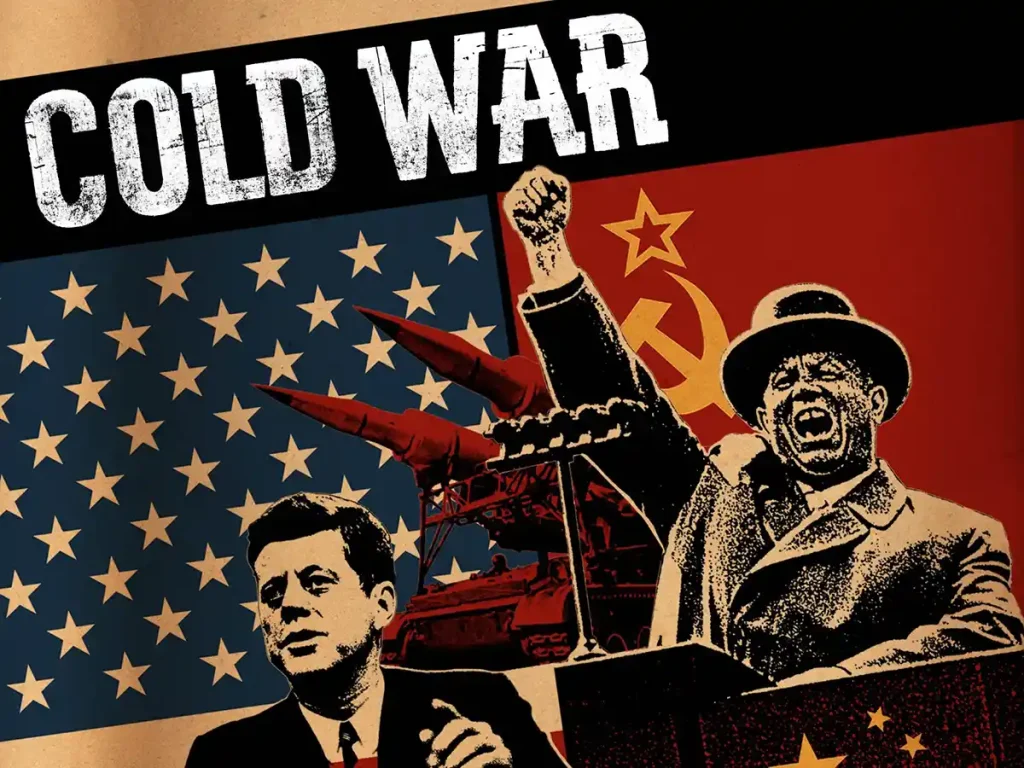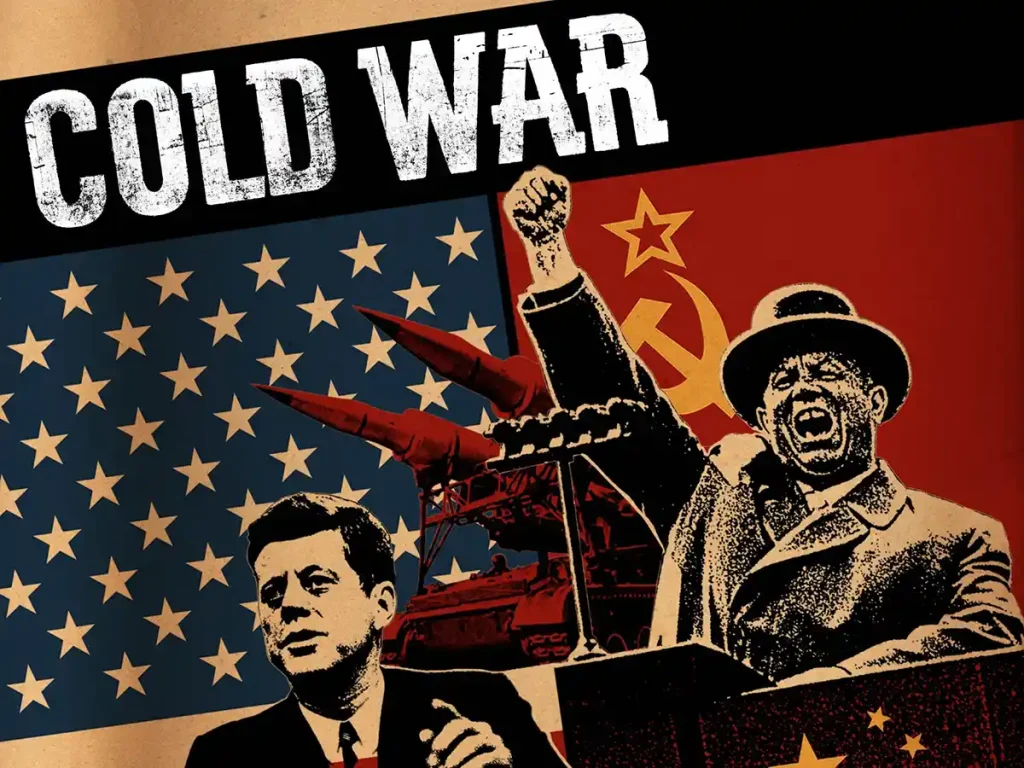
cold war

Cold War episode 21 - Soldiers of God 1975-1988

Cold War episode 21 – Soldiers of God 1975-1988

Cold War episode 21 – Soldiers of God 1975-1988 – Afghanistan is a war that costs the lives of almost 15,000 Soviet conscripts and an estimated one million Afghans. The turbulent conflict in Afghanistan that unfolded during the closing decades of the 20th century can be characterized as a tragic, costly war of significant global consequence. This fierce clash resulted in the untimely demise of nearly 15,000 Soviet conscripts, while the Afghan populace suffered even more heavily with an estimated one million lives extinguished. This theatre of war became an unlikely meeting ground for an unusual alliance, as the United […]

Cold War episode 21 – Soldiers of God 1975-1988 Read More »


Cold War episode 20 - Freeze 1977-1981

Cold War episode 20 – Freeze 1977-1981

Cold War episode 20 – Freeze 1977-1981: In 1976, Jimmy Carter and Leonid Brezhnev promised to reduce East-West tensions. But within four years those promises turned to anger and mistrust. The Cold War was far from over. The Soviet invasion of Afghanistan ends detente. Promising tougher measures against Moscow; Reagan defeats Carter for the presidency. In Poland, martial law is imposed. Carter’s ambitious proposals for total multilateral nuclear disarmament are rejected by Brezhnev; his championing of human rights does not win favour either. The Helsinki Accords encourage writers to establish Charter 77 in Czechoslovakia.     The visit of Pope

Cold War episode 20 – Freeze 1977-1981 Read More »

Cold War episode 19 - Backyard 1954-1990

Cold War episode 19 – Backyard 1954-1990

Cold War episode 19 – Backyard 1954-1990: The United States has always regarded Latin America as its own backyard. Fearing the spread of communism, it seeks to destabilize leftist governments. In 1973, the CIA helps overthrow the Chilean president Salvador Allende; in the 1980’s it support right wing extremists in Nicaragua and El Salvador. The United States saw the emergence of leftist movements in different Latin American countries as threatening to its commercial interests, and secretly plotted with military strongmen and middle class interests concerned with the land reforms and nationalisation policies of new governments.       In Guatemala

Cold War episode 19 – Backyard 1954-1990 Read More »


Cold War episode 18 - Good Guys, Bad Guys 1967-1978

Cold War episode 18 – Good Guys, Bad Guys 1967-1978

Cold War episode 18 – Good Guys, Bad Guys 1967-1978: The Cold War was not only a confrontation between two superpowers, but also a series of proxy conflicts that involved their allies and surrogates in different regions of the world. One of the main arenas of this surrogate warfare was the Middle East, where the United States and the Soviet Union competed for influence and resources. In 1967 and 1973, Israel, backed by the United States, defeated Egypt and Syria, supported by the Soviet Union, in the Six Day War and the Yom Kippur War.     These wars reshaped

Cold War episode 18 – Good Guys, Bad Guys 1967-1978 Read More »

Cold War episode 17 - Detente 1969-1975

Cold War episode 17 – Detente 1969-1975

Cold War episode 17 – Detente 1969-1975: In the early 1970s, North Vietnam launched a new offensive against the South, prompting the United States to intensify its bombing campaign in an effort to bring an end to the conflict. At the same time, the U.S. government, under President Richard Nixon, sought to establish peace through diplomatic means, building closer relations with both China and the USSR. As part of this strategy, Nixon and Soviet leader Leonid Brezhnev signed the Strategic Arms Limitation Treaty (SALT) in 1972, marking a significant step toward détente between the two superpowers. Meanwhile, West German Chancellor

Cold War episode 17 – Detente 1969-1975 Read More »


Cold War episode 16 - China 1949-1972

Cold War episode 16 – China 1949-1972

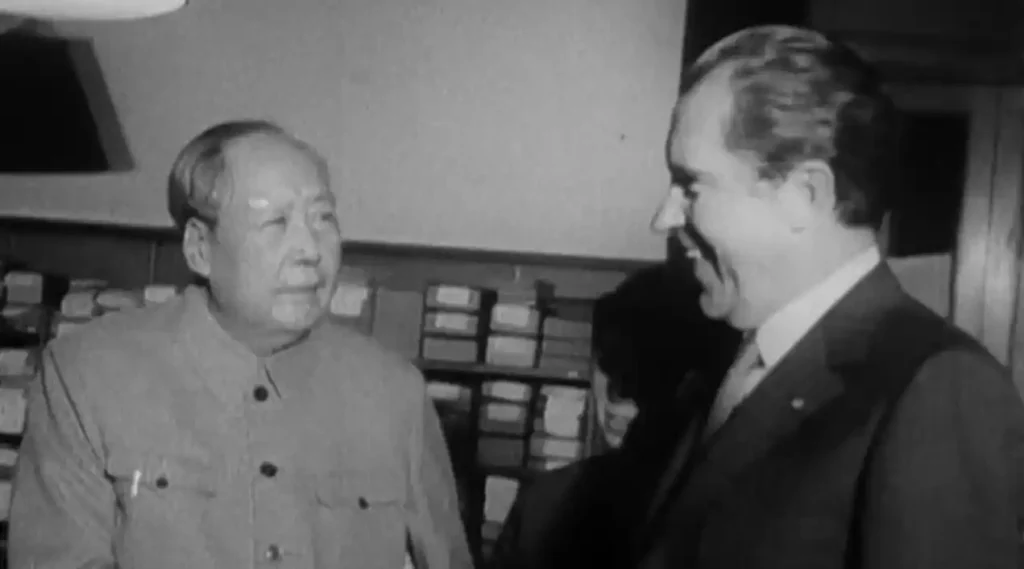
Cold War episode 16 – China 1949-1972 – Chinese communists win the longest civil war in 20th century history.  In the annals of 20th-century history, the Chinese Communist Party emerged victorious in the longest and most protracted civil war, profoundly shaping the nation’s future. Mao Zedong’s initial land reforms were met with widespread approval, but in 1958, he embarked on a sequence of disastrous policies that led to immense upheaval and catastrophe. As China’s relationship with the Soviet Union grew increasingly tense, the Sino-Soviet split in 1960 would ultimately pave the way for President Nixon’s groundbreaking visit to Beijing.  

Cold War episode 16 – China 1949-1972 Read More »

Cold War episode 15 - Red Spring: The Sixties

Cold War episode 15 – Red Spring: The Sixties

Cold War episode 15 – Red Spring: The Sixties – In the Soviet bloc, communist rule stifles ambition and achievement. Soviet defense expenditure cripples economic growth. In the Soviet bloc, the grip of communist rule has long been a suppressive force, stifling ambition and achievement among its citizens. The immense burden of Soviet defense expenditure continues to hinder economic growth, creating an environment that breeds disillusionment. The younger generations, captivated by the alluring symbols of America’s youth culture, yearn for the freedom represented by blue jeans and rock ‘n roll. Within this context, Czechoslovakia witnesses a glimmer of hope under

Cold War episode 15 – Red Spring: The Sixties Read More »


Cold War episode 12 - MAD 1960-1972

Cold War episode 12 – MAD 1960-1972

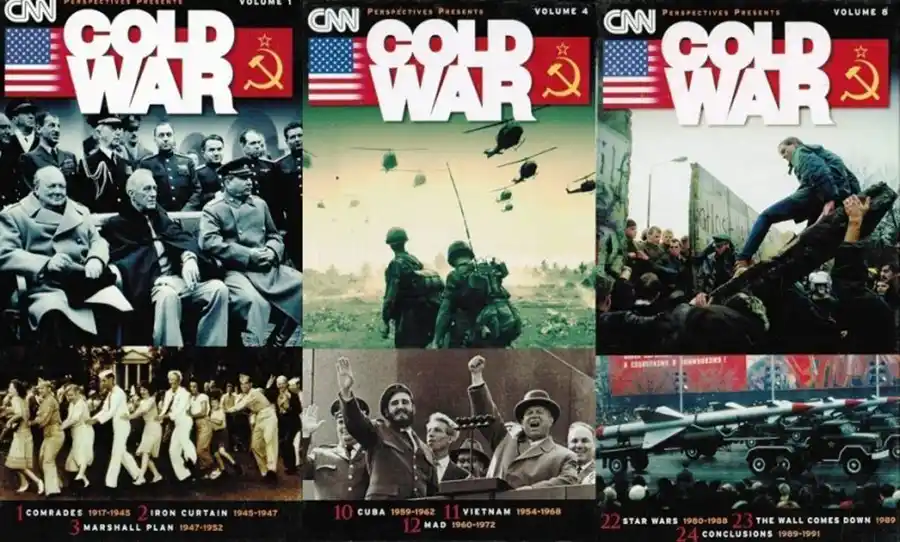
Cold War episode 12 – MAD 1960-1972 – Throughout the 1960s, the United States and the Soviet Union find themselves embroiled in a perilous nuclear standoff, both keenly aware that attacking the other could incite retaliation and result in self-destruction. This precarious balance leads to the evolution of nuclear strategy, known as Mutual Assured Destruction (MAD), in which both sides face assured annihilation in the event of nuclear war. During the Cuban Missile Crisis, America’s policy of targeting Soviet military bases as a deterrent to war proves to be ineffective. Consequently, U.S. Secretary of Defense Robert McNamara conceives a new

Cold War episode 12 – MAD 1960-1972 Read More »

Cold War episode 11 - Vietnam 1954-1968

Cold War episode 11 – Vietnam 1954-1968

Cold War episode 11 – Vietnam 1954-1968: Since the conclusion of French colonial rule, Vietnam has been a nation divided. The North is governed by communists, while the South is controlled by anti-communists. Despite cautionary advice against involvement in a nationalist conflict, the United States deploys its military forces. As opposition to the war grows within America, the US comes to realise that victory is unattainable.     Following the French defeat at the Battle of Dien Bien Phu, refugees pour into South Vietnam from the North as a strict land reform programme is implemented by the communist regime. With

Cold War episode 11 – Vietnam 1954-1968 Read More »

Cold War episode 10

Cold War episode 10 – Cuba 1959-1962

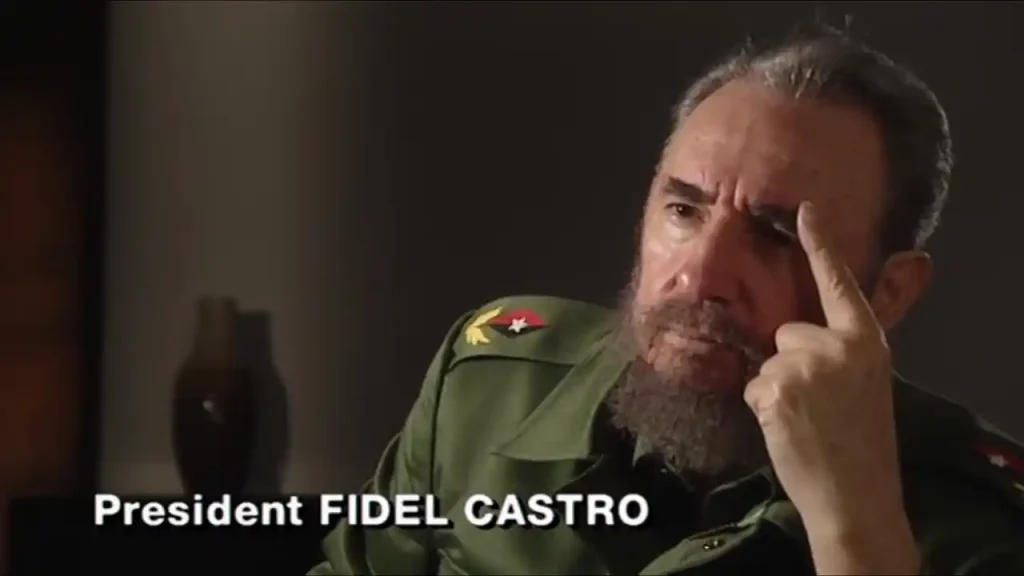
Cold War episode 10 – Cuba 1959-1962: In a gripping tale of political intrigue and high-stakes brinkmanship, Khrushchev, with Castro’s consent, decides to station short and medium-range missiles in Cuba, a mere 90 miles from the United States. As the tension mounts, the U.S. discovers the missile sites and enforces a blockade around the island. The two superpowers stand toe-to-toe, teetering on the edge of nuclear war, before sensibly stepping back from the precipice.       In the turbulent aftermath of the Cuban Revolution, Fidel Castro seizes power and forms a strong alliance with the Soviet Union. His decision

Cold War episode 10 – Cuba 1959-1962 Read More »

Cold War episode 9 - The Wall 1958-1963

Cold War episode 9 – The Wall 1958-1963

Cold War episode 9 – The Wall 1958-1963: The fate of Germany remains unresolved. West Germany has been admitted to NATO. Within East Germany, Berlin is divided between East and West by an open border. Thousands seize the chance to flee the communist system. To keep their people in, the East Germans, with Soviet backing, build The Wall.       As West Germany and West Berlin become more affluent, East Germans begin to flee their country for their more prosperous neighbor. Khrushchev demands that the British, French, and Americans leave West Berlin, but they decline and the opportunity for

Cold War episode 9 – The Wall 1958-1963 Read More »

Cold War episode 8 - Sputnik 1949-1961

Cold War episode 8 – Sputnik 1949-1961

Cold War episode 8 – Sputnik 1949-1961: During the mid-1950s, it appeared that the Soviet Union was surging ahead. In October 1957, the first Soviet satellite, Sputnik, orbited the Earth, causing dismay and fear within the United States as their space programme struggled to keep pace. In 1961, the Soviets sent Yuri Gagarin into space, forcing America to rise to the challenge.       Unbeknownst to the United States, the Soviets had been spying on their development of the atom bomb and quickly created their own after the Second World War. This ignited a nuclear arms race between the

Cold War episode 8 – Sputnik 1949-1961 Read More »

Scroll to Top