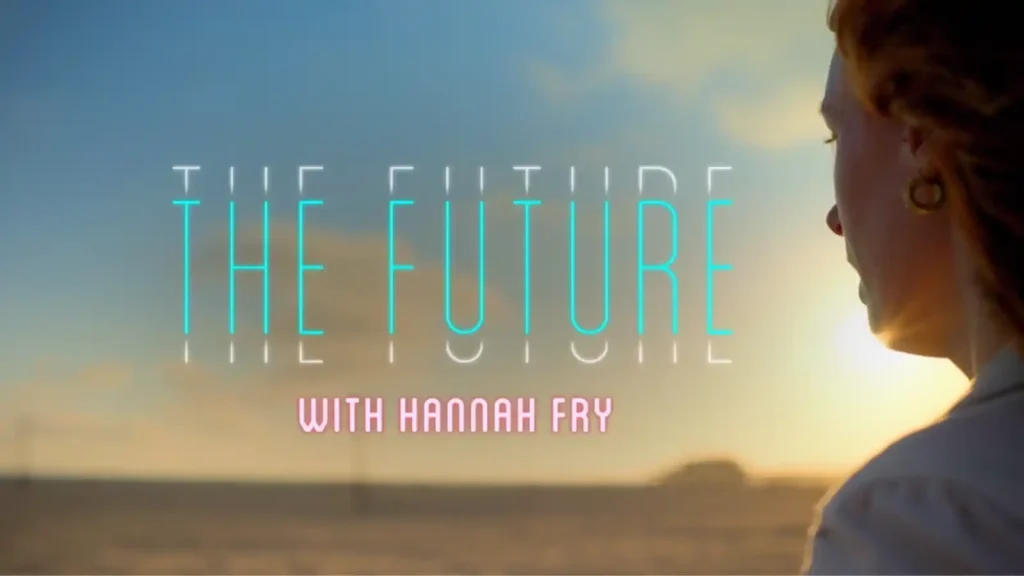
The Future with Hannah Fry Episode 2 puts one of the most consequential questions in modern technology directly on the table: can a computer read a human emotion? In OK Computer, How Do I Feel?, mathematician and writer Professor Hannah Fry investigates the artificial intelligence systems quietly spreading through hiring practices, insurance models, car dashboards, classrooms, and even pig farms — systems that claim to decode what you’re feeling from the movements of your face. The stakes are real, the science is contested, and the implications stretch well beyond anything most people realise is already happening.
Emotion recognition AI is no longer a laboratory curiosity. It has become a commercial industry, deployed by marketers tracking which advertisements produce the strongest reactions, by employers screening job candidates, by airport security trying to detect shifty behaviour, and by car manufacturers building surveillance directly into the cabin. Fry’s investigation peels back the confident exterior of this technology and finds, underneath it, a set of assumptions that don’t hold up — assumptions built on a 150-year-old scientific framework that even the companies selling these products quietly admit is imperfect.
What makes The Future with Hannah Fry episode 2 worth paying close attention to is where it goes beyond the obvious. Yes, facial recognition raises privacy concerns. But the deeper problem is scientific. The question isn’t simply whether your face is being watched. The question is whether a machine can ever reliably tell what your face is actually saying — and the answer, according to leading psychologists, is almost certainly not.
The Future with Hannah Fry episode 2
Darwin’s Six Emotions and the Foundation of Facial Recognition Technology
Everything in emotion recognition AI traces back to one source: Charles Darwin. In his 1872 work The Expression of Emotion in Man and Animals, Darwin argued that six basic emotions — anger, happiness, sadness, disgust, fear, and surprise — are universal across species and cultures. To test his theory, Darwin enlisted the French neurologist Guillaume Duchenne, who produced a series of photographs demonstrating specific facial expressions by electrically stimulating the muscles of a volunteer’s face. The results were both scientifically groundbreaking and, as Fry notes, quite interesting to look at.
Those six emotions became the foundational framework for a century and a half of emotion science. They are, Fry points out, the same expressions now represented by the most basic emoji set — recognisable, she says, even when rendered as four circles on a screen. That universality is what made them so attractive to software developers. If emotions are hardwired and universal, then in theory a camera and an algorithm can learn to read them.
The problem is that this theory, however elegant, turns out to be considerably less reliable than the technology built on top of it. Fry tests a facial recognition program early in the programme — it uses machine vision to analyse face movements and assign one of the six Darwinian categories. Happy and surprised, it gets right. Sad proves harder to perform convincingly, even for a human being. The program works well enough under controlled conditions. But controlled conditions, as Fry goes on to demonstrate, are not how human emotion actually operates.
Inside the Pig Farm Using AI to Detect Animal Pain
One of the more unexpected stops on Fry’s investigation is a pig farm where a team of scientists is attempting to use artificial intelligence to detect the emotional and physical states of pigs. The setup is striking: a camera system equipped with ring lighting captures the pigs’ faces as they enter the pen. A deep learning algorithm then analyses the pixels, looking for facial expressions associated with specific states.
The researcher leading the project, Emma, explains that the primary target is pain detection. Pigs in pain squint more, produce something resembling a grimace, and show subtler shifts in facial musculature that a trained system could potentially flag before a farmer would notice. The vision is practical and humane: cameras at feeding stations could alert a farmer when a specific pig shows signs of distress, allowing immediate intervention. That pig, as Emma puts it, needs a bit more attention.
The longer ambition goes further. Emma describes the ultimate goal as a truly animal-centric welfare assessment tool — one that allows farms to understand the individual emotional experience of each pig in their care. Fry is warm about the welfare motivation behind the research. She is more sceptical, however, about whether pigs experience emotions in the same discrete, categorical way the six-emotion framework assumes. The question of whether a pig can be genuinely happy or sad in a human sense, she concludes, doesn’t yet have an absolute answer. It may be a question for the future.
The Future with Hannah Fry Episode 2 and the AI Inside Your Car
From the pig farm, Fry moves to one of the most commercially advanced applications of emotion recognition technology: in-car surveillance. Accompanied by a somewhat unsettling plastic baby and stuffed dog, she tests a system already being offered to car manufacturers. The setup involves multiple cameras pointed at the driver, tracking facial expression, eye gaze, hand position, and body posture simultaneously. The technology is described by its developer, Modar, as human behaviour understanding AI.
The safety case is legitimate. Cameras that detect whether a driver’s eyes are on the road, whether their hands are on the wheel, and whether their body posture suggests fatigue can trigger warnings — steering wheel vibrations, seat vibrations, audible alerts — before a dangerous moment develops. Reducing road deaths through attentive AI is a goal most people would support.
But Fry pushes on the emotion-specific element, and the implications become considerably thornier. Some car companies, Modar tells her, have explored using detected stress or mood levels to alter GPS routing — sending an angry or stressed driver along a quieter, longer road automatically. That application sounds almost benign. The next one does not. Emotion data captured in the cabin could, Modar confirms, feed into usage-based insurance models. Insurers are already looking at how driver behaviour, measured across multiple sensors over time, might be used to customise premiums. A driver flagged repeatedly for angry driving could face higher costs.
Fry takes that logic one step further, unprompted. If a driver’s emotional state is being recorded as data, that data could, in principle, be used against them in court following a road accident. A moment of anger, captured and converted by the algorithm into a hard fact — “you were angry in that moment” — could be introduced as evidence. The muddle of actual human feeling, she notes, gets transformed somewhere in that black box into something cold, precise, and potentially devastating.
Why the Science Behind Emotion Recognition Is Weaker Than the Industry Claims
To understand why this matters so profoundly, Fry travels to Boston to meet Dr Lisa Feldman Barrett, a psychologist who has spent years researching the link between facial expressions and internal emotional states. Barrett’s challenge to the entire emotion recognition industry begins with a simple demonstration: she shows Fry a photograph of a woman’s face contorted with overwhelming intensity. Fry immediately reads it as grief — something terrible has happened. Barrett then reveals the wider context. The woman has just won a medal at a major competition.
The point is precise and devastating. A face, seen without context, is radically ambiguous. The human brain never actually reads faces in isolation — it processes an entire ensemble of information simultaneously: the setting, the body language, the sounds, the situation. Take the face alone, and interpretation becomes guesswork. Emotion recognition algorithms, by design, work almost entirely from the face.
Barrett’s own research and the studies she summarises make the scientific fragility even more explicit. Researchers who examined every published study measuring facial movements during emotional events found a consistent and troubling pattern. When people are angry, they scowl around 35% of the time. The same pattern held across all six Darwinian emotion categories — not one of the supposedly universal expressions was present even half the time during the corresponding emotional state. Scowling, in other words, is an expression of anger, not the expression of anger. The emoji version of human emotion is, most of the time, simply absent.
This means that any algorithm built to equate a scowl with anger will be wrong, by definition, at least 65% of the time. For applications like movie testing or advertising research — where knowing the general direction of an audience’s reaction is useful enough — that error rate might be acceptable. For applications that make consequential decisions about individual people’s lives, it is not.
Emotion Recognition in Recruitment and the Racial Bias Built Into the System
The stakes rise sharply when emotion recognition moves into the workplace, and it has moved there with remarkably little public discussion. There is, as ethics researcher Os Keyes explains to Fry, a growing push to integrate emotion recognition into workplace software. The pitch to managers is straightforward: monitor your sales team’s emotional engagement during calls, evaluate enthusiasm, assess performance through the lens of detectable affect. For a company trying to optimise output, the appeal is understandable.
But Keyes identifies a problem that runs deeper than inaccuracy. These systems, he argues, are built on a very particular model of how emotion works and how faces express it — one that is specifically white and Western in its assumptions. The emotional grammar encoded into these algorithms reflects the cultural frameworks of the people who built them. That is not a neutral technical limitation. It produces measurable, documented bias.
A 2018 study found that some emotion recognition systems consistently read Black men’s faces as angrier than white men’s faces — even when those men were smiling. The algorithm, trained on data shaped by existing cultural assumptions, delivered those assumptions back as objective scientific output. As Keyes frames it pointedly: existing biases and assumptions get encoded into the machine, and because it’s a machine producing the verdict, it gets classified as science rather than discrimination.
The consequences for hiring are direct. If a company uses emotion recognition software to evaluate the enthusiasm or trustworthiness of job candidates during video interviews, and that software systematically underscores certain groups or misreads their expressions, the discrimination becomes invisible — buried inside an algorithm that most hiring managers will not interrogate. Barrett puts the broader question clearly: would you want an algorithm making decisions about you, your children, or the people you love if it was wrong at least 50% of the time, and possibly more?
The Future with Hannah Fry Episode 2 and the Right Way to Build Emotion AI
Not all of the technology Fry encounters in The Future with Hannah Fry episode 2 draws the same level of scepticism. At MIT — the institution where some of the earliest work on computers and emotion was conducted — neuroscientist Kristy Johnson is developing something deliberately different. Her project, called Commalla, is designed to help nonverbal children communicate more effectively. The motivation is personal: her son Felix has autism and does not use spoken words. His vocalisations — specific sounds that carry consistent meanings within his world — are his speech.
The problem Commalla addresses is a real and daily one. Kristy can read Felix’s vocalisations fluently, because she knows him. A teacher, a carer, a therapist encountering him for the first time cannot. The app captures Felix’s sounds in real time, labels them with Kristy’s interpretation of what each means, and builds a personalised model over time. New sounds then get interpreted based on the accumulated record. It is not a generic emotion classifier applied to an individual — it is a system built entirely around the specific communication patterns of one specific person.
That distinction is the one Fry finds most significant. She describes Commalla as a good example of how this kind of work should be done. It centres the individual at every step, rather than assuming things about large groups and projecting those assumptions onto anyone who comes through the door. Kristy herself is careful about how she frames what the app does: it enhances communication, she says. It is not a mind-reading tool. The emotion in Felix’s sounds is real, but it is only part of what he is experiencing or conveying. No single technology, she believes, will ever fully capture the complexity of the human experience.
The False Authority of Algorithms and What It Means for Society
The final thread running through The Future with Hannah Fry episode 2 is the one that ties everything else together. Emotion recognition technology is not simply imperfect in the way that all early technology is imperfect, waiting to be refined into accuracy. It is built on a scientific foundation that is genuinely contested. The six universal emotions, Darwin’s framework, and the link between specific facial expressions and specific internal states are assumptions that do not survive close empirical scrutiny.
And yet these systems are being deployed at scale, making decisions about employment, insurance, security, and potentially criminal guilt, wrapped in the apparent authority of algorithmic objectivity. Os Keyes makes the point crisply: algorithms take on an air of authority that makes them difficult to argue with or to see through. A manager told by a software system that a candidate’s face suggested low engagement during an interview is unlikely to push back. The system said so. The algorithm decided.
Fry’s conclusion, drawn from Barrett, Keyes, Johnson, and the evidence gathered across continents and contexts, is consistent. Emotion recognition technology can probably give a rough idea of how groups of people might be feeling in some situations, and that is enough for some applications. It cannot reliably determine the internal emotional state of an individual person. Scientists are clear on that. Companies developing the technology largely admit it privately. The gap between what the science supports and what the products are being used to decide is the problem — and closing that gap before the harm it causes becomes entrenched is the challenge that matters.
FAQ The Future with Hannah Fry episode 2
Q: Can artificial intelligence accurately read human emotions from facial expressions?
A: Not reliably. Research shows that people only display the expected facial expression for a given emotion around 35% of the time at most. That means emotion recognition algorithms built on facial expressions alone are wrong at least 65% of the time. Scientists are clear that computers cannot dependably determine an individual’s internal emotional state from their face.
Q: What are the six basic emotions that emotion recognition AI is built on?
A: The six emotions are anger, happiness, sadness, disgust, fear, and surprise. Charles Darwin identified them in his 1872 work as universal across species and cultures. Guillaume Duchenne later photographed specific facial expressions linked to each by electrically stimulating a volunteer’s facial muscles — the first scientific attempt to connect outward expression with internal emotional state.
Q: How is emotion recognition AI already being used in everyday life?
A: It is already deployed by marketers testing advertisement reactions, by employers screening job candidates, in educational settings to monitor student engagement, at airport security to flag suspicious behaviour, and inside car cabins to track driver attention and emotional state. Its reach across daily life is wider than most people realise.
Q: How does in-car emotion recognition technology work and what can it do with the data?
A: Cameras inside the cabin track facial expression, eye gaze, hand position, and body posture simultaneously. The system can alert distracted or drowsy drivers using steering wheel vibrations or audible sounds. However, the same data can feed into usage-based insurance models, potentially raising premiums for drivers flagged as angry or inattentive — and could theoretically be used as evidence in court following an accident.
Q: Why can’t a facial expression reliably tell you what someone is feeling?
A: Because context is everything. The human brain never reads a face in isolation — it processes the full situation, body language, sounds, and environment simultaneously. A face showing intense emotion looks identical whether the person has just won a medal or suffered a loss. Algorithms working from facial pixels alone miss all of that surrounding information.
Q: Is emotion recognition AI biased against certain groups of people?
A: Yes. These systems are built on models reflecting white, Western assumptions about how faces express emotion. A 2018 study found that some systems consistently rated Black men’s faces as angrier than white men’s faces, even when smiling. Ethics researchers warn the technology is particularly biased against disabled people and people of colour, encoding existing social discrimination into algorithmic output.
Q: Can emotion recognition AI be used to make hiring decisions?
A: Some companies are already using it this way, evaluating candidates’ enthusiasm or engagement during video interviews based on facial expression analysis. Psychologists argue this is deeply problematic, since the technology is wrong the majority of the time and carries significant racial and disability bias. Decisions about employment, educational access, and even criminal guilt are being made on this flawed basis in some contexts.
Q: How are scientists using AI to detect emotions in pigs and why does it matter?
A: Researchers are using deep learning algorithms to analyse pig facial expressions and detect signs of pain or distress. Cameras at feeding stations capture images and flag individual animals showing signs of discomfort, alerting farmers to intervene. The longer goal is a fully animal-centric welfare assessment tool that can capture each pig’s individual experience of its environment without requiring verbal communication.
Q: What makes the Commalla app different from standard emotion recognition systems?
A: Commalla is built around one specific individual rather than generalised assumptions about human expression. Developed at MIT, it captures the vocalisations of nonverbal children with autism and labels them using parental interpretation, building a personalised model over time. New sounds are then interpreted against that unique record. It is designed as a communication tool, not a mind-reading system, and centres the individual at every stage.
Q: What is the biggest risk of deploying emotion recognition AI at scale?
A: The greatest danger is that flawed technology carries an unwarranted air of scientific authority. Algorithms are difficult to question or challenge, so decisions made by emotion recognition systems — about who gets hired, who pays higher insurance, or who is considered guilty — get treated as objective facts. When the underlying science is contested and the error rates are high, deploying these systems at scale is fundamentally dangerous for society.