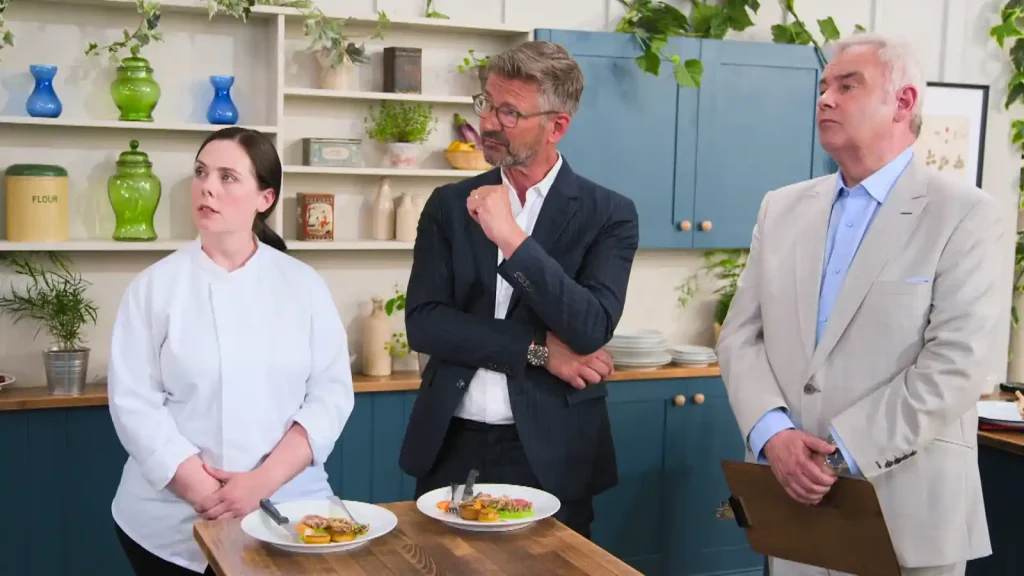
Farm to Feast episode 4: The Battle for the Final Semi-Final Spot
The tension rises in episode 4 of Farm to Feast as the competition narrows to just four remaining contestants. With three semi-finalists already confirmed, Danni and Joris eagerly anticipate the culinary showdown that will determine who claims the coveted final spot in the semi-finals.
This week’s challenge centers around two distinctive local ingredients: the prized Lough Neagh eels and an award-winning triple cream cheese from County Armagh. These regional delicacies will test the contestants’ creativity and technical prowess as they transform these ingredients into exceptional dishes.
The contestants face mounting pressure as they create memorable menus that showcase their unique culinary perspectives. Each chef must demonstrate not only technical skill but also an understanding of how to honor these ingredients’ natural flavors while elevating them to restaurant-quality presentations.
Lough Neagh eels present a particular challenge due to their distinctive texture and flavor profile. Furthermore, working with the rich, buttery triple cream cheese requires finesse to balance its decadence with complementary flavors. The judges will be looking for dishes that demonstrate thoughtful flavor combinations and skillful execution.
Danni and Joris, having witnessed the evolution of each contestant’s abilities throughout the competition, pay particular attention to how the chefs approach these ingredients. They observe how each contestant handles the delicate balance between tradition and innovation when working with these celebrated local products.
The stakes have never been higher as the four contestants vie for the last remaining semi-final position. Each plate served represents not just a dish but a culinary narrative—telling the story of Northern Ireland’s rich agricultural heritage through expertly prepared cuisine.
As the contestants forage from field and shore, they must consider how to transform these locally sourced treasures into cohesive, impressive menus. The challenge tests their ability to understand the connection between the land and exceptional dining experiences.
Farm to Feast episode 4
The judges evaluate each dish based on technical execution, creativity, flavor harmony, and presentation. However, they also consider how well the contestants capture the essence of farm-to-table philosophy—honoring the journey from producer to plate.
Throughout the episode, viewers witness moments of brilliance alongside inevitable challenges as contestants navigate time constraints and the pressure of competition. These moments of culinary drama highlight the passion driving each contestant toward their goal.
The competition ultimately reveals which chef possesses the perfect combination of technical skill, creative vision, and respect for ingredients. This winning approach secures them the final place in the semi-finals, where the competition will become even more intense.
Farm to Feast continues to showcase Northern Ireland’s exceptional produce while spotlighting the talented chefs who transform these ingredients into unforgettable dining experiences. The journey from farm to feast represents not just a cooking competition but a celebration of local food culture and culinary innovation.
A Culinary Journey’s Pinnacle: Where Tradition Meets Innovation
As the embers of competition cool in episode 4 of Farm to Feast, what remains is far more than simply the announcement of our final semi-finalist. Rather, we witness the culmination of a gastronomic odyssey that speaks to Northern Ireland’s rich culinary heritage. The contestants’ journeys mirror the very ingredients they’ve worked with—transformed through passion, skill, and vision into something greater than the sum of their parts.
Throughout this episode, we’ve observed how Lough Neagh eels and County Armagh’s triple cream cheese—ingredients deeply rooted in local tradition—have become vessels for contemporary culinary expression. Moreover, these regional treasures have challenged our chefs to demonstrate not just technical proficiency, but also an authentic connection to place and provenance.
The pressure of competition undoubtedly brought forth moments of brilliance and innovation. Furthermore, it revealed each contestant’s unique perspective on what farm-to-table truly means in Northern Ireland’s evolving food landscape. The judges’ deliberations ultimately centered on which chef most eloquently spoke through their dishes, telling a story that honored both ingredient and origin.
Looking beyond the competitive aspect, this episode underscores a profound truth about Northern Irish cuisine. Subsequently, it reminds us that our best culinary traditions are not static relics but living practices that evolve through respectful innovation. The contestants who balanced reverence for traditional ingredients with bold, creative vision demonstrated this principle masterfully.
Danni and Joris’s insightful evaluations throughout the episode highlighted the critical importance of understanding ingredients deeply. Additionally, their commentary emphasized how technical skill must always serve the purpose of elevating natural flavors rather than masking them. This philosophy will certainly carry into the semi-finals, where standards will rise even higher.
As we conclude this pivotal episode, we recognize that the true winner extends beyond the individual who secured the final semi-final position. In fact, Northern Ireland’s rich agricultural bounty and culinary tradition stand triumphant. The contestants have served as worthy ambassadors, translating the language of field and shore into exquisite dining experiences.
The journey from farm to feast is, after all, one that connects us not just to our food but to our cultural identity. Therefore, as we anticipate the semi-finals, we celebrate not just culinary skill but the continuing story of a region whose identity is inextricably linked to its exceptional produce and the talented individuals who transform it.
When the final fork was set down and the judges delivered their verdict, what resonated most was not simply who would advance, but how each contestant had honored the profound relationship between land, producer, and plate—a relationship that forms the beating heart of Farm to Feast.
FAQ Farm to Feast episode 4
Q: What makes cooking competition shows like Farm to Feast different from other reality TV formats?
A: Cooking competition shows like Farm to Feast distinguish themselves through their unique blend of culinary education, regional ingredient spotlighting, and authentic skill assessment. Moreover, these programs celebrate cultural heritage by connecting traditional ingredients with contemporary techniques. Unlike typical reality formats that rely primarily on interpersonal drama, cooking competitions showcase genuine technical expertise, creativity under pressure, and the transformation of raw ingredients into artistic expressions. Additionally, shows like Farm to Feast emphasize the connection between local agriculture and cuisine, creating a narrative that honors both producers and chefs alike.
Q: How do judges evaluate contestants in professional cooking competitions?
A: Judges in professional cooking competitions typically evaluate contestants across multiple dimensions, creating a comprehensive assessment framework. Technical execution forms the foundation, where judges scrutinize cooking techniques, temperature control, and precision. Creativity and innovation are subsequently measured through unique flavor combinations and presentation styles. Furthermore, judges analyze flavor harmony, ensuring all components complement rather than compete with each other. Presentation quality is also essential, as visual appeal significantly impacts the dining experience. Finally, many competitions like Farm to Feast specifically evaluate how well contestants honor ingredient integrity, showcasing the natural flavors of featured local products.
Q: What challenges do contestants face when working with unfamiliar local ingredients?
A: Contestants working with unfamiliar local ingredients face a multifaceted challenge that tests their adaptability and culinary knowledge. First, they must quickly decipher the optimal cooking methods for ingredients with unique textures and properties, such as Lough Neagh eels. Time constraints compound this difficulty, forcing rapid experimentation rather than measured testing. Additionally, balancing traditional preparation methods with innovative approaches requires cultural sensitivity alongside technical skill. Contestants must also navigate flavor pairing uncertainties, especially with distinctive regional products like artisanal cheeses. This culinary tightrope walk ultimately separates those with fundamental understanding of ingredient principles from those who merely follow recipes.
Q: How do cooking competitions highlight regional culinary heritage?
A: Cooking competitions serve as vibrant showcases for regional culinary heritage through several deliberate approaches. By featuring indigenous ingredients like Lough Neagh eels, these shows spotlight products uniquely tied to specific landscapes and traditional harvesting methods. The competitions frequently incorporate challenges that reference historical cooking techniques, connecting viewers to culinary practices passed through generations. Furthermore, expert commentary often provides cultural context, explaining the significance of particular dishes within local celebrations and customs. These programs essentially function as living museums, documenting regional food cultures while simultaneously demonstrating how traditional ingredients can evolve through contemporary culinary innovation.
Q: What qualities typically distinguish semi-finalists in high-level cooking competitions?
A: Semi-finalists in high-level cooking competitions consistently demonstrate a distinctive blend of technical mastery and creative vision that separates them from their peers. Exceptional stress management becomes increasingly evident as pressure intensifies, with top contenders maintaining precision despite time constraints. These chefs exhibit remarkable adaptability, pivoting gracefully when techniques fail or ingredients behave unexpectedly. Additionally, semi-finalists typically possess a refined palate capable of detecting subtle flavor imbalances that would escape less experienced chefs. Their presentations often tell cohesive stories through thematic unity and thoughtful plating. Finally, the most compelling semi-finalists bring authentic personality to their dishes, creating signature styles that judges can recognize even in blind tastings.
Q: How does the farm-to-table philosophy influence modern cooking competitions?
A: The farm-to-table philosophy has fundamentally transformed modern cooking competitions by shifting their evaluative framework and educational mission. Competitions increasingly incorporate foraging challenges that require contestants to source ingredients directly from natural environments. Judges now emphasize seasonality as a critical criterion, rewarding chefs who construct menus around peak-harvest ingredients. Furthermore, many competitions now feature direct collaboration with farmers and producers, bringing agricultural expertise directly into the culinary spotlight. This philosophy has essentially expanded the definition of culinary skill beyond kitchen techniques to include ingredient selection and sourcing wisdom. Consequently, competitions like Farm to Feast have evolved into celebrations of entire food ecosystems rather than merely individual cooking talents.
Q: What role do judges like Danni and Joris play beyond simply scoring contestants?
A: Judges like Danni and Joris fulfill multiple essential roles beyond their scoring responsibilities, functioning as narrative guides for the viewing audience. They translate complex culinary techniques into accessible concepts, helping viewers understand why certain approaches succeed or fail. Throughout competitions, judges also serve as cultural ambassadors, providing historical context for traditional ingredients and preparation methods. Their commentary creates educational moments that transform entertainment into culinary instruction. Additionally, experienced judges often function as emotional anchors, acknowledging the immense pressure contestants experience while maintaining objective assessment standards. Through their expertise and commentary, judges essentially create the evaluative framework through which audiences learn to appreciate culinary artistry at professional levels.
Q: How do cooking competitions balance tradition with innovation?
A: Cooking competitions achieve the delicate balance between tradition and innovation through thoughtfully structured challenges and nuanced judging criteria. Many competitions specifically design dual-aspect challenges requiring contestants to demonstrate mastery of classical techniques before applying creative modifications. Judges typically reward innovation that enhances rather than obscures traditional ingredient qualities. Furthermore, competitions often incorporate heritage ingredients with explicit instructions to reinterpret them for contemporary palates. This approach creates a culinary dialogue between past and present, where traditions serve as foundations rather than limitations. The most successful contestants recognize that meaningful innovation must be grounded in understanding what makes traditional preparations successful, treating culinary heritage as a springboard rather than a constraint.
Q: How does the pressure of competition affect culinary creativity?
A: The pressure of competition transforms culinary creativity through a fascinating psychological alchemy that both constrains and liberates chefs. Time limitations paradoxically spark innovative solutions as chefs must abandon overthinking in favor of instinctive decisions. Additionally, competitive pressure often pushes contestants beyond comfortable techniques into experimental territory they might otherwise avoid. However, this same pressure can trigger risk aversion in some chefs, who retreat to proven methods rather than attempting boundary-pushing concepts. The adrenaline of competition frequently heightens sensory perception, allowing some chefs to make more precise flavor adjustments. Ultimately, competitive environments reveal which chefs can channel pressure into focused creativity and which become creatively paralyzed—a distinction that often separates champions from runners-up.
Q: What lasting impact do shows like Farm to Feast have on regional food cultures?
A: Shows like Farm to Feast create substantial ripple effects throughout regional food cultures that extend far beyond entertainment value. These programs dramatically increase consumer awareness of indigenous ingredients, often revitalizing market demand for heritage products like specialty cheeses or traditional catches. Local restaurants frequently experience increased interest in dishes featuring televised ingredients, expanding markets for regional producers. Furthermore, these shows inspire culinary tourism as viewers travel to experience authentic versions of highlighted regional specialties. Young chefs often cite such programs as inspiration for pursuing culinary careers focused on local traditions. Perhaps most importantly, these competitions document evolving food cultures, creating valuable cultural archives that preserve traditional knowledge while simultaneously demonstrating how culinary traditions naturally evolve through creative interpretation.