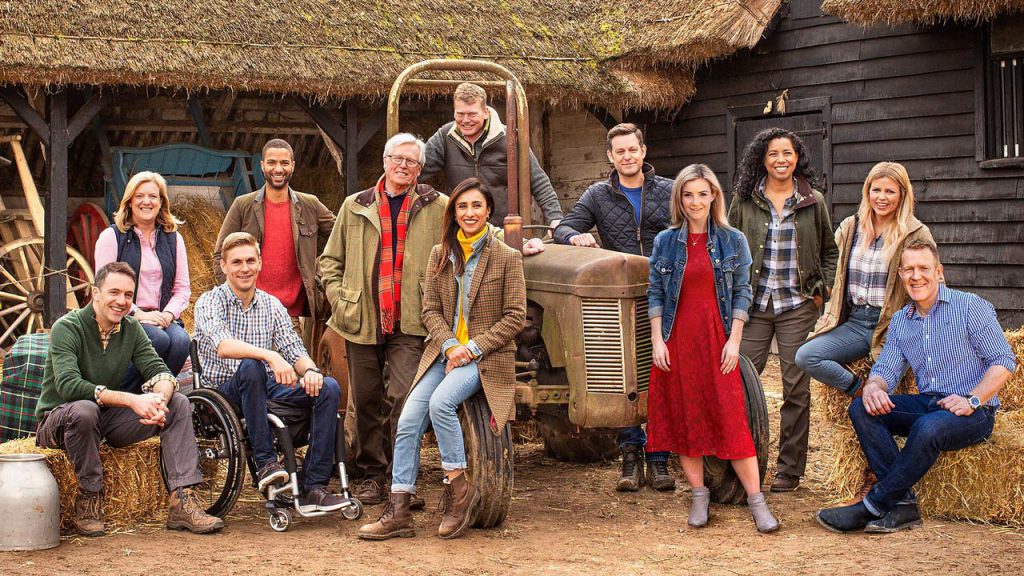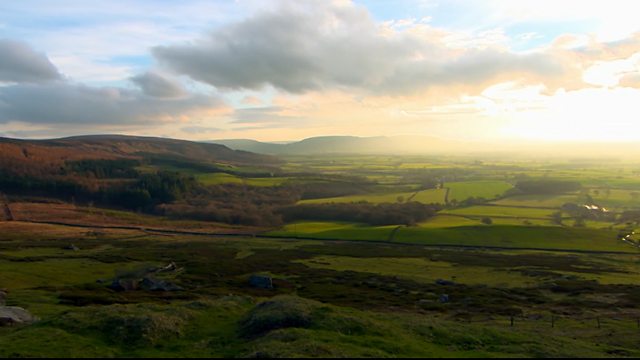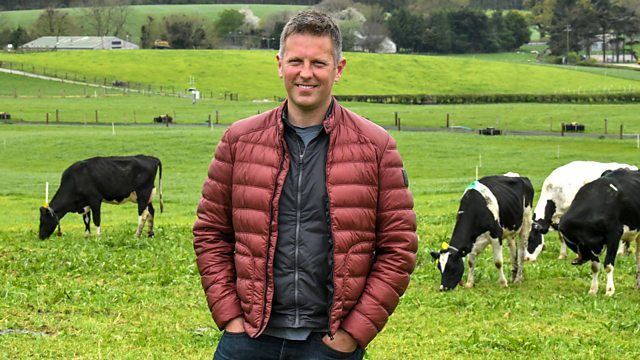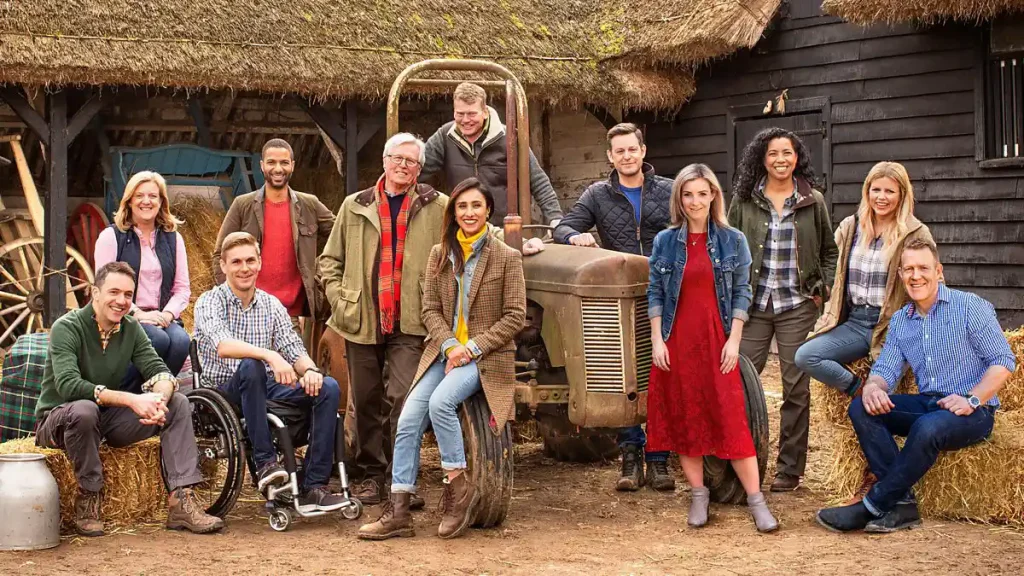
The special series Countryfile – Adam’s Farming Families explores the delicate balance between heritage and innovation on Britain’s farms. It begins with the Eggleston family in Leicestershire, who have supplied milk to the local Stilton dairy for over a century. Their story reveals how deep-rooted traditions can fuel a modern, thriving agricultural business. For them, farming is not merely a job; it is a way of life handed down through generations, constantly adapting to meet new challenges.
The significance of generational farming lies in this continuity. Families like the Egglestons embody the resilience required to navigate the complexities of modern agriculture. They must care for nature, produce our food, and ensure that rural traditions thrive. This requires a unique blend of historical knowledge and forward-thinking strategy, a theme central to their success. They face constant pressure to evolve while honouring the legacy left by their ancestors.
This exploration into their world, as shown in Countryfile – Adam’s Farming Families, reveals a multi-faceted approach to dairy farming. It contrasts different philosophies, from pasture-led systems to high-tech indoor operations. The series delves into how families work together day-to-day, manage succession, and make crucial decisions that will shape their future. It is a glimpse into the inventive ways farmers are keeping their businesses thriving for generations to come.
At the heart of this story is the Eggleston family and their home, Bridge Farm, located near the town of Melton Mowbray. The late Roy Eggleston purchased the farm in 1962, and today his son Paul and daughter-in-law Claire run the business. They are supported by their children, James and Amy, representing the farm’s third and fourth generations. Together, they have expanded the operation from just 100 cows to a strong herd of 600.
Every drop of the three million litres of milk they produce annually is destined to become Stilton cheese. This iconic product holds a protected status, meaning it can only be produced in a few licensed dairies across Leicestershire, Derbyshire, and Nottinghamshire. Paul’s great-grandfather was one of the founding members of the local farmer-owned cooperative dairy in 1911. This century-long relationship underscores the family’s deep connection to their region’s most famous culinary export.
To maintain this legacy, the Egglestons have embraced a progressive, low-input system inspired by international methods. This model focuses on efficiency and profitability by aligning their practices with the natural behavior of their animals. At the core of this philosophy is a pasture-based approach drawn from the New Zealand farming system, which prioritizes high-quality grazing. This method represents a significant shift from the more intensive system their grandparents ran, yet it continues the family’s proud tradition of producing milk for Stilton cheese.
Countryfile – Adam’s Farming Families
The Heart of the Operation: A New Zealand-Inspired System
The daily rhythm at Bridge Farm revolves around a meticulously managed grazing schedule. The Eggleston family has adopted a rotational grazing system where their 600 cows are moved to a fresh paddock of grass every 12 hours. This practice is part of a 21 to 25-day cycle across 75 different paddocks. According to Paul Eggleston, this ensures the herd always has access to the best quality grass while allowing grazed pastures ample time to recover. This structure is the central pillar of their entire operation.
To achieve this level of precision, the family relies on a simple yet effective piece of technology. Amy Eggleston uses a rising plate meter to measure the amount of available grass in each field weekly. The technique, colloquially known as “plonking,” involves walking across a paddock and taking average readings of the grass height and density. This data allows her to calculate exactly how much grazing area to allocate, ensuring the cows receive enough food without wasting precious resources by trampling it.
This entire philosophy was inspired by farming practices in New Zealand, where the family has spent time learning and drawing inspiration. The New Zealand farming system is renowned for its low-input, high-efficiency pasture management. While the UK climate prevents year-round grazing, the Egglestons have adapted these principles to their own environment. This includes breeding a smaller, more robust cow that is better suited to walking long distances between the 7 miles of tracks connecting their many paddocks. This low-input model has proven to be more profitable for the Eggleston family.
A Tale of Two Dairies: Contrasting Farming Philosophies
The Egglestons’ pasture-based model stands as one successful approach to modern dairy farming, but it is not the only one. A look into the archives at the Lilburn family in County Down reveals an entirely different philosophy: the zero grazing system. Here, the herd remains indoors for most of the year in what they describe as a “five-star hotel for cows.” This environment includes comfortable mattresses, automated scratchers, and constant access to food and water.
The Lilburns’ decision to adopt a zero grazing system was born from necessity. Persistent rain made their fields too wet for grazing, leading to wasted grass and damaged land. Their solution was to bring the field to the cow. Three times a day, fresh, lush grass is cut and delivered directly to the herd. This method eliminates the waste associated with trampling and ensures the cows receive optimal nutrients, allowing the farm to feed 20 tons of fresh grass to 200 cows daily.
This stark contrast between the Egglestons and the Lilburns highlights the diverse strategies within dairy farming. While the Egglestons focus on low inputs and natural grazing to achieve profitability, the Lilburns leverage technology and a controlled environment to maximize yield and efficiency. Both are powerful examples of generational farming, where families make bold, strategic decisions to secure their farm’s viability for the future. Each system, though philosophically different, is tailored to its specific climate, landscape, and business goals.
The Role of Technology in Modern Dairy Farming
Technology is the engine that drives the Lilburn family’s zero grazing system. Their most significant investment is in four robotic milking machines, which cost over £100,000 each. These automated systems allow cows to choose when they want to be milked, day or night. A cow simply walks into the robot, which uses a laser to identify her teats and attach the milking cups. This voluntary process reduces stress and allows for frequent milking, with some high-yield cows visiting the robots up to five times a day.
These robots are more than just milkers; they are sophisticated data collection hubs. As a cow is milked, an integrated lab tests the milk for salt levels, butterfats, and proteins. It also checks the cow’s temperature and records her exact yield. This real-time information gives the Lilburns an incredible overview of each animal’s health and productivity. This level of data is a far cry from the Egglestons’ more traditional but highly efficient milking parlours, which are intentionally simple with few electronics.
Richard Lilburn acknowledges the immense financial risk of investing so heavily in technology. However, he saw it as essential for the farm’s future. He believed that to make the business appealing to his two sons, he had to move away from the grueling, labour-intensive methods of the past. By integrating technology, he created a system that allows for a better work-life balance, demonstrating that a career in farming can be both profitable and personally fulfilling, thereby securing the path for the next generation.
Countryfile – Adam’s Farming Families: The Legacy of Generational Farming
Beyond the fields and technology, the core of Countryfile – Adam’s Farming Families is the human dynamic of working with relatives. For the Eggleston family, success is built on a foundation of mutual respect and clearly defined roles. Paul oversees the farm’s finances and overall strategy, while his wife Claire is described as “the glue that holds the family together.” Their children, James and Amy, have found their own niches, with James managing the herd and a separate feed-blending business, and Amy handling data-driven tasks like grass measurement and grant applications.
This successful collaboration is a product of deliberate parenting and leadership. Paul reflects on how his own father gave him significant responsibility at a young age. This experience proved invaluable when his father passed away, as Paul was already equipped to run the farm. He has applied that same lesson to his own children, trusting them to make decisions and see the fruits of their efforts. This approach to succession is vital for the longevity of any generational farming enterprise.
This theme of legacy echoes across different farms. In New Zealand, 78-year-old Ian Brickell farms a remote and rugged landscape, embodying a classic can-do spirit. Even at his age, he continues to work the land, driven by a deep love for the wild places. His motivation, much like the Lilburns’, is rooted in family. By investing in their farms and empowering the next generation, these families ensure that their life’s work will continue, adapting and thriving for years to come. The sight of the Eggleston family working together is a powerful testament to this enduring spirit.
The Timeless Recipe for Agricultural Resilience
Standing in the rolling fields of Leicestershire or the high-tech barns of County Down, you witness something profound: the art of keeping one foot planted in the wisdom of the past while boldly stepping toward an uncertain future. The Eggleston and Lilburn families, despite their dramatically different approaches, share a common thread that runs deeper than methodology—they understand that successful farming isn’t just about growing crops or raising livestock, but about cultivating something far more precious: continuity.
What emerges from these family stories is a masterclass in adaptive leadership. Paul Eggleston’s embrace of New Zealand grazing principles didn’t abandon his great-grandfather’s legacy with the Stilton cooperative; it honored it by ensuring the farm could thrive for another century. Similarly, Richard Lilburn’s investment in robotic milking systems wasn’t about replacing the human element—it was about creating space for his sons to want to join the business, transforming backbreaking labor into strategic management.
The genius lies in how these families have redefined what it means to preserve tradition. Rather than treating their inherited practices as museum pieces, they’ve treated them as living, breathing systems that must evolve or die. Amy Eggleston “plonking” across paddocks with her rising plate meter isn’t just measuring grass—she’s measuring the future. The Lilburn’s robotic milkers aren’t just extracting milk—they’re extracting data that will inform decades of decisions ahead.
Perhaps most importantly, these families have cracked the code on succession by making farming irresistible to the next generation. They’ve understood that young people don’t want to inherit drudgery; they want to inherit opportunity. By combining cutting-edge innovation with meaningful work, they’ve created environments where the fourth generation doesn’t just stay—they eagerly anticipate taking the reins.
This agricultural renaissance happening across Britain’s farms offers profound lessons that extend far beyond agriculture. In an era of rapid technological change and economic uncertainty, these farming families demonstrate how to navigate disruption without losing your identity. They show us that the most resilient organizations—whether farms, businesses, or communities—aren’t those that resist change, but those that change with intention, guided by clear values and a long-term vision.
For anyone facing the challenge of preserving something meaningful while adapting to new realities, these farming families offer a blueprint: honor your roots, embrace useful innovation, invest in the next generation, and never lose sight of your core purpose. Whether you’re running a century-old business, leading a family tradition, or simply trying to build something that will outlast you, the wisdom is the same—plant seeds today that will feed tomorrow’s dreams.
The fields of Britain are telling us something crucial: in a world obsessed with disruption, the real revolution lies in thoughtful evolution.
FAQ Countryfile – Adam’s Farming Families
Q: What is generational farming and why is it important for modern agriculture?
A: Generational farming refers to agricultural operations passed down through family lines, where each generation builds upon inherited knowledge while adapting to contemporary challenges. Furthermore, these farms embody resilience by combining historical wisdom with forward-thinking strategies. Additionally, they play a crucial role in preserving rural traditions while ensuring food security and environmental stewardship for future generations.
Q: How do farming families successfully balance tradition with modern innovation?
A: Successful farming families treat inherited practices as living systems that must evolve rather than static traditions. Moreover, they honor their legacy by ensuring long-term viability through strategic adaptation. For instance, the Eggleston family embraced New Zealand grazing principles while maintaining their century-long relationship with Stilton cheese production, demonstrating how innovation can strengthen rather than replace traditional foundations.
Q: What is the New Zealand-inspired grazing system and how does it benefit dairy farming?
A: The New Zealand farming system prioritizes low-input, high-efficiency pasture management that aligns practices with natural animal behavior. Additionally, this approach focuses on rotational grazing with smaller, more robust cattle breeds suited for extensive walking. Consequently, farms achieve greater profitability through reduced input costs while maintaining high milk quality, making it particularly effective for operations supplying specialty products like Stilton cheese.
Q: How does rotational grazing work in practice on modern dairy farms?
A: Rotational grazing involves moving cattle to fresh paddocks every 12 hours across a 21-25 day cycle. Furthermore, farmers use rising plate meters to measure grass height and density weekly, calculating precise grazing allocations. This systematic approach ensures optimal grass quality while allowing sufficient recovery time for grazed areas, ultimately maximizing pasture productivity and animal nutrition throughout the grazing season.
Q: What is zero grazing and how does it differ from traditional pasture-based farming?
A: Zero grazing systems keep cattle indoors year-round while bringing fresh-cut grass directly to them three times daily. Moreover, this controlled environment eliminates waste from trampling and weather damage. In contrast to pasture-based systems, zero grazing maximizes nutrient delivery and allows precise monitoring of individual animal health and productivity through integrated technology systems and automated feeding schedules.
Q: What role does technology play in modern dairy farming operations?
A: Technology serves as both a productivity enhancer and data collection system in contemporary dairy farming. Additionally, robotic milking machines costing over £100,000 each provide 24/7 automated milking while monitoring individual cow health metrics. Furthermore, integrated laboratory systems test milk quality in real-time, enabling precision management decisions that optimize both animal welfare and farm profitability for forward-thinking operations.
Q: How do robotic milking systems work and what benefits do they provide?
A: Robotic milking systems use laser technology to identify cow teats and automatically attach milking cups when animals voluntarily enter the system. Moreover, these robots collect comprehensive data including milk yield, temperature, and nutritional composition during each session. Consequently, high-producing cows can be milked up to five times daily, reducing stress while improving work-life balance for farming families and ensuring consistent production quality.
Q: What are the main challenges facing generational farming families today?
A: Generational farming families face constant pressure to evolve while honoring ancestral legacies and maintaining profitability. Additionally, they must navigate complex environmental regulations, climate variability, and market fluctuations. Furthermore, attracting younger generations requires modernizing operations to provide appealing career prospects rather than just inheriting traditional labor-intensive methods, demanding significant capital investment and strategic planning for long-term sustainability.
Q: How do successful farming families manage succession to ensure continuity?
A: Effective succession planning involves giving younger family members significant responsibility early while clearly defining individual roles within the operation. Moreover, successful families create environments where the next generation wants to participate rather than feeling obligated. Additionally, they invest in modernization and technology to make farming appealing, ensuring that inherited businesses offer genuine opportunities for growth, innovation, and personal fulfillment.
Q: What lessons can other businesses learn from generational farming families?
A: Generational farming families demonstrate how to navigate disruption without losing organizational identity through intentional change guided by core values. Furthermore, they show that resilient organizations adapt thoughtfully rather than resist change entirely. Additionally, their success in making traditional businesses attractive to younger generations offers valuable insights for any organization seeking to preserve meaningful legacy while embracing innovation and ensuring long-term viability.