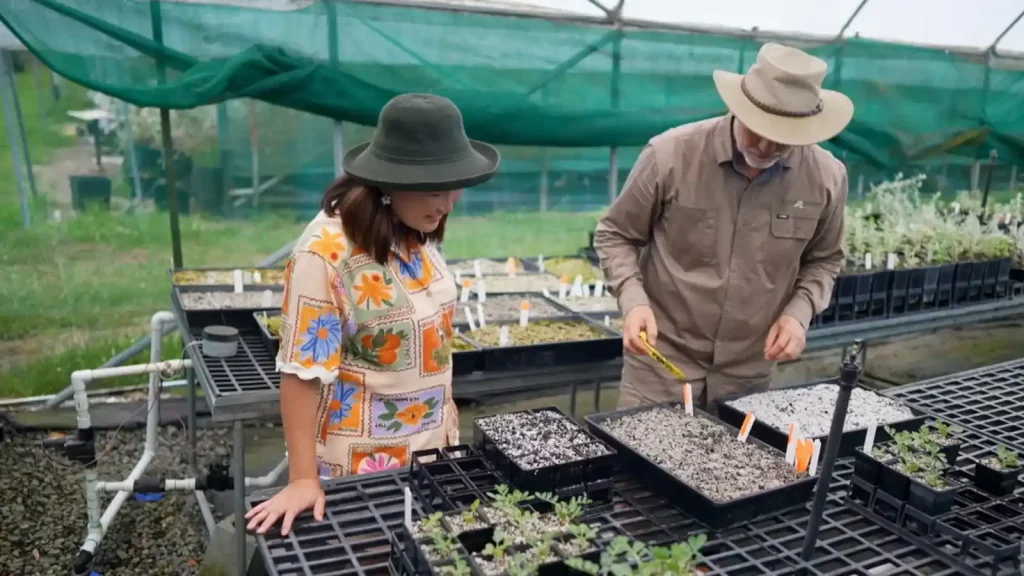
Gardening Australia 2025 Episode 37 explores the dynamic relationship between gardeners, their climate, and the land they cultivate. This installment provides expert guidance on diverse topics, ranging from creating climate-appropriate gardens and supercharging soil to mastering the cultivation of iconic native plants. It also highlights innovative approaches to public land management and the profound connections between art and the natural world. The episode emphasizes practical, sustainable techniques that empower gardeners to work smarter, not harder. (gardeners world episode)
As climates become hotter and drier, the insights from Gardening Australia 2025 Episode 37 are increasingly relevant. Gardeners face challenges in maintaining water efficiency, managing soil health, and selecting plants that can thrive. This episode directly addresses these concerns. It presents solutions that are both environmentally conscious and highly effective. These methods move away from resource-heavy interventions, such as synthetic fertilisers, toward more organic and holistic systems.
The scope of the program is extensive. It travels to Fremantle to explore a stunning Mediterranean courtyard. It visits a community garden to demonstrate how to organically enrich soil for vegetable production. The episode also features an expert grower on the New South Wales Central Coast. This segment demystifies the process of growing the notoriously difficult Sturt desert pea.
Furthermore, the program investigates a large-scale biodiversity project at the Melbourne General Cemetery. This project is transforming a historical site into a thriving grassy woodland. In a practical segment, viewers learn the fundamentals of installing a drip irrigation system. This technique helps to water gardens more efficiently.
This deep dive into horticulture also features insights from Gardening Australia 2025 Episode 37 on art. It profiles a sculptor who uses plants and natural forms as the basis for his mechanical and bronze artworks. This highlights the intricate ways nature inspires human creativity.
Each segment provides foundational knowledge for intelligent, non-specialist gardeners. The episode showcases individuals who have mastered their specific environments. From Margot Tobin’s waterwise Mediterranean oasis to Helen Tuton’s large-scale ecosystem regeneration, the focus remains on thoughtful, sustainable gardening. The advice provided is actionable, whether it involves calculating water flow rates or choosing the correct compost ratio.
Gardening Australia 2025 Episode 37
The Principles of Mediterranean Garden Design
In Fremantle, homeowner Margot Tobin has cultivated a garden that perfectly embraces its Mediterranean climate. This climate is characterized by long, hot, dry summers and cool, wet winters. Tobin, who heads the Western Australian chapter of the MGS, draws on her extensive travels to define the style. She explains that a true Mediterranean garden must incorporate three key design elements: water, shade, and a place for outdoor dining.
Water is a historical component, dating back to Islamic garden design. In those gardens, rills or channels transported water from mountains for irrigation. Tobin’s garden features a rill, which she finds is a perfect place for morning reflection. Shade is equally critical for managing intense heat. She has used olive trees to provide a delicate, dappled shade over the plants. Finally, the Mediterranean lifestyle necessitates an outdoor eating area, as socialising often happens outdoors.
The planting strategy is twofold, utilizing a mix of traditional Mediterranean plants and Australian natives. This combination creates a resilient garden that requires very little irrigation. It can survive the region’s increasingly hot summers, which sometimes reach 40 degrees Celsius as early as October. An old fig tree is a highlight, kept pruned low in the traditional Mediterranean way. This method simplifies harvesting the prolific crop, which yields about 400 figs annually.
Tobin’s garden is split into two distinct concepts: ‘Riot and Restraint’. The ‘Restraint’ area, located at the back, shows discipline. Here, she uses a limited palette of repeated species, such as Westringia and Plectranthus, with very little color. Conversely, the ‘Riot’ section is her favorite part. It is a space to indulge her love of plants, where there is “always room for one more.” This area focuses on seasonality and foliage, designed to look good 365 days a year. Plants like Euphorbia and Pelargoniums take turns coming to the fore.
This ‘Riot’ garden also showcases her favorite tree, the Cussonia paniculata, or mountain cabbage tree. It is a rare plant from southern Africa, prized for its gorgeous, corky bark and silvery foliage. She pairs it with Kalanchoe beharensis, which features large, furry leaves. This leaf texture is a common adaptation for Mediterranean plants, helping them with moisture retention. The garden requires minimal work; it only receives water in spring or autumn if rains fail. The plants largely go dormant in summer, and the dense planting leaves no room for weeds.
Supercharging Soil: An Insight from Gardening Australia 2025 Episode 37
At the Paddington Community Garden, the secret to growing abundant vegetables lies directly in the soil. As plants grow and are harvested, they draw minerals from the soil. This process can leave the soil depleted season after season. To ensure nutrients are available for the next round of planting, the soil must be “supercharged.” While synthetic fertilisers are an option, their production has a significant environmental impact. The focus here is on organic additives.
The simplest and cheapest method is making homemade compost. Finished compost should have a beautiful, crumbly texture and an earthy aroma. It boosts soil by adding beneficial bacteria, microbes, and organisms. It also provides a home and food for these microscopic workers. As they break down organic matter, they make nutrients more available for plants.
A successful compost pile requires a balance of “green” and “brown” materials. The ideal ratio is approximately 40% green materials to 60% brown materials. Green materials, like food scraps and garden clippings, are rich in nitrogen. Brown materials, such as cardboard, dry leaves, and sawdust, are full of carbon. Too much green material results in a wet, stinky pile. Too much brown material creates a dry pile that will not break down. Gardeners should use at least two bins, allowing one to rest while adding to the other.
Worm castings, or worm poo, are another powerful additive. They improve soil structure and water retention. More importantly, they contain a diverse mix of microbes, good bacteria, and mycorrhizal fungi. These fungi form tiny threads that extend the reach of a plant’s roots. This makes it easier for the plant to take up water and nutrients. Worm castings are also a great source of nitrogen, phosphorus, and potassium (NPK).
Other organic fertilisers include pelletised chicken manure and Blood & Bone. Composted chicken manure breaks down slowly, releasing nutrients gradually. It is high in NPK, making it essential for leafy greens. Blood & Bone is a classic organic choice. The blood component provides slow-release nitrogen for leafy growth. The bone component is full of calcium and phosphorus, which support strong roots, healthy flowers, and fruit.
These additives can be combined in a wheelbarrow and spread over the garden bed. A few buckets of compost mixed with a decent handful of the other additives will cover about one square metre. This should always be followed by a layer of mulch. Snow peas are also soil superheroes. As legumes, they add atmospheric nitrogen to the soil through a symbiotic relationship with rhizobia bacteria on their roots. When the plant is finished, its roots should be left in the ground to decompose and release that nitrogen.

Cultivating the Arid Icon: The Sturt Desert Pea
The Sturt desert pea is a stunning, iconic Australian flower. However, it is notoriously difficult for home gardeners to grow, especially in humid, temperate climates. Jonathan Ledbetter, who grows them for the Sydney market on the NSW Central Coast, shares his expert tips. In their natural, arid habitat, these plants receive only 250-500mm of rain per year. On the humid coast, they are highly prone to fungal infections like botrytis. Ledbetter, therefore, treats them as a summer crop.
Success begins with the seeds. Sturt desert peas are in the Fabaceae family, meaning they have a very hard seed coat. This coat enforces dormancy, allowing the seed to wait in the wild for ideal conditions. To germinate, this coat must be softened through a process called scarification. While this can be done with a scalpel or sandpaper, Ledbetter uses hydrogen peroxide.
His method involves creating a soak that both scarifies the seed and acts as a surface sterilant. He mixes 30mL of hydrogen peroxide with 160mL of water, adding a couple of drops of detergent. The detergent breaks the seed’s surface barrier, ensuring full contact with the solution. The seeds are shaken in the jar and soaked for 30 to 45 minutes. Leaving them too long can kill them.
During this soak, an interesting segregation occurs. Seeds that float have an 80% germination rate. Seeds that remain on the bottom have only a 20% rate. After rinsing the seeds, they are sown into a seed-raising mix. Ledbetter uses a light, free-draining mix of one-part native potting mix to four-parts fine perlite. The swollen seeds are placed on the surface, lightly covered, and kept moist.
Once germinated, they are carefully potted into tube stock, with minimal root disturbance. They stay in these tubes for 6 to 10 weeks. They are then potted up one final time into a deep, ten-litre pot, where they will live their entire life. Good hygiene is essential at every stage. He recommends using a stone-based mulch, like expanded clay (LECA) balls, on the pot’s surface. This keeps the leaves and the surface of the mix dry, further preventing fungal issues. Watering is done with a dripper placed under the mulch.
Project Cultivate: Reawakening a Grassland Ecosystem
The Melbourne General Cemetery, which opened in the 1850s, is a 43-hectare site that is nearing the end of its working life. With 300,000 recorded burials, the site must be maintained into perpetuity. Helen Tuton, the horticulture assets manager, is overseeing Project Cultivate. This initiative aims to transform the site into a beautiful, biodiverse landscape. The team researched the area’s original ecosystem, discovering it was once a grassy woodland.
Previously, the site’s management was unsustainable. It relied heavily on herbicides and resources just to keep weeds down, providing no environmental benefit. The ground was barren, hot, and prone to water run-off. Project Cultivate’s first step was to cease herbicide use. Then, the team began installing mulch. By the project’s end, 5,600 cubic metres of mulch will have been spread entirely by hand to protect the headstones.
The results were dramatic. Within a month or two of adding mulch, the soil improved. Its color changed, and worms returned. The team is planting indigenous plants only on unmarked graves, respecting the monuments. The goal is to recreate the grassland environment that once existed. So far, 250,000 indigenous plants have been put in the ground. This number will rise to half a million by the project’s completion in 2025.
Key plants in this new ecosystem include kangaroo grass, which would have dominated the original landscape. The team is already seeing a second generation of these grasses sprouting. Tussock grasses, or Poa species, have also been planted. These are vital plants for many native and beneficial insects. To add understory diversity, golden billy buttons provide pops of yellow. These flowers are beloved by pollinators, such as bees and hoverflies, as well as by human visitors.
This project is significant because Victorian grasslands are a threatened environment. Less than 3% of the original grasslands remain. Project Cultivate is not only recreating this habitat but also educating the public on its value. In one of the older, challenging sections under cypress trees, the team planted grasses and Chrysosephalums. This area, which has received no irrigation, is now thriving. It perfectly demonstrates the project’s goal: adding a beautiful, living layer to the traditional cemetery landscape.
Mastering Water Efficiency: Drip Irrigation and Deep Watering
For many gardeners, hand watering is a chance to observe the garden. However, as life gets busier and climates get hotter, efficiency is key. A drip irrigation system is an effective solution for watering the garden. Before starting, a gardener must know their water flow rate. This is easily calculated by timing how long it takes to fill a bucket of a known size. For example, a ten-litre bucket filled in 15 seconds means a flow rate of 40 litres per minute.
With this flow rate, the next step is to draw a plan or “mud map” of the garden beds. This plan helps determine the amount of piping needed. A 19mm feeder pipe is a good choice for the main line, as its large diameter maintains water flow over distances. This pipe can be run along the edge of the gardens in a trench.
Zoning the system is critical, especially on a sloped garden. The top of a slope dries out much more quickly than the bottom. Therefore, the top beds should be on a separate watering line from the lower beds. It is also wise to install individual taps on the feed line for each garden bed. This allows a bed to be switched off if, for example, seeds have just been sown, which require top-watering until established.
The feeder pipe connects to the in-bed dripper lines using T-joiners. A helpful tip is to dip the pipe ends in a thermos of hot water. This softens the plastic, making it much easier to push onto the fittings. The dripper line itself should have inbuilt, pressure-regulated drippers. These ensure that each emitter releases the same amount of water, such as two litres per hour.
At the water source, a filter should be installed to stop debris from clogging the system. A pressure-reducing valve is also essential. It prevents high-pressure surges from overloading the pipes. Finally, a simple tap timer allows each zone to be watered on different days and for different lengths of time. When firing up the system, all ends should be left open to flush out any dirt. Instead of capping the ends, one can simply kink the hose and clamp it. This creates a blockage but allows for easy flushing in the future. This system delivers water directly to the roots. It keeps foliage dry, prevents disease, and is highly efficient.
This method supports deep watering, a technique that improves plant performance. Light, frequent watering encourages roots to stay near the surface, where soil is hot and dry. This makes plants susceptible to heat damage. Deep watering, done less frequently, trains the roots to grow far down into the soil. This creates deeper anchoring roots, making plants more storm-resistant and sturdy.
Gardening Australia 2025 Episode 37: Where Nature and Sculpture Intersect
The work of sculptor Jason Waterhouse provides a unique perspective on the natural world. Profiled in Gardening Australia 2025 Episode 37, Waterhouse operates from a factory in Sunshine, Melbourne. He has always been fascinated by mechanics and how things fit together. His art, which includes steel fabrication and bronze casting, has increasingly become plant-based. His overarching theme involves bending or mutating familiar objects in impossible ways.
He uses a process called lost wax casting, sometimes applying it directly to combustible materials like plants. He frequently uses cotyledons, which he finds cast beautifully. The process begins by putting a ceramic mould around the plant. This mould is then fired in a kiln, which burns the plant out. This “magical moment” leaves a void—the sculpture is just air. This void is then filled with molten bronze heated to 1,200 degrees Celsius.
After the bronze cools, the ceramic waste mould is blasted off with water, revealing the piece. The pipes used to pour the bronze are cut off, and the sculpture is cleaned. Waterhouse then paints the succulent back to its natural, powdery white-blue color. This process allows him to capture the intricate detail of the plant, freezing it in metal.
Waterhouse also collaborates on large-scale public artworks. He recently created an Indigenous smoking ceremony dish for Melbourne’s City Square, based on a concept by Aunty Joy Murphy Wandin. Aunty Joy wanted the piece to speak to the manna gums. Waterhouse sculpted manna gum leaves and flowers in all their different stages of flowering. He also hand-sculpted 11 poppies in wax for the new Anzac station, drawing inspiration from a friend’s garden.
This connection to plants, particularly the manna gum, stems from his personal life. He lives on a bush property in Glenlyon that his father bought in 1984. Over decades, they have cleared noxious gorse and revegetated the land. One of his artworks, ‘Slump’, is deeply autobiographical. It uses a branch from his favorite manna gum, which was knocked down by a truck. He re-collaged the branch and presented it slumping against a wall, a state reflecting his own exhaustion. For Waterhouse, this work, like his home, is a celebration of his deep roots and connection to place.
Cultivating Resilience: Your Garden’s Future Starts with Smart Choices Today
The wisdom shared throughout Gardening Australia 2025 Episode 37 delivers a powerful reminder: successful gardening isn’t about fighting against your environment—it’s about understanding and working with it. From Margot Tobin’s waterwise Mediterranean sanctuary in Fremantle to Helen Tuton’s ambitious grassland restoration at Melbourne General Cemetery, each segment reveals gardeners who’ve stopped struggling and started thriving by aligning their practices with natural systems.
What makes this episode particularly valuable is its rejection of quick fixes in favor of foundational knowledge. Consider the soil supercharging techniques demonstrated at Paddington Community Garden. Rather than reaching for synthetic fertilizers that offer temporary boosts while damaging long-term soil health, the approach here builds resilient, living ecosystems underground. When you understand that worm castings deliver not just nutrients but entire networks of beneficial microbes and mycorrhizal fungi, you’re not simply feeding plants—you’re cultivating a thriving underground city that works for you season after season. This isn’t harder than conventional methods; it’s actually smarter, requiring less intervention over time while delivering superior results.
The same principle applies to water management. Jonathan Ledbetter’s meticulous approach to growing Sturt desert peas demonstrates that even Australia’s most challenging native plants become manageable when you understand their needs. His hydrogen peroxide scarification method and careful attention to drainage don’t represent obstacles—they’re simply the price of admission for growing something extraordinary. Similarly, the drip irrigation segment shows how a single weekend’s work installing a thoughtful system saves countless hours of hand watering while dramatically improving plant health through deep watering techniques. These aren’t compromises; they’re upgrades to how you garden.
Perhaps the most inspiring thread running through this episode is the emphasis on climate-appropriate gardening. As Australian summers grow hotter and water becomes increasingly precious, the Mediterranean design principles showcased in Tobin’s garden offer a blueprint that’s both beautiful and practical. Her “Riot and Restraint” philosophy proves you don’t need to sacrifice plant diversity or visual interest to create a waterwise space. The key lies in choosing plants adapted to dry conditions—whether Mediterranean classics or native Australian species—and designing gardens that largely care for themselves through summer dormancy and strategic shade placement.
Project Cultivate takes this thinking to a grander scale, demonstrating that even a 43-hectare cemetery can transition from resource-intensive maintenance to self-sustaining biodiversity. When 250,000 indigenous plants can thrive without irrigation after proper establishment, the message is clear: working with native ecosystems isn’t just environmentally responsible—it’s economically sensible and practically achievable.
The beauty of Gardening Australia 2025 Episode 37 is that every technique presented scales to your situation. Whether you’re installing your first drip line, starting a compost bin, or simply rethinking your plant selection for next season, these approaches share a common thread: they reduce your workload while improving outcomes. Jason Waterhouse’s sculptures capture plants in bronze because he recognizes their inherent perfection; your garden deserves the same respect. Stop fighting your climate, start celebrating it, and watch your garden transform from a maintenance burden into a resilient, regenerating space that genuinely takes care of itself.
Gardening Australia 2025 Episode 37
Q: What makes Gardening Australia 2025 Episode 37 particularly relevant for today’s gardeners?
A: This episode addresses critical challenges facing Australian gardeners as climates become hotter and drier. It focuses on practical, sustainable techniques that emphasize water efficiency, soil health management, and selecting climate-appropriate plants. Rather than promoting resource-heavy interventions like synthetic fertilizers, the episode showcases organic and holistic systems that empower gardeners to work smarter. Furthermore, it demonstrates how working with your environment instead of against it creates resilient gardens that thrive with minimal intervention, making it essential viewing for anyone adapting to changing climate conditions.
Q: What are the three essential elements of Mediterranean garden design featured in the Fremantle segment?
A: Margot Tobin identifies water, shade, and outdoor dining spaces as the three key design elements for authentic Mediterranean gardens. Water features, historically inspired by Islamic garden design, provide irrigation and contemplative spaces like the rill in Tobin’s garden. Shade becomes critical for managing intense heat, achieved through strategically placed olive trees that create dappled coverage. Finally, outdoor eating areas reflect the Mediterranean lifestyle where socializing happens outdoors. Additionally, Tobin’s garden demonstrates how combining traditional Mediterranean plants with Australian natives creates a resilient landscape requiring minimal irrigation, even when temperatures reach 40 degrees Celsius as early as October.
Q: How do you properly supercharge soil for vegetable gardening without synthetic fertilizers?
A: The Paddington Community Garden segment reveals that organic soil enrichment begins with homemade compost using a 40% green to 60% brown material ratio. Green materials like food scraps provide nitrogen, while brown materials such as cardboard and dry leaves supply carbon. Worm castings add beneficial microbes, mycorrhizal fungi, and essential NPK nutrients while improving soil structure and water retention. Consequently, combining these with pelletized chicken manure for slow-release nutrients and Blood & Bone for calcium and phosphorus creates a comprehensive soil amendment. A few buckets of this mixture covers approximately one square meter and should always be topped with mulch to retain moisture and suppress weeds.
Q: Why are Sturt desert peas so difficult to grow outside their natural habitat?
A: Sturt desert peas naturally receive only 250-500mm of rain annually in their arid habitats, making them highly susceptible to fungal infections like botrytis in humid, temperate climates. Their hard seed coat enforces dormancy, requiring scarification before germination can occur. Jonathan Ledbetter’s expertise demonstrates that success requires treating them as summer crops with meticulous hygiene practices throughout their lifecycle. Specifically, using hydrogen peroxide for seed scarification, planting in extremely free-draining mixes (one-part native potting mix to four-parts fine perlite), and maintaining dry foliage through stone-based mulches prevents fungal issues. Moreover, they must remain in deep ten-liter pots their entire lives with minimal root disturbance during transplanting.
Q: What is Project Cultivate and why is it significant for biodiversity?
A: Project Cultivate transforms Melbourne General Cemetery’s 43-hectare site from unsustainable herbicide-dependent management into a biodiverse grassy woodland ecosystem. Helen Tuton’s team has planted 250,000 indigenous plants, with plans to reach half a million by the project’s 2025 completion. This initiative holds particular significance because Victorian grasslands represent a threatened environment with less than 3% of original grasslands remaining. The project ceased all herbicide use, spread 5,600 cubic meters of mulch by hand, and recreated the area’s original ecosystem using kangaroo grass, tussock grasses, and golden billy buttons. Remarkably, these indigenous plantings now thrive without irrigation, demonstrating that ecological restoration can be both beautiful and economically sustainable.
Q: How do you calculate water flow rate for installing a drip irrigation system?
A: Calculating your water flow rate requires timing how long it takes to fill a bucket of known capacity. For instance, if a ten-liter bucket fills in 15 seconds, your flow rate equals 40 liters per minute. This fundamental measurement determines your entire system’s capacity and helps you plan pipe sizing and dripper placement effectively. Subsequently, you’ll need to create a garden bed plan to determine piping requirements, using 19mm feeder pipe for maintaining flow over distances. Understanding your flow rate prevents system overload and ensures each section receives adequate water pressure for optimal plant health and growth throughout your garden beds.
Q: Why is zoning critical when designing a drip irrigation system on sloped gardens?
A: Sloped gardens experience dramatically different moisture levels, with upper sections drying out much faster than lower areas due to gravity and water runoff patterns. Therefore, creating separate watering zones with individual control allows you to provide appropriate irrigation to each section’s unique needs. Installing individual taps on feed lines for each garden bed offers flexibility to switch off sections when seeds require top-watering or certain areas need establishment time. Additionally, pressure-regulated drippers ensure consistent water delivery across elevation changes, with each emitter releasing identical amounts regardless of its position. This strategic approach prevents overwatering lower sections while underwatering upper beds, maximizing water efficiency across challenging terrain.
Q: What is deep watering and how does it improve plant performance compared to frequent shallow watering?
A: Deep watering involves less frequent but thorough irrigation that penetrates far into the soil profile, training plant roots to grow downward rather than remaining near the surface. Light, frequent watering encourages shallow root systems that stay in hot, dry surface soil, making plants vulnerable to heat damage and drought stress. Conversely, deep watering creates extensive root systems that anchor plants more securely, making them storm-resistant and structurally sturdy. Drip irrigation systems deliver water directly to root zones, keeping foliage dry to prevent disease while maximizing efficiency. This technique fundamentally changes how plants access moisture and nutrients, transforming them into more resilient specimens capable of withstanding environmental stresses with minimal intervention.
Q: What is the lost wax casting process that Jason Waterhouse uses for his plant-based sculptures?
A: Waterhouse employs lost wax casting directly on combustible materials like cotyledons and succulent plants to create intricate bronze sculptures. The process begins by encasing the plant in a ceramic mold, which is then fired in a kiln at temperatures that completely burn out the organic material. This creates a void—essentially a negative space where the plant once existed—which Waterhouse fills with molten bronze heated to 1,200 degrees Celsius. After cooling, the ceramic waste mold is blasted away with water, revealing extraordinary detail that captures every texture and contour of the original plant. Finally, he often paints the bronze to restore natural colors, effectively freezing botanical specimens in permanent metal form that celebrates their inherent beauty.
Q: What is Margot Tobin’s ‘Riot and Restraint’ garden philosophy and how does it create year-round interest?
A: Tobin’s garden philosophy divides her space into two contrasting sections that balance discipline with exuberance. The ‘Restraint’ area employs a limited palette of repeated species like Westringia and Plectranthus with minimal color, creating visual calm through repetition and structure. Meanwhile, the ‘Riot’ section indulges her plant passion with diverse species where “there’s always room for one more,” focusing on seasonality and foliage textures that provide interest 365 days annually. Plants such as Euphorbia and Pelargoniums take turns featuring throughout seasons, while specimens like the rare Cussonia paniculata and furry-leaved Kalanchoe beharensis add architectural drama. This dualistic approach demonstrates that waterwise Mediterranean gardens can be both disciplined and exuberant while requiring minimal maintenance beyond occasional spring or autumn watering during dry spells.


