The practical and inspirational advice of Gardening Australia 2025 Episode 36 arrives at the perfect moment for gardeners. This time of year, the temperature is ideal, gardens are burgeoning with life, and the soil invites hands-on activity. It is a season of action, focused on nurturing the plots we have created and preparing them for the months ahead. This episode provides a wealth of inspiration, covering everything from broad-scale rural projects to intensive urban solutions.
Understanding the garden as a complete ecosystem, rather than just a collection of plants, is a central theme. Creating a welcoming wildlife habitat is as important as pruning or planting. This approach requires a shift in thinking, moving away from simple aesthetics to fostering a living network. It means providing for the insects, birds, and even microbes that bring a garden to life. This perspective informs every aspect of gardening, from maintenance to design.
The scope of Gardening Australia 2025 Episode 36 demonstrates this holistic view. The episode explores the intricate art of maintaining native plants, a task often misunderstood by enthusiasts. It also journeys into a flourishing country-cottage garden, revealing how ambitious designs are built from the ground up. In contrast, it visits a lush, shared courtyard in a dense urban setting. These examples show how principles of biodiversity and design scale to any environment.
Furthermore, the program delves into the science of backyard biodiversity. It highlights new techniques that allow us to understand exactly who visits our gardens. This intersection of science and home gardening empowers individuals. It provides data that confirms the vital role private gardens play in supporting local ecosystems. This knowledge transforms Australian gardening from a hobby into a meaningful act of conservation.
The episode also champions passionate diy gardening projects. It showcases the dedication required to achieve excellence, whether in horticulture or husbandry. We meet a certified “chicken champion” whose family has spent generations perfecting poultry breeding. This story celebrates the legacy and deep knowledge passed down through families. It reminds us that gardening, in all its forms, is often a shared passion.
From ambitious beginnings on empty blocks to the subtle art of pruning, the core message is one of engagement. Good gardening requires love, attention, and a willingness to learn. It involves building soil, managing water, and making thoughtful choices. These actions ripple outward, benefiting the entire community of creatures, both great and small. The following sections explore these key themes in detail.
Gardening Australia 2025 Episode 36
The Art of the Rambling Cottage Garden
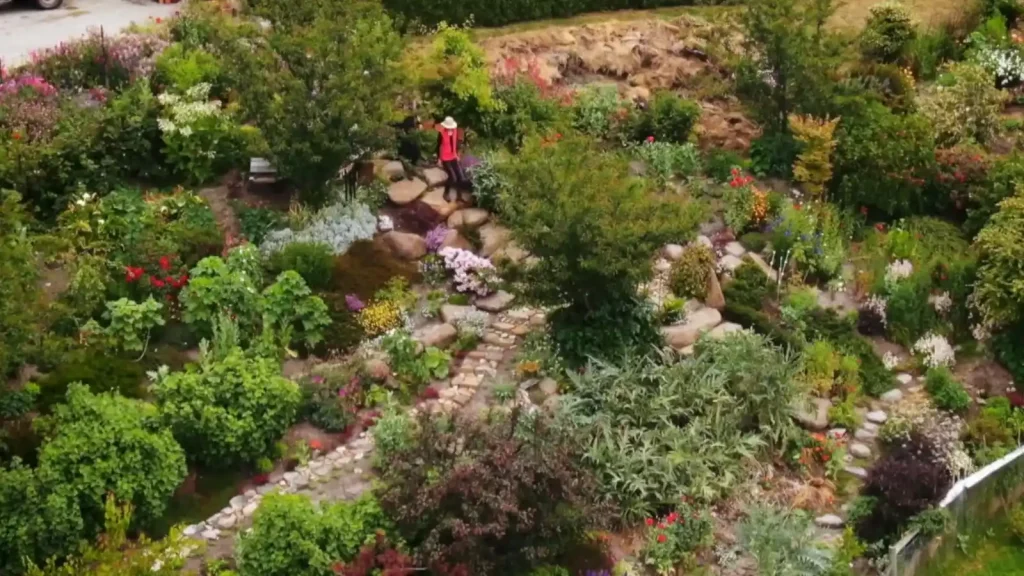
Hannah explores a stunning five-acre property in Lymington, Tasmania, where gardener Sally Ives has cultivated a one-acre house garden. This space is a testament to the English cottage garden style. It is defined by a seemingly unruly and rambling character. However, this charming chaos is underpinned by strong structure. Curved stone pathways, hedges, and bulk plantings provide form and coherence to the vibrant madness. Sally admits she pretends to have control, but is happy the plants are truly in charge.
The garden’s creation was a significant undertaking. The property was an ex-apple orchard, essentially an empty block of land save for two old trees. Before the house was even built, Sally and her husband planted 24 fruit trees and a veggie patch. The primary challenge was the soil, which was all clay. It took two years of intensive soil building, adding hay, manure, and mushroom compost. Only after amending the earth could they begin planting around the house.
The property’s steep slope, described as “goat country,” presented another challenge. Sally built the winding stone paths herself, collecting rocks from a friend’s farm. She amusingly notes she did it in the wrong order, planting first and then trying to establish access. This process was a journey of learning by making mistakes. One benefit of the slope, however, is that it offers more character and allows you to see more of the garden from different viewpoints.
Sally’s planting philosophy is resourceful. The garden features a diverse mix of edibles, ornamentals, and natives. The majority of these plants were grown from cuttings gifted by friends. This explains the garden’s full color palette; Sally accepts all colors, noting that the bees love them all. One of her favorite garden hacks is a unique fertilizer made from the by-product of homemade soy milk. She ferments the grit in a bucket of water for six to eight months, then dilutes the potent liquid as a feed. She also practices “chop and drop,” composting material directly in the garden rather than in a central pile.
Creating a Thriving Urban Wildlife Habitat
A major focus of Australian gardening is the creation of a wildlife habitat. Australia is home to over 1,700 species of native bees. These, along with butterflies, wasps, hoverflies, moths, beetles, and native flies, are essential pollinators. These insects face increasing threats from habitat loss, pesticide use, and climate change. Gardeners can provide crucial support by creating insect-friendly habitats. This involves providing nesting sites, overwintering shelters, and safe foraging areas.
A key principle is to step away from the “sanitisation” of gardens. Many native bees nest in the ground or in dead stems, not in hives. Raking fallen leaves under shrubs, for instance, provides temporary shelter for soil insects like ground beetles and native slaters. These creatures, in turn, break down the mulch and recycle nutrients. Building small piles of sticks and logs, like a game of Jenga, creates a sheltered habitat for beetles and native wasps. Rolled bark can also offer a perfect home for insects.
Pollinators also need water, especially during hot, dry summers. A simple water station can keep them happy. It is important to avoid an open body of water, as insects can drown. Instead, use semi-submerged rocks or branches as landing pads. This allows insects to safely walk to the water’s edge. Place the water station in a moderately shady spot near flowers and replenish it weekly. This keeps the water fresh and prevents mosquito larvae.
Even a small balcony can become a buzzing haven. The key is using layers, just as in a wild ecosystem. A mix of plant heights and textures attracts more wildlife. Tall plants like Lomatia, with its insect-magnet flowers, provide a top layer. Bushy shrubs like the shade-loving Plectranthus argentatus add texture and create nooks for insects. Low, spilling plants like Brachyscome provide ground cover and color. Winter-flowering plants like Grevillea ‘Scarlet Sprite’ are especially valuable, providing nectar when birds need it most.
Practical Maintenance for Australian Native Plants
Millie tackles one of the biggest myths in gardening: that Australian plants need little or no maintenance. The truth is, natives are just plants, and they benefit from TLC, including pruning, feeding, and extra planting. Many gardeners are apprehensive about pruning native plants. They worry about the timing or fear they might damage the plant. While mistakes can happen, the benefits of pruning usually outweigh the risks. Pruning increases a plant’s vigor, encourages new growth, helps create a desired shape, and removes dead or diseased wood.
A good rule of thumb for timing is to prune a plant just after it finishes flowering. This encourages lovely, thick, bushy growth. For example, a Pimelea that has grown too tall can be cut back by about a third. By following the stem down to fresh growth below, you avoid cutting into old, bare wood. Pruning can also be used to remove dead or diseased foliage, such as on a struggling cotton bush. This can help stimulate new growth and aid the plant’s recovery. Pruning can also enhance a plant’s natural features. On a weeping silver tea tree (Leptospermum brachyandrum), selective pruning of lower limbs reveals the beautiful, shedding bark.
Fertilising native plants is more complex. Plants indigenous to your specific area are likely well-suited to your soil and need little interference. However, plants from other parts of Australia have different needs. The Proteaceae family, which includes many Grevilleas, Banksias, and Hakeas, is particularly sensitive to phosphorus. These plants are so efficient at absorbing it that general fertilizers can be toxic. The safest solution is to use a low-phosphorus Australian-native fertiliser. This product can be used on all your native plants, simplifying the feeding routine.
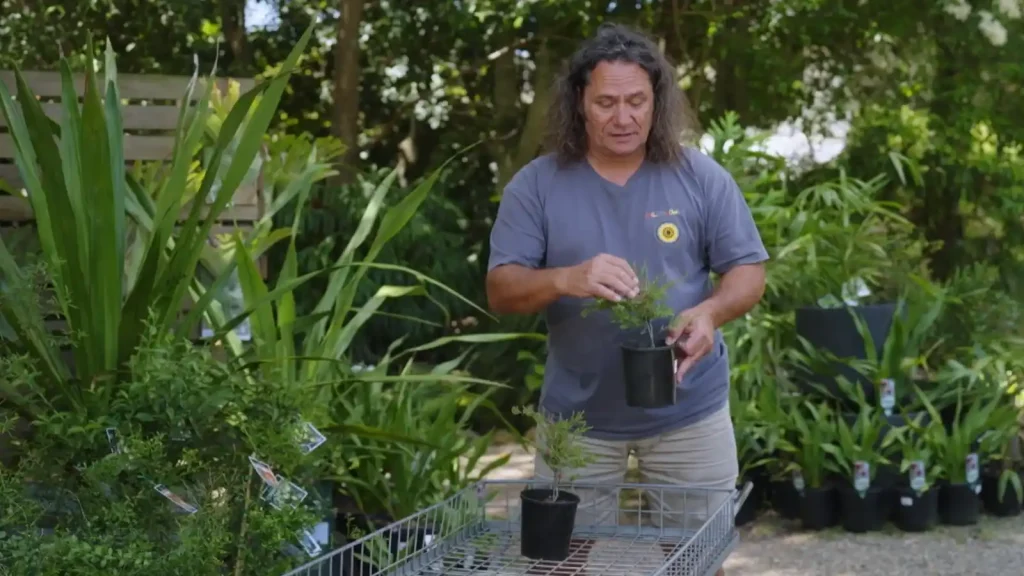
Potted native plants are a different story. They are completely reliant on the gardener for nutrients. Potted native shrubs and flowers benefit from a top-dressing of a slow-release native fertiliser every six months. A hungry rainforest plant like a finger lime, which is trying to produce flowers and fruit, requires a “three-course meal.” This includes a top-dressing of compost, a small amount of organic fertiliser, and a weak liquid feed. Seedlings like paper daisies also appreciate a weak liquid feed to push them along.

Jane visits the inner-city suburb of Carlton, Melbourne, which is not typically known for large gardens. There, she meets Neil, who has spent eight years transforming a shared courtyard space into a lush secret garden. The property consists of three courtyards surrounded by townhouses. The gardens have become a harmonious space for the community, serving as an adventure for the young children who live there. Neil’s success is a collaboration with the property’s gardener, Liam.
The first courtyard provides an immediate “wow factor.” It receives lots of sun and is filled with colorful Buddleja, Anemones, Impatiens, and Penstemon. Neil embraces serendipity, allowing self-sown Primulas to pop up wherever they please. The second courtyard, however, required a complete transformation. It was once a lovely shade garden, dominated by a large ash tree and a maple tree. When the trees began to compromise the garden walls and sewer pipes, they had to be removed. Overnight, the space became a hot, sunny garden.
The solution to this garden design challenge was to create a garden focused on native plants. They planted two ‘Silver Princess’ gums, which thrive in sun and have non-invasive roots. The underplanting includes Correas, Grevilleas that attract wattle birds, and Westringias clipped into topiary. Resident children helped plant the grey-leafed button ground covers. This courtyard also features raised herb beds, built by one resident and planted by the children. The community, especially the kids, regularly harvest herbs for their evening meals.
This transformation was not without difficulty. The sewer repair left behind builder’s rubble and heavy clay. Liam worked for two years, adding mulch and organic-matter fertiliser, to create the amazing soil they have today. The garden is supported by a community compost system, managed by Neil. He turns the residents’ kitchen scraps daily, producing a wheelbarrow of compost each week. The third and final garden is a “sanctuary.” It features a spectacular avenue of elm trees that create a “cathedral-like forest.” This area provides deep shade gardening opportunities, housing Camellias, Rhododendrons, and Chinese lanterns. The trees also act as natural air-conditioning, and residents enjoy the forest view from their lounge rooms.
Science in the Backyard: Tracking Biodiversity with eDNA
Josh investigates a scientific technique used to track backyard biodiversity in the Perth hills. He joins environmental science student Will Roocke and wildlife biologist Associate Professor Bill Bateman. They are sampling for environmental DNA, or eDNA. This is DNA shed from organisms, like birds and mammals, that is floating in the environment. As biodiversity declines, gardens are one of the last places for it to persist in cities. This makes biomonitoring in gardens crucial.
The team from Gardening Australia 2025 Episode 36 learned that eDNA sampling has a distinct advantage. It allows researchers to detect the presence of animals that are not easily seen. These include cryptic animals, those low in number, or those hidden from view. The process is also non-disturbing. Samples can be collected in several ways. Researchers can take water samples from a pond or birdbath. They can also take simple air samples, as eDNA is floating all around. Spider webs are another excellent source, as they act like natural air filters, accumulating DNA over time.
This technology adds to the research toolbox, complementing traditional methods like observation and camera traps. It does have limitations; for example, eDNA is not as effective for reptiles like snakes and lizards, as they do not shed skin cells in the same way. In his own garden, Bill has observed quenda, but eDNA analysis revealed the presence of kangaroos, new bird species, and even some reptiles he had never seen.
At Curtin University, Associate Professor Paul Nevill explains the lab process. The DNA extraction is like cooking, using kits to isolate the DNA. A “molecular magnet” is used to pull out specific DNA sequences, such as those from vertebrate species. The samples are put through a sequencing machine that generates hundreds of millions of DNA sequences. A supercomputer then “blasts” these sequences against a known database to identify the species. This technology is a game-changer. Will’s research found that all gardens, whether in highly urbanised areas or next to reserves, play a role in supporting biodiversity. This information empowers gardeners, giving them confidence that they can make a real impact on conservation.
The Art and Heritage of Poultry Breeding
A segment with Gardening Australia 2025 Episode 36 highlights a passion for poultry that spans five generations. Lachie Arnett, 24, is a fifth-generation poultry breeder, while his father, Peter, is a fourth-generation breeder. Peter began exhibiting at age five and judging at 17. The family’s legacy is so deep that they have a quilt made from prize ribbons his grandfather won from the 1940s to the 1970s. Lachie and Peter jointly breed Old English Game bantams and Leghorns, the latter from a genetic line spanning over 60 years.
Peter notes that Lachie has a “particularly good eye” for young birds, a skill his own father possessed. Lachie took over the breeding plan at 15, which led to a dramatic improvement and major awards. Preparing a bird for a show is an art form. Soft-feathered birds get a bath. Their legs are cleaned, sometimes with a toothpick. They are dried in the sun or with a hairdryer. Finally, a bit of olive oil is applied to their comb, wattles, and legs. This “lipstick” makes them look fresh for the judge. Each breed also has a specific stance, and the birds are trained to show themselves off.
In 2022, the Arnetts had their most successful year, culminating at the Ekka. They won champion Leghorn and champion Old English Game, placing both birds in the champion-of-champions pens. Their Black Leghorn cockerel was then announced as the Supreme Grand Champion. It was a surreal moment, representing the culmination of three generations of work building up the birds’ genetics.
The Arnetts also share practical tips for backyard chicken keepers. The best laying breeds include soft-feather lights like Leghorns and heavy breeds like Sussex and Australorps. For “pretty” and placid backyard pets, Silkies are terrific for families. The required space depends on the bird size; a bantam needs about a square meter if locked up, but less if it has a run. The best bedding is soft wood shavings or straw, which encourages scratching. Active chickens are healthy chickens. Good pest control is essential. Poultry are susceptible to lice and mites, and mice and cockroaches can also cause feather damage. Regular worming is also important.
Seasonal Gardening Jobs Across Australia
Finally, Gardening Australia 2025 Episode 36 outlines key jobs for the weekend, tailored to different climates. In cool temperate zones, it is time to check azaleas. If the foliage is mottled, silver, and sticky, it indicates azalea lace bug. Gardeners should remove affected foliage and ensure the soil is rich and acidic. It is also a great time for planting edibles like basil and chives along path edges.
For warm temperate gardeners, watering is now a must. Amending soil with organic matter and mulch will help retain moisture. Gardeners can also consider grey water for ornamental trees. The Morning iris, a true-blue Australian native, is a beautiful, low-maintenance clumping plant perfect for partially shaded spots.
In the subtropics, ponds need a good spring clean. This involves removing leaf litter, checking filters, and adding barley straw to keep algae at bay. It is also time to set molasses traps for grasshoppers. This is done by filling a bucket with water and adding a cup of molasses. Gardenias should be fed, watered, and mulched.
Tropical gardeners should get trimming. Faded flowers can be removed from jasmine vines with a light prune. Passionfruit vines benefit from a tip-prune, followed by a feed of potash for good fruit set. The young, edible foliage of the passionfruit vine can be used as a spinach substitute. In arid regions, lavenders should be pruned by removing dead wood and spent blooms. Regular pruning means lavenders will live longer and bloom better.
Bringing the Garden to Life: Your Role in a Living Ecosystem
The beauty of Gardening Australia 2025 Episode 36 lies not in what it tells us to do, but in what it reminds us we already can become: stewards of thriving, interconnected spaces that matter far beyond our fence lines. From Sally’s rambling Tasmanian cottage garden to Neil’s transformed Melbourne courtyards, from eDNA discoveries in Perth to five generations of poultry breeding expertise, the episode weaves a single, vital thread—that gardening is never just about plants. It’s about creating sanctuary, building soil communities, and nurturing the countless creatures that transform a collection of green things into a living, breathing ecosystem.
What makes this approach so powerful is its accessibility. You don’t need five acres or a scientific background to make a difference. A balcony with layered plantings of Lomatia, Plectranthus, and Brachyscome becomes a haven for native bees. A simple water station with semi-submerged rocks keeps pollinators thriving through summer. Even leaving fallen leaves under shrubs—resisting that urge to sanitize every corner—provides winter shelter for the ground beetles and native slaters that quietly do the essential work of nutrient recycling. These aren’t grand gestures; they’re small, intentional choices that ripple outward through your local ecosystem.
The science backs up what passionate gardeners have always sensed. When Will Roocke’s eDNA research revealed that every garden—whether surrounded by concrete or nestled beside nature reserves—supports biodiversity, it validated something profound. Your garden matters. Those quenda, kangaroos, and birds that leave invisible traces in spider webs and birdbaths are depending on the habitat you create. This knowledge transforms weekend pruning and planting from hobby to conservation, from personal satisfaction to community contribution.
But perhaps the most inspiring lesson comes from the patient, long-term commitment these stories demonstrate. Sally spent two years building soil before she could even begin planting around her house. Neil and Liam worked through the challenge of removing established trees, then spent another two years amending heavy clay and builder’s rubble to create rich, living earth. The Arnett family refined their poultry genetics across 60 years and five generations. Excellence in gardening—whether you’re growing natives, breeding chickens, or designing urban courtyards—emerges from sustained attention, from learning through mistakes, from accepting that the plants might actually be in charge.
As you head into your garden this weekend, consider which principles resonate most. Will you prune those native plants you’ve been hesitant to touch, now understanding that the benefits outweigh the risks? Will you create a small insect hotel from sticks and rolled bark? Perhaps you’ll resist the rake and let those autumn leaves settle naturally under your shrubs, knowing you’re providing shelter for countless creatures preparing for winter.
The invitation is simple: engage more deeply with your garden as a complete ecosystem. Build the soil, provide water thoughtfully, layer your plantings, and resist over-sanitizing. Whether you’re working with an empty block or a mature landscape, your choices matter. Every Australian garden, as the eDNA research confirms, plays a role in conservation. That’s not pressure—that’s possibility. Your patch of earth, however modest, is already participating in something larger. The question isn’t whether you can make a difference, but how you’ll choose to make it today.
FAQ Gardening Australia 2025 Episode 36
Q: What makes Gardening Australia 2025 Episode 36 different from typical gardening shows?
A: This episode transcends traditional gardening advice by presenting gardens as complete ecosystems rather than mere plant collections. Furthermore, it bridges the gap between amateur gardening and conservation science, showcasing how eDNA technology validates the crucial role private gardens play in supporting biodiversity. The episode spans diverse environments—from Tasmania’s cottage gardens to Melbourne’s urban courtyards—demonstrating that sustainable gardening principles scale effectively across all settings, whether you’re working with five acres or a small balcony.
Q: How long does it take to build healthy soil for a new garden?
A: Building quality soil requires patience and consistent effort over time. Sally Ives spent two years intensively amending her clay soil with hay, manure, and mushroom compost before planting around her Tasmanian property. Similarly, Liam worked for two years transforming builder’s rubble and heavy clay into thriving garden soil in Melbourne’s Carlton suburb. This timeline isn’t arbitrary—soil ecosystems need time to develop the microbial networks, organic matter integration, and structural improvements that support healthy plant growth. However, the investment pays dividends through decades of productive gardening.
Q: Do Australian native plants really need less maintenance than other plants?
A: This represents one of gardening’s most persistent myths. While natives indigenous to your specific region may require minimal intervention, Australian plants still benefit significantly from regular pruning, appropriate fertilizing, and thoughtful care. Additionally, natives from other parts of Australia have different requirements than local species. The Proteaceae family, including Grevilleas, Banksias, and Hakeas, demonstrates particular sensitivity to phosphorus levels. Consequently, using low-phosphorus native fertilizers prevents toxicity while ensuring optimal growth. Potted natives are especially dependent on gardener-provided nutrients.
Q: What is environmental DNA (eDNA) and how does it help track garden biodiversity?
A: Environmental DNA refers to genetic material shed by organisms—including birds, mammals, and other creatures—that floats in the surrounding environment. Researchers collect samples from water sources like birdbaths, air samples, or even spider webs that act as natural air filters. Subsequently, laboratory processing extracts and sequences this DNA, comparing it against known databases to identify species present in your garden. This technology excels at detecting cryptic animals that remain hidden from traditional observation methods. Importantly, Will Roocke’s research revealed that all gardens, regardless of urbanization level, contribute meaningfully to biodiversity conservation.
Q: How can I create an effective wildlife habitat on a small balcony?
A: Small spaces can become thriving wildlife havens through strategic layering that mimics natural ecosystems. Plant in vertical layers using tall species like Lomatia for height, bushy mid-layer shrubs such as Plectranthus argentatus for texture, and low ground covers like Brachyscome for color. Moreover, install a simple water station with semi-submerged rocks that prevent insect drowning while providing safe access. Winter-flowering plants like Grevillea ‘Scarlet Sprite’ offer critical nectar during scarce months. Even minimal spaces support Australia’s 1,700 native bee species when designed thoughtfully with varied plant heights and textures.
Q: When is the best time to prune Australian native plants?
A: The optimal pruning window occurs immediately after flowering, which encourages thick, vigorous, bushy growth. For example, tall Pimeleas can be reduced by approximately one-third, following stems down to fresh growth while avoiding bare, old wood. Pruning serves multiple purposes: it increases plant vigor, stimulates new growth, maintains desired shapes, and removes diseased or dead material. While mistakes occasionally happen, the benefits typically outweigh risks. Selective pruning also showcases plants’ natural features—removing lower limbs on weeping silver tea trees reveals their stunning, shedding bark underneath.
Q: What are the essential elements for creating insect-friendly garden habitats?
A: Step away from garden sanitization—many native bees nest in ground cavities or dead stems rather than hives. Leave fallen leaves raked under shrubs to shelter ground beetles and native slaters that decompose mulch and recycle nutrients. Additionally, build small stick and log piles resembling Jenga structures to house beetles and native wasps. Rolled bark provides excellent insect homes. Install water stations with semi-submerged rocks as landing platforms, placed in moderately shady spots near flowers. Replenish weekly to maintain freshness and prevent mosquito breeding. These simple interventions support pollinators facing habitat loss and climate pressures.
Q: What chicken breeds work best for backyard egg production and family pets?
A: For optimal egg laying, fifth-generation breeder Lachie Arnett recommends soft-feather light breeds like Leghorns alongside heavy breeds including Sussex and Australorps. These consistently productive layers balance temperament with performance. Conversely, families seeking pretty, placid backyard companions should consider Silkies, which offer gentle dispositions ideal for children. Space requirements depend on bird size—bantams need approximately one square meter when confined, less with outdoor runs. Use soft wood shavings or straw bedding that encourages natural scratching behavior, keeping chickens active and healthy. Regular pest control and worming remain essential for flock health.
A: Neil’s eight-year transformation demonstrates that urban constraints inspire creative solutions. When established ash and maple trees required removal due to structural damage, the resulting sunny exposure necessitated complete redesign. He planted Silver Princess gums with non-invasive roots, underplanting with Correas, Grevilleas, and topiary-clipped Westringias. Resident children participated by planting ground covers and herbs in raised beds they now harvest regularly. Critically, Neil established a daily-managed community compost system that produces a wheelbarrow of compost weekly, feeding the gardens sustainably. This collaborative approach created harmonious spaces serving multiple generations while addressing challenging urban conditions.
Q: What seasonal gardening tasks should Australian gardeners prioritize right now?
A: Climate-specific tasks maximize seasonal opportunities across Australia’s diverse regions. Cool temperate gardeners should inspect azaleas for lace bug damage—indicated by mottled, silver, sticky foliage—while planting edibles like basil and chives. Warm temperate zones require increased watering, soil amendment with organic matter, and potential grey water use for ornamentals. Subtropical gardeners need pond maintenance, grasshopper molasses traps, and gardenia feeding. Tropical regions benefit from jasmine pruning and passionfruit tip-pruning followed by potash feeding. Meanwhile, arid zone lavenders require deadwood removal and spent bloom pruning. These targeted interventions align with regional conditions for optimal results.


