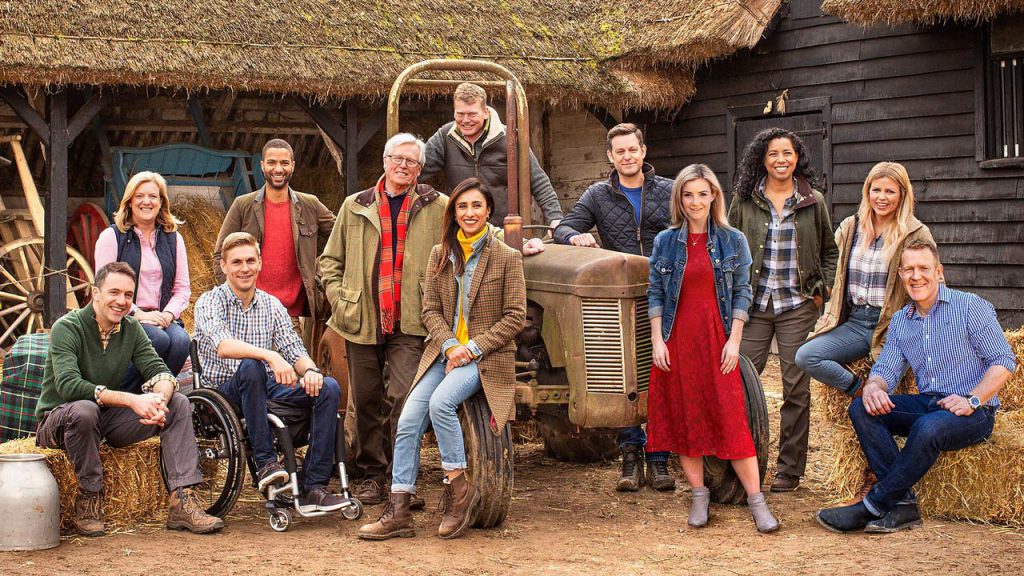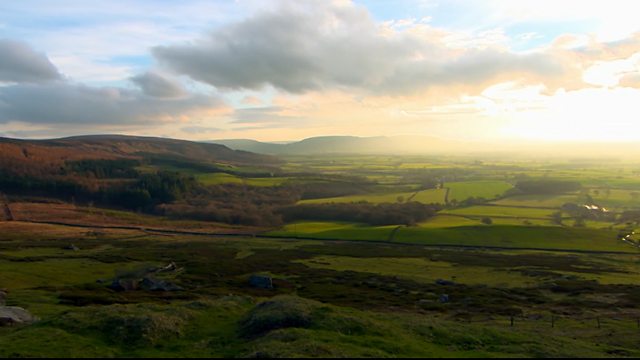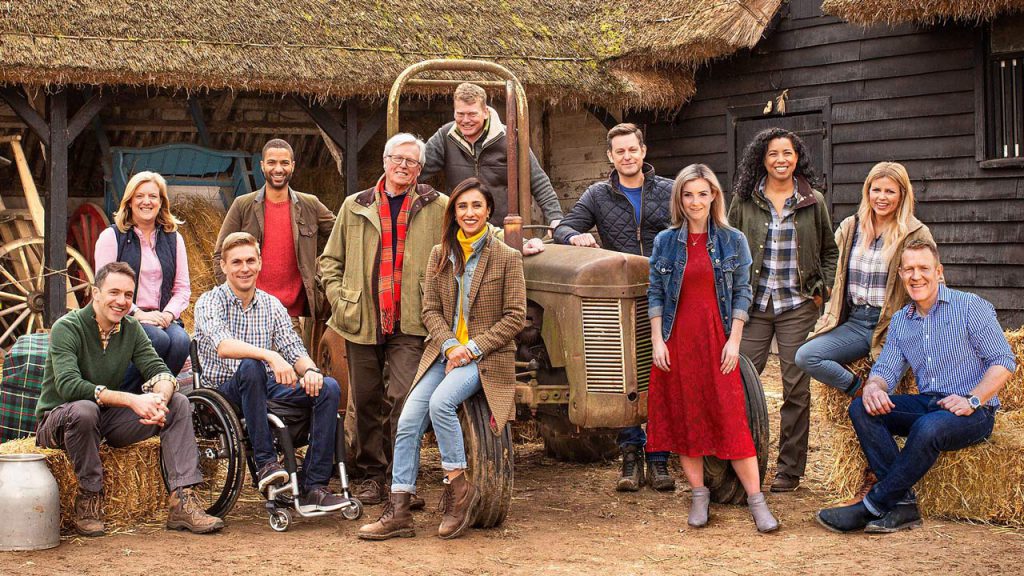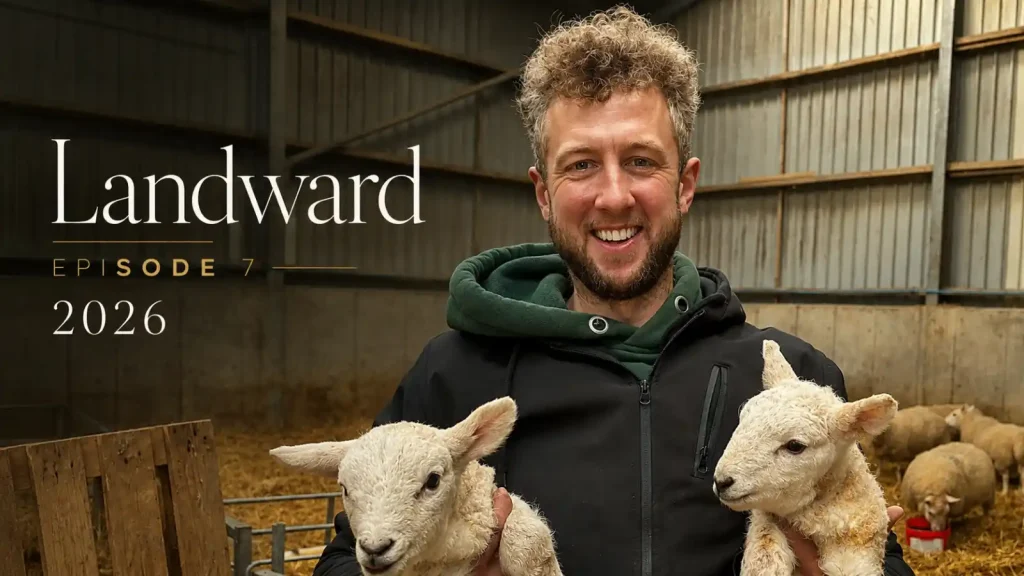
Landward episode 7 2026: Wildfires, Lambing Season, and a Lighthouse Legacy
Spring is loosening its grip on Scotland. Summer is waiting just around the corner. And Landward 2026 is right there to capture it all — the beauty, the drama, and the quiet stories that make Scottish country life so deeply human. Episode 7 takes us from the ancient pinewoods of the Cairngorms to a windswept island off the Fife coast, touching every kind of Scottish landscape in between. If you love agriculture, wildlife, and the honest rhythms of rural life, this episode delivers.
First, we head to Cairngorms National Park with presenter Dougie. Scotland’s largest national park is breathtaking in every season. However, climate change is turning its precious heathland and woodland into a tinderbox. Dougie meets the rangers and land managers working tirelessly to protect these habitats from the growing threat of wildfires.
This isn’t just a conservation story. It’s a warning. As temperatures rise and dry spells grow longer, Scotland’s landscapes face risks they’ve rarely seen before. The people Dougie speaks with are calm and methodical — but their concern is real. Their work matters not only for wildlife but for the farming and agricultural communities that depend on these lands staying healthy and intact.
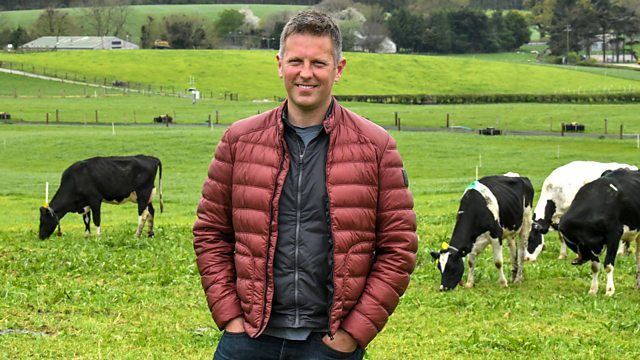
Meanwhile, Cammy takes us to his Ayrshire farm at the very peak of lambing season. Few moments in agricultural life carry as much raw energy as this one. Ewes and newborn lambs fill the fields, and every hour brings a new arrival. It’s exhausting, joyful, and utterly relentless.
For anyone curious about farming and livestock, this segment is a treat. Cammy is warm and knowledgeable, walking us through the challenges and rewards with genuine passion. Lambing season is the heartbeat of the farming calendar. Watching it unfold on screen reminds us just how much skill, patience, and dedication Scottish farmers pour into their work every single year.
Then comes the episode’s most moving segment. Anne travels to the Isle of May — a remote island nature reserve in the Firth of Forth. She’s there to investigate something quietly heartbreaking. Climate change and extreme weather are pulling apart pairs of puffins, birds that famously mate for life.
Puffins bond deeply with their partners and return to the same burrow year after year. But shifting weather patterns are disrupting their return journeys. Some pairs are simply failing to reunite. It’s a small story, in some ways. Yet it speaks volumes about what we stand to lose as the climate continues to change.
Landward episode 7 2026
Fortunately, Anne’s visit to the Isle of May isn’t only about loss. It’s also deeply personal. Her grandfather was once posted to the island’s lighthouse, and she takes time to visit it herself. That connection gives the segment a tender, reflective quality. Anne isn’t just reporting on the island — she’s rediscovering a piece of her own family history. It’s the kind of storytelling that makes Landward feel so different from a standard nature programme.
Finally, journalist Rachel Bell heads to Braemar to follow in the footsteps of a remarkable figure — the so-called Highland Lady. This historical thread adds a pleasing contrast to the episode’s more urgent themes. The Highland Lady left a distinctive, stylish mark on the Braemar area, and Rachel’s journey brings her story back to life with curiosity and warmth.
It’s a reminder that Scotland’s country life has always been shaped by bold, interesting people. The landscape holds their legacies as surely as it holds its heather and its rivers.
Landward episode 7 2026
Landward episode 7 2026 arrives at a moment when Scotland’s landscapes face pressures both ancient and urgent — wildfire risk creeping into the Cairngorms, lambing season stretching farmers to their limits, and seabirds whose lifelong partnerships are being quietly torn apart by a changing climate. This episode moves across the country with characteristic range, from the high heathered plateaus of the Cairngorms National Park to the wind-stripped rock of the Isle of May, from the muddy fields of an Ayrshire farm to the Victorian streets of Braemar. Each location carries its own story, and together they form a portrait of rural Scotland at a turning point — where traditional agricultural life meets the increasingly unpredictable forces of a warming world.
Spring turning to summer is a season of promise in Scotland’s countryside, but it is also a season of vulnerability. Across the uplands, dried winter vegetation becomes tinder. On island colonies, birds that have paired for decades begin to show the strain of environmental disruption. On farms across Ayrshire, the relentless work of lambing season demands everything a farmer has, with little margin for error and no days off. This is the Scotland that Landward has always documented: not the postcard version, but the working, weathered, ecologically complex reality beneath it.
The episode’s scope is ambitious. Dougie Vipond heads into the Cairngorms to investigate how rangers and land managers are responding to the growing threat of wildfire — a hazard that many people still associate with Mediterranean scrublands rather than Scottish hillsides. Meanwhile, Cammy Murray opens his Ayrshire farm to cameras at the absolute peak of lambing, offering an unfiltered view of livestock farming at its most demanding. Anne Martin travels to the Isle of May, a National Nature Reserve off the Fife coast, where she explores the impact of severe weather on puffin populations — and discovers a deeply personal connection to the island through her grandfather’s posting at its lighthouse.
Rounding out the episode, journalist Rachel Bell ventures to Braemar in pursuit of a remarkable historical figure — the Highland Lady, a woman whose influence on the aesthetics of rural Deeside has largely been forgotten but whose legacy is woven into the very fabric of the village. Taken together, these strands make Landward episode 7 2026 one of the season’s most varied and resonant outings, drawing on farming, wildlife, conservation, history, and personal memory in equal measure.
What unites these seemingly disparate stories is a single underlying concern: the fragility of things that matter. Habitats, farming traditions, wildlife populations, and even historical memory are all subject to forces that can erode or destroy them if left unaddressed. Landward has always understood that agriculture and ecology are not separate concerns — they are deeply entangled, with the decisions made on farms and in land management offices rippling outward into ecosystems and communities in ways that are only now becoming fully understood.
The programme’s strength lies in its commitment to specificity. Rather than surveying issues from a distance, it embeds its presenters within them. Dougie does not simply report on wildfire risk — he walks the terrain with the people responsible for managing it. Cammy does not describe lambing — he lives it, on camera, in real time. Anne does not narrate the puffin crisis — she stands on the island where it is happening and connects it to her own family’s history there. This approach, sustained across all its seasons, gives Landward episode 7 2026 its authority and its warmth.
Secondary to none of this is the broader context of climate change, which sits beneath several of the episode’s main threads like a slow drumbeat. The wildfire risk in the Cairngorms is intensified by drier springs. The puffin disruption on the Isle of May is linked to storm patterns that have grown more severe. Country life in Scotland is adapting, sometimes painfully, to conditions that earlier generations of farmers and land managers never anticipated. The episode does not lecture on these themes — it simply shows the evidence and lets those working on the ground speak for themselves.
By the time the episode settles into its rhythm, it has established something important: that Scottish country life is neither static nor simple. It is dynamic, pressured, and deeply shaped by forces operating at every scale from the individual farm to the global atmosphere. Landward episode 7 2026 documents that complexity with intelligence and care.
Wildfire in the Cairngorms: Landward Episode 7 2026 Confronts a Growing Threat
The Cairngorms National Park is one of the most ecologically significant landscapes in Britain — home to ancient Caledonian pinewoods, blanket bog, dwarf shrub heath, and a suite of species found nowhere else in the UK. It is not, in most people’s imaginations, a place associated with wildfire. Yet Dougie Vipond’s visit to the park at the heart of Landward episode 7 2026 makes clear that the risk is real, growing, and taken extremely seriously by those responsible for the landscape’s protection.
Dougie joins rangers and fire management specialists to understand how the park monitors and responds to wildfire threats. The conditions that create risk are, in essence, simple: dry vegetation, low humidity, and wind. In a landscape dominated by heather, grass, and peat, these conditions combine to create fire that can spread with alarming speed and intensity. Spring is particularly dangerous because the previous year’s dead vegetation has not yet been replaced by new growth, leaving vast quantities of dry fuel across the hillsides.
The consequences of a major wildfire in the Cairngorms would be severe. Blanket bog, which stores enormous quantities of carbon and takes centuries to develop, can be destroyed in hours. Heathland habitats that support red grouse, mountain hares, and ground-nesting birds are equally at risk. The park’s approach is therefore proactive rather than reactive — using controlled burning, fire breaks, and rapid response protocols to prevent small outbreaks from becoming catastrophic events. Dougie speaks with those who carry out this work, gaining an appreciation of the judgement and knowledge required to manage fire risk in a landscape where weather can change rapidly.
What emerges from the Cairngorms section of the programme is a nuanced picture of land management in an era of climate change. The park is not simply fighting fire — it is rethinking its entire approach to vegetation management in light of conditions that are shifting year by year. Drier springs, longer periods without significant rainfall, and increased visitor numbers all add to the pressure. The people working on the ground are doing so with limited resources and considerable expertise, often making decisions that will shape the landscape for decades to come.
Lambing Season on an Ayrshire Farm: Agriculture at Full Stretch
Cammy Murray’s Ayrshire farm segment is perhaps the most viscerally immediate part of Landward episode 7 2026. Lambing season is, for sheep farmers across Scotland, the most demanding period of the agricultural year — a stretch of weeks in which normal life effectively ceases and the farm demands around-the-clock attention. Cammy’s willingness to open this period to the cameras provides an honest and unglamourised portrait of livestock farming at its most intense.
The physical demands of lambing are considerable. Ewes require monitoring at all hours, difficult births require intervention, and newborn lambs are vulnerable to cold, wet conditions and a range of health complications. Cammy moves through this landscape of early mornings, muddy fields, and improvised solutions with the pragmatic competence of someone who has done this many times — but the episode makes clear that familiarity does not diminish the strain. Each lamb matters, both economically and as a creature in its own right, and the care Cammy brings to his work reflects this dual understanding.
Agriculture in Scotland operates within tight economic margins, and lambing season crystallises this reality. The investment of time, effort, and infrastructure in bringing lambs safely into the world is enormous, and the returns are not guaranteed. Weather, disease, market prices, and simple bad luck all play their roles. Cammy’s segment does not dwell on these pressures in abstract terms — it shows them in practice, through the rhythms of a working farm at full stretch.
The livestock focus also connects naturally to the programme’s broader interest in country life and the communities built around it. Farming is not simply an economic activity in rural Scotland — it is a way of organising time, identity, and relationship with the land. Cammy’s farm embodies this, and his approach to the season — energetic, knowledgeable, grounded in genuine affection for his animals — makes this segment one of the episode’s most engaging.
The Isle of May and the Puffin Crisis: Landward Episode 7 2026 on Climate and Wildlife
The Isle of May sits at the mouth of the Firth of Forth, a small sandstone island that becomes, each spring and summer, one of the most important seabird colonies in Britain. Puffins, razorbills, guillemots, shags, and terns all nest there in extraordinary numbers. For Anne Martin’s visit in Landward episode 7 2026, however, the focus falls on a specific and troubling phenomenon — the disruption of puffin pair bonds by extreme weather events.
Puffins are among the most faithful of birds. They pair for life, returning year after year to the same burrow, to the same mate, in one of nature’s most reliable partnerships. The stability of this bond is not merely romantic — it is functionally important. Established pairs are more effective breeders, producing more surviving chicks over their lifetimes than birds forced to find new mates. When pair bonds are broken, breeding success declines, and in a species already facing pressures from food availability and ocean change, the consequences ripple through population dynamics.
Anne speaks with researchers on the island who have been monitoring puffin populations for many years, building up a detailed picture of how individual birds and pairs are faring over time. What they have found is that severe winter storms — the kind of extreme weather events that have become more frequent and more intense in recent decades — are causing pairs to become separated. Birds that spend the winter at sea can be driven apart by storms, arriving back at the colony having lost contact with their partners. The result is a measurable increase in pair bond breakdowns, with direct consequences for breeding productivity.
The climate change dimension is explicit here: the researchers connect the increase in storm severity to broader atmospheric changes, and the impact on puffin pairs provides a concrete, observable example of how wildlife is responding to a warming world. This is not a theoretical future scenario — it is happening now, on this island, in this population, and it is being documented with the rigour that long-term ecological monitoring makes possible.
Anne’s Grandfather and the Isle of May Lighthouse: A Personal Dimension in Landward Episode 7 2026
Alongside the scientific story of the puffins, Anne Martin brings a deeply personal dimension to her Isle of May visit. Her grandfather was posted to the island’s lighthouse — a connection that gives her relationship with the place a different quality from that of a visiting journalist. She explores the lighthouse itself, reflecting on what life there must have been like for the keepers and their families.
The Isle of May lighthouse has a significant history. Automated in 1989, it operated for over a century and a half as a manned station, its keepers maintaining the light through storms and isolation that most people today would find difficult to imagine. Anne’s grandfather was part of this tradition, and her visit has the quality of a homecoming — not to a place she has lived, but to a place that has always been part of her family’s story.
This personal thread enriches the episode considerably. It connects the wildlife and conservation story to something more human and more intimate — the experience of living and working in a landscape that most people only ever see from a distance. The lighthouse keepers were not passive observers of the island’s ecology; they were present in it, year-round, through all its seasons and weathers. Anne’s reflection on this history adds a temporal depth to the episode’s concern with country life and its relationship to the natural world.
The Isle of May segment is also visually striking. The island in spring, dense with nesting birds and surrounded by the grey-green Firth, offers some of the episode’s most memorable imagery — a landscape simultaneously ancient and urgent, beautiful and under pressure.
The Highland Lady of Braemar: History, Style, and Country Life in Royal Deeside
Rachel Bell’s investigation into the Highland Lady of Braemar brings a different register entirely to Landward episode 7 2026 — one of historical detective work and cultural recovery. Braemar is best known as the home of the Royal Highland Gathering and as a gateway to the Cairngorms, but Rachel’s interest lies in a specific figure whose influence on the village’s character has largely been overlooked.
The Highland Lady in question left a stylish and distinctive mark on Braemar that is still visible in the architecture and aesthetic of the village. Rachel follows the physical evidence of her presence — buildings, designs, and local traditions that bear her imprint — while piecing together the biographical details of a woman whose story deserves to be better known. This kind of cultural archaeology, recovering the lives and influences of women who shaped their communities without receiving the recognition accorded to their male contemporaries, is a recurring interest of the programme.
Braemar itself provides an atmospheric backdrop. The village sits in the upper Dee valley, surrounded by mountains, and has been associated with Highland culture and royalty for centuries. The Highland Lady’s influence here was not merely decorative — it was a genuine contribution to the identity of a place that takes its character seriously. Rachel’s exploration of this legacy illuminates how individuals, even those subsequently forgotten by official history, can leave lasting marks on the landscapes and communities they inhabit.
The Braemar segment also connects, perhaps unexpectedly, to the episode’s broader themes of country life and the forces that shape rural Scotland. The Highland Lady was, in her own way, responding to the character of a specific landscape and trying to articulate something about what Highland life should look and feel like. Her legacy, surviving in the fabric of the village, is a reminder that places are made by people — by the choices, tastes, and ambitions of those who lived and worked in them.
Landward Episode 7 2026 and the Ecology of Scottish Land Management
One of the defining strengths of this episode is the way it connects individual stories to broader questions of land management and ecological responsibility. The Cairngorms wildfire segment and the Isle of May puffin story are not simply interesting anecdotes — they are windows into the systems and pressures shaping Scottish landscapes at a critical moment.
Land management in Scotland is undergoing significant evolution. The demands of biodiversity protection, carbon sequestration, flood prevention, and agricultural productivity are often in tension with one another, and the people making decisions on the ground must navigate these competing priorities with limited information and limited resources. Landward episode 7 2026 does not resolve these tensions — it maps them, giving viewers enough detail to understand what is at stake without pretending that the answers are simple.
The farming dimension, represented by Cammy’s lambing season, sits within this broader picture. Agriculture shapes habitats directly — through grazing patterns, drainage decisions, and the management of field margins and hedgerows. Livestock farming, specifically, has a complex relationship with upland ecology in Scotland, providing both economic activity and, in some contexts, habitat management that benefits biodiversity. The programme treats this complexity with the seriousness it deserves, avoiding simplistic narratives in either direction.
Meanwhile, the conservation work on the Isle of May represents a different model of land and sea management — one based on monitoring, research, and the long-term accumulation of ecological knowledge. The researchers there are not just counting birds; they are building a scientific record that will inform decisions about marine protected areas, fisheries management, and climate adaptation for decades to come. Landward episode 7 2026 honours this work by giving it sustained, substantive attention.
Landward Episode 7 2026: The Threads That Connect Scottish Rural Life
What makes this episode particularly coherent, despite its geographical and thematic range, is the underlying sense that all these stories are part of a single, connected world. The wildfire risk in the Cairngorms is shaped by the same climatic trends that are disrupting puffin pairs on the Isle of May. The pressures on Cammy’s Ayrshire farm are part of the wider story of agricultural life adapting to a changing environment. The Highland Lady’s legacy in Braemar is a reminder that Scottish country life has always been shaped by the people who chose to engage with it seriously and creatively.
Landward has always been a programme about connections — between people and places, between human activity and ecological consequence, between past and present. Episode 7 of the 2026 series demonstrates this connective quality at its best. Each of the programme’s strands is strong enough to stand alone, but together they form something more than the sum of their parts: a portrait of a country negotiating its relationship with its own landscapes in real time.
The presenters carry this weight with ease. Dougie brings his characteristic combination of warmth and curiosity to the Cairngorms; Cammy’s farm segment has the unforced authenticity of someone doing a job he knows deeply; Anne’s personal connection to the Isle of May adds emotional resonance to what might otherwise have been a purely scientific story; and Rachel’s historical investigation brings intellectual engagement and a sense of recovery — of something valuable retrieved from the margins of memory.
Conservation, Climate Change, and Country Life: The Legacy of Landward Episode 7 2026
In its best moments, Landward episode 7 2026 does something that very little television achieves: it makes the complexities of ecology, agriculture, and environmental change genuinely compelling without simplifying them. The wildfire risk in the Cairngorms is presented in enough detail to be understood, but not so much that it becomes technical. The puffin story is emotionally resonant without being sentimental. The farming segment is honest about difficulty without being either romanticised or pessimistic.
This balance is harder to achieve than it looks. Environmental and agricultural stories are frequently told in ways that either catastrophise or reassure — presenting the situation as either hopeless or as already in hand. Landward’s approach is different: it trusts its audience to sit with complexity and uncertainty, to find the stories of people doing their best under difficult circumstances genuinely interesting rather than merely distressing.
Climate change runs through this episode as a shaping force, visible in the increasing wildfire risk on Scottish hillsides, in the storm patterns disrupting seabird colonies, and in the changing conditions that farmers must adapt to each season. Country life in Scotland has always required resilience — the ability to absorb setbacks and continue — but the scale and pace of current change is testing that resilience in new ways.
The programme’s contribution is to make these changes visible and legible, grounding them in specific places and specific people rather than allowing them to remain abstract. Dougie standing on a Cairngorms hillside, Anne on the Isle of May cliffs, Cammy in his lambing shed — these images carry information that statistics alone cannot convey. They show what is at stake in terms that are immediate and human, and they do so with the authority of people who have spent time in these places and with the communities that depend on them.
Landward episode 7 2026 is, ultimately, a programme about care — care for landscapes, for animals, for historical memory, and for the communities that make rural Scotland what it is. In that sense, it is entirely true to what the series has always been: not a spectacle of the countryside, but a sustained, serious, affectionate engagement with it.
FAQ Landward episode 7 2026
Q: What is Landward episode 7 2026 about?
A: Landward episode 7 2026 covers four main stories across Scotland. Dougie Vipond investigates wildfire risk in the Cairngorms National Park. Cammy Murray documents lambing season on his Ayrshire farm. Anne Martin travels to the Isle of May to explore how extreme weather is breaking up lifelong puffin pairs. Additionally, journalist Rachel Bell follows the legacy of the Highland Lady in Braemar.
Q: Why is wildfire a concern in the Cairngorms National Park?
A: Many people associate wildfires with Mediterranean climates, but Scotland’s uplands carry significant risk. The Cairngorms contain vast areas of dry heather, grass, and peat. Drier springs leave dead winter vegetation undecomposed, creating large quantities of fuel. Furthermore, increased visitor numbers and changing weather patterns intensify the danger. Rangers use controlled burning and fire breaks to prevent small outbreaks from becoming catastrophic events.
Q: What ecological damage can wildfires cause in Scottish uplands?
A: A major wildfire in the Cairngorms could destroy blanket bog, which stores vast quantities of carbon and takes centuries to form. Heathland habitats supporting red grouse, mountain hares, and ground-nesting birds would also be severely affected. Consequently, land managers treat fire prevention as a long-term ecological priority. Proactive vegetation management and rapid response protocols are essential tools in protecting these irreplaceable habitats.
Q: What does lambing season involve for farmers in Scotland?
A: Lambing season is the most demanding period of the agricultural year for sheep farmers. Cammy Murray’s Ayrshire farm segment in Landward episode 7 2026 shows the reality clearly. Ewes require monitoring around the clock. Difficult births need direct intervention, and newborn lambs are vulnerable to cold and disease. However, experienced farmers like Cammy approach this intense period with practical skill and genuine care for their livestock.
Q: Why does the Isle of May matter for seabird conservation?
A: The Isle of May is one of Britain’s most significant seabird colonies, hosting puffins, razorbills, guillemots, shags, and terns in large numbers each spring and summer. Researchers have monitored individual birds and pairs there for many years, building a detailed long-term dataset. This record is invaluable for understanding how climate change affects wildlife populations and for informing marine conservation policy across Scotland.
Q: How is climate change affecting puffin pairs on the Isle of May?
A: Puffins are lifelong partners, and established pairs breed more successfully than newly formed ones. However, increasingly severe winter storms are driving birds apart while they overwinter at sea. When they return to the colony, some fail to reunite with their original partner. Researchers on the Isle of May have documented a measurable rise in broken pair bonds directly linked to more frequent extreme weather events, with clear consequences for breeding productivity.
Q: What personal connection does Anne Martin have to the Isle of May?
A: Anne Martin’s grandfather was posted to the Isle of May lighthouse, giving her a family connection to the island that predates her career in broadcasting. During her visit in Landward episode 7 2026, she explores the lighthouse itself and reflects on what life meant for keepers and their families in such an isolated posting. This personal dimension deepens her engagement with the island’s history and enriches the conservation story she tells alongside it.
Q: Who was the Highland Lady of Braemar, and why does she matter?
A: The Highland Lady was a historical figure whose distinctive aesthetic vision left a lasting mark on the village of Braemar in Royal Deeside. Journalist Rachel Bell investigates her legacy in Landward episode 7 2026, tracing her influence through surviving architecture and local traditions. Despite her significant contribution to the character of the village, she has largely been overlooked by official history. Rachel’s investigation recovers her story and recognises the cultural importance of her work.
Q: How does Landward episode 7 2026 address the theme of agricultural life and climate change together?
A: The episode treats agriculture and ecology as deeply connected rather than separate concerns. Cammy’s lambing season illustrates the pressures facing Scottish livestock farmers, while the Cairngorms wildfire segment shows how changing conditions directly threaten upland farming landscapes. Meanwhile, the puffin story demonstrates that wildlife and country life both face the same underlying challenge. Landward episode 7 2026 presents these pressures honestly, trusting viewers to engage with complexity rather than offering simple reassurance.
Q: Where can viewers watch Landward episode 7 2026?
A: Landward episode 7 2026 airs on BBC One Scotland as part of the programme’s regular broadcast schedule. Additionally, episodes are available to stream on BBC iPlayer for viewers across the UK following transmission. Landward has documented Scottish rural and agricultural life for decades, and its 2026 series continues that commitment with strong reporting on farming, wildlife, conservation, and country life. Checking the BBC iPlayer library is the most reliable way to access recent and archived episodes.