Asia Episode 3 – The Frozen North
In the frigid expanse of northern Asia, life stands as a testament to resilience. Here, creatures adapt to an unforgiving landscape where temperatures plummet and survival requires extraordinary ingenuity. From the icy waters of Russia’s Lake Baikal to the snow-covered forests of Japan, each story reveals nature’s determination to thrive.
Lake Baikal, often called the “Galápagos of Russia,” shelters one of the world’s few freshwater seal species. Among these seals, a young pup faces a perilous challenge as its ice den begins to melt prematurely. With the warming climate accelerating the thaw, the pup must navigate this unexpected danger, using instincts honed by generations to evade predators and find safer grounds. The fragile beauty of this scene mirrors the delicate balance of the lake’s ecosystem, which depends on its icy cover.
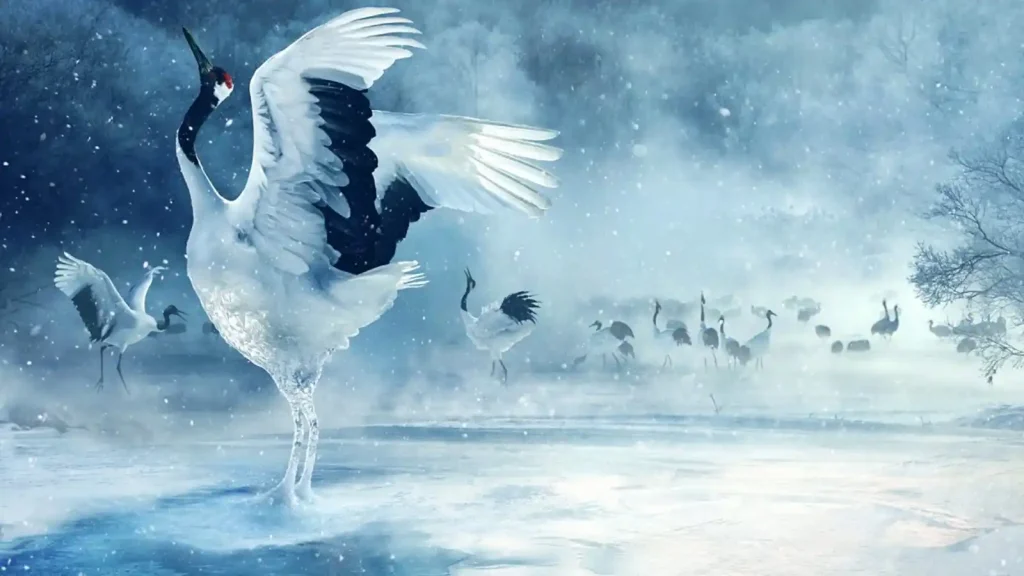
Traveling eastward to Hokkaido, Japan, the landscape transforms into a dreamlike tableau. Thermal springs, steaming and bubbling amid the snow, offer refuge to one of nature’s most elegant dancers—the red-crowned crane. These majestic birds, their plumage stark against the white backdrop, perform elaborate courtship rituals. Their synchronized movements, as graceful as a choreographed ballet, symbolize the enduring cycles of life even in the harshest winters.
On the Tibetan Plateau, where the air is thin and the land stretches barren, a Himalayan wolf prowls the desolate plains. Alone, it moves with calculated precision, eyes fixed on a herd of antelope grazing in the distance. Each step is a blend of patience and power, a silent testament to the predator’s skill in a realm where every meal is hard-earned. The plateau, vast and windswept, is both a battleground and a sanctuary for the species that endure its challenges.
Further north, in the dense forests marking the border between Russia and China, the haunting calls of fish owls echo through the trees. These imposing birds, with wings spanning over six feet, command the waterways. Their sharp talons pluck fish from the icy rivers, sustaining them through the long, dark winters. This borderland forest, teeming with hidden life, showcases a rich biodiversity that thrives despite the biting cold.
Meanwhile, on the Kamchatka Peninsula, brown bears engage in a ritual as ancient as the land itself. Standing at the river’s edge, they swipe at leaping salmon with a mix of brute force and surprising dexterity. This annual feast is vital, allowing the bears to build reserves for hibernation. The scene—a powerful bear towering against a backdrop of volcanic peaks—is a vivid reminder of nature’s raw splendor.
Asia episode 3 – The Frozen North
Elsewhere in Japan, creatures adapt to winter’s embrace in astonishing ways. Beneath a blanket of snow, bats huddle in caves, their hearts beating in slow, deliberate rhythms to conserve energy. Above ground, red foxes and sea eagles engage in a tense rivalry, competing for scarce food sources. The foxes, sly and quick, rely on cunning to secure their meals, while the eagles dominate the skies with sharp-eyed precision. This dynamic interplay highlights the interconnectedness of life in these frozen landscapes.
In Arctic Russia, polar bears face an uncertain future. Stranded on isolated patches of land, they wait for the sea ice to return. This ice is their hunting platform, crucial for catching seals. As climate change shortens the ice season, these apex predators must adapt or face dwindling opportunities. The sight of a bear gazing across the vast, frozen horizon is both haunting and profound, embodying the fragile balance of life in the Arctic.
These stories of survival in northern Asia paint a vivid picture of resilience and adaptation. Each species, from the agile Himalayan wolf to the graceful red-crowned crane, demonstrates the incredible ability to endure and flourish against the odds. Together, they form a living mosaic, a testament to the tenacity of life in some of the world’s most extreme environments. This frozen north, though harsh and unyielding, pulses with a quiet vitality that inspires awe and reverence.
Conclusion Asia episode 3 – The Frozen North
The Frozen North of Asia leaves us with a profound appreciation for life’s tenacity. In every icy crevice, every wind-swept plain, and every shadowed forest, nature demonstrates its remarkable ability to adapt, endure, and flourish. These frozen lands are not just realms of survival but of stories—powerful tales of perseverance that echo through time.
From the vulnerable seal pup of Lake Baikal to the graceful red-crowned cranes of Hokkaido, each creature finds a way to live in harmony with its environment. The cranes’ intricate dances, framed by the steaming thermal springs, remind us of the beauty that emerges even in the harshest conditions. They symbolize not only survival but celebration—a momentary triumph against the cold.
In the desolate Tibetan Plateau, the lone Himalayan wolf epitomizes strength and strategy. Its solitary hunt underscores a universal truth: survival demands resilience, whether in the form of patience, power, or cunning. This wolf, like so many of the region’s inhabitants, thrives not because the world bends to its will but because it adapts with grace and determination.
Moving through the dense forests of the Russia-China border, the fish owls’ commanding presence highlights the intricate relationships within ecosystems. Their dominance of the waterways, paired with the resilience of their prey, reflects the delicate balance of predator and prey that sustains life. Similarly, on the Kamchatka Peninsula, the brown bears’ salmon hunt illustrates the unbreakable link between preparation and survival. These ancient rituals, passed down through generations, mirror our own efforts to ready ourselves for the uncertainties of life.
In Arctic Russia, the polar bear’s plight offers a poignant reminder of the fragility of these frozen ecosystems. As they await the return of the sea ice, their watchful patience becomes a symbol of hope and perseverance. Their struggle underscores the urgency of preserving these habitats, not just for them but for the world’s ecological balance.
The Frozen North is a testament to life’s resilience and creativity. It teaches us that even in the harshest climates, beauty and perseverance shine brightly. These landscapes, with their untamed wildness, challenge us to reflect on our own resilience. They inspire awe and remind us that in adversity, life finds a way to flourish—as enduring as the ice and as fierce as the winds that shape this extraordinary land.
FAQ Asia episode 3 – The Frozen North
Q: What is unique about the wildlife featured in “Asia Episode 3 – The Frozen North”?
A: This episode showcases animals with incredible resilience. For example, it features the Baikal seal, one of the few freshwater seal species worldwide. Furthermore, you’ll witness the red-crowned crane performing its elegant courtship dance in the snowy landscapes of Hokkaido. Finally, observe the powerful Himalayan wolf, a testament to nature’s strength and adaptation in the challenging environment of the Tibetan Plateau.
Q: How does “Asia Episode 3 – The Frozen North” portray the impact of climate change?
A: The episode specifically highlights the plight of the polar bear in Arctic Russia. As climate change reduces the sea ice, these bears lose their primary hunting grounds. Consequently, they face a struggle for survival. This serves as a powerful reminder of the environmental challenges we face.
Q: What kind of behaviors are shown in this episode?
A: “Asia Episode 3 – The Frozen North” offers a glimpse into fascinating animal behaviors. For instance, the fish owls of the Russia-China border demonstrate their impressive hunting skills. Meanwhile, on the Kamchatka Peninsula, brown bears engage in their annual salmon feast. Moreover, the episode explores the cunning of red foxes as they compete with sea eagles for survival in the snowy landscapes of Japan.
Q: Why is “Asia Episode 3 – The Frozen North” considered inspiring?
A: This episode celebrates the tenacity of life in extreme environments. Indeed, it reveals how various species not only survive but thrive in the Frozen North. Ultimately, it reminds us that even in the face of adversity, life finds a way to flourish. Therefore, it leaves viewers with a sense of awe and a deeper appreciation for the natural world.
Q: Where can I watch “Asia Episode 3 – The Frozen North”?
A: While we can’t provide specific viewing details, you can likely find this episode on nature documentary channels or streaming services. Look for platforms that feature wildlife documentaries, especially those focusing on Asia or extreme environments. Additionally, check for official websites or social media pages related to the series.