Science

Video documentaries about science and technology

Big Oil v the World episode 2

Big Oil v the World episode 2

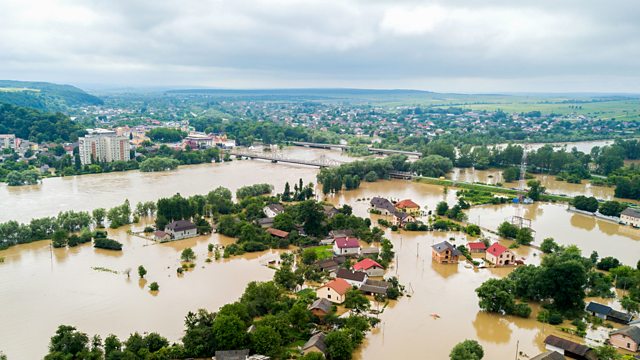
Big Oil v the World episode 2: Even as the science grew more certain, the oil industry continued to block action to tackle climate change in the new millennium. In a revelatory interview, Christine Todd Whitman, George W Bush’s former environment chief, tells the story of how the industry successfully lobbied President Bush to reverse course on his campaign promise to regulate carbon emissions.     Tensions grew between two of the world’s biggest oil companies, ExxonMobil and BP, after the latter publicly called for action to tackle climate change. The election of Barack Obama provided hope for supporters of […]

Big Oil v the World episode 2 Read More »


Big Oil v the World episode 1

Big Oil v the World episode 1

Big Oil v the World episode 1: The story of what the fossil fuel industry knew about climate change more than four decades ago, as scientists working for Exxon reveal how they sounded the alarm about the effects of fossil fuels.     Scientists who worked for the biggest oil company in the world, Exxon, reveal the warnings they sounded in the 1970s and early 1980s about how fossil fuels would cause climate change – with potentially catastrophic effects. Drawing on thousands of newly discovered documents, the film goes on to chart in revelatory and forensic detail how the oil

Big Oil v the World episode 1 Read More »

Super Telescope: Mission to the Edge of the Universe

Super Telescope: Mission to the Edge of the Universe

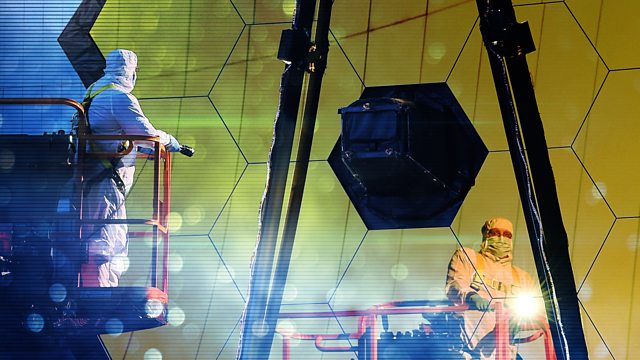
Super Telescope: Mission to the Edge of the Universe – As Nasa releases the first images from the James Webb Space Telescope, this film tells the inside story of the telescope’s construction and the astronomers taking its first picture of distant stars and galaxies. Will it be the deepest image of our universe ever taken?     The successor to Hubble, and 100 times more powerful, the James Webb is the most technically advanced telescope ever built. It will look further back in time than Hubble to an era around 200 million years after the Big Bang, when the first

Super Telescope: Mission to the Edge of the Universe Read More »


Brian Cox: Seven Days on Mars

Brian Cox: Seven Days on Mars

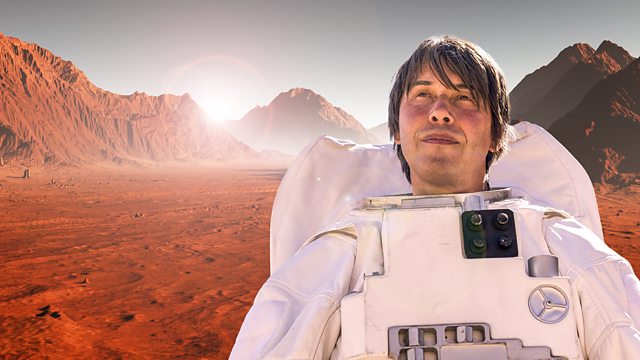
Brian Cox: Seven Days on Mars: Professor Brian Cox fulfils a childhood dream by going behind the scenes at Nasa’s Jet Propulsion Laboratory (JPL), mission control for Mars 2020 – one of the most ambitious missions ever launched that may finally reveal if life ever existed on the red planet.       In 1980, a young Brian Cox wrote to JPL asking for photos from some of their missions to the planets. The pictures they sent him from Voyager and the Viking mission to Mars were a source of inspiration that set him on the path to becoming a

Brian Cox: Seven Days on Mars Read More »

Secrets of Skin episode 6 - Sensing

Secrets of Skin episode 6 – Sensing

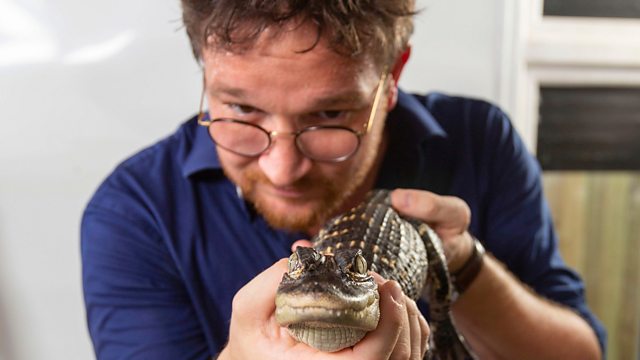
Secrets of Skin episode 6 – Sensing: Professor Ben Garrod explores how some snakes can see using heat, how crocodiles feel through their jaws and how some animals use electricity to navigate their world – and it is all only possible because of remarkable adaptations to their skin.     Whether animals live on land, in the sea, or in subterranean communities, skin is critical in allowing them to sense the world around them, be it to find food, navigate harsh environments or avoid danger. Even the toughest of animals, crocodilians, have a surprisingly sensitive side when it comes to

Secrets of Skin episode 6 – Sensing Read More »


Secrets of Skin episode 4 - Communication

Secrets of Skin episode 4 – Communication

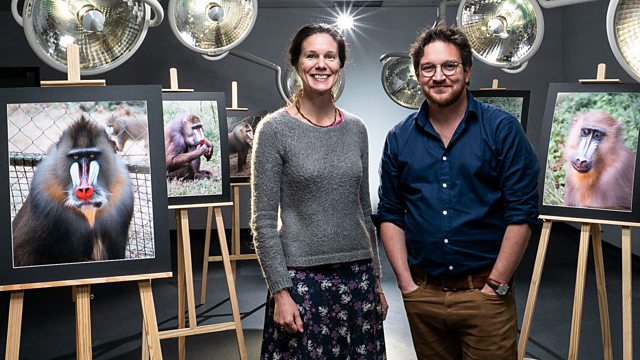
Secrets of Skin episode 4 – Communication: Why are male mandrill faces (big bold primates from West Africa) red and blue? How are birds’ feathers so colourful? What do ringtail lemurs do to talk to one another? Their skin holds the key. As Professor Ben Garrod explores how animals communicate with one another, he uncovers a myriad more wonderful ways.     Skin has evolved in some remarkable ways to enable animals to communicate with each other, from vibrant displays of colour to skin pouches to amplify sound. Ben shows how animals have evolved to use skin to make themselves

Secrets of Skin episode 4 – Communication Read More »

Secrets of Skin episode 3 - Protection

Secrets of Skin episode 3 – Protection

Secrets of Skin episode 3 – Protection: How does a giraffe stay cool? What are different porcupine quills teaching us about medicine? What makes some people more likely to be bitten by mosquitoes than others? All the answers and more lie in the secrets of how skin protects us from a hostile world. When it comes to protecting our delicate insides, skin is like an external suit of armour. Animals have adapted ways of protecting themselves from everything a hostile planet has to throw at them.     Hippos produce their own sunscreen to protect themselves against the dangers of

Secrets of Skin episode 3 – Protection Read More »


Secrets of Skin episode 2 - Moving

Secrets of Skin episode 2 – Moving

Secrets of Skin episode 2 – Moving: What makes sharks built for speed? How do snakes move without limbs? How do sugar gliders fly without feathers? The answer all lies in their skin. Professor Ben Garrod uncovers the secrets of how skin has evolved to enable animals to solve some of the most remarkable challenges on Earth.     To do this, Ben heads to the specialist flight centre at the Royal Veterinary College to analyse the way a sugar glider uses its skin flaps to stay aloft. He goes diving with sharks at the Blue Planet Aquarium and discovers

Secrets of Skin episode 2 – Moving Read More »

Secrets of Skin episode 1 - Adaptability

Secrets of Skin episode 1 – Adaptability

Secrets of Skin episode 1 – Adaptability: Skin is an incredible, multi-function organ that science is still learning so much about. It has adapted to allow animals to conquer virtually every habitat on the planet.     In this episode, Professor Ben Garrod reveals some ground-breaking new science and amazing, specialist, factual insight as he discovers how human skin is an ecosystem in its own right, playing host to demodex mites, that might redefine our understanding of human ancestry. He explores the new science that could pave the way for re-engineering human skin on amputations to make it more robust.

Secrets of Skin episode 1 – Adaptability Read More »

Secrets of Size episode 2 - Atoms to Supergalaxies

Secrets of Size episode 2 – Atoms to Supergalaxies

Secrets of Size episode 2 – Atoms to Supergalaxies: In the concluding episode of the series, Jim encounters ever larger cosmic structures to reveal the latest breakthroughs in our understanding of the universe. For example, there’s the heliosphere, a vast cloud of solar plasma that surrounds and protects the solar system. Its unique physics help us understand why life is possible. Larger still, Jim comes face to face with our galactic home the Milky Way, a monstrous structure sculpted by the gravitational forces of dark matter. Jim finds out from pioneering researcher Adrian Fabian about the black hole at its

Secrets of Size episode 2 – Atoms to Supergalaxies Read More »

Secrets of Size episode 1 - Atoms to Supergalaxies

Secrets of Size episode 1 – Atoms to Supergalaxies

Secrets of Size episode 1 – Atoms to Supergalaxies: What would the universe look like if you were a billion times smaller or a billion times bigger? In this mind-bending series, Jim Al-Khalili will look at the universe across its vast range of size, ranging from the tiniest objects measuring just a few atoms, to vast structures consisting of hundreds of thousands of interconnected galaxies. Investigating these astonishing objects will reveal fundamental truths about our universe. At the end of each film, the audience will see the largest structures ever discovered in the universe and the smallest objects whose images

Secrets of Size episode 1 – Atoms to Supergalaxies Read More »

Seven Ages of Starlight

Seven Ages of Starlight

Seven Ages of Starlight: This is the epic story of the stars, and how discovering their tale has transformed our own understanding of the universe. Once we thought the sun and stars were gods and giants. Now we know, in a way, our instincts were right. The stars do all have their own characters, histories and role in the cosmos. Not least, they played a vital part in creating us.       There are old, bloated red giants, capable of gobbling up planets in their orbit, explosive deaths – supernovae – that forge the building blocks of life and

Seven Ages of Starlight Read More »

Scroll to Top