Science

Video documentaries about science and technology

Human Universe episode 4

Human Universe episode 4: A Place in Space and Time

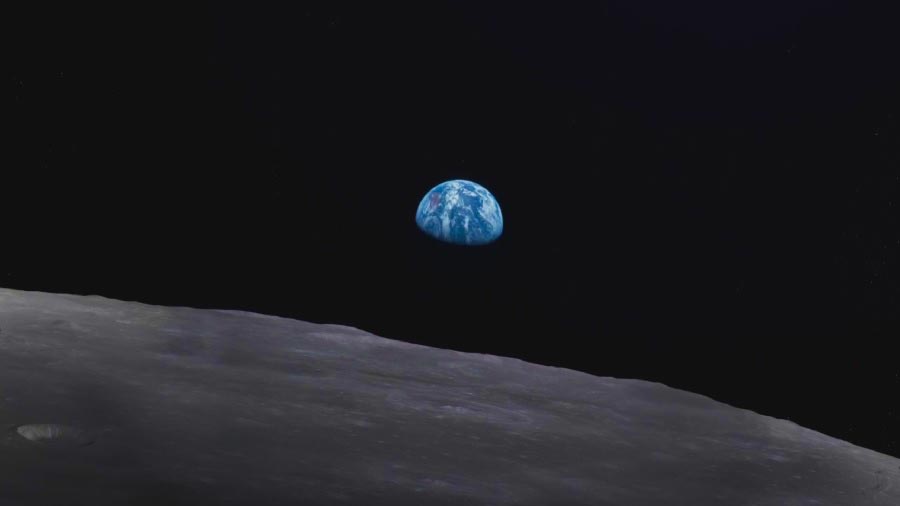
In Human Universe episode 4: A Place in Space and Time: professor Brian Cox explores our origins, place and destiny in the universe. We all start our lives thinking that we are at the centre of the universe, surrounded by our family and the world as it spins around us. But the urge to explore is strong. Brian tells the story of how our innate human curiosity has led us from feeling that we are at the centre of everything, to our modern understanding of our true place in space and time – that we are living 13.8 billion years […]

Human Universe episode 4: A Place in Space and Time Read More »


Human Universe episode 3

Human Universe episode 3: Are We Alone?

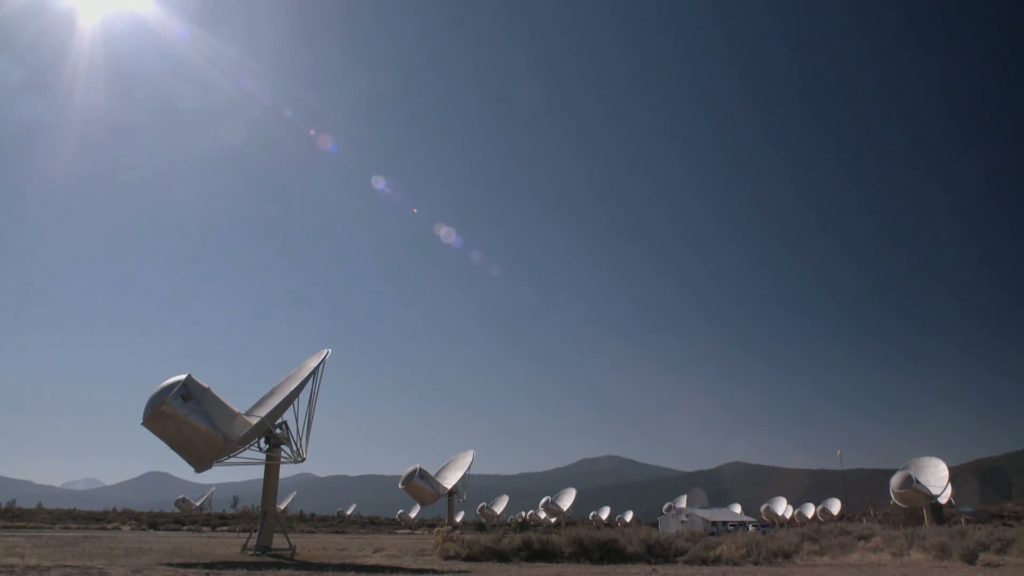
In Human Universe episode 3: Brian Cox explores the ingredients needed for an intelligent civilisation to evolve in the universe – the need for a benign star, for a habitable planet, for life to spontaneously arise on such a planet and the time required for intelligent life to evolve and build a civilisation. Brian weighs the evidence and arrives at his own provocative answer to the puzzle of our apparent solitude.     Human Universe episode 3: Are We Alone? In 1977 a radio signal was received that bore all the hallmarks of coming from an alien intelligence. To this

Human Universe episode 3: Are We Alone? Read More »

Human Universe episode 2

Human Universe episode 2: Why Are We Here?

In Human Universe episode 2: Brian Cox reveals how the wonderful complexity of nature and human life is simply the consequence of chance events constrained by the laws of physics that govern our universe. But this leads him to a deeper question – why does our universe seem to have been set up with just the right rules to create us? In a dizzying conclusion Brian unpicks this question, revealing the very latest understanding of how the universe came to be this way, and in doing so offers a radical new answer to why we are here.     Professor

Human Universe episode 2: Why Are We Here? Read More »


Human Universe episode 1

Human Universe episode 1: Apeman – Spaceman

In Human Universe episode 1: Professor Brian Cox asks the biggest questions we can ask as he explores our origins, our place and our destiny in the universe.     Brian begins his exploration in the beautiful Ethiopian Highlands, where he has a rare encounter with our distant cousins, the gelada monkeys. They were once Africa’s most successful primate, roaming across the entire continent, yet today they are found in just one place in the remote Ethiopian Highlands. So how did this happen? Why have some of our closest relatives retreated, whilst we have expanded everywhere? The clues are all

Human Universe episode 1: Apeman – Spaceman Read More »

The Sky at Night - Expedition Asteroid

The Sky at Night – Expedition Asteroid

A look at two missions attempting one of the most difficult feats of space exploration – to collect a rock from another world. This episode checks in on the US and Japanese attempts to bring a piece of an asteroid back to Earth. The missions have taken decades of planning, but the results will be worth it.      We find out how studying these space rocks can teach us about the origins of our solar system and may one day help save Earth from a catastrophic collision. The Sky at Night – Expedition Asteroid Your monthly journey through

The Sky at Night – Expedition Asteroid Read More »


Search for Life in Space

The Search for Life in Space

Journey from the depths of the Pacific Ocean into the far reaches of space on a quest to find something that changes everything…signs of life, somewhere else in the universe. With cutting-edge imagery from the world’s most powerful telescopes, The Search for Life in Space takes audiences from the surface of Mars and the icy moons of Jupiter and Saturn, to the extreme lava fields of Hawaii and thermal vents deep beneath the sea.     In these harsh environments, astrobiologists look for clues to how life takes hold. As this immersive adventure into the universe reveals the possibility of

The Search for Life in Space Read More »

The 21st Century Race for Space

The 21st Century Race for Space

A new age of space exploration, and exploitation, is dawning. But surprisingly, some of the boldest efforts at putting humans into space are now those of private companies started by a handful of maverick billionaire businessmen.     The 21st Century Race for Space Brian Cox gains exclusive access behind the scenes at Virgin Galactic, Blue Origin and Spaceport America, exploring what is really happening in privately financed space flight right now. From space tourism to asteroid mining, and even dreams of colonies on Mars, these new masters of the universe refuse to limit their imaginations. But are private companies

The 21st Century Race for Space Read More »


Return to the Moon

The Sky at Night – Return to the Moon ?

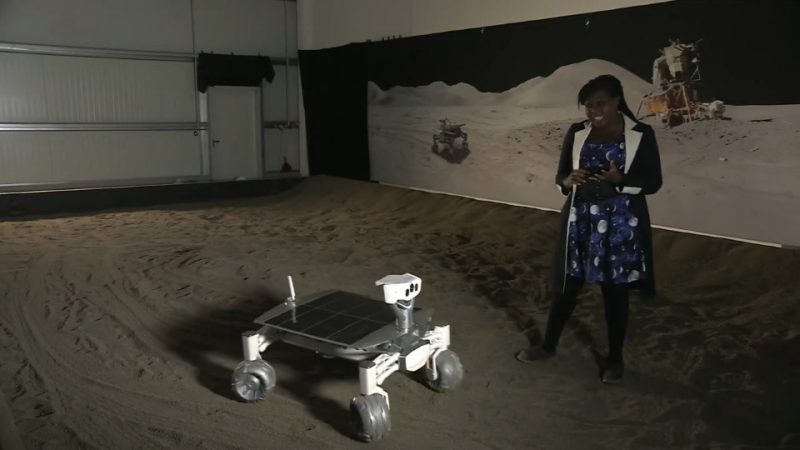
The Sky at Night – Return to the Moon ? –  Nearly 50 years ago, Neil Armstrong stepped onto the moon and it seemed like the dawn of a new age. Soon we’d be flying to the moon as effortlessly as we fly to America, and a moon base would be filled with men and women building a better future out in space. But then the moon fell out of fashion. We soon realized it was brutally inhospitable and getting there was eye-wateringly expensive.     Rather than spend huge sums of money going where we’d already been, Mars and

The Sky at Night – Return to the Moon ? Read More »

Guide to the Galaxy

The Sky at Night – Guide to the Galaxy

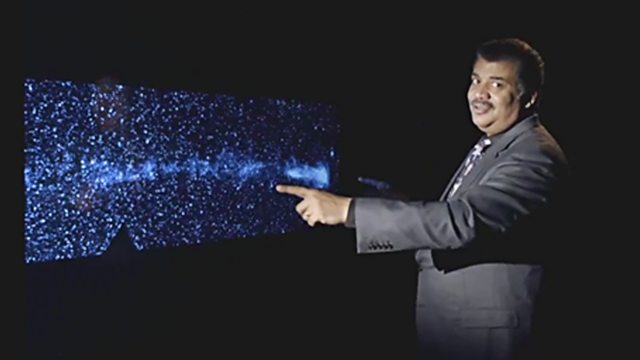
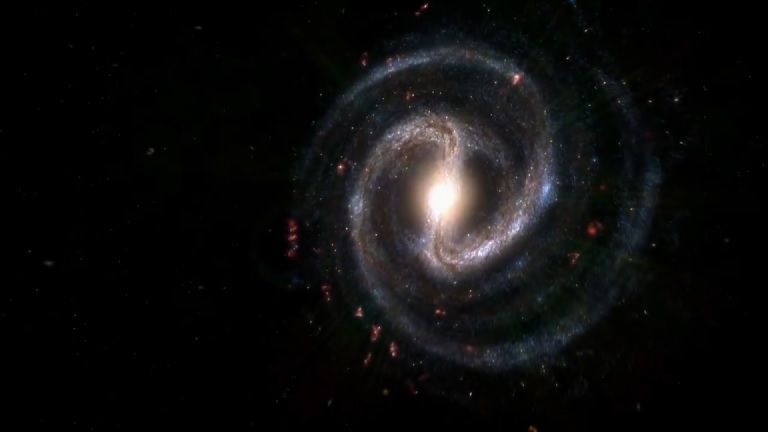
Guide to the Galaxy: all good travel guides need a map, and the team unveil the most detailed 3D map of the Milky Way ever produced. A map that reveals that there may be 50 per cent more stars in the galaxy than we previously thought.     American astronomer Neil deGrasse Tyson gives us a guided tour of the strangest stars we have ever observed, and we discover that the Milky Way may already be colliding with our neighbouring galaxy, Andromeda. Guide to the Galaxy A galaxy is a gravitationally bound system of stars, stellar remnants, interstellar gas, dust,

The Sky at Night – Guide to the Galaxy Read More »

Space-time

How the Universe Works: Mystery of Space-time ep.10 2018

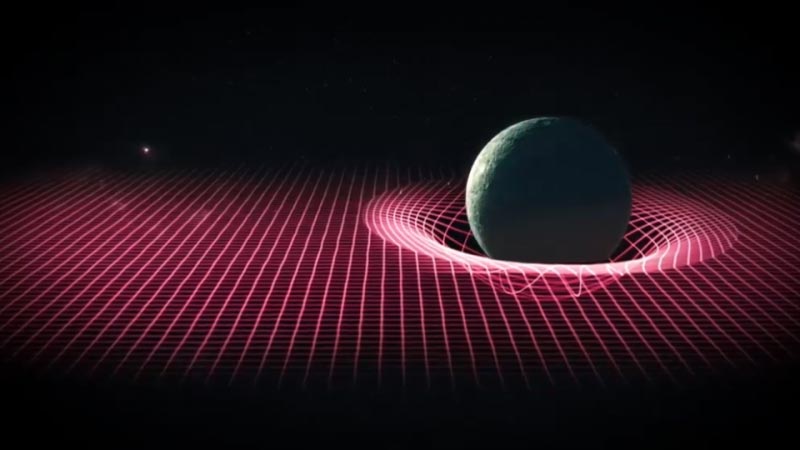
Space-time is the secret structure that controls the universe, and this strange four-dimensional substance controls time, light, and energy. It will also determine how the universe will end.       Space-time In physics, space-time is any mathematical model that fuses the three dimensions of space and the one dimension of time into a single four-dimensional continuum. Space-time diagrams are useful in visualizing and understanding relativistic effects such as how different observers perceive where and when events occur. Until the turn of the 20th century, the assumption had been that the three-dimensional geometry of the universe (its description in terms

How the Universe Works: Mystery of Space-time ep.10 2018 Read More »

Quasar

How the Universe Works: The Quasar Enigma ep.7 2018

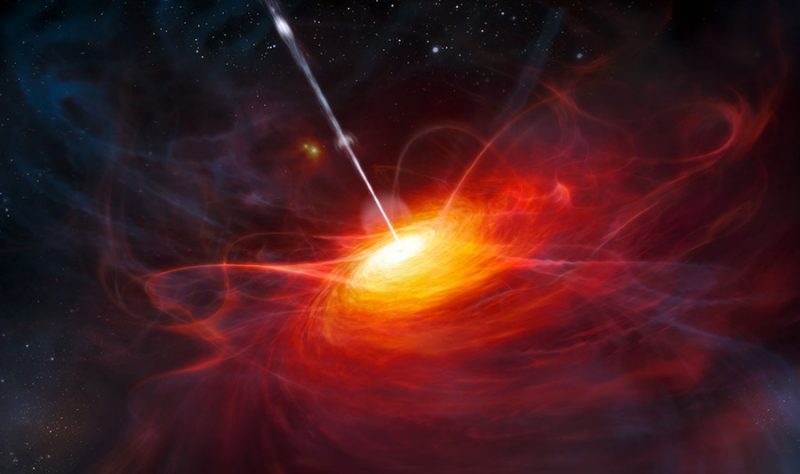
Quasars are the brightest and most powerful objects in our universe, and though they have shaped the cosmos, they might ultimately destroy everything that exists.     Quasar   A quasar (also quasi-stellar object or QSO) is an active galactic nucleus of very high luminosity. A quasar consists of a super massive black hole surrounded by an orbiting accretion disk of gas. As gas in the accretion disk falls toward the black hole, energy is released in the form of electromagnetic radiation. Quasars emit energy across the electromagnetic spectrum and can be observed at radio, infrared, visible, ultraviolet, and X-ray

How the Universe Works: The Quasar Enigma ep.7 2018 Read More »

Death of the Milky Way ep.5 2018

How the Universe Works: Death of the Milky Way ep.5 2018

The Milky Way is dying, and experts are investigating what’s killing it.     How is the universe put together? How is it built? And how does it actually work? Science’s hit space series will blow your mind by answering how the universe started and how it will end – and everything in between. Learn how nuclear fusion keeps them burning for billions of years and what powers our nearest star: the sun. The inner workings of outer space will be revealed as modern astronomy helps to demystify a series of unusual phenomena.   Milky Way   The Milky Way

How the Universe Works: Death of the Milky Way ep.5 2018 Read More »

Scroll to Top