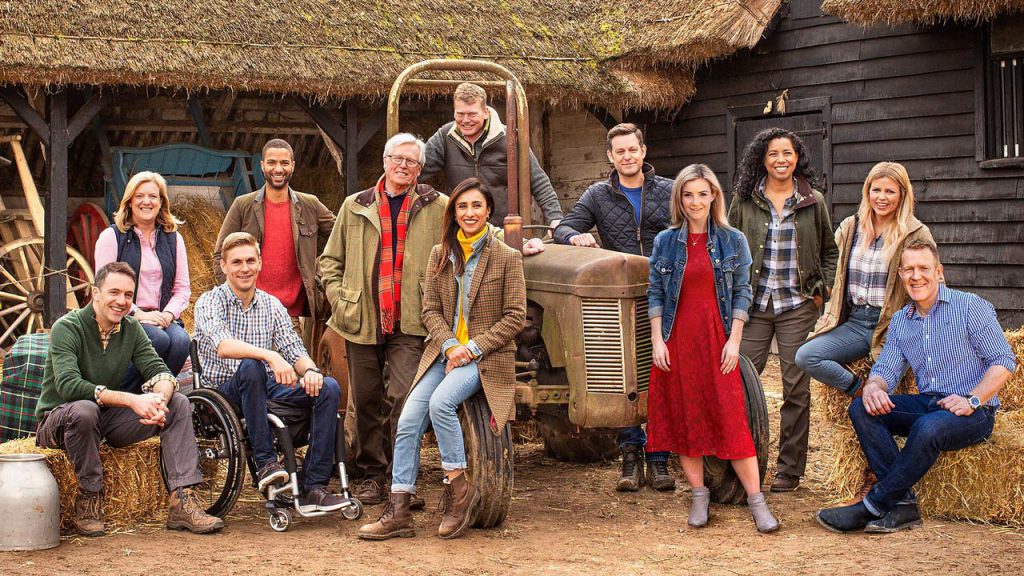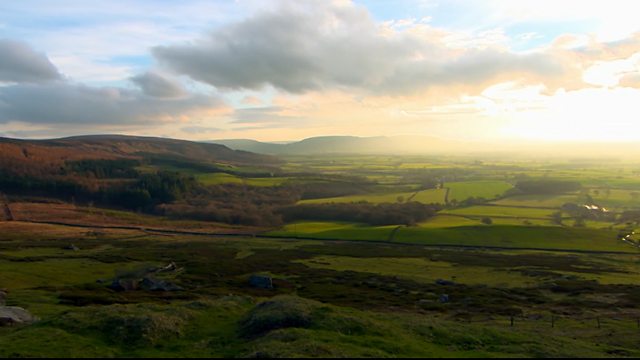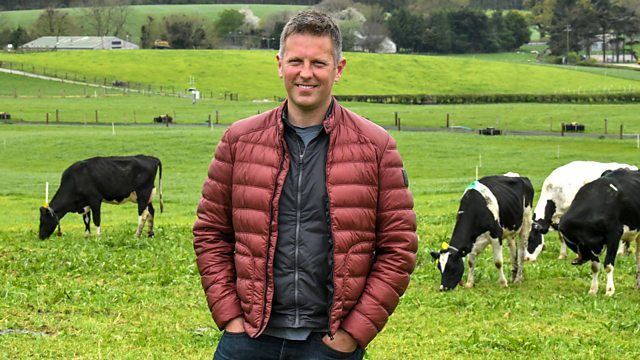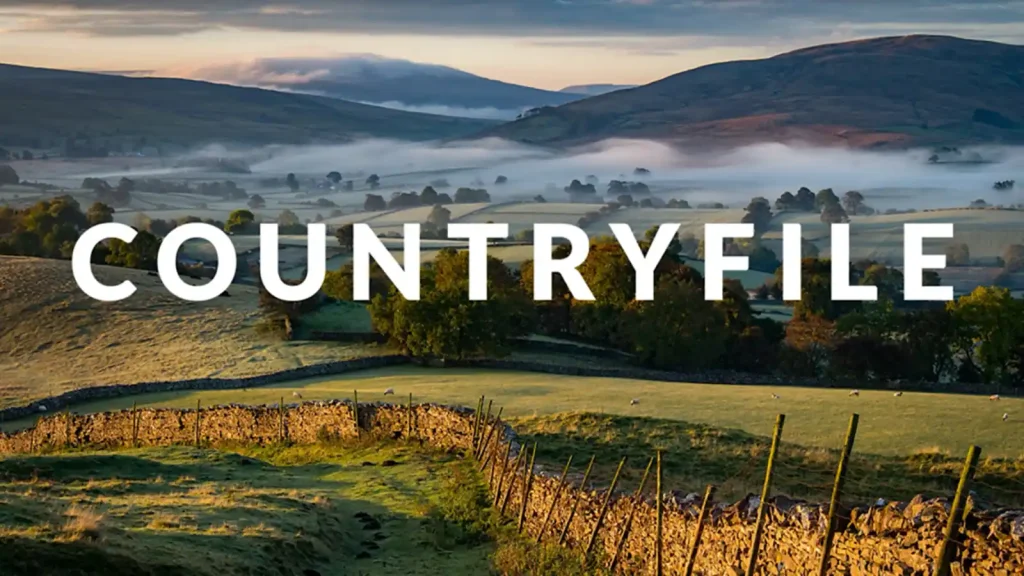
Countryfile – Conserving the Cotswolds brings John Craven and Vick Hope to one of Britain’s most recognisable rural landscapes, where honey-coloured villages, ancient limestone hills and a living farming culture are being defended by the people who know the region best. As the Cotswolds marks 60 years as a designated National Landscape, one question drives every encounter: how do you protect somewhere this beautiful without freezing it in time? The answer runs through quarrymen, roofers, stone wallers, biodiversity surveyors, rare-breed farmers, cheesemakers and lime-render specialists, each holding a thread of the same fragile inheritance.
This is the largest National Landscape in the UK, stretching from Bath, North-East Somerset and Wiltshire in the south, up through Gloucestershire and Oxfordshire, and reaching Warwickshire and Worcestershire at its northern edge. Across 810 square miles of rolling hills, limestone grassland and endless pasture, conservation is not a single project but a constant negotiation between heritage and modern pressure, between mass tourism and rural authenticity, between what the land has always done and what it must do next.
What emerges is a place held together by skill, patience and people who refuse to let tradition slip away. Conserving the Cotswolds means quarrying stone 170 million years old, planting reeds by hand to bring back breeding birds, shearing rare sheep whose wool once built whole villages, and rendering walls with a method five centuries old. Beauty here is maintained, deliberately, one stone and one season at a time.
Picture a Cotswold home and you conjure honey-coloured stone, tall chimneys and a steep, characterful roof. Those roofs are made from a local stone that is genuinely rare, and the skills to produce and lay it are rarer still. Maintaining the look that defines the region now rests on a dwindling number of people, and that scarcity sits at the heart of conserving the Cotswolds.
James Maxwell has spent four years producing Cotswold roof tiles at one of only two quarries still making the stone in meaningful quantity. Crucially, this is not slate. Slate is metamorphic; Cotswold stone is oolitic limestone, a sedimentary rock from the Jurassic period. The tiles are between 160 and 170 million years old, dense, heavy and remarkably resilient, with each pallet weighing 400 to 600 kilos. The stone is non-porous, standing up to water, frost and weather, which is exactly why it makes such a long-lived roof tile.
The reason the Cotswolds looks the way it does is partly an accident of history. In the Roman era the region lacked the transport to move stone far, so building material stayed local. Today the quarry yields more than 75 tonnes of tiles a year from seams buried up to four metres down. Excavators handle the largest slabs now, but the older method survives through workers like David, who has spent over 20 years freeing stone by hand with a pickaxe, reading the seam by sound and twisting the blade until the rock gives with a shudder and a pop. Lifting a fresh slab, James points out that no human has touched its inner face since the dinosaurs roamed.
After drying for a week, the tiles are cut to size, bevelled to shed rainwater and resist frost, then drilled. Twenty-seven miles away, the only other quarry supplies roofer Dave Legg, one of the few specialists keeping stone roofing alive. These tiles are four or five times heavier than ordinary ones, laid in diminishing sizes from 24 inches at the base to six inches at the ridge, so a job that takes two days in standard tile runs closer to nine in stone. Strip away that heritage, the roofers warn, and you lose the unique Cotswold look entirely.
Countryfile – Conserving the Cotswolds
How Exhausted Quarries Became the Thriving Cotswold Lakes
The Cotswolds is not only hills and villages. Its waterways and wetlands provide habitat for an abundance of wildlife, and the Cotswold Lakes, on the borders of Gloucestershire and Wiltshire, hold one of the finest collections of bird species anywhere in the country. Yet this sanctuary did not begin as a nature reserve at all, a fact central to understanding nature and wildlife recovery across the region.
All 180 lakes here exist because of quarrying on an industrial scale. Two million tonnes of rock, sand and gravel are extracted every year, and once the pits are exhausted, they are left to revert to nature. Conservation and estates director Ben Welbourn leads that work with a team of volunteers he calls indispensable. When the site was acquired it was bare earth, with no vegetation whatsoever.
The recovery was built deliberately. Some 15 to 16 years ago the team planted reeds by hand to attract bittern, which are now breeding on the reserve, giving nature a kick start rather than simply waiting. One grid square monitored here, under the British Trust for Ornithology’s Breeding Bird Survey, records more breeding bird species than anywhere else in the country.
The wetlands also draw reed warbler and Cetti’s warbler alongside larger water birds such as great white egret, which breed here, grey heron and little egret. Otters and water voles are well established, and beavers, already close by, are expected to colonise the Cotswold Lakes within a few years. The water itself matters: the lakes are fed entirely by groundwater filtering through sand and gravel laid down by the ancient River Thames, never pumped or piped in, leaving it beautifully clean.
Dragonflies and Damselflies as a Living Measure of Wetland Health
Monitoring the health of this country life sanctuary goes well beyond bird counts. Because the ecosystem depends on oxygen-rich water and a steady supply of aquatic insects, dragonflies and damselflies become a key indicator of whether the wetland is genuinely thriving. Biodiversity field officer Kim Milsom keeps a close watch on their numbers, and the surveying is as much art as science.
With many thousands of common blue damselflies on the wing, exact counts are impossible, so surveyors work in sensible estimates. In a normal year the reserve records around 25 species, some emerging early and others later. Most of a dragonfly’s life is hidden: eggs hatch underwater, and the nymphs live submerged for a year or two before climbing a reed stem and hatching out on dry land. The few weeks we see them flying are only a brief flourish at the end.
The variety on show is striking. The banded demoiselle, one of the larger damselflies, carries a metallic blue body in males and a green sheen in females, while four-spotted chasers dart past, named for their wing markings and built for chasing prey. The simplest field test still holds: dragonflies are larger and hold their wings out like an aeroplane, while damselflies fold theirs above the back. Everything here, the surveyors confirm, seems to be doing well.
The Tourism Pressure Threatening the Authentic Cotswolds
The Cotswolds is undeniably beautiful, but that beauty has become a burden. Easy access from major cities, frequent appearances on screen and the pull of social media mean the area now attracts more visitors than its infrastructure can comfortably support. Around 35 million visitors arrive each year, most by road, and they tend to congregate in just a handful of honeypot villages. Managing that imbalance is now central to country life and conservation in the region.
Retired teacher Peter Hill offers one practical response, leading sustainable cycling tours that steer visitors into quieter corners. Drawing on 40 years of riding the back roads, he links interesting places while avoiding the spots on everyone else’s itinerary. He argues the tourist trail has become overcommercialised in places, and that getting off it reveals somewhere nicer while feeding money back into the local economy. Electric bikes widen that opportunity, making the big hills accessible without spoiling them.
His point is not that tourists should stay away; the welcome here is genuine. It is that people need to spread themselves out, and that those bringing visitors in should think carefully about where the best, least-pressured places actually are. His deeper message is about authenticity. The real Cotswolds is a working, farming landscape built on the people who live in its many tiny villages, the ones who hold fetes, share the same pub and use the same cafes. Protecting that character, resisting too many big attractions and spreading the load, is how he believes the region keeps its soul intact.
Rare Cotswold Sheep and the Wool That Built the Hills
Rolling hills, limestone grassland and endless pasture have been crafted by agriculture over millennia, and every generation of farmer has left a mark, from ancient burial mounds to the medieval wool trade. Arrowheads picked up in the fields can date back to the Neolithic or earlier, perhaps 5,000 to 8,000 years, evidence of people working this same land to survive, much as farmers do today. The very name records that past: a sheep “cot” is an enclosure, and a “wold” is a rolling hill.
Many traditional Cotswold breeds that shaped the hills are now considered rare, yet some still have a working role. The Cotswold sheep, grazed here for centuries, are thought to have been introduced by the Romans, who brought large woolly animals to feed and clothe their legions alongside Britain’s smaller native short-tailed sheep such as the North Ronaldsay and Shetland. It was wool that made these sheep famous. During the medieval period that wool was immensely valuable, and the trade so large that the wealth of wool barons and farmers paid for the manor houses, wool churches and villages across the hills.
At shearing time the value is still visible. Cotswolds are big and tricky to shear, carrying wool down their legs and over their heads, but they produce a beautiful fleece. A mature ewe’s fleece can weigh five to ten kilos, far heavier than the 2 to 2.5 kilos of most commercial breeds, and what farmers prize is the long staple, silky and fine rather than coarse.
The farm’s ram, Fandango, makes the point at scale: weighing over 180 kilos, he yields perhaps 15 kilos of wool and keeps a traditional top knot so breeders can recognise him as a genuine Cotswold. Wool regrows every year and is fully biodegradable, and for this farmer a stronger market would mean returning the land to what it does best, growing grass and grazing sheep.
Reviving Gloucester Cattle and Medieval Farming Heritage
The sheep are not the only survivors of the Cotswolds’ medieval heyday. The same fields carry ridge and furrow, the undulating corrugations where crops grew on the ridges while water drained through the furrows, a signature of the era when Cotswold sheep were booming. Alongside that landscape memory runs another rare breed with deep local roots: the Gloucester, the county’s own cattle, a thread of agricultural life stretching back centuries.
Gloucester cattle have grazed these parts since at least the 13th century. In medieval times they were almost tri-purpose, pulling the plough while producing milk and beef. Their decline came in the late 1960s and early 1970s, when imported continental breeds outclassed them for beef and dairy cattle like the Friesian and Holstein outpaced them for milk. Caught between the two, the Gloucester slipped toward obscurity, but the breed is becoming more popular again.
That revival is not nostalgia. These rare breeds are described not as antiques on four legs but as animals with a genuine purpose in modern farming, producing good-quality beef and milk off fairly rough pasture for very low input. Keeping centuries-old Cotswold sheep and Gloucester cattle alongside advanced buildings and machinery, the farmer reflects, blends a heritage a medieval farmer would still recognise with a modern operation they never could. The guiding ambition is simple stewardship: to leave the land and the animals in a better place than he found them.
Dry Stone Walls and the Volunteers Keeping an Ancient Skill Alive
Dry stone walls are among the most distinctive features in the Cotswolds, with their symmetrical bases and higgledy-piggledy coping stones, and they stretch for well over 3,500 miles across this National Landscape. Most date from the 18th and 19th centuries, when open land was enclosed for agriculture, creating the patchwork of fields that defines the countryside today. Maintaining them is one of the most demanding strands of conserving the Cotswolds.
On top of Leckhampton Hill, beside the Cotswold Way National Trail, a volunteer group rebuilds a section in the traditional local style, led by 91-year-old veteran waller John Heathcott. Foundation stones are set 60 centimetres apart, then built up by the old maxim of two stones on one, one stone on two. Every stone slopes slightly outward so water drains off, vital given that Cotswold limestone readily absorbs water. Built well, the wall should stand for a hundred years.
The walls are also engineered to breathe. Smaller stones packed into the centre leave gaps so rainwater drains straight down and out, while larger angled stones shed water from the surface. The finishing flourish is the line of coping stones on top, known locally as cappers, toppers, or cock and hen, the taller and shorter stones alternating to lock the wall down so the courses beneath cannot move.
Asked whether the technique might be improved, John is blunt: the method was perfected in the Iron Age and has not been bettered since. What keeps it alive is people. He and his crew are Cotswold Volunteer Wardens, a 400-strong group helping to conserve the National Landscape, with members learning the craft as they go.
The Honey-Coloured Stone Myth and the 500-Year-Old Art of Harling
The honey-coloured stone building is the defining Cotswold image, yet it has not always looked that way, and a change in architectural fashion may have inadvertently put some buildings at risk. Heritage consultant Nicola Dyer reveals how different these villages once appeared. Before the mid-19th century, a visitor would have seen something quite different, with late-19th century postcards showing buildings finished in pale lime, looking nothing like the bare honey stone expected today.
Most Cotswold cottages were built not from finely dressed stone but from cheaper rubble stone, and from around the mid-16th century the majority carried a lime render that made them watertight and warmer. Those finishes largely vanished from the mid-19th century, lost to fashion and economics that left them unmaintained, while a new interest in archaeology encouraged owners to strip buildings back to bare stone. The legend of honey-coloured stone, Nicola points out, is therefore surprisingly recent, and the render was never purely decorative.
That lesson is now being relearned. At an Elizabethan manor house in Doughton, architect James Mackintosh is reinstating render that had failed, in places pulling away by four inches and patched with damaging cement. Stripped of its protective skin, the stone beneath had become frail and friable. Render, he explains, is the building’s raincoat: it protects the stone and mortar, keeps water out and lets the structure last. The repair falls to restorer Francis Stacey, who works in a 500-year-old method called harling.
Locally sourced sands and lime are bound with horsehair so the render does not crack, then thrown onto the wall with a sharp, explosive wrist flick, almost like darts, so it adheres. The rough finish is left to weather before limewashing. Above all, harling is passed from one tradesperson to the next; if the skill is lost, the trade dies, and with it the ability to preserve these buildings.
Regenerative Farming and the Future of Cotswold Soil
Farming is a key part of the Cotswold identity, making up 86% of the landscape, so caring for that land and adapting to changing demands is vital to its future. At Manor Dairy Farm in Chedworth, fourth-generation farmer Seb Clarke has turned away from chemically enriched pastures toward an age-old approach to conserving his soil, a clear example of agricultural life evolving to meet new pressures.
The challenge is written into the ground. Cotswold soil, known locally as brash, is shallow and full of stones, often only 15 to 30 centimetres deep, and poor at retaining moisture. Seb’s response is a herbal ley, a pasture sown with grasses, herbs and legumes such as clover, each with root structures that build the soil while feeding his animals. His key weapon against drought is chicory, whose taproot can reach a metre down, well below the thin topsoil, drawing up water and nutrients for the cows and the soil biology around the roots.
Regenerative farming, he stresses, is not limited to organic farms; many of its practices can be adopted by anyone to stop their methods degrading the soil. The results show in the product, which Seb believes is some of the best milk he has tasted, richer in minerals drawn up through the plants. With a dairy on this land for over a century, healthier pasture is what should keep it going for the next hundred years. That milk does not leave as a drink: much of his organic production, around 1,700 litres in a single morning, goes to the on-site King Stone Dairy, a direct link between regenerative soil and a finished, premium product.
New Cotswold Cheeses Rooted in Local Names and French Tradition
The Cotswolds is well known for cheese-making, and double Gloucester remains its most famous variety, tied to the Cooper’s Hill cheese-rolling ten miles away. King Stone Dairy, however, does not make it. Instead, master cheesemaker David Jowett and his team produce six unique cheeses inspired by French classics but made entirely on the farm using its own milk. He moved his whole operation here specifically for access to that milk, a modern chapter in a long tradition of country life and agricultural life in the region.
The cheeses range from three-month-aged hard varieties to younger soft styles, and turning them is a vital part of the process, helping each batch drain as it is turned three times across an afternoon. Many carry deeply local names. The 600 little Rollrights are named after the famous ancient Rollright Stones some 20 miles away, part of a deliberate habit of rooting each cheese in its place.
The dairy’s standout is the Ashcombe, named after a part of the farm and crowned supreme champion at the British Cheese Awards. It holds a unique claim to fame as the only cheese in the UK to include a layer of wood ash, an idea borrowed from a French cheese with the same striking line. The ash is purely aesthetic, adding no real taste, but it gives the cheese its signature look, a vivid black line running through a terracotta rind built up over three months of turning and brine-washing. The maturing room holds more than 1,500 cheeses, and the finished result needs only crackers and a glass of something to complete it.
Taken together, the people of this region are doing their bit to keep a beautiful place thriving. From the quarry to the cheese room, from hand-planted reeds to hand-built walls, conserving the Cotswolds is the work of locals who treat heritage as a responsibility rather than a backdrop. Sixty years after its designation as a National Landscape, the region’s future rests not on its postcard image but on the skill, care and stubborn dedication of the people keeping it alive, and by every measure on show, the Cotswolds are in very good hands.
FAQ Countryfile – Conserving the Cotswolds
Q: Why is Cotswold roofing stone considered so rare?
A: Only two quarries still produce Cotswold stone tiles in any real quantity. The stone is oolitic limestone from the Jurassic period, dating back 160 to 170 million years. It forms in seams up to four metres underground, and freeing it demands slow, skilled labour, which keeps supply limited and the look genuinely scarce.
Q: Is Cotswold roof tile the same as slate?
A: No. Slate is a metamorphic rock, while Cotswold tile is sedimentary oolitic limestone. The limestone is dense, heavy and non-porous, so it resists water, frost and weathering exceptionally well. Each pallet weighs between 400 and 600 kilos, making the tiles far heavier and more durable than ordinary roofing materials.
Q: How did the Cotswold Lakes nature reserve form?
A: All 180 lakes exist because of industrial-scale quarrying. Two million tonnes of rock, sand and gravel are extracted every year, and once each pit is exhausted, it is left to revert to nature. The site began as bare earth with no vegetation before conservationists rebuilt it into one of Britain’s finest bird habitats.
Q: Why were reeds planted by hand at the Cotswold Lakes?
A: The reeds were planted specifically to attract bittern, a shy wetland bird that now breeds on the reserve. Targeting a species this way gives nature a deliberate kick start rather than waiting for slow natural recovery. Planted 15 to 16 years ago, those reeds turned a derelict gravel pit into thriving habitat.
Q: How do dragonflies indicate the health of a wetland?
A: Dragonflies and damselflies need oxygen-rich water and plenty of aquatic insects, so strong numbers signal a healthy ecosystem. Their nymphs live underwater for a year or two before hatching on dry land. The Cotswold Lakes record around 25 species in a normal year, confirming the water quality is excellent.
Q: What is the main challenge facing Cotswold tourism?
A: Around 35 million visitors arrive each year, most by road, and they cluster in just a handful of honeypot villages. This overwhelms local infrastructure and risks eroding the area’s authenticity. The solution favoured by guides is spreading visitors across quieter corners, supporting the local economy while protecting the working, farming character of the landscape.
Q: Why was Cotswold sheep wool so valuable historically?
A: Cotswold wool was prized for its long, silky, fine staple, unlike the coarse wool used for carpets. During the medieval period this wool funded an enormous trade. The wealth generated paid for the manor houses, wool churches and villages still scattered across the hills, directly shaping the region’s famous architecture.
Q: Why are rare Gloucester cattle becoming popular again?
A: Gloucester cattle nearly disappeared when continental beef breeds and high-yield dairy cows outclassed them in the late 1960s and 1970s. They are returning because they produce quality beef and milk off rough pasture with very low input. That efficiency gives a premium product and a genuine role on modern, sustainable farms.
Q: Were Cotswold villages always honey-coloured stone?
A: No, and the idea is surprisingly recent. Before the mid-19th century, most cottages were built from cheaper rubble stone and covered in pale lime render to keep them watertight and warm. Those finishes vanished through fashion and economics, exposing the bare stone that visitors now wrongly assume was always the norm.
Q: What is harling and why does it protect old buildings?
A: Harling is a 500-year-old method of applying lime render by throwing it onto the wall with a sharp wrist flick so it adheres. Bound with horsehair to prevent cracking, it acts as the building’s raincoat, shielding stone and mortar from water. Without it, exposed stonework becomes frail and friable over time.