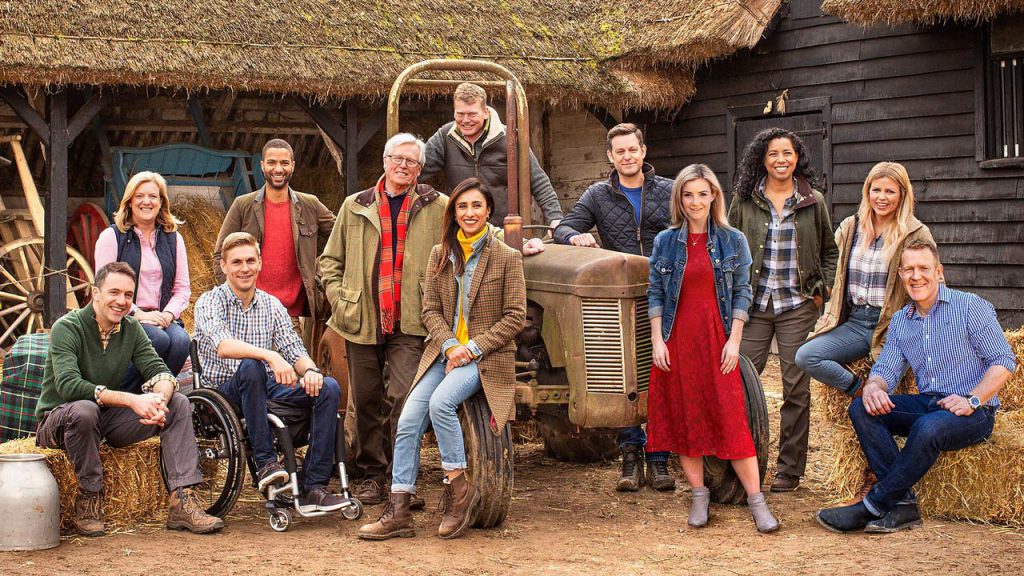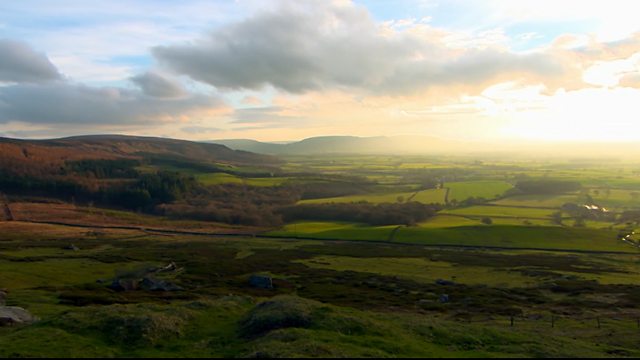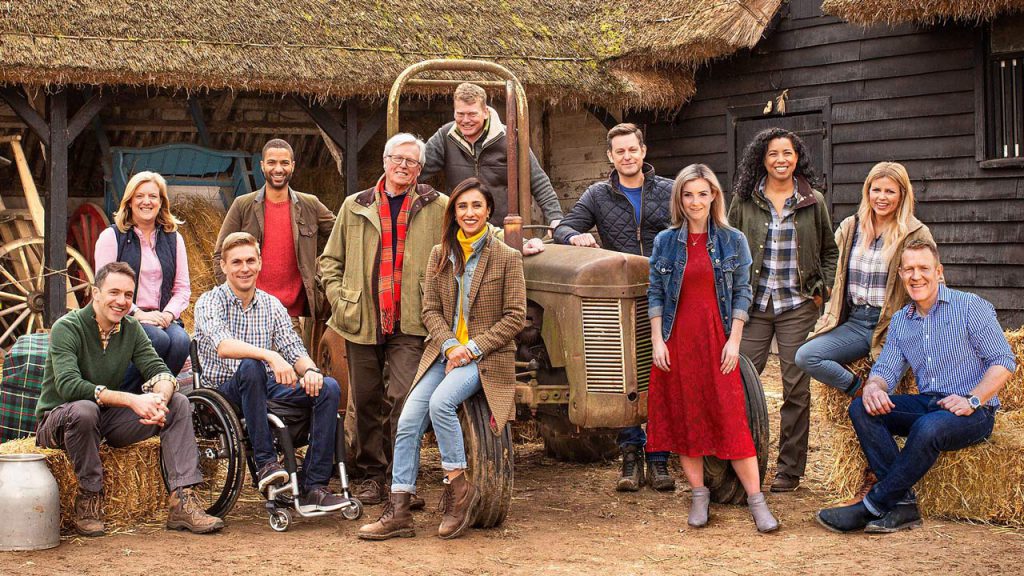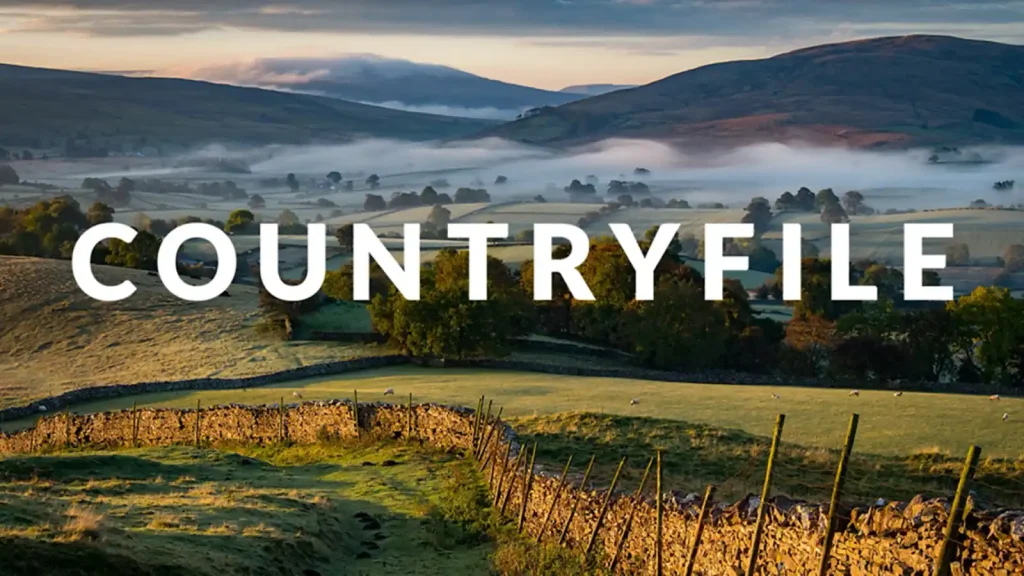
Countryfile – Custodians of the Peaks opens with a landscape that looks eternal but depends entirely on human hands. Across more than 550 square miles of moorland, gritstone edges and patchwork valleys, the UK’s first national park draws around 13 million visitors a year, yet it’s tended day after day by a surprisingly small cast of rangers, volunteers, scientists and farmers. John Craven and Charlotte Smith spent a week meeting the people who keep this place going, discovering just how much quiet labour lies behind every view.
The timing matters. Spring here follows one of the wettest winters on record, and visitor numbers are already beginning to soar with the longer days. That combination of pressure and possibility shapes everything the teams do, from repairing stiles for lambing ewes to fitting out accessible trails so more people can experience wildlife and country life for themselves. Countryfile – Custodians of the Peaks catches the national park at exactly the moment when the work is most visible.
Across the episode, the programme explores how rangers cover an impossibly large area with a tiny team, how volunteers give years of their lives to monument monitoring and dry-stone walling, and how science is being used to track the park’s most elusive residents. It also visits farms that have stopped going it alone, a campaigner rewriting who gets to reach wild places, and the head ranger whose budget has halved in a decade. Countryfile – Custodians of the Peaks treats all of these threads as parts of a single, interdependent system.
The background laid out on screen is important. The Peak District was designated 75 years ago as Britain’s first national park, and it has been carefully protected, restored and maintained ever since so that agricultural life and wildlife can thrive alongside the public who come to walk, cycle and camp. The landscape looks wild, but almost nothing about it is left to chance. Every drystone wall, gate and heather patch is the product of someone’s decision.
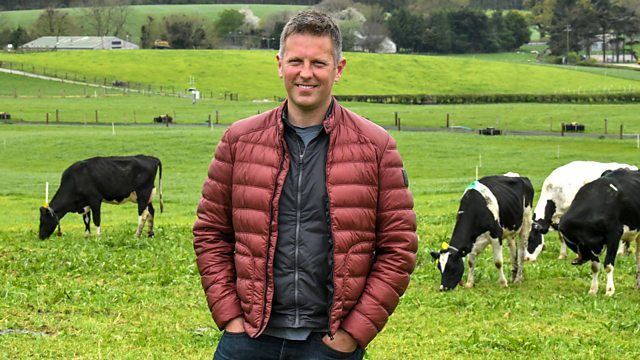
That tension between wilderness and management sets the tone for what follows. John takes up a temporary ranger post, Charlotte joins a monument survey and later hits a bike trail designed for all abilities, and Adam Henson heads to the uplands to meet farmers who’ve built a partnership out of a rare breed and a shared faith in slower, more sustainable methods.
What emerges is a portrait of country life that is anything but sleepy. The park is a working environment with real problems: wildfires sparked by barbecues, litter accumulating on viewpoints, funding in retreat, species in silent decline. Yet nearly everyone on screen speaks about the place with something close to devotion.
The rhythm of the programme moves between the sweeping and the small. One minute the camera tracks a drone surveying a Norman castle, the next it lingers on a single white mountain hare sitting in the lee of a hill hundreds of metres away. Both scales, the episode suggests, are necessary if this landscape is to survive the next 75 years.
Countryfile – Custodians of the Peaks
Life as a Ranger in the Peak District National Park
John begins the day with area team leader Hayden Bridgeman, who trades the expected 4×4 for an electric vehicle as the park moves toward lower emissions. The kit in the back tells its own story: personal protective equipment, high-vis, coupler tools and litter-pickers, ready for whatever the day throws up. Hayden, who arrived a few months ago from the New Forest, sets the tone immediately by describing a job that refuses to be routine.
There are only ten area rangers across the entire park, fewer than there used to be, and between them they’re responsible for informing and protecting the countryside for roughly 13 million visitors. The ratio is stark, and Hayden admits the pressure is real. The most immediate threat she names is barbecues, which in dry weather can ignite wildfires on the moors. When hikers get into trouble in the hills, rangers act as the convenor, calling Mountain Rescue and 999 and coordinating a response until help arrives.
An average day, she says, simply doesn’t exist. One hour you might be hanging a gate, the next you’re litter-picking, the next you’re on the radio about a fire. Rangers describe themselves as the eyes and ears of national parks, often the first on the scene of any incident. Even a minor moment on a narrow country lane, where Hayden has to reverse a good distance to let traffic through, becomes a reminder that in this job even the commute is part of the work.
Volunteers at the Heart of the Peak District National Park
The first practical stop is a traditional squeeze stile where Hayden’s colleague Julia is fitting a wicket gate. The stile is a Peak District classic, built from stone rather than wood because stone is what this land provides, and narrow enough to keep sheep in. Unfortunately, it isn’t narrow enough to stop lambs from squeezing through in lambing season. Historically farmers would jam a stile or piece of wood across the gap, but wicket gates make things easier for walkers without losing the lambs.
With more than 1,600 miles of paths and a dizzying number of dry-stone walls criss-crossing the area, the rangers lean heavily on volunteers like Julian and Ian, who help keep access open to everyone. Julian describes his route into the work simply: a lovely day, out in the countryside, doing something useful. He’s two and a half years in, a relative newcomer next to volunteers with twenty years of experience, and he’s learning dry-stone walling alongside what the team call engagement work, helping visitors enjoy the national park at weekends.
This is the first hint of a recurring pattern. Across Countryfile – Custodians of the Peaks, the line between paid staff and volunteer is deliberately soft. The park couldn’t function without the unpaid workforce, and the volunteers, in turn, get structure, purpose and an intense connection to the countryside that many describe as almost spiritual.
Protecting Ancient Monuments in the Peak District National Park
Charlotte then joins Catherine Parker Heath at Pilsbury Castle, one of 473 historic monuments scattered through the Peaks. Built in the 1080s as a Norman motte-and-bailey fortress with the unusual feature of two baileys, it once stood guard over its valley. Today, as Catherine cheerfully admits when Charlotte asks where the castle is, it’s mostly a series of lumps and bumps in a field. Yet it holds scheduled monument status, which puts it among the creme de la creme of archaeological sites in the country.
Volunteers Merrick and Freya are trialling a new app-based monitoring tool alongside support officer Karen, replacing a paper system and making it easier to track things like collapse of the soil surface and sheep scrapes, where sheep burrow into the hillside for wind shelter and damage the earthworks. By repeating surveys year after year, the team can see whether a feature is deteriorating and decide when to intervene.
Not all of the conservation work happens at ground level. Experienced volunteers Richard and Angela deploy a drone, taking hundreds of images that are stitched together via photogrammetry into a 3D model of the castle. The model allows sites to be compared with themselves, three months ago or a year ago, to spot erosion and plan repairs. Richard, a photographer for more than 60 years who studied archaeology as a mature student, explains that the alternative to this kind of recording is destruction. Asked what keeps them volunteering, the pair laugh and point to the prospect of daytime television. That kind of humour, threaded through the episode, is part of what holds the community together.
Farmers Working Together in the Peak District
Adam’s strand of Countryfile – Custodians of the Peaks heads up into a gale on the tops, where small farms everywhere are squeezed by rising costs and tight margins. Going it alone is getting harder. Two farms from very different backgrounds have decided to stop trying.
Sarah and James Frith, both former ecologists, run 30 Belted Galloway cattle on a mostly tenanted 24-hectare farm. The herd began with two cows, a birthday present James gave Sarah, presented on the morning with two humbug boiled sweets drawn with faces to stand in for the real animals. They chose Belties because they wanted to support rare breeds and because the hardy cattle thrive in a spot so cold locals call it Moscow, with winds that seem to come straight from Siberia.
The breed’s famous white belt was selectively bred so farmers could count cattle from a distance on the hills, and their double coat, a dense insulating underlayer and longer shedding hairs, keeps the skin dry in the worst weather.
Their farm is certified organic, the cattle live entirely outdoors, and Adam watches them spreading seed-rich hay to keep pastures diverse. A small bale is thought to hold around 10,000 seeds, some still viable, and the meadows now support roughly 38 wildflowers and ten grass species. Sarah and James say the resulting beef is richer in Omega-3s, and the ecology pays off in other ways too. By late summer, swallows skim the fields at ankle height, feeding on abundant insects. For two people who used to advise other farmers, the chance to practise what they once preached is, as James puts it, humbling.
Three miles away as the crow flies, John and Helen Parsons run an 80-hectare farm that John inherited in decline. Raised on fast-growing continental beef breeds reliant on concentrated feed and intensive management, John found the inherited system unworkable. A decade ago he bought three in-calf heifers from James and Sarah and made the switch to Belted Galloways, a slow-growing beef breed his father initially thought was bonkers. The shift, John’s wife Helen says, wasn’t just about profit. Look at the bank account, she tells Adam, and you won’t see much. Look around and you see beautiful land, beautiful animals and good food in the fridge. It works.
Each farm runs independently without sharing profits, but they back each other up where it counts. James’s ecology background gives him the edge on paperwork, including the Sustainable Farming Incentive and Countryside Stewardship grants that funded 80% of a new cattle crush and enabled them to employ a full-time worker, Josh. John brings a farmer’s eye, an ability to read cattle that got Sarah and James out of trouble time and again in the early days. Demand for their directly-sold beef already outstrips supply, and they’re open to other small producers joining on a bolt-on basis. Many hands, John says simply, make light work.
Tracking the Mountain Hare on the High Moors
Charlotte’s most demanding assignment takes her onto Bleaklow, one of the coldest places in England, with Dr Carlos Bedson. The Peak District is England’s last stronghold for the mountain hare, and Carlos first spotted them while fell running here more than 20 years ago. For over a decade he has been tracking numbers across 26 remote sites.
Mountain hares aren’t native in the long view. They lived in England 6,000 years ago during the Ice Age, but followed the retreating ice north to Scotland. In the 1870s sporting landowners, wanting a touch of Scotland on their moors, captured hares, crated them onto trains and released them on the Peaks, in what Carlos calls possibly the world’s first mammal translocation reintroduction.
His method is precise. The survey demands walking an exact one-kilometre-squared block of habitat in a straight line, following GPS grid lines east through bog, marsh and heather, stopping every 200 metres to scan with binoculars. For each hare spotted, Carlos records the distance using a laser rangefinder and the angle from north, then uses trigonometry at home to plot the exact location on a map. Repeated year on year, the same squares yield comparable numbers.
The numbers are not good. Since Carlos began, his average sightings have dropped from 25 hares per 10km to just 13. On Bleaklow the population has fallen by roughly 80% over the past ten years. The reasons are multiple: likely disease, possibly gut parasites, possibly genetic bottlenecks from a small founder population in the 1870s, and increasingly climate change.
Because snow now rarely falls, the hares’ white winter coats stand out against a brown background and predators pick them off, and high-summer wildfires are another pressure. On the day, after hours of careful tracking through sphagnum bogs, Charlotte spots one white hare sitting tucked out of the wind in a distant gulley. The moment is a treat, Carlos says, and a rare one.
Monitoring Wildlife on the Eastern Moors
John’s next stop is the Eastern Moors, a patchwork of heather, woodland and open ground where site manager Danny Udall leads a team of 105 volunteers. Today Danny is out on owl patrol with volunteer Tommo, retrieving one of a series of acoustic recording units deployed in the trees. These devices run constantly, capturing bird sound and allowing computers to sort through which species are present and how often.
The target species are mostly owls: tawny, long-eared and short-eared, along with woodland specialists like lesser redpoll and nightjar that benefit from more trees in the uplands. Ranger Julie, who has worked here for six years and knows the woods by sound alone, reads the resulting sonograms, showing how a tawny owl’s call looks different from a long-eared owl’s or an eagle owl’s. The data guides restoration, helping managers track how species respond as dense conifer plantations are converted back to open heath and native woodland.
A parallel strand of the work has volunteers lifting cover objects to survey reptiles and amphibians. Adders haven’t been recorded in one target area for around a decade. One volunteer describes her first-ever adder sighting as amazing and another site where lifting any cover object revealed five, ten, fifteen slowworms, like an Easter egg hunt. On a good sunny day the team have counted around 30 common lizards on a single wall. A record of nothing, one volunteer notes, is still a record, and without this volunteer effort little would be known about how common species are faring.
The Enduring Spirit of Peak District Volunteers
Back with Hayden, John meets the wider network: 180 volunteer rangers, from 11-to-16-year-old junior rangers to 88-year-old Margaret, who has spent the last three decades looking after the Peaks. Asked why she loves the place so much, Margaret replies simply that it is part of her soul, what makes her who she is. If she didn’t get out into the countryside, she wouldn’t feel herself. In thirty years, she says, the Peaks haven’t changed much, but the visitors have. Some don’t really know how to behave and leave a lot of litter, and she and her fellow volunteers gently help them along, picking up rubbish because, as she puts it, you can’t not.
Head ranger Rob Kenning puts Margaret’s work in its wider context. Ten area rangers, 180 volunteer rangers and a couple of thousand more people volunteering in other ways make up the park’s true workforce, a quality-not-quantity operation under real strain. Restructures over the past decade mean the park has, in real terms, about half the money it had ten years ago, even as visitor numbers climb and environmental challenges grow. Rob is not untroubled, but he’s hopeful. People who come here, he says, fall in love with the place, and that passion has to carry the work through the lean years.
Accessible Cycling in the Peak District National Park
Charlotte’s final strand returns to the question of who the countryside is really for. For much of the park’s 75-year history, large parts have effectively been out of bounds for visitors with disabilities. At Parsley Hay, carer and accessibility campaigner Gillian Scotford has helped change that. Two of Gillian’s three children were born with severe disabilities; Thomas, who had a catastrophic brain injury, died in 2017 aged 21, and Sam, now 27, had a stroke during pregnancy. A former mountain-climber, Gillian found family days out required military-operation planning, and hit wall after wall of poor surfaces, stiles, signage and inaccessible cafes. Her mantra became a brew, a view and a loo.
Changes over the last decade include a 30-mile network of wheelchair-friendly paths known as Miles Without Stiles, accessible cycle hire, and a new Changing Places hoisted toilet at Parsley Hay with a height-adjustable sink, a changing table-bed with shower and a ceiling hoist to allow lifting with dignity and safety. Without such facilities, Gillian notes, many carers have been forced to lay loved ones on public toilet floors, a horrendous reality the new installations directly address.
Charlotte joins today’s adventurers, Mandy and Gary Flint, with Gary trialling an all-terrain Tramper scooter for the first time. Gary, a tetraplegic who fell in love with sailing after retiring ten years ago, explains that the freedom of such activities puts him on parity with able-bodied people. People with limited options, he says, often spend a lot of their time indoors and can’t experience something like this, which makes days like this life-changing. Accessibility has improved, Mandy adds, because awareness has grown and websites now allow families to do their due diligence before visiting, so that outings actually work.
Over a coffee on a bench, the three of them toast Gillian’s formula. They have the view. They have the brew. They have the loo. Asked if he’ll come back, Gary answers 100%.
By the end of the day, the separate strands of Countryfile – Custodians of the Peaks have started to feel like a single argument. A ranger team of ten cannot look after 550 square miles alone, so volunteers keep the walls standing and the monuments surveyed. Small upland farms cannot survive in isolation, so two of them pool strengths and open the door to others. A species as elusive as the mountain hare cannot be protected without a decade of patient data, so one scientist walks the same grid lines year after year. And a national park cannot truly belong to everyone unless its paths, toilets and scooters reflect everyone who wants to use them.
What ties it all together is something harder to measure than a budget line. Margaret’s soul is in the place. Gillian’s hiking boots saved her. Sarah and James built a herd from two boiled sweets. John Parsons cares more about the land than the bank balance. Carlos keeps walking even on the days he counts no hares at all. As Rob Kenning says, that passion may be what rides the park through the next difficult stretch.
Countryfile – Custodians of the Peaks leaves its audience with a clearer view of why places like this are called custodial landscapes. Nature and wildlife do much of the visible work, but agricultural life, volunteer effort and scientific care make up the invisible scaffolding, and without any one of them the picture would not hold. John managed not to break anything, Charlotte saw her first mountain hare without crashing a bike, and squeeze stiles were squeezed through, in style. The real story, though, belongs to the people who will be out on the moors tomorrow, and the day after, doing the same quiet work all over again.
FAQ Countryfile – Custodians of the Peaks
Q: What is Countryfile – Custodians of the Peaks about?
A: This Countryfile 2026 episode follows John Craven and Charlotte Smith across the Peak District National Park. Additionally, Adam Henson visits upland farmers. The programme explores how rangers, volunteers, scientists and farmers protect 550 square miles of countryside, wildlife and agricultural life.
Q: Why is the Peak District National Park historically significant?
A: The Peak District was designated 75 years ago as the UK’s first national park. Furthermore, it has been carefully protected, restored and maintained ever since. Today, it welcomes roughly 13 million visitors annually who come for its stark beauty, nature and breathtaking views.
Q: How many rangers care for the Peak District landscape?
A: Only ten area rangers cover the entire park, fewer than in previous years. However, they work alongside 180 volunteer rangers and roughly 2,000 additional volunteers. Head ranger Rob Kenning describes the operation as a quality-not-quantity model under real financial strain.
Q: What threats do rangers face during busy countryfile seasons?
A: Team leader Hayden Bridgeman identifies barbecues as the most immediate threat because they spark wildfires. Additionally, rangers handle litter, damaged stiles and emergency coordination. When hikers get into trouble, rangers act as convenors, calling Mountain Rescue and 999 until help arrives.
Q: Why are squeeze stiles unique to country life here?
A: Squeeze stiles reflect the Peak District’s geology because stone was easier to source than wood. Therefore, farmers built narrow stone gateways to stop sheep escaping. However, lambs still squeeze through, so rangers now fit wicket gates to protect livestock without blocking walkers.
Q: How are volunteers protecting historic monuments on Countryfile 2026?
A: Volunteers monitor 473 scheduled monuments using new app-based surveys instead of paperwork. Furthermore, experienced volunteers Richard and Angela deploy drones at Pilsbury Castle, a 1080s Norman fortress. Photogrammetry stitches hundreds of images into detailed 3D models that track erosion over time.
Q: How does farmer collaboration strengthen upland agricultural life?
A: Two Peak District farms run Belted Galloway cattle independently but back each other up. Specifically, former ecologists Sarah and James Frith handle paperwork and grants. Meanwhile, John and Helen Parsons bring traditional farming knowledge. Consequently, their directly-sold beef demand already outstrips supply.
Q: Why are mountain hares declining across this wildlife stronghold?
A: Dr Carlos Bedson’s surveys show Bleaklow’s population has dropped roughly 80% in ten years. Moreover, sightings averaged 25 per 10km but now fall to 13. Contributing factors include disease, gut parasites, genetic bottlenecks and climate change eliminating protective winter snow cover.
Q: What wildlife monitoring happens on the Eastern Moors?
A: Site manager Danny Udall leads 105 volunteers gathering nature data year-round. Specifically, acoustic recording units capture owl activity continuously, including tawny, long-eared and short-eared species. Additionally, volunteers lift cover objects to survey adders, slowworms and common lizards across the moorland.
Q: How has accessibility improved in the Peak District recently?
A: Campaigner Gillian Scotford champions the mantra “a brew, a view and a loo.” Consequently, improvements include a 30-mile Miles Without Stiles network and accessible cycle hire. Furthermore, Parsley Hay now offers a Changing Places hoisted toilet alongside all-terrain Tramper scooters.