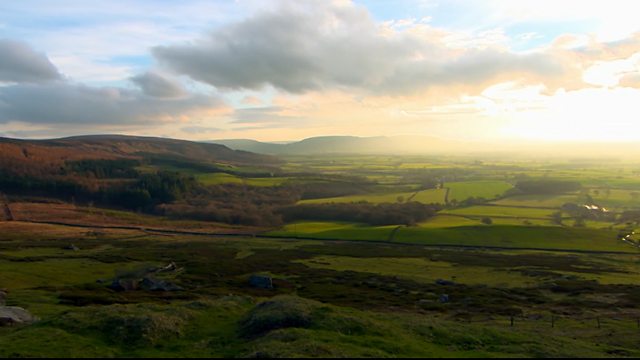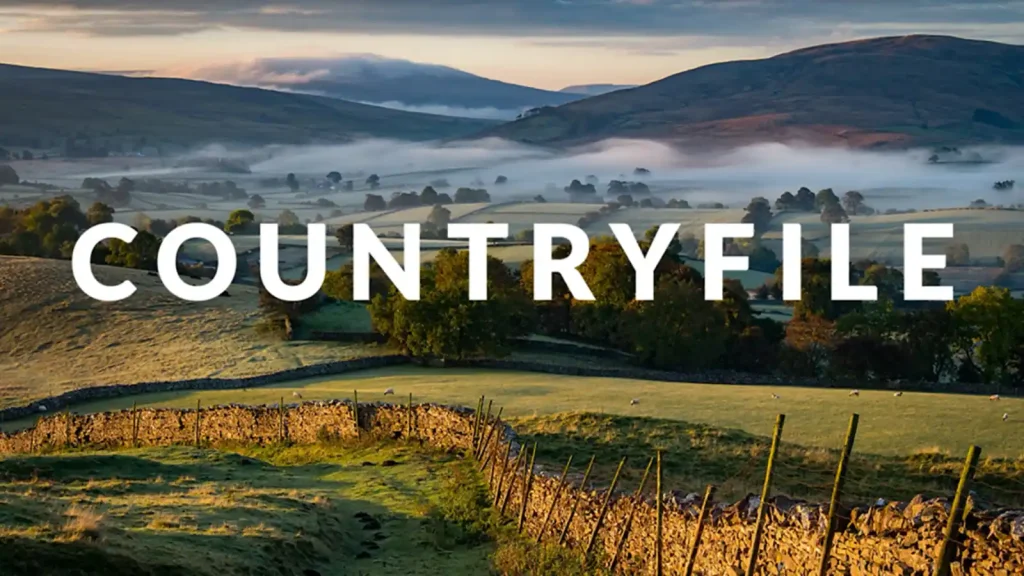
Countryfile – The National Forest – 10 Million Trees marks one of the most significant environmental milestones in recent British history, a moment that speaks volumes about what patient, determined effort can achieve in the landscape of the modern countryside. In the heart of the English Midlands, spanning parts of Derbyshire, Leicestershire, and Staffordshire, a forest has grown from almost nothing into something vast and living over the course of three decades. The planting of the ten-millionth tree represents not simply a number but a transformation so complete that the land itself has been remade.
The area now known as the National Forest was not always green. For much of the twentieth century, this was coal country, a working industrial landscape defined by deep mines, spoil heaps, and the particular kind of environmental exhaustion that heavy extraction leaves behind. When the pits closed, the communities built around them faced a double loss: the work that had sustained generations, and a landscape that offered little in its place. The idea that woodland could reclaim this scarred territory and simultaneously create new reasons to live and work there seemed, at the time, almost improbable.
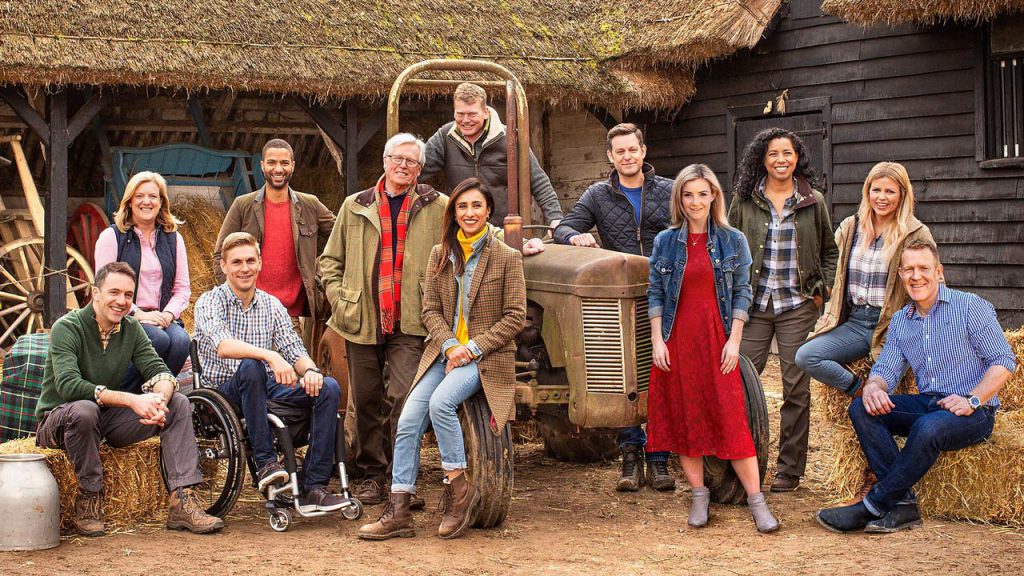
Yet that is precisely what has happened. Countryfile – The National Forest – 10 Million Trees brings together the stories of the people, the wildlife, and the land itself to show how a singular vision, first articulated in the early 1990s, has quietly and profoundly changed life in the Midlands. John Craven and Charlotte Smith travel through this evolving landscape, meeting the craftspeople, walkers, conservationists, and farmers whose lives have been shaped by the forest’s growth. Meanwhile, in Devon, Adam Henson explores a complementary strand of the same broader story: the revival of ancient woodland grazing practices on a working farm.
What makes the National Forest remarkable, even by the ambitious standards of British conservation, is its sheer scale and its deliberately human character. This is not a wilderness project aimed at exclusion but a working landscape designed to welcome people in, to offer them employment, recreation, health, and connection to the natural world. Country life here has been reinvented rather than simply preserved, and that reinvention has involved everyone from professional foresters to women discovering woodland paths for the first time.
The ten-millionth tree arrives not as a destination but as a waypoint. The forest continues to grow, continues to attract new species and new communities, and continues to demonstrate that even the most damaged land can be given back. To understand how that happened, it helps to go back to the beginning, to the moment when a bold and somewhat radical idea was first floated and then, with remarkable tenacity, actually delivered.
The National Forest Company was established with a clear mandate: to create a new forest across two hundred square miles of the Midlands, planting millions of trees on land that had been industrially exhausted. From the outset, the project combined public funding with private landowner participation, community engagement, and an understanding that woodland only becomes truly useful when people feel it belongs to them. The early years involved persuasion as much as planting, convincing farmers and landowners that the transition from arable or pasture to woodland could be financially and ecologically worthwhile.
Charlotte Smith explores this founding vision with the people who have watched it unfold from the inside. The sense of accumulated pride is palpable among those who remember the landscape before the trees arrived. Agricultural life in this part of the Midlands has changed substantially, not just in what the land produces but in how it is perceived. Fields that once grew crops now grow oak and ash and birch, and the communities around them have had to rethink their relationship with the land entirely.
John Craven, meanwhile, brings his characteristic warmth to encounters that reveal how deeply the forest has embedded itself in everyday life. The milestone of ten million trees is celebrated here not in abstract terms but through the people who planted them, the animals that now inhabit them, and the craftspeople who harvest and shape them into lasting objects. Wildlife has returned in kinds and numbers that would have seemed impossible thirty years ago, and that return is itself a measure of how thoroughly the landscape has been restored.
Countryfile – The National Forest – 10 Million Trees
Countryfile – The National Forest – 10 Million Trees: A Milestone Built on Three Decades of Planting
The ten-millionth tree does not look especially different from its nine million nine hundred and ninety-nine thousand nine hundred and ninety-nine predecessors. It is a young sapling, carefully handled and precisely placed in prepared ground, but its significance is entirely in what it represents. The National Forest Company has been tracking this number with care, knowing that the moment carried symbolic weight far beyond the act of planting itself.
The forest now covers around two hundred and forty square miles, and the woodland cover across that area has risen from six percent at the project’s start to well over a third today. That shift, measured in percentage points but experienced as an entirely different landscape, has taken place through a combination of direct planting, natural regeneration, and the gradual conversion of former industrial land. Each approach has played its part, and the result is a mosaic rather than a monoculture, a patchwork of different woodland types that supports a far richer range of wildlife than any single species plantation could.
The planting itself has involved an enormous cast of contributors. Schools, community groups, corporate volunteers, individual landowners, and professional foresters have all driven spades into this ground over the years. That breadth of participation is not incidental. It reflects a deliberate philosophy that a forest people have helped to create is a forest they will protect, visit, and value. Country life in the National Forest zone has therefore developed a shared ownership of the landscape that is unusual in modern Britain, where land and access remain deeply contested in many areas.
Wildlife Returns to a Landscape Transformed by Nature and agricultural life
One of the most striking consequences of three decades of tree cover is the return of wildlife to land that had, in living memory, supported very little of it. The change is not simply a matter of birds and mammals recolonising available habitat, though that has certainly happened. It is also a story of ecological complexity reasserting itself, of food webs rebuilding from the ground up as the woodland matures.
Fallow deer now move through sections of the National Forest with a confidence that suggests they have always been there. In fact, their presence is relatively recent, a direct consequence of the cover and food that maturing woodland provides. Alongside them, species of woodland bird that require dense understorey or old timber have begun appearing in areas where, a decade ago, there was nothing for them. The forest is still young by the standards of ancient woodland, but it is already delivering ecological returns that exceed early projections.
Specific habitats within the forest have been designed with wildlife in mind from the outset. Rides and clearings have been maintained to allow sunlight to reach the woodland floor, creating the conditions that butterflies, bumblebees, and specialist plants require. Ponds and wetland margins have been incorporated into the design, adding freshwater habitats that further diversify the wildlife value of the landscape. Nature here has not simply returned on its own terms; it has been carefully invited back.
The Craftspeople of Countryfile – The National Forest – 10 Million Trees and Their Sustainable Woodland Economy
A living forest is also a productive one, and the National Forest has generated a significant and growing craft economy rooted in the sustainable use of woodland materials. Charlotte Smith meets some of the craftspeople who have built livelihoods from what the trees provide, and their work spans a range from the ancient to the contemporary.
Charcoal production remains one of the most traditional woodland crafts, and it is experiencing something of a revival in the National Forest. The slow burn in a sealed kiln, the careful management of airflow, the judgement required to know when the process is complete: these skills were once common across the English countryside, tied to the iron-working and cooking needs of earlier centuries. In the National Forest, charcoal burners are working again, producing a high-quality product from coppiced wood and selling it locally.
Green woodworking, the practice of shaping freshly cut, unseasoned timber, has also found a home in the forest economy. Craftspeople working with pole lathes and hand tools produce chairs, bowls, tool handles, and decorative objects that carry the character of the wood itself. This kind of work is deeply connected to place: the character of the finished object depends on which species was cut, how it was grown, and where in the woodland it came from. The result is a craft economy with genuine ecological grounding rather than a superficial ruralism imposed from outside. Agricultural life and woodland craft life here are not in opposition; they are mutually reinforcing.
Basket making from willow and hazel grown within the forest is another strand of this emerging economy. Weavers work with material harvested on short rotations, meaning the woodland is cut and regrows repeatedly, a practice that actually enhances biodiversity by creating the varied age structure that many species prefer. The economic case for this kind of woodland management is increasingly well understood, but in the National Forest it has been demonstrated practically, in real workshops producing real goods.
Walking, Wellbeing, and Community Life in the National Forest
One of the most human stories within Countryfile – The National Forest – 10 Million Trees involves a group of women who have discovered the woodland paths on their doorstep and, in doing so, discovered something unexpected about themselves. Charlotte Smith walks with a local women’s walking group whose members describe how access to the forest has altered their relationship with health, community, and the natural world around them.
For some members of the group, the forest represented an unfamiliar environment before the group brought them to it. Urban backgrounds, cultural distance from the countryside, and the simple absence of habit had kept them from a landscape that was, geographically, very close to where they lived. The walking group changed that, providing companionship, gentle challenge, and a reason to return week after week. Country life, they discovered, was not something that required a particular background or set of credentials; it was accessible to anyone willing to put on boots and step through a gate.
The health benefits described by group members are both physical and psychological. Regular walking in woodland has improved fitness and reduced stress. More significantly, the shared experience of moving through a living landscape has built friendships and mutual support networks that extend well beyond the walks themselves. The forest has functioned, in this respect, as social infrastructure as much as green infrastructure.
This is precisely the kind of outcome the National Forest was designed to produce. The founding vision always included the idea that woodland should serve people as well as ecology, and that serving people meant addressing wellbeing in the broadest sense. The walking group is a small but vivid illustration of that vision working as intended.
Countryfile – The National Forest – 10 Million Trees: The Tree-Planting Ceremony and Its Meaning
The ceremony marking the ten-millionth tree is a restrained and grounded affair, befitting a project that has always valued practical action over grand gesture. John Craven is present for the planting, and the moment has a quality that is quietly moving rather than ostentatiously celebratory. People who have spent years working in and around the forest gather to mark a number that represents an enormous collective effort.
The species chosen for the milestone planting carries its own significance. Native broadleaf trees have formed the backbone of the National Forest’s composition, and the ten-millionth tree continues that tradition. Oak, in particular, has been planted in large numbers throughout the project, partly because of its extraordinary ecological value as a host species and partly because of its deep cultural resonance in the English landscape. A young oak planted today will be a veteran tree in three hundred years, long after everyone present at the ceremony has gone. That temporal dimension gives the project a gravity that few conservation initiatives can match.
The people gathered for the planting include representatives from the full range of communities the forest has touched. Farmers who converted land, schools whose pupils planted saplings now taller than they are, craftspeople who draw their materials from the woodland: all are present in one form or another. Wildlife does not attend ceremonies, but its presence throughout the forest is its own kind of witness to what has been achieved. Nature, returning steadily to a landscape that once expelled it, offers the most eloquent measure of the milestone’s meaning.
Adam Henson and the Devon Farm Reviving Traditional Woodland Grazing
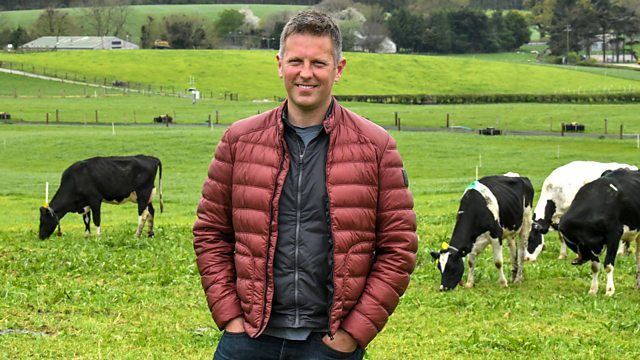
Away from the Midlands, Countryfile – The National Forest – 10 Million Trees extends its exploration of woodland and agricultural life to Devon, where Adam Henson visits a young farming couple engaged in something that is simultaneously ancient and radical. The practice of woodland grazing, the deliberate use of livestock within tree cover, was once widespread across Britain but has largely disappeared from modern farm management. On this Devon farm, it is being brought back with careful attention to both animal welfare and ecological effect.
Woodland grazing works by allowing animals, in this case pigs and cattle, to move through established tree cover, feeding on the plant life, fallen mast, and invertebrates found there. The animals disturb the soil surface in ways that benefit seed germination and create the uneven ground structure that many woodland species require. At the same time, their grazing pressure prevents rank vegetation from overwhelming the more diverse understorey plants that characterise healthy wood pasture.
The young couple running this farm came to woodland grazing through a combination of ecological interest and practical farming logic. They were looking for a system that suited their land, which has naturally heavy clay soils and a mosaic of existing tree cover, and that would allow them to produce high-quality meat while improving the ecological condition of their holding. Woodland grazing, they found, addressed both ambitions simultaneously.
Adam Henson, himself a farmer with a deep understanding of the practical and economic realities of country life, engages with the couple’s approach with genuine curiosity. He examines the condition of the animals, the state of the woodland floor, and the management decisions that keep the system in balance. Too many animals, and the woodland degrades; too few, and the grazing benefit is lost. The couple have developed a sophisticated understanding of this balance through direct observation and, where necessary, the guidance of ecologists.
The wood pasture system they are developing has historical roots in medieval and earlier land management, when the boundary between farmland and woodland was far more permeable than it became in the agricultural intensification of the twentieth century. Ancient woodland pastures supported some of the most biodiverse habitats in Britain, and the recognition that recreating similar conditions could deliver both ecological and agricultural value is driving a quiet revival of interest in the practice.
Countryfile – The National Forest – 10 Million Trees: The Next Phase of a Living Project
The ten-millionth tree is, as those closest to the project are careful to emphasise, a beginning as much as an end. The National Forest has a long-term plan that extends well beyond the current planting programme, with ambitions to continue increasing woodland cover, to connect the forest more effectively with surrounding landscapes, and to deepen the integration of woodland into the economic and social life of the communities it surrounds.
The ecological maturation of the forest is itself a kind of ongoing project. Trees planted in the early 1990s are now entering a phase of development where their ecological value accelerates rapidly. Dead wood is accumulating, veteran trees are beginning to develop the complex bark and branch structure that specialist insects and birds require, and the soil fungi that underpin woodland health are establishing the networks that make mature woodland function so differently from a young plantation. Each decade adds layers of complexity that were simply absent in the bare fields where this all began.
The economic dimension of the forest’s future is equally important. Sustainable woodland management requires ongoing investment, and the craft economy, tourism, and ecosystem services that the forest generates need to grow in scale and diversity if they are to fund the management the landscape requires. The National Forest Company has demonstrated that this model can work, but scaling it further demands continued public and private commitment. Nature delivers its services for free, but only if the conditions that support it are maintained by human effort and investment.
Country life in the National Forest zone today is defined by a relationship with woodland that would have been unimaginable to the communities living here when the pits were still working. The forest has not simply changed the landscape; it has changed what it means to live and work in this part of the Midlands. Wildlife moves through land that was once silent and exhausted. Craftspeople find materials and markets where there were none. Walkers discover health and community on paths that did not exist a generation ago. Farmers, in Devon and across the broader countryside, are finding new value in old ways of working land alongside trees.
The planting of the ten-millionth tree is the kind of milestone that invites reflection, and the reflection it invites is, by any honest measure, a positive one. The National Forest stands as evidence that large-scale landscape restoration is achievable in Britain, that it can serve ecological and human goals simultaneously, and that it can transform not just how land looks but how communities experience and relate to the world around them. Countryfile – The National Forest – 10 Million Trees captures that transformation at a moment of justified celebration, and it does so by staying close to the people and places that made it real.
FAQ Countryfile – The National Forest – 10 Million Trees
Q: What is the National Forest and where is it located?
A: The National Forest is a large-scale woodland creation project spanning approximately 240 square miles across parts of Derbyshire, Leicestershire, and Staffordshire in the English Midlands. It was established in the early 1990s on land largely exhausted by decades of coal mining and industrial activity. Today, woodland cover across the area has risen from around six percent at the project’s start to well over a third, transforming a formerly scarred landscape into a thriving mosaic of trees, wildlife habitat, and community green space.
Q: How significant is the planting of the ten-millionth tree in the National Forest?
A: The ten-millionth tree represents a profound milestone in British conservation history. However, those closest to the project emphasise it marks a waypoint rather than a conclusion. The planting involved a young native broadleaf sapling, continuing the tradition of prioritising species such as oak for their extraordinary ecological value. Furthermore, the milestone reflects three decades of combined effort from schools, community groups, corporate volunteers, private landowners, and professional foresters working together across the Midlands countryside.
Q: What wildlife has returned to the National Forest since tree planting began?
A: Wildlife recovery in the National Forest has significantly exceeded early projections. Fallow deer now move confidently through maturing woodland, and specialist woodland bird species requiring dense understorey or old timber have begun establishing themselves in areas previously devoid of suitable habitat. Additionally, carefully managed rides, clearings, ponds, and wetland margins have attracted butterflies, bumblebees, and specialist plant communities. Nature has not simply returned on its own terms; it has been deliberately and strategically invited back through considered habitat design.
Q: How has the National Forest supported craftspeople and local livelihoods?
A: The forest has generated a growing craft economy rooted in sustainable woodland management. Charcoal production, once widespread in English country life, has experienced a significant revival, with burners producing high-quality charcoal from coppiced wood for local markets. Green woodworkers using pole lathes and hand tools craft chairs, bowls, and tool handles from freshly cut timber. Furthermore, basket makers harvest willow and hazel on short rotations, a practice that simultaneously enhances biodiversity by creating the varied woodland age structure many species prefer.
Q: How have local communities benefited from access to the National Forest?
A: Community benefit has been central to the National Forest’s founding vision. A women’s walking group featured on Countryfile illustrates this vividly: members from urban backgrounds, previously unfamiliar with countryside access, discovered woodland paths on their doorstep through organised group walks. Regular walking improved physical fitness, reduced stress, and built lasting social networks extending well beyond the walks themselves. The forest has consequently functioned as social infrastructure, demonstrating that country life and nature connection are accessible to anyone willing to engage with them.
Q: What is woodland grazing and why is it being revived on British farms?
A: Woodland grazing is the practice of allowing livestock to move through established tree cover, feeding on vegetation, fallen mast, and invertebrates found there. Once widespread across Britain, it largely disappeared during twentieth-century agricultural intensification. However, a young Devon farming couple featured on Countryfile are reviving this ancient system, allowing pigs and cattle to graze within woodland. Their animals disturb soil surfaces beneficially, support seed germination, and prevent rank vegetation from overwhelming diverse understorey plants. The system simultaneously produces high-quality meat and actively improves the ecological condition of their holding.
Q: What role does coppicing play in sustainable woodland management within the National Forest?
A: Coppicing involves cutting trees close to the ground on regular rotations, encouraging vigorous regrowth from the stool. This traditional practice produces a renewable supply of small-diameter timber suitable for charcoal, basket weaving, tool handles, and rustic furniture. Importantly, coppiced woodland supports significantly higher biodiversity than unmanaged closed-canopy forest, because the varied age structure and periodic light flooding of the woodland floor benefit specialist butterflies, wildflowers, and birds. Within the National Forest, coppicing connects agricultural life and woodland ecology in a mutually reinforcing management cycle.
Q: How does the National Forest balance ecological restoration with human use and economic activity?
A: The National Forest was designed from the outset as a working landscape rather than a wilderness exclusion zone. Ecological restoration and human activity are treated as complementary rather than competing goals. Woodland is managed for timber and craft materials, providing economic returns that fund ongoing conservation work. Walking trails, visitor facilities, and community programmes bring people into direct contact with nature and wildlife. The founding philosophy holds that a forest people help create, use, and benefit from is a forest they will protect and value across successive generations.
Q: Why are native broadleaf species prioritised in the National Forest over faster-growing conifers?
A: Native broadleaf trees such as oak, ash, and birch support vastly richer ecological communities than non-native conifers. Oak alone hosts hundreds of associated insect species, which in turn support woodland birds and bats. Additionally, broadleaf woodland develops the complex bark texture, dead wood accumulation, and fungal networks that underpin mature forest ecology far more effectively than conifer plantations. Furthermore, native species carry deep cultural resonance within the English landscape. A young oak planted today will develop veteran tree characteristics within centuries, giving the National Forest genuine long-term ecological and historical depth.
Q: What are the future ambitions for the National Forest beyond the ten-millionth tree?
A: The National Forest Company has long-term plans extending well beyond current planting targets. Priorities include increasing woodland cover further, connecting the forest with surrounding landscapes to create ecological corridors, and deepening the woodland economy through expanded tourism, craft production, and ecosystem service markets. Trees planted in the 1990s are now entering a phase of rapid ecological maturation, with dead wood accumulating and soil fungal networks establishing. Each decade adds complexity that transforms young plantation into genuinely rich woodland. The project’s greatest ecological and social achievements, therefore, still lie ahead.