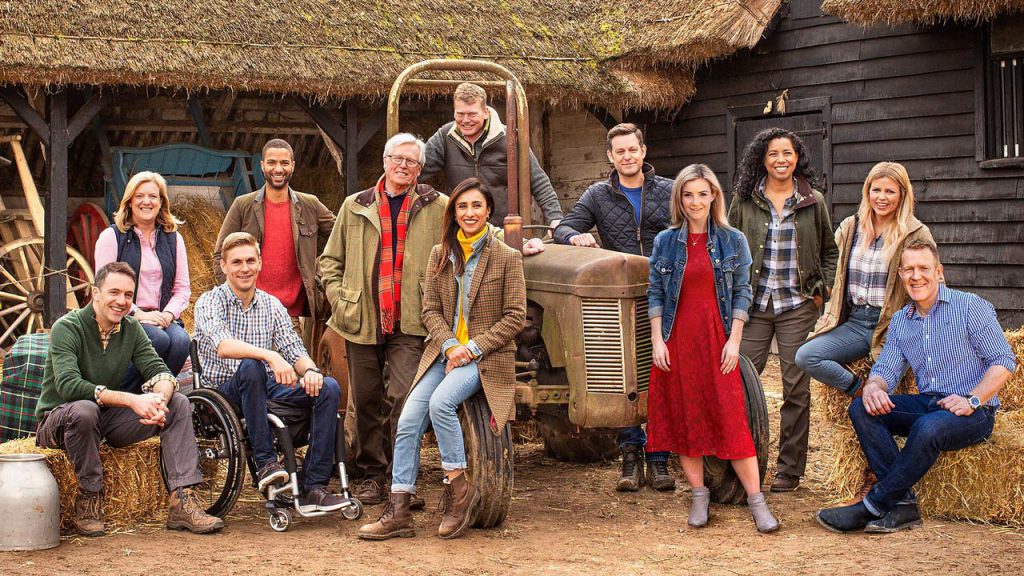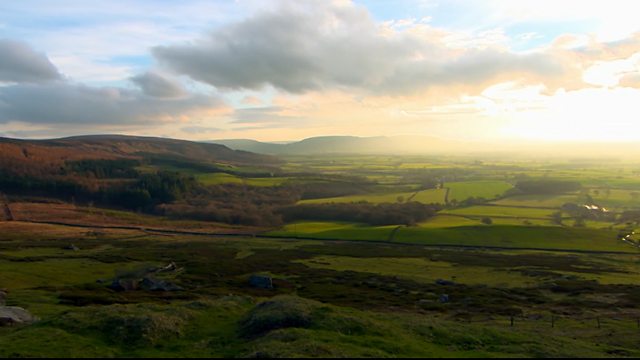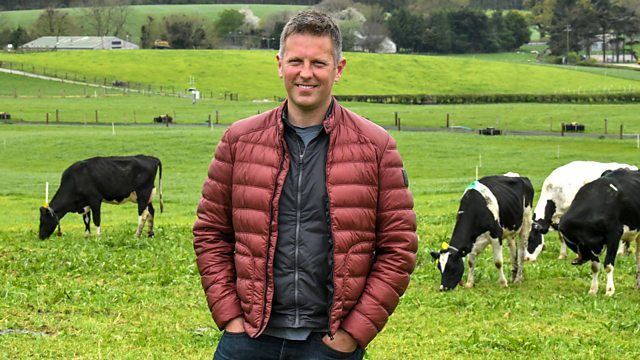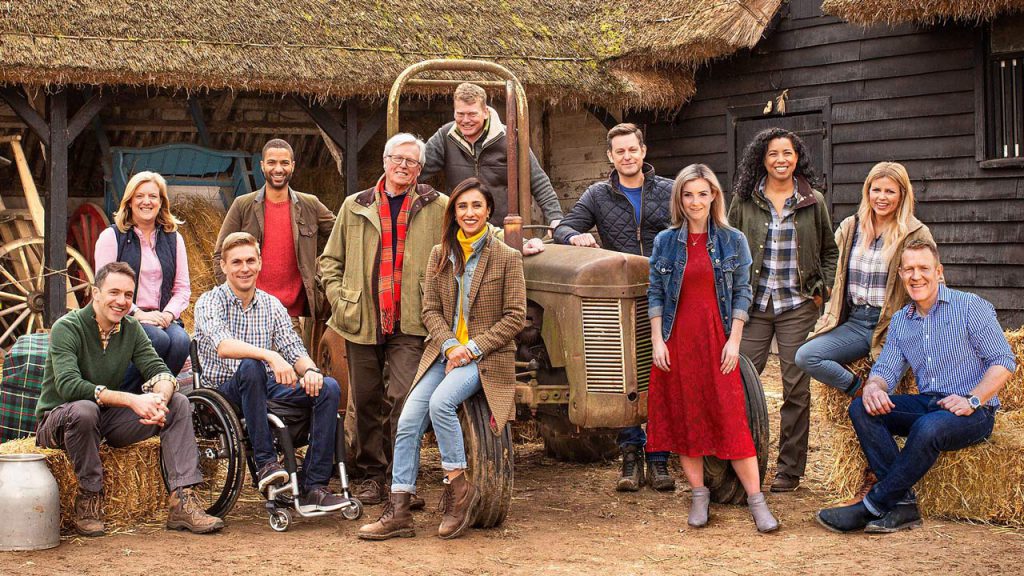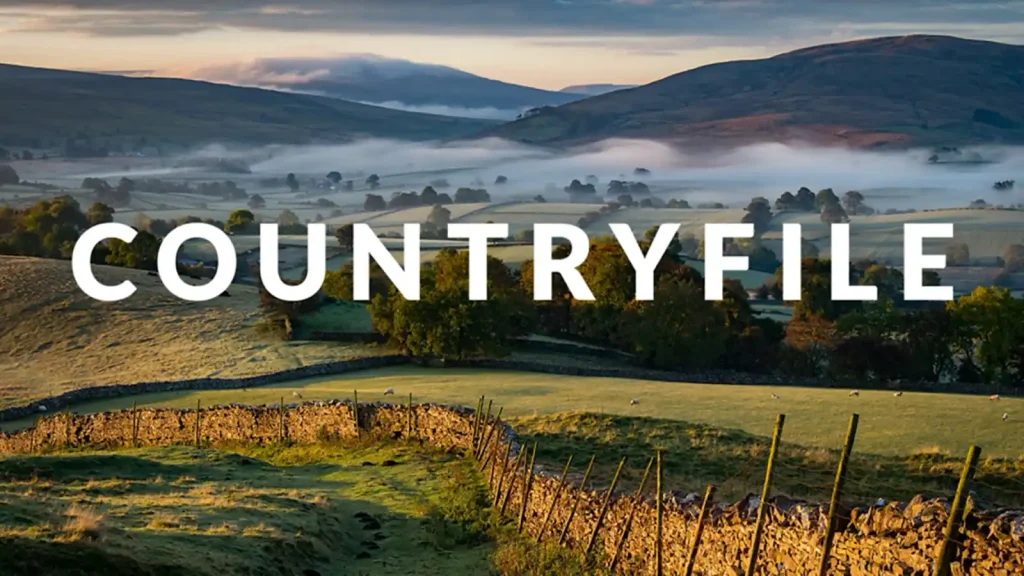
Countryfile – Easter – The Sights and Sounds of Spring arrives at a moment when the British countryside is undergoing one of its most dramatic seasonal transformations, and this Easter special captures that shift with rare precision. Across Hampshire’s Avon Valley, in the water meadows and farmed fields of the Bisterne Estate, two iconic British species are fighting to reclaim their place in the spring landscape. The lapwing and the brown hare — both once abundant, both now in serious decline — sit at the heart of an episode that weaves together conservation science, farming practice, landscape sound, and literary reflection into something genuinely illuminating.
Spring in lowland England is not the uncomplicated pastoral idyll it is sometimes imagined to be. Beneath the blossom and birdsong lies a landscape under pressure, where wildlife and farming must negotiate the same ground simultaneously. The episode draws on the expertise of farmers, ecologists, sound artists, and writers to examine what it actually takes to make space for nature in a working agricultural environment. In doing so, it touches on questions that matter deeply to anyone who cares about the future of British wildlife and British farming.
Matt Baker and Margherita Taylor present the programme, and between them they cover a considerable amount of ground — both literally and thematically. Baker spends time at Bisterne recording the acoustic landscape of spring with local sound artist Chris Watson, joins volunteers maintaining the ancient Harnham Water Meadows, and observes the lapwing conservation effort first-hand. Taylor, meanwhile, focuses on the hare, accompanying conservationists and farmers as they work to understand and reverse the species’ long decline. Together, their work in the field illustrates how much practical effort lies behind even modest gains for wildlife in a farmed landscape.
The episode also steps beyond Hampshire. On his Cotswolds farm, Adam Henson takes on the restoration of a traditional hedgerow — a task with immediate implications for nesting birds in the weeks immediately ahead. And in a quieter, more contemplative interlude, author Robert Macfarlane delivers an exclusive spring reading that brings a literary sensibility to the themes of renewal and attention that run through the entire programme. These threads, pulled together across the episode, make Countryfile – Easter – The Sights and Sounds of Spring something richer than a conventional wildlife documentary.
What unifies these strands is a shared insistence on specificity. This is not a programme interested in vague appeals to love nature or support farmers in the abstract. It wants to know exactly how a lapwing nest is located and protected, precisely why a hare population is monitored using thermal imaging, and in what particular ways an eighteenth-century water meadow system continues to function in the twenty-first century. That commitment to detail gives the episode its authority.
The Avon Valley setting is not incidental. Hampshire’s river systems and the meadows they have shaped over centuries represent some of the most ecologically significant lowland habitats in England. The Bisterne Estate sits within this landscape, and its combination of arable farmland, pasture, and water meadow creates a mosaic of habitat types that different species require at different stages of their life cycles. Understanding why lapwings and hares have struggled here — and what is now being done to help them — requires understanding that landscape in some depth.
Throughout the episode, farming and conservation are presented not as opposing forces but as disciplines that must find a common language. The farmers at Bisterne are not passive recipients of conservation advice; they are active participants in habitat management decisions, and their knowledge of the land is treated as indispensable. That relationship, built on mutual respect and shared observation, is one of the episode’s most instructive themes.
By the time Macfarlane’s reading closes one of the episode’s quieter passages, it is clear that Countryfile – Easter – The Sights and Sounds of Spring is working at several registers simultaneously — scientific, agricultural, acoustic, and literary. What follows explores each of those registers in turn, beginning with the species that give the episode its ecological centre of gravity.
Countryfile – Easter – The Sights and Sounds of Spring
Countryfile – Easter – The Sights and Sounds of Spring and the Lapwing Crisis in Lowland England
The lapwing is one of the most recognisable birds in the British countryside, and one of the most troubled. Its tumbling display flight and plaintive call are defining sounds of open farmland, yet lapwing populations have declined by more than sixty percent in England since the 1970s. The Bisterne Estate in Hampshire’s Avon Valley is one of the sites where conservationists and farmers are now working to reverse that trend, and the approach they have developed is both methodical and deeply practical.
Lapwings are ground-nesting birds, which makes them acutely vulnerable to modern agricultural practice. They require open, short-sward grassland for nesting, with clear sightlines that allow adults to spot approaching predators. They also need wet areas nearby, where chicks can find the invertebrate food they depend on in their first weeks of life. The drainage and intensification of lowland farmland has removed much of this habitat over the past half-century, and the lapwing has paid a heavy price.
At Bisterne, the response has been to manage specific fields with lapwings explicitly in mind. This means controlling vegetation height, maintaining wet scrapes — shallow pools that attract invertebrates and provide foraging habitat for chicks — and monitoring nest sites carefully. Conservation officers work alongside farmers to locate nests before machinery enters fields, a process that requires considerable time and detailed knowledge of where birds are likely to settle. The collaboration is painstaking, but the results on well-managed sites have been encouraging.
The importance of predator management also features in the episode’s treatment of lapwing conservation. Foxes, crows, and other predators take a significant toll on ground-nesting birds, and without some degree of control, even the best habitat management struggles to produce meaningful fledgling success. This is a point that conservationists and farmers at Bisterne both acknowledge, and it reflects a broader shift in conservation thinking toward integrated approaches that address multiple pressures simultaneously.
Hare Populations, Thermal Imaging, and the Science of Counting
The brown hare is another species whose fortunes have declined sharply across lowland England, and Margherita Taylor’s time in the field with conservationists exploring this decline reveals just how sophisticated modern wildlife monitoring has become. The Avon Valley supports one of the better hare populations in southern England, but understanding exactly how many animals are present — and whether numbers are stable, rising, or falling — requires tools and techniques that go well beyond simple observation.
Thermal imaging has transformed hare survey work. By scanning fields at night using cameras sensitive to heat signatures, surveyors can detect animals that would be completely invisible in conventional spotlight counts. Hares are masters of concealment; they rely on crouching motionless in their forms — shallow depressions in the ground — to avoid detection, and their camouflage is highly effective against the human eye. Thermal cameras remove that advantage, revealing the true density of animals in a given area with a degree of accuracy that was previously unattainable.
The survey work shown in Countryfile – Easter – The Sights and Sounds of Spring is part of a longer-term effort to establish baseline population data for the Avon Valley. Without reliable numbers from consistent methodology, it is impossible to assess whether conservation interventions are working or to make the case to landowners and policymakers that hare-friendly management is producing results. This is patient, unglamorous science, and the episode treats it with appropriate respect.
Hares thrive in mixed farming landscapes where field margins, hedgerows, and varied crop types provide cover, foraging opportunities, and shelter from weather. The shift toward large-scale arable monocultures has reduced the structural complexity of the landscape in ways that particularly disadvantage hares. Conservation advice in the region focuses on restoring that complexity — through beetle banks, grass margins, and the retention of rough field edges — while avoiding disturbance during the leverets’ most vulnerable early weeks.
The brown hare also has a cultural weight that the episode acknowledges. Long associated with spring and with a kind of wildness that feels increasingly rare in the managed countryside, the hare carries symbolic as well as ecological significance. Its presence in a landscape is read by many naturalists as an indicator of broader habitat health, which makes the work of monitoring and protecting it more than a single-species concern.
The Acoustic Spring: Recording Birdsong and Landscape Sound at Bisterne
One of the most distinctive elements of Countryfile – Easter – The Sights and Sounds of Spring is Matt Baker’s collaboration with sound artist Chris Watson, who has spent years recording the acoustic landscapes of natural environments. Their work together in the Avon Valley approaches spring not through vision but through listening, and the results reframe familiar countryside sounds in unexpected ways.
Watson’s practice involves capturing sound at a level of fidelity and spatial richness that ordinary recording cannot achieve. Using specialist microphones and recording equipment, he documents the layered acoustic environment of a place — the calls of individual species, the ambient wash of wind through vegetation, the subsonic movements of water — and assembles them into compositions that allow listeners to inhabit a landscape they cannot physically enter. His work has been described as acoustic ecology, and it treats sound as a form of environmental data as well as aesthetic experience.
In the water meadows and woodland edges around Bisterne, spring produces an extraordinary density of sound. The lapwing’s display call, the drumming of snipe, the liquid phrases of blackcap and chiffchaff, the underlying pulse of the river — all of these overlap and interact to create something genuinely complex. Watson helps Baker to hear this complexity actively rather than passively, drawing attention to specific layers within the overall soundscape and explaining what each element reveals about the health and character of the habitat.
The acoustic dimension of spring has practical conservation implications as well. Bird surveys based on sound — specifically, on species-specific calls recorded at fixed points across a landscape — are now a standard monitoring tool. The presence or absence of particular calls in particular places provides reliable information about breeding activity, territory establishment, and population distribution. What Watson offers, beyond the data, is an invitation to engage with that soundscape as something worth experiencing in its own right.
This section of the episode is unusual in wildlife television because it slows down. Rather than moving quickly from location to location, it asks the audience to stop and listen, and in doing so, it makes the case that attention itself is a conservation act. A countryside that people listen to as well as look at is a countryside they are more likely to value and protect.
Harnham Water Meadows: Wildlife and the Engineering of an Ancient Landscape
The Harnham Water Meadows near Salisbury represent one of England’s best-preserved examples of a water management system that was developed in the seventeenth and eighteenth centuries to extend the growing season for grass. By flooding low-lying meadows with river water in late winter and early spring, farmers could protect young grass from frost and stimulate early growth, providing grazing for sheep weeks ahead of unmanaged pasture. The system was once widespread across the chalk river valleys of southern England; today, Harnham is among the few places where it survives in working order.
Matt Baker joins a team of volunteers who maintain the Harnham system, and their work illuminates just how labour-intensive and technically demanding traditional water meadow management is. The system depends on a network of channels, hatches, and carriers — carefully graded earthworks that direct water across the meadow surface in a controlled sheet. Maintaining this infrastructure requires constant monitoring, physical repair, and an understanding of how water behaves across the specific topography of each meadow. The volunteers who do this work carry knowledge that would otherwise have been lost entirely.
The ecological benefits of functioning water meadows are substantial. The combination of wet conditions, regular flooding, and relatively low nutrient levels produces a plant community of considerable diversity — including meadow rue, water avens, and ragged robin — that supports a correspondingly diverse invertebrate fauna. Wading birds, including snipe and redshank, use the wet areas for foraging, while the structural complexity of the channel network provides habitat for water voles, kingfishers, and a range of aquatic invertebrates.
The survival of Harnham is partly a result of its historical significance — the site is scheduled as an ancient monument — and partly a result of the sustained commitment of the volunteers who maintain it. Their work is not merely custodial. By keeping the system operational, they are actively producing habitat that would not otherwise exist, demonstrating that traditional land management techniques can deliver contemporary conservation outcomes when applied with sufficient knowledge and care.
For Countryfile – Easter – The Sights and Sounds of Spring, the water meadows serve as a reminder that the British countryside is not natural in any pristine sense. It is the product of centuries of human management, and its ecological value depends on that management continuing. The question is not whether to intervene in the landscape, but how — and with what level of understanding and commitment.
Robert Macfarlane, Language, and the Literature of Spring
Robert Macfarlane’s contribution to the episode is brief but resonant. The author of Landmarks, The Wild Places, and Underland — works that have substantially shaped the way a generation thinks about the relationship between language and landscape — delivers a reading written specifically for the programme, reflecting on the qualities of spring that are most difficult to name.
Macfarlane has written extensively about the impoverishment of nature vocabulary in contemporary English, and specifically about the removal of ecological terms from children’s reference materials while new words for technology and consumer culture multiply. His spring reading engages with this theme obliquely, attending to the particular quality of light, sound, and growth that characterises this time of year and that resists reduction to easy description.
His presence in Countryfile – Easter – The Sights and Sounds of Spring underscores the episode’s interest in perception as well as ecology. Conservation depends on people caring about the natural world, and caring depends on noticing, and noticing depends partly on having the language to articulate what you have seen. Macfarlane’s work has always insisted on this connection, and his reading brings that insistence into a programme that is otherwise primarily practical and scientific in its approach.
The interlude works because it does not try to do too much. It offers a pause, a shift in register, and a reminder that the spring landscape has been the subject of human attention and reflection for as long as people have lived within it. That continuity — of observation, of response, of the attempt to find words for what the eye and ear and body register — is itself a form of conservation.
Adam Henson, Hedgerow Restoration, and the Countryfile Farming Perspective
On his Cotswolds farm, Adam Henson undertakes the restoration of a traditional hedgerow as part of the episode’s broader engagement with farming practices that benefit wildlife. Hedgerows are among the most important habitats in the British farmed landscape, supporting a disproportionate variety of species relative to the area they occupy. For birds, they provide nesting sites, song posts, and foraging habitat; for mammals, they offer cover and movement corridors; for invertebrates, the mix of woody and herbaceous species creates a layered microhabitat of considerable complexity.
Hedgerow loss in Britain has been severe. Between the late 1940s and the 1990s, an estimated 400,000 kilometres of hedgerow were removed from the English countryside to accommodate larger machinery and more intensive cropping systems. What remained was often poorly managed — either neglected and gappy or cut so frequently and severely that its structural diversity was destroyed. The partial reversal of this trend in recent decades, driven by agri-environment schemes and changing attitudes among farmers, has begun to show results, but the ecological damage of those decades of loss is not quickly repaired.
Henson’s hedgerow work is timed deliberately. Easter falls at the threshold of the nesting season, and laying or cutting a hedgerow in the weeks immediately following means that by the time birds begin establishing territories in earnest, the structure is in place to receive them. His approach combines traditional laid hedgerow techniques — in which stems are partly cut and bent horizontally to produce a dense, stock-proof barrier — with supplementary planting of species that provide food as well as structure.
The Countryfile farming strand has always placed particular value on Henson’s ability to translate technical practice into accessible explanation, and his hedgerow restoration segment is a good example of that skill. He demonstrates not just what he is doing but why each step matters, connecting the physical work of hedge-laying to its downstream consequences for bird populations, invertebrate communities, and the long-term productivity of the farm landscape itself.
Henson also speaks to the economic dimension of hedgerow management, which is not incidental. Farmers face real costs in time and machinery when they maintain hedgerows properly, and the case for doing so must be made in terms that acknowledge those costs rather than dismissing them. Agri-environment payment schemes have helped, but their terms vary and their continuity is not guaranteed. The conversation around farming and wildlife in England is ultimately a conversation about what society is willing to pay for, and Henson is alert to that context.
The cumulative argument of Countryfile – Easter – The Sights and Sounds of Spring is not a pessimistic one, despite the scale of the declines it documents. Lapwing numbers are recovering on well-managed sites. Hare populations in the Avon Valley are holding up better than in many other parts of lowland England. The Harnham Water Meadows are functioning and maintained. Adam Henson’s hedgerow will be in place for the nesting season. These are not transformative victories, but they are real.
What the episode demonstrates most clearly is that wildlife recovery in a farmed landscape is never automatic. It requires specific knowledge, specific interventions, and specific relationships between the people who manage the land and those who monitor what lives on it. The Bisterne Estate’s lapwing work depends on farmers who are willing to adjust their machinery schedules around nest locations. The hare survey depends on conservationists who will go out in darkness with thermal cameras to count animals no one can see. The water meadows depend on volunteers who know how to operate an eighteenth-century hydraulic system.
None of this happens without sustained commitment, and none of it is guaranteed to continue without the support — financial and social — that makes it viable. The farming context matters here. Changes to agricultural subsidy following the UK’s departure from the European Union have created both opportunity and uncertainty. The shift toward payment for public goods — including wildlife habitat, clean water, and accessible landscape — opens the possibility of redirecting farming support toward the kind of land management the episode celebrates. But the transition is complex and its outcomes are not yet clear.
The episode does not engage directly with subsidy policy; that would be a different kind of programme. But the practical conservation work it documents is inseparable from that policy context, and the audience watching farmers and conservationists work together in the Avon Valley is watching something that depends, in the end, on whether society chooses to support it.
In this respect, Countryfile – Easter – The Sights and Sounds of Spring is doing something more than celebrating spring. It is making visible the labour, knowledge, and collaboration that the spring countryside — its lapwings, its hares, its meadows, its hedgerows — actually depends on. That is not a small thing to communicate, and the programme communicates it well.
The episode closes, as British spring itself does, with a sense of things in motion and not yet resolved. The lapwings are nesting. The hares are in the fields. The water is moving through the Harnham hatches. The hedgerow is laid. And somewhere in the Avon Valley, the sounds of a particular morning in early April are being recorded with enough care and fidelity to be heard again, long after the season has turned.
FAQ Countryfile – Easter – The Sights and Sounds of Spring arrives at a moment when the British countryside is undergoing one of its most dramatic seasonal transformations, and this Easter special captures that shift with rare precision. Across Hampshire’s Avon Valley, in the water meadows and farmed fields of the Bisterne Estate, two iconic British species are fighting to reclaim their place in the spring landscape. The lapwing and the brown hare — both once abundant, both now in serious decline — sit at the heart of an episode that weaves together conservation science, farming practice, landscape sound, and literary reflection into something genuinely illuminating.
Spring in lowland England is not the uncomplicated pastoral idyll it is sometimes imagined to be. Beneath the blossom and birdsong lies a landscape under pressure, where wildlife and farming must negotiate the same ground simultaneously. The episode draws on the expertise of farmers, ecologists, sound artists, and writers to examine what it actually takes to make space for nature in a working agricultural environment. In doing so, it touches on questions that matter deeply to anyone who cares about the future of British wildlife and British farming.
Matt Baker and Margherita Taylor present the programme, and between them they cover a considerable amount of ground — both literally and thematically. Baker spends time at Bisterne recording the acoustic landscape of spring with local sound artist Chris Watson, joins volunteers maintaining the ancient Harnham Water Meadows, and observes the lapwing conservation effort first-hand. Taylor, meanwhile, focuses on the hare, accompanying conservationists and farmers as they work to understand and reverse the species’ long decline. Together, their work in the field illustrates how much practical effort lies behind even modest gains for wildlife in a farmed landscape.
The episode also steps beyond Hampshire. On his Cotswolds farm, Adam Henson takes on the restoration of a traditional hedgerow — a task with immediate implications for nesting birds in the weeks immediately ahead. And in a quieter, more contemplative interlude, author Robert Macfarlane delivers an exclusive spring reading that brings a literary sensibility to the themes of renewal and attention that run through the entire programme. These threads, pulled together across the episode, make Countryfile – Easter – The Sights and Sounds of Spring something richer than a conventional wildlife documentary.
What unifies these strands is a shared insistence on specificity. This is not a programme interested in vague appeals to love nature or support farmers in the abstract. It wants to know exactly how a lapwing nest is located and protected, precisely why a hare population is monitored using thermal imaging, and in what particular ways an eighteenth-century water meadow system continues to function in the twenty-first century. That commitment to detail gives the episode its authority.
The Avon Valley setting is not incidental. Hampshire’s river systems and the meadows they have shaped over centuries represent some of the most ecologically significant lowland habitats in England. The Bisterne Estate sits within this landscape, and its combination of arable farmland, pasture, and water meadow creates a mosaic of habitat types that different species require at different stages of their life cycles. Understanding why lapwings and hares have struggled here — and what is now being done to help them — requires understanding that landscape in some depth.
Throughout the episode, farming and conservation are presented not as opposing forces but as disciplines that must find a common language. The farmers at Bisterne are not passive recipients of conservation advice; they are active participants in habitat management decisions, and their knowledge of the land is treated as indispensable. That relationship, built on mutual respect and shared observation, is one of the episode’s most instructive themes.
By the time Macfarlane’s reading closes one of the episode’s quieter passages, it is clear that Countryfile – Easter – The Sights and Sounds of Spring is working at several registers simultaneously — scientific, agricultural, acoustic, and literary. What follows explores each of those registers in turn, beginning with the species that give the episode its ecological centre of gravity.
Countryfile – Easter – The Sights and Sounds of Spring and the Lapwing Crisis in Lowland England
The lapwing is one of the most recognisable birds in the British countryside, and one of the most troubled. Its tumbling display flight and plaintive call are defining sounds of open farmland, yet lapwing populations have declined by more than sixty percent in England since the 1970s. The Bisterne Estate in Hampshire’s Avon Valley is one of the sites where conservationists and farmers are now working to reverse that trend, and the approach they have developed is both methodical and deeply practical.
Lapwings are ground-nesting birds, which makes them acutely vulnerable to modern agricultural practice. They require open, short-sward grassland for nesting, with clear sightlines that allow adults to spot approaching predators. They also need wet areas nearby, where chicks can find the invertebrate food they depend on in their first weeks of life. The drainage and intensification of lowland farmland has removed much of this habitat over the past half-century, and the lapwing has paid a heavy price.
At Bisterne, the response has been to manage specific fields with lapwings explicitly in mind. This means controlling vegetation height, maintaining wet scrapes — shallow pools that attract invertebrates and provide foraging habitat for chicks — and monitoring nest sites carefully. Conservation officers work alongside farmers to locate nests before machinery enters fields, a process that requires considerable time and detailed knowledge of where birds are likely to settle. The collaboration is painstaking, but the results on well-managed sites have been encouraging.
The importance of predator management also features in the episode’s treatment of lapwing conservation. Foxes, crows, and other predators take a significant toll on ground-nesting birds, and without some degree of control, even the best habitat management struggles to produce meaningful fledgling success. This is a point that conservationists and farmers at Bisterne both acknowledge, and it reflects a broader shift in conservation thinking toward integrated approaches that address multiple pressures simultaneously.
Hare Populations, Thermal Imaging, and the Science of Counting
The brown hare is another species whose fortunes have declined sharply across lowland England, and Margherita Taylor’s time in the field with conservationists exploring this decline reveals just how sophisticated modern wildlife monitoring has become. The Avon Valley supports one of the better hare populations in southern England, but understanding exactly how many animals are present — and whether numbers are stable, rising, or falling — requires tools and techniques that go well beyond simple observation.
Thermal imaging has transformed hare survey work. By scanning fields at night using cameras sensitive to heat signatures, surveyors can detect animals that would be completely invisible in conventional spotlight counts. Hares are masters of concealment; they rely on crouching motionless in their forms — shallow depressions in the ground — to avoid detection, and their camouflage is highly effective against the human eye. Thermal cameras remove that advantage, revealing the true density of animals in a given area with a degree of accuracy that was previously unattainable.
The survey work shown in Countryfile – Easter – The Sights and Sounds of Spring is part of a longer-term effort to establish baseline population data for the Avon Valley. Without reliable numbers from consistent methodology, it is impossible to assess whether conservation interventions are working or to make the case to landowners and policymakers that hare-friendly management is producing results. This is patient, unglamorous science, and the episode treats it with appropriate respect.
Hares thrive in mixed farming landscapes where field margins, hedgerows, and varied crop types provide cover, foraging opportunities, and shelter from weather. The shift toward large-scale arable monocultures has reduced the structural complexity of the landscape in ways that particularly disadvantage hares. Conservation advice in the region focuses on restoring that complexity — through beetle banks, grass margins, and the retention of rough field edges — while avoiding disturbance during the leverets’ most vulnerable early weeks.
The brown hare also has a cultural weight that the episode acknowledges. Long associated with spring and with a kind of wildness that feels increasingly rare in the managed countryside, the hare carries symbolic as well as ecological significance. Its presence in a landscape is read by many naturalists as an indicator of broader habitat health, which makes the work of monitoring and protecting it more than a single-species concern.
The Acoustic Spring: Recording Birdsong and Landscape Sound at Bisterne
One of the most distinctive elements of Countryfile – Easter – The Sights and Sounds of Spring is Matt Baker’s collaboration with sound artist Chris Watson, who has spent years recording the acoustic landscapes of natural environments. Their work together in the Avon Valley approaches spring not through vision but through listening, and the results reframe familiar countryside sounds in unexpected ways.
Watson’s practice involves capturing sound at a level of fidelity and spatial richness that ordinary recording cannot achieve. Using specialist microphones and recording equipment, he documents the layered acoustic environment of a place — the calls of individual species, the ambient wash of wind through vegetation, the subsonic movements of water — and assembles them into compositions that allow listeners to inhabit a landscape they cannot physically enter. His work has been described as acoustic ecology, and it treats sound as a form of environmental data as well as aesthetic experience.
In the water meadows and woodland edges around Bisterne, spring produces an extraordinary density of sound. The lapwing’s display call, the drumming of snipe, the liquid phrases of blackcap and chiffchaff, the underlying pulse of the river — all of these overlap and interact to create something genuinely complex. Watson helps Baker to hear this complexity actively rather than passively, drawing attention to specific layers within the overall soundscape and explaining what each element reveals about the health and character of the habitat.
The acoustic dimension of spring has practical conservation implications as well. Bird surveys based on sound — specifically, on species-specific calls recorded at fixed points across a landscape — are now a standard monitoring tool. The presence or absence of particular calls in particular places provides reliable information about breeding activity, territory establishment, and population distribution. What Watson offers, beyond the data, is an invitation to engage with that soundscape as something worth experiencing in its own right.
This section of the episode is unusual in wildlife television because it slows down. Rather than moving quickly from location to location, it asks the audience to stop and listen, and in doing so, it makes the case that attention itself is a conservation act. A countryside that people listen to as well as look at is a countryside they are more likely to value and protect.
Harnham Water Meadows: Wildlife and the Engineering of an Ancient Landscape
The Harnham Water Meadows near Salisbury represent one of England’s best-preserved examples of a water management system that was developed in the seventeenth and eighteenth centuries to extend the growing season for grass. By flooding low-lying meadows with river water in late winter and early spring, farmers could protect young grass from frost and stimulate early growth, providing grazing for sheep weeks ahead of unmanaged pasture. The system was once widespread across the chalk river valleys of southern England; today, Harnham is among the few places where it survives in working order.
Matt Baker joins a team of volunteers who maintain the Harnham system, and their work illuminates just how labour-intensive and technically demanding traditional water meadow management is. The system depends on a network of channels, hatches, and carriers — carefully graded earthworks that direct water across the meadow surface in a controlled sheet. Maintaining this infrastructure requires constant monitoring, physical repair, and an understanding of how water behaves across the specific topography of each meadow. The volunteers who do this work carry knowledge that would otherwise have been lost entirely.
The ecological benefits of functioning water meadows are substantial. The combination of wet conditions, regular flooding, and relatively low nutrient levels produces a plant community of considerable diversity — including meadow rue, water avens, and ragged robin — that supports a correspondingly diverse invertebrate fauna. Wading birds, including snipe and redshank, use the wet areas for foraging, while the structural complexity of the channel network provides habitat for water voles, kingfishers, and a range of aquatic invertebrates.
The survival of Harnham is partly a result of its historical significance — the site is scheduled as an ancient monument — and partly a result of the sustained commitment of the volunteers who maintain it. Their work is not merely custodial. By keeping the system operational, they are actively producing habitat that would not otherwise exist, demonstrating that traditional land management techniques can deliver contemporary conservation outcomes when applied with sufficient knowledge and care.
For Countryfile – Easter – The Sights and Sounds of Spring, the water meadows serve as a reminder that the British countryside is not natural in any pristine sense. It is the product of centuries of human management, and its ecological value depends on that management continuing. The question is not whether to intervene in the landscape, but how — and with what level of understanding and commitment.
Robert Macfarlane, Language, and the Literature of Spring
Robert Macfarlane’s contribution to the episode is brief but resonant. The author of Landmarks, The Wild Places, and Underland — works that have substantially shaped the way a generation thinks about the relationship between language and landscape — delivers a reading written specifically for the programme, reflecting on the qualities of spring that are most difficult to name.
Macfarlane has written extensively about the impoverishment of nature vocabulary in contemporary English, and specifically about the removal of ecological terms from children’s reference materials while new words for technology and consumer culture multiply. His spring reading engages with this theme obliquely, attending to the particular quality of light, sound, and growth that characterises this time of year and that resists reduction to easy description.
His presence in Countryfile – Easter – The Sights and Sounds of Spring underscores the episode’s interest in perception as well as ecology. Conservation depends on people caring about the natural world, and caring depends on noticing, and noticing depends partly on having the language to articulate what you have seen. Macfarlane’s work has always insisted on this connection, and his reading brings that insistence into a programme that is otherwise primarily practical and scientific in its approach.
The interlude works because it does not try to do too much. It offers a pause, a shift in register, and a reminder that the spring landscape has been the subject of human attention and reflection for as long as people have lived within it. That continuity — of observation, of response, of the attempt to find words for what the eye and ear and body register — is itself a form of conservation.
Adam Henson, Hedgerow Restoration, and the Countryfile Farming Perspective
On his Cotswolds farm, Adam Henson undertakes the restoration of a traditional hedgerow as part of the episode’s broader engagement with farming practices that benefit wildlife. Hedgerows are among the most important habitats in the British farmed landscape, supporting a disproportionate variety of species relative to the area they occupy. For birds, they provide nesting sites, song posts, and foraging habitat; for mammals, they offer cover and movement corridors; for invertebrates, the mix of woody and herbaceous species creates a layered microhabitat of considerable complexity.
Hedgerow loss in Britain has been severe. Between the late 1940s and the 1990s, an estimated 400,000 kilometres of hedgerow were removed from the English countryside to accommodate larger machinery and more intensive cropping systems. What remained was often poorly managed — either neglected and gappy or cut so frequently and severely that its structural diversity was destroyed. The partial reversal of this trend in recent decades, driven by agri-environment schemes and changing attitudes among farmers, has begun to show results, but the ecological damage of those decades of loss is not quickly repaired.
Henson’s hedgerow work is timed deliberately. Easter falls at the threshold of the nesting season, and laying or cutting a hedgerow in the weeks immediately following means that by the time birds begin establishing territories in earnest, the structure is in place to receive them. His approach combines traditional laid hedgerow techniques — in which stems are partly cut and bent horizontally to produce a dense, stock-proof barrier — with supplementary planting of species that provide food as well as structure.
The Countryfile farming strand has always placed particular value on Henson’s ability to translate technical practice into accessible explanation, and his hedgerow restoration segment is a good example of that skill. He demonstrates not just what he is doing but why each step matters, connecting the physical work of hedge-laying to its downstream consequences for bird populations, invertebrate communities, and the long-term productivity of the farm landscape itself.
Henson also speaks to the economic dimension of hedgerow management, which is not incidental. Farmers face real costs in time and machinery when they maintain hedgerows properly, and the case for doing so must be made in terms that acknowledge those costs rather than dismissing them. Agri-environment payment schemes have helped, but their terms vary and their continuity is not guaranteed. The conversation around farming and wildlife in England is ultimately a conversation about what society is willing to pay for, and Henson is alert to that context.
The cumulative argument of Countryfile – Easter – The Sights and Sounds of Spring is not a pessimistic one, despite the scale of the declines it documents. Lapwing numbers are recovering on well-managed sites. Hare populations in the Avon Valley are holding up better than in many other parts of lowland England. The Harnham Water Meadows are functioning and maintained. Adam Henson’s hedgerow will be in place for the nesting season. These are not transformative victories, but they are real.
What the episode demonstrates most clearly is that wildlife recovery in a farmed landscape is never automatic. It requires specific knowledge, specific interventions, and specific relationships between the people who manage the land and those who monitor what lives on it. The Bisterne Estate’s lapwing work depends on farmers who are willing to adjust their machinery schedules around nest locations. The hare survey depends on conservationists who will go out in darkness with thermal cameras to count animals no one can see. The water meadows depend on volunteers who know how to operate an eighteenth-century hydraulic system.
None of this happens without sustained commitment, and none of it is guaranteed to continue without the support — financial and social — that makes it viable. The farming context matters here. Changes to agricultural subsidy following the UK’s departure from the European Union have created both opportunity and uncertainty. The shift toward payment for public goods — including wildlife habitat, clean water, and accessible landscape — opens the possibility of redirecting farming support toward the kind of land management the episode celebrates. But the transition is complex and its outcomes are not yet clear.
The episode does not engage directly with subsidy policy; that would be a different kind of programme. But the practical conservation work it documents is inseparable from that policy context, and the audience watching farmers and conservationists work together in the Avon Valley is watching something that depends, in the end, on whether society chooses to support it.
In this respect, Countryfile – Easter – The Sights and Sounds of Spring is doing something more than celebrating spring. It is making visible the labour, knowledge, and collaboration that the spring countryside — its lapwings, its hares, its meadows, its hedgerows — actually depends on. That is not a small thing to communicate, and the programme communicates it well.
The episode closes, as British spring itself does, with a sense of things in motion and not yet resolved. The lapwings are nesting. The hares are in the fields. The water is moving through the Harnham hatches. The hedgerow is laid. And somewhere in the Avon Valley, the sounds of a particular morning in early April are being recorded with enough care and fidelity to be heard again, long after the season has turned.
FAQ
Q: What is the Bisterne Estate and why does it matter for spring wildlife?
A: The Bisterne Estate sits within Hampshire’s Avon Valley, where farmland and water meadows combine to create a vital mosaic of habitats. This landscape supports lapwings, brown hares, and a wide range of wetland species. Its mix of arable fields, pasture, and managed water meadows makes it one of southern England’s most ecologically significant lowland sites.
Q: Why have lapwing populations declined so severely in England?
A: Lapwing numbers have fallen by more than sixty percent in England since the 1970s. As ground-nesting birds, lapwings require short-sward grassland with clear sightlines and nearby wet areas for chick-rearing. The drainage and intensification of lowland farmland has destroyed much of this habitat. Additionally, increased predator pressure from foxes and crows has reduced fledgling success on poorly managed sites.
Q: How do farmers and conservationists work together to protect lapwing nests at Bisterne?
A: Conservation officers survey fields before machinery enters, locating active nests and marking them so farm operations can avoid them. Farmers adjust their schedules accordingly, demonstrating that practical cooperation between agriculture and wildlife can deliver real results. Wet scrapes — shallow pools that attract the invertebrates lapwing chicks need — are also maintained specifically to support successful breeding.
Q: What is thermal imaging and how does it improve brown hare surveys?
A: Thermal imaging cameras detect heat signatures, allowing surveyors to spot hares crouching motionless in their forms at night. Traditional spotlight counts frequently miss animals relying on camouflage. Thermal technology removes that limitation entirely, revealing true population densities with far greater accuracy. Furthermore, consistent thermal survey methodology allows conservationists to build reliable baseline data and measure whether management interventions are actually working.
Q: What habitat conditions do brown hares need to thrive in farmed landscapes?
A: Brown hares favour structurally complex farming landscapes with varied crop types, rough field margins, hedgerows, and beetle banks. Large-scale arable monocultures remove the cover, foraging opportunities, and shelter that hares depend on year-round. Conservation advice focuses on restoring that complexity through grass margins and retained field edges. Avoiding disturbance during the leverets’ vulnerable early weeks is also critically important for population recovery.
Q: What are Harnham Water Meadows and how do they benefit wildlife?
A: Harnham Water Meadows near Salisbury preserve a seventeenth and eighteenth-century flooding system designed to protect early grass growth from frost. Today, the site functions as a rich ecological habitat. Its wet conditions and low nutrient levels support diverse plant communities, including meadow rue and ragged robin. Wading birds such as snipe and redshank forage across the flooded meadows, while water voles and kingfishers inhabit the channel network.
Q: How does sound recording contribute to wildlife conservation in the Avon Valley?
A: Sound artist Chris Watson uses specialist recording equipment to capture the layered acoustic environment of the Bisterne water meadows, documenting calls from lapwings, snipe, blackcaps, and chiffchaffs. Beyond their aesthetic value, acoustic recordings function as scientific monitoring tools. The presence or absence of species-specific calls at fixed survey points provides reliable data on breeding activity, territory establishment, and population distribution across the landscape.
Q: Why is hedgerow restoration important for nesting birds in spring?
A: Hedgerows provide nesting sites, song posts, foraging habitat, and movement corridors for a wide range of bird and mammal species. Britain lost an estimated 400,000 kilometres of hedgerow between the late 1940s and 1990s. Adam Henson’s Easter hedgerow restoration on his Cotswolds farm is timed deliberately — completing the work before the nesting season begins means birds arriving to establish territories find suitable structure already in place and ready to use.
Q: What does Robert Macfarlane’s contribution to the Easter Countryfile special explore?
A: Author Robert Macfarlane delivers an exclusive spring reading written specifically for the programme, attending to the particular qualities of spring light, sound, and growth that resist easy description. His work consistently argues that conservation depends on noticing, and that noticing depends on having adequate language. Furthermore, his presence in the programme underscores the idea that literary attention and ecological observation are complementary rather than separate ways of engaging with the natural world.
Q: How does the Countryfile Easter special connect farming practice to the future of British wildlife?
A: The programme demonstrates that wildlife recovery in farmed landscapes requires specific knowledge, targeted interventions, and sustained relationships between land managers and ecologists. Lapwing numbers are rising on well-managed sites. Hare populations in the Avon Valley remain comparatively healthy. However, these gains depend on continued financial and social support for wildlife-friendly farming. The shift in UK agricultural policy toward paying for public goods — including habitat and clean water — makes this moment genuinely consequential for the countryside.