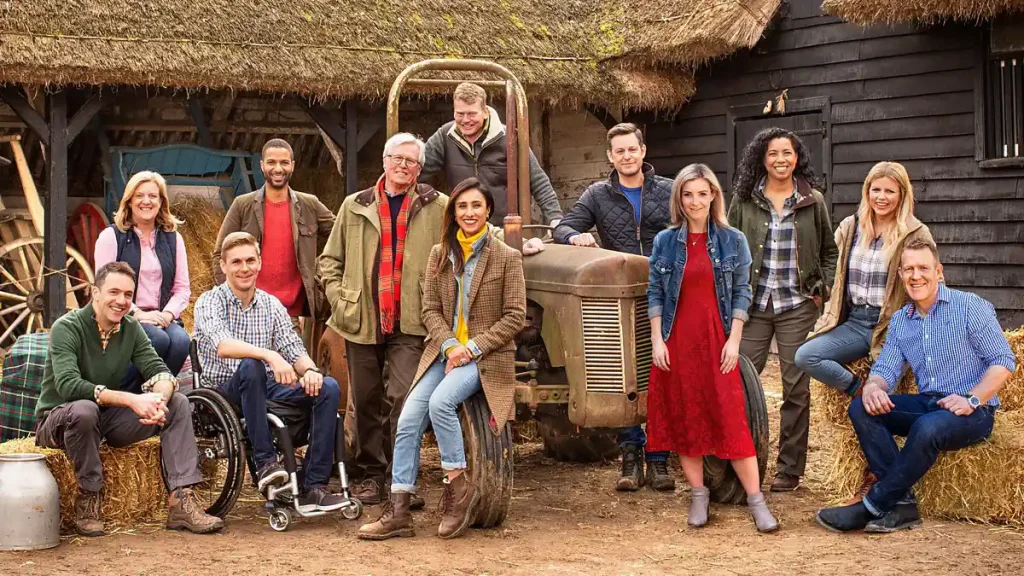
Countryfile – St Michael’s Mount – Some storms leave marks that last for generations. When Storm Goretti tore through Cornwall, it didn’t just bring wind and rain. It dismantled something precious. St Michael’s Mount, one of Britain’s most beloved landmarks, bore the full force of the tempest. Hurricane-strength winds ripped across the tidal island, stripping away nearly 80 per cent of its trees in a single, devastating night. For a tiny community of just 33 permanent residents, the morning after felt like waking inside a wound.
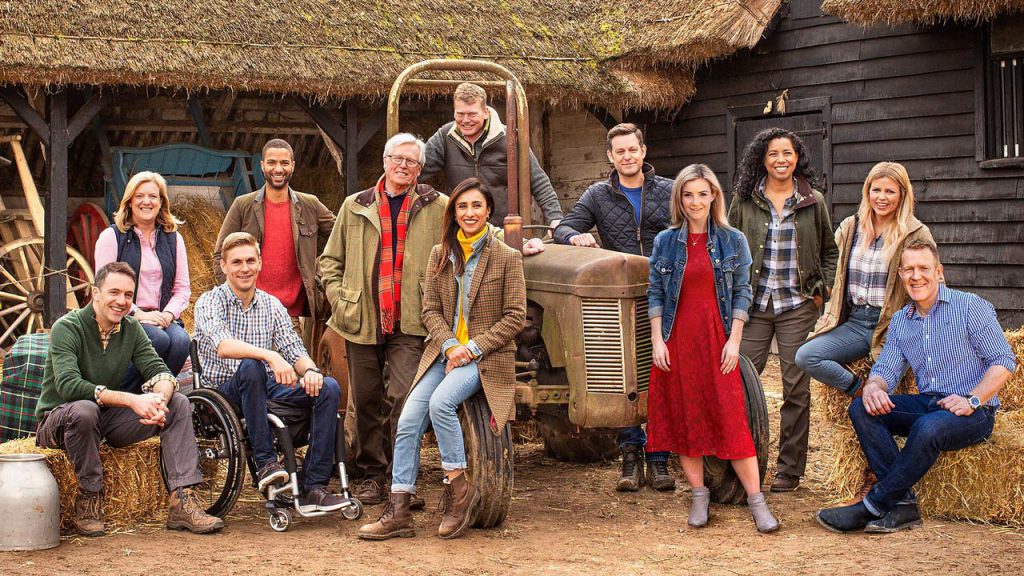
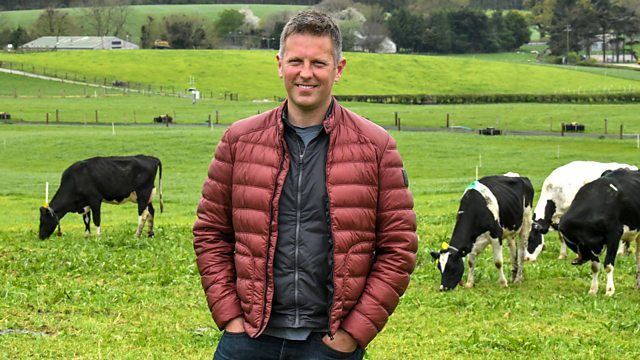
This week’s Countryfile 2026 heads straight to the heart of that aftermath. Sean Fletcher and Anita Rani travel to Cornwall to walk the battered grounds of St Michael’s Mount and witness firsthand what Storm Goretti left behind. What they find is both heartbreaking and quietly inspiring.
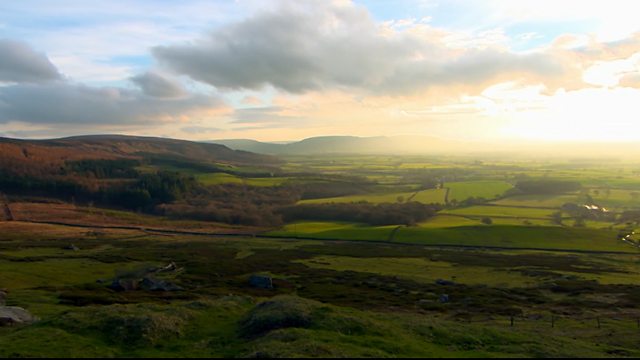
The trees are gone. Or most of them are. Those ancient, wind-sculpted shapes that framed the castle’s silhouette for centuries — vanished almost overnight. For anyone who has visited St Michael’s Mount, those trees were part of the magic. They softened the dramatic granite edges of the island, gave shelter to wildlife, and anchored the landscape in something that felt timeless. Now, in their absence, the island looks exposed. Raw. Like a face without its familiar expression.
Yet the people who call this extraordinary place home haven’t stopped moving. With Easter approaching fast, the community faces a race against the clock. Visitors come from across Britain and beyond to cross the causeway at low tide, to climb the cobbled paths, to stand at the top and look out across the sea. Reopening the Mount in time matters — not just for tourism, but for the soul of the place itself. Country life in Cornwall has always demanded resilience. Storm Goretti is simply the latest test.
Sean and Anita join the clean-up effort, getting their hands dirty alongside the island’s small but determined workforce. Fallen trunks need clearing. Paths need making safe. The gardens, once lush and sheltered, need assessing with honest, clear-eyed care. Every decision about what stays and what goes carries weight. Some of the damaged trees can still be saved. Others cannot. Working out the difference requires expertise, patience, and a certain kind of grief.
Because grief is part of this story too. Agricultural life and country life teach you that nature gives and nature takes. You learn to hold both truths at once. The gardeners and groundskeepers at St Michael’s Mount understand this better than most. They’ve spent years coaxing plants to flourish in the salt-laden air of the Cornish coast. Now they’re starting again in places — literally replanting hope into the earth.
What Countryfile captures so well in this episode is the texture of that effort. Not just the logistics, but the emotion. The quiet pride of a community that refuses to be defined by its worst moment. The way nature, even after destruction, begins almost immediately to reassert itself. Shoots appear. Birds return to unfamiliar perches. The island breathes again, differently than before, but still deeply.
Meanwhile, away from the coast, Datshiane Navanayagam takes on one of the most urgent and underreported issues in rural Britain today. Youth homelessness in the countryside doesn’t look the way most people imagine homelessness to look. There are no city streets, no doorways, no visible signs that something has gone badly wrong. Instead, young people sofa-surf between friends and relatives. They sleep in cars parked in lay-bys. They fall through gaps in systems not designed with rural isolation in mind.
Countryfile – St Michael’s Mount – After the Storm
Datshiane’s investigation pulls this issue into the light. The distances involved in rural areas mean that support services are harder to reach. Public transport is sparse. The cost of rural housing, often assumed to be cheaper than urban living, has risen sharply. Young people who grew up in villages and market towns find themselves priced out of the communities that shaped them. That’s a quiet crisis — and Countryfile is right to shine a light on it.
Together, these two threads make this a particularly rich episode of Countryfile 2026. On one hand, the elemental drama of nature and its consequences — a storm, an island, a community fighting back. On the other, a slower, less visible kind of hardship playing out across rural Britain’s hidden corners. Both stories are about belonging. Both ask what it means to call the countryside home when that home is under threat.
St Michael’s Mount has stood for over a thousand years. It has weathered sieges, tides, and centuries of Cornish weather. Storm Goretti is not the first assault, and it won’t be the last. But the wildlife that sheltered in those lost trees, the nature that shaped the island’s microclimate, the agricultural rhythms that still govern life on the mainland nearby — all of it will take time to recover. Recovery, though, is already underway.
That’s the thing about places like this. They carry a kind of memory in their stones and soil. The people who tend them carry it too. Sean and Anita leave St Michael’s Mount with something beyond a news story. They leave with a reminder that country life, at its best, is about exactly this — showing up, doing the work, and trusting that the landscape will meet you halfway.
Countryfile – St Michael’s Mount – After the Storm
Countryfile – St Michael’s Mount – After the Storm delivered a portrait of devastation and determination from one of Britain’s most iconic tidal islands, arriving on screens just weeks after Storm Goretti reshaped the landscape in ways that will take generations to reverse. Cornwall has weathered countless Atlantic storms, but Goretti was different. Hurricane-strength winds swept across the causeway and the castle-crowned rock in a single night, stripping away nearly 80 per cent of the island’s trees. For St Michael’s Mount, which had spent centuries cultivating a distinctive woodland character against the odds of salt air and thin soil, the loss was not merely aesthetic. It was structural, ecological, and deeply personal.
The island sits roughly 500 metres off the Cornish coast near Marazion, accessible at low tide by a cobbled causeway and by boat when the sea reclaims the path. Its permanent population numbers just 33 people, most of them connected to the St Aubyn family, who have managed the island for centuries. This is not a heritage site with a gift shop and a car park.
It is a living community, with children who grow up on the rock, workers whose daily commute depends on the tides, and families whose relationship with the land runs as deep as the granite beneath their feet. Country life here operates by rhythms that mainland agricultural life rarely demands. The storm did not simply damage trees. It dismantled something the community had built across lifetimes.
Countryfile – St Michael’s Mount – After the Storm explored what those 33 residents faced when daylight came after Goretti passed. The programme followed the immediate aftermath, the ecological reckoning, and the long-term replanting effort underway on the island’s steep southern slopes. It also turned its attention outward to the surrounding Cornish landscape, visiting working farms managing the tension between modern agricultural life and the demands of nature and wildlife recovery. Across the programme, the picture that emerged was of people who live closely enough to the land to feel its losses acutely, and who respond not with despair but with methodical, unglamorous work.
St Michael’s Mount has supported woodland on its upper slopes since at least the eighteenth century, a remarkable achievement on an exposed tidal island battered by prevailing south-westerly winds. The trees that grew there were not the grand forest specimens of inland Cornwall. They were wind-sculpted, salt-hardened, and slow-grown, shaped by decades of difficult conditions into forms that suited the island’s particular microclimate.
Losing them to a single storm meant losing not just the trees themselves but the shelter they provided to everything beneath them. Gardens, pathways, habitats for birds and invertebrates, and the visual character of the Mount from the mainland — all were changed in one night. Wildlife that had depended on the canopy for nesting and foraging suddenly found its habitat gone.
The morning after the storm, residents and estate workers began the process of assessing the damage. What they found was not the kind of loss that can be repaired in a season. The scale of the destruction meant that the usual language of storm management — clearing fallen timber, replanting a few gaps — did not apply. This was a reset, and the island’s response would need to be planned on a different timescale. The Countryfile – St Michael’s Mount – After the Storm episode placed this moment of reckoning at its centre, following the people responsible for deciding what comes next and how the island’s ecological future would be shaped.
The replanting project taking shape on the southern slopes represented both the practical and the philosophical challenge of restoration. Choosing which species to plant on a tidal island is not a straightforward exercise in arboriculture. Salt tolerance, wind resistance, drainage, and the specific aspect of each slope all determine what will survive. The team working on the Mount had to think not about what grew there before, but about what will grow there in the decades ahead, as climate patterns continue to shift. In that sense, the storm created an opportunity as well as a crisis. The blank slate of a cleared hillside allows for choices that dense existing woodland would never permit.
Meanwhile, the daily rhythms of island life continued around the restoration work. The 33 permanent residents of St Michael’s Mount maintain an existence that is genuinely unusual within British country life. Tides govern their access to the mainland. Children travel to school by boat or causeway depending on the season. Supplies arrive by the same route. The community operates as a self-contained unit in many practical respects, and the loss of the island’s trees added a new layer of difficulty to that already demanding existence. Wind that the canopy once softened now reached further into the gardens and living spaces of the island. The psychological weight of the changed landscape sat alongside the physical inconvenience.
Tom St Aubyn, part of the family whose stewardship of the island stretches back generations, appeared throughout the programme, articulating both the grief of the loss and the determination behind the recovery effort. His perspective carried the particular quality of someone who understands that he is a temporary custodian of something much older than himself. The decisions made now about what to plant, where, and in what sequence will define the island’s character for the next century. That awareness shaped everything about how the replanting was discussed and approached.
Countryfile – St Michael’s Mount and the Scale of What the Storm Took
The statistics from Storm Goretti are stark. Losing 80 per cent of the island’s trees in a single event is not a figure that sits easily alongside the usual language of storm damage. For context, the great storm of October 1987, which reshaped southern England’s woodland, typically took between 15 and 25 per cent of trees in the worst-affected areas. The destruction at St Michael’s Mount was of a different order.
What made it particularly severe was the combination of wind speed, direction, and the island’s exposed position. There was nowhere for the wind to be broken before it hit the slopes. The trees at the windward edge, which had spent decades hardening themselves against Atlantic weather, were overwhelmed. When they fell, they took the sheltered trees behind them with them.
The species lost included holm oak, a Mediterranean evergreen that had naturalised on the island’s sunny southern slopes and provided dense, salt-resistant cover. Holm oak is slow-growing and long-lived, which means that replacing a mature specimen takes not years but decades. Other losses included various broadleaved species that had established themselves in the more sheltered pockets of the island, along with the understorey plants that depended on the shade and root structure the trees provided.
The ecological knock-on effects spread quickly. Without canopy cover, soil that had been stable began to erode on steeper sections of the slope. Without root systems to hold moisture, drainage patterns changed. Without the structural complexity of mature trees, the wildlife that had relied on the woodland lost its habitat almost overnight.
The island’s gardening team, working under considerable time pressure, had to begin clearing fallen timber before replanting could begin. The sheer volume of fallen wood presented a logistical challenge on an island where heavy machinery cannot simply be driven in from the mainland. Everything had to be managed within the constraints of tidal access and the island’s narrow paths. The work was physical, sustained, and unglamorous, carried out by a small team whose connection to the place gave their labour a quality beyond professional obligation.
Replanting for the Future: Agricultural Life Meets Ecological Recovery
The replanting strategy adopted for St Michael’s Mount reflected current thinking about ecological restoration in exposed coastal environments. Rather than simply replacing like with like, the team considered the trajectory of climate change and the likely conditions the new trees would face over their lifetimes. Species that thrived in the mid-twentieth century may struggle in the warmer, wetter, stormier conditions projected for Cornwall’s coastline in the coming decades. The selection process therefore involved consultation with ecologists and arborists who could advise on resilience alongside aesthetics.
Holm oak featured in the replanting plan precisely because of its proven track record on the island. Despite being the species most spectacularly lost in the storm, its salt tolerance and drought resistance made it the logical choice for the exposed southern slopes. However, the planting approach changed. Rather than relying on the existing pattern of trees, which had developed organically over time, the new scheme used denser initial planting at strategic points, creating wind shelter for the more vulnerable species that would follow. This layered approach mirrors techniques used in agricultural life and farm woodland creation elsewhere in Britain, adapted to the particular demands of a tidal island.
Nature and wildlife considerations shaped the planting design as well. The cleared slopes offered an opportunity to introduce structural diversity that the previous woodland, which had evolved without deliberate design, lacked. Areas of scrub were incorporated alongside the tree planting to create transitional habitat zones valued by a range of bird species. Native wildflowers were seeded into clearings where light now reached the ground for the first time in decades. In this respect, the restoration plan attempted to go beyond simple tree replacement and toward a more ecologically complex landscape.
Countryfile – St Michael’s Mount: The Community Living Inside the Recovery
The 33 permanent residents of St Michael’s Mount did not experience the storm’s aftermath as an abstract conservation challenge. They lived inside it. The changed landscape was visible from every window, the increased wind exposure was felt in every garden, and the absence of the woodland’s sound-dampening effect altered the acoustic character of the island in ways that were noticed immediately. Country life in an isolated community carries an intensity of relationship with the environment that is difficult to replicate on the mainland, and the loss of the trees deepened that relationship in a painful direction.
Children growing up on the island after the storm will form their understanding of the place without the woodland that shaped previous generations’ experience of it. This generational dimension was not lost on the adults planning the recovery. Planting trees that will mature in thirty or forty years is an act of faith in a future community, and in the continuity of the island as a place worth sustaining. Tom St Aubyn spoke about this sense of custodianship explicitly, framing the replanting not as restoration to a previous state but as investment in a future that will look different but no less valuable.
The practical logistics of island life continued to impose themselves throughout the recovery. Access remained tidal. Supplies of young trees and planting materials had to be timed around the causeway schedule. Workers moving heavy materials up the steep southern slopes did so without the assistance of the equipment that would be standard on a mainland site. These constraints, which define the texture of country life on the Mount, also shaped the pace and method of the restoration. What might take weeks elsewhere took longer here, and that slower pace was accepted as part of the island’s character rather than resisted.
The Surrounding Landscape: Agricultural Life and Wildlife Across Cornwall
Countryfile – St Michael’s Mount – After the Storm did not confine itself to the island. The programme moved across the wider Cornish landscape, visiting working farms and speaking to those managing the tension between productive agricultural life and the increasing demands of nature and wildlife policy. One strand followed farmers navigating the post-Brexit agricultural support system, which has shifted subsidy payments away from land area and toward environmental outcomes. For those whose livelihoods depend on livestock and arable production, this transition requires significant adjustment.
The shift toward agri-environment schemes has encouraged more farmers to set aside land for wildlife recovery, create field margins for pollinators, and manage hedgerows for biodiversity rather than purely for stock control. In Cornwall, where the landscape of small fields, ancient hedgebanks, and sunken lanes is itself ecologically significant, these practices connect agricultural life to a longer tradition of land management that predates the intensive farming era. Several farmers in the programme described this reconnection not as a burden imposed from outside but as a return to the way their predecessors had worked.
Wildlife in the farmed landscape of Cornwall is responding to these changes, though the picture is uneven. Populations of farmland birds, which declined severely through the latter decades of the twentieth century, are showing early signs of recovery on farms that have introduced sympathetic management. Lapwing, skylark, and yellowhammer appeared in footage from farms where field margins and reduced pesticide use have created conditions for ground-nesting birds. These are not dramatic returns, but they represent movement in the right direction, and the farmers supporting them spoke with genuine investment in the outcomes.
Nature and Wildlife on the Island: Habitats Lost and Found
The trees of St Michael’s Mount supported a wildlife community that was not fully understood until it was gone. Invertebrate surveys carried out in the aftermath of Storm Goretti began to map what had been lost and what, perhaps unexpectedly, had been created. The fallen timber, rather than being entirely removed, was retained in some areas as habitat for wood-boring beetles, fungi, and the birds that feed on them. Dead wood in a managed landscape is often tidied away instinctively, but the ecological value of decaying timber is well established, and the island’s team recognised it as an asset rather than a problem.
The clearings opened by the storm let light reach soil that had been in permanent shade, triggering germination of seeds that had lain dormant for years. Bramble and other opportunistic scrub species moved in quickly, creating dense ground cover that provided immediate habitat for small mammals and nesting birds. This process of succession, familiar in any disturbed landscape, was happening at accelerated pace on the Mount because of the completeness of the original disruption. Nature and wildlife were not waiting for human intervention. They were already responding.
The garden areas of the island, which were maintained to a high horticultural standard before the storm, faced their own adjustment. Plants that had grown in the microclimate created by the surrounding trees now faced full exposure to wind and salt. Some did not survive the transition. Others proved more resilient than expected, and the gardening team began to develop a revised understanding of what the island’s exposed conditions could support. This adaptive process, uncomfortable in the short term, was laying the groundwork for a more resilient planting palette going forward.
Countryfile – St Michael’s Mount and the Longer Arc of Landscape Change
The storm and its aftermath placed St Michael’s Mount within a wider story of landscape change that is playing out across Britain. Extreme weather events are becoming more frequent, and the communities and habitats that bear the consequences are increasingly having to think not in terms of restoration to a previous state but in terms of adaptation to new conditions. The island’s recovery plan, with its emphasis on resilience and ecological complexity rather than simple replacement, exemplified this shift in approach.
Country life in exposed coastal locations has always involved negotiating with extreme weather. Cornwall’s farming and fishing communities have understood for centuries that the sea and the wind set the terms of existence along this coast, and that the appropriate response to their power is not to resist but to adapt. Storm Goretti was an extreme expression of that permanent reality, but the island’s response drew on the same tradition of pragmatic adjustment that has shaped country life in this part of Britain across generations.
The programme noted that St Michael’s Mount is not alone in facing this kind of post-storm reckoning. Across Britain, from the upland forests of Scotland to the coastal woodlands of Wales and the South-West, extreme weather events are forcing land managers to rethink the composition and structure of the landscapes they steward. The principles being applied at the Mount — resilience planting, ecological complexity, dead wood retention, early successional habitat creation — are increasingly mainstream in conservation practice, even where they were once considered unconventional.
Countryfile – St Michael’s Mount: Recovery as an Act of Faith
There is something particular about planting trees that will take thirty years to mature. It requires a quality of commitment that most human projects do not demand. The people planting on the southern slopes of St Michael’s Mount in the weeks and months following Storm Goretti would not, in most cases, see those trees reach their full form. They were planting for their children, or for the strangers who would live on the island after them, or simply because the continuity of the place mattered more than any individual’s experience of it.
Tom St Aubyn’s articulation of this custodial responsibility gave the programme its emotional core. The St Aubyn family’s stewardship of the island spans centuries, and the storm, as severe as it was, sat within that longer arc of responsibility. Trees planted now would eventually create the same layered, sheltered, ecologically complex woodland that Storm Goretti destroyed. The process would be slow, and it would require sustained attention across decades. But the community on the island had chosen to begin it, and that choice said something significant about the nature of deep attachment to place.
Agricultural life elsewhere in Cornwall, as explored through the programme’s farm visits, operated on a similar timescale in certain respects. Hedgebank restoration, agroforestry, and soil carbon building are all investments that pay returns on a generational scale. The farmers who have committed to these practices are doing so without certainty about the policy environment they will face in ten or twenty years. Like the planters at the Mount, they are making long-term bets on the value of working with the land’s biological potential rather than against it.
Nature and wildlife, for their part, do not wait for human timelines to resolve. The succession already underway on the cleared slopes of St Michael’s Mount demonstrated that biological recovery is not a slow, reluctant process. Given the right conditions, it is vigorous, opportunistic, and faster than human planning often expects. The task of the island’s stewards was not to drive that process but to guide it, ensuring that the spontaneous energy of ecological recovery was channelled toward a landscape that would serve the community and the wildlife of the Mount for the century ahead.
Countryfile – St Michael’s Mount – After the Storm closed with the island still mid-recovery, its slopes a patchwork of cleared ground, young plantings, and the remnant trees that Goretti had spared. It was not a resolved image, and it was not meant to be. The programme offered something more honest than a tidy conclusion: a community in the middle of a long piece of work, clear-eyed about the scale of what was lost and equally clear-eyed about the effort required to build something new.
Country life on the Mount had always been defined by its relationship with the extraordinary conditions of the place. The storm had changed those conditions profoundly. The response, methodical and unhurried, was already shaping what would grow next.
FAQ Countryfile – St Michael’s Mount – After the Storm
Q: What happened to St Michael’s Mount during Storm Goretti?
A: Storm Goretti struck St Michael’s Mount with hurricane-strength winds, destroying nearly 80 per cent of the island’s trees in a single night. The tidal island, located roughly 500 metres off the Cornish coast near Marazion, lost woodland that had taken generations to establish. The destruction reshaped the island’s landscape, ecology, and the daily lives of its 33 permanent residents almost overnight.
Q: How many people live permanently on St Michael’s Mount?
A: Just 33 people live permanently on St Michael’s Mount, most connected to the St Aubyn family, whose stewardship of the island spans centuries. Country life there operates under unusual constraints. Tides govern access to the mainland, children travel to school by boat or causeway, and supplies arrive according to tidal schedules. The storm added significant hardship to an already demanding existence.
Q: Why was the loss of trees so significant for the island’s wildlife?
A: The trees supported a complex wildlife community providing nesting habitat, foraging ground, and shelter for birds and invertebrates. Additionally, their root systems stabilised the soil and regulated drainage on the steep southern slopes. When the canopy disappeared, soil erosion accelerated, drainage patterns changed, and nature and wildlife dependent on the woodland lost their habitat almost immediately. The full ecological impact only became clear through post-storm surveys.
Q: Which tree species were lost in the storm, and which are being replanted?
A: Holm oak, a salt-resistant Mediterranean evergreen well established on the sunny southern slopes, suffered heavily. Various broadleaved species in more sheltered pockets were also lost. However, holm oak features prominently in the replanting plan because its proven tolerance of salt air and drought makes it the most logical choice for exposed coastal conditions. The new planting scheme uses denser initial placement to create wind shelter for more vulnerable species that follow.
Q: How does the replanting strategy differ from simply replacing the lost trees?
A: Rather than recreating the previous woodland exactly, the restoration plan selects species suited to future climate conditions rather than past ones. Furthermore, the design incorporates scrub zones, wildflower clearings, and structural diversity that the original woodland lacked. This layered approach mirrors techniques used in agricultural life and farm woodland creation across Britain. The goal is a more ecologically complex and resilient landscape, not a replica of what Storm Goretti destroyed.
Q: What unexpected wildlife benefits emerged after the storm cleared the slopes?
A: Light reaching previously shaded ground triggered germination of dormant seeds, producing new ground-level habitat quickly. Bramble and scrub species colonised cleared areas, providing cover for small mammals and nesting birds. Additionally, fallen timber retained in certain locations created valuable habitat for wood-boring beetles and fungi. Nature and wildlife responded faster than anticipated, demonstrating that biological recovery is vigorous when given the right conditions, even in a severely disrupted landscape.
Q: How does tidal access affect restoration work on St Michael’s Mount?
A: Every material needed for restoration, from young trees to planting equipment, must arrive via the tidal causeway or by boat. Heavy machinery used routinely on mainland sites cannot operate on the island’s narrow paths. Consequently, workers carried materials up steep slopes by hand, and the entire operation was scheduled around tide times. This pace was accepted as intrinsic to country life on the Mount rather than treated as an obstacle to overcome.
Q: How are Cornish farmers adapting agricultural life to support nature and wildlife recovery?
A: The shift away from area-based subsidies toward agri-environment payments has encouraged many Cornish farmers to create wildflower field margins, manage hedgerows for biodiversity, and set aside land for wildlife recovery. Several farmers described this as a return to practices their predecessors used before intensive agriculture became dominant. Farmland birds including lapwing, skylark, and yellowhammer are showing early recovery on farms where sympathetic management has improved ground-nesting conditions. Progress remains gradual but measurable.
Q: What role does Tom St Aubyn play in the island’s recovery?
A: Tom St Aubyn, part of the family that has managed St Michael’s Mount for generations, leads the custodial response to the storm’s damage. He frames the replanting not as restoration to a former state but as investment in a future the island’s current residents may never fully see. His perspective carries the weight of long-term stewardship, acknowledging that trees planted today will define the island’s character and support its nature and wildlife for the next century.
Q: What broader lessons does St Michael’s Mount offer about landscape recovery after extreme weather?
A: The island’s experience illustrates that post-storm recovery requires adaptation rather than simple restoration. Principles applied there, including resilience planting, dead wood retention, and early successional habitat creation, are increasingly standard across British conservation practice. Furthermore, the community’s response demonstrates that deep attachment to place sustains long-term commitment in ways that policy alone cannot. Country life in exposed coastal locations has always demanded pragmatic adjustment to powerful natural forces, and Storm Goretti reinforced that lesson emphatically.