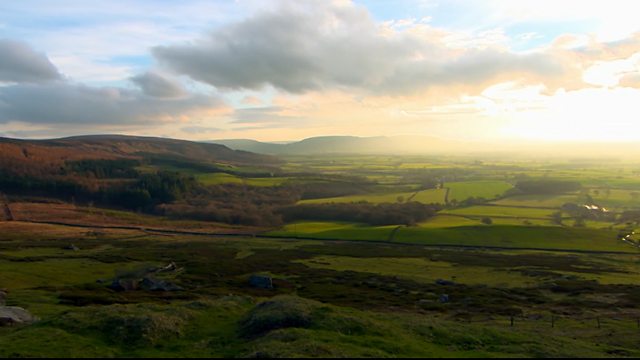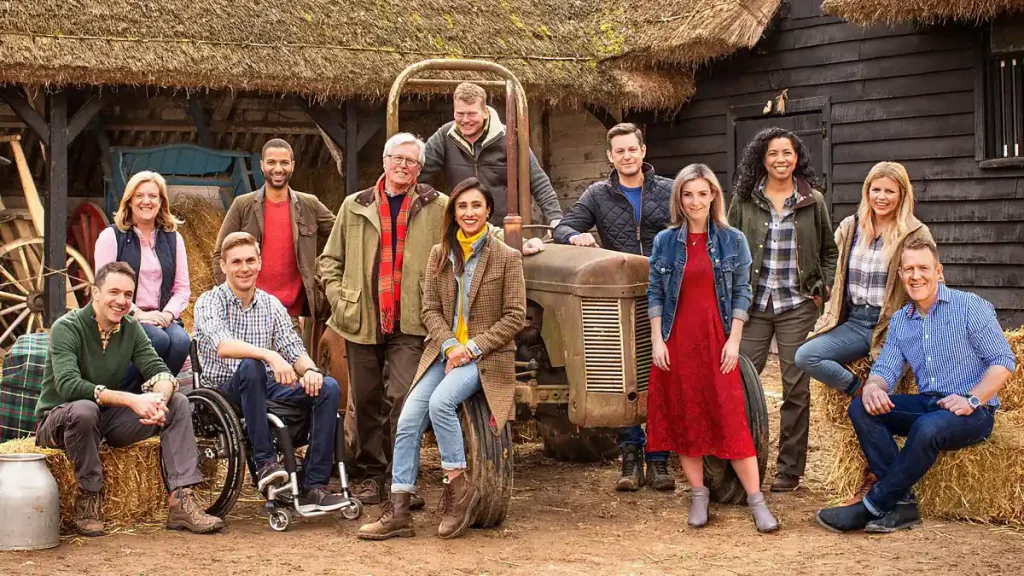
Countryfile – Dusk Til Dawn steps into the shadows for one of its most atmospheric episodes yet. Dusk Til Dawn takes viewers deep into the North York Moors, a landscape transformed when daylight fades. This is country life stripped back to its most elemental — wild, quiet, and full of secrets.
The North York Moors holds a rare and precious status. It is one of the UK’s designated Dark Sky Reserves, a place where true darkness is still possible. For those who understand what that means, it is worth protecting at almost any cost. Tonight, Countryfile goes in search of what lives and breathes once the last light dies.
Margherita Taylor heads to the Dark Skies Festival, drawn in by lanterns and conversation. Yet the mood is far from celebratory. She quickly discovers a sobering truth. Light pollution is quietly dismantling the rhythms of nocturnal wildlife across Britain. Hedgehogs, owls, bats, moths — each depends on darkness to hunt, to navigate, and to survive. Without it, their instincts misfire. Their ancient routines begin to unravel.
Margherita speaks with conservationists who have spent years piecing together this hidden crisis. Their findings are striking. Artificial light, spilling endlessly into the night, acts like a slow interference signal. It disrupts migration patterns. It confuses pollinators. It silences creatures that have evolved over millennia to live by the moon. The problem is not dramatic or sudden. Instead, it creeps in, orange glow by orange glow, until the darkness is gone entirely.
Meanwhile, Sammi Kinghorn is out on the moors meeting a different kind of hero. These are the volunteers and scientists gathering dark-sky data, methodically recording light levels across the landscape. Their work is patient and precise. Furthermore, it is urgent. Every reading helps build the case for better protection. Every data point matters.
Sammi also meets those working on practical solutions. Across farms, villages, and nature reserves, wildlife-friendly lighting is slowly replacing traditional bulbs. The new designs are warmer, dimmer, and directional. They light what needs lighting without bleeding into the sky above. It sounds simple. In practice, it requires real commitment from communities willing to change old habits for the sake of nature.
What strikes Sammi most is the passion she encounters. These are not distant scientists issuing warnings from behind desks. They are local people, deeply attached to this landscape, who refuse to watch it dim. Their dedication gives Dusk Til Dawn its emotional core. Country life, at its best, has always meant stewardship — caring for the land beyond your own lifetime.
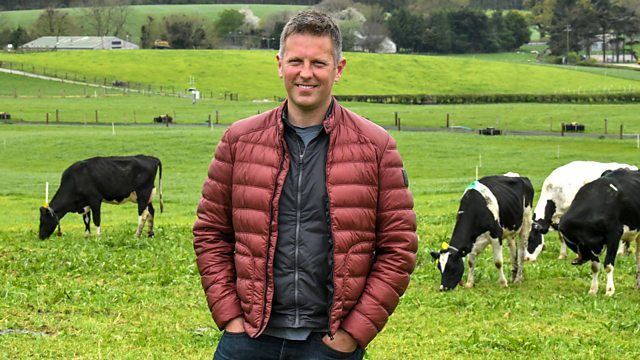
As the episode moves toward morning, the mood shifts entirely. Adam Henson is already on the road as most of the country still sleeps. He arrives at a cattle mart before dawn has properly broken, stepping into a world of noise, breath, and purpose. Agricultural life does not wait for sunrise. It never has.
The mart is busy with familiar faces and unfamiliar apprentices. Adam seeks out the younger generation — those who have already learned to set their alarms hours before the rest of the world stirs. Their stories are honest and grounding. Moreover, they offer a reminder of something essential. British farming depends on people willing to give everything, including their sleep.
One apprentice describes rising at four in the morning as simply normal. Another talks about the satisfaction of finishing a full day’s work before most people have eaten breakfast. There is no self-pity in any of it. Instead, there is quiet pride. Agricultural life demands discipline. In return, it offers a connection to the land that very few modern careers can match.
Adam moves between the pens, watching the animals, talking to traders and mentors alike. The cattle mart hums with the language of country life — practical, direct, and warm beneath the surface. This is Countryfile at its most grounded. No spectacle. Just the enduring rhythm of rural Britain doing what it has always done.
Countryfile – Dusk Til Dawn
Dusk Til Dawn holds together beautifully as an episode precisely because it honours both ends of the day. The night belongs to wildlife and wonder. The early morning belongs to work and graft. Together, they paint a portrait of country life that is richer and more complex than most city-dwellers ever imagine.
Nature runs on its own timetable. Countryfile 2026 has always understood that. This episode simply follows that timetable more closely than usual, venturing into the hours that television rarely visits. The result feels genuinely special.
There is also something quietly political about Dusk Til Dawn. The episode does not lecture. Nevertheless, its message is clear. The darkness above the North York Moors is not just beautiful. It is functional. It is necessary. Lose it, and something irreplaceable goes with it — not just for wildlife, but for the human soul too.
Stargazing, it turns out, is not merely a hobby. It is a form of perspective. Standing beneath a truly dark sky, with the Milky Way spread above like scattered salt, reminds you of your place in something vast. That reminder is worth protecting.
Similarly, watching a young apprentice throw themselves into the pre-dawn chaos of a cattle mart is its own kind of perspective. Agricultural life has continuity built into it. Each generation hands something on to the next. That passing of knowledge and graft is as old as farming itself.
Countryfile captures both beautifully in this episode. From the patient data-gathering on the moors to the clatter of the early morning mart, Dusk Til Dawn is television that respects its subject. It trusts the landscape, the people, and the viewer to find meaning without being told where to look.
Countryfile – Dusk Til Dawn
Countryfile – Dusk Til Dawn sets out after dark across one of Britain’s most treasured and carefully protected landscapes, the North York Moors, to ask a deceptively simple question: what happens to the natural world when the sun goes down? The answer, it turns out, is both extraordinary and increasingly fragile. As light pollution spreads further into rural Britain, the darkness that nocturnal wildlife depends upon is quietly disappearing. This episode of Countryfile 2026 places that disappearance at the centre of its investigation, moving between scientific fieldwork, community action, and the ancient rhythms of agricultural life to build a picture that is urgent, absorbing, and deeply rooted in the countryside it celebrates.
The North York Moors is not merely a beautiful stretch of upland England. It holds official status as one of the UK’s International Dark Sky Reserves, a designation that recognises the exceptional quality of its night skies and commits those who manage the landscape to protecting them. That status matters now more than ever. Across the country, artificial light is encroaching on places that were once genuinely dark, and the consequences for wildlife are only beginning to be understood. Country life in this corner of Yorkshire exists in close relationship with that darkness, and the people who live and work here are acutely aware of what is at stake.
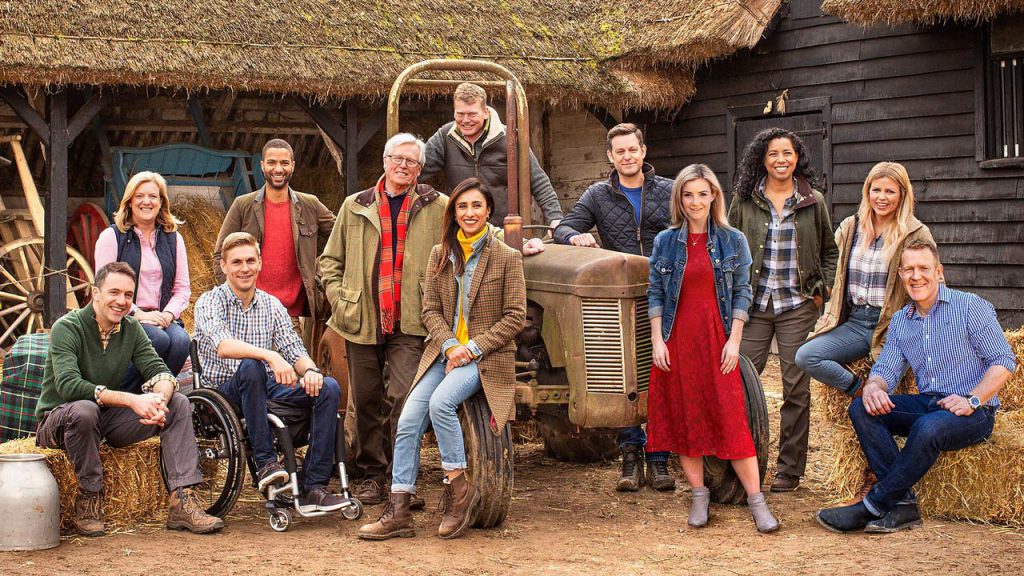
Dusk Til Dawn opens with a clear sense of purpose. The episode does not linger at the edges of its subject. Instead, it moves directly into the field, accompanying presenters Margherita Taylor, Sammi Kinghorn, and Adam Henson across a single night and into the early hours of the following morning. Each follows a distinct thread. Margherita investigates the impact of light pollution on nocturnal wildlife and the science being done to understand it. Sammi meets the volunteers and communities working to protect dark skies through data collection and practical lighting solutions. Adam, meanwhile, heads to a cattle mart long before dawn to meet the young apprentices whose agricultural life begins while most of Britain is still asleep.
The episode was filmed partly around the annual Dark Skies Festival, which draws visitors, scientists, and conservationists to the North York Moors each year. The festival provides a focal point for the episode’s darker concerns, gathering people who share a commitment to preserving what remains of Britain’s natural night. However, Countryfile – Dusk Til Dawn is careful not to treat this as a simple celebration. The festival exists precisely because the thing it celebrates is under threat. That tension runs throughout, giving the episode a quiet but persistent urgency.
Nature, as this episode makes clear, does not sleep when humans do. The North York Moors after dark is alive with movement, sound, and ecological activity that most people never witness. Barn owls quarter the moorland edges. Bats navigate by echolocation along hedgerows and field margins. Moths, drawn by scent rather than sight, move between flowers in total darkness. These creatures have evolved over millions of years to exploit the night. Each depends on genuine darkness to function, and each is vulnerable to the growing tide of artificial light spilling outward from towns, roads, and farms.
Margherita Taylor’s strand of the episode begins with that vulnerability. She joins researchers and conservationists working in the field on the moors, gaining access to work that rarely reaches a mainstream audience. What she finds is both scientifically rigorous and immediately accessible. The case being made is not abstract. It is grounded in specific animals, specific behaviours, and specific consequences. The wildlife of the North York Moors is not a backdrop to the story. It is the story.
Sammi Kinghorn’s contribution adds a different dimension. Where Margherita focuses on the ecological impact of light pollution, Sammi concentrates on the human response to it. She meets the volunteers monitoring light levels across the moors, the community groups retrofitting their villages with wildlife-friendly lighting, and the individuals who have made the protection of dark skies a personal mission. Their work is practical, collaborative, and genuinely effective. Furthermore, it demonstrates something important about country life in the twenty-first century — that stewardship of the natural environment increasingly requires both scientific understanding and community commitment.
Adam Henson’s pre-dawn visit to a cattle mart completes the episode’s sweep across the hours of darkness. Agricultural life, as Adam reminds viewers, has always operated on a different clock from the rest of the country. Long before the sky begins to lighten, the mart is already busy with livestock, traders, and the next generation of farming professionals. The young apprentices Adam meets have already absorbed this rhythm. They carry it as a point of pride.
The Dark Sky Reserve: Why the North York Moors Matters to Countryfile – Dusk Til Dawn
The International Dark Sky Reserve status of the North York Moors is not a honorary title. It reflects a rigorous assessment of the quality of darkness above the moors and a formal commitment to maintaining it. Achieving and retaining that status requires active management of artificial light sources within the reserve and its surrounding buffer zones. The designation also recognises the scientific and ecological value of genuine darkness — something that is becoming vanishingly rare across Britain.
The North York Moors covers more than 1,400 square kilometres of upland heath, woodland, and valley farmland. Its remoteness from major urban centres has historically protected it from the worst effects of light pollution, but that protection is not absolute. Roads, farm buildings, villages, and visitor facilities all generate artificial light. Without careful management, each new source of illumination adds to the cumulative glow that erodes the quality of the night sky.
The Dark Skies Festival that provides the backdrop for much of Countryfile – Dusk Til Dawn brings this challenge into sharp focus. It draws hundreds of visitors to the moors each year, creating both an opportunity and a responsibility. The festival promotes awareness of dark sky issues while demonstrating that communities can choose to manage light in ways that benefit both people and wildlife. It is a model that conservationists hope will spread beyond the reserve’s boundaries.
The reserve’s value extends well beyond astronomy. For the wildlife of the moors, genuine darkness is not a luxury. It is a biological necessity. The ecological case for dark sky protection rests on decades of research showing that artificial light disrupts the behaviour, physiology, and reproduction of a wide range of species. That research is now informing practical conservation work on the ground, much of which is explored directly in this episode.
Light Pollution and Nocturnal Wildlife: What Margherita Taylor Discovers
Margherita Taylor’s investigation into light pollution and its effects on nocturnal wildlife is the scientific heart of Dusk Til Dawn. She begins by establishing the basic problem. Artificial light at night interferes with the biological cues that nocturnal animals use to regulate their behaviour. For creatures that hunt, navigate, or reproduce in darkness, even low levels of artificial light can have significant consequences.
Barn owls are among the species most directly affected. These birds hunt by sight and sound, quartering open ground in near-total darkness. Research conducted on and around the North York Moors has shown that barn owls avoid well-lit areas, even when those areas contain abundant prey. The practical effect is a reduction in the effective habitat available to a species that is already under pressure from changes in agricultural land use. Light pollution, in this context, is not a peripheral threat. It is a direct constraint on where barn owls can live and how successfully they can breed.
Bats present a more complex picture. Different species respond to artificial light in different ways. Some fast-flying species are actually attracted to lit areas, where insects congregate around light sources. However, slower-flying species — including some of Britain’s rarest bats — actively avoid light. The consequence is a fragmentation of the landscape, with lit areas acting as barriers that prevent bats from moving between roosts and foraging grounds. Connectivity is essential for healthy bat populations, and light pollution is quietly severing it.
Moths are particularly vulnerable. As pollinators, they perform a crucial ecological function, transferring pollen between plants during the hours when daytime pollinators are inactive. Artificial light disrupts their navigation, drawing them away from their routes and in many cases causing them to exhaust themselves circling light sources. The collapse in moth populations recorded across Britain over recent decades is linked to multiple factors, but light pollution is increasingly recognised as a significant contributor. Margherita’s conversations with researchers on the moors make this connection explicit and compelling.
The research being conducted in and around the Dark Sky Reserve is therefore not merely of local interest. It contributes to a growing body of evidence that is reshaping how conservationists think about habitat management. Protecting darkness, these scientists argue, should be treated as a conservation priority on a par with protecting habitat quality and reducing pesticide use.
Measuring the Dark: Sammi Kinghorn and the Data Behind the Night Sky
Sammi Kinghorn’s strand of Dusk Til Dawn focuses on the practical work of measuring and monitoring the quality of darkness across the North York Moors. This is painstaking, methodical work, but it underpins everything else. Without reliable data on light levels across the reserve, it is impossible to identify problem areas, track changes over time, or demonstrate the effectiveness of mitigation measures.
The volunteers Sammi meets are part of a coordinated monitoring network. Using calibrated instruments called Sky Quality Meters, they take regular readings at fixed points across the moors. Each reading captures the brightness of the night sky at that location, expressed in a standardised unit that allows comparisons to be made across time and geography. The data builds up into a map of darkness and light across the reserve, revealing where the night sky remains genuinely dark and where it is being compromised.
The results are used directly by the reserve’s management team. Areas where light levels have increased trigger investigation. Sometimes the cause is a new installation — a security light on a farm building, a road improvement scheme, or a new housing development on the reserve’s fringe. In each case, the monitoring data provides the evidence needed to begin a conversation about mitigation. That conversation is not always easy. However, the data gives conservationists a factual foundation that is difficult to dismiss.
Sammi also discovers that community engagement is central to the reserve’s success. The dark sky designation is not enforced through legislation alone. It depends on the willingness of farmers, householders, businesses, and local authorities to modify their behaviour. That willingness, where it exists, reflects a genuine attachment to the landscape and a recognition that the night sky is part of what makes the North York Moors exceptional. Country life here carries a sense of shared responsibility for a shared resource.
Wildlife-Friendly Lighting: Practical Solutions from the Countryfile – Dusk Til Dawn Investigation
One of the most practically valuable aspects of Countryfile – Dusk Til Dawn is its examination of wildlife-friendly lighting. Sammi Kinghorn spends time with the teams and individuals who are retrofitting existing light installations across the reserve, replacing conventional bulbs with alternatives that minimise ecological impact without compromising safety or usability.
The principles behind wildlife-friendly lighting are straightforward. Light should be directed downward, rather than allowed to scatter upward and sideways into the sky and surrounding landscape. It should be warm in colour temperature, since blue-rich white light is more disruptive to wildlife than warmer amber tones. It should be used only where genuinely necessary, at the lowest intensity that meets the practical need. And where possible, it should be controlled by timers or motion sensors to reduce the number of hours during which it operates.
These principles are not technologically demanding. Modern LED technology makes it entirely possible to design lighting systems that meet all of them. The challenge is not technical. It is behavioural. Persuading farmers, householders, and local authorities to replace familiar light fittings with alternatives requires both information and motivation. The Dark Sky Reserve programme provides both, offering practical advice alongside the broader case for protecting nocturnal wildlife and the quality of the night sky.
The farms that have adopted wildlife-friendly lighting on the North York Moors report no significant disadvantage. Security is maintained. Yards and access routes remain adequately lit. However, the ecological footprint of their lighting has been dramatically reduced. Bat activity has increased on some farms following the switch. Moths have been recorded in areas where they were previously absent. These are small-scale observations, but they are consistent with the broader scientific evidence and they resonate powerfully with the farmers involved.
Sammi’s conversations with these farmers reveal something important about the relationship between agricultural life and the natural environment. Farmers on the North York Moors are not indifferent to the wildlife around them. Many express a genuine interest in bats, owls, and other nocturnal species, and a willingness to modify their practices if the case is made clearly and the alternatives are practical. The reserve programme succeeds, in large part, because it works with that goodwill rather than against it.
Countryfile – Dusk Til Dawn and the Pre-Dawn World of the Cattle Mart
Adam Henson’s contribution to Dusk Til Dawn takes the episode in a different direction entirely. While Margherita and Sammi are engaged with the science and conservation of the night, Adam is preparing to enter a world that has always operated in the pre-dawn darkness — the world of the livestock mart. His visit to a cattle mart in the early hours of the morning provides a vivid counterpoint to the episode’s ecological concerns. Agricultural life, as Adam demonstrates, has its own relationship with darkness and the early hours of the day.
The cattle mart is already busy when Adam arrives. Livestock have been brought in from farms across the region, many of them transported overnight. The people running the mart — auctioneers, handlers, vets, and administrators — have been at work for hours. The noise and energy of the place contrast sharply with the quiet of the moors that the episode has inhabited up to this point. However, the contrast is not a disruption. It is a reminder that the countryside contains multitudes.
Adam seeks out the apprentices — young people who have chosen agricultural life as their career and are learning its disciplines from the ground up. What strikes him immediately is how naturally they have adapted to the mart’s unsocial hours. Rising before four in the morning is not, for these young professionals, a hardship. It is simply what the job requires. They describe it with a matter-of-factness that speaks to a deeper truth about farming culture: the work comes first, and the clock adjusts accordingly.
The apprentices Adam meets come from a range of backgrounds. Some have grown up on farms and are extending a family tradition. Others have come to agricultural life from outside, drawn by a desire for work that is physically demanding, practically grounded, and genuinely meaningful. What they share is an enthusiasm that cuts through the early hour and the hard conditions. They are learning not just technical skills but a whole way of engaging with the land and its animals.
Agricultural Life at Dawn: Apprentices and the Future of Farming
The apprenticeship programmes represented at the cattle mart are part of a broader effort to attract and retain talent in British agriculture. The industry faces significant challenges. An ageing workforce, changing land use patterns, and the economic pressures of modern farming have made recruitment and retention increasingly difficult. The apprentices Adam meets are, in this context, a source of considerable optimism.
Their training covers a wide range of competencies. They learn to assess livestock, to understand the economics of the mart, and to work effectively within the physical and logistical demands of a busy sale. They also develop the interpersonal skills required to operate in a world built on trust, reputation, and long-standing relationships. The cattle mart is not merely a commercial venue. It is a social institution, and understanding how it works requires more than technical knowledge.
Adam’s conversations with both apprentices and their mentors reveal a consistent theme: the importance of patience and observation in agricultural life. Experienced farmers and mart workers describe the process of learning to read animals, to understand what their behaviour is communicating, and to respond appropriately. This is knowledge that cannot be acquired from a textbook. It accumulates slowly, through repetition and attention, over years of practice. The apprentices are at the beginning of that process, and they know it.
The mart also functions as a point of connection between different generations of agricultural life. Older farmers bring decades of experience and a detailed knowledge of local conditions. Younger apprentices bring energy, adaptability, and in some cases, formal qualifications that their predecessors did not have access to. The exchange between these generations is one of the most valuable things the mart facilitates, and it happens naturally, in the course of a day’s trading, without any formal structure.
Darkness as a Resource: Conservation Lessons from Countryfile – Dusk Til Dawn
One of the most significant contributions of Dusk Til Dawn is its framing of darkness itself as a natural resource — something with ecological value that can be degraded, protected, and restored. This framing has important practical implications. If darkness is treated as a resource, its loss can be measured, its protection can be justified on conservation grounds, and investments in reducing light pollution can be evaluated against clear ecological criteria.
The research conducted on the North York Moors supports this framing directly. Scientists working with barn owls, bats, and moths have demonstrated that the presence or absence of darkness has measurable effects on the abundance and distribution of these species. Furthermore, the improvements recorded on farms that have switched to wildlife-friendly lighting show that restoration is possible. Reducing light pollution does not require abandoning artificial light entirely. It requires using it more thoughtfully.
The reserve’s approach to dark sky management reflects a sophisticated understanding of the relationship between human activity and natural processes. It acknowledges that people need light for safety, productivity, and wellbeing. However, it insists that those needs can be met without the indiscriminate use of light that currently characterises much of the British countryside. The difference between a well-designed lighting scheme and a poorly designed one is not primarily one of cost. It is one of intention and knowledge.
Community engagement, as both Sammi Kinghorn’s strand and the broader festival context make clear, is essential to this work. Conservation in a settled, working landscape cannot rely solely on legislation or land management agreements. It requires the active participation of the people who live and work in that landscape. The North York Moors Dark Sky Reserve has developed effective tools for securing that participation, including practical advice, monitoring data, and the powerful draw of the night sky itself.
The Broader Significance of Countryfile – Dusk Til Dawn for Country Life
Countryfile 2026 has consistently engaged with the tensions and transitions that characterise contemporary country life, and Dusk Til Dawn is among its most compelling expressions of that engagement. The episode brings together ecological science, community conservation, and agricultural tradition in a way that is genuinely integrative. Each strand reinforces the others, building a picture of a landscape that is actively managed, deeply valued, and facing real and specific pressures.
The light pollution issue resonates well beyond the boundaries of the North York Moors. Across Britain, the quality of the night sky has deteriorated dramatically over the past century. Only a handful of designated dark sky areas now remain where the Milky Way is regularly visible to the naked eye. The research and community practices developing on the North York Moors therefore have relevance for every rural area in the country. The lessons being learned here — about monitoring, mitigation, and community engagement — are applicable wherever people are willing to take the quality of darkness seriously.
The agricultural strand of the episode carries its own broader significance. The challenges facing young people entering farming are well documented, and the apprenticeship model Adam Henson explores at the cattle mart represents one of the more effective responses to the workforce issues the industry faces. The enthusiasm and commitment of the apprentices he meets offer genuine grounds for optimism about the future of agricultural life in Britain.
Nature, as Dusk Til Dawn makes abundantly clear, is not something that exists apart from the human communities that share its spaces. It is woven into the fabric of country life, present in the barn owl that hunts the field margin, the bat that navigates the hedgerow, and the moth that pollinates the moorland flower. Protecting that fabric requires knowledge, commitment, and a willingness to change long-standing habits. The people featured in this episode of Countryfile possess all three. Their work, conducted in the hours when most of Britain is asleep, is among the most important being done in the British countryside today.
FAQ Countryfile – Dusk Til Dawn
Q: What is the Countryfile Dusk Til Dawn episode about?
A: Countryfile Dusk Til Dawn explores life after dark on the North York Moors, one of the UK’s International Dark Sky Reserves. Presenters Margherita Taylor, Sammi Kinghorn, and Adam Henson each follow a distinct strand. Together, they cover light pollution, nocturnal wildlife, dark sky data collection, wildlife-friendly lighting, and the pre-dawn world of agricultural life at a busy cattle mart.
Q: Why does the North York Moors hold International Dark Sky Reserve status?
A: The North York Moors earned International Dark Sky Reserve status because of the exceptional quality of darkness above the moors. Furthermore, the designation requires active management of artificial light sources within the reserve and its buffer zones. Retaining this status commits land managers, farmers, and local communities to protecting the night sky for both wildlife and people.
Q: How does light pollution affect nocturnal wildlife on the North York Moors?
A: Light pollution disrupts the biological cues that nocturnal animals rely on. Barn owls avoid well-lit areas even when prey is abundant, effectively reducing their usable habitat. Slower-flying bat species cannot cross lit zones, fragmenting their foraging routes. Additionally, moths are drawn away from their pollination paths by artificial light sources, contributing to long-term population decline across Britain.
Q: What role does the Dark Skies Festival play in protecting the North York Moors?
A: The Dark Skies Festival draws scientists, conservationists, and visitors to the North York Moors each year. It raises public awareness of light pollution while showcasing practical solutions already working within the reserve. However, the festival also highlights the ongoing threat to genuine darkness. It serves as both a celebration of the night sky and a platform for conservation action in the local community.
Q: What monitoring methods do volunteers use to measure dark sky quality?
A: Volunteers across the reserve use calibrated instruments called Sky Quality Meters to record light levels at fixed points on the moors. Each reading captures the brightness of the night sky in a standardised unit. Over time, these readings build a detailed map of darkness and light. Consequently, reserve managers can identify problem areas, track changes, and target mitigation efforts where they are most needed.
Q: What makes lighting wildlife-friendly, and how is it used on local farms?
A: Wildlife-friendly lighting directs light downward, uses warm colour temperatures, and operates at the lowest effective intensity. Motion sensors and timers further reduce unnecessary illumination hours. Farms on the North York Moors that have adopted these systems report no loss of security or safety. Moreover, bat activity and moth sightings have increased on several farms following the switch, demonstrating measurable ecological benefit.
Q: How does Dusk Til Dawn connect dark sky conservation to everyday country life?
A: Dusk Til Dawn shows that dark sky conservation is not a specialist concern. It is woven directly into daily country life on the North York Moors. Farmers, householders, and local businesses all contribute to protecting nocturnal wildlife through thoughtful lighting choices. Sammi Kinghorn’s conversations with these communities reveal genuine enthusiasm for stewardship. Therefore, conservation here succeeds because it works with local values rather than against them.
Q: What does Adam Henson discover about agricultural life at the pre-dawn cattle mart?
A: Adam Henson arrives at the cattle mart before dawn breaks to find it already busy with livestock, traders, and apprentices. Agricultural life at this level operates entirely on its own clock. The young apprentices he meets describe rising before four in the morning as entirely normal. Their calm confidence reflects a farming culture in which the demands of the work define the day, long before the rest of the country stirs.
Q: Why are farming apprenticeships important to the future of British agricultural life?
A: British agriculture faces an ageing workforce and increasing recruitment challenges. Apprenticeship programmes address this directly by attracting younger people into agricultural life and equipping them with both technical and practical skills. At the cattle mart, apprentices learn to assess livestock, understand mart economics, and build the trust-based relationships that define the industry. Furthermore, the exchange between experienced farmers and new trainees preserves knowledge that cannot be learned from formal study alone.
Q: What broader conservation lessons does Countryfile Dusk Til Dawn offer for rural Britain?
A: The North York Moors demonstrates that protecting darkness is a measurable, achievable conservation goal. Monitoring data, community engagement, and practical lighting upgrades have all produced real ecological improvements. Consequently, the reserve’s model is directly applicable to other rural areas across Britain where night sky quality is declining. Darkness, as Dusk Til Dawn makes clear, is a natural resource. Protecting it requires intention, knowledge, and communities willing to act together.