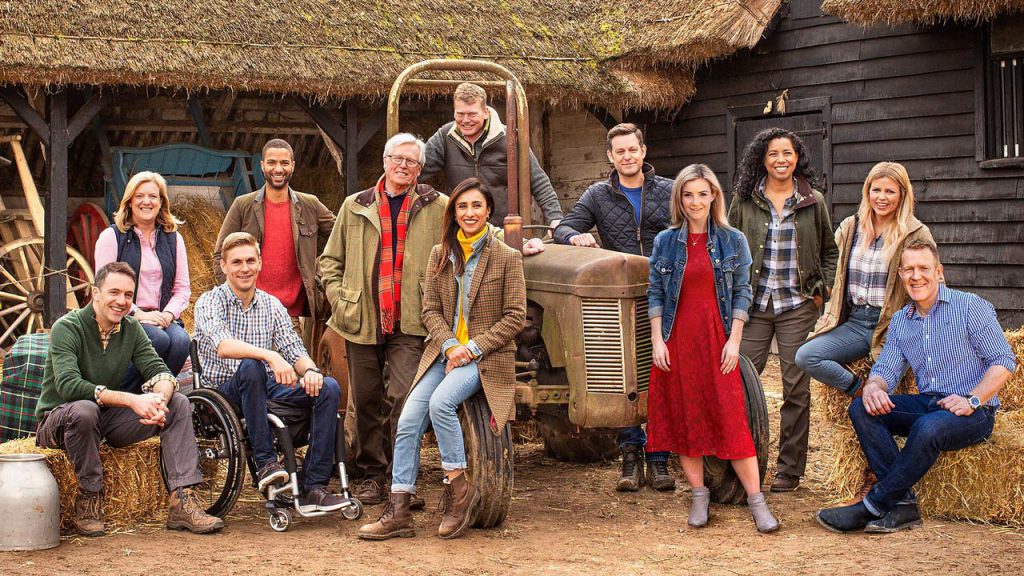
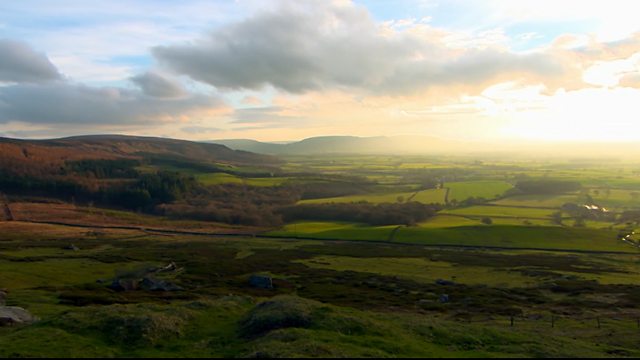
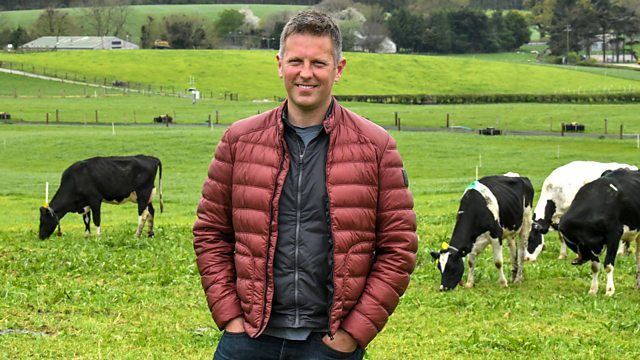
A journey through the episode Countryfile – Solway Coast reveals a breathtaking borderland where England and Scotland meet. This unique landscape is shaped by the immense power of the tides and the deep-rooted traditions of its people. The Solway Firth, with the UK’s second-highest tidal range, carves a dramatic coastline rich in precious habitats. Here, vast peatlands, rare dune systems, and expansive salt marshes create a stunning mosaic. The people who live and work here are united by a profound love for the land, its waters, and its wildlife. They are engaged in a delicate effort to protect this fragile environment.
The area’s character is defined by its constant state of change. Shifting sands and powerful tides continually reshape the coastline, creating a dynamic and sometimes treacherous terrain. This environment supports a remarkable tapestry of life, where traditional farming practices and modern conservation efforts work in tandem. The goal is to nurture the unique biodiversity that thrives in this challenging setting. This careful balance is a central theme explored throughout the Countryfile – Solway Coast episode, highlighting the interdependence of human activity and natural processes.
This exploration delves into several key aspects of the Solway Coast. It examines the symbiotic relationship between cattle grazing and wildlife on the expansive salt marshes. Furthermore, it covers the vital restoration work being undertaken on the region’s significant lowland peatlands, which are crucial for carbon storage. The article also investigates the conservation of a rare amphibian within the delicate sand dune ecosystem. Each habitat presents its own challenges and requires a dedicated, thoughtful approach to management.
Alongside these conservation stories, the Solway Coast is home to ancient traditions that face uncertain futures. One of the most prominent is haaf netting, a fishing technique that has been practiced in the Firth’s tidal waters for a thousand years. Today, this unique cultural heritage is battling to stay afloat against changing tides of regulation and declining fish populations. The struggle of the haaf netters exemplifies the tension between preserving tradition and addressing modern ecological crises.
The skills required to manage this land extend beyond fishing and habitat restoration. The precise control and sharp instincts honed over generations are also showcased in the world of sheepdog trialling. The connection between the everyday work of managing livestock and the high-stakes performance in the trial field demonstrates the deep well of expertise present in these rural communities. This blend of nature, tradition, and skill forms the very essence of the Solway Coast.
The narrative of this remarkable region unfolds across its diverse landscapes. From the expansive tidal flats to the spongy peat bogs, each habitat tells a story of resilience and adaptation. The people here are not just inhabitants; they are custodians of a fragile ecosystem. They navigate the complexities of conservation with a practical understanding born from generations of experience, ensuring that the legacy of the Solway Coast endures for the future.
Countryfile – Solway Coast
The Symbiotic Dance of Farming and Wildlife on Rockcliffe Salt Marsh
The Rockcliffe Salt Marsh, a vast triangle of land bordered by the River Esk and River Eden, is a prime example of the Solway’s dynamic environment. This expanse, comprising roughly 2,500 acres of grass and 5,000 acres of sand, is in a constant state of flux. Farm director Ruari Martin of the Castletown Estate notes that at certain times of the year, the entire grassy area can be submerged by the tide. The shifting sands can transform a gentle slope into a sudden cliff edge, making the terrain treacherous for those unfamiliar with its ways.
For nine generations, families on the Castletown Estate have grazed livestock on this rugged land. Today, they manage around 1,000 cattle, a practice that requires constant vigilance. The shifting nature of the marsh means the herd must be moved regularly to ensure they remain on safe ground. Each month, as the tides rise, the entire herd is gathered and moved behind the marsh bank for up to five days. This logistical challenge is integrated into the commercial aspect of the farm, providing an opportunity to select the largest animals for market.
The marsh provides more than just a challenging landscape; it offers a rich and diverse diet for the cattle. The sward is a mix of various herbs and grass species that change from the marsh bank out to the pioneer species on the sand. According to Martin, this unique herbage gives the animals a “marsh boost,” resulting in fantastic growth rates that would be unexpected in a typical finishing system. This natural advantage underscores the value of traditional grazing on this unique pastureland.
This farming practice also plays a crucial role in supporting local wildlife. Ornithologist Bart Donato, who has worked with the estate for two decades, explains that the marsh is the most important on the Solway for breeding birds. Cattle grazing helps create the right sward conditions for various species throughout the year. In winter, the marsh hosts barnacle geese from Svalbard.
In spring, it comes alive with nesting redshank, lapwing, oystercatchers, and skylarks. The relationship is a delicate balancing act, described by those involved as walking a tightrope. Cattle cannot graze when birds are nesting, yet without their grazing, the grass would become unsuitable for the following year. This careful management has paid off; while lapwing and redshank populations have declined by up to 70% nationally, their numbers on the marsh have remained stable.
Reviving the Land: Peatland Restoration on the Countryfile – Solway Coast
South-west of Rockcliffe lies another vital habitat: the peatlands of the South Solway Mosses. These are some of the largest and most intact lowland raised bogs in the UK. Peatlands are environmental powerhouses, quietly performing some of the most important climate work in the country. They act as massive carbon sinks, prevent flooding by absorbing water, and support immense biodiversity. However, centuries of peat extraction for fuel and horticulture have damaged these ecosystems, draining them of water and causing the peat to dry out.
At Wedholme Flow, where commercial extraction ceased in 2002, a long-term restoration project is underway. Senior nature reserve manager Emma Austin leads the effort, which focuses on rewetting the landscape. The primary challenge is restoring the water levels to allow the peat-forming vegetation, like sphagnum moss, to thrive once more. To monitor their progress, the team is trialling innovative new sensors. These devices are powered by the tiny amounts of energy released as pickled plant matter in the peat breaks down, providing continuous data on the water table’s depth.
A blueprint for this work can be found at the nearby RSPB Campfield Marsh reserve. Here, continuous restoration has resulted in a flourishing ecosystem that warden Dan Cropper helps to maintain. A key indicator of the peatland’s health is the presence of the white-faced darter dragonfly. This rare species is synonymous with healthy lowland bogs, 95% of which have been lost in the country. Its recent introduction and successful sighting at Campfield Marsh are testaments to the high quality of the restored habitat.
Maintaining this delicate balance requires constant management. A primary task is the removal of birch saplings. Trees absorb a great deal of water, which lowers the water table and causes the dry peat to release its stored carbon into the atmosphere. To prevent this, the team at Campfield Marsh clears birch from two hectares of the 60-hectare bog each year, operating on a 30-year cycle. This work ensures the bog remains wet, spongy, and able to perform its crucial ecological functions, including providing a water source for surrounding farmland during dry periods.
Protecting a Shifting Landscape: The Natterjack Toads of Mawbray Banks
At the southern edge of the Solway, the Mawbray Banks Nature Reserve protects a vast expanse of sand dunes. This is another delicate ecosystem where conservationists are working to protect the habitat and its specialist creatures. Landscape officer Sophie Badrick is responsible for this ever-changing environment. She explains that healthy sand dunes are dynamic; they need to be able to move. A primary threat is the spread of dense vegetation, particularly gorse, which puts down deep roots and stabilizes the sand, preventing natural movement and crowding out other species.
To combat this, a team of volunteers regularly cuts rides through the gorse, creating open, species-rich areas. They are assisted by a “conservation grazing team” of eight Belted Galloway cattle. These hardy animals help keep the grasses and other vegetation low, while their hooves turn over the ground, creating bare sand patches that are vital for many dune species. This combination of manual labor and natural grazing helps maintain the dynamic character of the dunes.
Among the creatures that rely on this unique habitat is the natterjack toad, one of Britain’s rarest amphibians and most vulnerable to extinction. Natterjack toads require very shallow, temporary pools for breeding, a habitat type that is common in sand dune systems but can easily dry up in some years. Howard Inns, of the Amphibian and Reptile Conservation Trust, is an expert on the species. He explains that after leaving the water, the toads dig burrows in the open sand, where they shelter during the day and hibernate through the winter.
The year 2025 is particularly significant for the natterjacks of Mawbray Banks. A highly successful breeding season in 2022, which produced around 70 spawn strings, means that the offspring from that year are now mature enough to breed themselves. During his search, Howard Inns successfully located five natterjack toads, including a young toadlet from the current year. This discovery was a thrilling confirmation that the conservation work is paying off, providing the right conditions for this vulnerable species to continue its life cycle.
An Ancient Tradition on the Brink: Haaf Netting in the Solway Firth
In the murky, tidal waters of the Solway Firth, one of Britain’s oldest fishing traditions is fighting for survival. Haaf netting, a practice believed to have been introduced by Vikings a thousand years ago, is unique to this part of the world. Fishermen wade into the powerful currents carrying a large wooden beam, often 16 feet long, from which a handmade net is suspended. Standing against the tide, they hold the net open, feeling for the tell-tale pull of a salmon or sea trout swimming into it.
The skill involved is immense, starting with the creation of the net itself. Haaf netter George Renwick makes his own, a process that takes about 60 hours and involves tying approximately 26,000 individual knots with a mile and a half of string. This dedication, however, is becoming increasingly rare. Once a viable living for many, haaf netting is now a hobby for a small group of enthusiasts. In its heyday, over a hundred people could be seen fishing in the Firth. Today, there are only about 15 licence-holders, and just a handful fish regularly, most of whom are in their 60s and 70s.
The decline is due to several factors, including the collapse in the price of wild salmon following the rise of fish farming. More significantly, a sharp decline in wild Atlantic salmon populations has led to strict conservation measures. The Scottish Government has mandated that any salmon caught in the Solway must be released. While the haaf netters support conservation, they feel the regulations are unfairly applied and threaten to extinguish their tradition entirely.
Fisherman John Warwick argues that the rules are primarily designed for anglers. He points out that catch-and-release angling involves playing a fish on a hook for several minutes, a stressful process that carries a known mortality rate. In contrast, a salmon caught in a haaf net can be released in seconds with virtually zero harm. Warwick suggests that if haaf netters were permitted to keep a small number of fish equivalent to the accepted angling mortality rate, it would provide just enough incentive to keep the thousand-year-old tradition alive for another generation.
The Art of Control in the Countryfile – Solway Coast Episode
The skill and instinct required to work with nature on the Solway Coast are also evident in the world of sheepdog trialling. On his farm, Adam Henson has been honing his skills with his dog Gwen, preparing for the International Supreme, one of the most demanding events in the calendar. To improve, he enlisted the help of expert handlers Ben Smith, an International Supreme finalist, and Lisa Kasel-Siebert, a national competitor. They demonstrate the incredible precision required to succeed at the highest level.
A sheepdog trial is a test of perfect communication and control. Handlers guide their dogs through a complex course that includes an outrun to gather the sheep, a fetch through a set of gates, and a drive across the field. The run culminates in the “shed,” where the dog must neatly split a few sheep away from the main group. Competitors start with a perfect score and lose points for every deviation from the perfect line or every extra command given.
The core challenge in trialling is to override a dog’s natural working instinct. A farm dog like Gwen is trained to bring sheep to the handler as efficiently as possible. In a trial, however, the dog must follow precise commands to navigate an artificial course, which can feel unnatural. When faced with a stubborn packet of sheep, Gwen reverted to her “work mode,” trying to bring them directly to Adam rather than following his commands to go through the gates.
Ben Smith explained that success comes from finding a balance. You need the dog’s natural ability but must train it to prioritize the handler’s commands. He noted that with dedicated training, Gwen’s stop could be sharpened and her finesse improved. Ultimately, he observed that in sheepdog handling, the issue is with the person, not the dog, “nine and a half times” out of ten. A masterclass from Ben with his champion collie Roy showed what is possible: an almost robotic response to every whistle, demonstrating a seamless partnership between handler and dog.
Where Ancient Wisdom Meets Tomorrow’s Stewardship
Standing at the edge of the Solway Firth, watching the tide surge across thousands of acres in a matter of hours, you witness something profound: a landscape that refuses to be tamed, yet thrives under careful human partnership. This is the enduring lesson of the Solway Coast—that our most fragile ecosystems don’t need rescuing from people, but rather require the right kind of human touch, applied with generations of accumulated wisdom.
The cattle grazing at Rockcliffe Salt Marsh aren’t just livestock; they’re ecological architects, sculpting the perfect conditions for nesting birds through timing refined over nine generations. The haaf netters standing chest-deep in treacherous currents aren’t just fishermen; they’re living libraries of sustainable practice, their thousand-year-old technique embodying principles that modern conservation is only beginning to understand. Even the sheepdog handlers demonstrate this same truth—that mastery comes not from domination, but from learning to work with natural instincts rather than against them.
What makes the Solway Coast truly remarkable isn’t just its biodiversity or stunning vistas, but how it challenges our modern tendency to separate human activity from environmental protection. Here, the most successful conservation stories emerge from collaboration, not isolation. The thriving bird populations on the salt marsh, the returning natterjack toads in the dunes, the flourishing sphagnum moss in restored peatlands—each success story shares the same DNA: respect for natural processes combined with human knowledge that spans centuries.
Yet this delicate balance hangs by a thread. The haaf netters aging out without apprentices, the constant vigilance required to maintain peatland water levels, the ongoing battle against invasive gorse in the dunes—these challenges remind us that conservation is never a finished project. It’s an ongoing conversation between human communities and the land they inhabit, requiring both traditional knowledge and innovative approaches like those bog-monitoring sensors powered by decomposing peat.
The Solway Coast offers a blueprint for the future of environmental stewardship, one that recognizes people as partners rather than problems. As we face unprecedented ecological challenges globally, this borderland between England and Scotland demonstrates that the most effective conservation often happens not in pristine wilderness, but in working landscapes where communities have learned to read the subtle language of tide and season, soil and sky.
The next time you encounter a “protected” landscape, look closer. Ask whether true protection might mean embracing the human traditions that shaped it, supporting the communities that understand it intimately, and recognizing that sometimes the most radical act of conservation is simply allowing people to practice the ancient art of paying attention to place. The Solway Coast’s greatest gift isn’t just its beauty—it’s its reminder that we belong here too, when we learn to belong well.
FAQ Countryfile – Solway Coast
Q: What makes the Solway Coast unique among UK coastal regions?
A: The Solway Coast stands apart as a dynamic borderland where England meets Scotland, featuring the UK’s second-highest tidal range. Furthermore, this remarkable coastline combines vast peatlands, rare sand dune systems, and expansive salt marshes in constant flux. Additionally, the region showcases successful integration of traditional farming practices with modern conservation efforts, creating a living laboratory for sustainable environmental stewardship.
Q: How do cattle grazing and wildlife conservation work together on Rockcliffe Salt Marsh?
A: Cattle grazing creates optimal sward conditions for breeding birds through carefully timed management across 2,500 acres of grassland. Specifically, the Castletown Estate’s 1,000 cattle are moved monthly during high tides, preventing overgrazing during nesting seasons. Consequently, while lapwing and redshank populations declined 70% nationally, their numbers remained stable on this marsh, demonstrating successful symbiotic conservation.
Q: Why are the Solway’s peatlands crucial for climate change mitigation?
A: The South Solway Mosses represent some of the UK’s largest intact lowland raised bogs, functioning as massive carbon sinks. Moreover, these environmental powerhouses prevent flooding by absorbing water while supporting immense biodiversity. However, centuries of peat extraction damaged these ecosystems, making restoration efforts at locations like Wedholme Flow essential for climate action and ecosystem recovery.
Q: What innovative methods are used to monitor peatland restoration progress?
A: Restoration teams utilize groundbreaking sensors powered by energy released from decomposing plant matter in the peat itself. These devices continuously monitor water table depth, providing real-time data on rewetting progress. Additionally, the presence of white-faced darter dragonflies serves as a biological indicator, since this rare species only thrives in healthy lowland bogs.
Q: How do conservationists maintain the dynamic nature of Mawbray Banks sand dunes?
A: Conservation teams employ a dual approach combining manual gorse cutting with natural grazing by eight Belted Galloway cattle. Specifically, volunteers create open rides through dense vegetation while cattle hooves naturally turn over ground, creating vital bare sand patches. This management strategy prevents vegetation from stabilizing the dunes, allowing natural movement essential for species-rich ecosystems.
Q: What makes natterjack toads so vulnerable and why is 2025 significant?
A: Natterjack toads represent one of Britain’s rarest amphibians, requiring very shallow, temporary pools for breeding that can easily dry up. However, 2025 marks a conservation milestone as offspring from the highly successful 2022 breeding season (producing 70 spawn strings) have matured enough to breed themselves, potentially doubling the population through successful habitat management.
Q: What is haaf netting and why is this ancient tradition endangered?
A: Haaf netting involves wading into powerful currents with 16-foot wooden beams supporting handmade nets, a Viking-introduced technique practiced for 1,000 years. Unfortunately, this tradition faces extinction due to declining wild Atlantic salmon populations and strict conservation regulations requiring catch-and-release. Currently, only 15 license-holders remain from over 100 practitioners in its heyday.
Q: How do haaf netters argue their method is more sustainable than angling?
A: Haaf netters contend their technique causes virtually zero harm since salmon can be released within seconds of capture. Conversely, catch-and-release angling involves playing fish on hooks for several minutes, creating stress with known mortality rates. Therefore, they propose keeping a small number equivalent to accepted angling mortality would provide sufficient incentive to preserve this cultural heritage.
Q: What skills are demonstrated through sheepdog trialling on the Solway Coast?
A: Sheepdog trialling showcases precise communication and control, requiring handlers to guide dogs through complex courses including outruns, fetches, drives, and sheds. Importantly, success demands overriding a dog’s natural working instincts in favor of artificial course navigation. As expert Ben Smith notes, handler error accounts for problems “nine and a half times” out of ten, emphasizing human skill development.
Q: How can visitors responsibly experience the Solway Coast’s unique ecosystems?
A: Visitors should respect the dynamic, potentially treacherous terrain by following designated paths and tide schedules, particularly around shifting salt marshes. Additionally, timing visits outside bird nesting seasons (spring) helps protect vulnerable species. Furthermore, supporting local conservation organizations and traditional practitioners like haaf netters ensures these unique landscapes and cultural heritage survive for future generations to experience and appreciate.