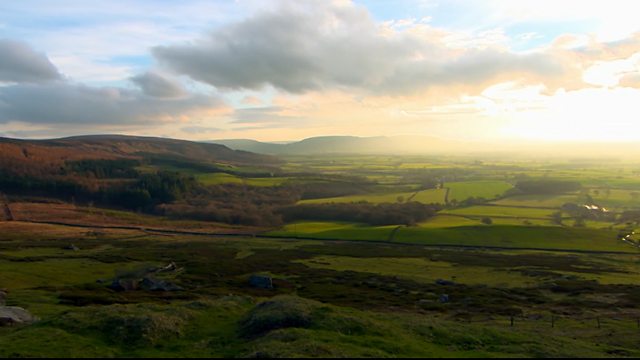
Countryfile – Stonehenge: The wind sweeps across the Salisbury Plain, carrying whispers from a distant past. Here, the landscape feels different. It feels heavy with secrets and ancient memories. Rising from the grassy horizon like a silent sentinel stands a structure that defies time itself. This is Stonehenge. It is Britain’s most iconic prehistoric monument. For centuries, it has captured the world’s imagination.
However, viewing it from a distance is one thing. Stepping inside the circle is entirely different. On this special edition of Countryfile, we are doing exactly that. We invite you to journey with us back to this mystical site. It has been almost ten years since our cameras last visited these sacred grounds. A decade may seem like a long time to us. Yet, for these ancient stones, it is merely the blink of an eye.
Consequently, our return feels momentous. Presenters Joe Crowley and Vick Hope are our guides on this extraordinary adventure. They have secured rare access to the world-renowned site. Usually, ropes keep the modern world at bay. But today, Joe and Vick walk among the giants. Therefore, they can touch the history carved into the rock. They can feel the cold, rough surface of the sarsens. This is an exclusive look at a legend.
Stonehenge is not just a collection of rocks. It is a puzzle that we are still piecing together. Its construction likely began around 5,000 years ago. Just imagine that span of time. Civilizations have risen and fallen since the first earth was broken here. Nevertheless, the story of this monument is far from complete. In fact, it seems the more we look, the more we find. Joe and Vick are here to uncover fresh discoveries. Science and archaeology never stand still. New technology allows us to peer deeper into the past than ever before.
As a result, we are learning more about the people who built this wonder. Who were they? Why did they drag massive stones for miles across the country? We often think of the monument as a static object. However, it was likely a bustling hub. It served as a gathering place for ancient peoples. They came here to celebrate, to mourn, and to mark the turning of the seasons. The stones witnessed their lives.
Now, Joe and Vick explore these theories. They look for the human fingerprints left on history. It is a deeply emotional journey. You can almost hear the chanting of our ancestors in the wind.But the megaliths have more to tell us. Surprisingly, the stones are teeming with life. From a distance, they appear gray and lifeless. But look closer. Actually, lean in until your nose almost touches the surface. You will see a vibrant, miniature world. Tiny organisms call Stonehenge home. Specifically, rare lichens cover the surfaces of the great stones. These micro-landscapes are complex and beautiful. They add splashes of gold, orange, and green to the gray pillars.
Thus, the monument is also a biological treasure. Nature has claimed the stones for herself. It is a reminder of a powerful truth. Even the hardest rock eventually yields to the persistence of life. Joe and Vick examine this fascinating relationship between geology and biology. This perspective shifts how we see the monument. It is not just a tomb or a temple. It is a living, breathing ecosystem. Furthermore, the atmosphere at the site changes with the light. Under the midday sun, the stones look imposing and solid. However, as the light fades, they become mysterious silhouettes.
The shadows lengthen, and the mystery deepens. It creates a hauntingly beautiful scene for our Countryfile cameras. We capture the magic so you can feel it from your living room. Meanwhile, life in the countryside continues its relentless pace. We leave the ancient stillness of Wiltshire for the rolling hills of the Cotswolds. Here, the concerns are more immediate. Specifically, winter is coming. On Adam Henson’s farm, the air is turning crisp. The trees have shed their leaves. The ground is hardening with the first frosts.
Countryfile – Stonehenge
Therefore, preparations are well under way. Farming follows the rhythm of the seasons, much like the builders of Stonehenge did. But Adam has a new excitement on the farm this week. A new arrival is making his grand entrance. He is big, hairy, and magnificent. Adam welcomes a new Highland bull to the herd.This bull is a sight to behold. He carries the rugged spirit of the Scottish Highlands in his stride. His long horns and thick coat are built for tough weather.
However, he isn’t just here for his looks. He brings a vital promise for the future. He represents the next generation of the herd. Adam hopes this bull will bring calves next year. It is a cycle of renewal that every farmer relies on. New life is the heartbeat of the farm. Watching the bull settle in is a joy. He investigates his new surroundings with curiosity. The other animals watch him warily. It is a classic farmyard drama.
Adam explains the importance of introducing new bloodlines. It ensures the health and vitality of the flock. Farming is a science, just as much as it is a lifestyle.So, as we watch the bull, we look forward to spring. We imagine the fields full of playful calves. It is a beacon of hope during the dark winter months.
Ultimately, this episode of Countryfile is about connection. We connect with the deep past through the stones. We connect with the living land through the lichens. And we connect with the future through Adam’s farm. Whether it is a 5,000-year-old circle or a newborn calf, the land sustains us. It shapes our history and our future.Join us for this journey. Walk with Joe and Vick beneath the towering lintels. Feel the weight of the ages. Then, warm your heart with the promise of new life in the Cotswolds.
It is a celebration of Britain’s heritage and its living landscape. The stories are waiting for you. The stones are waiting. So, tune in. Discover why Stonehenge continues to surprise us after all this time. Witness the enduring spirit of the countryside. It is an episode you will not want to miss.
Countryfile – Stonehenge
Countryfile – Stonehenge offers a profound investigation into the enduring mysteries of Britain’s most iconic prehistoric monument, revealing that despite its 5,000-year history, the site continues to yield secrets that reshape our understanding of the ancient world. Standing as a silent sentinel on the windswept expanse of Salisbury Plain in Wiltshire, the towering megaliths have long captivated the human imagination.
However, recent archaeological endeavours have transformed this static stone circle into a dynamic narrative of human connection, technological ingenuity, and ritualistic fervour. The unmistakable silhouette of the stones serves not merely as a relic of the past but as an active research site where a decade of discovery has provided fresh insights into Neolithic life. It is a landscape where the ancient concept of congregation meets modern scientific inquiry, allowing us to peer into a time long before the concept of countries existed.
The significance of this site extends far beyond its physical footprint, serving as a focal point for understanding the movements and motivations of prehistoric communities across Britain. As explored in Countryfile, the monument was built in distinct stages between 3,000 and 2,400 BC, evolving from a circular earthwork of ditch and bank into the complex stone structure visible today.
This architectural evolution mirrors the developing sophistication of the societies that constructed it. The site is comprised of two primary stone types: the colossal sarsens that form the outer ring and the five towering trilithons, and the smaller bluestones nestled within them. For generations, the questions of why it was built—whether as a temple, a burial ground, or a place of healing and pilgrimage—have persisted alongside the logistical puzzle of how such immense stones were transported.
While the stones align perfectly with the Earth’s movement around the sun, marking the solstices with precision, the human stories embedded in the landscape are equally compelling. The narrative of Countryfile – Stonehenge is one of constant revelation, where every new finding by organisations like English Heritage and Forestry England adds depth to the picture of Neolithic society. We now know that this was a place where people from what we today call England, Wales, and Scotland were all represented, drawn together by a shared purpose.
The monument serves as a testament to the sheer effort and coordination of early farmers whose livelihoods depended entirely on the cycles of nature. It is a story of connectivity, demonstrating that even five millennia ago, communities were not isolated but were capable of interacting on an international scale.
This connectivity is evidenced not only by the stones themselves but by the traces of life found in the surrounding area. From the remains of feasting rituals to the footprints of ancient dwellings, the archaeological record paints a vivid portrait of a society that was vibrant, organised, and capable of monumental feats. The discoveries discussed in the programme highlight a society that could mobilise vast numbers of people for construction projects while simultaneously maintaining complex agricultural and social traditions. As winter solstice approaches, marking the shortest day of the year, the alignment of the setting sun with the great stones reminds us of the sophisticated astronomical understanding possessed by these ancient builders.
Furthermore, the investigation into the site’s history is paralleled by a look at the natural rhythms of modern agriculture, providing a thematic link between the ancient and the present. Just as the builders of the monument were attuned to the seasons, modern farming continues to revolve around the cycles of birth and renewal. This juxtaposition of ancient history and contemporary rural life underscores the enduring relationship between humanity and the land. Whether through the analysis of geochemical signatures in rock or the careful management of livestock breeding, the drive to understand and harness the natural world remains a constant human endeavour.
Unlocking the Geological Secrets of Countryfile – Stonehenge
The massive sarsen stones, some weighing over 30 tons, define the silhouette of the monument, yet their origins remained a subject of speculation for centuries. A significant breakthrough occurred recently, driven by a piece of evidence that had been missing for decades. In 1958, during conservation work to reinforce the stones with metal, a core was drilled from one of the sarsens.
This cylindrical sample of rock travelled to America with the man who performed the drilling, only to be donated back to English Heritage years later. This return proved to be a catalyst for a major geological discovery. By granting geologists access to the interior of the stone, the core allowed for a pristine analysis of its geochemical composition, free from the weathering of the surface.
The scientific analysis functioned much like a DNA test for rocks. Researchers used portable X-ray fluorescence, a device described as resembling a futuristic phaser, to determine the unique chemical signature of the sarsen stone. This technology allowed the team to scan various sarsen spreads across the landscape to find a matching profile. The results were definitive. The geochemical signature of the Stonehenge sarsens was an almost exact match to the stones found in West Woods, located 15 miles to the north of the monument. This discovery moved the understanding of the sarsens from a general assumption to a scientifically verified fact, pinpointing the specific location where ancient people sourced their materials.
Sarsen stones are a type of sedimentary rock that takes thousands of years to form, and West Woods is littered with them. While they are currently buried under soil or hidden by vegetation, the area would have been a rich quarry for Neolithic builders. The identification of West Woods as the source answers the “where” but amplifies the “how.” Moving these stones, even the 15 miles from West Woods, represents a logistical challenge that is difficult to comprehend in the modern age. It suggests a highly organised society capable of commanding the labour and resources necessary to extract and transport these “absolute monsters” of the geological world.
The Mechanics of Megalithic Transport
The journey from West Woods to Salisbury Plain was not merely a matter of brute force; it required sophisticated engineering and immense social coordination. At the quarry site, archaeologists have found evidence that the stones were not just dragged out in their raw state. Instead, they were dressed and shaped at the source. This indicates that the builders were making calculated decisions to reduce the weight of the stones before transportation, although the stones that arrived at the site were still larger than what we see today, as further shaping occurred upon arrival. The sheer scale of the operation is staggering, with estimates suggesting that dragging a single large sarsen would require at least 150 people.
Experimental archaeology is currently exploring the specific methods used to move these stones. Theories involving rollers and sledges are being tested to understand the friction and force involved. However, the physical movement is only one aspect of the undertaking. The logistical support required for such a workforce—providing food, shelter, and organization for hundreds of people—demonstrates a complex societal structure. This was not a casual endeavour but a massive, centralized effort. The noise of the work would have been deafening and distinctive; the rhythmic hammering of stone on stone is a sound that has been absent from the landscape for 5,000 years, a sonic signature of Neolithic industry.
The extraction process itself would have been arduous. Sarsen is incredibly hard, and the tools available were made of stone. The persistence required to quarry, shape, and move these blocks speaks to the ideological or spiritual motivation behind the construction. It was not done for efficiency but for a purpose that justified the immense expenditure of human energy. The landscape of West Woods, now quiet, was once a hive of industrial-scale activity, serving as the starting point for a journey that would culminate in the creation of one of the world’s most famous monuments.
Social Cohesion and the Midwinter Feast
While the stones stand as a testament to engineering, excavations at nearby Durrington Walls have revealed the vibrant social life of the people who built them. This site, located a short distance from the stone circle, served as the accommodation for the workforce and a centre for celebration. Evidence suggests that this was not a permanent settlement for year-round living but a seasonal hub, specifically occupied during the midwinter solstice. The picture that emerges is one of a festive gathering, described by archaeologists as akin to a Glastonbury festival of the 26th century BC.
The primary evidence for this seasonal occupation comes from the vast quantities of pig bones discovered in the middens, or rubbish heaps, surrounding the dwellings. Analysis of these bones indicates that the pigs were approximately eight months old when they were slaughtered. Given that sows typically farrow in the spring, an eight-month-old pig would be ready for consumption in midwinter. This points decisively to a large-scale midwinter feast. The sheer volume of bones—thousands of them—suggests that people were consuming immense amounts of pork as part of their celebrations.
The condition of the bones also offers clues about the nature of the festivities. Some bones were found with arrowheads embedded in them, suggesting that the animals were hunted for sport rather than simply slaughtered in a domestic setting. This adds a layer of ritual or entertainment to the feasting. It was a time for dispersed communities to come together, renew relationships, arrange marriages, and engage in dancing and singing. These gatherings were crucial for social bonding, uniting people who had travelled hundreds of miles, often on foot and without horses, to share in the experience.
Reconstructing the Neolithic Built Environment
To fully understand the living conditions of the Stonehenge builders, experimental archaeologists are engaged in an ambitious project to reconstruct a Neolithic hall based on evidence found at Durrington Walls. The original structure was identified by a footprint of four large square postholes surrounded by a perimeter of roughly 45 smaller postholes. From this limited evidence, teams are working to interpret the height, structure, and roofing of the building, using only the materials and technologies available 5,000 years ago. This project is not just about creating a visual replica; it is a data-gathering exercise designed to measure the effort and time required for Neolithic construction.
Volunteers play a critical role in this reconstruction, initially learning woodworking skills with steel tools before graduating to authentic stone axes. The process is meticulously recorded. Every blow of the axe is logged, along with the biometrics of the worker, the weight of the tool, and the volume of wood removed. This data helps experts calculate the man-hours needed to build not just a single hall but the larger timber monuments that dotted the landscape. The difference in efficiency is profound; a task that might take minutes with a modern saw can take days with stone tools, forcing a re-evaluation of the concept of time in the Neolithic era.
The work is physically demanding and requires a specific technique. Volunteers must notch the wood to create entry points before chopping away the material. The stone axes, some heavy and wedge-shaped, others lighter, behave differently than steel blades, crushing and tearing the wood fibres rather than slicing them cleanly. This experimental approach provides a tangible connection to the past, allowing modern participants to experience the visceral reality of Neolithic labour. The rhythmic sound of stone on wood, echoing once again across the site, bridges the gap between the present and the ancient builders.
The Scottish Connection and Countryfile – Stonehenge Mysteries
While the sarsen stones were sourced locally from West Woods, the origins of the other stones within the monument tell a story of extraordinary long-distance travel. The bluestones have long been known to originate from the Preseli Hills in southwestern Wales, some 150 miles away. However, a stunning new discovery has rewritten the history of the Altar Stone, the large sandstone block lying at the centre of the monument. Recent geological analysis has disproven the long-held theory that the Altar Stone was collected from the coast of Wales along with the bluestones. Instead, its chemical signature matches rocks from the Orcadian Basin in northeastern Scotland.
This revelation places the origin of the Altar Stone approximately 450 miles from Salisbury Plain, making it the farthest-flung stone found at the site. The implications of this are staggering. It suggests a level of connectivity and interaction between the extreme north of Britain and the south that was previously underestimated. The journey of this stone would have been a monumental undertaking, likely involving numerous communities and passing through various ceremonial landscapes. Whether it was transported overland or by sea remains a subject of debate, though the absence of evidence for boats capable of carrying such weight leans some experts toward an overland route.
An overland journey of that distance would have taken months, if not longer, and would have required the cooperation of different tribal groups. It is likely that the movement of the stone was an event in itself, a celebrated procession rather than a mere logistical transport. The stone’s origin in the Orcadian Basin implies that the area held significant spiritual or cultural power, enough to justify moving a piece of it to the southern plains. This connects the monument to a wider network of Neolithic sites across the British Isles, reinforcing the idea that the stone circle was a cosmopolitan hub where materials and ideas from across the island converged.
Genetic Shifts and Ancient Migration Patterns
The history of the monument is also a history of the people who visited and were buried there. In its earliest phases, the site functioned primarily as a large cemetery. Excavations of the Aubrey Holes—the ring of pits just inside the bank and ditch—have uncovered cremation burials containing the remains of individuals who did not originate from the local area. Chemical analysis of these remains suggests that these early people came from the west, potentially Wales or Cornwall. This indicates that the site was a place of pilgrimage or a final resting place for specific ancestors brought from afar, possibly to anchor their lineage to this significant landscape.
However, the genetic story of the site undergoes a dramatic shift over time. Ancient DNA analysis reveals that within a span of a few centuries, a new population arrived in Britain, replacing the earlier Neolithic farmers. These new arrivals carried “Steppe DNA,” originating from Eastern Europe. They brought with them distinct cultural practices, including the Beaker culture, and crucial technological advancements such as metalworking. This influx of people and ideas fundamentally changed the society that interacted with the monument.
The landscape surrounding the stone circle reflects these changes. The area is home to one of the largest concentrations of burial mounds in Europe, with over 400 barrows dotting the plains. These burials chronicle the changing demographics and customs of the region. The transition from the communal Neolithic ancestors to the individual burials of the Bronze Age marks a significant evolution in social structure. The monument, therefore, acts as a timeline of human development, recording the waves of migration and the introduction of new technologies that shaped prehistoric Britain.
Agricultural Rhythms and Modern Farming Parallels
While archaeologists unravel the deep history of the plains, the surrounding countryside remains a working landscape, governed by the same seasonal imperatives that dictated the lives of the monument’s builders. On Adam Henson’s farm, the cycle of new life serves as a modern reflection of the ancient fertility focus that likely underpinned the winter solstice celebrations. Just as the Neolithic people gathered at midwinter to feast and look forward to the return of the sun, modern farming is a process of preparation for the spring. The management of livestock during the winter months is critical for ensuring a successful birthing season, demonstrating a continuity of care and planning that spans millennia.
The breeding programs on the farm are meticulously staggered to spread the arrival of new lambs across the season. This strategy, similar to the organized nature of Neolithic society, ensures that resources are not overwhelmed and that the animals receive the best possible care. The farm is home to various breeds, including rare Cotswold sheep, known for their lustrous wool, and the robust Romney breed. The intricate process of “tupping,” where rams are introduced to the ewes, is monitored with coloured paints to track conception dates. This level of biological management ensures that the farmers know exactly when new life will arrive, echoing the precise timekeeping of the stone circle itself.
The introduction of new genetic lines is as important today as it was in the movement of ancient peoples. The arrival of a new Highland bull, named Ted, from a farm in Yorkshire illustrates the continued importance of moving livestock to maintain healthy bloodlines. This journey from the north to the south parallels the movement of materials and people in the past, albeit for agricultural rather than ceremonial purposes. The anticipation of new calves and foals represents the perpetual renewal of the land, a theme that would have been intimately familiar to the ancestors who first broke ground on Salisbury Plain.
Lichenology and the Living Surface of Countryfile – Stonehenge
Beyond the geology and archaeology, the stones themselves host a unique and fragile ecosystem. To the casual observer, the grey surfaces might appear lifeless, but closer inspection reveals they are covered in a “living skin” of lichens. David Hill, a leading lichenologist, describes the monument as a biological treasure trove, home to approximately 70 different species. These organisms are not plants but a symbiotic partnership between fungi and microscopic algae, allowing them to thrive on bare rock using only sunlight and moisture. The longevity of the stones has allowed these slow-growing colonies to develop undisturbed for up to 5,000 years.
The biodiversity found on the megaliths is startling and scientifically significant. Among the species present are several that are typically found only in maritime environments, such as Buellia subdisciformis and rock ivory. Their presence on Salisbury Plain, far inland, suggests that the stones act effectively as a “sea cliff” in the middle of the landscape, exposed to the winds sweeping in from the Atlantic. This unique microclimate has created a habitat for species that are otherwise extremely rare in Britain.
One particular species, Buellia saxorum, is almost exclusive to this environment, found primarily at Stonehenge, Avebury, and on other sarsen stones. The identification of these species requires specialized techniques, including the use of UV light which causes the lichens to fluoresce in different colours, and microscopic analysis of chemical reactions. This biological layer adds another dimension to the monument’s significance. It is not just a cultural heritage site but a reservoir of biological rarity, where the stability of the stones over millennia has preserved a specific ecological niche that exists nowhere else.
Domestic Life and Pottery Traditions
The grand narrative of the stones is balanced by the intimate details of domestic life uncovered through the study of ceramics. Fragments of pottery found at the site, specifically Grooved Ware, provide a window into the daily existence of the Neolithic people. These pots were not merely decorative but functional tools essential for survival and social gatherings. The reconstruction of these vessels by volunteers like Flo Brooks allows for a tactile understanding of the skills possessed by ancient artisans. The pots were handmade, decorated with geometric grooves that may have held symbolic meaning or simply reflected the aesthetic of the time.
Analysis of residues found inside these ancient pots has revealed that they were used to process dairy products. This is a crucial finding because genetic studies suggest that the adults of this period were lactose intolerant. They could not drink raw milk without falling ill. Therefore, the presence of dairy lipids implies that they were processing milk into cheese or yogurt, breaking down the lactose to make it digestible. This technological adaptation allowed them to exploit a valuable food source, contributing to the nutritional surplus needed to sustain the workforce and the festivities.
The vision of domestic life reconstructed from these shards is one of warmth and community. Large pots of stew or cheese sitting by a fire would have welcomed workers returning from the cold, wet landscape. This shared consumption of food was central to the social fabric, reinforcing the bonds between the diverse groups who gathered at the site. The imperfections in the handmade pottery, replicated by modern volunteers, serve as a reminder of the human hands that shaped them, bridging the gap between the monumental scale of the henge and the personal experiences of the individuals who built it.
The Ever-Evolving Story of the Stones
The exploration of Countryfile – Stonehenge demonstrates that the site is far from a closed chapter of history. It is a constantly unfolding story where new scientific techniques continue to challenge and refine our knowledge. From the “phaser-like” technology used to source the sarsens to the DNA sequencing that maps ancient migrations, modern science is giving a voice to the silent stones. We now understand the monument not as a static object but as a hub of international convergence, a place where the populations of modern-day Scotland, Wales, and England met millennia ago.
The complexities of the site are revealed in layers: the geological origins of the stones, the biological diversity on their surface, the genetic makeup of the builders, and the remnants of their feasts. Each discovery prompts new questions. The mystery of how the Altar Stone travelled 450 miles remains a topic of active debate, just as the exact nature of the rituals performed there continues to intrigue scholars. The blend of certainty—such as the winter solstice alignment—and mystery is what keeps the site relevant and captivating.
Ultimately, the programme portrays the monument as a testament to human resilience and ingenuity. Whether it was the sheer physical effort of dragging 30-ton stones, the delicate craft of pottery, or the sophisticated management of seasonal gatherings, the people of the Neolithic era were driven by a powerful shared vision. As the wind continues to sweep across the Salisbury Plain, it blows not over a dead ruin, but over a landscape that is still revealing the depth of its connection to the human story, linking the ancient past with the living present.
FAQ Countryfile – Stonehenge
Q: What makes Stonehenge such an iconic prehistoric monument?
A: Stonehenge stands as Britain’s most recognizable ancient structure, rising from Salisbury Plain like a silent sentinel. Constructed approximately 5,000 years ago between 3,000 and 2,400 BC, this monument represents extraordinary human achievement. The massive sarsen stones, some weighing over 30 tons, form an outer ring with five towering trilithons. Additionally, smaller bluestones nestle within them, creating a complex architectural design. The site perfectly aligns with Earth’s movement around the sun, marking solstices with precision. Furthermore, it served as a gathering place where ancient peoples celebrated, mourned, and marked seasonal turning points throughout generations.
Q: Where did the massive sarsen stones at Stonehenge originate?
A: Recent scientific breakthroughs have pinpointed West Woods as the source of Stonehenge’s sarsen stones, located 15 miles north of the monument. This discovery resulted from analyzing a core sample drilled in 1958 during conservation work. Researchers used portable X-ray fluorescence technology to determine the unique chemical signature of the sarsen stone. The geochemical analysis functioned like a DNA test for rocks, matching the Stonehenge sarsens to West Woods stones. Consequently, this moved understanding from assumption to scientifically verified fact. The identification explains where ancient people sourced their materials, though it amplifies the logistical mystery of how they transported these absolute monsters.
Q: How did Neolithic people transport the enormous stones to Stonehenge?
A: Transporting the massive stones required sophisticated engineering and immense social coordination rather than mere brute force. Archaeological evidence shows builders dressed and shaped stones at the quarry before transportation, reducing weight strategically. However, dragging a single large sarsen still required at least 150 people working together. Experimental archaeology explores theories involving rollers and sledges to understand friction and force dynamics. Moreover, the operation demanded extensive logistical support, providing food, shelter, and organization for hundreds of workers. This demonstrates a complex societal structure capable of massive, centralized efforts. The rhythmic hammering of stone on stone would have been deafening, creating a distinctive sonic signature of Neolithic industry.
Q: What evidence suggests Stonehenge was used for midwinter celebrations?
A: Excavations at nearby Durrington Walls reveal compelling evidence of large-scale midwinter feasting and celebration. Archaeologists discovered vast quantities of pig bones in the middens surrounding dwellings. Analysis indicates these pigs were approximately eight months old when slaughtered. Since sows typically farrow in spring, eight-month-old pigs would be ready for consumption precisely at midwinter. Additionally, some bones contained embedded arrowheads, suggesting animals were hunted for sport rather than simply slaughtered domestically. The site resembles a Glastonbury festival of the 26th century BC, where dispersed communities gathered to renew relationships, arrange marriages, and engage in dancing and singing while consuming immense amounts of pork.
Q: What is the significance of the Altar Stone’s Scottish origin?
A: Recent geological analysis has revealed a stunning discovery that rewrites Stonehenge’s history completely. The Altar Stone, lying at the monument’s centre, originates from the Orcadian Basin in northeastern Scotland, approximately 450 miles away. This makes it the farthest-flung stone at the site, disproving the long-held theory it came from Wales. The implications are staggering, suggesting extraordinary connectivity between Britain’s extreme north and south. Furthermore, transporting this stone would have required cooperation from numerous communities, likely taking months. Whether moved overland or by sea remains debated, though evidence leans toward an overland route. This journey was probably a celebrated procession rather than mere logistical transport, connecting the monument to a wider Neolithic network.
Q: How do lichens contribute to Stonehenge’s scientific importance?
A: The grey stone surfaces host a remarkable living ecosystem, covered in approximately 70 different lichen species. These organisms form a symbiotic partnership between fungi and microscopic algae, thriving on bare rock using only sunlight and moisture. The stones’ longevity has allowed slow-growing colonies to develop undisturbed for up to 5,000 years. Notably, several species typically found only in maritime environments exist here, far inland. The stones effectively act as a sea cliff in the middle of the landscape, exposed to Atlantic winds. Species like Buellia saxorum are almost exclusive to Stonehenge, Avebury, and other sarsen stones. This biological layer makes the monument not just a cultural heritage site but a reservoir of biological rarity.
Q: What do pottery fragments reveal about Neolithic daily life?
A: Grooved Ware pottery fragments provide intimate details about the domestic existence of Stonehenge’s builders. These handmade pots featured geometric grooves and served functional purposes essential for survival and social gatherings. Analysis of residues inside ancient pots revealed they processed dairy products, despite adults being lactose intolerant. Therefore, they likely made cheese or yogurt, breaking down lactose to make it digestible. This technological adaptation allowed them to exploit valuable food sources, sustaining the workforce and festivities. The reconstruction of these vessels demonstrates the skills possessed by ancient artisans. Large pots of stew or cheese by the fire would have welcomed workers returning from cold, wet landscapes, reinforcing community bonds.
Q: How did the population of Britain change during Stonehenge’s use?
A: Ancient DNA analysis reveals a dramatic genetic shift occurring within a few centuries. Early cremation burials in the Aubrey Holes contained remains of individuals from the west, potentially Wales or Cornwall. However, a new population carrying Steppe DNA from Eastern Europe subsequently arrived, replacing earlier Neolithic farmers. These newcomers brought distinct cultural practices, including the Beaker culture, and crucial technological advancements like metalworking. The landscape’s 400-plus burial mounds chronicle these changing demographics and customs. The transition from communal Neolithic burials to individual Bronze Age burials marks significant social structure evolution. Consequently, the monument acts as a timeline of human development, recording migration waves and technological introductions that shaped prehistoric Britain.
Q: How are experimental archaeologists recreating Neolithic construction methods?
A: Researchers are reconstructing a Neolithic hall based on evidence from Durrington Walls to understand ancient construction techniques. The original structure left a footprint of four large square postholes surrounded by approximately 45 smaller postholes. Teams use only materials and technologies available 5,000 years ago, making this a data-gathering exercise rather than simple replication. Volunteers learn woodworking skills with stone axes, and every blow is meticulously logged along with biometrics and measurements. This data calculates man-hours needed for Neolithic construction projects. Tasks taking minutes with modern saws require days with stone tools, forcing re-evaluation of Neolithic time concepts. The rhythmic sound of stone on wood bridges the gap between present and ancient builders.
Q: Why does Stonehenge continue to surprise researchers after 5,000 years?
A: The monument remains a constantly unfolding story where new scientific techniques continuously challenge and refine our knowledge. Modern technology, from portable X-ray fluorescence to DNA sequencing, gives voice to the silent stones. We now understand Stonehenge not as a static object but as an international convergence hub where Scotland, Wales, and England’s ancient populations met millennia ago. Each discovery prompts new questions, such as how the Altar Stone travelled 450 miles or what specific rituals occurred there. The blend of certainty, like the winter solstice alignment, and mystery keeps the site perpetually relevant. Ultimately, it testifies to human resilience and ingenuity, revealing the depth of its connection to the human story through ongoing archaeological investigation.