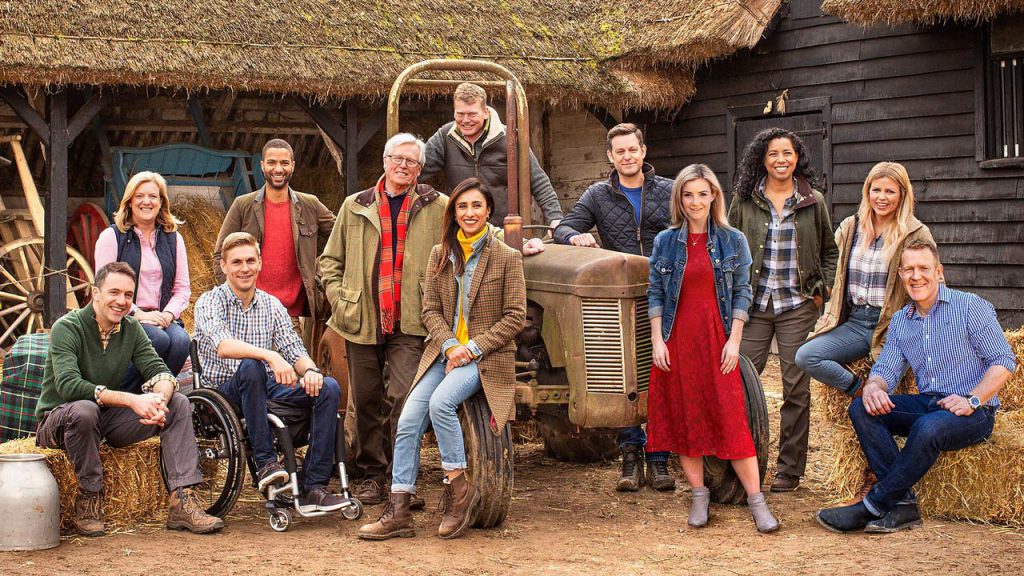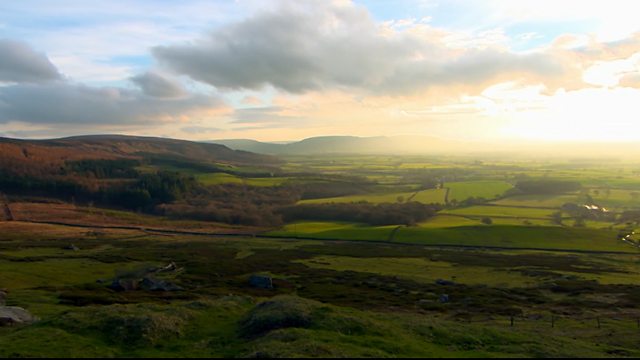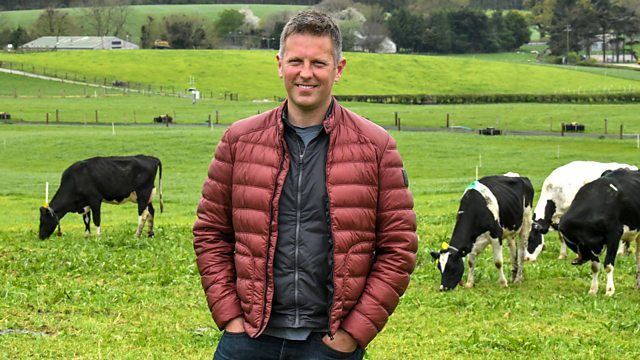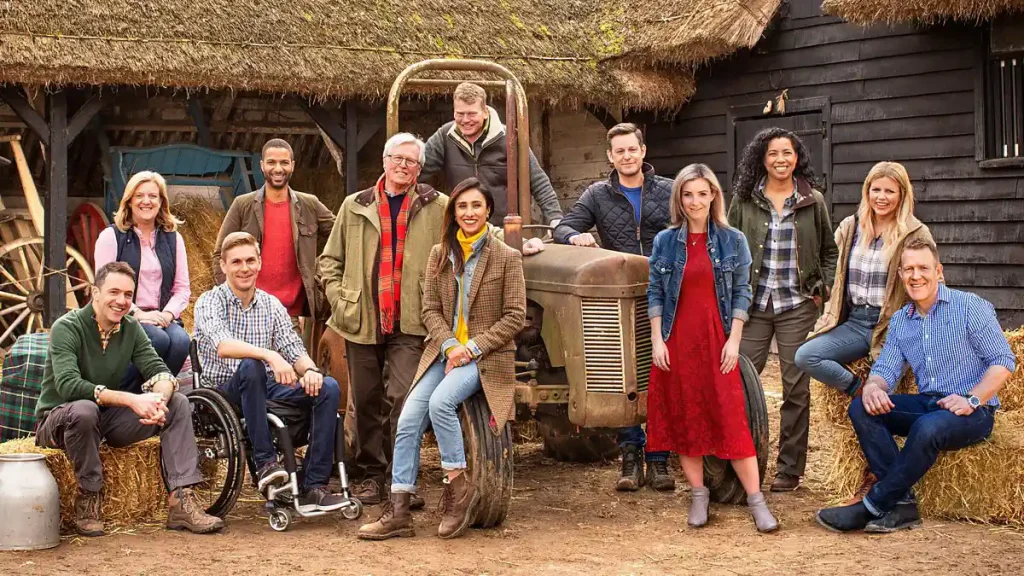
The Balmoral Show returned to Lisburn, Northern Ireland, this year for its 157th outing, drawing farmers, food producers and show teams from across the region to one of the biggest dates in the rural calendar. Sean Fletcher and Adam Henson spent the four-day event meeting the people who keep this gathering at the centre of Northern Irish agricultural life, from prize-winning Dexter cattle handlers to master saddlers safeguarding heritage crafts. Organised by the Royal Ulster Agricultural Society, the show now unfolds on a 65-acre site 13 miles southwest of Belfast, where modern machinery and age-old traditions meet in front of an audience of thousands.
What makes the Balmoral Show matter is not nostalgia. It is the working reality behind it. Northern Ireland’s food and drinks industry is worth more than £7 billion a year and supports over 100,000 jobs, and almost every strand of that economy traces back to the farming community on display here. For families showing livestock, the stakes are real: reputation, breeding value and future sales all ride on a single judge’s decision in the ring.
That tension runs through everything at Balmoral. Animals are washed, clipped, sprayed and coaxed for weeks. Young Farmers test skills sharpened on the farm against the clock. Producers chase new customers across crowded food halls. Underneath the buzz of the tannoy and the smell of the cattle lines, this is country life conducted at full intensity, with livelihoods quietly hanging in the balance.
The Balmoral Show has moved homes several times across its long history, but its purpose has never shifted. It exists to celebrate Northern Irish agriculture and the local produce that flows from it. The community around Lisburn is deeply entrenched in farming, and the show functions as both a shop window and an annual reunion for an industry that rarely stops working.
For Sean Fletcher and Adam Henson, the appeal is immediate. The sense of excitement that hits anyone walking into an agricultural show, the noise, the crowds, the unmistakable smells, lands hardest here because the local connection to the land runs so deep. The show is not a spectacle staged for outsiders. It belongs to the people competing in it.
That ownership explains the scale. Over four days, the site hums with livestock rings, machinery competitions, craft demonstrations and food stalls. Each element reinforces the same point. Agricultural life in Northern Ireland is not a museum piece, and Balmoral is where its present and future are argued out in public, one rosette at a time.
Countryfile – The Balmoral Show
The Bloomer Family and the Quiet Comeback of the Dexter Breed
In the cattle lines, one breed carries a legacy far larger than its frame. Dexters are the smallest native breed in the UK and Ireland, standing only waist-high, yet they hold real significance for Irish farming heritage. By the mid-20th century the breed had nearly disappeared. Its resurgence owes much to families like the Bloomers.
Desmond Bloomer has been showing Dexters at Balmoral for 12 years, and his is a genuine family affair, with son Matthew and daughter Grace working alongside him. The preparation is relentless. Plans for the show begin before Christmas, built around feeding, conditioning and constant attention to feet and coat. Showing is also costly, with money spent on equipment, shampoos and travel before a single animal enters the ring.
Dexters are prized as a dual-purpose breed, producing both surprising quantities of milk and beef the Bloomers rate above any other. For young handlers, they are a confidence-building starting point before moving to larger breeds. Grace and Matthew demonstrate the tricks of the trade too, brushing the coat to disguise small bumps and combing it outward to make a bull look slightly wider, gentle optical illusions designed to show each animal at its absolute best.
The family brought three bulls: Spidaman, the previous Balmoral winner Cerberus, and Barra, the 2023 national Dexter champion. With in-house rivalry between them, the pressure builds toward a single decisive class. As Desmond puts it, there is a lot riding on this, for the value and reputation of their animals as much as for pride.
Inside the High-Pressure Battle of the Dexter Bulls
When the bull class finally arrives, seven animals enter the ring, but the Bloomers’ three stand out. Matthew leads the magnificent Spidaman, Desmond and Grace handle the shorter, previously crowned Barra, and Matthew’s girlfriend Imogen takes the red bull. Energy levels, as the family admits, are very tense.
The judging is methodical and physical. The judge brings each bull to a corner, walks it toward him to assess the front legs, then turns it away to study the back legs, looking for straightness rather than legs twisted in or out. He runs his hands over the shoulders, down the loin and onto the rump, feeling muscle depth and the tightness of the skin. Handlers use show sticks to keep the animals square and calm, tickling the chest and nudging the feet.
Not everything goes smoothly. Imogen struggles to hold the red bull still, and when the judge cannot get his hand on an animal, that counts against it. The red bull’s brief misbehaviour proves costly. When the judge pulls his top three into the centre, all three are Bloomer bulls, and the order holds: Desmond’s Barra first, the red bull second, Matthew third.
That red rosette qualifies Barra for the best of breed category, where the judge walks to his chosen winner and slaps him on the back, the traditional signal of victory. Barra is named champion Dexter. For Desmond, watching his son and daughter take prizes in the ring is openly emotional, the payoff for years of work that began when his children were very young.
Young Farmers Push Heavy Machinery to the Limit
Away from the cattle, Balmoral’s Young Farmers raise the tempo in one of the show’s biggest tests of skill. The machinery handling competition asks competitors to tow heavy equipment around a tight obstacle course, entirely in reverse, against the clock. This year’s challenge is a 12-foot-wide land roller, with posts set just a foot either side, leaving almost no margin for error.
Judge William Richmond, who competed in the same event back in 1998 and reached a UK final at Silsoe College, stresses that speed is not everything. Safety comes first. Touching a post brings a five-second penalty, and so does wheelspin or any avoidable adjustment. The course runs in reverse out through the cones, then demands a three-point turn and a reverse back, finished neatly for the next contestant.
Matthew Cleland and Alexander Mitchell from County Down compete as one of six pairs, each pair drawn from the top two finishers in their county heats. Their backstory captures the show’s spirit: Alexander beat Matthew into second place at the heats, yet they now team up, describing the rivalry between counties as friendship rather than feud. Sean Fletcher, handed sole charge of the stopwatch, confesses to real nerves about his one job.
The reigning champions, Iain and Steven Wilson from County Antrim, set a blistering, penalty-free 4.17. Pressure tells on others. Alexander cannot get his tractor into gear, then clips a post, a reminder that the faster you go, the more mistakes you make. County Armagh’s Joel Milligan and George Porter take first place, the Wilsons second. For Matthew, the value lies elsewhere, in the craic, the neighbours and the rare day that simply brings everybody together.
The New Heritage Craft Hub Keeping Rural Skills Alive
New to the show this year is a heritage craft hub celebrating rural skills once found right across Northern Ireland. Throughout the week, visitors can try everything from saddlery to spinning. The man behind it is Clive Lyttle, a multi-skilled craftsman determined to bring these practices back to life and prove they still belong in the modern world.
Clive’s work is rooted in conservation. He grows much of his own timber and materials on his smallholding, carrying a craft through its full cycle of growing, harvesting, preparing, making and selling, much as it would have been done for centuries. A donkey creel, the traditional pannier basket once slung either side of an animal to carry turf from the bog or seaweed from the beach, sits among his pieces, a direct link to how rural households once heated and cooked.
For Clive, the case for these skills is partly practical and partly human. He runs workshops with a diverse range of groups, and points to the mental health benefits of repetitive craft, the way weaving demands total focus and pushes everything else out of mind for a few hours. The hub is not about looking back. It is about giving old skills a genuine future.
Master Saddler Lucy Cushley and the Living Trade Behind the Ring
Bespoke leather-work forms another strand of the craft hub, and at a show where presentation is everything, master saddler Lucy Cushley is never short of work. A halter she made for a bull around ten years ago brought a repeat customer back for a heifer version, each one custom-made and carrying the owner’s herd name, a level of fit and finesse the off-the-peg market cannot match.
Her craft is also a matter of animal welfare. Lucy insists on backing the brass fittings with leather so no prong sits against the animal’s face, and a strong, well-made halter keeps a leaping bull secure when he touches grass. When customers ask her simply to push an ornament through, she refuses, explaining the reasoning rather than cutting corners.
Lucy is passionate that craft is living and breathing, not something confined to a training room or kept on the sidelines. Once, she notes, every village had a saddler, and craftspeople were integral to society, from cattle and horses to blacksmithing and hedge-laying. Quality costs more, but it lasts for years, and she argues that once people grasp how much skilled craft matters, they cannot live without it.
Stock Judging and the Expert Eye That Shapes a Herd’s Future
For Young Farmers, the ability to spot a truly good animal is far more than a competition skill. It shapes breeding decisions, sale prices and the long-term future of a herd. The stock judging at Balmoral puts those instincts directly to the test, and local sixth-generation farmer Emily McGowan, who first came to the show aged seven, watches to learn a thing or two.
Senior judge Geoffrey Rodgers explains what separates a good beef animal: size, length and the expensive cuts, strong hindquarters and a well-rounded back end. Competitors rank two groups of cattle and must match the order set by the two master judges, David Connolly and Geoffrey Rodgers. The placings count for only half the score. The other half rests on a formal presentation, delivered face-to-face, justifying every decision.
The field includes Geoffrey’s daughter Lucy, a stock judge since she was 11, and Lynsay Beattie, competing in her final year after almost two decades in Young Farmers. Lynsay, a dairy farmer’s daughter judging beef, captures the bittersweet edge of ageing out at 30. She also makes the wider case for the movement: 50 clubs across Northern Ireland, over 3,500 members, and skills that transfer far beyond farming. Lucy takes first in the senior beef class, carrying home rosettes and hard-won experience.
The Kerr Family’s Show Sheep and the Business Behind the Beauty Parlour
Sometimes the animals that turn heads are the more unusual breeds. Five miles from the showground, James and Laura Kerr keep eye-catching Rouge de l’Ouest sheep, a flock of around 60 pedigree ewes run alongside James’s full-time job as a plumber. It is teamwork that makes it possible, with three generations pitching in, and the couple themselves first met at the Balmoral Show.
The Rouge’s bare face and legs leave nowhere to hide, so judges see every detail. That is why the family give their sheep a full beauty treatment in what they call the beauty parlour, finishing the coat, clipping legs from hoof to hock, and spraying on a secret, non-toxic colour recipe to show off each animal’s curves. Their prize ram Buckingham, the reigning Best in Show champion, weighs an intimidating 140kg.
For the Kerrs, showing is serious business, not just fun. Balmoral is their shop window for selling rams and breeding ewes, with the clear objective of pushing the breed and making a living. Buckingham does not retain his crown this year, finishing second to a younger ram, but the family’s ewes and lambs collect multiple rosettes, including a red that qualifies their ewe for the overall championship, where she takes Interbreed Best in Show. For patriarch Sammy, watching son, daughter and granddaughters follow behind is where the pride comes in.
The Food Hall and the £7 Billion Industry Built on Local Produce
The Balmoral food hall hums with the small producers behind Northern Ireland’s thriving food and drinks sector. Under one roof sit 85 producers, from biltong made with retired organic dairy cows and the region’s only commercial salad-leaf grower, to bacon curers with over 30 years at the trade. For many, events like this are crucial, with as much as half their produce sold through markets and shows.
Baker Mark Douglas has brought his mobile bakery to Balmoral since 2014, on a mission to keep the soda farl on the menu. The bread’s defining ingredient is buttermilk, sourced locally from Draynes Farm, which reacts with bicarbonate of soda and cream of tartar to release carbon dioxide and make the dough rise almost instantly. The name itself comes from the Gaelic word fardel, meaning four parts, a nod to the quartering of the dough.
Mark’s craft rewards a light touch. The dough is barely kneaded, cut with a clean press of the knife rather than a saw, and baked for around 15 minutes, with a popular variation studded with smoked bacon and cheese. Forty-four years of practice underpin a philosophy shared across the hall: promote the local skill, sell the produce, and make a living while keeping a Northern Irish tradition alive. As Mark notes, local producers feeding off one another in a genuine network is what keeps the whole thing thriving.
Tug-of-War, Tractors and the Community Glue of Balmoral
Few events distil Balmoral’s competitive heart like the tug-of-war, a fixture for more than a decade that takes county rivalry to another level. This year 19 teams of Young Farmers compete for glory in the ultimate test of teamwork. Leading one of them is Courtney McMullan, founder and captain of the Moycraig Young Farmers Ladies Team from County Antrim.
Preparation borders on the heroic. The team has trained hard since after Christmas, indoors and out, even tying their rope to a pick-up tow bar and dragging it through fields. Their secret weapons are homemade: tea towels padding the anchor’s shoulders, and boots built from old roller skates, smoothed down so a metal edge digs into the ground when they dig in. The team’s coach is Tracey, who also happens to be Courtney’s mum.
Drawn against the reigning champions in their first heat, Moycraig come up short, but battle through wins and losses to claim third place in the play-offs. For Courtney, who admits her own competing days are winding down, coming home with third is a fantastic achievement and proof that the training and anticipation were worth it, with a strong team ready to carry Moycraig forward.
The Balmoral Show endures because it bundles all of this together: the pride of the Bloomer family in the Dexter ring, the precision of Young Farmers reversing a land roller through cones, the saddlers and basket-makers keeping rural craft breathing, and the producers turning local buttermilk and beef into a living. After 157 years, the show remains exactly what its community needs, a place where the wildlife of the countryside, the heritage of its crafts and the future of its farming all gather in one field for four extraordinary days. As Sean and Adam agree at the close, you really can’t beat an agricultural show, and Balmoral, more than most, proves why.
FAQ Countryfile – The Balmoral Show
Q: Where is the Balmoral Show held and how big is it?
A: The Balmoral Show takes place in Lisburn, around 13 miles southwest of Belfast, on a 65-acre site. Organised by the Royal Ulster Agricultural Society, it is now in its 157th year and ranks among the biggest dates in Northern Ireland’s rural calendar, drawing thousands of farmers, food producers and show teams across four days.
Q: Why are Dexter cattle important to Irish farming heritage?
A: Dexters are the smallest native breed in the UK and Ireland, standing only waist-high, yet they carry significant heritage value. By the mid-20th century the breed had nearly disappeared. A resurgence followed, helped by families embracing them as a confidence-building starting point for young handlers. They are prized as a dual-purpose breed, producing both milk and highly rated beef.
Q: How much preparation goes into showing cattle at Balmoral?
A: Preparation often begins before Christmas. Handlers focus on feeding, conditioning and constant attention to feet and coat for months. The work is also costly, with money spent on equipment, shampoos and travel. On show day, animals are washed, clipped and combed, with coats brushed to disguise small bumps and make each bull look its absolute best.
Q: How does the Young Farmers machinery handling competition work?
A: Competitors tow heavy equipment around a tight obstacle course entirely in reverse, against the clock. This year’s challenge was a 12-foot-wide land roller, with posts set just one foot either side. Safety comes first: touching a post, wheelspin or unnecessary adjustments each carry five-second penalties, so racing too fast often proves costly.
Q: What do judges look for when assessing a beef animal?
A: Judges look for size, length and the expensive cuts of meat, including strong hindquarters and a well-rounded back end. They walk each animal toward and away from them to check the legs are straight, not twisted in or out. They also run their hands over the shoulders, loin and rump to feel muscle depth and skin tightness.
Q: What is the new heritage craft hub at the Balmoral Show?
A: New for this year, the heritage craft hub celebrates rural skills once found across Northern Ireland, from saddlery to spinning. Visitors can try crafts throughout the week. Led by craftsman Clive Lyttle, it showcases traditional pieces like the donkey creel and emphasises slow, conservation-rooted making, alongside the proven mental health benefits of repetitive craft work.
Q: Why does custom leather-work matter for show animals?
A: Custom halters fit far better than off-the-peg versions and carry the owner’s herd name. Importantly, they support animal welfare. Master saddler Lucy Cushley backs all brass fittings with leather so no prong sits against the animal’s face. A strong, well-made halter also keeps a leaping bull secure when he touches grass.
Q: Why are Rouge de l’Ouest sheep given a full beauty treatment?
A: The breed’s bare face and legs leave nowhere to hide, so judges see every detail. To stand out, handlers finish the coat, clip legs from hoof to hock, and spray on a non-toxic colour to highlight the animal’s curves. The Kerr family’s prize ram Buckingham weighs an intimidating 140kg.
Q: What makes a traditional Northern Irish soda farl unique?
A: Buttermilk is the defining ingredient, giving the bread its distinctive flavour. It reacts with bicarbonate of soda and cream of tartar to release carbon dioxide, making the dough rise almost instantly. The name derives from the Gaelic word “fardel”, meaning four parts. The dough is barely kneaded and cut with a clean press rather than sawed.
Q: Why is the Balmoral Show so important to Northern Ireland’s economy?
A: Northern Ireland’s food and drinks industry is worth more than £7 billion a year and supports over 100,000 jobs, almost all of it rooted in farming. The show gives small producers a platform to reach thousands of new customers daily. For many, shows and markets account for up to half their sales, making events like this crucial to their future.