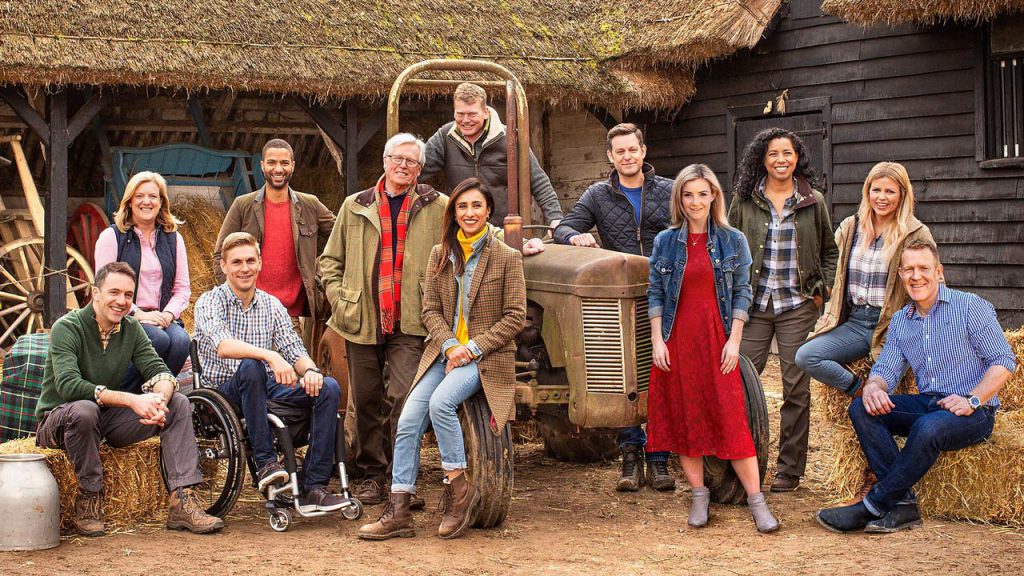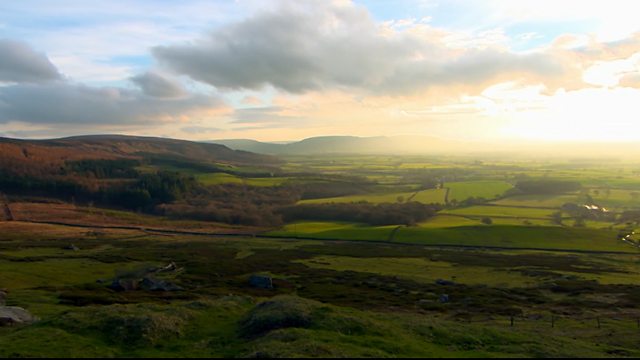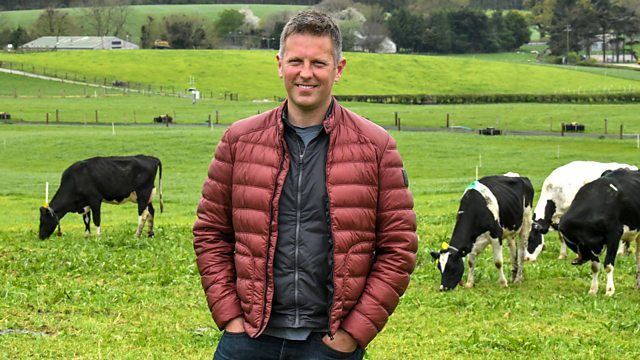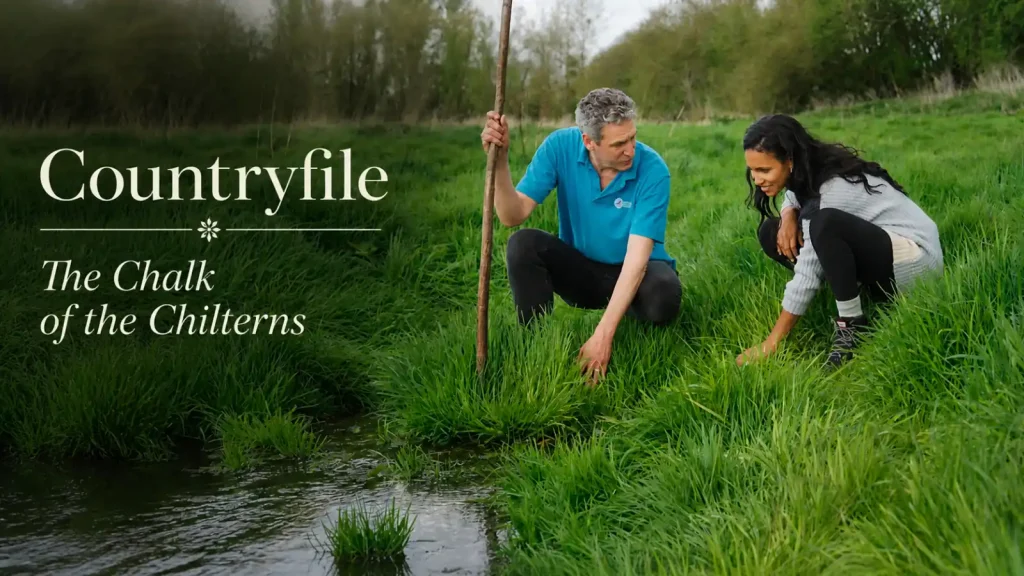
Countryfile – The Chalk of the Chilterns takes you deep into one of England’s most quietly extraordinary landscapes. Beneath the rolling hills and wildflower meadows of the Chilterns lies something remarkable: a foundation of chalk that shapes almost everything living above it. Matt Baker and Vick Hope travel to this special corner of country life to uncover what makes it so fragile, so precious, and so worth fighting for.
Chalk is not simply rock. It is the skeleton of an entire ecosystem. The thin, fast-draining soil it creates supports rare grasslands that cannot survive anywhere else. Specialised wildflowers, insects, and birds have evolved over thousands of years to thrive in these conditions. Lose the chalk, or break it apart, and you lose the wildlife that depends on it. That is exactly what has been happening.
Over recent decades, agricultural life and urban expansion have fragmented these habitats into isolated pockets. Species that once roamed freely across connected landscapes are now trapped in smaller and smaller patches, like islands cut off from the mainland. For some, the decline has been dramatic. For others, it may already be too late unless action comes quickly.
Countryfile 2026 puts this urgent story front and centre. Matt Baker travels across the Chilterns to meet the farmers, conservationists, and innovators working to reverse the damage. What he finds is not despair. It is determination, creativity, and a genuine love for the land beneath their feet.
One of the most poignant moments involves the Duke of Burgundy butterfly. This small, jewel-like creature is one of Britain’s most endangered insects. Its survival depends entirely on the presence of specific plants that grow only on well-managed chalk grassland. Matt gets involved directly in efforts to protect it, learning how careful land management can make all the difference between extinction and recovery.
Meanwhile, Vick Hope visits one of nature’s most fleeting spectacles: a winterbourne stream. These seasonal watercourses are unique to chalk landscapes. They flow only after heavy winter rainfall, when the chalk becomes saturated and water bubbles up from underground. For much of the year, they are dry valleys. Then, suddenly, they come alive. Vick’s visit coincides with restoration work designed to help one such stream return to its natural rhythm.
The heart of this episode of Countryfile lies in a simple but powerful idea: landscapes need to be connected. A single field of chalk grassland, however well managed, cannot support a thriving ecosystem on its own. Species need corridors to move through, to find mates, to spread and recover. Matt meets farmers who have begun working together across property boundaries to create exactly these connections.
This kind of collaborative approach is relatively new to British farming. Traditionally, each farm operated independently. Now, neighbours are aligning their land management strategies, creating joined-up networks of habitat across whole hillsides. The result is something greater than any one farmer could achieve alone. It is community action dressed in muddy boots.
Not everything in this episode looks to the past for answers. Matt also discovers how drone technology is transforming farming on the chalk hills. At a chalkland vineyard, drones now monitor the health of vines with extraordinary precision, identifying stress and disease before the human eye could ever detect them. Furthermore, this precision allows farmers to respond quickly and reduce chemical use.
The image of a drone humming over ancient chalk slopes is striking. It represents the meeting point between deep-rooted tradition and modern innovation. The chalk has been farmed for centuries. The tools change; the commitment to working with the land remains constant.
Additionally, wildlife and conservation are not the only threads running through this episode. Adam Henson, a familiar and beloved presence in countryfile, welcomes a rare-breed Middle White pig to his Cotswolds farm. The Middle White is a native British breed with a wonderfully expressive face and an equally expressive personality. Seeing it settle into its new home is one of those warm, unhurried moments that remind you why countryside television at its best feels like a breath of fresh air.
Adam is also trialling crops that could significantly reduce the need for synthetic fertilisers. As farming faces increasing pressure to cut its environmental footprint, these trials offer a genuinely hopeful glimpse of what sustainable agricultural life could look like in the years ahead.
Countryfile – The Chalk of the Chilterns
Countryfile – The Chalk of the Chilterns takes viewers into one of southern England’s most distinctive and ecologically significant landscapes, where a single geological formation shapes everything from the soil underfoot to the species that survive above it. The Chilterns, stretching across Buckinghamshire, Oxfordshire, Hertfordshire and Bedfordshire, sit atop a vast seam of chalk that has defined rural life, farming practice and wildlife habitat for centuries. Yet this ancient landscape is under pressure. Habitats have been lost, fragmented and degraded over decades, and the specialised species that depend on chalk conditions have declined as a result. Understanding why matters now more than ever, as farmers, conservationists and scientists work together to reverse the damage before it becomes irreversible.
Chalk is not simply a rock type. It is a foundation for an entire ecological system. The porous nature of chalk means water drains rapidly through it, creating dry, nutrient-poor soils that favour a specific suite of wildflowers, grasses and invertebrates found almost nowhere else. Where these conditions survive, they support some of Britain’s rarest wildlife. Where they have been lost to intensive farming, urban expansion or simple neglect, the species that depended on them have followed. The story of the Chilterns is therefore a story of loss, but also, increasingly, of recovery. Agricultural life in this part of England is changing, and the changes carry real consequences for the nature that shares this ground.
The episode follows Matt Baker and Vick Hope as they move through the Chilterns, each encountering a different dimension of this chalk-dependent world. Matt works alongside farmers who are rethinking how they manage their land, joins conservationists protecting one of Britain’s most threatened butterflies, and visits a vineyard using cutting-edge drone technology to tend its vines.
Vick, meanwhile, traces the course of a rare winterbourne stream whose very existence depends on chalk hydrology, and witnesses the restoration work that is slowly bringing it back to life. Together, these stories build a picture of a landscape at a turning point. Countryfile – The Chalk of the Chilterns frames each encounter not as isolated curiosity but as part of a connected ecological argument.
That argument begins underground. The chalk aquifer beneath the Chilterns holds enormous quantities of water, releasing it slowly into springs and streams that emerge at the base of the escarpment. This hydrological behaviour creates the winterbourne, a type of stream that flows only seasonally, filling after heavy winter rainfall and retreating as summer approaches.
For most people, a stream that disappears for half the year might seem broken. In reality, it is functioning exactly as it should. The chalk landscape produces these intermittent watercourses as a direct expression of its geology, and the wildlife and vegetation that line their banks have adapted accordingly. Country life in the Chilterns has always been shaped by this rhythm, even when modern land use has obscured it.
Above the valley floors, the chalk downland supports a very different but equally specialised community of life. Chalk grassland, where it survives in good condition, is one of the most species-rich habitats in Europe. A single square metre can contain dozens of plant species, each adapted to the thin, alkaline soils and the open, sunny conditions that come with them. These grasslands are not natural in the strict sense; they developed under centuries of grazing by sheep and cattle, which kept coarser vegetation at bay and allowed low-growing wildflowers to persist. Crucially, they require continued management to survive. Without grazing, scrub invades, shade increases, and the specialist plants and insects disappear within years.
The vulnerability of chalk grassland to fragmentation is one of the episode’s central concerns. When a large, continuous grassland is divided by roads, hedgerows, or agricultural fields, the isolated patches that remain become harder for species to move between. Butterflies, in particular, struggle to cross unsuitable habitat. If a population in one patch declines, recolonisation from a neighbouring patch becomes impossible if the two are no longer connected. This is not theoretical: several species that were once common on Chilterns chalk have already been lost from much of their former range. The wildlife that remains is concentrated in increasingly small and isolated strongholds, and the challenge facing conservationists is not simply to protect what survives but to reconnect it.
This context gives weight to every practical action described across the episode. A farmer allowing a field margin to revert to chalk grassland, a conservation volunteer clearing scrub from a hillside, a water authority restoring a stream channel — each intervention is small in isolation but significant as part of a larger, coordinated effort. Nature responds to connection. When habitats link up, species move, populations stabilise and resilience increases. That is the underlying logic driving the agricultural life and conservation work that Countryfile – The Chalk of the Chilterns documents, and it is a logic grounded in decades of ecological research applied to this specific, irreplaceable landscape.
The episode builds its case through people who live and work in this landscape every day, whose decisions directly determine what survives and what does not. Their knowledge is practical, earned through seasons of observation and experiment, and it carries authority that no textbook can replicate. Understanding the chalk, in their telling, is not an academic exercise. It is a daily responsibility, and it shapes everything from where they walk their animals to which fields they leave ungrazed each autumn.
Connecting Fragmented Habitats Across the Countryfile – The Chalk of the Chilterns Landscape
One of the most urgent conservation challenges in the Chilterns is the fragmentation of chalk grassland. Matt Baker meets farmers who are actively working to address this problem by managing their land in ways that create corridors between isolated habitat patches. The principle is straightforward: if wildlife cannot travel between populations, those populations eventually collapse. The solution requires landowners across a wide area to coordinate their efforts, aligning field margins, unfenced slopes and restored grassland so that species can move freely across the landscape.
The farmers Matt encounters are not working in isolation. They are part of a coordinated local effort, sharing knowledge and aligning management practices across neighbouring holdings. This kind of landscape-scale collaboration is increasingly recognised as essential to conservation success, because the ecological processes that sustain chalk grassland do not respect farm boundaries. A butterfly or a rare plant does not know where one holding ends and another begins. What matters is whether suitable habitat exists in a continuous enough form to support viable, interconnected populations.
The practical work involved includes allowing field margins to develop into wildflower-rich strips, reducing or eliminating fertiliser applications in target areas, and reintroducing grazing where it has lapsed. Each of these actions, taken individually, produces modest results. Taken together across multiple farms, they begin to recreate the connected chalk landscape that once supported much greater biodiversity. The farmers Matt meets understand this. Their motivation is not purely financial, though agri-environment schemes provide some support. It is rooted in a genuine attachment to the land and a recognition that the wildlife and the farming are inseparable parts of the same system.
Protecting the Duke of Burgundy: A Countryfile – The Chalk of the Chilterns Conservation Priority
Among the species most at risk from chalk grassland fragmentation is the Duke of Burgundy butterfly, one of Britain’s most endangered insects. Matt joins a conservation effort focused on protecting and expanding the population of this small but striking butterfly in the Chilterns. The Duke of Burgundy has very specific requirements: it needs cowslips for its larvae to feed on, and it needs those cowslips to grow in the right microhabitat conditions — warm, sheltered slopes with short turf and patches of scrub edge.
The butterfly’s decline has been steep. It has been lost from much of its former range across England, and the Chilterns represent one of its remaining strongholds. Conservation work here combines habitat management with careful monitoring. Volunteers and ecologists survey populations each season, tracking numbers and distribution to identify where management interventions are most needed. The work is painstaking and requires sustained commitment over many years, because the results of habitat improvement often take time to show in butterfly numbers.
Protecting the Duke of Burgundy also means managing the scrub that colonises unmanaged chalk grassland. Scrub provides habitat for some species, but when it spreads too thickly it shades out the cowslips and other plants that the butterfly depends on. Conservation teams therefore carry out regular clearance work, removing encroaching hawthorn and bramble to maintain the open, structured grassland that the Duke of Burgundy requires. This is seasonal, physical work, and it illustrates a wider truth about chalk grassland management: it demands ongoing active intervention, not simply leaving land alone. Wildlife in this landscape is a product of management, and always has been.
Drone Technology and Agricultural Life in the Chilterns Vineyard
Away from the grasslands and butterfly reserves, Matt visits a chalkland vineyard where modern technology is transforming traditional viticulture. Chalk soils are well suited to viticulture because their free-draining, low-fertility properties stress the vines in productive ways, concentrating flavour in the fruit. The Chilterns and the broader chalk belt of southern England have seen significant growth in vineyard planting over recent decades, driven partly by a warming climate and partly by a growing understanding of how well English chalk terroir suits certain varieties.
The vineyard Matt visits is using drone technology to manage its vines with a precision that would be impossible through conventional means. Drones equipped with cameras and sensors fly over the vineyard, capturing detailed imagery that allows the grower to assess vine health, identify disease or stress, and target interventions precisely where they are needed. This reduces the use of chemical treatments across the whole vineyard, instead concentrating them where the data shows a genuine need. The result is more efficient, more sustainable viticulture that reduces the environmental impact of farming on chalk soils.
The scale of the vineyard and the complexity of managing it row by row, vine by vine, makes drone surveillance particularly valuable. A human walking the rows would take days to assess what a drone can survey in hours, and the quality of the data captured exceeds what the naked eye can reliably detect. Agricultural life at the cutting edge now involves as much data management as physical labour, and this vineyard represents a model that other growers are watching closely. The technology is expensive, but the savings in wasted inputs and the improvements in crop quality create a compelling case for adoption.
The Winterbourne Stream: Chalk Hydrology and Country Life on the Valley Floor
Vick Hope’s exploration of the winterbourne stream provides the episode’s most direct encounter with the chalk landscape’s underlying hydrology. A winterbourne is a stream fed entirely by groundwater emerging from the chalk aquifer. After significant winter rainfall, the water table in the chalk rises until it intersects the valley floor, and water begins to flow. As the drier months of spring and summer progress, the water table drops, the springs cease, and the stream retreats upstream and eventually disappears entirely. This cycle has governed country life in chalk valleys for millennia.
The stream Vick visits has been affected by changes to its channel and its catchment over many decades. Agricultural drainage, modified valley floors and reduced winter rainfall in some years have altered its behaviour, making it less predictable and reducing the length of channel that holds water even in good years. Restoration work now underway aims to reverse some of this damage by improving the channel’s condition, removing obstructions and allowing the stream to reconnect with its natural floodplain.
The ecological significance of the winterbourne extends beyond the stream itself. The damp grassland and wet woodland that develop along its banks during the flowing season support specialist plants and invertebrates that depend on the combination of chalk water and seasonal inundation. When the stream stops flowing, the damp conditions persist in the soil and vegetation for some time, extending the period of suitable habitat. Restoring the stream therefore restores not just a watercourse but an entire riparian ecosystem, including the insects, birds and plants that are part of country life along chalk valleys throughout the Chilterns.
Restoration Work and the Return of the Winterbourne in Countryfile – The Chalk of the Chilterns
The restoration work Vick witnesses is part of a broader effort to improve the ecological condition of chalk streams and valleys across southern England. Chalk streams are globally rare: the great majority of the world’s chalk streams are found in England, giving the country a disproportionate international responsibility for their conservation. Despite this, many have been degraded by abstraction, pollution, physical modification and changed land use in their catchments.
The restoration approach combines several techniques. Channel narrowing uses introduced material to concentrate the flow, increasing water velocity and improving the conditions for aquatic life. Removing accumulated silt restores the gravelly stream bed that chalk stream invertebrates require. Reducing bank-side vegetation in strategic locations allows more light to reach the water, warming it and encouraging the growth of aquatic plants. Each intervention is chosen based on the specific condition of the reach being treated, and the results are monitored carefully over subsequent seasons.
What strikes Vick most forcefully is the speed of ecological response once conditions improve. Species that have been absent or scarce begin to reappear within months of restoration. Plants establish in newly cleared gravel beds. Invertebrates colonise restored reaches surprisingly quickly, suggesting that viable source populations remain in the catchment, waiting for the habitat to become suitable again. The chalk landscape, it seems, retains a remarkable capacity for recovery when given the right conditions. That capacity is fragile, however, and depends on human decisions made both on the land and in the management of water resources across the catchment.
Adam Henson at Bemborough: Middle White Pigs and Innovative Cropping in Agricultural Life
While Matt and Vick explore the Chilterns, Adam Henson continues his work at Bemborough Farm in the Cotswolds, introducing a rare-breed Middle White pig and trialling crops that could reduce reliance on synthetic fertilisers. The Middle White is a native British breed with a distinctive snout and a docile temperament, once widespread in commercial farming but now classified as a rare breed. Adam’s interest in keeping such breeds is both preservationist and practical: rare breeds often carry traits, resilience and genetic diversity that commercial lines have lost.
The pig’s arrival at Bemborough is a straightforward piece of agricultural life — a new animal joining the farm, requiring appropriate housing, feeding and management — but it carries a wider significance. Native rare breeds represent a link to agricultural traditions that shaped country life over centuries. Their preservation depends on farmers like Adam who are willing to commit space, time and resources to animals that do not necessarily maximise commercial output but contribute to genetic heritage and farm biodiversity.
Adam is also trialling crops with the potential to fix atmospheric nitrogen, reducing the need for synthetic nitrogen fertilisers. The environmental case for reducing fertiliser use is strong: nitrogen fertiliser production is energy-intensive and its application contributes to nitrous oxide emissions, soil acidification and water pollution. If leguminous or other nitrogen-fixing crops can be integrated effectively into rotations, they could reduce input costs and environmental impact simultaneously. The trial is at an early stage, and Adam is honest about the uncertainties involved, but the direction of travel reflects a wider shift in how agricultural life on mixed farms is being rethought.
The Role of Farmers in Sustaining Countryfile – The Chalk of the Chilterns Wildlife and Habitats
Throughout the episode, the relationship between farming and nature on the chalk emerges as one of mutual dependency rather than conflict. The chalk grassland habitats that support rare wildlife are themselves products of agricultural management stretching back centuries. Remove the grazing animals, and the grassland disappears within a generation. Remove the farmers who manage scrub, maintain field margins and coordinate with neighbours, and the fragile connectivity between habitat patches will quickly break down.
This dependency creates both a challenge and an opportunity. The challenge is that farming in the Chilterns, as elsewhere, has changed dramatically since the mid-twentieth century. Intensification, amalgamation of holdings and the shift toward arable production have all reduced the extent and quality of chalk grassland. The farmers who remain and who are engaged in conservation-oriented management represent a minority, and their work is not always financially straightforward. Support from agri-environment schemes helps but does not fully compensate for the opportunity cost of land managed for nature rather than maximum crop yield.
The opportunity lies in the growing recognition, among farmers, policymakers and the public, that the ecological services provided by well-managed chalk landscapes have genuine value. Clean water from the chalk aquifer, carbon stored in chalk grassland soils, pollination services from the insects that chalk habitats support, the mental health and recreational benefits of a biodiverse countryside — all of these represent real returns from land managed with wildlife in mind. Countryfile – The Chalk of the Chilterns makes this case not through argument but through example, showing what the landscape looks like when farmers choose to prioritise it.
Species, Soils and the Science Behind Countryfile – The Chalk of the Chilterns Conservation
The ecological complexity of chalk landscapes becomes apparent when individual species are examined in detail. The Duke of Burgundy butterfly’s dependence on cowslips is well established, but cowslips themselves are only abundant where the soil chemistry, hydrology and management history align correctly. Change any one of these factors, and the cowslip population declines, and the butterfly follows. This layered dependency is characteristic of chalk ecosystems, where many species occupy very narrow ecological niches that require multiple conditions to be met simultaneously.
Understanding these dependencies has improved significantly in recent decades, as ecologists have developed better tools for mapping habitat quality, tracking population trends and identifying the specific management interventions that produce results. Drone surveys, remote sensing and genetic analysis have all contributed to a more precise understanding of where species occur and why. This scientific progress is directly supporting the conservation work described across the episode, enabling practitioners to make better decisions about where to invest limited resources.
The science also reveals the importance of landscape context. A small chalk grassland patch managed impeccably in isolation will not sustain viable populations of mobile species like butterflies indefinitely. It needs to be connected to other patches, and those connections need to be maintained. The concept of metapopulation dynamics — the idea that local populations go extinct and are recolonised from neighbouring populations — underpins the landscape-scale approach to conservation that the episode documents. Wildlife management in the Chilterns is increasingly informed by this understanding, and the results, while gradual, are measurable.
Agricultural and Conservation Priorities Converging Across the Chalk Landscape
The most striking aspect of the picture assembled across the episode is how thoroughly agricultural life and conservation have converged in their priorities on the chalk. Farmers managing for biodiversity are also managing for soil health, water quality and long-term productivity. Conservationists restoring habitats are also supporting the farming systems that maintain them. Neither can succeed without the other, and both are increasingly aware of this.
This convergence is not accidental. It reflects years of dialogue, practical experimentation and policy development that have gradually aligned the incentives facing farmers with the outcomes that ecologists want to see. Agri-environment schemes have played a role, but so has the cultural shift among farmers who have come to see their land as a living system rather than a resource to be maximised. Country life in the Chilterns today is shaped by this shift, which is visible in the field margins, the restored stream channels, the scrub-cleared hillsides and the butterfly transects that volunteers walk each summer.
The chalk landscape rewards this approach. It is a landscape with a remarkable capacity for recovery, given the right conditions. Species return, habitats reconstitute, and the ecological connections that fragmentation severed can, with sustained effort, be remade. Countryfile – The Chalk of the Chilterns documents this recovery in progress — incomplete, imperfect and dependent on continued commitment, but real. The chalk beneath the Chilterns has supported life through vast changes before. Whether it continues to do so depends, now as always, on the decisions made by the people who work and live upon it.
FAQ Countryfile – The Chalk of the Chilterns
Q: What makes the Chilterns chalk landscape ecologically significant?
A: The Chilterns sit atop a vast chalk seam that creates free-draining, nutrient-poor soils supporting some of Europe’s most species-rich grasslands. These habitats host rare wildflowers, specialist invertebrates and endangered butterflies found almost nowhere else. Additionally, the chalk aquifer supplies clean groundwater to millions of people across southern England.
Q: What is a winterbourne stream and why does it disappear each year?
A: A winterbourne is a seasonal stream fed entirely by groundwater rising through the chalk aquifer. After heavy winter rainfall, the water table climbs until it meets the valley floor and water begins to flow. As spring and summer arrive, the water table drops and the stream retreats upstream, eventually vanishing entirely until the following winter.
Q: Why is the Duke of Burgundy butterfly so endangered in Britain?
A: The Duke of Burgundy requires very specific conditions: cowslip-covered slopes with short turf, warm microhabitats and structured scrub edges. Habitat loss and fragmentation have eliminated it from much of its former range. Furthermore, without regular scrub clearance, encroaching hawthorn and bramble shade out the cowslips its larvae depend on, making active management essential to its survival.
Q: How does habitat fragmentation threaten Chilterns wildlife?
A: When continuous chalk grassland is broken into isolated patches by roads, farmland or development, species can no longer move freely between populations. If a local population declines, recolonisation from neighbouring patches becomes impossible. Over time, isolated populations collapse entirely. Conservationists therefore focus on reconnecting fragments through coordinated land management across multiple farms and landholdings.
Q: What role do farmers play in conserving chalk grassland habitats?
A: Chalk grassland is not a natural habitat; centuries of sheep and cattle grazing created and maintained it. Without continued grazing and scrub management, coarser vegetation invades and specialist species disappear within years. Farmers in the Chilterns who coordinate land management across neighbouring holdings are therefore essential partners in conservation, directly determining which species survive in this landscape.
Q: How is drone technology being used in Chilterns viticulture?
A: Drones equipped with cameras and sensors survey vineyards planted on chalk soils, capturing detailed data on vine health, disease and stress across entire sites within hours. This precision allows growers to target chemical treatments exactly where needed rather than applying them uniformly. Additionally, the approach reduces environmental impact and improves crop quality, making chalk-soil vineyards more sustainable and commercially competitive.
Q: Why are chalk streams considered globally rare and internationally important?
A: The vast majority of the world’s chalk streams are found in England, giving the country a disproportionate responsibility for their conservation. These streams support highly specialised aquatic plants and invertebrates adapted to clear, mineral-rich water flowing over gravel chalk beds. However, many have been degraded by abstraction, pollution and physical modification, making restoration work in valleys like those of the Chilterns critically important.
Q: What does winterbourne restoration work actually involve on the ground?
A: Restoration teams narrow channels to concentrate flow, remove accumulated silt to expose the gravelly beds that aquatic life requires, and clear bankside vegetation strategically to allow sunlight to reach the water. Each intervention targets the specific condition of the reach being treated. Ecologists monitor results carefully each season, and species often begin recolonising restored sections within months of work being completed.
Q: What is the Middle White pig and why does Adam Henson keep rare breeds at Bemborough Farm?
A: The Middle White is a native British pig breed with a distinctive snout and docile temperament, now classified as rare after declining sharply in commercial farming. Adam Henson maintains rare breeds at Bemborough Farm in the Cotswolds to preserve genetic diversity and traditional agricultural heritage. These breeds often carry resilience traits that commercial lines have lost, providing long-term value beyond immediate productivity.
Q: How can nitrogen-fixing crops reduce the environmental impact of farming on chalk landscapes?
A: Certain crops fix atmospheric nitrogen directly into the soil, reducing the need for synthetic nitrogen fertilisers. Fertiliser production is energy-intensive and its application contributes to nitrous oxide emissions, water pollution and soil acidification. By integrating these crops into farm rotations, growers can lower input costs while protecting the chalk aquifer and surrounding habitats from nutrient runoff, supporting both agricultural sustainability and wider conservation goals.