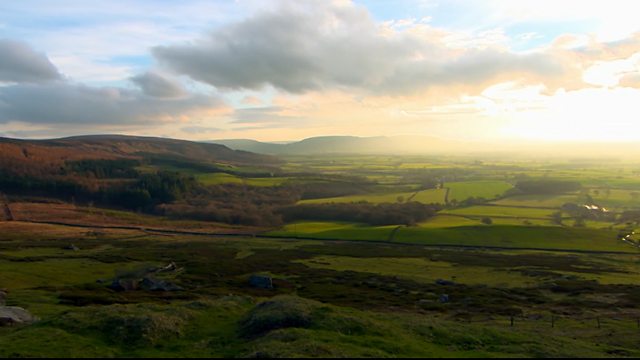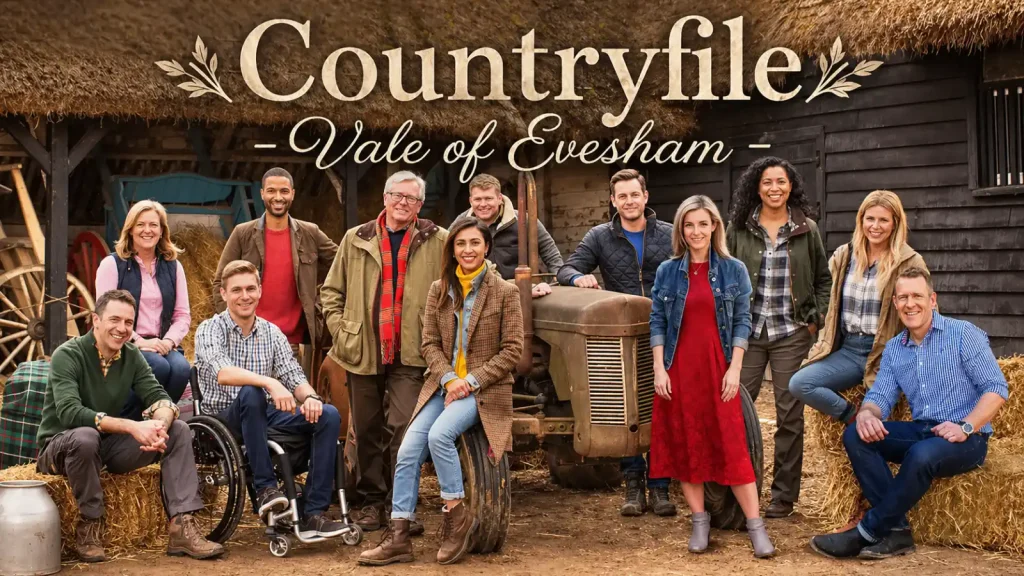
Countryfile – Vale of Evesham visits one of Britain’s most storied agricultural landscapes at precisely the moment when the season begins to turn — when the soil is waking, the orchards are stirring, and the question of what the land can yield in early spring becomes both urgent and fascinating. Nestled in Worcestershire, the Vale of Evesham sits within a natural bowl formed by the Cotswold escarpment and the Malvern Hills, a geography that creates a microclimate unlike almost anywhere else in England. That gentle shelter, combined with the deep, fertile alluvial soils laid down over centuries by the River Avon, has made this valley an agricultural powerhouse since long before modern growing techniques existed.
Spring in Britain carries a particular tension for growers and cooks alike. Between the last of winter’s stored crops and the true abundance of early summer, there falls a period known as the hungry gap — a lean stretch when fresh British produce is genuinely scarce. Yet the Vale of Evesham, shaped by both tradition and innovation, has long found ways to push back against that scarcity. Its growers have developed methods, built infrastructure, and cultivated varieties specifically designed to feed the country during exactly these difficult weeks.
The vale’s most celebrated crop — asparagus — has become synonymous with the region. The first spears of British asparagus emerging from the Evesham soil each spring signal not just the start of a season but the close of a long wait. For centuries, this vegetable has defined the area’s agricultural identity, drawing buyers, chefs, and enthusiasts who understand that asparagus grown here, in this particular soil and this particular microclimate, tastes different from anything grown elsewhere. That reputation was not built quickly, and sustaining it requires both respect for tradition and willingness to invest in the future.
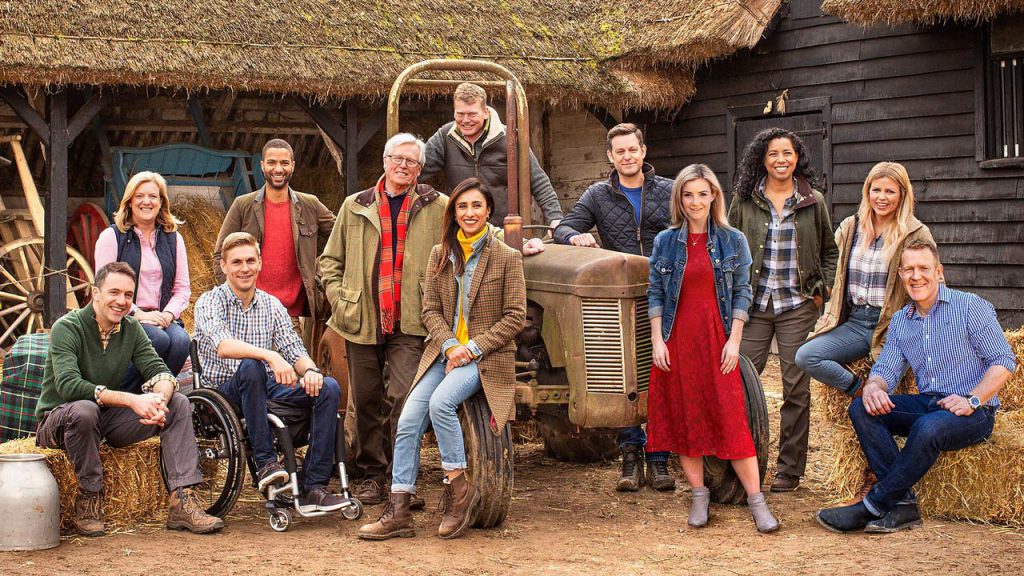
Adam Henson, familiar to viewers of country life and agricultural television, arrives in the Vale of Evesham alongside Paralympic champion Sammi Kinghorn to explore this layered landscape. Together, they move through market gardens, orchards, and high-tech growing facilities, meeting the people who have dedicated their working lives to keeping this region productive. What they encounter is a place caught between its own history and the demands of a modern food system — a place where the wildlife thrives among the blossom, where the bees are essential partners in production, and where the soil itself is treated as a long-term investment rather than a short-term resource.
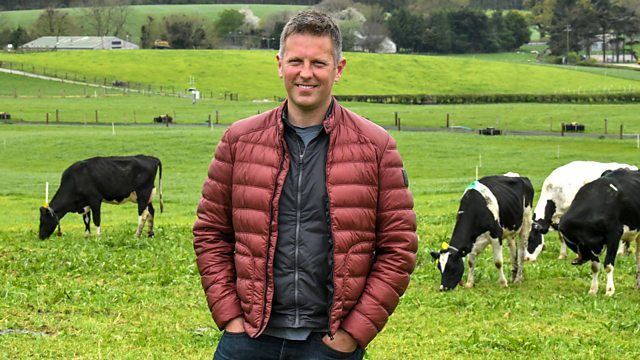
Meanwhile, the programme casts its gaze further afield, where dairy farming in Britain is under severe pressure. Charlotte Smith reports from the frontlines of a crisis that is forcing experienced farmers off the land despite record milk production and booming export figures. The contrast is sharp: a valley flourishing in early spring, set against a livestock sector in genuine distress.
The Vale of Evesham is not simply a pretty agricultural postcard. It is a working landscape where decisions made over generations continue to shape what is grown, how it is sold, and who can afford to keep farming. Country life in this part of England carries weight — economic, ecological, and cultural. The people working here are not merely producing food. They are maintaining a living system that links the land, the wildlife, the market, and the table in ways that are deeply interconnected.
Understanding the vale means understanding the hungry gap not as a failure but as a structural feature of British growing seasons. It is the moment when the ingenuity of growers is most visible, when the investment in polytunnels, in soil health, in bee-friendly orchards, and in crop variety pays off in ways that are immediate and tangible. This is a region that has never accepted that winter must be followed by emptiness.
What unfolds across this episode of Countryfile – Vale of Evesham is a portrait of productive resilience. It is agricultural life examined at close quarters, with the complexity and difficulty left intact. From the first asparagus spear to the last dairy farmer weighing up whether to quit, the episode refuses easy answers and instead offers something more valuable: a clear-eyed, grounded account of what it actually means to work with British land in the twenty-first century.
Countryfile – Vale of Evesham
The Vale of Evesham and the Science Behind Its Growing Power
Few agricultural regions in Britain can claim the combination of natural advantages that the Vale of Evesham possesses. The surrounding hills — the Cotswolds to the east and the Malverns to the west — act as windbreaks, reducing the frost risk and keeping temperatures slightly warmer than the surrounding countryside. That warmth accumulates in the soil over time, and in early spring, when the rest of England is still locked in cold, the vale is already beginning to move.
The soils themselves are the product of millennia of river activity. The Avon has deposited layer upon layer of alluvial material, creating a tilth that is both free-draining and nutrient-rich. Market gardeners working this ground describe it as among the finest they have encountered anywhere in the country. Crops establish quickly, root deeply, and produce with a reliability that is genuinely unusual for British conditions.
This combination of factors is not accidental, and the growers of the vale have long understood that they are custodians of something rare. That understanding shapes everything from planting decisions to soil management practices. Rather than mining the land for short-term yield, the most successful operations treat fertility as a resource to be maintained and enhanced year on year.
Asparagus, Tradition, and the Countryfile Vale of Evesham Harvest
Asparagus has been grown in the Vale of Evesham for well over a century, and the relationship between the crop and the landscape is one of genuine mutual dependence. The plant requires deep, well-drained soil and several years of patience before it produces a harvestable crop. Once established, however, an asparagus bed can remain productive for two decades or more — a commitment that suits the long-term thinking of the vale’s most experienced growers.
Adam Henson visits an asparagus operation where the scale of production is immediately striking. Row upon row of raised beds stretch across the landscape, the soil carefully mounded to warm more quickly in the pale spring sunshine. The growers explain that timing is everything. Cut the spears too early, and they are thin and unimpressive. Wait for the soil temperature to rise to the right point, and the asparagus that emerges is thick, tender, and full of flavour.
The harvest itself is entirely manual — a detail that surprises many people unfamiliar with how labour-intensive asparagus production actually is. Each spear must be cut individually, by hand, at the precise moment of maturity. A single harvester can cover a remarkable amount of ground in a day, but the work is relentless, physical, and requires genuine skill to judge quality consistently. The growers are emphatic that no machine yet built can replicate the human eye for identifying a spear at exactly the right stage.
The market for Evesham asparagus is strong, and the growers are clear that provenance matters enormously to buyers. Restaurants, retailers, and individual customers pay a premium for asparagus they know has come from this specific region. That premium funds the investment in beds, in labour, in machinery for the parts of the process that can be mechanised. Without it, the economics of asparagus growing would not work.
High-Tech Growing in the Countryfile Vale of Evesham: Year-Round Production
Not all food production in the Vale of Evesham follows the seasonal rhythms of traditional horticulture. One of the most striking elements of the episode involves a visit to a high-tech growing operation that uses protected structures — polytunnels and glasshouses — to produce food throughout the year, including during the hungry gap when outdoor growing is essentially impossible.
The scale of this operation is significant. Hundreds of metres of polytunnel structure cover ground that would otherwise be idle in winter and early spring. Inside, conditions are carefully managed — temperature, humidity, light levels all adjusted to keep crops growing at a pace that outdoor conditions would never permit. The growers describe the system as an investment in food security as much as a business decision.
Sammi Kinghorn explores these structures with visible curiosity, speaking with the growers about what it takes to maintain production through the coldest months. The answer involves not just infrastructure but expertise — knowing which varieties perform well under artificial conditions, understanding how to manage pest and disease pressure without the natural regulation that outdoor growing provides, and maintaining the soil health within enclosed systems where the usual ecological processes are partially disrupted.
The economic logic is compelling. Producing during the hungry gap means selling into a market where British fresh produce is genuinely scarce. The premium that buyers will pay for home-grown food in February or March — when the alternative is imported produce — makes the investment in protected growing infrastructure financially viable. These operations are not replacing traditional seasonal growing. They are extending it into periods that would otherwise be empty.
The environmental questions around high-intensity protected growing are real, however. Energy use for heating and lighting is significant. The growers here are conscious of that tension and speak about efforts to reduce their carbon footprint, including investment in renewable energy sources. The discussion is honest rather than defensive — acknowledging the trade-offs while arguing that the food security benefits justify the approach.
Historic Market Gardens and the Roots of Country Life in the Vale of Evesham
The Vale of Evesham’s market gardening tradition stretches back several hundred years. Long before supermarkets existed, the vale supplied fruit and vegetables to the towns and cities of the Midlands via a network of markets, with Evesham itself serving as the commercial hub. The growers who worked this land in the nineteenth century were sophisticated businesspeople as well as farmers, managing relationships with buyers, timing harvests for maximum price, and investing in the varieties most likely to succeed in their particular soil.
That tradition has shaped the culture of agricultural life in the vale in ways that remain visible today. Smallholdings remain common. Family-run operations, often working the same land for multiple generations, are not unusual. The knowledge of how to work this specific ground — which fields drain early, which varieties suit which soils, which markets pay best for which crops — is embedded in family memory as much as in any written record.
Adam Henson speaks with growers whose families have worked in the vale for generations. The conversation moves between pride in what has been achieved and anxiety about what comes next. Land values have risen sharply, making it difficult for young growers without inherited land to enter the market. The supermarket supply model, with its demand for consistency, volume, and price compliance, has squeezed the margins on many crops. The market garden model that sustained this landscape for centuries is under pressure.
Yet there are signs of adaptation. Some growers have moved toward direct sales — farmers markets, box schemes, and farm shops — that allow them to capture a greater share of the retail price. Others have diversified into crops with higher margins or into agritourism, opening their operations to visitors who want to understand where their food comes from. The vale is not standing still.
Orchards, Pollinators, and Wildlife in the Vale of Evesham
The Vale of Evesham is as famous for its fruit as for its vegetables, and in early spring the orchards become one of the most visually and ecologically significant features of the landscape. The blossom that covers the plum, pear, and apple trees in March and April transforms the vale into something extraordinary — a landscape that manages to be both working agricultural land and a critical wildlife habitat simultaneously.
Sammi Kinghorn visits one of the traditional orchards that still survives in the vale, and the experience is clearly affecting. The trees are old — some of them several decades mature — and their gnarled, spreading forms support not just the crop but an entire ecosystem. Lichen covers the bark. Birds nest in the cavities. And, most importantly for the crop itself, pollinators move through the blossom in large numbers.
The relationship between the orchard and its pollinators is not incidental. Without effective pollination, the fruit does not set, and without the fruit, the orchards have no commercial purpose. The growers who maintain traditional orchards understand this dependency intimately. They manage the ground beneath the trees — leaving grass and wildflowers rather than mowing clean — specifically to support the insect populations that their crops depend upon.
Beekeeping in the vale is closely linked to the orchard economy. Beekeepers move their hives to orchard sites in spring, providing concentrated pollination services during the critical blossom period. The arrangement benefits both parties: the beekeeper gains access to a rich forage source, and the orchard gains reliable pollination. It is an example of agricultural cooperation that has existed in this landscape for a very long time.
The wildlife value of the traditional orchards extends beyond bees. The programme highlights the variety of species that use these habitats — from birds that feed on the insects in the bark to small mammals that shelter in the long grass beneath. Traditional orchards are now recognised as a priority habitat for nature conservation in England, a status that reflects how much of this habitat has been lost over the past century and how important what remains has become.
The Hungry Gap and the Countryfile Vale of Evesham Response to Seasonal Scarcity
The hungry gap is not a new problem. Before global supply chains made it possible to fill supermarket shelves with produce from Spain, Morocco, and beyond, the period between March and May was genuinely difficult for communities dependent on local food. Stored root vegetables ran out. The first new-season crops were weeks away. People found ways to manage, but the scarcity was real.
In the Vale of Evesham, that history has produced a culture of innovation specifically focused on this period. Growers here have spent generations developing approaches that extend the season at both ends — pushing early crops earlier and late crops later. The result is a region that produces during the hungry gap with a consistency that few other parts of Britain can match.
The asparagus season, which begins in the vale before almost anywhere else in England, is perhaps the clearest expression of this. The warmth of the microclimate, combined with careful variety selection and skilled husbandry, means that the first Evesham spears can appear several weeks before asparagus is ready elsewhere. That early window is commercially valuable, but it also represents something more — a refusal to accept the hungry gap as an immutable seasonal reality.
The high-tech growing operations extend this logic further. By producing lettuce, salad leaves, and other crops under cover throughout winter, these businesses bridge the hungry gap entirely. The food they produce during the leanest weeks of the year is genuinely additional to what the outdoor growing season delivers — it represents a net gain in British food production at exactly the moment when that gain is most needed.
Country life in the vale is therefore partly defined by this seasonal challenge and by the ingenuity that challenge has provoked. The hungry gap is not something growers here apologise for or hide behind. It is the condition that has shaped their thinking and their investment, producing an agricultural culture more resilient and more creative than it might otherwise have been.
Dairy Farming Under Pressure: Charlotte Smith and the Milk Price Crisis
Away from the orchards and market gardens of the Vale of Evesham, a very different agricultural story is unfolding. Charlotte Smith investigates a crisis in the British dairy sector that is forcing experienced farmers to exit the industry despite headlines suggesting that everything is going well.
The paradox at the heart of the dairy crisis is striking. British milk exports are at record levels. Demand for dairy products from international markets — particularly in Asia — has been growing strongly. Total milk production nationally is high. By any superficial reading, the sector should be thriving. Yet the price that farmers receive for their milk has fallen to a point where many operations cannot cover their costs.
The disconnect between production volumes and farm-gate prices reflects the structure of the supply chain. Processors and retailers hold significant power in the negotiation over milk prices, and when global commodity prices shift, that pressure is transmitted downward to the farmer. The farmer, with cows to feed, staff to pay, and infrastructure to maintain, has very limited ability to absorb those price shifts. The result is a squeeze that is ending careers and emptying farmyards.
Charlotte Smith speaks with dairy farmers who are confronting this reality directly. The conversations are difficult. These are people who have invested their lives — financially and emotionally — in their farms. They understand dairy farming at a level of detail that takes decades to acquire. Losing that knowledge from the agricultural sector is not simply a human cost, though it is certainly that. It also represents a loss of practical expertise and land management skill that will not be easily replaced.
The contrast with the Vale of Evesham is instructive. Horticulture in the vale has found ways to add value — through provenance, through direct sales, through premium products that command prices above commodity levels. Dairy farmers, selling an undifferentiated product into a commoditised market, have far fewer tools available to resist price pressure. The structural challenge they face is different in kind from the challenges facing vegetable and fruit growers.
Conservation, Soil Health, and the Future of Agricultural Life in the Vale of Evesham
Running through the entire episode is a broader concern about the long-term health of the agricultural system that makes the Vale of Evesham so productive. The soil that underpins everything — the asparagus, the salad crops, the orchard grass, the market garden beds — is not inexhaustible. It requires management, investment, and respect.
The growers who discuss soil health in the programme speak about it with a seriousness that goes beyond commercial interest. They understand that the fertility of their land is the foundation of everything they do, and that poor decisions today will manifest as reduced productivity in five or ten years’ time. Organic matter levels, soil structure, drainage capacity — these are the metrics that matter most to the most thoughtful operators in the vale.
The relationship between farming and wildlife in this landscape is genuinely complex. The intensive growing operations that keep the vale productive during the hungry gap involve some practices — plastic covering, chemical inputs, intensive soil cultivation — that create ecological costs. The traditional orchards and hedgerows that support wildlife require economic justification to survive. Finding the balance between productivity and ecological health is not a simple calculation, and the episode does not pretend otherwise.
Nature and country life are intertwined here in ways that cannot be separated. The bees that pollinate the orchards are part of the same system as the crops they serve. The soil organisms that maintain fertility are as essential as the fertilisers that supplement them. The wildlife in the hedgerows is not separate from the agricultural landscape — it is embedded within it, dependent on the decisions farmers make and in turn influencing the health of the system those farmers depend upon.
The Countryfile Vale of Evesham as a Model for British Food Production
The Vale of Evesham offers something that is genuinely instructive for anyone thinking about the future of British food production. It demonstrates that early adoption of innovation does not require abandoning tradition. The most successful operations in the vale combine cutting-edge growing techniques with deep knowledge of their specific land and its characteristics.
It shows that geography still matters in an era of globalisation. The microclimate and soils that make the vale productive are not replicable elsewhere. The food produced here carries the character of its place in ways that create real economic value — value that the growers are increasingly skilled at communicating to the consumers who purchase their produce.
Countryfile – Vale of Evesham also makes clear that the challenges facing British agriculture are structural as well as seasonal. The dairy crisis is not caused by individual farmer failure. It reflects the economics of commodity production in a market where processors and retailers hold disproportionate power. Addressing that requires policy engagement, industry restructuring, and consumer awareness — none of which is simple or quick.
The episode ends without resolution of these larger questions — as it should. The Vale of Evesham is flourishing in early spring, its asparagus pushing through, its orchards in blossom, its high-tech growing facilities humming through the hungry gap. But the dairy farmers facing an impossible choice, the young growers unable to access land, and the soil that requires constant stewardship represent challenges that the next season alone will not solve. Agricultural life in Britain, in all its complexity, continues.
FAQ Countryfile – Vale of Evesham
Q: What makes the Vale of Evesham one of Britain’s most productive growing regions?
A: The Vale of Evesham benefits from a unique natural microclimate created by the surrounding Cotswold escarpment and Malvern Hills, which shelter the valley from harsh winds and reduce frost risk. Combined with deep, fertile alluvial soils deposited by the River Avon over centuries, the vale produces crops with exceptional reliability and flavour. These geographical advantages make it one of the few British regions capable of growing high-quality food even during early spring.
Q: What is the hungry gap, and how does the Vale of Evesham address it?
A: The hungry gap is the period between late winter and early summer when fresh British produce is genuinely scarce. Most stored winter crops are exhausted, yet new-season outdoor vegetables remain weeks away. The Vale of Evesham combats this through a combination of early-season crops, careful variety selection, and high-tech protected growing operations that continue producing throughout winter and early spring. Consequently, the region supplies fresh British food precisely when it is hardest to source.
Q: Why is Vale of Evesham asparagus considered among the finest in Britain?
A: Evesham asparagus benefits directly from the vale’s warm microclimate and nutrient-rich alluvial soils, which allow the first spears to emerge several weeks before asparagus is ready elsewhere in England. Each spear is harvested entirely by hand, with skilled workers cutting at the precise moment of maturity. This labour-intensive care, combined with a terroir found nowhere else, produces asparagus with a thickness, tenderness, and depth of flavour that commands a genuine premium from chefs and retailers.
Q: How do high-tech growing facilities in the Vale of Evesham extend the British growing season?
A: Several growers in the vale operate extensive polytunnel and glasshouse systems that carefully control temperature, humidity, and light levels throughout the year. These protected environments allow crops such as salad leaves and lettuce to grow continuously during the coldest months, when outdoor production is impossible. Furthermore, selling fresh British produce during the hungry gap means these operations supply a market where demand is high and domestic alternatives are scarce. The investment in renewable energy also helps address the environmental costs of year-round protected growing.
Q: What role do traditional orchards play in the vale’s agricultural and wildlife landscape?
A: Traditional orchards in the Vale of Evesham serve a dual purpose, functioning simultaneously as productive fruit-growing operations and as critical wildlife habitats. The veteran trees support lichen, nesting birds, and a wide range of insect species. Additionally, the uncut grass and wildflowers beneath the canopy sustain the pollinator populations that the fruit crop depends upon entirely. Traditional orchards are now recognised as a priority conservation habitat in England, reflecting how much of this habitat type has been lost nationally over the past century.
Q: How important are pollinators to fruit production in the Vale of Evesham?
A: Pollinators are absolutely essential to fruit production in the vale. Without effective pollination during the spring blossom period, fruit simply does not set, making the entire crop commercially worthless. Beekeepers actively move hives to orchard sites each spring, providing concentrated pollination services in exchange for access to a rich forage source. Growers manage the ground beneath their trees specifically to support wild insect populations year-round. This cooperative relationship between farming and nature has existed in the vale for generations and remains central to its productivity.
Q: How has the Vale of Evesham’s market gardening tradition shaped its agricultural culture today?
A: The vale’s market gardening heritage stretches back several centuries, supplying Midlands towns and cities long before modern supermarket supply chains existed. That history created a culture of smallholdings, multi-generational family farms, and embedded practical knowledge about working specific soils and local markets. However, rising land values and supermarket price pressures now threaten this model. Many growers have responded by moving toward direct sales through farm shops, box schemes, and farmers’ markets, capturing a larger share of the retail price and maintaining the independence that defines country life in this region.
Q: Why are British dairy farmers struggling despite record milk production and export growth?
A: The dairy sector faces a structural paradox: national milk production is high, exports are at record levels, yet farm-gate prices have fallen below the cost of production for many farmers. Processors and retailers hold significant negotiating power within the supply chain and transmit global commodity price shifts directly onto farmers, who have limited ability to absorb them. Unlike horticultural producers who can differentiate their product by provenance or quality, dairy farmers largely sell into a commoditised market. The result is experienced farmers being forced to exit the industry despite years of investment and expertise.
Q: How do growers in the vale approach long-term soil health and sustainability?
A: The most thoughtful growers in the Vale of Evesham treat soil fertility as a long-term asset rather than a short-term input. They monitor organic matter levels, soil structure, and drainage capacity carefully, understanding that poor management today reduces productivity significantly within a few years. Additionally, maintaining hedgerows, wildflower margins, and uncut orchard floors supports the ecological processes that underpin natural fertility. The balance between intensive production and ecological stewardship is complex, but growers here largely accept that sustaining the land’s productivity requires active investment in the systems that support it.
Q: What broader lessons does the Vale of Evesham offer for the future of British food production?
A: The vale demonstrates that geographical advantage, when combined with generational knowledge and willingness to innovate, produces an agricultural system of genuine resilience. Growers here have shown that tradition and technology are not mutually exclusive. However, the dairy crisis examined alongside the vale’s horticultural success highlights how structural market conditions can overwhelm even skilled and dedicated farmers. Therefore, sustaining British food production requires not just skilled growers but also supply chain reform, accessible land for new entrants, and consumer understanding of the true cost of locally grown food.