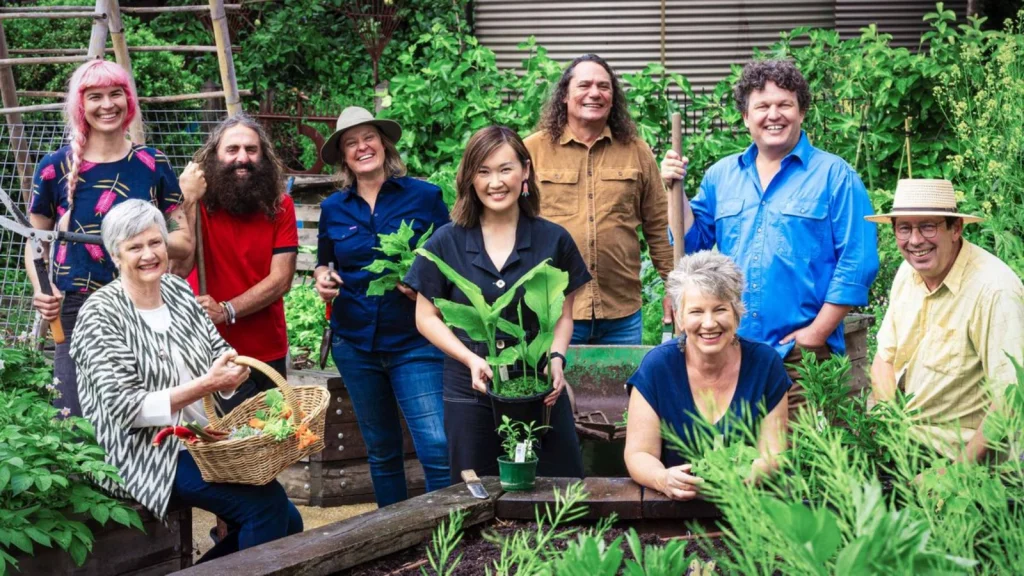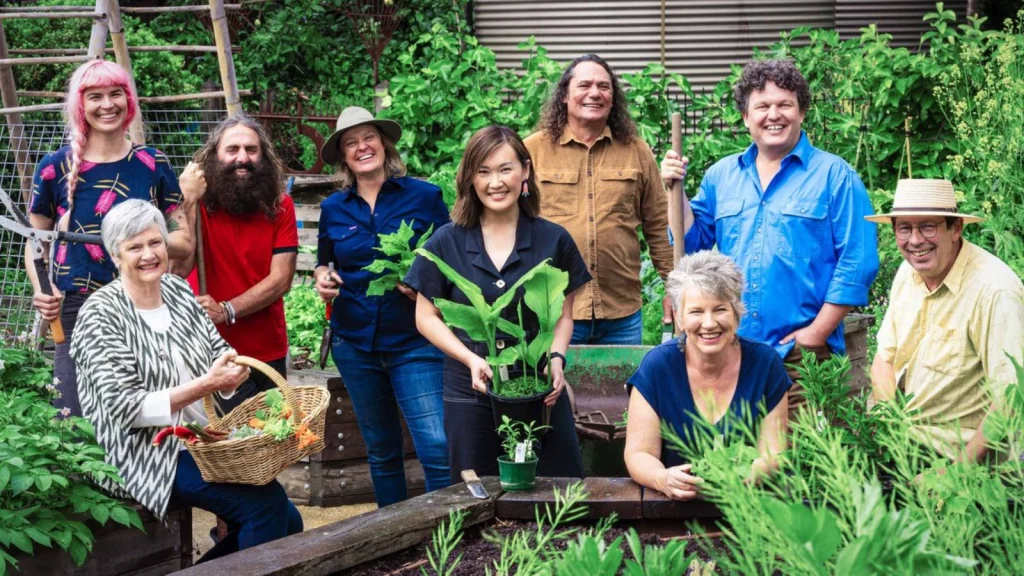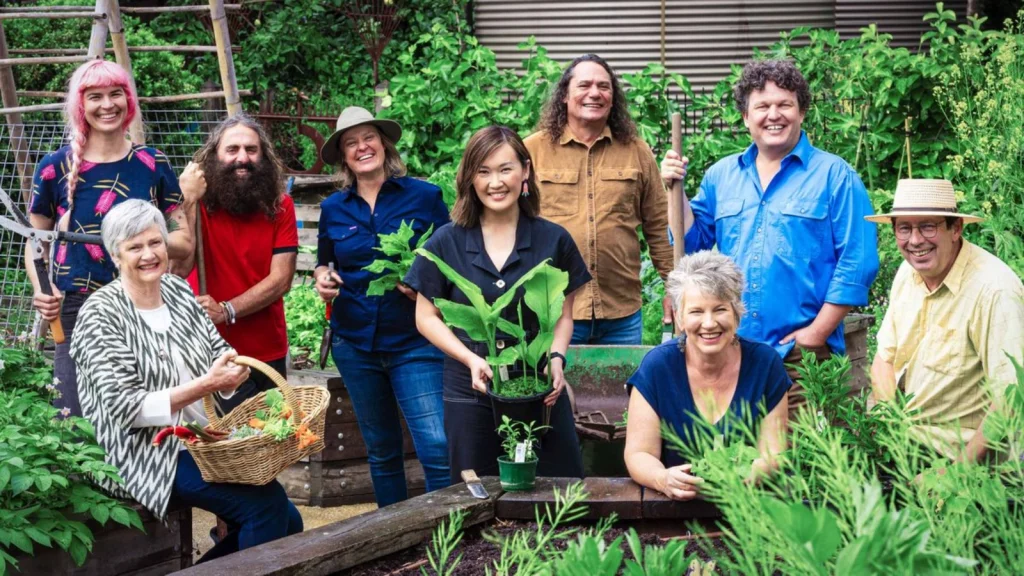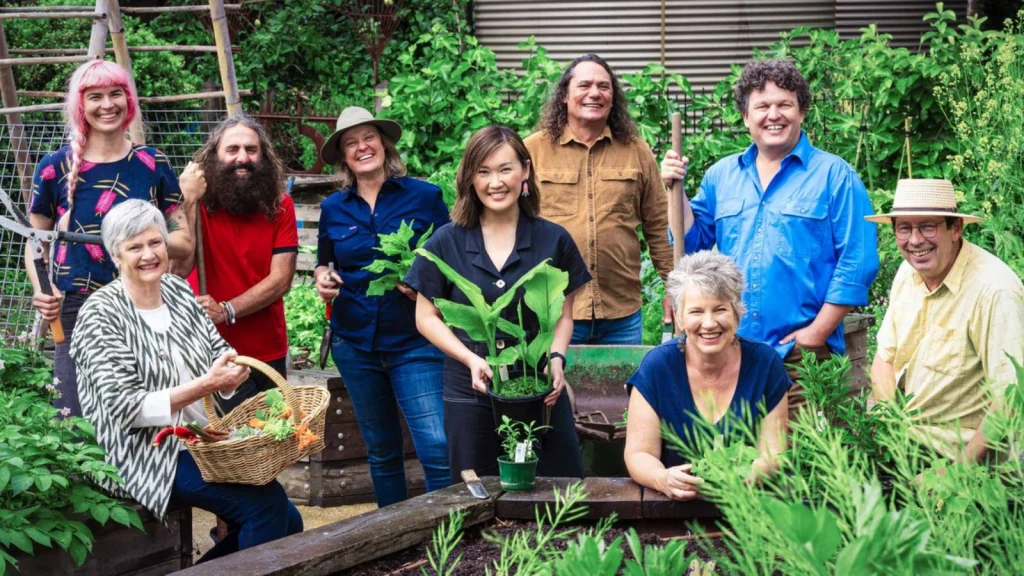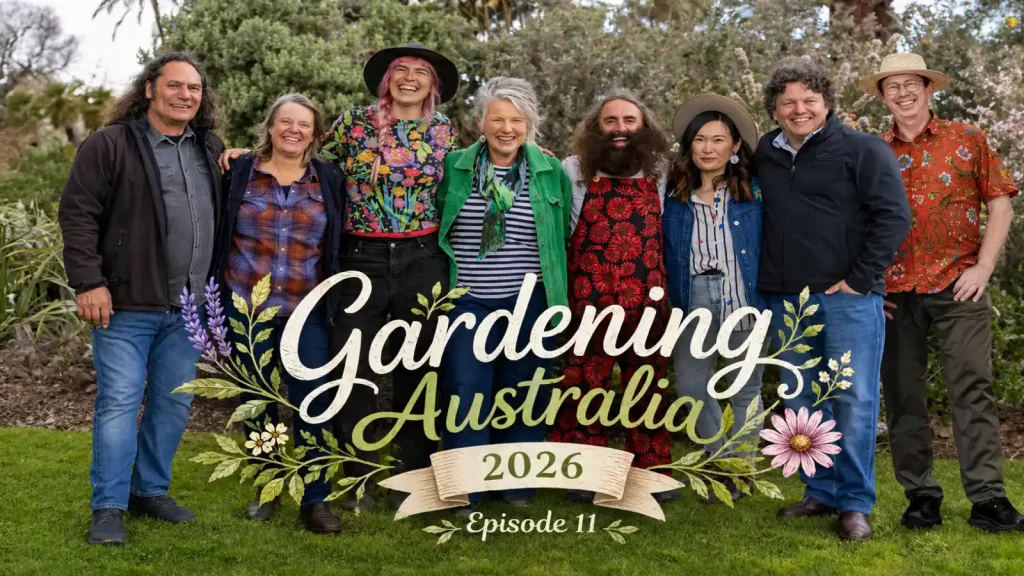
Gardening Australia 2026 Episode 11 arrives with an episode that ranges from windswept coastal terraces to suburban backyards buzzing with biosecurity innovation, drawing together five distinct horticultural stories that collectively capture the breadth and ingenuity of Australian gardening in autumn.
This is a program that consistently refuses to settle into predictability, and Episode 11 is no exception, moving between dragon fruit orchards in subtropical Queensland, native plant displays crafted from salvaged timber, disease-detecting dogs patrolling nursery rows, and a Sydney cliff-face garden where succulents defy the salt-laden wind with quiet, tenacious beauty. The episode reflects a wider truth about Australian gardening: that climate, creativity, and ecological awareness are increasingly inseparable forces shaping how gardeners work and think.
Autumn in Australia brings a particular kind of gardening clarity. The brutal heat of summer has eased, soils remain warm, and both plants and gardeners seem to exhale. It is the season when considered planting decisions pay dividends, when structure becomes visible in the garden, and when the interplay between plant selection and place becomes most legible. Gardening Australia 2026 Episode 11 uses this seasonal moment as its backdrop, presenting stories that are rooted not just in horticulture but in landscape, identity, and scientific curiosity. Each segment is grounded in a real place and a real person, which gives the episode its characteristic warmth and credibility.
Succulents occupy a central position in two of the episode’s key segments, and their presence is not coincidental. These are plants ideally suited to the pressures of contemporary Australian gardening: drought tolerance, salt resistance, low maintenance, and genuine visual drama. Whether massed in coastal conditions or deployed in rustic native displays, succulents in this episode represent a growing understanding among Australian gardeners that the right plant in the right place is not a compromise but a design philosophy. That philosophy runs through all five stories, threading together what might otherwise seem like disconnected garden visits.
Meanwhile, the inclusion of a segment on biosecurity dogs introduces a dimension rarely explored on gardening television. Plant health is not a glamorous subject, but it is an urgent one, and Gardening Australia 2026 Episode 11 treats it with the seriousness it deserves. Josh Byrne’s visit to a team of trained sniffer dogs capable of detecting plant disease puts a human and animal face on what is otherwise an abstract policy concern, making the science accessible without oversimplifying it. This is exactly the kind of public education that distinguishes the program from mere lifestyle television.
The dragon fruit segment with guest presenter Thanh Tran adds yet another register to the episode. Here, the focus falls on a crop plant with genuine commercial momentum in Australia, explored through the lens of a grower who has built something extraordinary from a modest beginning. Dragon fruit, with its spectacular flowers and architectural canes, occupies a fascinating middle ground between ornamental and productive gardening. It demands specific knowledge to cultivate successfully, and the episode delivers that knowledge with precision and enthusiasm.
Clarence Slockee’s rustic native display brings a strongly place-based sensibility to the episode. His work consistently draws on Indigenous knowledge and on a deep familiarity with Australian plant communities, and his segment here continues that tradition by turning salvaged timber and native plants into something that feels genuinely of its landscape. In contrast to the engineered drama of a tropical fruit orchard or the wind-blasted geometry of a coastal terrace, Clarence’s garden feels rooted in quietness, in the conviction that beauty does not require importation or spectacle. It needs only attentiveness to what already belongs.
Costa Georgiadis links these stories with his familiar energy and genuine curiosity, visiting a garden in the Barossa Valley where a family has created a productive and decorative space that responds thoughtfully to its semi-arid conditions. His segment grounds the episode in questions of water, soil, and seasonal rhythm that resonate across all Australian climates. Gardening Australia 2026 has always understood that gardening is fundamentally local, and Episode 11 reinforces that understanding at every turn.
By the time the episode’s five stories are laid out in full, what emerges is less a collection of gardening tips than a portrait of a gardening culture in active, confident evolution. Australian gardening in 2026 is increasingly ecological in its instincts, increasingly willing to question received wisdom about what a garden should look like, and increasingly capable of finding beauty in restraint, resilience, and botanical intelligence. What follows explores each of these stories in depth.
Gardening Australia 2026 Episode 11
Gardening Australia 2026 Episode 11 and the Coastal Terrace Built for Wind and Salt
Tammy Huynh’s visit to a coastal terrace garden in Sydney’s eastern suburbs is one of the most visually striking segments in Gardening Australia 2026 Episode 11. The garden belongs to a homeowner who faced a genuinely formidable set of conditions: a cliff-top position, near-constant salt-laden wind, poor shallow soils, and the structural constraints of an elevated terrace. The solution arrived at over time is a masterclass in responsive planting, built almost entirely around succulents and other salt-tolerant species.
The terrace itself is organised into distinct zones, each planted according to its specific exposure. The most exposed sections, directly in the path of onshore winds, are given over to ground-hugging succulents that present minimal wind resistance. Species including aeoniums, sedums, and various echeverias sit low and dense, their fleshy leaves buffering salt spray and their shallow root systems finding purchase in what little soil exists. Tammy notes that these plants were not simply placed for aesthetic effect but selected with genuine care for their capacity to endure the conditions.
Further into the terrace, where the dwelling itself provides partial shelter, the planting palette broadens. Here, larger succulents including agaves and aloes add structural height, their bold architectural forms creating a visual rhythm that draws the eye from the exposed outer beds toward the more sheltered interior spaces. The owner explains that the transition between these zones was gradual and empirical, with plants that failed in exposed positions being relocated further in, and those that thrived moving steadily toward the edge over successive seasons.
What makes this garden particularly instructive is its rejection of a common coastal gardening mistake: the assumption that because a site is difficult, it should be planted simply. This terrace is anything but simple. It is layered, textural, and seasonally dynamic, with succulents chosen not only for survival but for their capacity to flower, to change colour with temperature shifts, and to create a genuine sense of horticultural abundance even in conditions where many plants would simply refuse to grow.
Dragon Fruit Cultivation and the Productive Beauty of an Australian Orchard
Guest presenter Thanh Tran travels to a dragon fruit farm to explore a crop that has moved from exotic curiosity to genuine agricultural presence in subtropical Australia. The grower, who established the orchard from a small initial planting, now manages a substantial operation producing multiple varieties of dragon fruit for both local and export markets. The farm is a revelation of scale and botanical drama, with rows of tall cane trellises supporting the sprawling, night-blooming cacti that produce one of the world’s most distinctive fruits.
Dragon fruit, botanically a member of the Hylocereus genus, is a climbing cactus that requires a robust support structure to bear its weight as the plant matures. The farm uses treated timber posts with crossbars, from which the canes arch outward in characteristic fountains of growth. Thanh observes that the plant’s scale and vigour are initially surprising to many visitors who know dragon fruit only from supermarket shelves, where the fruit appears modest in size. In the ground, the plants are substantial, capable of producing dozens of fruits per season once fully established.
The varieties grown on the farm include the familiar white-fleshed red-skinned type most common in retail, alongside yellow-skinned varieties and the prized red-fleshed cultivars that command premium prices for their sweeter, more intense flavour. The grower explains that the red-fleshed varieties are considerably more demanding in their cultural requirements, needing precise nutrition, consistent irrigation, and careful management of flowering and fruiting timing. However, the price differential makes the additional effort economically compelling.
Pollination is a critical factor in dragon fruit production, and the grower covers this in detail. Dragon fruit flowers open only at night and must be pollinated within a narrow window. The farm relies on a combination of bat and insect activity for natural pollination, supplemented by hand pollination during peak flowering periods. Thanh participates in hand pollination during the visit, using a small brush to transfer pollen between flowers in the hours after dusk. The grower notes that hand pollination dramatically increases fruit set reliability, particularly for the higher-value red-fleshed varieties.
Irrigation across the orchard is managed through a drip system calibrated to the cactus’s paradoxical water needs: these are succulents, capable of tolerating dry periods, but they produce vastly better crops when irrigated consistently during fruiting. The grower has found that allowing the soil to dry between irrigations during the vegetative phase, then maintaining more consistent moisture during flowering and fruiting, produces the best balance of plant health and productivity. This seasonal adjustment of irrigation strategy mirrors what any experienced gardener understands about working with rather than against a plant’s natural rhythms.
Biosecurity Dogs and the Science of Plant Disease Detection in Gardening Australia 2026 Episode 11
Josh Byrne’s segment introduces one of the most innovative biosecurity tools currently deployed in Australian horticulture: specially trained sniffer dogs capable of detecting specific plant pathogens. The dogs are part of a program designed to identify diseased plants within nursery stock before infection can spread, a capacity that has significant implications for the garden industry and for broader agricultural biosecurity. This segment represents Gardening Australia 2026 Episode 11 at its most unexpectedly fascinating.
The dogs are trained to detect the volatile organic compounds produced by plants infected with specific pathogens. In the segment, the focus falls on detection of Phytophthora cinnamomi, the water mould responsible for dieback disease, which has caused catastrophic damage to native plant communities across southern and western Australia. The dogs are trained using controlled samples of infected plant material and can locate infected specimens within trays of nursery stock with a speed and accuracy that far exceeds visual inspection alone.
Josh watches a working demonstration in which a dog moves systematically along rows of container plants, pausing and indicating at infected specimens while passing over healthy material. The handler explains that the dog’s detection ability is remarkably consistent, capable of identifying early-stage infections before any visible symptoms appear. This early detection capacity is the key to the program’s value: by identifying diseased plants before they show symptoms, nurseries can remove them from the propagation and retail pipeline before the pathogen spreads to adjacent stock.
The training process is extensive and ongoing. The dogs require regular reinforcement sessions with fresh samples to maintain their detection accuracy, and the handler notes that each dog has a working life of several years before retirement. The program currently operates across multiple nursery sites and has identified infected plants that would not have been detected by conventional visual inspection for weeks or months. The implications for native plant conservation are significant, given that Phytophthora cinnamomi is listed as a key threatening process under Australian environmental law.
Josh reflects that this segment reshaped his thinking about where innovation in horticulture comes from. The technology here is not chemical or genetic but biological and behavioural, drawing on capacities that dogs have possessed for thousands of years and applying them to a contemporary problem of considerable ecological urgency. It is, he notes, a reminder that the most elegant solutions to complex problems are sometimes very old ones.
Clarence Slockee’s Rustic Native Display and the Art of Working with Country
Clarence Slockee’s segment is built around a project that exemplifies his approach to gardening: take what is already present or salvageable, work with native plants that belong to the landscape, and create something that feels less designed than discovered. The rustic native display he constructs uses reclaimed timber as its structural element, the weathered character of the wood creating a visual harmony with the dry, textural quality of the native plants growing against it.
The timber used in the display comes from a salvaged source, its surface already worked by weather into the silvered, fissured texture that new timber takes years to achieve. Clarence uses it to create a raised framework that functions both as a physical backdrop for the planting and as a structural support for the overall composition. The effect is of something that has grown up together over time, plant and material in a relationship of mutual accommodation.
The plant selection is drawn from species native to the local area, with a strong emphasis on those that offer textural and seasonal interest without demanding irrigation or intensive management. Banksias, grevilleas, and grass trees feature prominently, their distinctive forms creating the kind of structural planting that remains interesting across seasons. Smaller natives, including native violets and groundcovers, fill the spaces between the structural plants, softening the composition and creating habitat for insects and small birds.
Clarence explains the principle underlying his plant selection: natives that evolved in a given landscape carry within them the precise adaptations that landscape demands. They know the soil, the rainfall pattern, the light quality, and the seasonal rhythms. A gardener who selects with this knowledge is, in a sense, working with the land’s own intelligence rather than imposing a foreign template upon it. This is not merely an ecological argument but an aesthetic one: gardens built on this principle tend to look right in a way that is difficult to achieve through any other means.
The completed display is quietly impressive. It does not shout for attention but rewards sustained looking, revealing layers of texture, form, and detail that become more apparent the longer one spends with it. This quality of sustained interest, of a garden that deepens rather than exhausts itself on first viewing, is precisely what Clarence consistently achieves, and it reflects a gardening philosophy with deep roots in Indigenous ways of understanding and relating to Country.
Gardening Australia 2026 Episode 11 in the Barossa: Water-Wise Planting in Semi-Arid Conditions
Costa Georgiadis visits a family garden in South Australia’s Barossa Valley, where the gardeners have created a productive and beautiful space that responds intelligently to the region’s semi-arid conditions. The garden combines edible plants, ornamentals, and native species in a design that is openly experimental, reflecting years of trial, failure, and refinement. Costa’s enthusiasm for this kind of honest, process-oriented gardening is evident throughout the segment.
Water management is the central challenge in the Barossa garden. Annual rainfall is modest and unreliable, summer temperatures are extreme, and the soil, while fertile, dries rapidly. The family has responded by installing rainwater harvesting infrastructure, applying deep mulch across all planted areas, and selecting species with demonstrated drought tolerance. The vegetable garden operates on a drip irrigation system fed from rainwater tanks, allowing production to continue through dry periods without drawing on mains water.
The ornamental areas of the garden rely almost entirely on rainfall once plants are established, a goal achieved through a two-year establishment period during which newly planted specimens receive supplementary irrigation. The approach demands patience but produces gardens of considerable resilience. Costa notes that the plants in the established ornamental areas show none of the stress responses, wilting, leaf scorch, or stunted growth, that typically appear in insufficiently adapted species during Barossa summers.
The productive element of the garden includes a kitchen garden, fruit trees, and a small cutting garden providing flowers for the house. The kitchen garden is intensively managed, with succession planting timed to exploit the cooler shoulder seasons of autumn and spring, and with summer given over to heat-tolerant crops including capsicums, eggplants, and tomatoes. The family has developed a detailed seasonal planting calendar over many years, adjusting it annually based on observed seasonal variation. This kind of accumulated practical knowledge, specific to a particular place, is exactly what Gardening Australia values and amplifies.
Gardening Australia 2026 Episode 11 and the Principles That Connect Five Garden Stories
What Gardening Australia 2026 Episode 11 demonstrates most powerfully, across its five segments, is that Australian gardening has matured into something genuinely sophisticated in its understanding of place, ecology, and design. The episode’s stories are separated by geography, scale, and plant type, yet they share a common intellectual foundation: the conviction that good gardening begins with an honest reading of conditions and builds outward from there.
The coastal terrace and the rustic native display both embody this principle in visual terms, using plants selected for ecological fit rather than decorative convention. The dragon fruit orchard embodies it in productive terms, deploying a crop that is ideally suited to subtropical conditions and rewarding careful management with exceptional yields. The biosecurity dogs embody it in scientific terms, bringing ecological intelligence to bear on a problem of considerable urgency for the native plant garden industry. The Barossa garden embodies it in temporal terms, demonstrating that a garden built on honest ecological principles becomes more itself, not less, as the years pass.
Succulents appear across multiple segments not as a trend but as a response. They are the answer that several different gardening questions arrive at when asked honestly in Australian conditions: what will survive coastal exposure, what will thrive in a rustic display without demanding constant water, what will persist through Barossa summers without irrigation support. The convergence of succulents across the episode’s segments reflects a broader shift in Australian garden design toward plants that belong, rather than plants that merely decorate.
The diy gardening spirit that runs through all five segments is equally significant. None of the gardens featured is a professional showpiece designed and built by landscape architects for a brief moment of photogenic perfection. All of them are working gardens, built by people who spend time in them, who have made mistakes and learned from them, and who continue to adjust and refine their approach as conditions change and understanding deepens. This is the tradition that Gardening Australia has always celebrated, and Episode 11 upholds it with conviction.
The program’s ongoing relevance to Australian gardening culture rests on exactly this quality: its willingness to take ordinary gardeners and their gardens seriously, to find in a backyard native display or a cliff-top succulent terrace the same intelligence and commitment that a more glamorous gardening culture might reserve for grand estate landscapes. In doing so, Gardening Australia 2026 Episode 11 makes the case, quietly but insistently, that the future of Australian gardening belongs to those who look first at their soil, their water, their plants, and their place, and then begin.
FAQ Gardening Australia 2026 Episode 11
Q: What succulents does Tammy recommend for a wind-exposed coastal terrace garden?
A: Tammy visits a Sydney cliff-top garden where aeoniums, sedums, and echeverias thrive in salt-laden winds. These low-growing succulents present minimal wind resistance and tolerate salt spray effectively. Larger structural species including agaves and aloes succeed in partially sheltered zones closer to the dwelling. The key principle is matching each species precisely to its exposure level rather than planting the entire terrace uniformly.
Q: How does Clarence Slockee create a rustic native display using salvaged materials?
A: Clarence uses weathered reclaimed timber as a structural backdrop, its silvered texture harmonising naturally with native Australian plants. He selects locally native species including banksias, grevilleas, and grass trees for structural form, then fills gaps with native groundcovers and violets. The approach prioritises plants that evolved in the local landscape, working with the land’s own ecological intelligence rather than imposing decorative templates from elsewhere.
Q: What dragon fruit varieties does the Queensland grower cultivate, and how do they differ?
A: The farm grows white-fleshed red-skinned dragon fruit, yellow-skinned varieties, and premium red-fleshed cultivars. Red-fleshed varieties command higher prices due to their sweeter, more intense flavour. However, they demand more precise nutrition, consistent irrigation, and careful flowering management. Guest presenter Thanh Tran discovers that the red-fleshed types require considerably greater cultural attention than standard varieties, making the economic premium a direct reward for that additional effort.
Q: Why is hand pollination important in dragon fruit production?
A: Dragon fruit flowers open only at night and must be pollinated within a narrow window. The Queensland farm combines bat and insect activity with hand pollination during peak flowering. Thanh participates directly, using a small brush to transfer pollen between flowers after dusk. Hand pollination dramatically increases fruit-set reliability, particularly for high-value red-fleshed varieties where consistent yields are essential to justify their more demanding cultivation requirements.
Q: How are biosecurity sniffer dogs trained to detect plant disease in nursery stock?
A: The dogs detect volatile organic compounds produced by plants infected with specific pathogens. Training uses controlled samples of infected material, focusing particularly on Phytophthora cinnamomi, the water mould responsible for devastating dieback disease in Australian native plant communities. Regular reinforcement sessions with fresh samples maintain detection accuracy. Each dog works for several years before retirement, and handlers confirm the dogs identify early infections long before any visible symptoms appear on affected plants.
Q: What makes biosecurity detection dogs more effective than standard nursery inspection methods?
A: Josh Byrne watches dogs move systematically along nursery rows, accurately indicating infected container plants that show no visible symptoms whatsoever. Conventional visual inspection cannot detect early-stage Phytophthora cinnamomi infections, meaning diseased plants regularly enter the retail pipeline undetected. Furthermore, the dogs operate across multiple nursery sites and have identified infected specimens weeks or months before symptoms would have appeared. Phytophthora cinnamomi is listed as a key threatening process under Australian environmental law, making early detection critically important.
Q: How does the Barossa Valley family garden manage water in semi-arid conditions?
A: Costa Georgiadis visits a garden combining rainwater harvesting infrastructure, deep mulch across all planted areas, and carefully selected drought-tolerant species. The vegetable garden runs on drip irrigation fed entirely from rainwater tanks. Ornamental areas rely on rainfall alone once plants complete a two-year establishment period with supplementary irrigation. Additionally, the family maintains a detailed seasonal planting calendar refined over many years, adjusting it annually to account for observed variation in local seasonal conditions.
Q: What productive planting strategies does the Barossa garden use across different seasons?
A: The kitchen garden uses succession planting timed to exploit cooler autumn and spring shoulder seasons. Summer production focuses on heat-tolerant crops including capsicums, eggplants, and tomatoes. A cutting garden supplies flowers for the house year-round. The family’s approach demonstrates that productive diy gardening in challenging climates depends on accumulated place-specific knowledge rather than generic advice, with each seasonal adjustment informed directly by years of careful observation in that particular Barossa Valley microclimate.
Q: Why do succulents feature so prominently across multiple segments of Gardening Australia 2026 Episode 11?
A: Succulents appear in coastal terrace planting, rustic native displays, and water-wise garden design because they answer several distinct Australian gardening challenges simultaneously. Their drought tolerance, salt resistance, low maintenance requirements, and genuine visual drama make them a practical response to conditions ranging from cliff-top exposure to semi-arid heat. Their recurring presence reflects a broader shift in Australian garden design toward plants selected for ecological fit rather than purely decorative convention.
Q: What is the central gardening philosophy connecting all five stories in Gardening Australia 2026 Episode 11?
A: Every segment begins with an honest reading of local conditions and builds outward from there. Tammy’s coastal terrace, Clarence’s native display, Thanh’s dragon fruit orchard, Josh’s biosecurity dogs, and Costa’s Barossa garden all prioritise ecological intelligence over imposed aesthetics. Furthermore, all five gardens are working spaces built by attentive people who have refined their approach through experience. The episode consistently argues that genuinely successful diy gardening depends on understanding place before selecting plants.