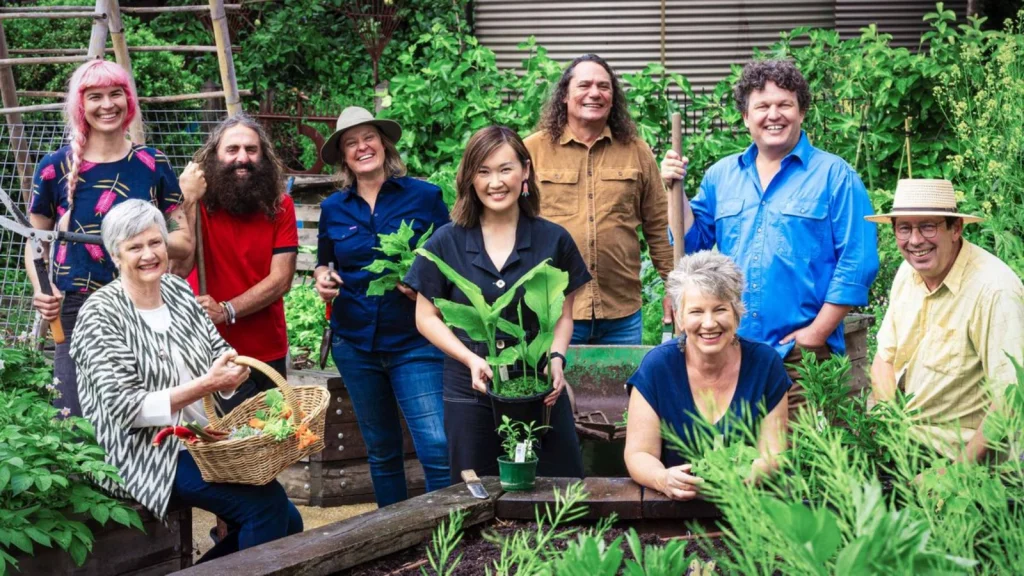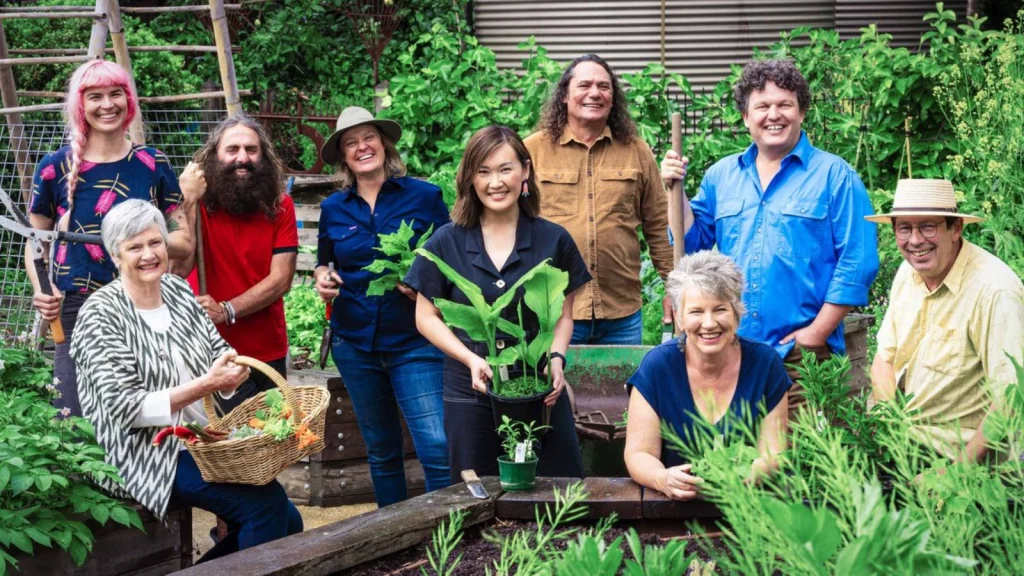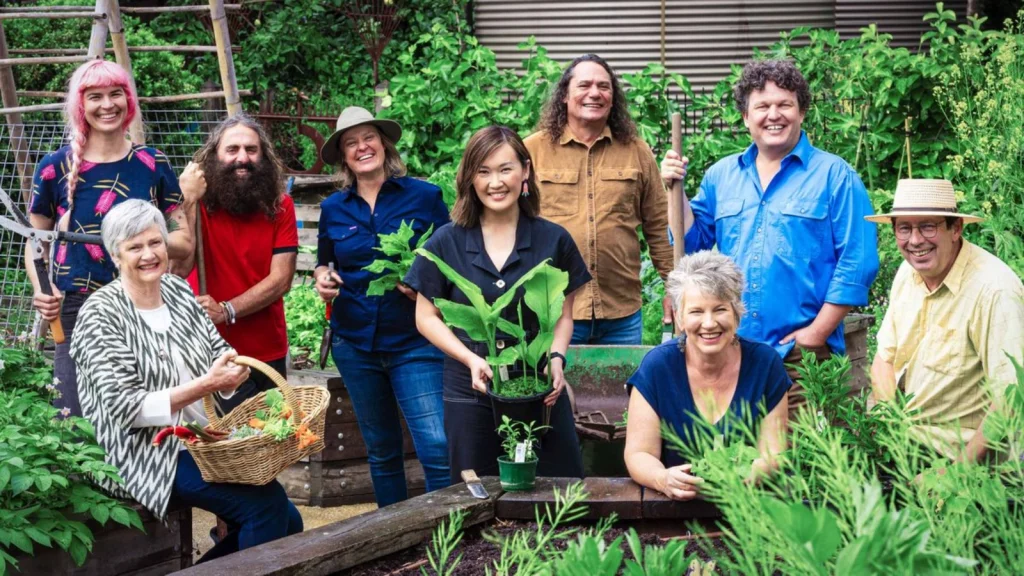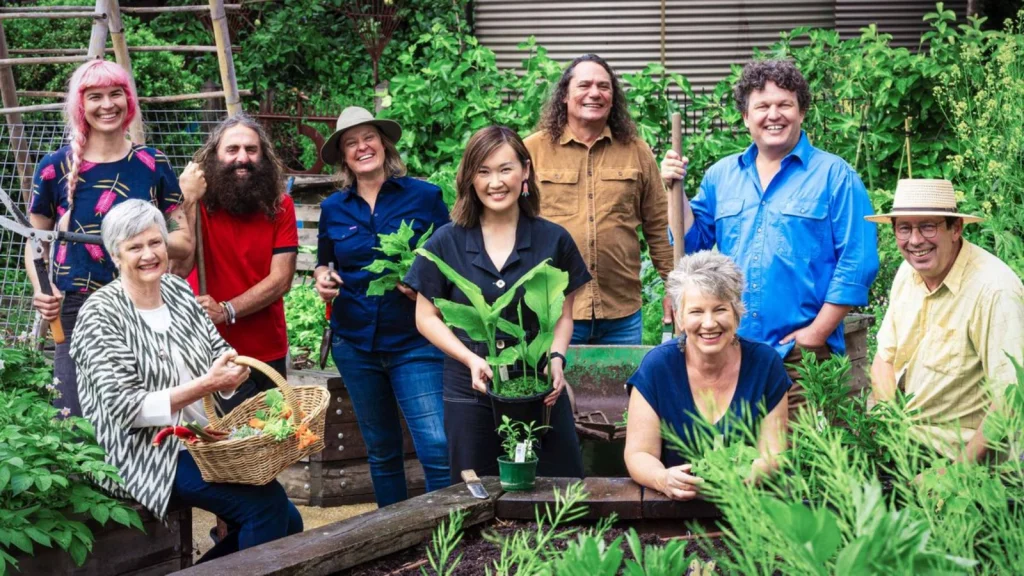
Gardening Australia 2026 Episode 4 opens a window onto four remarkably distinct corners of the natural world, each one revealing a different dimension of what it means to tend, protect, and celebrate living things. From a nursery owner whose life’s work is planting trees across degraded landscapes, to a suburban backyard reimagined as a slice of Mediterranean island life, this episode moves with purpose and depth through the full spectrum of Australian gardening.
A researcher-turned-swimmer finds that the most effective pool filter is nature itself, while an urban wildlife shelter hidden in plain sight offers refuge to dozens of injured and orphaned animals. Together, these stories form one of the most substantive and wide-ranging episodes the series has produced. {Gardeners World 2026}
The significance of this episode extends well beyond horticultural technique. Each segment addresses something urgent: the fragmentation of native habitat, the loss of cultural connection to place, the environmental cost of conventional pool chemistry, and the growing pressure on wildlife carers working at the interface of urban expansion and ecological collapse. Australian gardening has always carried a certain pragmatic idealism, the belief that what happens in a single backyard or on a single hillside can ripple outward. Gardening Australia 2026 gives that belief its fullest expression yet.
What unfolds across the four segments is a portrait of committed people doing extraordinary things in ordinary spaces. The nursery owner has planted more than three million trees. The Maltese-Australian gardener has reconstructed an entire cultural landscape from seeds carried across oceans. The natural swimming pool builder has turned a backyard into a working ecosystem. The wildlife shelter operator has transformed a suburban block into a functioning rescue facility, caring for everything from possums to powerful owls. These are not hobbyists. They are practitioners operating at a level of seriousness that challenges conventional assumptions about what gardening is for.
Native plants, garden design, and DIY gardening feature prominently across all four stories, but the connective tissue is something harder to name: a particular quality of attention, a refusal to treat the garden as merely decorative. In each case, the garden is a response to a problem. Trees are planted because land has been cleared and birds have nowhere to nest. A Mediterranean garden is built because cultural memory demands a physical home. A natural pool is constructed because chlorine is both a health concern and an ecological one. A wildlife shelter is established because hospitals and vets cannot absorb the volume of injured animals arriving from an increasingly developed urban fringe.
Gardening Australia 2026 has always been at its best when it follows people rather than techniques, and Episode 4 is no exception. The four subjects profiled here carry their knowledge lightly but apply it with extraordinary rigour. Their gardens are laboratories, sanctuaries, and acts of resistance all at once. The episode rewards close attention, and what follows reconstructs each segment in full, drawing out the detail, the reasoning, and the practical wisdom embedded in every story.
The thread connecting all four segments is regeneration. Whether the medium is a hillside, a backyard, a pool, or a rescue cage, each story is fundamentally about returning something to health. Trees restore habitat. A Maltese garden restores cultural identity. A natural pool restores ecological balance to a domestic space. A wildlife shelter restores injured animals to the wild. Regeneration is not a passive process in any of these contexts. It demands specific knowledge, sustained effort, and a willingness to think on a timescale longer than a single season.
The episode also implicitly argues for a particular relationship between people and place. Each subject has developed a deep, specific knowledge of their environment, not generic enthusiasm but hard-won expertise. The nursery owner knows which species will establish in which soil type and rainfall regime. The Maltese gardener knows which plants survive Malta’s brutal summers. The pool builder understands the nitrogen cycle. The wildlife carer knows the precise diet requirements of a brushtail possum versus a ringtail. This kind of knowledge, grounded in place and practice, is what Gardening Australia 2026 consistently argues is both possible and necessary.
Episode 4 is structured around contrast as much as continuity. The scale shifts from millions of trees to a single backyard pool. The geography moves from rural hillsides to suburban streets. The plant palette swings from Australian natives to Mediterranean exotics. Yet the underlying values remain consistent: observation, patience, specificity, and care. These are the qualities that define serious gardening, and they run through every minute of this extraordinary episode.
Gardening Australia 2026 Episode 4
Gardening Australia 2026 and the Mission to Plant Three Million Trees
Costa visits a nursery owner whose commitment to reforestation has shaped both a business and a philosophy. The nursery, which propagates exclusively native species suited to the local region, has supplied trees for revegetation projects across an enormous area of landscape. The owner explains that the figure of three million trees represents not a single dramatic gesture but the cumulative result of years of methodical work, supplying landholders, local councils, Landcare groups, and private individuals with plants that are genetically appropriate to their specific location.
The concept of provenance is central to this segment. The nursery owner is emphatic that planting the wrong genetic stock, even of the correct species, can do more harm than good. Trees sourced from distant populations may not be adapted to local rainfall patterns, soil chemistry, or temperature extremes. Over time, they can dilute the local gene pool and reduce the resilience of the broader plant community. For this reason, the nursery collects seed only from within a defined geographic range, ensuring that every plant it produces carries the genetic heritage of the local landscape.
The practical implications of this approach are considerable. It requires the nursery to maintain a complex seed collection operation, with collectors deployed across the region to harvest seed from identified parent trees at the appropriate time of year. The seed is then processed, stored, and germinated under controlled conditions before the resulting seedlings are grown on to planting size. The entire process can take months, and the nursery must plan its production schedule years in advance to meet the demand generated by revegetation projects on that timescale.
The segment also addresses the question of what constitutes success in reforestation. The nursery owner argues that the standard metric of survival rate, how many planted trees are still alive after twelve months, is insufficient. What matters in the long term is whether the planted trees are recruiting, whether they are producing seed and generating natural regeneration around them. A tree that survives but does not reproduce has contributed little to the restoration of a functioning plant community. The nursery therefore monitors its projects over extended periods, returning to planting sites to assess not just survival but ecological integration.
Costa is shown walking through a section of revegetated hillside where trees planted a decade earlier are now forming a closed canopy, with understorey plants establishing naturally in their shade. The transformation is striking. This is native gardening operating at landscape scale, and it makes a compelling case for the cumulative power of individual planting decisions made consistently over time.
The Maltese Garden: Cultural Identity and Garden Design in a Suburban Backyard
Tammy visits a garden in suburban Australia that is, in every meaningful sense, a piece of Malta. The gardener, who emigrated from the Mediterranean island, has spent years recreating the distinctive plant palette, textures, and sensory atmosphere of a Maltese courtyard garden. The result is a space that defies easy categorisation. It is intensely personal, visually dramatic, and botanically specific in ways that conventional Australian gardening rarely achieves.
Malta’s climate is extreme by Mediterranean standards. Summers are long, intensely hot, and almost completely dry. Winters are mild but can deliver significant rainfall. The island’s native flora has adapted to these conditions over millennia, developing the familiar Mediterranean toolkit of aromatic foliage, succulent stems, deep root systems, and drought-triggered dormancy. The gardener has selected plants that reflect this heritage, including capers growing from cracks in rendered walls, prickly pears trained against fences, and a range of aromatic herbs that perfume the air in the morning heat.
The garden design draws explicitly on the enclosed courtyard tradition of Maltese domestic architecture. High walls create a microclimate that amplifies heat and reduces wind. Paving materials echo the warm honey tones of Maltese limestone. Water features, though modest in scale, provide the auditory backdrop that defines the Maltese garden experience. The overall effect is one of compression and intensity, a maximalist space in which every element is purposeful.
What makes this segment particularly compelling is the gardener’s account of sourcing plant material. Many of the species she grows are not commercially available in Australia. Some were grown from seed or cuttings brought from Malta by family members over the years, a form of living cultural transmission that parallels the movement of people. Others were tracked down through specialist nurseries, collectors, and community networks. The garden is therefore a social object as much as a botanical one, a repository of relationships and histories encoded in plant form.
Tammy explores the productive side of the garden with evident enthusiasm. The caper bush, which the gardener harvests and pickles in the traditional Maltese manner, is a particular focus. The gardener explains the harvesting technique, picking the buds before they open and then processing them in salt before transferring them to vinegar. This is DIY gardening in the deepest sense, not merely growing food but maintaining a cultural practice that connects the gardener directly to her origins. The garden is doing work that no other kind of cultural institution could do as effectively.
Natural Swimming Pools: Gardening Australia 2026 and the Living Pool Revolution
Josh visits a homeowner who has replaced a conventional chlorinated pool with a natural swimming pool, a system in which the water is kept clean not by chemical treatment but by biological filtration. The pool is divided into two zones: a swimming zone and a regeneration zone. The regeneration zone is planted with aquatic and marginal plants that filter nutrients from the water, preventing the algal blooms that would otherwise make the pool unusable. The system works because it mimics the way a healthy natural waterway manages its own water quality.
The science underpinning the natural pool is straightforward but requires careful implementation. Aquatic plants absorb nitrogen and phosphorus, the primary nutrients that fuel algal growth. By drawing these nutrients out of the water column and incorporating them into plant tissue, the regeneration zone effectively starves potential algae of the conditions they need to proliferate. The plants are periodically harvested to remove the accumulated nutrients from the system entirely, closing the nutrient cycle and maintaining the pool’s clarity.
The pool owner explains that the transition from conventional to natural pool was motivated partly by health concerns and partly by a broader commitment to reducing the chemical footprint of domestic life. Chlorine and its byproducts are associated with a range of health issues, and the pool owner was uncomfortable with the volume of chemicals required to maintain conventional pool water quality. The natural pool eliminates this concern entirely. The water in a well-functioning natural pool is clean by biological rather than chemical standards, and the owner describes swimming in it as a qualitatively different experience, softer, warmer in tone, and more closely resembling swimming in a healthy river or lake.
Josh examines the planting in the regeneration zone in detail. The plant selection is critical to the pool’s function. Species must be capable of aggressive nutrient uptake, tolerant of full sun exposure, and structurally robust enough to survive the physical disturbance caused by swimmers in the adjacent zone. The owner has used a combination of native and non-native aquatic species, selected for their functional performance rather than their geographic origin. The result is a dense, layered planting that is visually appealing as well as ecologically effective.
The segment also addresses the practical challenges of natural pool maintenance. Unlike a conventional pool, which requires regular chemical dosing but relatively little horticultural skill, a natural pool requires the owner to understand and manage a living system. The balance between the swimming zone and the regeneration zone must be actively maintained. If the regeneration zone is allowed to overgrow into the swimming zone, the pool loses usable space. If it is cut back too aggressively, the filtration capacity is reduced and water quality may deteriorate. The owner has developed a seasonal maintenance rhythm that keeps the system in balance without excessive intervention.
Gardening Australia 2026 Explores Urban Wildlife Shelters and Native Animal Care
The final segment of Gardening Australia 2026 Episode 4 visits an urban wildlife shelter operating out of a suburban property. The shelter takes in injured and orphaned native animals, provides veterinary care and rehabilitation, and releases them back into the wild when they are ready. The operator, who runs the shelter with a small team of trained volunteers, explains that the volume of animals arriving has increased significantly in recent years, a direct consequence of urban expansion reducing and fragmenting the habitat available to native wildlife.
The range of species cared for at the shelter is extraordinary. Brushtail and ringtail possums make up the largest share of admissions, but the shelter also handles gliders, bats, echidnas, reptiles, and, most impressively, powerful owls. Each species requires a distinct approach to care. Possums need specific leaf diets matched to the species composition of their home range. Bats require careful handling to avoid zoonotic disease transmission. Echidnas need deep substrate to burrow in. Powerful owls, which are large, powerful predators, require substantial enclosures and a diet of whole prey items. The shelter’s capacity to manage this diversity of needs in a suburban setting is a remarkable feat of organisation and knowledge.
The garden itself is an integral part of the shelter’s operation. Native plants throughout the property provide food, shelter, and enrichment for the animals in care. The operator has planted extensively with species known to be important for local wildlife, including flowering eucalypts that attract insects and provide nectar, native grasses that offer ground cover, and dense shrubs that allow small animals to shelter and build confidence before release. This is native gardening with an explicitly functional purpose, the garden as rehabilitation infrastructure.
The segment explores the emotional dimension of wildlife care with honesty and restraint. The operator acknowledges that not all animals survive, and that the work involves frequent loss alongside the successes. What sustains the team is the knowledge that the work is necessary. Without shelters like this one, the animals that arrive injured or orphaned would have no pathway back to the wild. The shelter exists because the broader environment has been compromised, and it represents one community’s practical response to that compromise.
The Role of Native Plants and Garden Design Across Gardening Australia 2026 Episode 4
A recurring theme across all four segments is the relationship between plant selection and ecological function. Whether at the scale of a revegetation project, a suburban Mediterranean courtyard, a natural swimming pool, or a wildlife shelter, the plants chosen are doing specific work. They are not merely decorative elements arranged for visual effect. They are components of systems, selected for their capacity to perform ecological, cultural, or rehabilitative functions.
This instrumental approach to planting does not diminish the aesthetic dimension of the gardens shown. If anything, it enhances it. The revegetated hillside is beautiful precisely because the plants belong there, because they are growing in the soil and climate they evolved for, because they are attracting the birds and insects they co-evolved with. The Maltese courtyard is beautiful because every plant in it carries cultural meaning, because the garden is dense with intention and history. The natural pool is beautiful because it is alive in a way that a conventional pool cannot be, because the plants move, the insects visit, and the water has a depth of quality that chemistry cannot replicate.
Native plants feature across the episode not as a stylistic preference but as an ecological imperative. The nursery owner plants only local provenance natives because restoration ecology demands genetic fidelity. The wildlife shelter garden is planted with natives because the animals in care need to interact with the plants they will encounter in the wild. Even the natural pool, which incorporates some non-native aquatic species, is conceived within a framework that prioritises ecological function over horticultural convention. Gardening Australia 2026 consistently positions native plants not as one option among many but as the foundation of responsible gardening in the Australian context.
Gardening Australia 2026 and the Philosophy of Regenerative Practice
What emerges most powerfully from Episode 4 is a coherent philosophy of gardening as regenerative practice. Each of the four subjects profiled is engaged in a form of repair: repairing degraded landscape, restoring cultural connection, correcting the ecological damage done by conventional pool chemistry, or rehabilitating injured wildlife. In each case, the work requires patience, specificity, and a long time horizon.
The episode implicitly challenges the transactional model of gardening, in which the garden exists to produce a defined output, whether food, flowers, or leisure, and is managed to maximise that output with minimum complication. The gardens shown in Episode 4 are not optimised for simplicity. They are complex, demanding, and occasionally unpredictable. They require their owners to develop genuine expertise and to remain attentive to the changing needs of the living systems they are managing.
This complexity is presented not as a burden but as a source of satisfaction. The nursery owner finds meaning in the long-term monitoring of revegetation projects. The Maltese gardener finds joy in the cultural continuity that her garden embodies. The natural pool owner values the daily engagement with a living system that a conventional pool cannot offer. The wildlife carer draws purpose from the knowledge that her work has a direct impact on the survival of native species under pressure. In each case, the garden is more than a garden. It is a practice, a commitment, and a form of care that extends well beyond the property boundary.
Australian gardening, at its most serious, has always been entangled with questions of identity, ecology, and responsibility. What does it mean to garden in a country whose native ecosystems are under sustained pressure? Whose aesthetic traditions should inform garden design in a multicultural society? How should the domestic garden relate to the broader landscape of which it is a part? Gardening Australia 2026 does not answer these questions directly, but Episode 4 offers four compelling examples of people who have worked out their own answers and built gardens that embody them.
The result is an episode of unusual depth and coherence, one that earns its audience’s attention not through spectacle but through the sustained intelligence of its subjects. Each segment rewards careful viewing, and the cumulative effect is of a programme operating at the height of its powers. For anyone serious about gardening, ecology, or the relationship between people and place, this episode of Gardening Australia 2026 is essential viewing.
FAQ Gardening Australia 2026 Episode 4
Q: What is Gardening Australia 2026 Episode 4 about?
A: Gardening Australia 2026 Episode 4 covers four distinct segments. Costa visits a native tree nursery focused on large-scale reforestation. Tammy explores a Maltese-inspired suburban garden. Josh investigates natural swimming pools filtered by aquatic plants. Additionally, the episode visits an urban wildlife shelter where native animals receive care and rehabilitation.
Q: What is a provenance-sourced native plant, and why does it matter?
A: A provenance-sourced plant is grown from seed collected within a defined local geographic range. This ensures the plant carries genetic traits adapted to local soils, rainfall, and temperature. Planting genetically mismatched stock, even of the correct species, can weaken local ecosystems over time. Furthermore, provenance integrity supports long-term ecological resilience in revegetation projects.
Q: How has the nursery featured in Gardening Australia 2026 Episode 4 contributed to reforestation?
A: The nursery has supplied over three million provenance-correct native trees to landholders, local councils, and Landcare groups. Rather than a single large project, this figure reflects years of consistent, methodical production. The nursery also monitors planting sites over time, measuring not just survival rates but whether trees are recruiting and generating natural regeneration around them.
Q: What plants feature in the Maltese-inspired garden visited by Tammy?
A: The garden features capers growing from rendered walls, prickly pears trained against fences, and a range of aromatic Mediterranean herbs. The gardener sourced many plants through family members carrying seeds and cuttings from Malta. Additionally, specialist nurseries and collector networks supplied harder-to-find species. The overall garden design replicates the enclosed courtyard style traditional to Maltese domestic architecture.
Q: How does a natural swimming pool stay clean without chemicals?
A: A natural swimming pool uses a dedicated regeneration zone planted with aquatic species. These plants absorb nitrogen and phosphorus, the nutrients that fuel algal growth. By removing nutrients biologically, the system prevents algae from proliferating. Periodic harvesting of plant material removes accumulated nutrients entirely. However, maintaining this balance requires the owner to manage a living system actively rather than relying on chemical dosing.
Q: What motivated the homeowner in Gardening Australia 2026 Episode 4 to switch to a natural pool?
A: The homeowner was concerned about the health implications of chlorine and its chemical byproducts. Additionally, reducing the domestic chemical footprint was a key priority. The owner describes swimming in the natural pool as a qualitatively different experience, softer and more closely resembling a healthy river or lake. This DIY gardening approach transformed a conventional backyard feature into a functioning aquatic ecosystem.
Q: What native animals does the urban wildlife shelter care for?
A: The shelter cares for brushtail and ringtail possums, gliders, bats, echidnas, reptiles, and powerful owls. Each species requires a distinct rehabilitation approach. Possums need leaf diets matched to their home range. Bats require careful handling due to disease transmission risks. Powerful owls need large enclosures and whole-prey diets. Furthermore, the shelter garden is planted with native species that support animal enrichment before release.
Q: How do native plants support wildlife rehabilitation in an urban shelter garden?
A: Native plants throughout the shelter provide food, shelter, and behavioural enrichment for animals in care. Flowering eucalypts attract insects and supply nectar. Native grasses offer ground cover for small mammals. Dense shrubs allow animals to build confidence before release. This approach treats the garden as functional rehabilitation infrastructure rather than decoration, ensuring animals interact with plants they will encounter once returned to the wild.
Q: What garden design principles connect all four segments of Gardening Australia 2026 Episode 4?
A: Every garden featured prioritises ecological function over visual effect alone. Plant selection in each case serves a specific purpose: restoring habitat, preserving cultural identity, filtering water biologically, or rehabilitating wildlife. Additionally, all four subjects demonstrate deep place-specific knowledge developed through sustained practice. The episode consistently positions Australian gardening as a form of active regeneration rather than passive decoration.
Q: What is the broader message of Gardening Australia 2026 Episode 4 for home gardeners?
A: The episode argues that even a single suburban garden can function as a site of genuine ecological and cultural repair. Whether planting provenance-correct native species, maintaining a chemical-free pool, or growing culturally significant plants, every choice carries consequence. Furthermore, the episode demonstrates that serious gardening requires patience, observation, and a long time horizon. Home gardeners can draw direct inspiration from each segment regardless of their garden size or experience level.