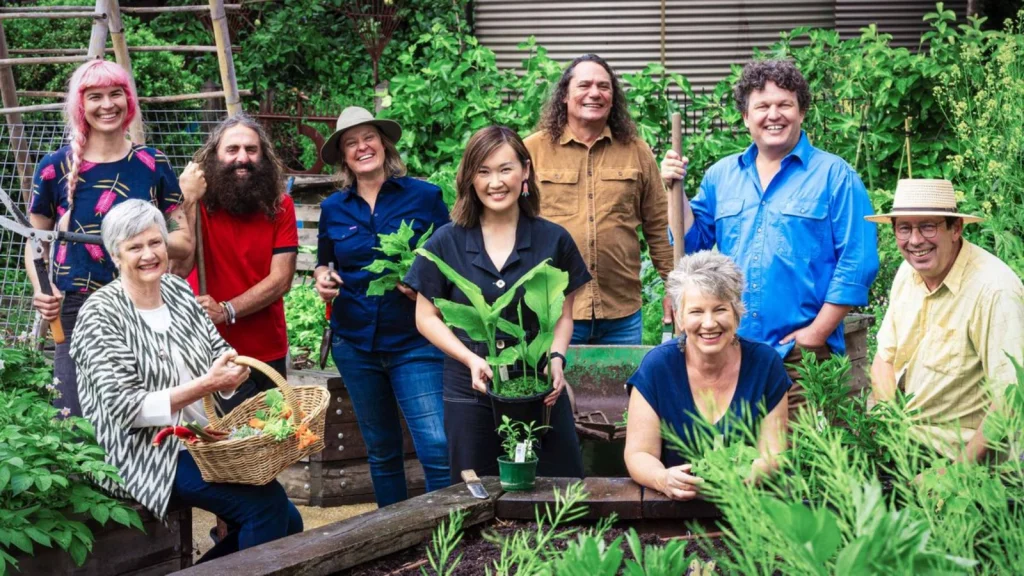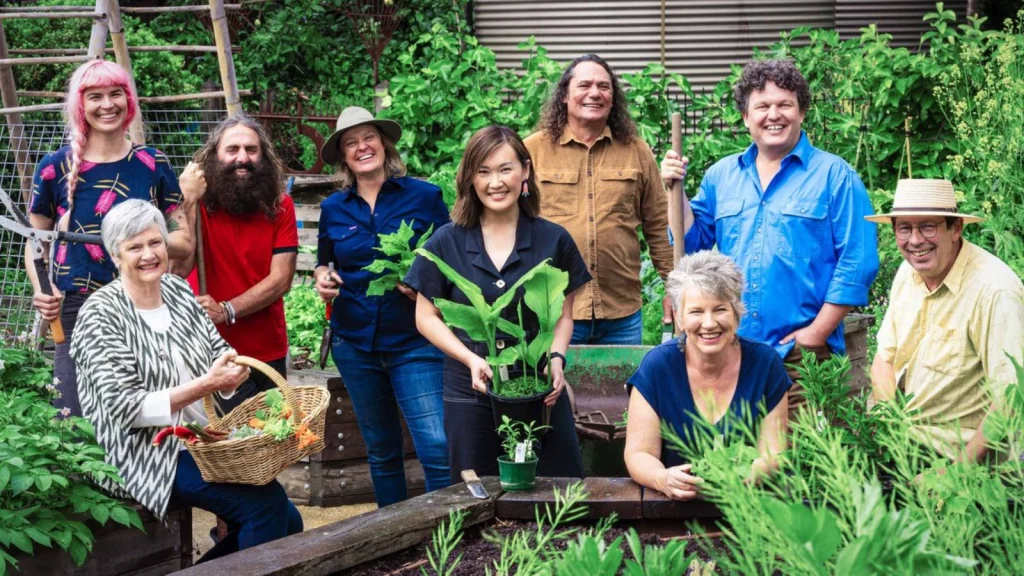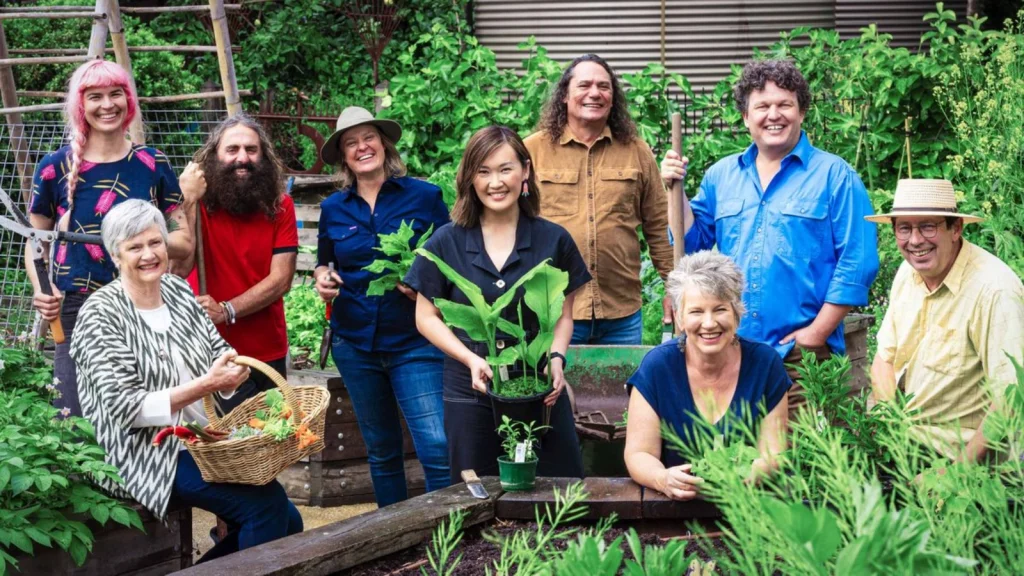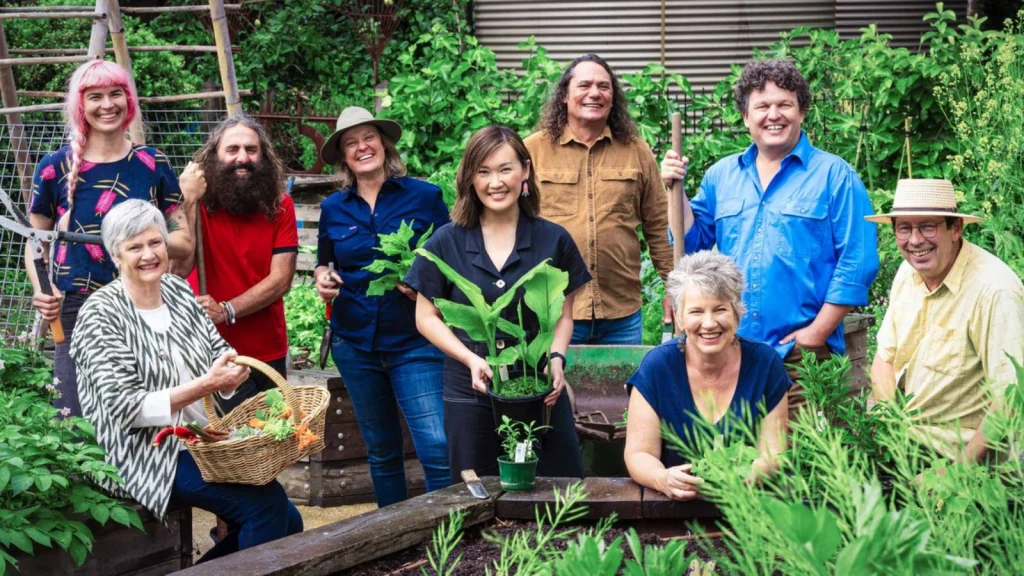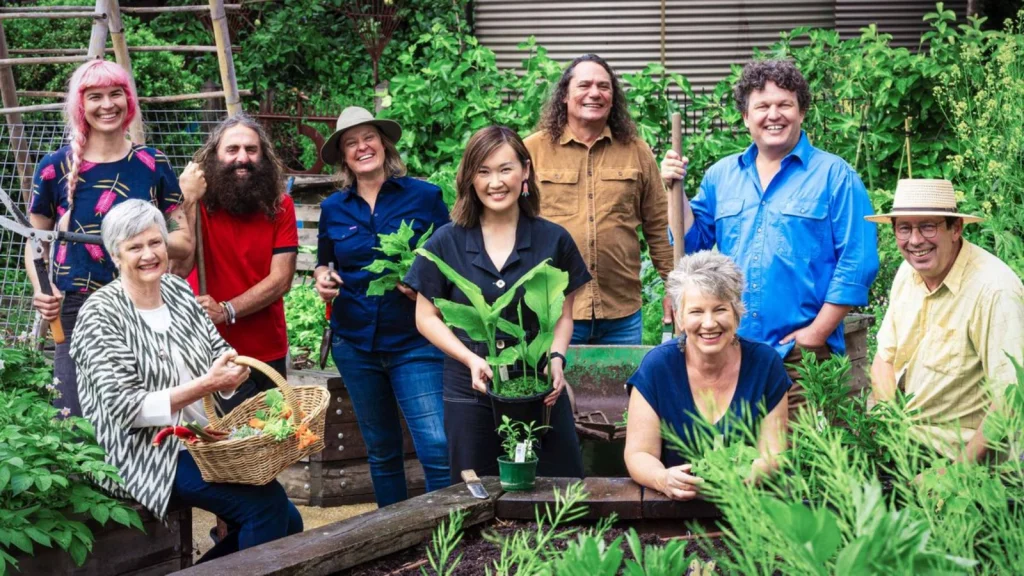
Gardening Australia 2026 Episode 5 arrives with one of its most eclectic and emotionally resonant instalments yet, moving from a pop legend’s rose-laden country retreat to a dusty outback plot, from a suburban feijoa obsession to a scientist’s mission to compress an entire forest into a single backyard. This episode captures the full spectrum of what Australian gardening means in 2026 — a practice that is by turns deeply personal, scientifically rigorous, philosophically grounded, and wildly creative. It is an episode about relationships: between people and their plants, between ambition and patience, between the land and those who tend it. (Gardeners World 2026)
Australian gardening has always reflected the country’s extraordinary diversity of climate and culture, and this episode leans into that diversity with conviction. From the tablelands of New South Wales to the arid interior, from a compact city block in Melbourne to a fruit-filled suburban plot, the locations shift dramatically. Yet a common thread runs through every segment — the idea that a garden is not merely a physical space but an expression of identity, memory, and hope. These are not passive spaces. They are worked, argued over, adapted, and loved.
The scope of Gardening Australia 2026 Episode 5 is deliberately ambitious. Costa Georgiadis visits music legend Leo Sayer at his country property outside Bowral, discovering a man who has translated decades of creative instinct into an extraordinary rose and kitchen garden. Sophie Thomson, meanwhile, unveils her new home patch in outback South Australia for the first time — a raw, challenging site that she is approaching with characteristic clarity and optimism.
Guest presenter Thanh Nguyen, known to audiences as the Fruit Nerd, travels to meet a feijoa enthusiast whose collection of the underappreciated fruit has grown well beyond hobby scale. And ecologist Simon Leake demonstrates a radical approach to urban planting that draws on deep ecological science to grow dense, layered native forests in small spaces.
Each of these stories operates on more than one level. Leo Sayer’s garden is a meditation on retirement, creativity, and the surprising parallels between making music and making a garden. Sophie’s new patch is a practical masterclass in reading a difficult site and making intelligent early decisions. Thanh’s visit to the feijoa garden is a love letter to an undervalued fruit and the passionate collectors who keep unusual varieties alive. Simon’s urban forest work raises urgent questions about how cities can be redesigned from the ground up to support ecological function. Together they form a picture of Australian gardening that is alive with ideas.
The programme also demonstrates, quietly and without fanfare, how much skill underpins even the most instinctive-seeming gardening decisions. When Leo Sayer talks about which roses he chose and why, he reveals a fluency with plant characteristics that has been built over years. When Sophie walks her new block and notes what the weeds are telling her about the soil, she is practising a form of ecological literacy that most gardeners take a lifetime to develop. This episode makes that knowledge visible and accessible, translating specialist understanding into language anyone can use.
There is, too, a sense of joy running through the episode. Gardening Australia 2026 has always understood that gardening is pleasurable as well as purposeful, and Episode 5 holds those two dimensions in balance. Leo Sayer’s delight in his roses is palpable and infectious. Thanh’s excitement about feijoas is the excitement of someone who has found a subject worthy of genuine obsession. Sophie’s measured optimism about her new patch carries the particular satisfaction of someone who knows exactly what she is doing, even in unfamiliar terrain.
Ultimately, what this episode communicates most powerfully is that gardening is a long game. None of the gardens featured here arrived fully formed. Each one represents years of observation, experiment, mistake, and adjustment. The instant garden is a myth this programme consistently refuses to perpetuate. Instead, it celebrates the accumulation of knowledge, the value of patience, and the rewards that come to those who pay close attention to the living systems they are working with. That message, delivered across four very different stories, gives the episode its coherence and its weight.
The programme’s structure — moving between stories that are each complete in themselves — allows each segment to breathe. There is no hurry, no competition, no manufactured drama. What fills the space instead is genuine expertise, generously shared, and the kind of specificity that comes only from people who have spent serious time with their subject. That quality is what distinguishes Gardening Australia 2026 at its best, and Episode 5 delivers it in abundance.
Gardening Australia 2026 Episode 5
Costa Meets Leo Sayer: Gardening Australia 2026 and a Pop Legend’s Country Retreat
Leo Sayer’s property outside Bowral, in the New South Wales Southern Highlands, is not what most people would imagine when they picture a rock star’s country retreat. There are no grand formal gardens, no professional landscaping crews, no immaculate hedges. What there is, instead, is a working kitchen garden of considerable ambition, a rose collection assembled with the fervour of a true enthusiast, and a man who has found in horticulture something that satisfies him in ways that music once did.
Costa Georgiadis visits Sayer at the property, which Sayer shares with his wife Donatella. The couple moved to the Bowral area to slow down, and the garden has become the centrepiece of that slower life. Sayer explains that he came to gardening relatively late — he did not grow up in a gardening household — but that once he began, the practice consumed him completely. He draws an explicit parallel between composing music and designing a garden, noting that both involve working with structure and improvisation simultaneously, and both require you to listen carefully to what is already there before you add anything new.
The rose collection is the heart of the garden, and Sayer’s knowledge of individual varieties is detailed and affectionate. He discusses the differences between old garden roses and modern hybrids with ease, favouring the old varieties for their fragrance and their more complex, less symmetrical flower forms. He is particularly enthusiastic about climbing roses trained against the stone walls of the property, noting that the thermal mass of the stone creates a microclimate that benefits the plants and extends their season. Costa, who shares Sayer’s enthusiasm for roses, engages with this discussion as a genuine conversation between two people who know their subject.
The kitchen garden sits alongside the rose beds and is equally well-developed. Sayer grows vegetables and herbs in raised beds, and the selection reflects his Italian wife’s culinary priorities. Donatella has strong views about what the garden should produce, and Sayer describes their collaboration in the kitchen garden with warm amusement. She insists on particular varieties of tomato, specific herbs, and produce that she cannot easily source locally. The garden, in this sense, is a direct extension of the kitchen table, and the connection between growing and cooking is kept deliberately short.
Costa and Sayer also discuss the challenges of gardening in the Southern Highlands climate. The region experiences cold winters, late frosts, and summers that can swing between wet and dry. Sayer has learned to work with these conditions rather than against them, choosing plants that are suited to the climate rather than forcing plants that struggle. He mentions that this adjustment — accepting what the climate will and will not allow — was one of the most important lessons he learned in his first years at the property.
Sophie’s New Patch: Reading a Difficult Site in Outback South Australia
Sophie Thomson has moved, and for the first time in the programme she invites viewers into her new garden in outback South Australia. The block is challenging in almost every respect — the soil is poor, the climate is harsh, rainfall is low and unreliable, and the site has no existing garden infrastructure to build on. Sophie’s response to this blank and demanding canvas is methodical, pragmatic, and deeply informed by her decades of experience as a horticulturist.
Her first task, she explains, is not to plant anything. Before a single seed goes in or a single tool breaks the soil, she is conducting what she calls a site reading — a systematic observation of the block across time and across conditions. She is tracking where water moves when it does rain, noting which areas dry out fastest, identifying where the wind comes from and how it moves across the space. She is also examining the existing weed population carefully, because weeds, she explains, are one of the most reliable indicators of soil type and condition available to a gardener.
The weeds on Sophie’s new block tell a specific story. Their composition and vigour indicate a soil that is low in organic matter, prone to compaction, and likely alkaline — all characteristics typical of outback South Australian soils. Sophie treats this information not as a problem to be solved immediately but as data to be incorporated into her planning. She is not trying to transform the soil in a single season. Instead, she is mapping out a multi-year programme of improvement, starting with organic matter additions and cover cropping to begin building the soil biology before she places any permanent plantings.
Water is the central constraint, and Sophie’s approach to it reflects sophisticated thinking about outback gardening. She is planning a water harvesting system that channels whatever rain does fall into the areas of the garden where it will do the most good. She discusses swales, contour planting, and the use of deep-rooted plants to open up compacted subsoil and create pathways for water infiltration. These are techniques drawn from permaculture and dryland farming, adapted to the garden scale, and Sophie presents them with a practical clarity that makes them feel genuinely achievable.
Sophie also makes a point of discussing which plant families and genera perform well in conditions like hers. Native plants suited to arid and semi-arid conditions feature prominently in her thinking, but she is not doctrinaire about natives versus exotics. Her criterion is simple: will this plant thrive here with minimal supplementary water once established? If the answer is yes, it belongs in the planting palette. If it needs constant support to survive, it does not, regardless of its provenance. This pragmatism is one of the most useful things the programme offers to gardeners in similar climates across Australia.
The Feijoa Fanatic: Thanh the Fruit Nerd Explores a Remarkable Collection
Thanh Nguyen — known across social media and to regular viewers of gardening Australia as the Fruit Nerd — visits a gardener whose commitment to the feijoa has gone well beyond ordinary enthusiasm. The host of this visit has assembled a collection of feijoa varieties that is, by any measure, extraordinary, with dozens of named cultivars growing across the property, each selected for specific characteristics of fruit size, flavour, texture, or season.
The feijoa itself — Acca sellowiana, native to South America — is a fruit that occupies a curious position in Australian horticulture. It is widely grown, particularly in temperate and cool climates, but it is also frequently underestimated. Many people know it only as the fruit that falls on the footpath in autumn and is occasionally used to make jam. The gardener Thanh visits has spent years exploring its full potential, sourcing varieties from New Zealand, where feijoa cultivation and breeding are considerably more advanced than in Australia, and trialling them under Australian conditions.
Thanh approaches the visit with the particular quality of attention that defines his presenting style — genuine curiosity combined with a willingness to learn from people who know more than he does about a specific subject. The two of them move through the feijoa planting together, discussing the differences between varieties with the kind of specificity that diy gardening content rarely achieves. They compare fruit size, skin thickness, the ratio of granular to smooth flesh, the presence or absence of guava-like aroma notes, and the timing of the season for each variety.
Cross-pollination is an important topic in this segment. Feijoas are technically self-fertile, but all varieties produce significantly better crops when pollinated by a different variety. The gardener explains the pollination dynamics of his collection, noting which varieties are the best pollinators and how he has arranged them in the planting to maximise pollination efficiency. He also discusses the role of bees and other insects in the orchard, and the importance of not using pesticides during flowering.
Thanh is particularly interested in which varieties perform best in different Australian climates. The feijoa is most commonly associated with cool to temperate zones, but the gardener has been trialling varieties in conditions that push the conventional limits of the crop. He has found that certain varieties show unexpected heat tolerance, performing well in summers that would traditionally be considered too warm for reliable cropping. This finding has implications for gardeners across a much wider geographic range than is usually associated with the fruit, and Thanh makes this point clearly for the benefit of viewers in warmer parts of the country.
The segment concludes with a tasting session that serves as a practical demonstration of the variety differences the two have been discussing. Thanh’s reactions are unscripted and revealing — different varieties produce genuinely different sensory experiences, and his responses make clear that the feijoa has far more range as a fruit than its modest reputation suggests. For gardeners interested in diy gardening with a focus on productive fruit growing, this segment is among the most practically informative in the episode.
Simon Leake and the Urban Forest: Ecological Science Meets Native Plants
Ecologist Simon Leake’s segment is the most scientifically demanding in the episode, but it is also one of the most practically exciting. Leake is developing and refining a methodology for growing dense, structurally complex native plant communities in small urban spaces — essentially compressing the ecological structure of a forest into a backyard or verge planting. The approach draws on Japanese researcher Akira Miyawaki’s forest planting method, adapted for Australian native plant communities and Australian urban conditions.
The core principle of the method is density. Traditional garden plantings give plants generous spacing, allowing each individual to develop its full form. Miyawaki-style plantings go in at extremely high density — many plants per square metre — deliberately triggering the competition responses that drive rapid upward growth. Plants competing for light grow faster, develop stronger root systems, and in Leake’s experience, reach canopy closure far more quickly than conventional plantings. What might take a conventional native garden twenty years to achieve, this method can accomplish in five to seven.
Leake’s work is informed by a deep understanding of Australian plant communities. He is not simply planting native species at high density and waiting. He is carefully selecting species mixes that replicate the structural layers found in natural Australian forest communities — groundcovers, shrubs, understorey trees, and canopy trees — and ensuring that species are matched to the specific soil type, aspect, and rainfall of the site. This specificity is what separates his approach from simpler rewilding efforts, and it is what makes his results so striking.
Urban spaces present specific challenges for this kind of planting. Soils are often compacted, degraded, and low in biological activity. Leake addresses this with a preparation protocol that involves deep tillage to break compaction, additions of organic matter to kick-start soil biology, and inoculation with mycorrhizal fungi that are specific to Australian native plants. These fungi are crucial partners for many native species and are often absent from degraded urban soils. Without them, many natives struggle to establish, regardless of how carefully they are otherwise managed.
The scale of ambition in Leake’s work extends beyond individual gardens. He is interested in connectivity — the creation of linked corridors of native vegetation across urban areas that allow wildlife to move between larger habitat patches. A single urban forest planting is valuable in itself, providing habitat, cooling, and carbon storage. But a network of such plantings, connected across a suburb or across a city, creates something qualitatively different: a functional ecological infrastructure that can support diverse communities of birds, insects, and other urban wildlife.
Costa engages with Leake on the question of maintenance — a practical concern for any gardener considering this approach. Leake is candid about the demands of the establishment phase. The first two years require regular attention: weeding out exotic species that would otherwise suppress the native planting, monitoring for pests, and occasionally intervening to help slower-establishing species compete. After that, however, the planting becomes increasingly self-sustaining. As the canopy closes and the leaf litter builds up, weed pressure drops dramatically and the system begins to regulate itself.
Gardening Australia 2026 Episode 5 and the Science of Soil
Across all four segments of this episode, soil emerges as a foundational theme. Whether it is Sophie assessing her outback block, Simon preparing a degraded urban site, Leo Sayer discussing the loamy soils of the Southern Highlands, or the feijoa grower describing the well-drained conditions his trees prefer, the quality and character of the soil underneath is never far from the conversation. This episode treats soil not as a backdrop but as a protagonist — a living system that determines what is possible in every garden.
Sophie’s approach to her outback soil is perhaps the most instructive. She articulates a clear principle: that the goal is not to fight the soil you have, but to understand it completely and then work with it systematically. Adding organic matter is the universal recommendation, and Sophie explains why — organic matter feeds soil microorganisms, improves both water retention and drainage, builds structure, and gradually shifts the soil chemistry toward conditions that support a wider range of plants. It is slow work, she acknowledges, but it is the only work that produces lasting results.
Simon Leake’s soil preparation for his urban forest plantings echoes this principle but adds the dimension of biological inoculation. His point — that Australian native plants evolved with specific fungal partners and cannot thrive without them — is one of the more technically sophisticated points made in the episode. It has direct practical implications for anyone attempting to establish native plantings in urban areas, where those fungal communities are typically depleted. The solution, Leake explains, is to source and introduce mycorrhizal inoculants that match the species being planted — a recommendation that requires a little research but is entirely achievable for a committed home gardener.
Gardening Australia 2026 Episode 5: Connecting Plants, People, and Place
What gives this episode its underlying coherence is the way each story connects a specific plant or garden to a specific human story. Leo Sayer’s roses are not just plants — they are the medium through which a creative person has found a new form of expression in the second half of his life. Sophie’s outback patch is not just a challenging site — it is the beginning of a new chapter, approached with the full weight of her professional knowledge and personal history.
The feijoa grower’s collection is not just a horticultural exercise — it is the physical expression of a passionate intellectual curiosity that has taken years to develop. And Simon Leake’s urban forests are not just ecological experiments — they are an argument about what cities could and should become.
Gardening Australia 2026 has consistently understood that the most compelling garden stories are not really about plants. They are about the people who grow them, and what growing reveals about who those people are and what they care about. This episode exemplifies that understanding. Each story is generous with practical information — viewers come away with specific knowledge about roses, soil preparation, feijoa varieties, and urban planting methods — but that practical content is always embedded in a human context that gives it meaning.
The episode also reflects a broader truth about Australian gardening in 2026: that gardeners are increasingly drawing on science, ecology, and traditional knowledge to inform their practice. Sophie’s dryland techniques, Simon’s ecological planting science, and even the feijoa grower’s systematic approach to variety trialling all reflect a shift away from purely intuitive gardening toward practice that is grounded in evidence and informed by rigorous observation. This is not a cold or academic shift — as this episode demonstrates, it coexists happily with passion, beauty, and joy.
Native plants run through the episode as a consistent preoccupation. Simon’s urban forest work is centred entirely on native species. Sophie’s planting palette is heavily weighted toward natives suited to arid conditions. Even in Leo Sayer’s rose garden, there is discussion of how native plants in the broader garden create habitat and support the ecosystem that in turn supports the cultivated garden. The message, delivered without dogma, is that natives and the ecological functions they provide are central to the future of Australian gardening.
The final impression left by Gardening Australia 2026 Episode 5 is of a programme that respects its audience — their intelligence, their curiosity, and their genuine desire to grow things well. It does not talk down, it does not simplify unnecessarily, and it does not pretend that gardening is easy. What it does, consistently and beautifully, is demonstrate that gardening is worth doing seriously, that knowledge makes it better, and that the rewards — in beauty, in food, in ecological function, and in the particular human satisfaction that comes from working closely with living things — are real, lasting, and available to anyone willing to pay attention.
FAQ Gardening Australia 2026 Episode 5
Q: What does Gardening Australia 2026 Episode 5 cover?
A: Gardening Australia 2026 Episode 5 features four main segments. Costa visits pop legend Leo Sayer at his Southern Highlands property. Sophie Thomson reveals her new outback garden patch. Guest presenter Thanh Nguyen, the Fruit Nerd, explores a dedicated feijoa collection. Additionally, ecologist Simon Leake demonstrates how to grow dense urban forests using native plants in small city spaces.
Q: Where is Leo Sayer’s garden located, and what does he grow?
A: Leo Sayer gardens at his property near Bowral in the New South Wales Southern Highlands. He focuses primarily on old garden roses, which he values for their fragrance and complex flower forms. Furthermore, he maintains a productive kitchen garden growing vegetables and herbs chosen to suit his wife Donatella’s Italian cooking. Climbing roses trained against the property’s stone walls benefit from the thermal mass the stone provides.
A: Sayer emphasises accepting what your local climate allows rather than forcing unsuitable plants. He favours old garden rose varieties over modern hybrids for superior scent and natural form. He also draws a direct parallel between composing music and garden design, noting both require careful listening before adding anything new. Working with your site’s conditions, he argues, produces far better long-term results than fighting them.
Q: How does Sophie Thomson approach her new outback garden patch?
A: Sophie begins with thorough site observation before planting anything. She tracks water movement across the block, identifies wind patterns, and reads the existing weed population to assess soil type and condition. The weeds indicate low organic matter, compaction, and likely alkaline soil. She then plans a multi-year improvement programme using organic matter additions, cover cropping, and water-harvesting techniques including swales and contour planting to maximise every drop of rainfall.
Q: What native plants and water-wise strategies does Sophie recommend for dry Australian gardens?
A: Sophie selects plants based on a single practical criterion: will they thrive with minimal supplementary water once established? She considers both native plants and suitable exotics, prioritising performance over origin. Additionally, she incorporates deep-rooted plants to break up compacted subsoil and improve water infiltration. Her approach draws on permaculture and dryland farming principles, scaled to suit the home garden rather than broadacre land management.
Q: What is a feijoa, and why does Gardening Australia 2026 Episode 5 feature it?
A: The feijoa, botanically known as Acca sellowiana, originates from South America and grows well across temperate and cool Australian climates. Despite wide cultivation, it remains an underappreciated fruit with far greater variety than most gardeners realise. Guest presenter Thanh Nguyen visits a collector who has assembled dozens of named cultivars, sourced largely from New Zealand where feijoa breeding is considerably more advanced. The segment highlights the fruit’s genuine range of flavour, texture, and seasonal timing.
Q: How does cross-pollination affect feijoa crops, and which varieties work best together?
A: Feijoas are technically self-fertile but produce significantly heavier crops when a different variety pollinates them. The collector in Gardening Australia 2026 Episode 5 has arranged his planting specifically to maximise cross-pollination efficiency, positioning the best pollinator varieties strategically throughout the orchard. He also avoids pesticide use during flowering to protect visiting bees and other beneficial insects. Furthermore, he has identified certain varieties showing unexpected heat tolerance, extending feijoa cultivation into warmer Australian climate zones.
Q: What is Simon Leake’s urban forest method, and how does it work?
A: Simon Leake adapts the Miyawaki dense-planting method for Australian native plant communities. He plants at very high density, deliberately triggering competition responses that drive rapid upward growth. Plants competing for light develop stronger root systems and reach canopy closure in five to seven years instead of twenty. He carefully selects species mixes that replicate the structural layers of natural Australian forests, from groundcovers through shrubs and understorey trees up to full canopy species, matched precisely to each site’s conditions.
Q: Why does Simon Leake inoculate soil with mycorrhizal fungi when establishing native plants?
A: Many Australian native plants evolved alongside specific mycorrhizal fungi and struggle to establish without them. Urban soils are frequently degraded and biologically depleted, meaning these fungal partners are often entirely absent. Leake prepares sites with deep tillage to relieve compaction, adds organic matter to stimulate soil biology, and then inoculates with mycorrhizal fungi matched to the target species. However, he notes the establishment phase requires two years of active management before the planting becomes largely self-sustaining.
Q: What broader themes connect all segments of Gardening Australia 2026 Episode 5?
A: Soil health, patience, and observation link every story in this episode. Each gardener reads their site carefully before acting. All four segments also demonstrate that gardening rewards a long-term view, rejecting the idea of instant results in favour of systematic, evidence-based practice. Furthermore, native plants appear across every segment as central to sustainable Australian gardening. The episode consistently treats diy gardening not as decoration but as a deeply purposeful engagement with living ecological systems.