Gardening Australia 2026 Episode 3: Seeds, Orchards, Perennials and the Desert in Full Bloom
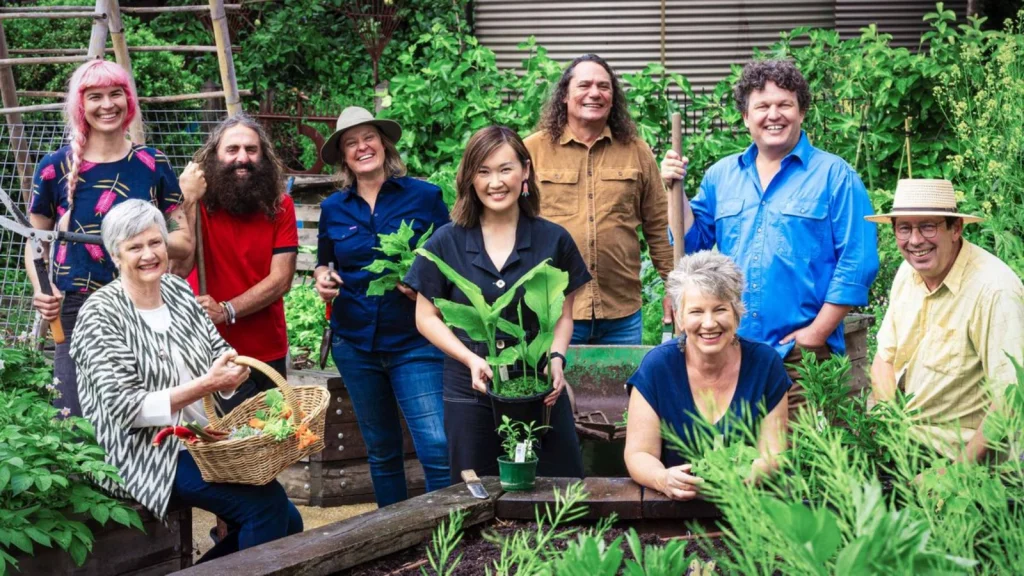
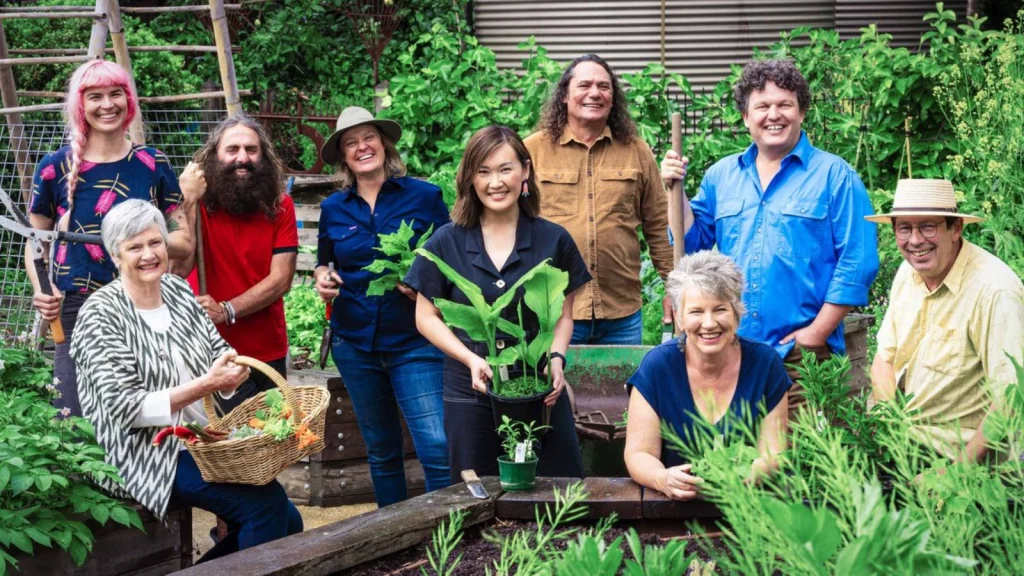
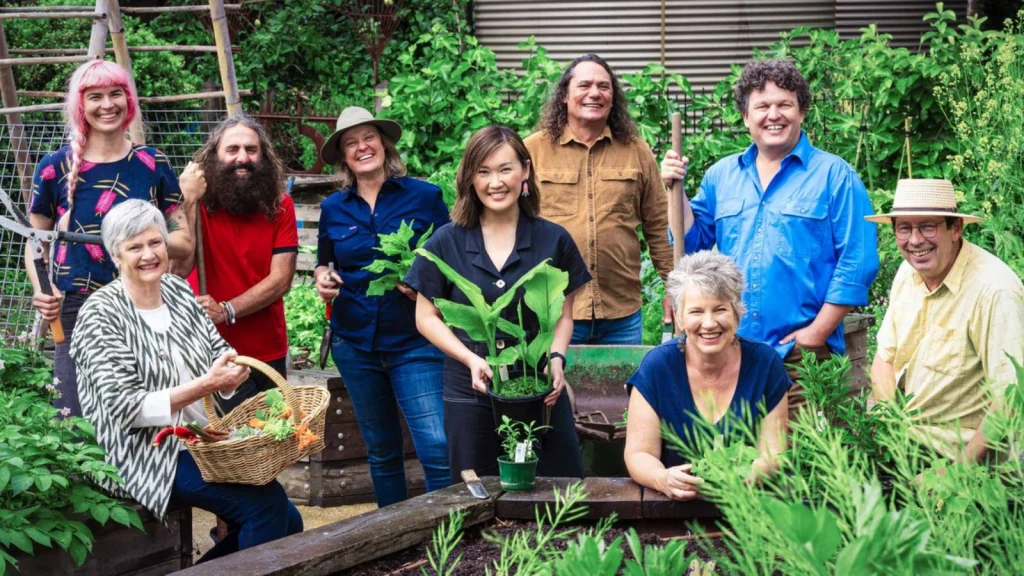
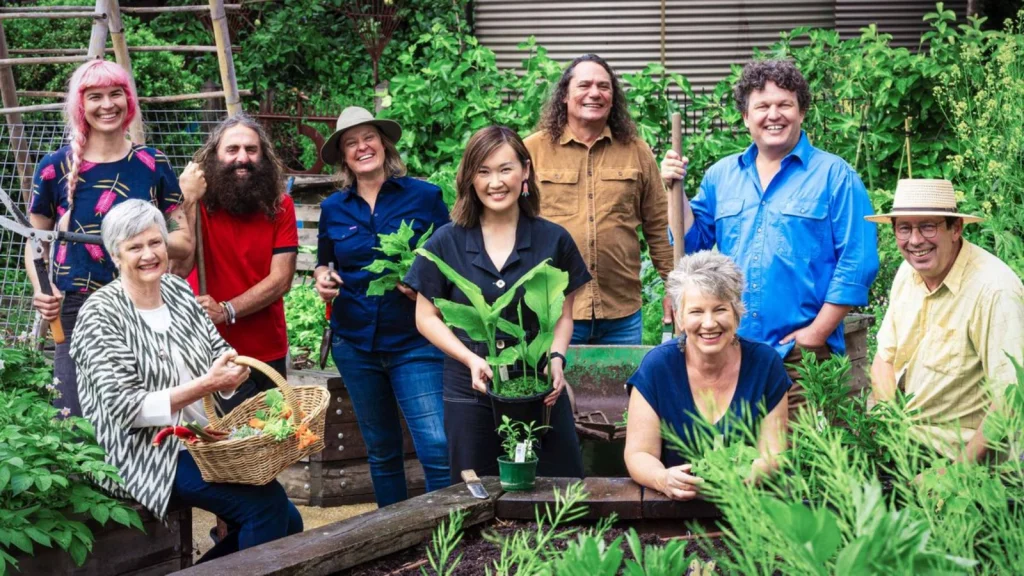
Gardening Australia 2026 Episode 3 arrives at the height of summer with a sense of abundance, urgency, and wonder that captures exactly why Australian gardening culture continues to captivate millions. This is the season when the veggie patch pays dividends — when picking, eating, preserving, and storing move to the top of every gardener’s agenda. From a breathtaking arid botanic garden on the edge of Spencer Gulf to a hillside home orchard growing fruits that once graced medieval royal tables, the episode spans the full breadth of what Australian gardening means today. (GARDENERS WORLD 2026 EPISODES)
The timing of this episode matters. As climate change reshapes growing conditions across the continent, Australian gardeners are rethinking what they plant, how they water, and which traditions from older horticultural cultures deserve revival. The episode captures this shift not as crisis but as opportunity — a chance to embrace a wider palette of plants suited to a drying, warming world. Gardening Australia consistently demonstrates that diy gardening is not merely a pastime but a response to the world we inhabit.
This episode covers six distinct stories, each anchored in genuine expertise and practical wisdom. Jerry explores seeds as both propagation material and food source, from spice crops to fresh sprouts. Sophie visits a meticulously planned Adelaide Hills home orchard where two doctors have created a waterwise, productive landscape. Millie tastes her way through more than a dozen heritage tomato varieties on a Victorian farm north of Daylesford. Hannah meets a perennial nursery manager in Hobart whose design philosophy transforms landscapes with movement, colour, and seasonal rhythm. Josh addresses sunburn damage to a Perth fig tree. And Costa narrates a sweeping tour of the Australian Arid Lands Botanic Garden in Port Augusta, where the desert meets the sea.
Running beneath all six stories is a seasonal logic. Late summer in Australia is a moment of reckoning and preparation. Crops are finishing, seeds are ripening, and soil needs attention before autumn planting begins. The episode’s presenters move through these pressures with knowledge and calm, offering both inspiration and instruction. Their collective message is clear: now is the time to engage most deeply with the garden.
Several threads connect the episode’s diverse segments. Water stewardship features in nearly every story — from the Sprod family’s 115,000-litre rainwater tank in Mount Barker to the arid zone plants at Port Augusta that survive without rain for five or six years at a stretch. Native plants receive sustained attention as a practical solution to climate pressure. And the joy of eating something grown by hand — whether a heritage tomato drizzled in olive oil or fresh mung bean sprouts from a kitchen windowsill — pulses through the episode with consistent warmth.
The breadth of expertise on display reflects how far gardening knowledge has evolved in Australia. These are not hobbyists guessing. They are practitioners who have spent decades observing, experimenting, and refining. Garden design, soil chemistry, seed biology, botanic science, and culinary tradition all intersect in a single hour of television. Gardening Australia 2026 makes the case that engagement with plants is one of the most intellectually rich pursuits a person can undertake.
The episode’s seasonal task segments close each break with crisp, climate-zone-specific diy gardening advice for gardeners from Hobart to Darwin. However, the real depth lies in the feature stories — each a fully realised portrait of a person, a place, and a way of seeing the living world. Together they build an argument: that close attention to plants changes everything, and that the Australian landscape holds far more richness than most people realise.
By the time the credits roll, the viewer is left not merely informed but activated. There is always something to do. With that spirit established, each of the episode’s major stories rewards detailed examination.
Gardening Australia 2026 Episode 3 and the Remarkable Power of Seed
Jerry opens his segment by holding up a collection of seeds and calling them the unsung heroes of both his garden and his kitchen. That framing immediately signals the ambition of what follows. Seeds are not merely the starting point of plant life — they are food, spice, medicine, and portable wealth compressed into a tiny package. Jerry works from his subtropical Brisbane garden, where spring’s heat and dryness create ideal conditions not for watering but for letting winter crops ripen and set seed naturally.
For saving seed from larger crops like his Ethiopian cabbage, Jerry demonstrates a satisfying simplicity. He harvests a few pods, presses along the seam, and liberates the seed. For fine-seeded plants like Nicotiana, where seeds are so small they disperse on the lightest breath of air, he stretches pantyhose over the seed head and secures it. When rain falls, the seed inside dries quickly without spoiling. These are practical diy gardening techniques refined over years of close observation.
Proper seed storage is equally methodical. Jerry’s top tips are clear: always dry seed thoroughly before storing, use silica gel packs to remove excess moisture, choose an airtight jar, label it precisely, and keep it in the fridge. Common seed — peas, beans, tomatoes, and capsicum — stored this way will remain viable for up to ten years. This kind of seed sovereignty, as Jerry describes it, gives gardeners agency and power over their own growing future.
Beyond propagation, Jerry is equally passionate about seeds as direct food sources. His sword beans are a standout: harvested in winter, peeled and boiled, they match steak in protein content. Black sesame, which he prefers for its richer flavour over commercial white sesame, is growing in his garden alongside black pepper climbing a fruit tree. He rhapsodises about the moment a gardener first smells and tastes a home-grown peppercorn: it is, he says, a distinct before-and-after moment in life from which there is no return.
Spices grown from seed include black cumin, whose slightly bitter, peppery seeds are excellent in breads, curries, and pickles, and coriander, which Jerry harvests by simply rubbing the seed heads between his fingertips. His observation that people complain about coriander going to seed is met with characteristic directness: the seed is the second crop. His curries, he notes, would not be the same without it.
The segment closes with an elegant demonstration of seed sprouting. Using a sterilised jar, a tablespoon of mung bean seed, and a square of shadecloth secured with a rubber band, Jerry shows how to produce nutritionally dense food on a kitchen windowsill in just a few days. The sprouts are at their best, he explains, before the first pair of true leaves appears. No garden required. Seeds, as Jerry concludes, are portable. Half his garden, he says with a grin, fits in a small container. Exploit their potential and both garden and kitchen will flourish.
Perennial Plants and Purposeful Garden Design with Richard Hole
Hannah arrives at a perennial nursery in Granton, in the northern suburbs of Hobart, to meet Richard Hole, manager and avid grower. Perennials are, as she observes, having their moment. People cannot seem to get enough of them, and Richard has spent years at the leading edge of that wave, supplying plants and knowledge to gardeners hungry for colour, resilience, and something more dynamic than static shrub beds.
Richard’s definition is precise. A perennial lives more than one year. It may be herbaceous — dying back over winter and returning — or woody, like a shrub or tree. The herbaceous perennials he grows concentrate current enthusiasm, particularly those with drought tolerance. Agastache, thriving in hot, sunny conditions while requiring minimal water, leads the list. Ornamental grasses have surged in recent years, valued for movement, soft texture, and the ability to cut through the visual rigidity of more conventional plantings.
The conversation about climate resilience is substantive. Richard identifies low fertiliser requirements as a key environmental benefit of perennials — chemical fertilisers are often counterproductive with these plants, and reduced irrigation needs mean significantly less run-off entering waterways. Established perennial plantings support healthier ecosystems, attract beneficial insects, and create conditions where those insects support surrounding plants. This is diy gardening as ecological stewardship, expressed in practical terms.
Richard’s own one-hectare property at Dromedary, fifteen minutes from the nursery along the River Derwent, illustrates the philosophy. His original plan involved silver birches and liquid ambers. Insufficient rainfall ended that ambition within a year. He pivoted to native trees, which now form a bush-block backdrop to an intensively planted perennial garden near the house — a balance between the wild and the cultivated achieved with genuine confidence.
The design principles Richard applies coalesce around three Rs: rhythm, repetition, and restraint. Rhythm comes from repeating plant shapes — flat achillea heads, upright salvias, rounded echinaceas and daisies — in a pattern that flows without jarring transitions. Repetition prevents the jumbled effect of treating every plant as a specimen. Restraint, he concedes, is the hardest principle for plant lovers, but adhering to it makes a substantial difference. Dense planting is deliberate: bare soil invites weeds and loses moisture, while tightly packed plants conserve both.
Grasses are Richard’s particular passion because they move. He names three favourites: Calamagrostis ‘Karl Foerster’, so upright and architectural that it excels at the back of a border; Stipa ichu, which responds to the faintest puff of breeze with expressive swaying; and Anemanthele lessoniana, the New Zealand wind grass, whose rounded hazy form softens the garden in flower. Richard also applies what he describes as a United Nations philosophy to plant selection. Origin matters less than compatibility — whether plants want the same conditions and grow well together. That perpetual seasonal freshness, something always emerging or changing, is precisely what makes a perennial garden worth returning to every day.
Sophie Explores an Adelaide Hills Home Orchard Built from Adversity
When Sophie visits the Mount Barker property of doctors Cathy and David Sprod, she encounters a garden that is simultaneously a personal philosophy and a practical achievement. On 2,000 square metres, the Sprods have created a waterwise, productive landscape featuring vegetables, nuts, native plants, exotic specimens, and at least 100 fruit and nut trees. The property is simultaneously their habitat, a sanctuary for birds, lizards, and possums, and a demonstration of what careful design can accomplish in a challenging climate.
The centrepiece of their water management is extraordinary: a 115,000-litre rainwater tank buried beneath the lawn. The house requires approximately 50,000 litres annually, leaving 65,000 litres as a drought buffer for the garden. The lawn sits on just 400mm of soil above the tank’s surface, which constrains what can be planted there — including a standard grevillea grafted onto Grevillea robusta rootstock specifically because of that species’ remarkable toughness. Despite the shallow growing medium, it thrives and must be regularly cut back to keep it from expanding across the grass.
The Sprods have lived on this property for 30 years, but in 2017 a fire thought to have been sparked by a power fault destroyed their house. It was, Cathy acknowledges, a devastating experience made harder by having an established garden already in place. Yet the fire allowed them to rebuild entirely, designing an eco-friendly, north-facing home where the garden is central to every view and every room. Every room looks outward. The garden informs the house and the house informs the garden. The mature trees that survived the fire — gum trees especially — were incorporated into the new design as bones around which the rebuilt garden was shaped.
Their respective roles reflect complementary sensibilities. David has an artistic eye and a preference for the empty space between plants, believing negative space is as important as the planting itself. Cathy loves shade and big trees, the experience of moving under a canopy. She also preserves enough produce each year to last twelve months, sharing surplus with neighbours, children, and community. Their 40-year marriage, Cathy says with affectionate humour, has taught them to work together through many discussions — not all of which required words. Their collaborative approach to the garden is evident in its coherence.
Later in the episode, Sophie focuses specifically on the home orchard’s more unusual fruit trees — species that once occupied an important place in European horticulture before falling out of fashion. Medlars, members of the rose family with rough brown skin and distinctive open centres, were all but essential in medieval royal orchards and monasteries. Chaucer and Shakespeare both referenced them. They are harvested in autumn, brought indoors, and allowed to blet — to go soft and mushy — before cooking. Eaten raw, Sophie does not enjoy them; cooked into paste or jelly, she loves them. Their autumn foliage, she adds, turns remarkable tones of colour while still holding fruit, making them as beautiful as they are useful.
Quinces receive similar treatment: historically important, now underappreciated, but genuinely extraordinary when cooked. Raw, they are extra tart and tough-textured. Steamed, poached, baked, or roasted, they become sweet, delicious, and strikingly ruby-red. Drought, heat, and frost tolerant, they thrive in many parts of Australia and offer both productive and ornamental value in the garden. Sophie’s enthusiasm for reviving these ancient fruits connects the episode’s broader argument about diy gardening with history, culture, and the pleasures of eating well.
The real surprise of the orchard visit is the jujube. Native to China, Mongolia, and Korea, jujubes are among the oldest cultivated fruits in the world, with a history spanning 7,000 years. Crisp and sweet when ripe, with an apple-like flavour, they can also be dried to produce what is known as the Chinese Date. Tolerant of salinity, alkalinity, and dry conditions, they are, Sophie argues, a compelling choice for difficult spots in Australian gardens. They grow seven to ten metres tall but can be pruned or espaliered, and most are self-fertile, though multiple pollinators improve fruiting.
Gardening Australia 2026 Episode 3’s Heritage Tomato Deep Dive with Florian Hofinger
Millie drives to Mount Franklin, north of Daylesford in Victoria, to meet Florian Hofinger, a former chef of 29 years who now grows more than 110 varieties of heritage tomatoes on his rural property. The visit is part investigation, part celebration, and — in Millie’s words — an exercise in journalistic integrity that requires her to taste as many varieties as possible. Florian obliges with cheerful generosity.
Heritage tomatoes, Florian explains, are defined by the phrase “true to type.” Save the seed and you can grow the same tomato the following year. In practice, accidental crossing does occur. Florian demonstrates this with his accidental variety “Triferella,” a cross between ‘Black Trifele’ and ‘Tigerella’ that appeared when he grew the two varieties side by side. He plans to isolate and develop it further — a small act of creation that captures something essential about the open, experimental nature of growing heirloom crops.
Among the varieties Florian presents, each earns its description through tasting. ‘Black Beauty’ is, he believes, the darkest of all tomatoes — midnight black outside, red inside, and super sweet with a bright acid character that stops short of cloying honey-sweetness. ‘Chocolate Stripes’, a bronzy beefsteak with green striping, grows darker and sweeter as it ripens and offers a rich, full flavour.
‘Helsing’ appears almost as a gothic novelty — pitch black with a red star on top — but its flavour is spectacularly sweet and Millie confirms that she could eat a lot of them. ‘Blueberry’, a small truss variety named for its visual resemblance to the berry, has a lovely soft skin ideal for home gardeners but too fragile for commercial handling.
Florian’s production methods are systematic and sustainable. He targets a soil pH of around 6.5, ensures good bed drainage, and finishes each season with a cover crop of faba beans for nitrogen and mustard to fumigate the soil. In spring, that cover crop is turned in and supplemented with compost, potash, and a small amount of pelletised fertiliser before straw mulch is applied. He uses drippers exclusively, avoiding leaf-wetting to reduce disease spread, and raises his seedlings in a hothouse before planting out after the last frost — a timing call he concedes resembles gambling. To manage mildew, a sulphur solution applied as a spray is his chosen defence.
The segment closes with Florian producing a plate of tomatoes that distils his cheffing past into his farming present. His favourite, the rainbow platter, is dressed with a friend’s olive oil, fresh basil from the garden, a little salt, and burrata cheese. Millie’s response says everything: the flavour intensity of such a large tomato, treated with such restraint, is astonishing. Less is more, Florian confirms — a principle as applicable to cooking as it is to Australian gardening and garden design.
Gardening Australia 2026 Episode 3 at the Australian Arid Lands Botanic Garden
The episode’s most visually and intellectually ambitious segment transports viewers to Port Augusta, South Australia, where Brian Reichelt of the Friends of the Australian Arid Lands Botanic Garden guides a tour of one of the country’s most distinctive horticultural institutions. The garden occupies 250 hectares on Barngarla and Nukunu land at the entrance to the Eyre Peninsula, a location known as the crossroads of Australia. From its elevated vantage, the viewer looks across Spencer Gulf toward the Flinders Ranges — a panorama of extraordinary power where, as Brian says, the desert meets the sea.
The garden’s mission is specific and urgent. Every plant grown within its bounds is a low-rainfall species, adapted to conditions under 250mm of rainfall per year. These are desert species, covering approximately 70% of the Australian continent. Brian describes the garden as an ark — a living collection of plants that will be increasingly relevant as climate change pushes temperature and aridity into regions not previously considered arid. The garden is not simply a display; it is a seed bank, a research resource, and a demonstration of what the Australian continent actually grows.
Chenopod plains represent one of the garden’s educational focal points. To motorists passing through arid zones, these expanses of saltbushes, bluebushes, and Maireana species register as dry and lifeless. But Brian is insistent: getting out of the car and walking changes that perception entirely. Lichens and fungi survive the hot, dry summers and spring back to life at the first rain. Black bush provides excellent habitat for birds and insects and responds well to garden pruning. Pearl saltbush, Maireana sedifolia, with its unusual bead-like grey leaves covered in fine hairs, is, Brian argues, a genuinely beautiful plant well suited to native garden settings.
The sand-hill country within the garden introduces the western myall — an iconic tree that can live up to 100 years. In the driest conditions, roots are visible above the surface, eroded clear by wind, while minute rootlets extend below to locate moisture. The silver-grey foliage serves as a heat reflector, reducing moisture loss and — remarkably — lowering the temperature beneath the canopy by up to 15 degrees during 45 to 50-degree days. These trees can survive five to six years without meaningful rainfall and then return to full life when rain finally arrives.
Among the botanical rarities Brian highlights, two stand out with particular force. Waddy-wood, which grows around the margins of the Simpson Desert, produces the hardest wood known in the world and can live approximately 500 years. Leopard wood, extremely rare and growing from White Cliffs in New South Wales north into Queensland, will develop its distinctive white-blotched trunk as its lower foliage drops and its bark enlarges. The specimen Brian shows is about 30 years old — still decades from its most dramatic form.
The eremophila collection is another of the garden’s claims to distinction. With 200 species represented, it may be the largest collection in any botanic garden worldwide. These plants vary enormously in shape, colour, flower, and size, and many are well suited to Australian home gardens across a range of climates, provided drainage is adequate and frost tolerance is checked for the relevant region. Eremophila bignoniiflora, carrying both fruit and flower simultaneously during the visit, serves as a shade tree and garden specimen of real quality.
Brian’s birdwatching passion adds another dimension to the visit. From an original 49 recorded species, the garden now hosts around 160 species moving through on seasonal patterns. The nankeen kestrel hunts the open plains with ease. White-winged fairy-wrens work the open country while the secretive rufous fieldwren occasionally rises above a saltbush to sing. Brian has been watching birds since the age of 12 — some 55 years — and his conviction is plain: in this type of country, the rewards belong entirely to those who take the time to look.
Josh’s Fig Tree Recovery and Seasonal Garden Hacks Across Australia
In a focused practical segment, Josh in Perth examines a fig tree showing the effects of last summer’s extreme heat. The bark is rough, scaly, cracked, and dry — clear signs of sunburn damage to the vascular tissue beneath. A healthy tree protects its branches through a dense canopy, but when moisture stress causes significant leaf drop, those branches become vulnerable to rot. Heavy pruning creates the same problem by stripping the canopy’s protective cover.
Josh’s response targets the root cause: vigorous canopy growth that will re-shade and protect the damaged bark. He applies pelletised manure, compost, and mulch, then confirms that the irrigation system is functioning correctly. This combination encourages strong leaf growth and restores the canopy’s shading role. Water-based lime paint applied to sun-facing bark is an alternative, but supporting the tree’s own vigour is his preferred long-term strategy.
The episode’s seasonal task segments cover all Australian climate zones with efficient precision. Cool temperate gardeners sow parsnips now, spacing seeds 3cm apart into fluffy soil. Powdery mildew is treated with one part full-cream milk to nine parts water — a simple, effective fungus fighter. Warm temperate gardeners cut wisteria side shoots back to within 10cm of the main lateral stem and turn compost heaps in preparation for autumn planting.
Subtropical gardeners thin camellia buds, mow lawn high to conserve moisture, sow amaranth as both food and companion plant, and get green manure crops underway. Arid gardeners avoid white oil sprays in extreme heat — physical removal of aphids by hand or hose is safer — and use molasses traps to catch grasshoppers efficiently. Native hibiscus, growing two metres by two metres with showy purple flowers from spring through autumn, is recommended as a tough choice for a sunny arid position.
What Gardening Australia 2026 Episode 3 Tells Us About Australian Gardening Now
Taken together, the stories in Gardening Australia 2026 Episode 3 map a clear direction for contemporary Australian gardening culture. It moves toward climate-resilience, biological diversity, and a richer relationship with the full spectrum of what this continent grows — from chenopod plains and arid desert trees to medieval orchard fruits and subtropical spice gardens. The episode’s practitioners are not nostalgic. They are engaged, experimental, and purposeful.
The theme of water runs through everything: the 115,000-litre tank under the Sprods’ lawn, Richard Hole’s drought-tolerant perennials in Hobart, the western myall at Port Augusta surviving six years without meaningful rainfall, and Jerry’s deliberate use of spring heat to ripen seed without additional irrigation. Water intelligence is now inseparable from Australian gardening at every level and every climate zone.
The episode demonstrates what diy gardening looks like at its most sophisticated — not a series of disconnected weekend tasks but a sustained, thoughtful conversation between gardener and landscape. Garden design, as Richard Hole illustrates, is not decoration. It is ecology made visible, beauty made purposeful, and movement made permanent. Gardening Australia 2026 continues to make that case with authority and genuine joy.
FAQ Gardening Australia 2026 Episode 3
Q: What is Gardening Australia 2026 Episode 3 about?
A: Gardening Australia 2026 Episode 3 covers six distinct stories filmed across Australia. Sophie visits an Adelaide Hills home orchard growing unusual fruits. Jerry demonstrates seed-saving, spice-growing, and sprouting techniques. Millie taste-tests heritage tomatoes on a Victorian farm. Hannah explores perennial plants at a Hobart nursery. Costa tours the stunning Australian Arid Lands Botanic Garden in Port Augusta. Additionally, Josh addresses heat damage to a Perth fig tree.
Q: What unusual fruits does Sophie discover in the Adelaide Hills home orchard?
A: Sophie visits doctors Cathy and David Sprod’s 2,000-square-metre property in Mount Barker. She discovers medlars, which require bletting — a softening process — before cooking into paste or jelly. She also explores quinces, valued for their drought and frost tolerance, and jujubes, one of the world’s oldest cultivated fruits with a 7,000-year history. Furthermore, their orchard contains at least 100 fruit and nut trees overall.
Q: How does Jerry use seeds beyond growing plants in the garden?
A: Jerry highlights seeds as a direct food and spice source. He grows black pepper climbing a fruit tree, black cumin for breads and curries, coriander for its essential seed crop, and sesame for its rich flavour. Additionally, he demonstrates home sprouting using a sterilised jar and shadecloth. Mung bean sprouts appear within days and deliver nutritionally dense food without needing any outdoor garden space at all.
Q: What are Jerry’s top tips for storing saved seeds successfully?
A: Jerry recommends always drying seeds thoroughly before storage. Use silica gel packs to absorb excess moisture, then seal seeds in an airtight labelled jar. Store jars in the fridge for maximum longevity. Common seeds including peas, beans, tomatoes, and capsicum remain viable for up to ten years using this method. For fine seeds like Nicotiana, Jerry uses pantyhose stretched over the seed head to capture dispersing seed without moisture damage.
Q: What heritage tomato varieties does Florian Hofinger grow at Mount Franklin?
A: Florian grows over 60 varieties outdoors and another 50 under cover on his property north of Daylesford, Victoria. Notable varieties include ‘Black Beauty’, considered the darkest tomato in existence, ‘Chocolate Stripes’, a rich beefsteak type, ‘Helsing’, pitch black with a red star, and ‘Blueberry’, a delicate truss variety ideal for home gardens. He even accidentally created his own cross, ‘Triferella’, from ‘Black Trifele’ and ‘Tigerella’ parents.
Q: What defines a heritage tomato and why does it matter for home gardeners?
A: Heritage tomatoes are defined as “true to type,” meaning saved seed reliably reproduces the same variety the following season. This characteristic gives home gardeners real seed sovereignty and reduces ongoing purchase costs. Florian, a former chef of 29 years, targets a soil pH of 6.5, uses drip irrigation exclusively to prevent disease spread, and applies a sulphur spray against mildew. However, he notes that farming always involves an element of seasonal uncertainty and calculated risk.
Q: Why are perennial plants experiencing such strong popularity in Australian gardening?
A: Richard Hole, nursery manager in Granton, Tasmania, attributes the surge to increasing awareness of climate resilience. Perennials require very low fertiliser inputs, need minimal water once established, and actively reduce environmental run-off. Furthermore, they attract beneficial insects that support the broader garden ecosystem. Ornamental grasses in particular have grown dramatically in popularity for their movement, seasonal change, and ability to soften garden structures. Richard’s design principles of rhythm, repetition, and restraint help gardeners use perennials most effectively.
Q: What is the Australian Arid Lands Botanic Garden and why is it significant?
A: Located in Port Augusta on Barngarla and Nukunu land, this 250-hectare garden grows exclusively low-rainfall desert species adapted to under 250mm of annual rain. Brian Reichelt of the Friends group describes it as an ark for plants that will become increasingly vital as climate change progresses. The garden attracts over 120,000 visitors annually — the highest regional botanic garden visitation in Australia. Additionally, it hosts approximately 160 bird species and contains one of the world’s largest eremophila collections, with 200 types represented.
Q: Which rare trees grow in the Australian Arid Lands Botanic Garden?
A: The garden holds several extraordinary rare specimens. Waddy-wood, found around the Simpson Desert margins, produces the hardest wood known in the world and lives approximately 500 years. Leopard wood, native to areas from White Cliffs in New South Wales north into Queensland, develops striking white-blotched bark as it matures over decades. The western myall, another iconic resident, can survive five to six years without meaningful rainfall. Its silver foliage reflects heat and reduces temperatures beneath the canopy by up to 15 degrees.
Q: What seasonal gardening tasks does Gardening Australia 2026 Episode 3 recommend?
A: The episode provides climate-zone-specific advice across Australia. Cool temperate gardeners should sow parsnips now and treat powdery mildew with a one-part milk to nine-parts water spray. Warm temperate gardens need wisteria pruned and compost turned. Subtropical gardeners should thin camellia buds, mow lawns high to conserve moisture, and sow amaranth as a spinach substitute. Additionally, arid gardeners are advised to avoid white oil sprays in heat and instead use molasses traps to catch grasshoppers effectively before autumn planting begins.