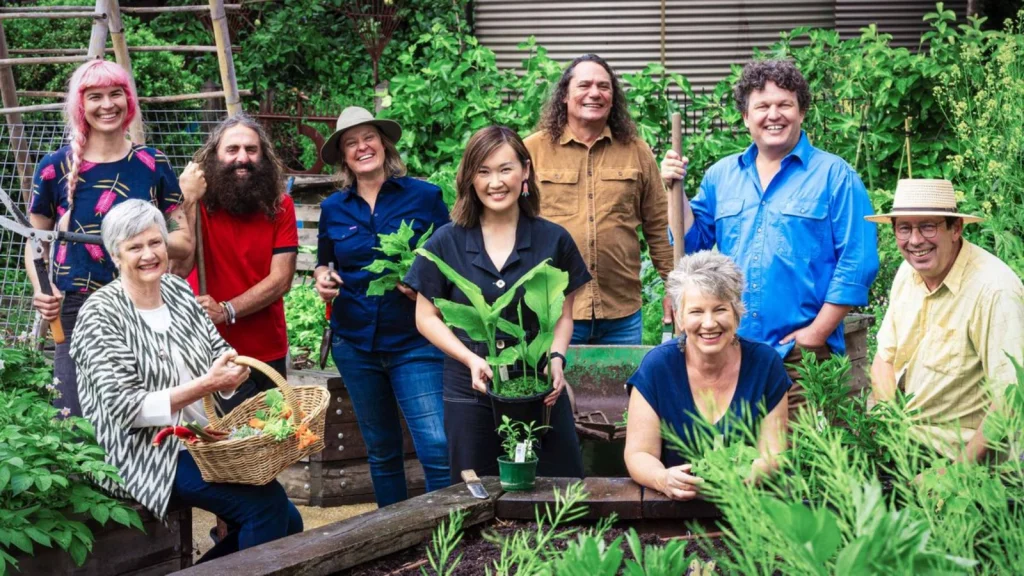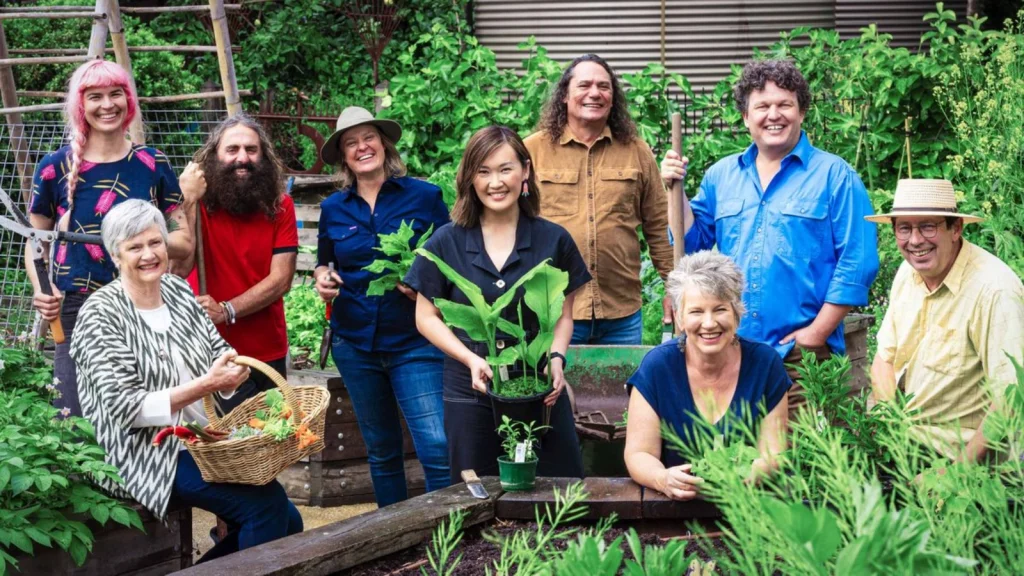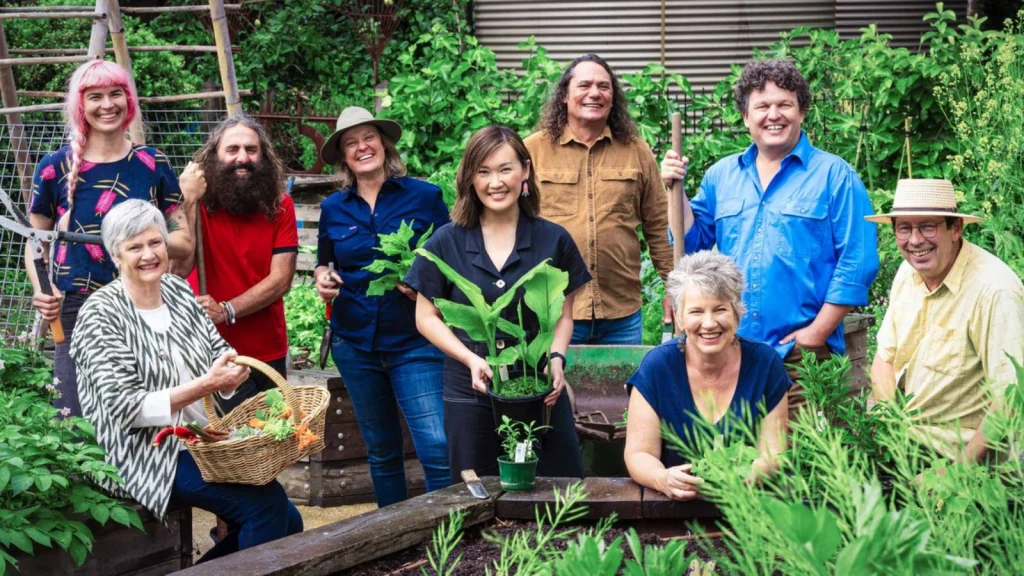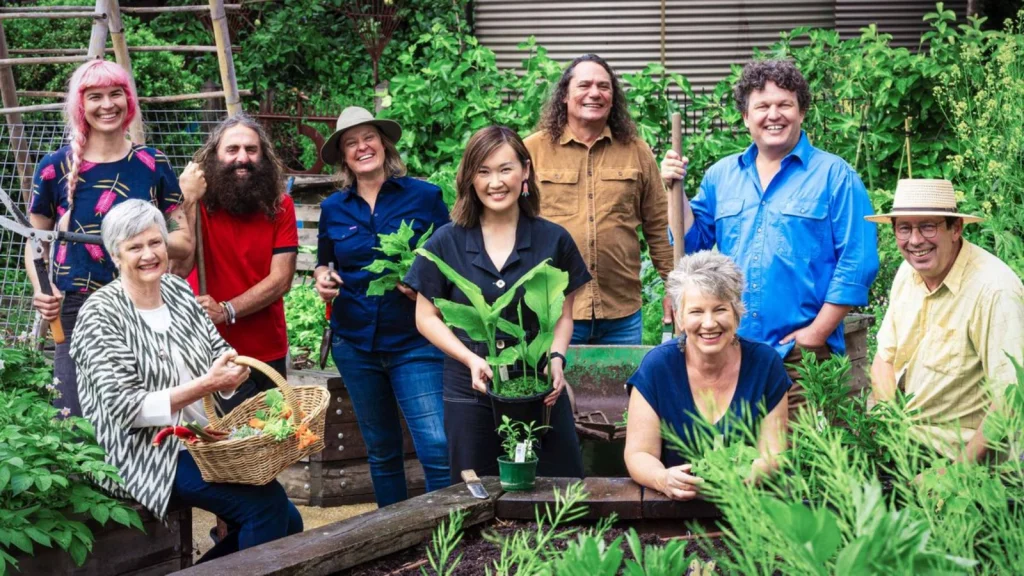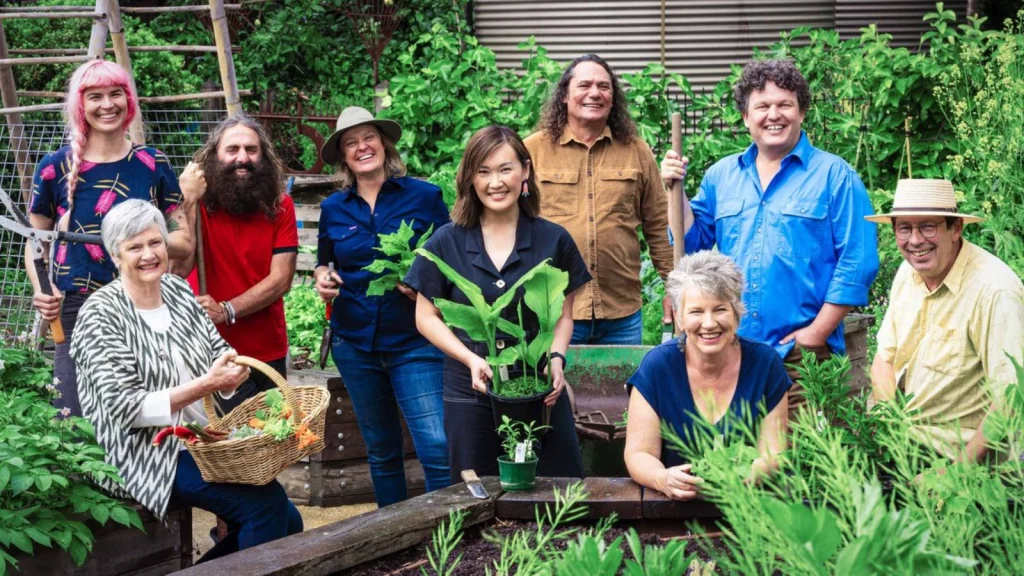
Gardening Australia 2026 Episode 2 opens with a deceptively simple premise: that gardens, in all their diversity, are always teaching us something new. Whether the lesson arrives through a close encounter with a venomous snake, the discovery of a subtropical food forest tucked behind a Brisbane restaurant, or the quiet science of restoring a degraded wetland, this episode refuses to stay in one place for long. It moves with the restless energy of the Australian landscape itself, shifting from coast to inland, from backyard to bushland, from the practical to the poetic. For anyone passionate about Australian gardening, it is precisely this breadth that makes the episode so compelling. (GARDENERES WORLD 2026)
The timing of this episode feels significant. Australia is moving deeper into its growing season, and gardeners across the country are making decisions that will shape their harvests, their landscapes, and their relationship with the natural world for months to come. DIY gardening has never been more popular, and with that popularity comes both opportunity and risk. The risk, in this case, is sometimes literal. Costa Georgiadis, the show’s irrepressible host, opens the episode not with a trowel but with a conversation about snake safety — a reminder that Australian gardening operates on terms set partly by the wildlife that shares our spaces.
Sophie Thomson travels to Queensland to visit one of the most extraordinary kitchen gardens featured in recent seasons. It is a subtropical oasis behind a restaurant, designed and managed by a horticulturalist whose approach to growing food blurs the boundary between garden design and ecological thinking. Clarence Slockee, meanwhile, tackles a very different challenge: a rain-soaked, waterlogged patch of earth that most gardeners would write off entirely. And Josh Byrne heads to Western Australia, where a wetland restoration project is quietly rewriting what a degraded landscape can become.
The thread connecting all of these stories is the idea that gardening is not simply about growing plants. It is about reading a place, responding to its conditions, and working with — rather than against — the systems already in motion. This philosophy runs through every segment of Gardening Australia 2026 Episode 2, surfacing in different forms depending on the presenter, the location, and the problem at hand. It is a philosophy that resonates with the broader conversation around native plants, ecological restoration, and the future of how Australians relate to the land they inhabit.
Each presenter brings a distinct sensibility to their subject. Costa’s approach is grounded in empathy — for plants, for wildlife, for the people who garden. Sophie’s curiosity draws her toward the unconventional and the inspiring. Clarence approaches problem-solving with methodical precision, while Josh brings the lens of environmental science to landscapes in transition. Together, they build a portrait of Australian gardening that is layered, honest, and deeply engaged with the complexity of growing things in one of the world’s most ecologically diverse countries.
What makes this episode particularly valuable for home gardeners is its refusal to oversimplify. Snake safety is addressed not with fear-mongering but with clear, actionable guidance from an expert who has spent years working with snakes in the field. The restaurant kitchen garden is not presented as an unattainable ideal but as a model that contains real, transferable lessons about soil, space, and plant selection. Clarence’s waterlogged garden becomes a case study in drainage, soil amendment, and plant resilience. Josh’s wetland project expands the definition of what gardening can mean at a landscape scale.
The episode also reflects a growing awareness within the gardening community that the boundaries between garden design, ecological restoration, and food production are becoming increasingly permeable. Native plants appear not just in bushland settings but woven through kitchen gardens and ornamental beds. Water management emerges as a theme that connects the waterlogged suburban backyard with the restored wetland. The conversation about coexisting with wildlife — snakes included — sits within a broader reckoning with what it means to garden in Australia responsibly.
Gardening Australia 2026 Episode 2 is, in this sense, a document of a particular moment in Australian horticultural culture: one defined by ambition, ecological awareness, and a genuine willingness to learn from failure as much as from success. The segments that follow each carry their own weight, their own specific insights, and their own cast of characters. But read together, they form something larger — a sustained argument for a kind of gardening that is attentive, adaptive, and deeply rooted in place.
Gardening Australia 2026 Episode 2
Snake Safety in the Garden: Gardening Australia 2026 Episode 2 and the Expert Perspective
Costa’s segment on snake safety is one of the most practically useful sequences the show has produced in recent memory. Rather than approaching the subject from a position of alarm, Costa sits down with a snake expert whose experience handling venomous species gives the conversation immediate credibility. The message is clear from the outset: snakes in the garden are not an emergency. They are a reality of Australian outdoor life, and the appropriate response is knowledge, not panic.
The expert explains that the vast majority of snake encounters in gardens are accidental. Snakes are not aggressive by nature. They move through gardens in search of food, shelter, and warmth, and they will almost always retreat if given the opportunity. The advice is therefore to slow down, give the snake space, and allow it to move on in its own time. Attempting to remove or confront a snake dramatically increases the risk of a bite, which is why the expert is emphatic: unless you are a licensed handler, do not attempt to catch or kill a snake.
For gardeners specifically, the practical guidance centres on reducing the conditions that attract snakes in the first place. Long grass, wood piles, and dense ground cover all provide ideal shelter. Keeping these areas tidy — particularly around sheds, fences, and garden beds — reduces the likelihood of an unexpected encounter. The expert also notes that rodents are a primary food source for many snake species, so controlling rodent populations around compost bins and garden structures has the secondary benefit of making the garden less attractive to snakes. This is DIY gardening wisdom at its most pragmatic.
Costa responds to all of this with characteristic enthusiasm, absorbing the information and reflecting it back in ways that make it accessible to a broad audience. He is genuinely curious about the snakes themselves, not just the safety protocols, and this curiosity elevates the segment beyond a simple safety briefing. By the end, the viewer comes away with a more nuanced understanding of snakes as ecological participants in the garden — predators that perform a genuine function in controlling pest populations and maintaining balance.
Sophie Thomson’s Subtropical Oasis: A Kitchen Garden That Redefines Garden Design
Sophie’s visit to Queensland introduces one of the most visually and intellectually rich garden spaces featured in Gardening Australia 2026 Episode 2. The garden sits behind a restaurant, and it is managed by a horticulturalist whose approach to food growing is informed equally by culinary need and ecological ambition. The result is a space that functions simultaneously as a working kitchen garden, an ornamental garden, and a demonstration of what subtropical horticulture can achieve.
The horticulturalist explains that the garden was designed from the beginning with the restaurant’s menu in mind. Every plant earns its place by contributing something edible, aromatic, or functionally useful to the kitchen. Herbs, vegetables, edible flowers, and fruit trees are layered through the space in a way that maximises both productivity and beauty. The garden design here is not decorative in the conventional sense. It is productive design, where aesthetic decisions are always made in service of the harvest.
What distinguishes this garden is the sophistication with which it handles the subtropical climate. Canopy layers filter harsh light and create microclimates that allow more delicate plants to thrive beneath. Water-retentive mulches protect the soil surface during the intense summer heat. Companion planting strategies reduce pest pressure without the need for chemical intervention. These are not abstract techniques. They are visible, practical, and replicable in a home gardening context, which is part of what makes Sophie’s visit so instructive.
The horticulturalist also speaks about the importance of soil health with a conviction that borders on the evangelical. Every decision in the garden — from what to plant to how to manage waste — is filtered through the question of what it does to the soil. Compost, worm castings, and green manures are integrated into the management cycle. The soil in this garden is visibly alive, dark, and friable in a way that clearly reflects years of careful stewardship. For anyone interested in DIY gardening in a subtropical climate, the lessons here are directly transferable.
Sophie responds with the kind of informed enthusiasm that makes her such an effective presenter. She asks the right questions, draws out the details that matter most, and communicates her genuine admiration for what the horticulturalist has achieved without letting that admiration tip into uncritical hagiography. The segment ends with a clear sense of what makes this garden exceptional and, more importantly, what principles underpin its success.
Gardening Australia 2026 Episode 2: Clarence Slockee and the Waterlogged Garden
Clarence’s segment addresses a problem that many Australian gardeners will recognise with a sinking feeling: a garden bed that simply will not drain. After an unusually wet season, the patch Clarence is working with has become compacted, anaerobic, and largely hostile to the plants that once thrived in it. Rather than reaching for a quick fix, Clarence approaches the problem systematically, working through the causes before addressing the solutions.
The first step is diagnosis. Clarence assesses the soil structure, noting the degree of compaction and the presence of a hardpan layer that is preventing water from moving through to the subsoil. He explains that this kind of compaction is often the result of foot traffic or heavy rain on bare soil, both of which cause the soil particles to press together in ways that eliminate the pore spaces water and air need to move freely. This is foundational knowledge for any gardener dealing with drainage problems, and Clarence communicates it with clarity and without condescension.
The remedy involves both physical intervention and soil amendment. Clarence uses a garden fork to break up the compacted layer, working carefully to avoid further damage to the soil structure. He then incorporates organic matter — compost and aged manure — to improve both drainage and aeration. The logic is that organic matter creates physical space within the soil while also feeding the microbial communities that keep soil healthy over time. This is a long-term solution, not a single-season fix, and Clarence is explicit about the time frame involved.
Plant selection for the revamped bed is also addressed. Clarence identifies species that tolerate periodic waterlogging, noting that part of working with a difficult site is choosing plants that can handle its realities rather than fighting those conditions at every turn. Several native plants make the list, reflecting the episode’s broader interest in the value of indigenous species in Australian gardening contexts. The segment closes with Clarence expressing cautious optimism about the bed’s prospects — a realistic, earned hopefulness that rings true for anyone who has worked a difficult piece of ground.
Josh Byrne and the Wetland Restoration Project in Western Australia
Josh’s segment takes Gardening Australia 2026 Episode 2 into its most expansive territory. The wetland restoration project he visits in Western Australia operates at a scale far beyond the domestic garden, but the principles it embodies — observation, patience, ecological humility — are ones that apply equally to a suburban backyard. Josh has always brought an environmental science perspective to his presenting, and here that perspective finds its ideal subject.
The project involves the rehabilitation of a degraded wetland that had been affected by drainage, weed invasion, and nutrient loading from surrounding land uses. The team behind the restoration explains that the first phase of any such project is understanding what the site once was — its original ecology, hydrology, and species composition — before determining what it could realistically become again. This is not a process of simply planting native plants and hoping for the best. It requires careful hydrological analysis, weed management, and a long-term commitment to monitoring and adaptive management.
Native plants are central to the restoration effort, but their selection is guided by a detailed understanding of the site’s specific conditions. Species from the surrounding region are prioritised, not because exotic alternatives are unavailable, but because local provenance plants carry genetic adaptations to local conditions that make them more likely to establish and persist. Josh explores this concept with evident interest, drawing out the implications for home gardeners who might be tempted to source plants based on aesthetics alone rather than ecological fit.
Water management is the spine of the entire restoration effort. The team has worked to restore the natural hydrology of the site by blocking drainage channels that were artificially lowering the water table. As water levels have begun to recover, the response from native vegetation has been striking. Species that had been absent from the site for decades are beginning to reappear, apparently from a persistent seed bank in the soil. This kind of ecological resilience is both humbling and inspiring, a reminder that natural systems retain a capacity for recovery that human intervention can either support or obstruct.
Josh’s enthusiasm for the project is evident, but it is matched by an appropriate respect for its complexity. He does not oversell the outcomes or ignore the challenges that remain. The wetland is recovering, but recovery is not linear, and setbacks are part of the process. This is honest environmental communication of a kind that gardening shows do not always manage, and it elevates the segment considerably.
Native Plants and Ecological Thinking in Gardening Australia 2026 Episode 2
One of the most consistent threads running through Gardening Australia 2026 Episode 2 is the increasing prominence of native plants in every gardening context the episode explores. They appear in Clarence’s revamped garden bed, in the provenance-based planting of Josh’s wetland, and even in the margins of Sophie’s subtropical kitchen garden. This is not incidental. It reflects a genuine shift in how Australian gardeners think about the relationship between their gardens and the broader landscape.
The case for native plants rests on multiple foundations. Ecologically, they support local food webs — providing nectar, pollen, and habitat for native insects, birds, and reptiles. Horticulturally, they are often better adapted to local soils, rainfall patterns, and temperature ranges, which translates into lower maintenance requirements once established. And aesthetically, they offer a palette that connects gardens to the surrounding landscape in ways that exotic species rarely can. The episode makes all of these points not through advocacy but through demonstration, showing native plants performing across a range of contexts and conditions.
The snake safety segment adds another dimension to this conversation. The expert’s explanation of snakes as ecological participants in the garden sits within a broader argument for accepting and accommodating native wildlife rather than treating it as an intrusion. This extends, implicitly, to the plants as well. A garden that supports native insects will attract native predators, which in turn creates a more self-regulating system. The move toward native plants is, in this sense, part of a larger reorientation of how Australian gardening understands its relationship with the natural world.
Soil, Water, and the Fundamentals of Australian Gardening
Across every segment of this episode, two themes recur with such consistency that they amount to a kind of editorial argument: the centrality of soil health and the complexity of water management. From the compacted, waterlogged bed that Clarence rehabilitates, to the carefully mulched and composted soil of the Queensland kitchen garden, to the hydrologically restored wetland in Western Australia, the message is that understanding how water moves through soil is foundational to everything else a gardener does.
The kitchen garden horticulturalist frames this in terms of biological activity. Healthy soil is living soil, populated by bacteria, fungi, nematodes, and invertebrates that collectively process organic matter, cycle nutrients, and maintain the physical structure that allows water to move appropriately through the profile. When that structure is compromised — by compaction, by chemical inputs, or by bare soil exposure — the consequences cascade through every layer of the garden’s ecology. This understanding drives the management decisions visible throughout the garden.
Clarence’s segment makes the same argument from the corrective end. When soil structure breaks down, the results are visible in standing water, yellowing plants, and the sour smell of anaerobic decomposition. Restoring that structure requires patience and the consistent application of organic matter over multiple seasons. There is no shortcut. The garden fork and the compost heap are, in the end, the most powerful tools available. This is diy gardening stripped of mystification, returned to its essentials.
Water management in Josh’s wetland project operates at a different scale but rests on the same principles. Hydrology shapes ecology. When water moves correctly through a landscape, the appropriate plants establish, and the appropriate animals follow. When drainage is manipulated artificially, the cascade of consequences can take decades to fully manifest — and decades more to reverse. The wetland project is a large-scale illustration of what happens when water is allowed to return to its natural patterns, and the results, however incomplete, are already striking in their ecological significance.
The Restaurant Garden Model: Food Production and Garden Design in Practice
The kitchen garden at the heart of Sophie’s segment deserves more detailed attention as a model for what food-producing garden design can achieve. The horticulturalist running the garden has made a series of decisions that, taken together, demonstrate a coherent design philosophy built around the specific demands of restaurant-scale food production.
Seasonality is central to the whole operation. The planting calendar is structured around the restaurant’s menu, which in turn is structured around what the subtropical climate makes available at different times of year. This circularity — from climate to plant to kitchen to plate and back to the garden through the compost system — is what gives the garden its sense of coherence and integrity. Nothing is arbitrary. Every plant is present because it serves a purpose within this cycle.
The layered planting structure also deserves attention. By combining canopy trees, mid-story shrubs, and ground-level crops, the horticulturalist has created a space that is productive at multiple levels simultaneously. This approach, familiar from permaculture design principles, is here applied with the discipline and attention to detail that a working restaurant demands. The result is a garden that is both highly efficient in its use of space and genuinely beautiful — a demonstration that productivity and aesthetics are not in tension but are, in the best garden design, expressions of the same underlying logic.
The emphasis on zero-waste management is another distinguishing feature. All organic material from the kitchen returns to the garden through the composting system. This closed loop means that nutrients extracted by crops are continuously returned to the soil, maintaining fertility without reliance on external inputs. For home gardeners interested in DIY gardening at any scale, this is perhaps the most transferable insight the segment offers.
Gardening Australia 2026 Episode 2 and the Broader Conversation About Sustainable Gardening
Taken together, the segments of Gardening Australia 2026 Episode 2 build a picture of Australian gardening at a moment of genuine evolution. The conversation has moved beyond the basics of what to plant and when to plant it. It now encompasses questions about ecological function, hydrological management, wildlife coexistence, and the relationship between food production and environmental stewardship. These are not niche concerns. They are increasingly central to how ordinary Australian gardeners think about their outdoor spaces.
The episode reflects this evolution without becoming didactic. The lessons are embedded in specific stories about specific places and people, which keeps the content grounded and accessible. The horticulturalist in Queensland is not presenting a theory of sustainable food production. She is showing Sophie her garden, explaining her decisions, and demonstrating what those decisions have produced. The result is persuasive in the way that only direct experience can be.
Similarly, the wetland restoration project does not present itself as a model to be replicated wholesale by home gardeners. It is a large-scale, professionally managed ecological intervention. But the principles it demonstrates — work with the site’s natural hydrology, use locally appropriate native plants, commit to long-term monitoring and adaptation — are principles that scale down elegantly to the domestic context. This is what good gardening journalism does: it finds the universal in the particular and trusts the audience to make the connections.
The snake safety segment, meanwhile, completes the picture by addressing the most visceral aspect of gardening in Australia — the awareness that the garden is shared with wildlife that can, under certain circumstances, cause serious harm. By approaching this subject with expertise and without sensationalism, the episode models the kind of informed, respectful coexistence that sustainable Australian gardening requires. Snakes are part of the ecology of the garden, just as native plants and beneficial insects are. Learning to live with them is not a concession. It is a form of ecological literacy that makes the garden, and the gardener, more complete.
FAQ Gardening Australia 2026 Episode 2
Q: What snake safety advice does Gardening Australia 2026 Episode 2 provide for home gardeners?
A: Costa Georgiadis consults a snake expert who emphasises that snakes rarely act aggressively. If you encounter one, stop moving, give it space, and allow it to leave on its own. Never attempt to catch or kill a snake unless you are a licensed handler. Staying calm and stepping back dramatically reduces bite risk. This practical guidance applies to every Australian gardener, regardless of their location or experience level.
Q: How can gardeners reduce the chance of snake encounters in their gardens?
A: Keep lawns short and remove dense ground cover near sheds, fences, and garden beds. Wood piles and cluttered corners provide ideal snake shelter, so tidy these areas regularly. Additionally, control rodent populations around compost bins, since rodents are a primary food source for many snake species. Reducing food and shelter opportunities makes your garden significantly less attractive to snakes overall.
Q: What makes the Queensland restaurant kitchen garden featured in the episode so exceptional?
A: A skilled horticulturalist designed this subtropical garden specifically around the restaurant’s menu. Every plant contributes something edible, aromatic, or functionally useful. Canopy trees create microclimates that protect more delicate crops below. Furthermore, a closed-loop composting system returns all kitchen waste to the soil, maintaining long-term fertility without external inputs. The result is a productive, beautiful space that demonstrates food-focused garden design at its most thoughtful.
Q: What soil management techniques does the restaurant kitchen garden demonstrate?
A: The horticulturalist prioritises biological activity above all else. Compost, worm castings, and green manures are integrated into the regular management cycle. Water-retentive mulches protect the soil surface during intense subtropical heat. Healthy soil teems with bacteria, fungi, and invertebrates that process organic matter and cycle nutrients. However, achieving this takes consistent effort across multiple seasons rather than a single corrective application.
Q: How does Clarence Slockee approach a waterlogged and compacted garden bed?
A: Clarence begins by diagnosing the cause before reaching for a solution. He identifies a hardpan layer caused by foot traffic and heavy rain on bare soil. Using a garden fork, he breaks up the compacted layer carefully to restore pore space. He then incorporates compost and aged manure to improve both drainage and aeration. Selecting plants that tolerate periodic waterlogging is also part of his long-term strategy.
Q: Which plants does Clarence recommend for a previously waterlogged garden bed?
A: Clarence selects species that tolerate periodic waterlogging rather than fighting the site’s natural conditions. Several native plants feature prominently on his list, reflecting their adaptability to variable Australian conditions. Choosing plants suited to a site’s realities reduces ongoing maintenance demands. Additionally, native species support local wildlife, adding ecological value beyond simple aesthetics or crop production.
Q: What does Josh Byrne’s wetland restoration project reveal about native plant selection?
A: Josh visits a Western Australian wetland rehabilitation project where the team prioritises locally sourced native plants above all others. Local provenance plants carry genetic adaptations to regional soils, rainfall, and temperatures. Consequently, they establish more reliably and persist longer than plants sourced purely for their visual appeal. This principle applies equally to home gardeners, who benefit from selecting natives that match their specific local conditions rather than broader regional categories.
Q: How does restoring natural hydrology benefit a degraded wetland?
A: The restoration team blocks drainage channels that had been artificially lowering the water table for decades. As water levels recover, native vegetation responds remarkably quickly. Species absent from the site for many years reappear from a persistent seed bank in the soil. Furthermore, recovering hydrology triggers a cascade effect, creating habitat that supports insects, birds, and other wildlife. This demonstrates that natural systems retain extraordinary regenerative capacity when given appropriate conditions.
Q: Why does Gardening Australia 2026 Episode 2 emphasise native plants across every segment?
A: Native plants appear in Clarence’s revamped garden bed, Josh’s wetland project, and Sophie’s subtropical kitchen garden. Their consistent presence reflects a genuine shift in Australian gardening culture. Ecologically, native plants support local food webs, providing nectar, pollen, and habitat for indigenous insects and birds. Horticulturally, they require less maintenance once established because they are already adapted to local soils and rainfall. They also connect gardens visually and ecologically to the surrounding landscape.
Q: What broader gardening principles does Gardening Australia 2026 Episode 2 promote for Australian home gardeners?
A: The episode consistently promotes working with a site’s natural conditions rather than against them. Soil health and water management emerge as the two most fundamental skills for any Australian gardener. Additionally, coexisting with native wildlife, including snakes, forms part of a responsible ecological approach to gardening. Whether managing a suburban bed or a large restoration project, the same principles apply: observe carefully, amend thoughtfully, select plants wisely, and commit to long-term stewardship over quick fixes.