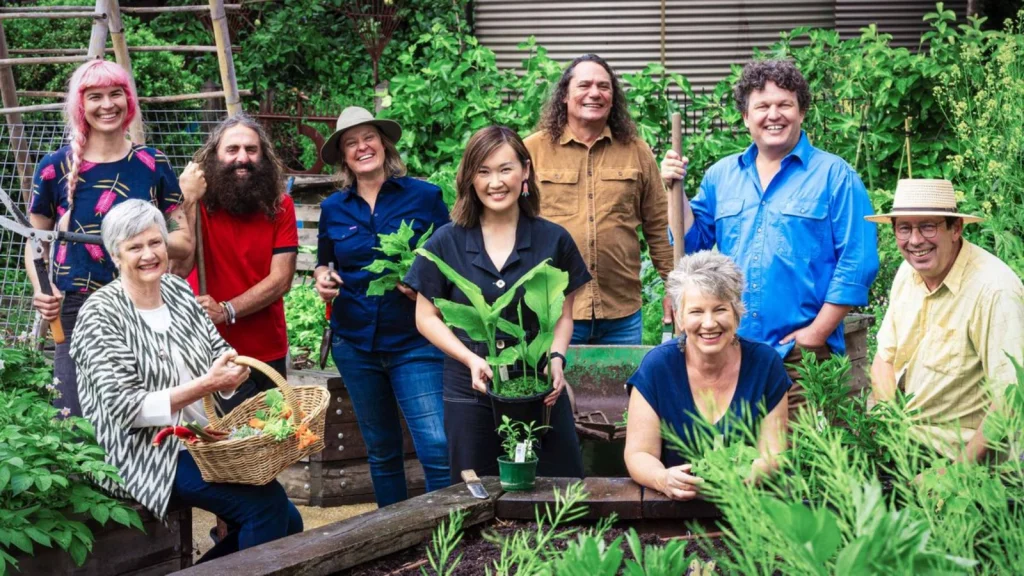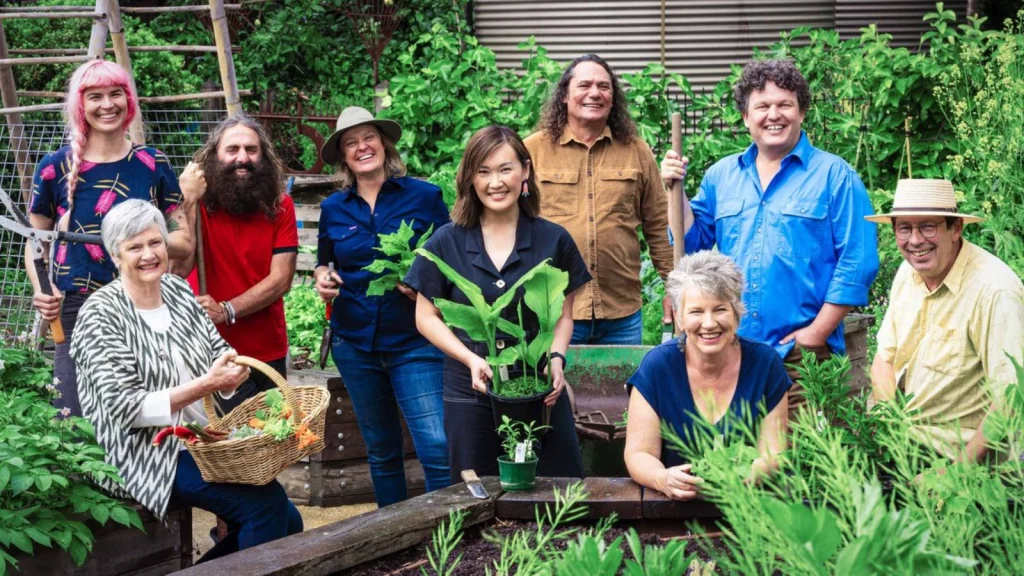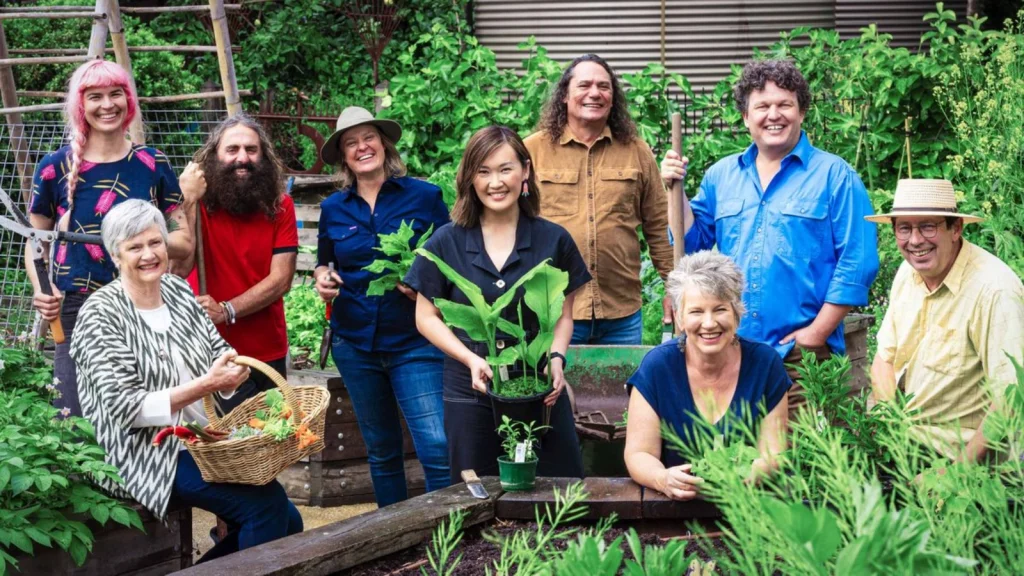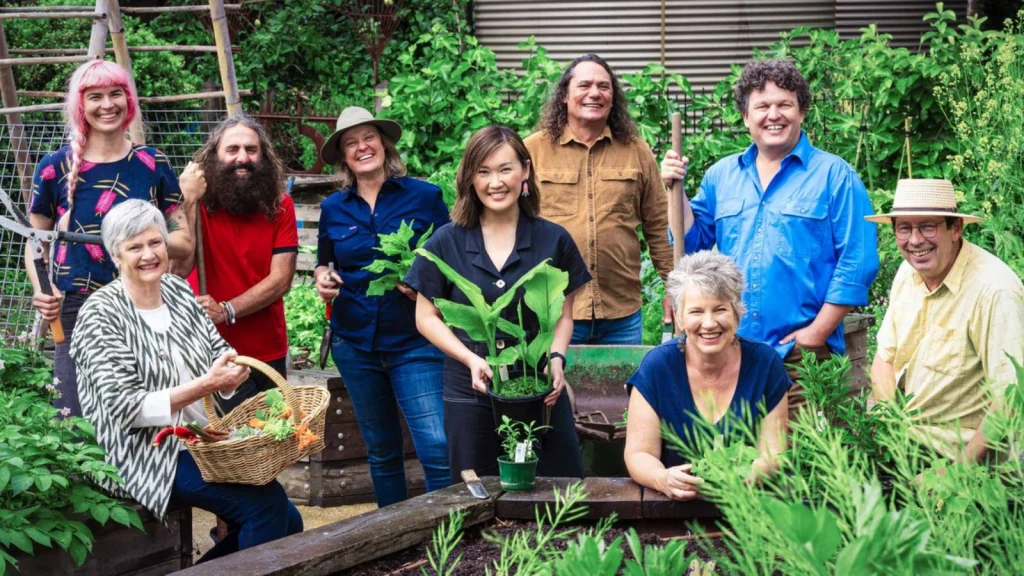
Gardening Australia 2026 Episode 10 delivers an unusually wide-ranging autumn instalment, moving from a historic cool-climate estate in the Blue Mountains foothills to a subtropical lychee orchard, a native-plant masterclass in Western Australia, a Queensland cactus obsession, and a conversation with one of the country’s best-known radio gardeners. Costa Georgiadis anchors the episode from the 170-year-old garden at Nooroo, where autumn colour is peaking and the design logic of the nineteenth century is still visible in every bed, path and tree canopy.
Autumn is the through-line of this Gardening Australia 2026 Episode 10, and the timing matters. In cool-climate gardens, the season is the annual payoff for months of patient cultivation, when deciduous trees release their pigments and structural bones of the garden reappear. In the subtropics, meanwhile, autumn signals the end of the lychee harvest and the moment to begin pruning and feeding for next season’s crop. The episode treats autumn not as a single event but as a set of regional cues that shape very different gardening calendars across Australian gardening zones.
The scope of this Gardening Australia 2026 Episode 10 is deliberately broad. Costa walks the autumnal grounds at Nooroo with owner Maggie Wilson. Guest presenter Thanh Truong visits a Sunshine Coast lychee farmer to demystify a fruit many Australians buy but few grow. Sophie Thomson shows how native plants can be shaped into formal garden design without losing their wildness. Jerry Coleby-Williams tours a private cactus collection numbering in the thousands. Finally, the My Garden Path segment introduces Phil Dudman, a Northern Rivers vegie gardener whose career has run in parallel with the program itself.
The background to each segment is drawn directly from the presenters and their hosts. Nooroo was established in 1880 and has been tended by successive generations of the Valder and Wilson families. The lychee grower profiled has spent decades adapting a Chinese subtropical crop to Queensland conditions. The native plants featured grow wild across southern and Western Australia but are rarely used in clipped, formal schemes. The cactus collector has assembled specimens from arid zones worldwide, many propagated by hand. Each thread stands on its own while contributing to the episode’s wider argument about regional knowledge.
That argument, stated plainly, is that good gardening is local. The same autumn week produces maple colour in one state and ripening lychees in another, and the tools and techniques used by a Perth native-plant designer have little overlap with those used by a Brisbane cactus enthusiast. Yet each practitioner demonstrates the same underlying discipline: close observation, patience, and a willingness to work with, rather than against, the conditions at hand. This Gardening Australia 2026 Episode 10 treats that discipline as the common language of every gardener profiled.
The episode’s rhythm moves from the contemplative to the practical and back again. Costa’s walk through Nooroo is slow, reflective, and rich in horticultural history. Thanh’s lychee segment is brisk, hands-on, and full of kitchen-ready detail. Sophie’s native-plant design sequence is instructional, with clear before-and-after logic. Jerry’s cactus visit is almost anthropological, examining why a collector commits decades to a single plant family. Phil’s profile closes the hour with a career’s worth of vegie-gardening wisdom distilled into a few minutes.
What follows reconstructs each of these threads in turn, preserving the distinct voice of every presenter and host while drawing out the horticultural substance. The garden hacks, garden design principles, and plant-by-plant information are presented as they appeared on screen, with supporting detail from the program’s companion pages where relevant. Readers hoping to apply any of these lessons at home will find specific cultivars, pruning windows, and soil notes throughout.
Gardening Australia 2026 Episode 10
Autumn at Nooroo: A Blue Mountains Garden in Full Colour
Costa’s visit to Nooroo, outside Mount Wilson in the Blue Mountains, is the longest segment of the episode and the one most concerned with garden design at scale. The property was established in the 1880s and has been continuously gardened for more than 140 years. Current custodian Maggie Wilson walks Costa through beds laid out by earlier generations, explaining which trees were planted when and how the garden’s structure has been maintained through changing fashions. Further background on the garden’s history is available on the program’s companion page at abc.net.au/gardening/how-to/autumnal-nooroo/106568902.
The autumn colour at Nooroo is the result of deliberate plant selection made more than a century ago. Japanese maples dominate several beds, chosen for their reliable autumn display in the cool mountain air. Oaks, liquidambars, and ginkgos provide the canopy layer, each turning at a slightly different moment to extend the season. Maggie points out that the garden was designed with a sequence of colour in mind, so that one tree’s peak overlaps with the next tree’s beginning. The effect is a rolling display rather than a single climactic week.
Costa is particularly interested in the understorey. Beneath the tall deciduous trees, Maggie has layered shade-tolerant perennials, ferns, and bulbs that emerge in spring and retreat in summer. By autumn, the understorey is quiet, allowing the canopy colour to dominate without visual competition. This seasonal choreography is a core principle of cool-climate garden design: every layer has its moment, and no layer is asked to perform year-round. The discipline required to plan a garden on this timescale is considerable, and Nooroo is a working example of what that patience produces.
Lychees with Thanh Truong: Growing a Subtropical Favourite
Guest presenter Thanh Truong, known as the Fruit Nerd, takes the episode to a Sunshine Coast lychee farm to explore a fruit that is familiar to most Australian gardening enthusiasts but rarely grown at home. Lychees are native to southern China and thrive in frost-free subtropical conditions. Thanh’s host has been growing them commercially for years and walks him through the orchard at the tail end of the harvest season. Additional detail on the segment can be found at abc.net.au/gardening/how-to/fruit-nerd-fruits-lychees/106568984.
The farmer explains that lychees need a cool, dry period in winter to trigger flowering, followed by warm, humid conditions through spring and summer for fruit development. This narrow climatic window is why lychees are commercially viable only in parts of Queensland and northern New South Wales. Home gardeners in those zones can grow them successfully, but the trees are long-term investments. A seedling lychee may take seven to ten years to bear fruit, while a grafted tree will fruit in three to five. Most commercial growers and serious home gardeners choose grafted stock for this reason.
Thanh focuses on the practical details. The trees at the farm are kept to a manageable height through annual pruning after harvest, which also stimulates the next season’s flowering wood. Mulching is heavy and continuous, protecting the shallow root system from heat and moisture loss. Irrigation is timed carefully: too much water during flowering causes fruit drop, while too little during fruit development produces small, dry lychees. The farmer’s approach is a reminder that even a tropical fruit requires disciplined water management, and that garden hacks alone will not substitute for attention to seasonal rhythm.
The episode also touches on cultivar selection. The farm grows several varieties, each with a different ripening window, allowing the harvest to be spread across several weeks. Popular Australian cultivars include Kwai May Pink, Salathiel, and Wai Chee, each with distinct flavour and flesh characteristics. For home gardeners considering a single tree, the farmer recommends choosing a cultivar suited to the local microclimate rather than the most widely available one. This kind of locally calibrated advice is exactly the sort of guidance Gardening Australia 2026 Episode 10 is built around.
Native Plants in Formal Gardens: Sophie Thomson’s Design Lesson
Sophie Thomson’s segment addresses a persistent misconception in Australian gardening: that native plants are incompatible with formal garden design. Working in a South Australian garden, Sophie demonstrates how species usually associated with bushland can be clipped, shaped, and arranged into structured schemes that rival traditional hedging plants. The segment’s companion page is available at abc.net.au/gardening/how-to/native-design/106575136.
Sophie’s argument rests on plant selection. Not every native responds to hard pruning, but a surprising number do. She highlights several species that tolerate regular clipping and hold their shape well. Westringia, often called native rosemary, is her first example. Its small, grey-green leaves and dense growth habit make it an ideal substitute for box in hot, dry gardens where traditional hedging struggles. Clipped twice a year, westringia forms a tight, formal edge that softens only slightly between trims.
Her second example is correa, which offers similar density with the added benefit of winter flowering. Correas respond well to shaping and can be grown as low borders or taller structural elements depending on the cultivar. Sophie also points to certain grevilleas and callistemons as candidates for larger formal schemes, particularly where a flowering hedge is desired. The key, she emphasises, is to choose cultivars with naturally compact growth rather than trying to force a sprawling species into a shape it resists.
The design principles Sophie applies are familiar from European formal gardens: repetition, symmetry, and clear geometry. What changes is the palette. By substituting native plants for the traditional box, yew, and privet, she produces a garden that reads as formal at a distance but reveals its Australian character up close. This approach has practical advantages beyond aesthetics. Native hedging requires less water, tolerates local pests better, and supports native birds and insects in ways exotic hedging cannot. For gardeners in water-restricted regions, the case for native formal design is increasingly persuasive.
A Collector’s Cacti: Jerry Coleby-Williams in Queensland
Jerry Coleby-Williams’s visit to a Queensland cactus collector is one of the episode’s more unusual segments, both for the scale of the collection and for what it reveals about specialist gardening. The collector has assembled thousands of cacti and succulents over several decades, housed in a combination of greenhouses, shade structures, and outdoor beds. The segment’s companion page at abc.net.au/gardening/how-to/collecting-cactus/106568936 provides further detail on the collection and its owner.
Jerry’s interest is partly botanical and partly cultural. He walks through the collection asking about provenance, propagation methods, and the collector’s preferred species. The answers reveal a practitioner who treats cactus cultivation as a long-term discipline rather than a decorative hobby. Many of the specimens have been grown from seed, a process that can take years before a recognisable plant emerges. Others have been propagated from cuttings shared among collectors, a practice that has become increasingly important as wild collection of rare species is restricted.
The growing conditions are carefully managed. Despite their reputation for toughness, cacti require specific care in the Queensland climate, which is wetter than most arid-zone natives tolerate. The collector uses raised beds with sharply drained sandy mixes, covered structures during the wet season, and careful watering regimes that mimic the dry-wet cycles of the plants’ native habitats. Overwatering, Jerry notes, kills more cacti in Australian gardens than any other single factor. The collector’s setup is a response to that risk, translated into a working system.
Jerry also explores the social dimension of cactus collecting. The owner is part of a network of enthusiasts who trade plants, share seed, and visit each other’s collections to compare notes. This kind of specialist community is common in horticulture and is one of the ways rare plants are preserved outside botanic gardens. For viewers of Gardening Australia 2026 Episode 10 who may never grow a cactus themselves, the segment is a window into how serious collectors operate and why their work matters for plant conservation.
Phil Dudman’s Garden Path: Vegie Growing on the Northern Rivers
The My Garden Path segment profiles Phil Dudman, a radio presenter, garden writer, and long-time vegie gardener based in the Northern Rivers region of New South Wales. Phil has been broadcasting and writing about gardening for decades, and the segment traces his career alongside a tour of his current vegie patch. The program’s companion page is at abc.net.au/gardening/how-to/my-garden-path-phil-dudman/106568976.
Phil’s approach to vegie growing is rooted in subtropical conditions. The Northern Rivers has hot, humid summers and mild winters, which means the traditional temperate vegie calendar does not apply. Phil plants many of his cool-season crops, such as brassicas, lettuces, and peas, from autumn through winter, when temperatures are mild enough for them to thrive. His warm-season crops, including tomatoes, capsicums, and beans, go in from late winter to early spring, giving them time to establish before the worst of the summer humidity arrives.
Soil preparation is central to Phil’s method. He builds his beds with layers of organic matter, including compost, aged manure, and mulch, added continuously throughout the year. This approach produces a deep, biologically active soil that holds moisture through hot weather and drains well through the wet season. Phil also rotates crops rigorously, moving each plant family through a different bed each year to break pest and disease cycles. These are not garden hacks in the modern sense but traditional organic practices applied with decades of local refinement.
The segment also touches on Phil’s broadcasting career and his role in making gardening accessible to a wide audience. He talks about the questions listeners ask most often, many of which concern the same basic issues: why plants fail, how to improve soil, and when to plant what. His answers are practical and unfussy, shaped by years of his own trial and error. For newer gardeners, Phil’s segment is a reminder that most gardening problems have been solved before, and that listening to experienced local growers is often more useful than searching for novel solutions.
Regional Rhythms and the Gardening Australia 2026 Episode 10 Through-Line
One of the quieter achievements of this Gardening Australia 2026 Episode 10 is how it uses autumn as a device to show regional difference. The same calendar week produces five entirely different gardening scenes: a deciduous display in the Blue Mountains, a subtropical fruit harvest in Queensland, a native-plant design project in South Australia, a cactus collection in Queensland’s warmer zones, and a vegie garden transition in Northern New South Wales. Each presenter works within the conditions of their region rather than against them.
This regional framing has practical consequences for viewers. A gardener in Melbourne watching the Nooroo segment will recognise much of what Maggie Wilson describes, because cool-climate autumn behaviour is broadly similar across southern Australia. A gardener in Cairns watching the same segment will find little that applies directly, but the lychee and cactus segments will speak to their conditions. Gardening Australia has always been structured around this principle, and the 2026 series continues the approach with unusual clarity in this episode.
The episode also makes an implicit argument about time. Every practitioner profiled has been working at their craft for decades. Maggie Wilson is the custodian of a 140-year-old garden. The lychee farmer has spent years refining his orchard management. Sophie’s native-plant designs are the result of long experimentation with which species tolerate clipping. Jerry’s cactus collector has assembled his plants over a lifetime. Phil Dudman has broadcast about gardening for decades. The common thread is that good gardening rewards sustained attention, and that garden design at any scale benefits from long-term thinking.
Practical Takeaways from Gardening Australia 2026 Episode 10
For viewers looking to apply the episode’s lessons, several concrete takeaways emerge. In cool-climate gardens, autumn is the moment to assess structure and plan planting for the following spring. Deciduous trees reveal the bones of the garden, making it easier to see where new plantings are needed and where existing ones can be removed or moved. Maggie Wilson’s advice at Nooroo is to take photographs each week through autumn as a record for future planning.
For subtropical fruit growers, the lychee segment offers a clear framework. Choose grafted trees over seedlings, select cultivars suited to the local microclimate, prune hard after harvest, mulch heavily, and manage water carefully through flowering and fruit development. These principles apply to other subtropical fruits as well, including longans, rambutans, and mangoes, though the specific timings vary. Thanh’s broader point, that home gardeners should think in terms of a fruit’s native conditions, is a useful lens for any tree crop.
For those drawn to Sophie’s native-plant formal design, the starting point is plant selection. Westringia and correa are the most forgiving of the clip-tolerant natives and work well in most southern Australian gardens. Plant at the spacing recommended for the chosen cultivar, water in establishment, and begin light shaping in the second year. Hard clipping can follow from the third year onwards. The same principles scale from a small border to a large parterre, and the long-term water savings over traditional hedging are substantial in dry regions.
Jerry’s cactus segment is less directly instructional but offers one clear lesson: drainage matters more than anything else. Gardeners attempting cacti in humid climates should build raised beds with coarse, sharply drained mixes, provide cover during prolonged wet periods, and water sparingly. Phil Dudman’s vegie-gardening advice, meanwhile, reduces to three principles: build soil continuously, plant with the local seasonal calendar rather than a generic one, and rotate crops to break pest cycles. Across all five segments, this Gardening Australia 2026 Episode 10 returns to the same underlying discipline of matching practice to place.
FAQ Gardening Australia 2026 Episode 10
Q: What is Gardening Australia 2026 Episode 10 about?
A: Gardening Australia 2026 Episode 10 is an autumn-themed instalment featuring five distinct segments. Costa Georgiadis visits the historic Nooroo garden in the Blue Mountains. Additionally, Thanh Truong explores lychee growing, Sophie Thomson demonstrates native formal design, Jerry Coleby-Williams tours a cactus collection, and Phil Dudman shares vegie-growing wisdom.
Q: How old is the Nooroo garden Costa visits?
A: Nooroo was established in 1880 and has been continuously gardened for more than 140 years. Furthermore, successive generations of the Valder and Wilson families have tended it. Current custodian Maggie Wilson maintains the original design logic, including deliberate plant selections made over a century ago for sequential autumn colour.
Q: Why does Nooroo have such spectacular autumn colour?
A: The autumn display results from deliberate plant selection made more than a century ago. Specifically, Japanese maples, oaks, liquidambars, and ginkgos were chosen for reliable cool-mountain performance. Moreover, each species turns at a slightly different moment, producing a rolling display rather than a single climactic week.
Q: How long do lychee trees take to bear fruit?
A: Timing depends entirely on propagation method. A seedling lychee may take seven to ten years to bear fruit. However, a grafted tree will fruit in three to five years. Consequently, most commercial growers and serious home gardeners choose grafted stock to shorten the wait considerably.
Q: Which lychee cultivars does Thanh Truong highlight?
A: The segment features several popular Australian cultivars, including Kwai May Pink, Salathiel, and Wai Chee. Each variety offers distinct flavour and flesh characteristics. Additionally, staggered ripening windows allow commercial harvests to spread across several weeks. The farmer recommends matching cultivar choice to your specific local microclimate rather than availability.
Q: Can native plants really work in formal garden designs?
A: Absolutely, and Sophie Thomson demonstrates this convincingly. Westringia, often called native rosemary, substitutes beautifully for traditional box in hot, dry conditions. Furthermore, correa offers similar density with winter flowering benefits. Certain grevilleas and callistemons also respond well to shaping, particularly where flowering hedges are desired.
Q: What are the advantages of native hedging over traditional options?
A: Native hedging requires significantly less water than box, yew, or privet. Moreover, it tolerates local pests better and supports native birds and insects. In water-restricted regions, the practical case becomes increasingly persuasive. Clipped twice yearly, westringia maintains a tight formal edge with minimal maintenance between trims.
Q: What kills more cacti in Australian gardens than anything else?
A: According to Jerry Coleby-Williams, overwatering kills more cacti than any other single factor. Consequently, the Queensland collector featured uses raised beds with sharply drained sandy mixes. Additionally, covered structures protect plants during wet seasons, and careful watering regimes mimic the dry-wet cycles of the plants’ native arid habitats.
Q: When does Phil Dudman plant his vegetables in the Northern Rivers?
A: Phil works with subtropical conditions rather than against them. Specifically, he plants cool-season crops like brassicas, lettuces, and peas from autumn through winter. Conversely, warm-season crops including tomatoes, capsicums, and beans go in from late winter to early spring, establishing before summer humidity arrives.
Q: What are the core principles of Phil Dudman’s vegie-growing method?
A: Phil’s approach reduces to three enduring principles. Firstly, he builds soil continuously using compost, aged manure, and mulch throughout the year. Secondly, he plants according to the local seasonal calendar rather than a generic one. Finally, rigorous crop rotation breaks pest and disease cycles across successive growing seasons.