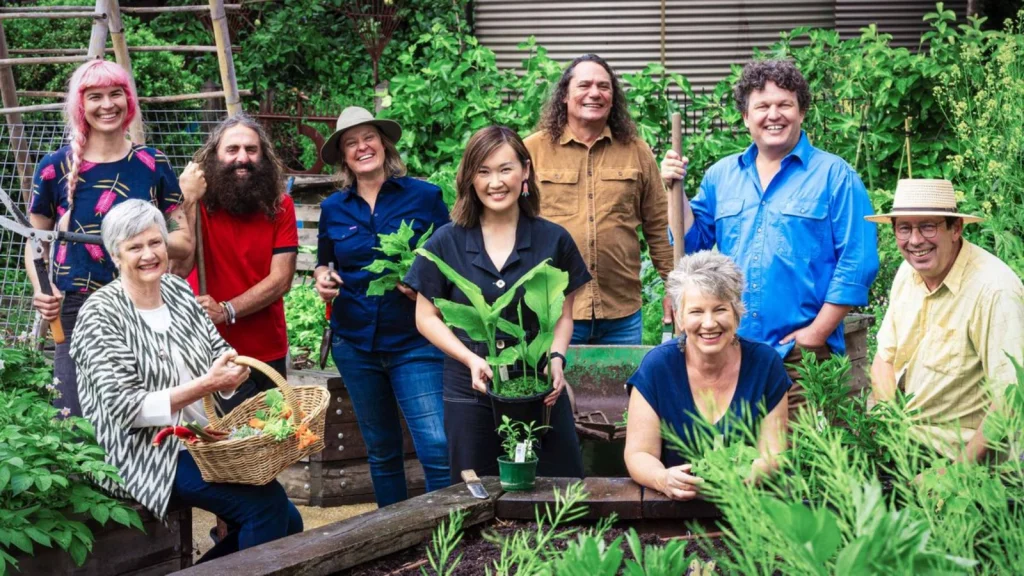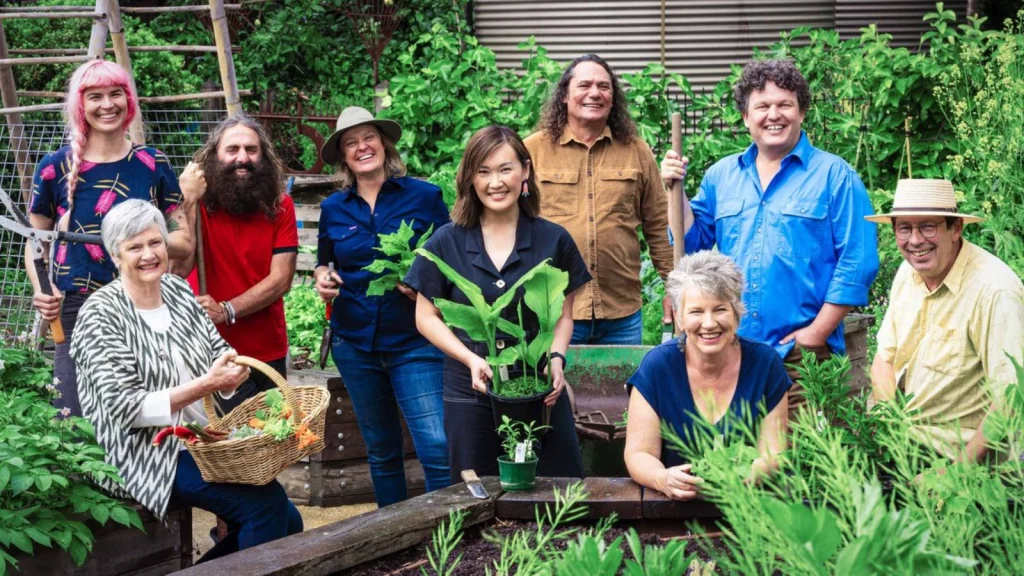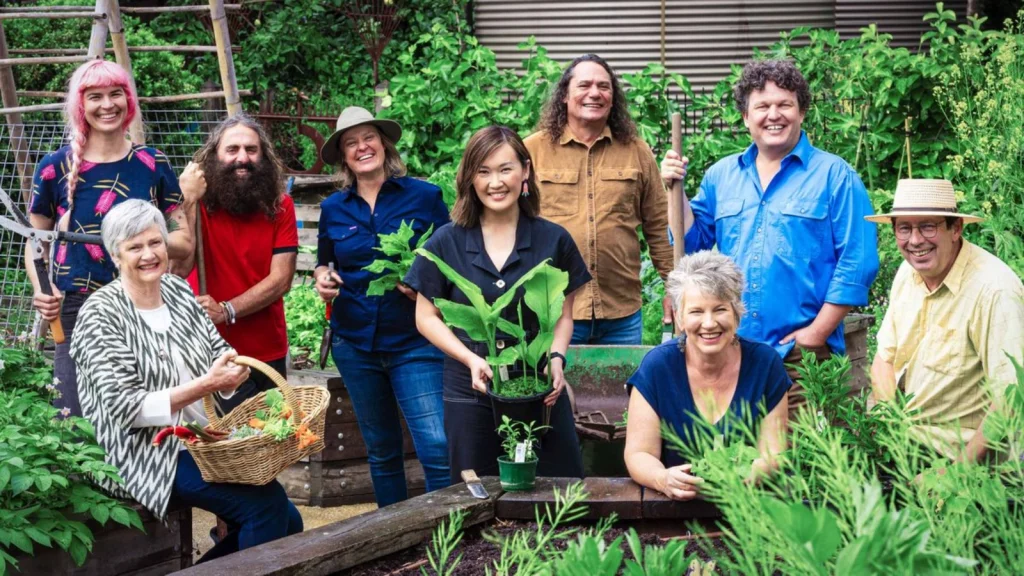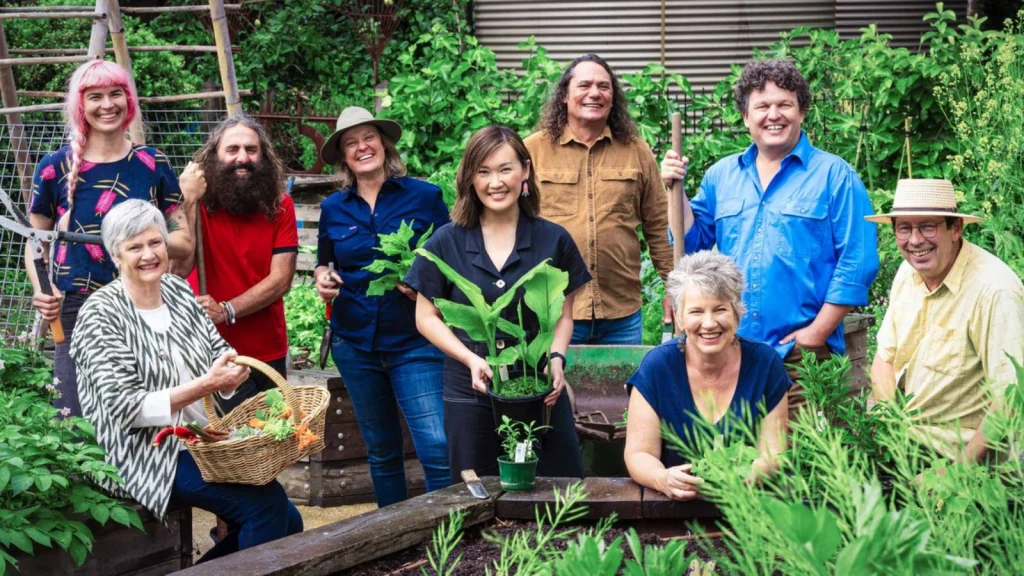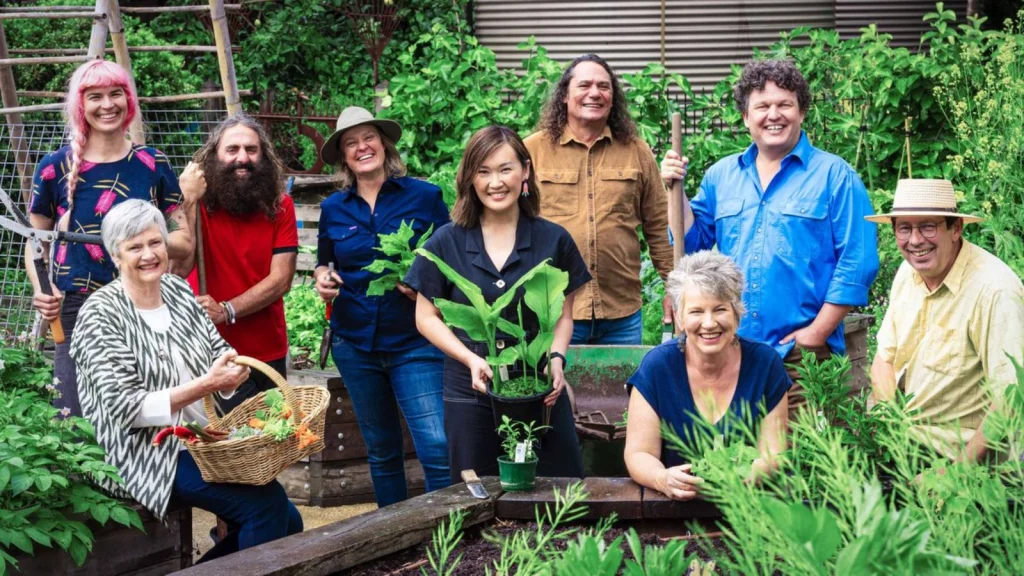
Gardening Australia 2026 Episode 9 opens a window onto four remarkably distinct growing worlds, each shaped by personal passion, cultural heritage, and a deep commitment to the living world. This episode ranges from a suburban backyard transformed into a productive Fijian food garden, through the intricate and carnivorous world of pitcher plants, to a wetlands sanctuary that has quietly evolved over four decades, and finally into an artist’s studio where botanical forms inspire vivid, health-focused textiles. Together, these stories capture what Australian gardening looks like when it is driven not by convention but by curiosity and care.
The episode arrives at a moment when interest in culturally specific food growing has never been stronger. Across Australia, gardeners from diverse backgrounds are reclaiming crops that supermarkets ignore, growing ingredients that connect them to memory and place. Gardening Australia 2026 has consistently celebrated this diversity, and Episode 9 is no exception. The Fijian garden at the episode’s centre is not a novelty act but a living archive of flavour and community knowledge, tended with the same rigour that any serious grower brings to their patch.
Pitcher plants occupy a completely different register. These are not soft, domesticated plants bred for compliance. They are evolutionary marvels, shaped by millennia of adaptation to nutrient-poor environments. The grower featured in this episode has built a collection that spans dozens of species, and his enthusiasm is infectious enough to make even the most casual viewer reconsider what a houseplant can be. Gardening Australia 2026 has always found space for the unusual, and pitcher plants reward that editorial instinct richly.
Meanwhile, the Hunter Wetlands story anchors the episode in ecological time rather than a single growing season. Clarence Slockee’s visit to this conservation site reveals how patient, sustained effort transforms degraded land into thriving habitat. The work here has unfolded across decades, not seasons, and the results speak for the power of long-term thinking in environmental stewardship. This is gardening at its most expansive, applied to landscapes rather than beds or containers.
The fourth strand, Marlene Coburn’s textile practice, might initially seem the furthest removed from soil and seed. Yet her work draws directly on botanical science and personal health experience, translating plant knowledge into large-scale woven pieces that carry both aesthetic and educational weight. Her presence in Gardening Australia 2026 Episode 9 reinforces something the programme has always understood: plants reach into every corner of human life, including art, medicine, and identity.
Each of these four threads carries its own momentum, but they share a common current. All four involve individuals who have chosen depth over breadth, committing to a specific plant world and learning it thoroughly. In doing so, they have created something worth visiting, whether that means stepping into a Fijian backyard, peering into a pitcher, walking a restored wetland, or standing before a woven tapestry of botanical forms.
The episode also reflects a broader truth about Australian gardening: that this country’s extraordinary ecological range, combined with its multicultural population, produces a horticultural culture unlike anywhere else on earth. Native plants sit alongside tropical imports; conservation science shares space with folk knowledge; and the boundary between garden and landscape remains productively blurred. Gardening Australia 2026 has made that blurring its business, and Episode 9 exemplifies the approach with particular clarity.
What follows is a detailed account of all four stories, explored in the order they emerge and with the specificity they deserve. The growers, artists, and conservationists featured here are not representatives of trends. They are individuals who have done the work, accumulated the knowledge, and built something real. Their stories are worth attending to closely.
Gardening Australia 2026 Episode 9
Gardening Australia 2026 Episode 9 and the Fijian Food Garden of Costa’s Visit
Costa Georgiadis arrives at a garden in suburban Australia to find something that takes him entirely by surprise: a productive, densely planted space filled with crops he has rarely encountered growing in Australian soil. The gardener, Unaisi, has spent years building this collection, sourcing plants through community networks, Pacific Island grocers, and the slow accumulation of gifts from family and friends. The garden is not decorative in any conventional sense. Every plant earns its place by being edible, medicinal, or culturally significant within Fijian tradition.
Unaisi grows dalo, the Fijian name for taro, which forms one of the central food plants in Pacific Island cuisine. The plant’s large, heart-shaped leaves are distinctive, and the corms it produces underground are starchy, substantial, and deeply embedded in Fijian food culture. She explains to Costa that different varieties carry different flavours and textures, and that choosing the right type for a particular dish matters as much as the cooking method itself. This is knowledge that does not appear in any Australian gardening book, carried instead through family memory and community exchange.
Alongside the dalo, Unaisi grows cassava, another carbohydrate-rich root crop that thrives in warm conditions. Cassava demands space and patience; it can take up to eighteen months to reach harvest, but the yield it produces justifies the wait. She also cultivates duruka, a type of edible flowering shoot that erupts seasonally and must be harvested at precisely the right moment, when the unopened flower is still tender and sweet. Costa is visibly delighted by duruka, describing the eating experience as something between asparagus and a young corn cob.
The garden also features breadfruit, growing with the ambition of a tree rather than a shrub, and a range of leafy plants used in Fijian cooking that have no common English names. Unaisi moves through the space with the fluency of someone who has grown up surrounded by these plants, identifying each one and explaining its uses without hesitation. For Costa, the visit becomes an education in the depth of food knowledge that migrant communities bring with them, and the importance of providing conditions in which that knowledge can continue to grow.
Soil management in this garden reflects Pacific growing traditions adapted to Australian conditions. Unaisi mulches heavily, using whatever organic material she can source, and she feeds her soil regularly with compost and aged manures. The tropical and subtropical crops she grows demand warmth, moisture, and fertility in proportions that most Australian gardening advice does not account for, and she has worked out how to provide all three without access to specialist resources.
Pitcher Plants and the Art of Carnivorous Cultivation
Tammy Huynh visits Marcus, a grower whose relationship with pitcher plants began with a single plant purchased on impulse and has expanded into a collection numbering in the dozens. His growing space, a carefully managed shade house, holds specimens from across the genus Nepenthes, alongside related carnivorous plants that share similar growing requirements. The collection represents years of patient learning and not inconsiderable financial investment, but Marcus speaks about it with the matter-of-fact enthusiasm of someone who has simply followed his interest wherever it led.
Pitcher plants fascinate because they have solved a specific ecological problem in an unexpected way. Most plants source their nitrogen from soil. Pitcher plants evolved in environments where soil nitrogen is almost entirely absent, typically peat bogs, mossy cliff faces, and the bark surfaces of tropical trees. Rather than adapting their chemistry to extract more from poor soil, they evolved a structure that catches and digests insects and other small animals, extracting the nitrogen directly from their prey. The pitcher itself, a modified leaf structure, fills with digestive fluid and waits.
Marcus explains the mechanics of the trap in detail. The rim of the pitcher, called the peristome, produces nectar that attracts insects. The surface below the rim is waxy and angled downward, making it almost impossible for an insect to maintain its footing. Once an insect falls into the fluid below, digestive enzymes begin breaking it down. The process is slow but effective, and a single pitcher can process multiple insects over its active lifespan. Some larger Nepenthes species are capable of catching not just insects but frogs, lizards, and small rodents, though Marcus notes that such events are incidental rather than the primary feeding strategy.
Growing Nepenthes successfully requires understanding the conditions of their natural habitats and replicating them as closely as possible. Most species prefer high humidity, bright but indirect light, and a growing medium that drains freely while retaining moisture. Standard potting mix is unsuitable; Marcus uses a blend of long-fibred sphagnum moss and perlite, which provides the aeration and moisture retention the plants require without introducing the nutrients they have evolved not to need. Fertilising a pitcher plant through its roots can damage or kill it.
Watering is similarly counterintuitive. Marcus uses rainwater exclusively, because tap water in most Australian cities contains minerals and chlorine that accumulate in the growing medium and harm the plants. He collects rainwater in large tanks and supplements it during dry periods with water filtered through reverse osmosis. This level of attention might seem excessive, but Marcus frames it simply: the plants have very specific requirements, and meeting those requirements is the job.
Temperature management matters too. Lowland Nepenthes species, which come from hot, humid tropical environments close to sea level, require warmth year-round and suffer in temperatures below about fifteen degrees Celsius. Highland species, by contrast, come from mountain environments where nights are cool, and they actually require that nightly temperature drop to thrive. Marcus grows both types but houses them separately, using different sections of his shade house to approximate the distinct climatic profiles each group needs.
Gardening Australia 2026 Episode 9 and the Hunter Wetlands Conservation Story
Clarence Slockee travels to the Hunter Wetlands, a site that has been the focus of sustained ecological restoration work for more than four decades. The wetlands, located in New South Wales near the Hunter River, were significantly degraded by agricultural and industrial use over the course of the twentieth century. The restoration project that began in the 1980s set out to reverse that degradation, and the progress made since then represents one of Australia’s more quietly remarkable conservation achievements.
The scale of the transformation is striking. What was once compacted, weedy, and largely lifeless land now supports extensive areas of saltmarsh, mangrove, and freshwater wetland vegetation. Migratory shorebirds use the site as a critical stopping point on their annual journeys. Fish species that had disappeared from the area have returned. The ecological network that makes a wetland function, the interconnections between plants, invertebrates, fish, birds, and mammals, has rebuilt itself as conditions improved.
Clarence speaks with staff at the Hunter Wetlands Centre, who explain that the restoration process has never been a single intervention but a continuous programme of work. Weed removal, particularly of invasive exotic grasses and shrubs, remains an ongoing task. Revegetation using locally sourced native plants follows weed control, and the sourcing of those plants is itself a considered process: seeds are collected from remnant populations within the local catchment to ensure genetic appropriateness. This is not a detail many restoration projects attend to, but it matters for the long-term health of the ecosystem.
Water management is central to the wetland’s function and has required significant engineering as well as ecological knowledge. Tidal flows need to reach saltmarsh areas while freshwater zones need to be protected from saltwater intrusion. The structures that manage these flows require maintenance and adjustment as conditions change, particularly as sea level rise begins to affect coastal wetland systems along the New South Wales coast.
The birds that use the Hunter Wetlands are perhaps its most visible sign of ecological recovery. Clarence observes a range of shorebird species feeding along exposed mudflats, and the staff explain that some of these birds have flown from as far as Siberia to spend the Australian summer at sites like this one. The fact that the Hunter Wetlands can support these intercontinental travellers reflects the quality of the habitat that has been rebuilt. Without the invertebrate-rich mudflats that careful water and vegetation management has created, the birds would not stop here.
The wetlands story in Gardening Australia 2026 Episode 9 carries a broader message about timescale. Garden projects typically resolve within a season or two. Ecological restoration operates on generational time, and the people who do this work understand that they will not see its completion. The staff at the Hunter Wetlands Centre speak about their work with the patience of people who have internalised that reality, taking satisfaction in incremental progress rather than waiting for a moment of completion that will arrive, if at all, long after they are gone.
Native Plants and Ecological Thinking in Australian Gardening
The Hunter Wetlands visit sits within a tradition of native plant advocacy that runs through Gardening Australia 2026 and Australian gardening culture more broadly. Native plants are not simply a stylistic preference in Australian garden design; they are an ecological necessity in any garden that aspires to support local wildlife. The invertebrates, birds, and small mammals that form functioning suburban ecosystems depend on the plants they evolved alongside, and those are overwhelmingly native species.
Clarence is well placed to articulate this point. As an Indigenous horticulturalist with deep knowledge of Australian plant communities, he brings a perspective that extends well beyond aesthetic preference. He understands native plants as part of a system that has been operating on this continent for tens of thousands of years, and restoration work as an attempt to reconnect fragments of that system. The Hunter Wetlands project exemplifies this thinking at a landscape scale.
For home gardeners, the lesson from the wetlands visit translates directly into planting decisions. Choosing plants from the local provenance, rather than simply buying whatever is marketed as native, makes a real difference to ecological outcomes. Local provenance plants carry the genetic programming to respond to local conditions, local soils, and the specific insects and birds that have co-evolved with them. Australian gardening advice has historically been slow to emphasise this point, but it is becoming more central to horticultural education.
The episode also touches on the role of water in Australian garden design. Wetlands are extreme examples of water-dependent ecosystems, but every garden in Australia navigates water availability in some form. Whether managing the excess of wet seasons or the deficits of prolonged drought, Australian gardeners have always needed to think about water differently from their counterparts in wetter climates. The wetlands story reinforces that water is not simply an input but a shaping force that determines what can grow and where.
Gardening Australia 2026 Episode 9 Explores Art, Botanicals, and Marlene Coburn’s Textile Practice
Marlene Coburn is a textile artist whose work begins in the garden and the laboratory rather than the studio. Her large-scale woven pieces draw on detailed botanical research, translating the structures, relationships, and medicinal properties of plants into visual form. The scale of her work is significant: these are not decorative hangings but major pieces that command attention and reward sustained looking.
Her interest in plants is personal as well as artistic. Marlene has navigated her own serious health challenges and found in botanical medicine a resource that complemented conventional treatment. That experience has shaped both her research focus and the emotional register of her work. The plants she chooses to represent are not selected for their visual appeal alone but for the roles they play in human health and wellbeing, particularly as understood through indigenous and traditional knowledge systems.
The weaving process Marlene uses is labour-intensive and technically demanding. She works on large looms, building up images through thousands of individual thread crossings, and the finished pieces have a richness of texture that photographs cannot fully capture. The botanical subjects she represents, roots, stems, leaves, flowers, and seeds, are rendered with scientific accuracy while being transformed into something unmistakably artistic. The tension between documentation and expression is one of the things that makes her work distinctive.
In conversation with the Gardening Australia 2026 presenter, Marlene explains that she researches each plant extensively before beginning a new piece. She reads botanical literature, consults with plant scientists, and often grows the plant herself to observe it directly across its full seasonal cycle. This process can take months before a single thread is placed on the loom. The finished work therefore represents not just an image but an accumulated understanding of a particular plant and its relationship to human life.
Marlene’s practice connects the episode back to a theme that runs through all four of its stories: the relationship between deep knowledge and meaningful creative or practical work. Whether that knowledge concerns the flavour differences between taro varieties, the digestive chemistry of a pitcher plant, the genetics of a locally sourced sedge, or the medicinal properties of a specific herb, the episode consistently rewards those who have committed to learning something thoroughly. Gardening Australia 2026 has always understood that horticulture is an intellectual pursuit as much as a physical one, and Episode 9 makes that case with unusual breadth and conviction.
Garden Design, DIY Gardening, and Practical Takeaways for Australian Gardeners
Beyond the specific stories it tells, Gardening Australia 2026 Episode 9 offers a range of practical ideas that home gardeners can apply directly. The Fijian garden demonstrates that tropical and subtropical crops can succeed in Australian conditions with the right variety selection and soil management. Gardeners in warm climates across Queensland, New South Wales, and Western Australia may find that dalo, cassava, and edible gingers grow more readily than they expect, particularly in raised beds with rich, moisture-retentive soil.
The pitcher plant segment provides a detailed guide to carnivorous plant cultivation that applies well beyond Nepenthes to sundews, bladderworts, and other carnivorous genera that Australian gardeners encounter. The key principles, pure water, nutrient-free growing medium, appropriate humidity and temperature, and protection from frost, are consistent across the group. Marcus’s emphasis on understanding the specific habitat of each species before attempting to grow it reflects a broader truth about diy gardening: generic advice rarely serves unusual plants, and researching origins pays dividends.
Garden design thinking appears most explicitly in the wetlands story, where the relationship between water, soil, and plant communities illustrates how ecosystems organise themselves spatially. Home gardeners who incorporate wetland elements, bog gardens, rain gardens, or even small ponds, can draw on the same principles. Placing moisture-loving plants in the lowest points of a garden, for instance, replicates the natural gradient that shapes wetland vegetation and produces a design that works with rather than against the site’s natural hydrology.
The textile art segment has its own practical dimension for gardeners interested in growing plants for creative purposes. Marlene’s practice encourages gardeners to look at their plants as raw material not just for the kitchen or the compost heap but for dyeing, weaving, printing, and other crafts. Many Australian native plants produce significant colour in textile dyeing, and growing even a small patch of dye plants extends the garden’s purpose and deepens the grower’s relationship with what they cultivate.
Secondary Voices and Community Knowledge in Gardening Australia 2026
One of the consistent strengths of Gardening Australia 2026 is its willingness to feature knowledge-holders who sit outside the mainstream horticultural establishment. Unaisi’s Fijian food garden and Marlene’s textile practice both represent forms of expertise that developed outside formal horticultural training, rooted instead in cultural tradition, personal research, and hard-won practical experience. The programme treats these forms of knowledge with the same seriousness it brings to university-trained plant scientists.
This matters because Australian gardening has a long history of privileging European horticultural traditions over the plant knowledge that already existed here and the diverse knowledge that migrant communities have brought with them. Gardening shows, garden design culture, and horticultural education have all been slow to reflect the full range of expertise present in Australian society. Gardening Australia 2026 has made a genuine effort to address this imbalance, and Episode 9 is one of its more sustained expressions of that effort.
Community exchange is also a recurring theme across the episode’s stories. Unaisi sources many of her plants through networks of Pacific Island community members who share cuttings, seeds, and knowledge freely. Marcus has connected with carnivorous plant societies and online communities of growers who share cultivation experience across international boundaries. The Hunter Wetlands Centre depends on volunteer labour and community advocacy as much as on professional staff. And Marlene acknowledges the traditional knowledge holders whose understanding of plant medicine has informed her research.
In each case, the knowledge that makes the garden or the project work is not proprietary but shared, accumulating through exchange rather than individual discovery. This is how horticultural knowledge has always moved, and Gardening Australia 2026 Episode 9 makes that process visible in ways that are both specific and broadly resonant.
Gardening Australia 2026 Episode 9 and the Season of Autumn Abundance
The episode’s subtitle, Autumn Tastes of Fiji and Pitcher Plants, signals its seasonal context. Autumn in Australia is a time of harvest in warm-climate gardens, when the long growing season that stretches from spring through summer delivers its final flush of produce. For Unaisi, autumn means duruka shoots emerging, cassava corms ready for lifting in some varieties, and the kitchen becoming busy with preservation and cooking. The episode captures this seasonal intensity with real specificity.
For pitcher plants, autumn represents a transitional moment. As temperatures begin to drop in temperate parts of Australia, growers of lowland Nepenthes need to consider whether their plants require protection from cold. Marcus has developed systems for managing this transition, moving vulnerable plants to warmer positions and monitoring night temperatures carefully. Highland species, conversely, welcome the cooler nights and may show their best growth as the season turns.
The wetlands in autumn host an increasing number of migratory birds, arriving from the Northern Hemisphere as the Australian summer approaches. The timing of Clarence’s visit places him at the beginning of this influx, and the site’s capacity to receive these birds, built through decades of patient restoration, feels particularly apt in an episode that is otherwise focused on the productive abundance of the season. Autumn in the Hunter Wetlands is a time of arrival and accumulation, of ecological dividend paid out on a long investment.
Marlene’s studio, by contrast, operates outside seasonal rhythms in one sense: weaving continues through the year, driven by the internal logic of each project rather than the garden calendar. But her research does follow the seasons, since observing a plant in autumn, when it sets seed, enters dormancy, or produces its final flowers, adds to the complete picture she assembles before beginning a new piece. The garden and the studio are in conversation throughout the year, autumn included. Gardening Australia 2026 Episode 9 draws these seasonal threads together into a coherent and richly detailed portrait of what grows, and why it matters, at this particular moment in the horticultural year.
FAQ Gardening Australia 2026 Episode 9
Q: What crops does Unaisi grow in her Fijian food garden featured in Gardening Australia 2026 Episode 9?
A: Unaisi grows several traditional Fijian crops, including dalo (taro), cassava, duruka (an edible flowering shoot), and breadfruit. She also cultivates a range of leafy plants used in Pacific Island cooking. Many plants were sourced through Pacific Island community networks, family gifts, and specialist grocers rather than mainstream garden centres.
Q: What is duruka, and why does Costa find it so remarkable in Gardening Australia 2026 Episode 9?
A: Duruka is an edible flowering shoot that emerges seasonally from a plant grown widely in Fiji and other Pacific Islands. It must be harvested at precisely the right moment, when the unopened flower remains tender and sweet. Costa describes the eating experience as something between asparagus and a young corn cob, making it one of the episode’s most memorable discoveries.
Q: How does Unaisi manage soil and growing conditions for her tropical crops in an Australian garden?
A: Unaisi applies heavy mulching using available organic material and feeds her soil regularly with compost and aged manures. Her tropical and subtropical crops demand sustained warmth, moisture, and fertility. She has adapted Pacific growing traditions to Australian conditions without access to specialist horticultural resources, demonstrating that cultural plant knowledge translates effectively into practical garden management.
Q: How do pitcher plants catch and digest their prey, as explained in Gardening Australia 2026 Episode 9?
A: Pitcher plants attract insects using nectar produced along the rim, called the peristome. The surface below is waxy and angled downward, causing insects to slip into the fluid-filled chamber. Digestive enzymes then slowly break down the prey. A single pitcher can process multiple insects across its lifespan. Larger Nepenthes species occasionally catch frogs, lizards, or small rodents, though insects remain the primary food source.
Q: What growing medium and water does Marcus use for his Nepenthes pitcher plant collection?
A: Marcus uses a blend of long-fibred sphagnum moss and perlite, which provides the aeration and moisture retention Nepenthes require without introducing nutrients these plants have evolved not to need. He waters exclusively with rainwater collected in tanks, supplemented during dry periods with reverse-osmosis-filtered water. Tap water minerals and chlorine accumulate in the growing medium and can harm or kill the plants over time.
Q: What is the difference between lowland and highland Nepenthes species in terms of growing requirements?
A: Lowland Nepenthes originate from hot, humid tropical environments and require warmth year-round, suffering below approximately fifteen degrees Celsius. Highland species, however, come from mountain habitats where nights are noticeably cool, and they actually need that nightly temperature drop to thrive. Marcus houses both types separately within his shade house, creating distinct climatic zones that replicate each group’s natural environment as closely as possible.
Q: What conservation achievements does Clarence Slockee highlight at the Hunter Wetlands in Gardening Australia 2026 Episode 9?
A: Clarence visits a site that has undergone more than four decades of ecological restoration. Previously degraded by agriculture and industry, the Hunter Wetlands now support extensive saltmarsh, mangrove, and freshwater vegetation. Fish species have returned, migratory shorebirds use the site annually, and a functioning ecological network has rebuilt itself. Some visiting shorebirds travel from as far as Siberia, reflecting the high quality of restored habitat conditions.
Q: Why does local genetic provenance matter when replanting native species in wetland restoration projects?
A: Plants sourced from within the local catchment carry genetic programming suited to local soils, rainfall patterns, and the specific insects and birds that co-evolved with them. The Hunter Wetlands team collects seeds from remnant local populations specifically for this reason. Using genetically mismatched plants, even from the same species, can reduce long-term ecological performance. This provenance-focused approach represents best practice in Australian native plant restoration and diy gardening at landscape scale.
Q: How does textile artist Marlene Coburn research plants before beginning a new woven piece?
A: Marlene reads botanical literature, consults plant scientists, and grows each subject plant herself to observe it across a full seasonal cycle. This research phase can take several months before any weaving begins. Her personal experience with serious illness deepened her focus on plants used in traditional and indigenous medicine. The finished works therefore represent accumulated scientific and cultural understanding, not simply botanical illustration.
Q: What broader gardening lessons does Gardening Australia 2026 Episode 9 offer for home gardeners across Australia?
A: The episode demonstrates that tropical crops like taro and cassava succeed in warm Australian climates with rich, moisture-retentive soil. Carnivorous plants thrive when growers replicate their natural habitat rather than applying generic advice. Furthermore, incorporating bog gardens or rain gardens can mirror the water-management principles seen at the Hunter Wetlands. Additionally, growing plants for creative purposes, such as textile dyeing, extends the garden’s value well beyond the kitchen or compost heap.