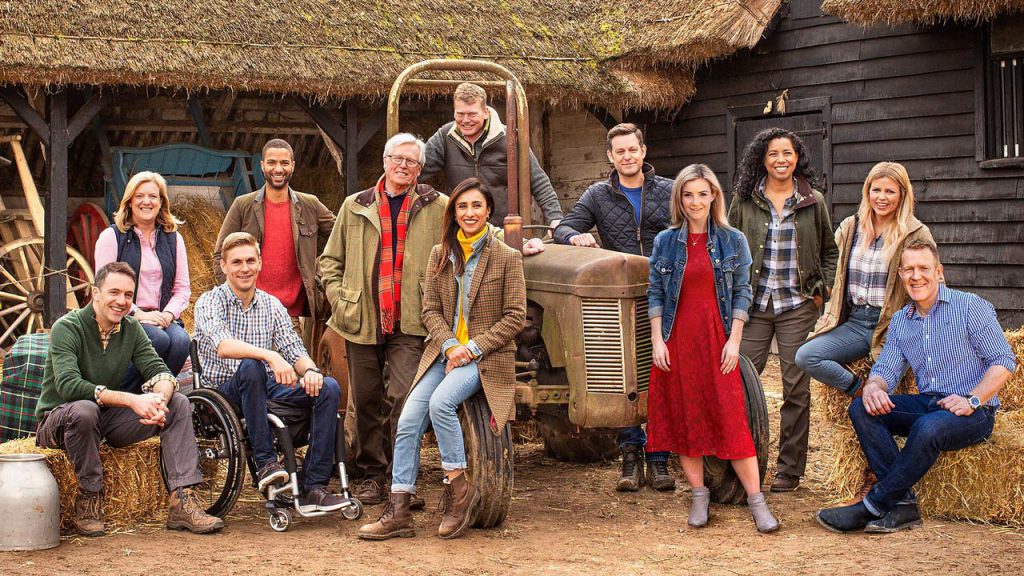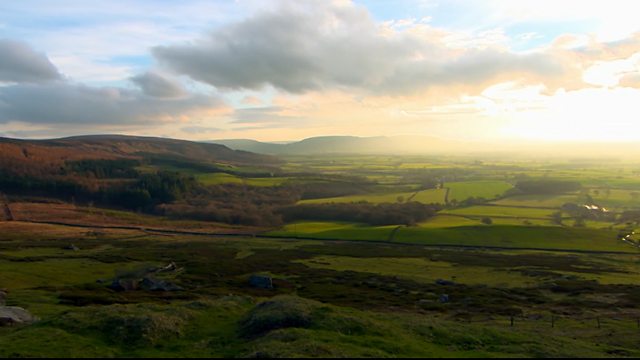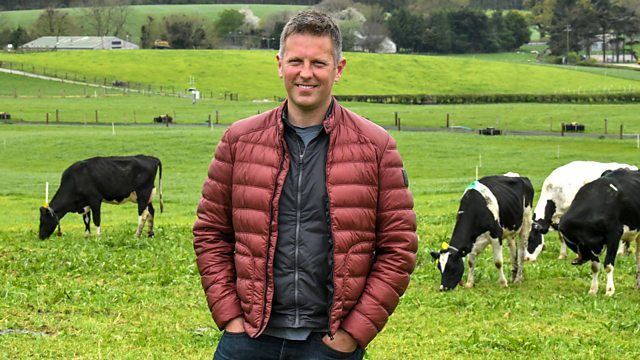
Landward episode 2 2026 returns to screens with a programme that feels both celebratory and purposeful, marking fifty years of the BBC Scotland series by weaving together stories of fire, livestock, lichen, wool, and the enduring human relationship with the Scottish land. Half a century of farming and country life coverage is no small milestone, and this episode honours that legacy by revisiting some of the most significant moments from the archive while simultaneously breaking new ground in the stories it chooses to tell.
From the grand baronial halls of Argyll to the wind-scoured pastures of the Hebrides, from a highland woodland floor to a bustling cattle auction ring, the programme ranges widely across Scotland’s landscapes and livelihoods. What unites every strand is a persistent curiosity about how communities, ecosystems, and economies adapt, survive, and sometimes flourish against considerable odds.
Scotland’s agricultural and rural identity is inseparable from its physical geography. The country’s uplands, islands, woodlands, and glens have shaped farming practices for centuries, and those practices in turn have shaped the land itself. Agriculture here is rarely straightforward — the terrain is often challenging, the weather frequently unforgiving, and the margins on which many farms and estates operate are correspondingly thin. Yet the stories gathered across this episode of Landward demonstrate repeatedly that difficulty breeds ingenuity. Whether a castle community rallying after catastrophic fire or a farmer finding new value in a breed of sheep that the industry had largely written off, the impulse to adapt runs through every segment.
The fiftieth anniversary context adds particular weight to some of the material here. Arlene Stuart revisits footage from the Landward archive to follow a story first told decades ago about a concept then known as agritourism — farm diversification through welcoming paying visitors. That concept, which once seemed novel enough to merit a dedicated report, has since become a mainstream strategy for rural survival across Scotland and beyond. Returning to those origins illuminates how dramatically country life and farming economics have shifted over fifty years, and how prescient some of that early Landward journalism turned out to be.
Meanwhile, the episode’s other strands speak directly to current pressures on Scottish agriculture and the natural environment. The Stirling Bull Sales represent one of the most important livestock trading events in the Scottish farming calendar, and Cammy Wilson’s visit there surfaces questions about genetics, premium pricing, and the future direction of beef production. In East Sutherland, Leanna MacKinnon’s walk through an ancient woodland introduces lichen as an ecological indicator of environmental health — a story that touches on climate change and habitat quality in ways that feel urgent rather than decorative. And Rosie Johnston’s visit to a Hebridean sheep farm explores a determined effort to restore economic value to a fleece that the mainstream wool market has long undervalued.
Each of these stories contributes to a cumulative portrait of Scotland’s rural world in 2026 — a landscape shaped by history, tested by economics, and navigated by people who bring remarkable depth of knowledge to their work. Country life in Scotland is never static, and Landward at fifty reflects that dynamism with energy and precision. The programme’s longevity is itself a form of testimony to the endurance of the communities it covers. Decades of filming have built up an extraordinary record of how Scotland’s relationship with its land has evolved, and this episode draws on that record with both affection and rigour.
The range of contributors here — farmers, ecologists, auctioneers, castle staff, wool processors — reflects the breadth of what farming and rural life actually encompass. Agriculture is never only about crops or livestock; it intersects with heritage, ecology, tourism, craft, and identity at every turn. Landward has always understood this complexity, and episode two of the 2026 series demonstrates that the programme’s appetite for that complexity remains undiminished. The stories are told with specificity and care, avoiding the kind of generic rural romanticism that can flatten the real texture of country life into pastoral cliché.
The structure of the episode itself mirrors the diversity of rural Scotland. No single story dominates; instead, the programme moves between its strands with the confidence of a publication that trusts its audience to hold multiple threads simultaneously. This is the grammar of long-running factual television that knows its subject deeply — the ability to move from a Victorian castle’s fire-blackened shell to a woodland floor carpeted with lichen, and to find in each location something worth the viewer’s sustained attention. That sustained attention is precisely what the best rural journalism demands, and Landward has been providing it for fifty years.
What follows is a detailed account of each of the episode’s major stories, assembled from the material gathered across its several locations. Together, they constitute a rich and varied document of Scottish country life at a moment of both historical reflection and contemporary challenge.
Landward episode 2 2026
Landward Episode 2 2026 at Inveraray Castle: Fire, Community, and Recovery
Inveraray Castle in Argyll is one of the most recognisable stately homes in Scotland — a turreted Georgian Gothic structure that has served as the seat of the Dukes of Argyll for centuries. Dougie Vipond’s visit there for Landward episode 2 2026 focuses on one of the most dramatic episodes in the castle’s long history: the fire of November 1975 that gutted significant parts of the building and threatened to destroy irreplaceable contents accumulated over generations.
The fire broke out in circumstances that quickly overwhelmed the castle’s own resources. Flames spread through the roof and upper floors, and the scale of the damage became clear within hours. What made the subsequent response remarkable, however, was not the firefighting itself but the community mobilisation that followed. Local people from Inveraray and the surrounding area arrived to help move furniture, artworks, and other contents out of the threatened sections of the building. That spontaneous collective effort saved a substantial number of objects that would otherwise have been lost.
Eleanor Matheson, who works at the castle and has detailed knowledge of its history, describes the aftermath with precision. The roof over the central tower was entirely destroyed, and the interior spaces it covered were exposed to the Scottish winter sky for an extended period. Rebuilding and restoration took years, and the process required considerable skill in matching materials and techniques to the castle’s original fabric. The fact that Inveraray Castle today presents an apparently intact and functioning historic house is a direct result of that painstaking recovery, and the role played by local people in those first desperate hours is acknowledged as foundational to what was salvaged.
The 1975 fire also had an unexpected documentary dimension relevant to Landward’s own history. The programme’s archive contains footage from around this period, and the anniversary context of the current series makes the Inveraray story particularly resonant. A fire that might have destroyed one of Scotland’s great houses instead became a story of community solidarity — the kind of story that Landward has always been well placed to tell.
The Stirling Bull Sales and the Economics of Livestock Breeding
Cammy Wilson’s segment at the Stirling Bull Sales drops the viewer into one of the most commercially intense environments in Scottish farming. The sales, held at Stirling’s livestock market, attract breeders from across Scotland and beyond, and the prices achieved for top animals can reach figures that seem extraordinary to those outside the industry. Understanding why requires some engagement with the genetics and economics that underpin premium cattle breeding.
The animals at the top end of the Stirling sales are not simply large or well-presented — they represent specific genetic combinations that breeders believe will improve the commercial performance of their herds. A bull purchased at significant cost will sire hundreds of calves over his productive life, and each of those calves carries forward whatever traits the sire contributes. If those traits include faster growth, better feed conversion, superior conformation, or higher disease resistance, the financial return on the initial investment can be substantial. Conversely, a poor choice of genetics can set a herd’s performance back for years.
Auctioneer Philip Dunn explains the mechanics of the ring with the fluency of someone who has presided over thousands of these transactions. The bidding moves quickly, and the atmosphere combines genuine commercial tension with the social rituals that have always characterised livestock markets. Farmers who have known each other for decades watch each other’s bidding with careful attention, reading intent and budget in the incremental movements of a hand or a nod. The prices achieved reflect both the intrinsic qualities of individual animals and the broader market conditions affecting livestock farming.
The question of record prices is not merely a matter of spectacle. When an animal sells for a figure that attracts wider attention, it signals something about where serious breeders believe value lies in the current market. Cammy’s conversations with participants at the sales surface a clear sense that genetics capable of producing animals well suited to current production systems — whether that means performance in intensive systems or adaptability to more extensive, lower-input approaches — command premium recognition. Scottish livestock farming, like agriculture more broadly, is navigating significant economic pressure, and the decisions made at events like the Stirling sales ripple outward into the sector for years.
Landward Episode 2 2026 and the Agritourism Archive Story
One of the most conceptually interesting segments in Landward episode 2 2026 involves Arlene Stuart revisiting a story from the programme’s archive about a form of farm diversification that was, at the time of the original report, sufficiently novel to require explanation. The concept was agritourism — the practice of opening a farm to paying visitors and generating income from the experience of country life rather than, or in addition to, the sale of agricultural produce.
The original Landward segment, presented by Ken Rundle, introduced viewers to a farm that was experimenting with welcoming guests. The approach involved giving visitors direct access to farming activities, accommodation, and the kind of immersive rural experience that urban and suburban populations had limited opportunity to encounter in their daily lives. At the time, this was genuinely innovative — a recognition that the farm itself, as a working environment and cultural landscape, had value that could be monetised beyond its primary productive function.
Arlene’s revisit to this story in 2026 allows for a striking historical comparison. Agritourism is now a well-established and significant component of Scottish rural economics. Many farms across the country generate substantial income from visitor activities, accommodation, and associated hospitality, and the sector has professional infrastructure, training programmes, and dedicated marketing behind it. The trajectory from novelty to mainstream over the intervening decades reflects both the success of the original innovators and the scale of the economic pressures that have driven other farmers to follow their example.
The archive footage itself is a fascinating document. Country life and farming as presented in the earlier Landward report have the visual and tonal qualities of their era — a different relationship between television and its rural subjects, a different pace, a different set of assumptions about what the audience needed to be told. Watching it through the lens of 2026, with the full knowledge of how agritourism subsequently developed, produces a kind of productive double vision that only a programme with fifty years of archive can generate.
Landward Episode 2 2026 in East Sutherland: Lichen, Woodland, and Environmental Health
Leanna MacKinnon’s walk through an East Sutherland woodland introduces one of the episode’s most ecologically rich stories. Lichen — the composite organisms formed by the symbiotic relationship between fungi and photosynthetic partners such as algae or cyanobacteria — are among the most sensitive environmental indicators available to ecologists. Their presence, abundance, and diversity reflect the quality of the air, the stability of the habitat, and the length of time the location has remained undisturbed.
The woodland Leanna visits is characterised by a remarkable diversity of lichen species, some of which require very specific conditions to survive. Botanist Kerry Milligan guides the walk, explaining the biology and ecology of different lichen types with evident enthusiasm. Some of the species present are associated specifically with ancient woodland — habitats that have been continuously wooded for centuries — and their presence is therefore both a signal of ecological quality and a historical record of the landscape’s long-term character.
Climate change enters this story in a specific and concrete way. Lichen are sensitive to changes in temperature and humidity, and shifts in both are already affecting which species can survive in particular locations. Some species previously found only in the far north and west of Scotland are extending their range as conditions change; others that depend on very particular combinations of cool, moist air and undisturbed bark may face increasing pressure. The woodland in East Sutherland currently supports a rich community of species, but that richness requires the maintenance of the conditions that sustain it.
The agricultural dimension of this story is less immediately obvious than in some of the episode’s other segments, but it is present. Land management decisions — about grazing pressure, drainage, planting, and the treatment of veteran trees — directly affect the woodland structure and microclimate on which sensitive lichen communities depend. Farming and woodland management interact at the edges of these habitats, and the health of the lichen tells you something important about whether that interaction is currently working well. In this sense, lichen literacy is a genuinely practical tool for anyone managing land with ecological quality as part of their objective.
Leanna’s engagement with Kerry’s expertise is characterised by the kind of genuine curiosity that makes this sort of outdoor television work well. The information density is high, but it is carried lightly, embedded in the physical experience of moving through the woodland and encountering specific organisms in their actual locations. Country life in East Sutherland, this segment suggests, includes a richness of biological detail that most people — even those who live nearby — have limited awareness of.
Hebridean Sheep Fleeces and the Recovery of Wool Value
Rosie Johnston’s visit to a farm working with Hebridean sheep addresses a problem that has affected British sheep farming for decades: the collapse of the value of wool relative to the cost of shearing. For many breeds, the income from a fleece no longer covers the labour cost of removing it, which has turned wool from an asset into something approaching a disposal problem. The farm Rosie visits is attempting to reverse this situation by developing a direct-to-consumer supply chain that captures more of the value inherent in Hebridean fleeces.
Hebridean sheep are a primitive breed — small, dark-fleeced, and well adapted to the challenging conditions of the Scottish islands and uplands. Their fleece is distinctive in character: coarser than merino but with properties that make it valuable for specific applications, particularly in craft spinning, hand-knitting, and traditional textile production. The commercial wool market, organised around high-volume processing of standardised clip, has historically placed low value on this kind of fleece precisely because it does not fit neatly into the dominant processing system.
The farm’s approach involves engaging directly with the people who want Hebridean wool for craft purposes. Rather than selling into the commodity market at minimal prices, the fleeces are processed and sold in forms — raw, washed, or prepared for spinning — that command prices reflecting their actual qualities. This requires more work than simply sending clip to the British Wool board, but the financial return is substantially better, and the connection between producer and end user creates a kind of value that the commodity market cannot generate.
This model speaks directly to broader debates within Scottish agriculture about how farming can generate better returns from its outputs. The Hebridean breed itself is part of this story — an animal well suited to lower-input, extensive farming systems that may become increasingly relevant as the economics of more intensive livestock production face continued pressure. Breed diversity within Scottish sheep farming is an asset that the industry has not always treated as such, and initiatives like the one Rosie visits represent an attempt to demonstrate what that asset can actually be worth.
The processing side of the operation involves careful attention to the qualities that make individual fleeces suitable for different end uses. Not every Hebridean fleece is identical, and the process of selection, washing, and preparation requires skill and knowledge. The farm works with a small team, and the scale is deliberately manageable — a conscious choice to prioritise quality and direct market relationships over volume.
Landward Episode 2 2026 and Scotland’s Farming Identity Across Fifty Years
Landward episode 2 2026, considered as a whole, presents a picture of Scottish farming and country life that is simultaneously historically grounded and acutely contemporary. The programme’s fiftieth anniversary provides a genuine structural advantage: the ability to place current stories within a documented trajectory of change that spans half a century. Agriculture, ecology, rural economics, and community life in Scotland have all shifted dramatically since the programme first aired, and the archive gives those changes a texture and specificity that commentary alone cannot provide.
The Inveraray fire story illustrates something important about the relationship between farming communities and the broader rural landscape. Castles, estates, and the communities that form around them are part of the fabric of Scottish country life, and their stories — including their disasters and recoveries — are part of the same cultural record that Landward has been building since the 1970s. The community response to the 1975 fire was an agricultural community response in the broadest sense: people who understood the value of what was at risk and acted accordingly.
The Stirling Bull Sales, meanwhile, represent the commercial heartbeat of livestock farming — the point at which the genetic decisions that shape herds for years are made public and priced. Livestock markets of this kind are ancient institutions, but the considerations that drive them have shifted with every generation of agronomic science and market development. Understanding what drives premium prices at Stirling in 2026 requires understanding something about the current state of Scottish beef production: the input costs, the market expectations, the regulatory environment, and the climate pressures that increasingly shape all agricultural decision-making.
The Wider Significance of Rural Storytelling for Scottish Agriculture
What Landward at fifty has accumulated is not simply an archive of individual stories but a continuous record of how Scotland’s relationship with its land has been understood, contested, and renegotiated over time. Farming appears throughout that record as a practice under constant pressure — from markets, from weather, from policy, from demographic change, and increasingly from the accelerating effects of climate change on both agricultural systems and the ecological communities that surround them.
The lichen story in East Sutherland and the Hebridean wool story both speak to this ecological and economic pressure in different registers. Lichen diversity in an ancient woodland is a measure of environmental health that decades of land management either sustain or erode. Wool value, or the lack of it, reflects a century of industrialisation in textile production that has restructured the relationship between sheep farmers and the market for their fibre. Both stories require the kind of patient, contextualised attention that long-form rural journalism at its best provides.
Landward’s fifty-year record gives it a particular authority in this territory. The programme has watched Scottish agriculture through periods of expansion, contraction, subsidy, reform, crisis, and adaptation. It has followed individual farmers, estates, and communities through the full arc of decisions and consequences that constitute a farming life. This accumulated knowledge is not simply a heritage asset — it is an active resource for understanding where the pressures of the present moment are leading.
Country life in Scotland is shaped by forces that operate at multiple scales simultaneously: the global commodity markets that set prices for beef and grain, the national policy frameworks that determine support payments and environmental requirements, the local ecologies that determine what can be grown or grazed where, and the individual decisions of farmers who must navigate all of these pressures within the specific constraints of their own land and resources. Landward episode 2 2026 moves across all of these scales with fluency, finding in each of its stories something that illuminates the larger condition.
Landward Episode 2 2026: Continuity, Adaptation, and the Scottish Land
The cumulative effect of this episode is a portrait of continuity and adaptation operating simultaneously. Inveraray Castle, restored after devastating fire, continues to serve the functions — cultural, historical, agricultural — that it has served for generations, because a community chose to protect it. The Stirling Bull Sales continue to be the forum in which livestock genetics are valued and traded, even as the specific criteria of value shift with each generation of breeding science and market demand. Agritourism, once an innovation requiring explanation, is now a routine component of the diversified farm income that keeps many rural households viable.
The lichen communities of East Sutherland continue to inhabit the same ancient woodland they have occupied for centuries, but their composition is changing in ways that reflect broader environmental shifts. The Hebridean sheep continue to be suited to the same challenging terrain they have occupied for millennia, but the economic logic of keeping them is being actively rebuilt by farmers willing to invest in direct market relationships. In each case, continuity and change are inseparable — the present is always a version of the past, modified by the pressures and choices of the intervening years.
This is what fifty years of Landward has documented: not a static pastoral Scotland but a dynamic, contested, and frequently surprising engagement between people and land. Agriculture is at the centre of that engagement — the practice through which human communities most directly and consequentially interact with the natural systems that sustain them. Farming in Scotland in 2026 faces challenges that are in some ways unprecedented, but it faces them with the accumulated knowledge, the institutional depth, and the communal solidarity that half a century of Landward journalism has helped to make visible.
The programme’s achievement, on the evidence of this episode, is to make that complexity legible without simplifying it — to honour both the difficulty of rural life and the genuine intelligence, skill, and care that so many of the people who live it bring to their work every day.
FAQ Landward episode 2 2026
Q: What is Landward episode 2 2026 about?
A: Landward episode 2 2026 marks the programme’s 50th anniversary with five distinct stories from across Scotland. Dougie Vipond visits Inveraray Castle in Argyll to revisit the devastating 1975 fire. Cammy Wilson attends the Stirling Bull Sales. Arlene Stuart explores an agritourism archive story. Leanna MacKinnon walks through an East Sutherland woodland to examine lichen. Additionally, Rosie Johnston visits a Hebridean sheep farm focused on restoring wool value.
Q: What happened at Inveraray Castle in 1975, and why does Landward episode 2 2026 revisit it?
A: A serious fire gutted significant sections of Inveraray Castle in November 1975, destroying the roof over the central tower and exposing the interior to the elements. Local people from Inveraray and surrounding areas mobilised spontaneously to remove furniture, artworks, and other contents from the threatened areas. This community response saved items that would otherwise have been lost permanently. Landward episode 2 2026 revisits the story as part of the programme’s 50th anniversary celebrations, highlighting the enduring relationship between Scotland’s rural communities and its historic estates.
Q: Why do some bulls fetch record prices at the Stirling Bull Sales?
A: Premium prices at the Stirling Bull Sales reflect the genetic value a top bull can deliver across an entire herd over his productive lifetime. A single sire may father hundreds of calves, each inheriting traits such as faster growth, better feed conversion, or superior conformation. Furthermore, bulls suited to current market demands—whether intensive or extensive farming systems—command particularly strong bidding. Auctioneer Philip Dunn oversees the ring, where experienced farmers read each other’s bidding carefully, making the sales both a commercial and social event central to Scottish livestock farming.
Q: What is agritourism, and how does Landward 2026 explore its history?
A: Agritourism involves opening a working farm to paying visitors, generating income from the rural experience itself rather than solely from agricultural produce. Landward presenter Ken Rundle first covered the concept in an archive report that treated it as a novel idea requiring explanation to viewers. However, by 2026 agritourism has become a mainstream strategy widely adopted across Scottish country life and farming. Arlene Stuart revisits the original footage in Landward episode 2 2026, demonstrating how dramatically rural economics have shifted over fifty years of broadcasting.
Q: What makes lichen a useful indicator of environmental health in Scottish woodlands?
A: Lichen are composite organisms formed by a symbiotic relationship between fungi and photosynthetic partners such as algae or cyanobacteria. They are highly sensitive to air quality, humidity, temperature, and habitat stability, making them reliable indicators of ecological health. Certain species are exclusively associated with ancient woodland—sites continuously wooded for centuries—so their presence signals both high habitat quality and long-term landscape continuity. Botanist Kerry Milligan guides Leanna MacKinnon through an East Sutherland woodland in Landward 2026, explaining how lichen diversity directly reflects the quality of land management decisions in the surrounding agricultural landscape.
Q: How is climate change affecting lichen communities in Scotland?
A: Climate change is altering the distribution and composition of lichen communities across Scotland. Some species previously confined to the far north and west are extending their range as temperatures and humidity levels shift. Conversely, species that depend on cool, moist conditions and undisturbed bark face increasing pressure as those conditions become less reliable. The East Sutherland woodland featured in Landward episode 2 2026 currently supports exceptional lichen diversity, but sustaining that richness requires maintaining the precise environmental conditions—including appropriate agricultural land management at the woodland’s edges—that allow sensitive species to survive.
Q: Why has the value of sheep wool collapsed, and what does this mean for Scottish farming?
A: Decades of industrialisation in textile production restructured the global wool market around high-volume, standardised clip from breeds such as merino. As a result, income from many British sheep fleeces no longer covers the labour cost of shearing, turning wool from a valued product into an economic liability. This situation particularly affects farmers keeping primitive or minority breeds whose fleeces do not suit mainstream processing systems. For Scottish agriculture and livestock farming more broadly, this loss of wool value has reduced the economic viability of breeds that are otherwise well adapted to challenging upland and island environments.
Q: How is the Hebridean sheep farm featured in Landward 2026 restoring value to its fleeces?
A: The farm Rosie Johnston visits bypasses the commodity wool market entirely, selling directly to craft spinners, hand-knitters, and traditional textile producers who value the distinctive qualities of Hebridean fleece. Fleeces are sold raw, washed, or prepared for spinning, at prices that reflect their actual character rather than their commodity grade. This direct-to-consumer model requires additional processing effort but generates substantially better financial returns. Furthermore, it builds a relationship between producer and end user that reinforces the breed’s cultural and ecological value—demonstrating that Hebridean sheep can be commercially viable within a thoughtfully managed niche supply chain.
Q: What is the significance of Landward reaching its 50th anniversary in 2026?
A: Fifty years of continuous broadcasting gives Landward a documented record of how Scottish farming, country life, and rural communities have evolved across half a century. The programme has covered agriculture through periods of expansion, subsidy reform, economic crisis, and environmental pressure, building an archive that contextualises present-day challenges with unusual depth. Landward episode 2 2026 draws on this archive explicitly, using historical footage to measure how far concepts like agritourism have travelled from novelty to normality. This accumulated perspective is a genuine editorial asset, allowing the programme to frame current stories within a trajectory of change that few other Scottish broadcasting outlets can match.
Q: How does Landward episode 2 2026 reflect the broader challenges facing Scottish agriculture today?
A: Each story in Landward episode 2 2026 connects to a pressure currently shaping Scottish agriculture. The Stirling Bull Sales reflect economic competition and the ongoing pursuit of genetic efficiency in livestock production. The agritourism segment illustrates how farm diversification has become essential to rural financial survival. The lichen woodland story underscores the environmental consequences of land management decisions. The Hebridean wool story demonstrates how farmers are rebuilding supply chains to recover value lost to commodity markets. Together, these strands present Scottish country life and farming as a sector navigating significant economic, ecological, and cultural pressures with considerable ingenuity and determination.