Landward episode 1 2026 marks a landmark moment in British broadcasting, as Scotland’s most enduring rural affairs programme reaches its fiftieth year on air. Few television series survive five decades, and fewer still manage to remain genuinely relevant across such a vast span of agricultural, social, and environmental change. This special anniversary episode steps back from the weekly rhythm of farms and fields to ask a larger question: what has rural Scotland actually become over half a century, and how faithfully has one programme captured that transformation? The answer, drawn from an extraordinary archive and from the voices of those who made the series, is both moving and illuminating.
Scotland’s countryside has never stood still. Farming has lurched through economic crises, catastrophic disease outbreaks, and seismic shifts in policy. Agricultural life that once seemed immovable — the rhythms of the drove roads, the patterns of the croft, the certainties of the livestock market — has been repeatedly upended. Climate change has accelerated weather extremes. Land ownership has undergone historic redistribution. Communities that once teetered on the edge of disappearance have occasionally fought back and won. Landward has been present for all of it, camera rolling, microphone extended, bearing witness with a consistency that no other Scottish programme can match.
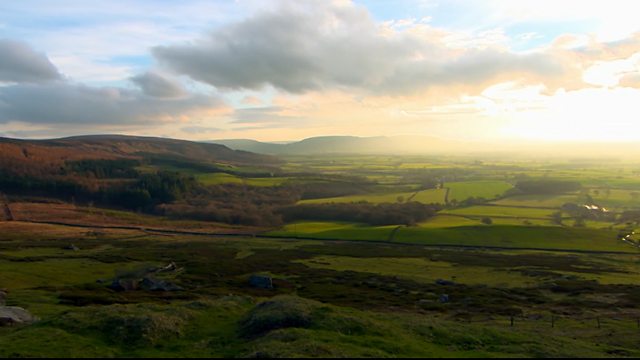
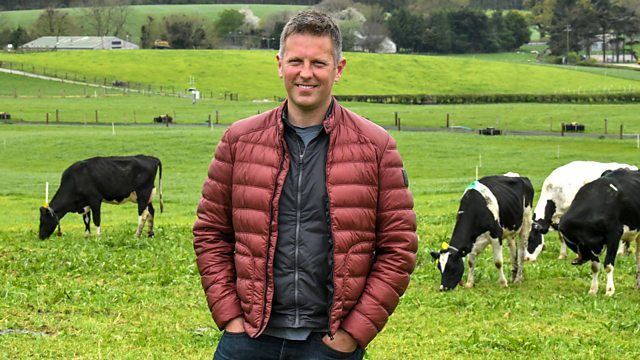
Presenter Dougie Vipond takes the lead for this anniversary special, and his approach is fitting. Rather than a studio retrospective, he walks — literally — through landscape, meeting past and present members of the Landward team as he moves. It is an intelligent structural choice. Country life, after all, is not experienced in a television studio. It is experienced in wind and mud and open sky. The walk becomes a device for moving through time as well as terrain, allowing the programme to fold archive footage into the present without any sense of artificiality.
What emerges from this journey is a portrait of a programme that began with a deliberately narrow agricultural remit and gradually widened its lens until it encompassed the full complexity of rural Scottish existence. From livestock management to land reform, from extreme weather to vanishing crafts, Landward became something its founders almost certainly did not anticipate: a document of social history as much as a farming programme. The archive it has accumulated across fifty years is, in that sense, irreplaceable. It holds footage of ways of life that no longer exist, of landscapes that have changed beyond recognition, and of people whose knowledge and skills have since been lost.
The fiftieth anniversary episode does not simply celebrate the programme’s longevity. It interrogates what that longevity means, and what the record it has compiled reveals about Scotland’s deepest rural transformations. The stories that Dougie and his colleagues revisit are not chosen for sentiment alone. They are chosen because they illuminate genuine turning points — moments when agricultural life, country life, and the wider relationship between Scotland and its land shifted in ways that still resonate today. What the programme has always understood, and what this anniversary makes emphatically clear, is that farming is never merely about farming. It is about identity, survival, and the ongoing negotiation between a people and the land they inhabit.
The tone set by this special is one of honest reflection rather than self-congratulation. Contributors from across the programme’s history speak with candour about what they witnessed, what surprised them, and what moved them. There is humour here, and genuine warmth. But there is also sobriety when the subject demands it. The stories that left the deepest marks on Landward’s team — and on Scottish agriculture — were not the triumphant ones. They were the ones involving loss: the loss of animals, the loss of livelihoods, the loss of entire ways of operating the land.
Yet the programme’s fifty-year arc is not ultimately a story of decline. It is a story of adaptation. Scotland’s rural communities have absorbed extraordinary pressure across these decades and, in many cases, have found new forms. Land reform has redistributed ownership in ways unimaginable in 1976. Some communities have taken control of their own futures with remarkable results. Renewable energy has arrived in the hills and waters, bringing both controversy and income. The programme has tracked all of this with the same close attention it once gave to the cattle markets and the sheep dips, remaining alert to the moment when agricultural life shades into something broader and harder to name.
The walk that Dougie undertakes in this special is therefore more than a presentational device. It is a statement of editorial philosophy. Landward has always believed that you understand the land by being in it, not by describing it from a distance. Fifty years on, that belief remains the programme’s most distinctive quality, and the one most worth celebrating.
Landward Episode 1 2026 and the Origins of Scotland’s Rural Voice
The programme that became Landward began in 1976 under a considerably more functional title and with a considerably more functional mandate. It was, at its inception, Scotland’s farming programme — designed to serve the practical information needs of an agricultural community that had few other television outlets. Prices, weather, disease alerts, policy changes: these were the building blocks of early output. The ambition was useful rather than ambitious, and there is nothing wrong with that. A farming community operating across some of the most demanding terrain in Britain needed reliable, accurate information, and Landward provided it.
What changed was the nature of the questions the programme began to ask. As the decades passed, it became clear that the issues shaping Scottish agriculture were not separable from the issues shaping Scottish society. Livestock prices were connected to global markets. Land ownership was connected to political philosophy. The survival of remote communities was connected to housing policy, school closures, and the availability of broadband. Landward could not report on farming without, eventually, reporting on all of this. The programme’s gradual expansion of scope was not a departure from its original purpose. It was a faithful response to the reality it was covering.
Past team members interviewed during the anniversary walk speak about this evolution with considerable insight. The sense is of a programme that grew alongside its subject matter, resisting the temptation to oversimplify Scotland’s rural complexity in favour of something more telegenic but less true. That intellectual honesty has been Landward’s most consistent editorial commitment across fifty years.
How Landward Documented the Animal Disease Crises That Defined a Generation
No section of the Landward archive carries more emotional weight than the footage gathered during the great livestock disease outbreaks. The foot-and-mouth disease crisis in particular — which devastated farming communities across Britain in 2001 — left marks that are still visible in Scottish agriculture today. Landward was there, on the farms, recording the culls, speaking to the farmers, and capturing the sheer scale of agricultural loss in ways that official statistics could never convey. Country life during those months had a quality of catastrophe that is almost impossible to overstate.
The images in the archive from this period are difficult to watch. Pyres of livestock. Farmers who had spent decades building their herds confronting overnight destruction. The silence of fields that had previously been full of animals. Landward’s coverage of foot-and-mouth was not sensationalised. It was steady, attentive, and compassionate — qualities that made it more powerful, not less. The programme understood that what was being lost was not merely economic value but accumulated knowledge, family heritage, and a specific form of agricultural life that could not simply be reconstituted once the crisis passed.
Other disease outbreaks also feature in the archive, and the pattern they reveal is concerning. Farming has always been vulnerable to biological catastrophe, but the scale and speed of modern outbreaks reflects the density and connectivity of contemporary livestock systems. Landward’s archive makes visible, across time, the accumulating pressure that disease risk places on Scottish farming communities, and the extraordinary resilience those communities have repeatedly demonstrated in response.
Land Reform and the Landward Episode 1 2026 Record of a Changing Scotland
Few developments in twentieth-century Scottish history were as politically charged as the movement for land reform, and Landward documented it from the inside. Scotland’s pattern of land ownership — historically concentrated in the hands of a small number of large estates — had long generated tension in rural communities that worked the land without owning it. The crofting areas of the Highlands and Islands were the most visible flashpoint, but the frustration was widespread.
The community land buyouts that began to gather pace in the 1990s and accelerated after Scottish devolution represented something genuinely historic. The Isle of Eigg buyout in 1997 was a landmark moment, and Landward’s archive contains footage that captures the atmosphere of that transformation with unusual intimacy. Communities that had spent generations as tenants becoming owners instead: the significance was not merely economic but psychological and cultural. Agricultural life in those communities changed in ways that were immediately apparent and continue to develop today.
Landward’s coverage of land reform was, by the standards of a farming programme, unusually political. The programme did not advocate for particular outcomes, but it did take the question seriously, giving voice to the communities most directly affected and examining the consequences of ownership change with genuine rigour. In doing so, it helped to keep land reform in the public conversation during periods when it might otherwise have faded from view.
The anniversary episode revisits this material with evident pride. The sense among those who covered these stories is that they were covering something that mattered beyond the immediate agricultural context — a fundamental renegotiation of the relationship between the Scottish people and the land they live on.
Extreme Weather, Climate Change, and the Shifting Scottish Landscape
Climate change appears throughout the Landward archive not as an abstract concept but as a lived reality experienced by farming families across Scotland. The programme has covered extreme weather events across five decades, and the archive reveals a pattern of increasing frequency and intensity that is unmistakable. Flooding, storm damage, prolonged drought, and unseasonal conditions have all featured, and the cumulative picture they present is one of a landscape under sustained pressure.
Livestock management has been directly affected. Sheep farmers in the uplands have faced new challenges as weather patterns shift. Lowland arable farmers have encountered both waterlogging and drought conditions that were historically unusual. The timing of seasons has changed, affecting lambing, harvesting, and a range of other farming operations that depend on predictable conditions. Landward has recorded these changes with the same consistency it has brought to everything else, creating an archive that is now of genuine scientific as well as cultural value.
The programme has also covered the human response to climate pressure. Farmers adapting their practices, shifting to different crops or breeds, investing in drainage or irrigation, changing the timing of operations: these stories run through the archive as a thread of practical ingenuity that stands alongside the stories of hardship. Scottish agricultural life has never been easy, and the capacity to adapt is deeply embedded in farming culture. Climate change tests that capacity in new ways, and Landward has made those tests visible.
Contributors to the anniversary special speak about weather events they covered with a clarity that suggests genuine impact. The storms, the floods, the frozen winters: these are not abstract memories. They are specific episodes attached to specific farms and specific people, and the archive footage that accompanies the recollections gives them an immediacy that purely verbal description cannot match.
Landward Episode 1 2026 and the Vanishing Crafts of Rural Scotland
Among the most poignant sections of the Landward archive are those documenting traditional skills and practices that have since disappeared or come close to disappearing. The programme was present, in many cases, for what turned out to be some of the last recordings of specific techniques, specific tools, and specific forms of agricultural knowledge. This was not always intentional. Landward was reporting on contemporary farming life, not archiving a disappearing world. But the world was disappearing anyway, and the cameras caught it.
Dry-stone walling, peat cutting, hand-shearing, traditional boat building, specific forms of livestock husbandry tied to particular breeds and particular landscapes: the archive holds examples of all of these. Some have survived in modified form. Others have effectively ceased. The footage that remains is now a historical document as much as a television record, and its value will only increase as the distance from those practices grows.
The anniversary episode gives space to this dimension of the archive, and the team members who worked on those sequences speak about them with particular warmth. There is a sense that covering these skills felt different from covering agricultural news — that it carried an added weight of responsibility, a feeling that what was being recorded might not be recordable for much longer. That instinct was, in many cases, correct.
Country life in Scotland has always involved the transmission of practical knowledge across generations. When that transmission breaks down — through economic pressure, rural depopulation, or the arrival of mechanisation — something is lost that cannot easily be recovered. Landward’s archive preserves examples of that knowledge in a form that remains accessible, and that is one of its most lasting contributions.
The People Who Made Landward What It Became
A programme’s character is inseparable from the people who make it, and one of the genuine pleasures of this anniversary special is the time it gives to past and present members of the Landward team. Producers, directors, researchers, and presenters who have worked on the programme at various points in its history come together on the walk with Dougie, sharing memories, assessments, and occasional moments of frank self-criticism. The picture that emerges is of a programme with a strong and distinctive culture — one that values proximity to its subject matter and scepticism towards studio polish.
Former presenters reflect on the stories that stayed with them long after filming ended. The foot-and-mouth sequences are mentioned repeatedly, as are the community buyout stories and the coverage of extreme weather events. But smaller stories also surface — individual farmers, specific animals, particular landscapes — that made an impression precisely because they were not obviously newsworthy. Landward’s team has always known that agricultural life is mostly made of ordinary moments, and that the ordinary moments are often where the truth lives.
The current team speaks about the inheritance they have received with evident respect. Fifty years of archive is not merely a resource. It is a responsibility. The programme that began in 1976 as a practical information service for Scottish farmers has become a cultural institution with obligations that extend well beyond the farming community it originally served. The people now making Landward are aware of those obligations and, on the evidence of this anniversary special, are taking them seriously.
Landward Episode 1 2026 and the Communities That Refused to Disappear
Scotland’s rural communities have faced sustained pressure across the fifty years of Landward’s existence. Depopulation, school closures, the loss of local services, the decline of traditional industries: these forces have reshaped the human geography of the Scottish countryside in ways that are visible in the programme’s archive. Some communities that featured in early Landward footage have since contracted dramatically. Others have stabilised or grown, finding new forms of economic activity or new sources of incoming population.
The programme has tracked these shifts without sentimentality but also without indifference. Country life in Scotland is not a museum exhibit, and Landward has consistently refused to treat it as one. The communities it covers are real places with real problems and real possibilities, and the programme’s best work has always conveyed that reality. The anniversary episode revisits some of the communities that have featured most prominently in the archive, allowing the current state of those places to comment on their earlier appearances.
The results are mixed, as they would be in any honest account. Some stories that seemed to be heading towards inevitable decline have taken unexpected turns. Community energy projects, new forms of tourism, the arrival of remote workers enabled by improved broadband: these developments have brought life to some communities that appeared to be fading. Other places have continued to lose population and services despite everything. Landward has reported both outcomes with the same commitment to accuracy, avoiding the temptation to construct a uniformly hopeful story where the evidence does not support one.
Agriculture, Identity, and What the Next Fifty Years Might Hold
The anniversary episode closes with a forward look that is characteristically restrained. The team members gathered with Dougie do not offer confident predictions about Scottish agriculture’s future. They are too experienced, and too honest, for that. What they offer instead is a sense of the questions that will define the next half-century, questions that Landward will presumably be present to explore.
How will Scottish farming respond to the accelerating pressure of climate change? What forms will land ownership take as reform continues? What role will technology play in livestock management and crop production? How will rural communities maintain viability as demographic change continues? These are not simple questions, and they do not have simple answers. But they are the right questions, and a programme that has spent fifty years asking the right questions about Scottish agricultural life is well placed to keep asking them.
Farming remains the economic and cultural backbone of much of rural Scotland, even as its scale and methods continue to change. Agriculture in the uplands operates under conditions that have no equivalent elsewhere in British farming, and the communities built around it have a resilience and a distinctiveness that Landward has done much to document and sustain. The programme’s value to those communities is not reducible to information provision, though that remains important. It is also about visibility — the sense that the lives being lived in remote glens and island townships are seen, taken seriously, and made part of a wider Scottish conversation.
Landward episode 1 2026, in marking fifty years of that commitment, does something more than celebrate a television anniversary. It makes the case that rural Scotland’s story is worth telling, in all its difficulty and complexity and occasional beauty, and that telling it faithfully, decade after decade, is work that genuinely matters.
FAQ Landward episode 1 2026
Q: What is Landward and why is its 50th anniversary significant?
A: Landward is BBC Scotland’s long-running rural affairs programme, first broadcast in 1976. Its 50th anniversary marks five decades of continuous coverage of Scottish farming, country life, and rural communities. No other Scottish television programme has documented agricultural life and the broader rural landscape with such consistency and depth across such a long period.
Q: How did Landward’s scope change over its 50 years on air?
A: Landward began as a practical farming information programme serving Scotland’s agricultural community. Over time, however, it expanded significantly to cover land reform, climate change, vanishing rural crafts, and community survival. What started as ‘Scotland’s farming programme’ became a broader reflection of all aspects of living and working in rural Scotland.
Q: What format does the Landward 50th anniversary special take?
A: Presenter Dougie Vipond leads the special by walking through the Scottish landscape, meeting past and present members of the Landward team along the way. The walk serves as a device for moving through both terrain and time. Archive footage is woven into the present-day journey, allowing the programme to revisit key moments from five decades of rural coverage.
Q: How did Landward cover the foot-and-mouth disease crisis?
A: Landward filmed directly on affected farms during the 2001 foot-and-mouth outbreak, recording livestock culls and speaking to farmers facing catastrophic losses. The coverage was steady and compassionate rather than sensationalised. Additionally, the archive footage from this period captures the human and agricultural devastation in ways that official statistics alone could never convey.
Q: What role did Landward play in covering Scottish land reform?
A: Landward documented the community land buyout movement from the inside, including historic moments such as the Isle of Eigg buyout in 1997. The programme gave voice to communities transitioning from tenants to landowners. Furthermore, its coverage helped keep land reform in the public conversation during periods when political attention might otherwise have moved elsewhere.
Q: How has Landward recorded the impact of climate change on Scottish farming?
A: Landward has covered extreme weather events across all five decades, creating an archive that reveals a clear pattern of increasing frequency and intensity. Flooding, prolonged drought, storm damage, and shifting seasons have all featured. The cumulative record is now of genuine scientific as well as cultural value, documenting how climate change has directly affected livestock management and agricultural life across Scotland.
Q: What traditional rural skills has Landward preserved on film?
A: The Landward archive contains footage of dry-stone walling, peat cutting, hand-shearing, traditional boat building, and specific livestock husbandry techniques tied to particular Scottish breeds and landscapes. In many cases, these recordings now represent some of the last documentation of those practices. The programme captured them while reporting on contemporary farming, not as a deliberate act of preservation.
Q: What do past Landward team members say were their most memorable stories?
A: Former presenters and producers consistently highlight the foot-and-mouth coverage, the community land buyouts, and extreme weather events as the stories that left the deepest impressions. However, smaller stories also surface — individual farmers, specific animals, and particular landscapes — that made lasting impacts precisely because they captured the ordinary reality of country life in Scotland.
Q: How have Scottish rural communities changed over Landward’s 50-year lifespan?
A: Scotland’s rural communities have experienced depopulation, school closures, and the loss of traditional industries across this period. Nevertheless, some have found new forms of economic activity through community energy projects, rural tourism, and improved broadband enabling remote working. Landward has reported both decline and recovery honestly, avoiding the temptation to construct a uniformly hopeful story where evidence does not support one.
Q: What questions will shape Landward’s coverage over the next 50 years?
A: The programme’s team identifies several defining challenges ahead. How will Scottish agriculture adapt to accelerating climate change? What forms will land ownership take as reform continues? How will rural communities maintain viability as demographics shift? Furthermore, what role will technology play in livestock management and crop production? These questions have no simple answers, but Landward is well positioned to keep asking them.