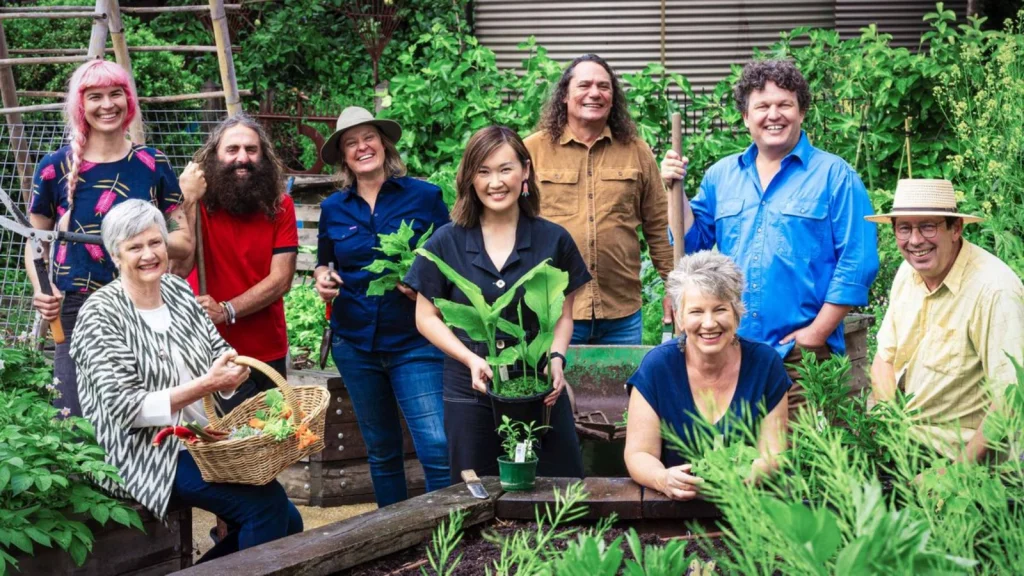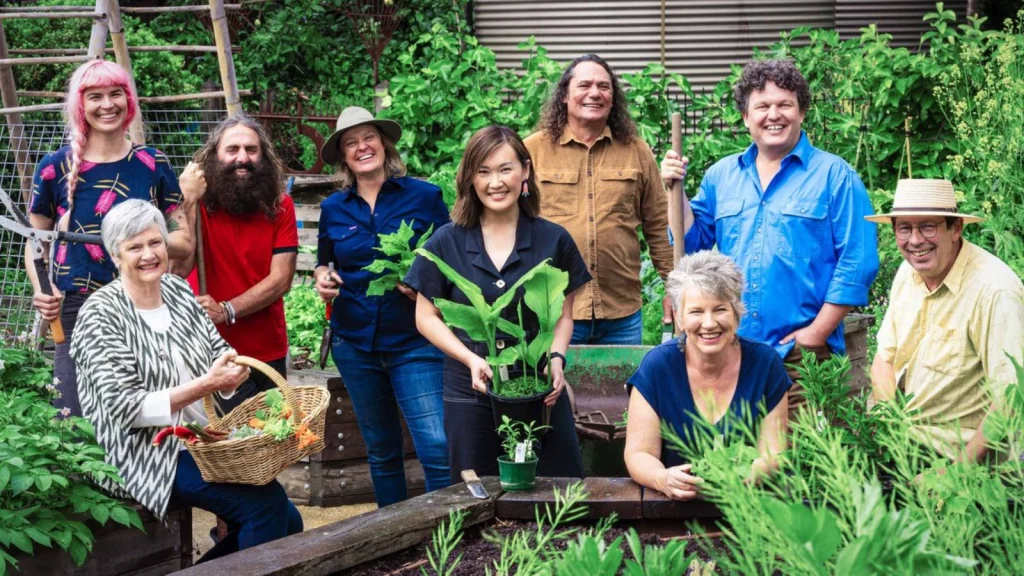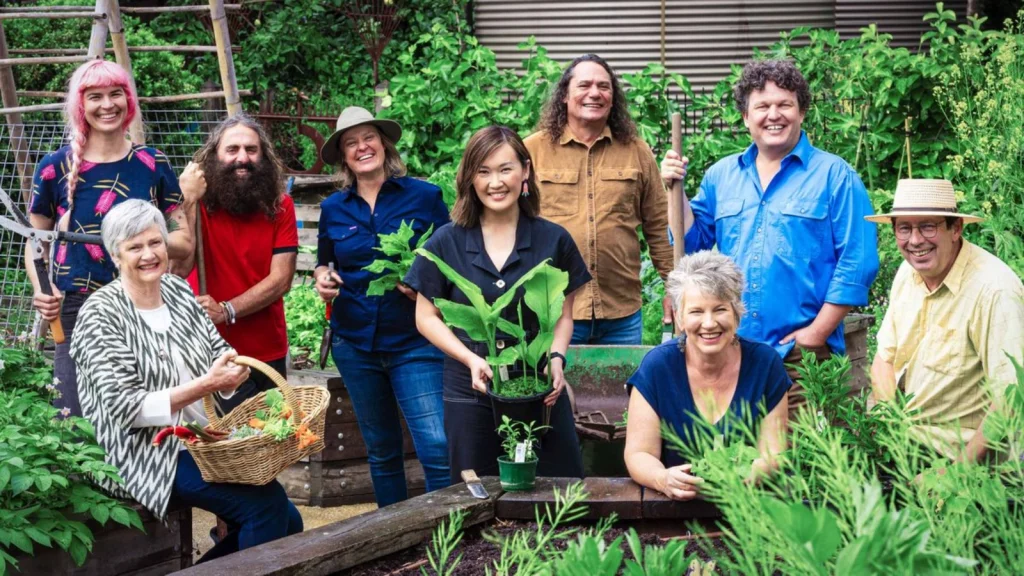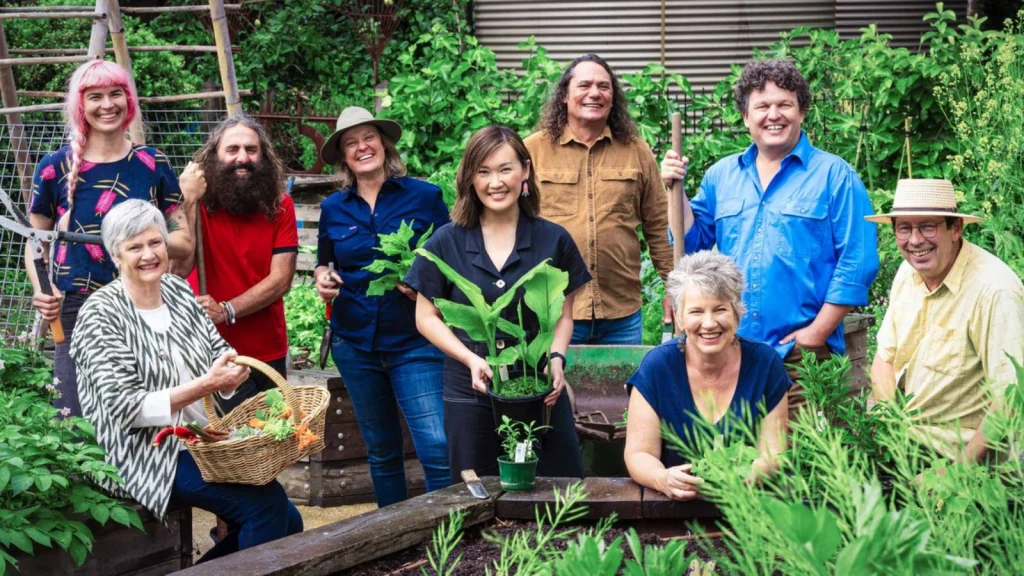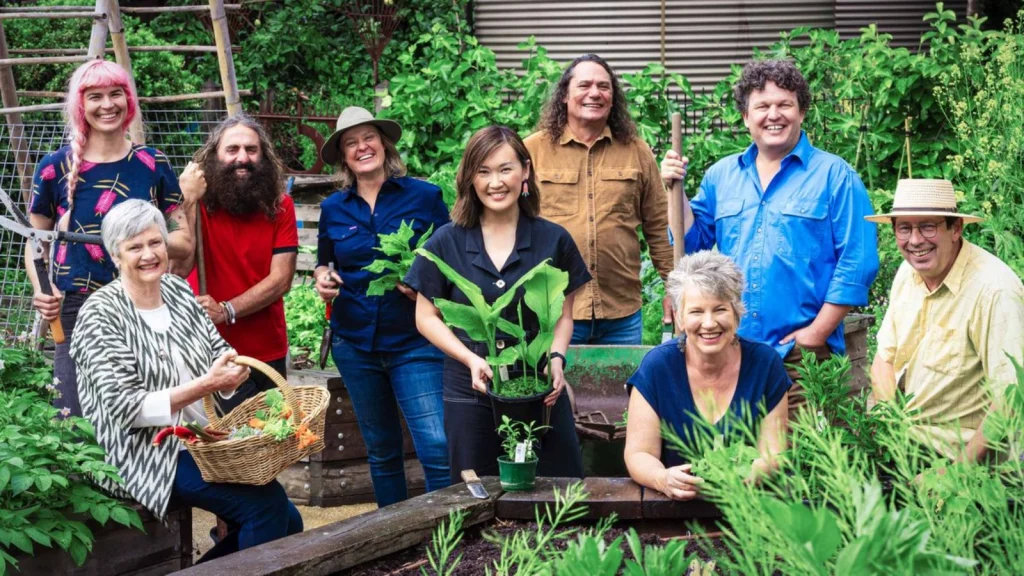
Gardening Australia 2026 Episode 8 opens on the rich, saturated palette of autumn, a season that Australian gardeners often underestimate but one that rewards those paying close attention. While spring commands the headlines, autumn quietly delivers some of the most dramatic colour transformations in the garden, and this episode makes a compelling case for rethinking the seasonal calendar entirely. From bold flowering shrubs to heritage fruit orchards, from wicking bed engineering to the patient cultivation of rare tropical specimens, the breadth of gardening knowledge on display is both instructive and genuinely inspiring. (Gardeneres World 2026 HERE)
Australian gardening has always carried a particular tension between the exotic and the endemic, between plants brought from distant climates and those shaped over millennia by the specific pressures of this continent. That tension runs through every segment of this episode, surfacing in conversations about tropical collectors, heritage quince varieties, and the challenge of building productive vegetable beds in a warming climate. Each story is grounded in real gardens, real soil, and real people doing the work.
The episode moves through five distinct strands, each with its own geography, personality, and set of preoccupations. Costa Georgiadis examines shrubs that carry the autumn garden through its most visually dynamic weeks. Hannah Moloney visits the garden her father has spent years transforming. Jerry Coleby-Williams travels to meet a grower whose relationship with tropical plants borders on the devotional. Sophie Thomson demonstrates the practical engineering behind wicking beds for productive vegetable growing. And Millie Ross spends time with a family whose quince orchard represents both agricultural heritage and an evolving understanding of Australian food culture.
Taken together, these segments reflect the expansive definition of gardening that this programme has always championed. Gardening, in this context, is not a weekend hobby confined to neat suburban beds. It is a practice of observation, adaptation, relationship, and sometimes sheer stubbornness in the face of difficult conditions. The diy gardening sensibility that runs through the episode is not about shortcuts — it is about understanding systems well enough to work with them rather than against them.
Autumn colour in Australian gardens is more complex than the northern hemisphere template most gardeners unconsciously use as their reference point. The timing shifts, the species differ, and the light has a different quality. Costa’s examination of shrubs for autumn colour starts from this premise: that Australian conditions demand an Australian eye, and that the plants best suited to delivering seasonal spectacle here are often not the ones imported wholesale from English or Japanese garden traditions. The episode is alert to this distinction throughout, and it shapes the recommendations, the plant choices, and the underlying philosophy in every segment.
The garden design sensibility on display is similarly inflected by place. Whether it is the subtropical textures of Jerry’s tropical plant visit, the productive pragmatism of Sophie’s wicking beds, or the structured heritage rows of the quince orchard, every garden featured in this episode has been shaped by its specific location, its soil, its rainfall, and its people. There are no generic solutions on offer here. Instead, the episode builds an argument — made incrementally and practically — for gardens designed from the inside out, starting with local conditions and working outward.
Native plants appear throughout as both subject and subtext. They surface in Costa’s shrub selections, in the ecological context Jerry’s tropical segment establishes, and in the broader conversation about what belongs in Australian soil and what must be carefully managed. The episode does not treat native plants as a ideological category but as a practical one: these are the plants that evolved here, that support local fauna, and that often perform with less intervention than their exotic counterparts.
What distinguishes Gardening Australia 2026 Episode 8 from a simple how-to programme is its consistent attention to the human dimension of gardening. Behind every technique is a person who learned it somewhere, refined it over years, and now holds it as a kind of knowledge worth sharing. That quality of accumulated, embodied expertise runs through every conversation in this episode, and it gives the practical advice a weight that transcends the merely instructional.
Costa Georgiadis on Shrubs for Autumn Colour in Gardening Australia 2026 Episode 8
Costa’s segment focuses on shrubs that deliver visual impact through the autumn months, a period he treats as an opportunity rather than a lull. He visits a selection of plants chosen specifically for their performance in the cooler months, moving through specimens with characteristic enthusiasm and specificity. His approach to plant selection is never merely aesthetic — he consistently connects a plant’s visual qualities to its ecological function and its fit within a broader garden design.
Among the shrubs Costa highlights, Smokebush stands out for its dramatic foliage colour, which shifts through purples, reds, and bronzes as temperatures drop. He notes that this plant performs best when cut back hard periodically, a pruning approach that encourages strong new growth with the most intense colour. The timing of that pruning, he explains, matters enormously — get it wrong and the plant either sulks or bolts without producing the display it is capable of.
Abelia is another shrub Costa returns to, praising its long flowering period and its adaptability across a range of conditions. It bridges seasons in a way that few shrubs manage, carrying flowers into autumn while simultaneously developing attractive foliage tones. For gardeners looking for low-maintenance structure in the middle layer of a planting scheme, Costa positions Abelia as close to indispensable. He also discusses Salvia, noting specific varieties that extend well into the cooler months and provide reliable colour when many other plants have finished their main flush.
The broader principle Costa articulates is that successful diy gardening depends on understanding a plant’s natural rhythm and working with it. Autumn shrubs are not simply summer shrubs that have lost their way — they are plants with a specific seasonal logic, and the gardener’s job is to read that logic and respond accordingly. This framing elevates the practical advice into something more like a philosophy of attention.
Hannah Moloney and the Garden Transformation Her Father Built
Hannah’s visit to her father’s garden is one of the more personally resonant segments in Gardening Australia 2026 Episode 8. What she finds is not a polished showpiece but a working garden that has evolved organically over years, shaped by one person’s growing understanding of the land he is working with. The transformation is visible not just in the plants but in the infrastructure — the paths, the beds, the water management — that her father has gradually put in place.
The garden occupies a site that presented real challenges, and much of the segment is given over to how those challenges were met. Slope, drainage, and soil quality all required addressed before productive planting could begin. Her father’s approach was incremental: building capacity gradually, learning from failures, and refining the design as his understanding deepened. This is diy gardening in its most honest form — not a single dramatic intervention but a sustained accumulation of small decisions.
Hannah responds to the garden with evident pleasure and some surprise at how much has changed. She identifies specific plantings that have thrived, notes areas that are still being worked out, and brings her own professional knowledge of garden design to bear on what she observes. The conversation between parent and child has an easy quality that opens up the story of the garden in a way that a straightforward tour could not. It reveals the emotional dimension of long-term garden-making — the patience it requires, the attachment it builds, and the satisfaction that comes from watching a vision gradually materialise.
The segment also touches on the practical mechanics of the transformation: how beds were established, how water is managed across the site, and how the planting palette was developed over time. These details ground the personal story in the practical realities of Australian gardening and give viewers a transferable framework for thinking about their own garden transformations.
Jerry Coleby-Williams and the World of Tropical Plants in Gardening Australia 2026
Jerry’s segment takes him to meet a grower with a deep, long-standing passion for tropical plants — a figure whose collection represents decades of patient acquisition, cultivation, and hard-won knowledge. The grower Jerry visits has assembled a remarkable range of tropical specimens, many of them rare or difficult to source, and has developed highly specific expertise in their cultivation within the Australian climate.
The conversation between Jerry and this grower has the quality of a dialogue between equals. Jerry brings his own substantial knowledge of tropical and subtropical plants to the encounter, which allows the grower to speak at a level of detail and nuance that a less informed interviewer could not have accessed. They discuss specific genera, cultivation requirements, and the particular challenges of growing tropical plants in a climate that can swing between extremes.
What emerges most powerfully from this segment is the relationship between a dedicated collector and their plants — the years of observation that build up into genuine expertise, the ability to read a plant’s condition from subtle visual cues, and the network of fellow enthusiasts through which rare specimens are shared and knowledge is exchanged. This is a specialist corner of the broader Australian gardening world, but it illuminates something true about gardening at every level: that deep engagement with plants produces a kind of knowledge that cannot be acquired from books alone.
The tropical plants featured in the segment include specimens that challenge the conventional boundaries of what can be grown in Australian conditions. Some require specific soil amendments, protection from particular weather events, or careful attention to moisture levels. The grower’s solutions to these challenges are inventive and informed, reflecting years of trial and error. Jerry clearly relishes this kind of encounter, and his enthusiasm for the plants he sees is infectious throughout.
Native plants are present in the segment as an implicit counterpoint — the grower’s tropical collection exists within a broader Australian landscape, and the conversation touches on how exotic and native elements can coexist and even complement each other in a thoughtfully managed garden.
Sophie Thomson’s Wicking Beds and the Science of Productive Vegetable Growing
Sophie’s segment is the most technically instructive of the episode, and it rewards close attention. She sets up wicking beds specifically designed for vegetable growing, walking through the construction process with the kind of clarity that makes a genuinely complex system seem manageable. Wicking beds work by drawing water upward from a reservoir through capillary action, delivering moisture directly to the root zone and dramatically reducing both water use and the risk of overwatering.
The construction process Sophie demonstrates involves layering materials within a container that has been modified to hold a water reservoir at its base. A separation layer — typically a geotextile fabric — sits between the reservoir and the growing medium, allowing water to wick upward while preventing soil from migrating down. The growing medium itself is formulated for excellent drainage and aeration above the waterline, which encourages healthy root development and prevents the waterlogging that can devastate vegetable crops.
Sophie’s choice of vegetables for the wicking beds reflects an understanding of which crops benefit most from this system. Plants with consistent moisture needs — and those that are particularly sensitive to the wet-dry cycles that plague conventional beds in hot weather — are strong candidates. She works through specific plant choices and their placement, explaining the rationale behind each decision in terms that connect the theory of wicking bed design to the practical reality of growing food.
The diy gardening credentials of this segment are strong. Sophie emphasises that wicking beds can be constructed from readily available materials and adapted to a wide range of container types and sizes. The system she demonstrates is scalable — it works as well for a single large container on a balcony as for a series of beds in a dedicated vegetable garden. For gardeners working in challenging conditions — whether limited space, poor native soil, or water restrictions — wicking beds represent a genuinely transformative approach.
Throughout the segment, Sophie returns to the principle that understanding how a system works is the key to using it well. She does not simply instruct viewers to follow a recipe; she explains the logic behind each step, which enables adaptation and troubleshooting. This pedagogical approach is characteristic of the programme’s broader commitment to building genuine horticultural literacy rather than simply transmitting techniques.
Millie Ross and the Quince Growers of Gardening Australia 2026 Episode 8
Millie’s visit to a family of quince growers is one of the most distinctive segments in Gardening Australia 2026 Episode 8, bringing together heritage horticulture, family history, and the particular pleasures of working with a fruit that has fallen out of mainstream fashion but retains a devoted following. The quince — hard, astringent, and deeply fragrant when raw — transforms under heat into something extraordinary, and the family Millie visits has built their agricultural practice around this transformation.
The orchard itself is the first thing that makes an impression. Quince trees have a sculptural quality in the garden design sense — their branches develop interesting forms over time, and their fruit hangs heavily in autumn, golden and fragrant. The family has worked with specific varieties, and the conversation Millie has with them covers the characteristics of different quinces: their size, their flavour profile when cooked, their yield, and their particular suitability for different culinary applications.
The family’s relationship with their quince orchard is clearly multigenerational, with knowledge and attachment passed down alongside the trees themselves. They speak about the orchard in terms that blend the practical and the emotional — the work it requires, the satisfaction it delivers, and the sense of continuity it provides. This is heritage gardening and heritage farming in the truest sense: a living connection to practices and plant varieties that might otherwise disappear from the Australian landscape.
Millie brings her characteristic warmth and genuine curiosity to the conversation, drawing out details about the harvesting process, the timing of the quince season, and the family’s approach to marketing and selling their fruit. The segment touches on the broader context of specialty fruit growing in Australia — the challenges of competing in a market dominated by mainstream varieties, the rewards of building a loyal customer base, and the cultural importance of keeping heritage varieties in active cultivation.
The quince’s profile in Australian gardening and food culture is clearly on an upward trajectory, and this segment contributes to that momentum. By showing a working orchard run by people with deep expertise and genuine passion, Millie’s visit makes a persuasive case for the quince as both a garden plant and a food crop worthy of serious attention.
Garden Design Principles Across Gardening Australia 2026 Episode 8
One of the most instructive aspects of Gardening Australia 2026 Episode 8 is the way coherent garden design principles emerge across segments that appear, on the surface, to be about entirely different things. Whether Costa is discussing shrub selection, Sophie is engineering wicking beds, or Hannah’s father is managing slope and drainage on a challenging site, the same underlying logic recurs: start with the conditions you have, understand the systems you are working with, and make decisions that work with the site’s natural tendencies rather than against them.
This principle applies at the scale of a single container — Sophie’s wicking bed — and at the scale of an entire orchard. It is as relevant to the tropical specialist Jerry visits, who has spent years understanding exactly what his rare specimens need, as it is to Hannah’s father, who has incrementally transformed a difficult site through patient observation and incremental investment. The consistency of this principle across such different contexts gives it genuine weight.
Garden design, as this episode presents it, is fundamentally about relationships: between the gardener and the soil, between the plants and the climate, between the garden and the wider landscape. The native plants that appear throughout the episode are part of this web of relationships — they are not simply aesthetic choices but ecological ones, reflecting a growing understanding of how Australian gardens can support biodiversity while still meeting the gardener’s creative and productive goals.
The episode also demonstrates that good garden design does not require a large budget or a blank canvas. Several of the gardens featured have been developed over many years with modest resources, shaped by ingenuity and observation rather than professional consultation. This is the diy gardening ethos at its most expansive: not the shortcut version but the deep version, grounded in genuine understanding.
Seasonal Awareness and the Autumn Opportunity in Australian Gardening
Autumn occupies a distinctive place in the Australian gardening calendar, one that this episode explores with real depth. In much of Australia, autumn marks not a retreat but a reopening — temperatures ease, rainfall patterns shift, and many plants enter a period of active growth that summer’s heat had suppressed. The gardening shows that understand this tend to treat autumn as a primary season rather than a coda, and Gardening Australia 2026 does exactly that.
Costa’s shrub segment is the most explicit engagement with this theme, but it runs through the whole episode. Sophie’s wicking beds are set up in autumn precisely because the season offers a productive window for establishing vegetable crops that will carry through the cooler months. The quince harvest is an autumn event, connecting the orchard to the seasonal cycle in a way that grounds Millie’s visit in a specific moment of agricultural time.
For Australian gardening to make the most of autumn’s opportunity, gardeners need to resist the impulse to treat the season as a period of winding down. The plants that perform best in autumn — the shrubs Costa selects, the vegetables Sophie grows, the quince that ripens in the orchard — all reward active engagement rather than passive waiting. Understanding which plants come into their own in autumn, and planning garden design accordingly, is one of the more valuable shifts a gardener can make.
The episode also implicitly addresses the challenge of climate variability. Autumn in Australia is not a fixed template — it varies enormously between regions and is increasingly unpredictable within regions. The adaptable approaches demonstrated throughout Gardening Australia 2026 Episode 8 — wicking beds that buffer against moisture fluctuation, plant selections that perform across a range of conditions, garden systems built for resilience rather than optimum conditions — all reflect an awareness that Australian gardening operates in a climate that demands flexibility.
Expertise, Community, and the Transfer of Knowledge in Gardening Australia 2026
Perhaps the deepest theme running through Gardening Australia 2026 Episode 8 is the transfer of expertise between people. In every segment, knowledge moves: from Costa to the viewer, from a father to his daughter, from a tropical specialist to Jerry, from Sophie to anyone who wants to build a wicking bed, from a family of quince growers to Millie and through her to the audience. This movement of knowledge is what makes the programme genuinely valuable rather than simply entertaining.
The experts and growers featured are not performing expertise — they are sharing it, in the full sense of that word. They show the failures as well as the successes, the ongoing questions as well as the settled answers, the specific conditions that shaped their knowledge and the limits of what that knowledge can do when transplanted to a different garden or a different climate. This honesty about the boundaries of expertise is one of the things that distinguishes the best gardening communication from the merely promotional.
Native plants, heritage varieties, tropical specialists, and ingenious diy gardening systems all appear in this episode as expressions of the same underlying truth: that the best gardening knowledge is earned through sustained engagement with real plants in real conditions, and that sharing that knowledge honestly and specifically is one of the most useful things a gardener can do. Gardening Australia 2026 Episode 8 models that sharing with skill and generosity, leaving the viewer not just informed but genuinely equipped to think more carefully about their own garden and what it might become.
FAQ Gardening Australia 2026 Episode 8
Q: What shrubs does Costa recommend for autumn colour in Australian gardens?
A: Costa highlights Smokebush for its dramatic foliage shift through purples, reds, and bronzes as temperatures drop. He also recommends Abelia for its long flowering period and seasonal adaptability, plus specific Salvia varieties that extend reliable colour well into the cooler months. Each plant suits Australian conditions rather than simply copying northern hemisphere traditions.
Q: Why does Costa cut Smokebush back hard, and when should this pruning happen?
A: Hard pruning encourages vigorous new growth on Smokebush, which produces the most intense foliage colour. However, timing is critical — prune at the wrong point in the season and the plant either sulks or bolts without delivering its full display. Costa emphasises understanding a plant’s natural seasonal rhythm before reaching for the secateurs.
Q: What is a wicking bed and how does it work for vegetable growing?
A: A wicking bed draws water upward from a built-in reservoir through capillary action, delivering moisture directly to plant roots. A geotextile separation layer sits between the reservoir and the growing medium, preventing soil migration downward. The growing medium above is formulated for excellent drainage and aeration, protecting vegetables from the waterlogging that damages crops grown in conventional beds.
Q: Can wicking beds be built at home using everyday materials?
A: Yes — Sophie Thomson demonstrates that wicking beds are a practical DIY gardening project using readily available materials. The system scales from a single balcony container to a full series of vegetable beds. Furthermore, understanding the logic behind each construction step allows gardeners to adapt the design to their specific space, soil conditions, and water restrictions without following a rigid formula.
Q: What does Hannah Moloney discover when she visits her father’s transformed garden?
A: Hannah finds a working garden shaped by years of incremental decisions rather than a single dramatic redesign. Her father addressed real challenges — slope, drainage, and poor soil — gradually, refining the garden design as his understanding deepened. Additionally, specific plantings have clearly thrived while other areas remain a work in progress, reflecting the honest, evolving nature of long-term Australian gardening.
Q: What makes the tropical plant grower Jerry visits significant within Australian gardening?
A: The grower has spent decades assembling a remarkable collection of rare tropical specimens, developing highly specific cultivation knowledge in the process. Jerry Coleby-Williams engages him as a peer, allowing a depth of conversation that reveals how sustained, hands-on engagement with plants produces expertise that books alone cannot provide. The grower’s inventive solutions to climate challenges reflect years of careful observation and trial.
Q: What varieties of quince does the family Millie Ross visits grow, and why does variety matter?
A: The family works with specific heritage quince varieties selected for their size, cooked flavour profile, yield, and suitability for different culinary uses. Variety selection directly affects the quality of the harvested fruit and its market appeal. Maintaining heritage varieties in active cultivation also preserves agricultural diversity that might otherwise disappear from the Australian food landscape entirely.
Q: How does autumn differ from other seasons for productive gardening in Australia?
A: Autumn is an active reopening rather than a wind-down across much of Australia. Temperatures ease and many plants enter growth phases that summer heat had suppressed. Sophie sets up wicking beds in autumn specifically to establish vegetable crops that carry through winter. Conversely, gardeners who treat autumn as a passive season miss one of the most productive planting windows in the Australian gardening calendar.
Q: How do native plants feature across the different segments of Gardening Australia 2026 Episode 8?
A: Native plants appear throughout the episode not as an ideological preference but as a practical one. They surface in Costa’s shrub selections for autumn colour, in the ecological context surrounding Jerry’s tropical plant visit, and in the broader conversation about which plants perform best in Australian conditions with minimal intervention. The episode consistently frames native plants as ecological choices that support local biodiversity alongside aesthetic garden design goals.
Q: What overarching garden design philosophy connects all the segments in Gardening Australia 2026 Episode 8?
A: Every segment returns to the same core principle: start with the conditions you have, understand the systems at work, and make decisions that align with the site’s natural tendencies. This applies equally to Sophie’s wicking bed engineering, Costa’s shrub selections, and the quince orchard’s heritage cultivation practices. Furthermore, the episode consistently demonstrates that genuine DIY gardening success depends on understanding why a method works, not simply following instructions.