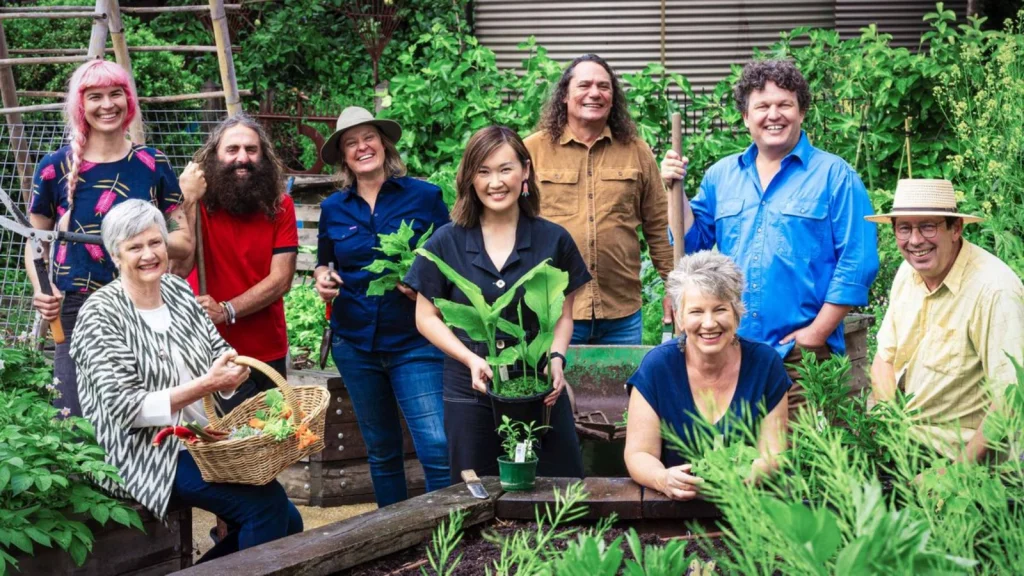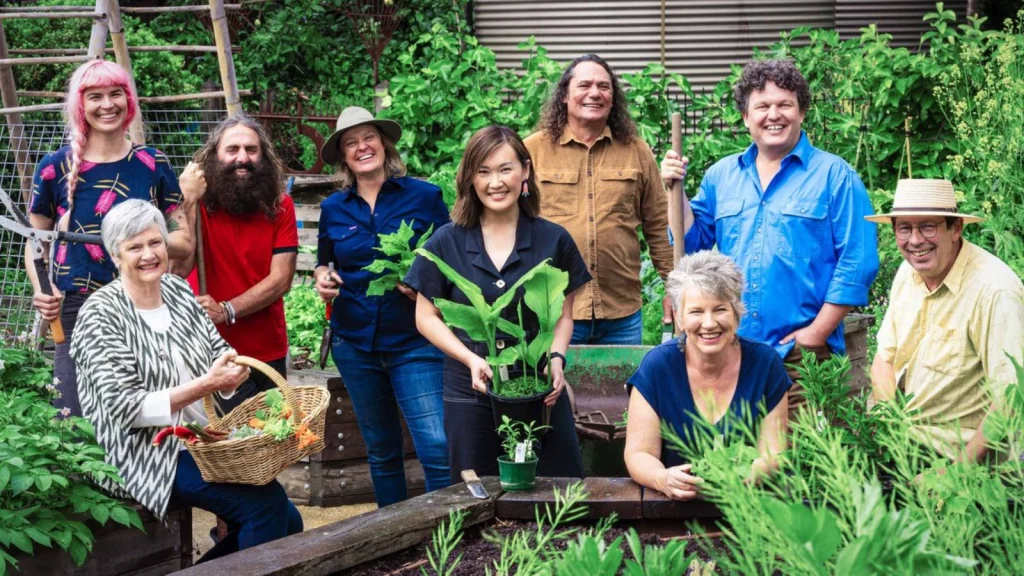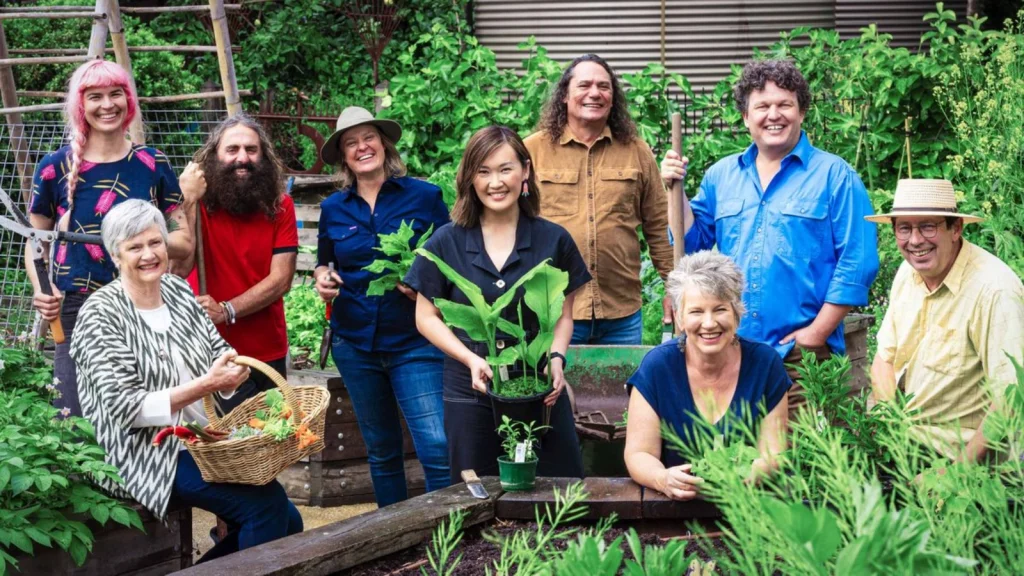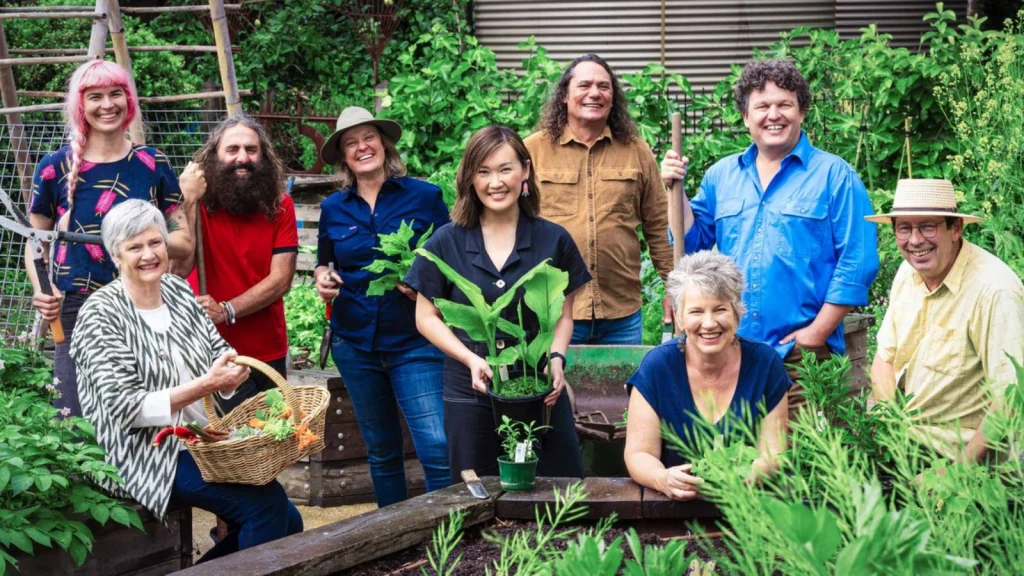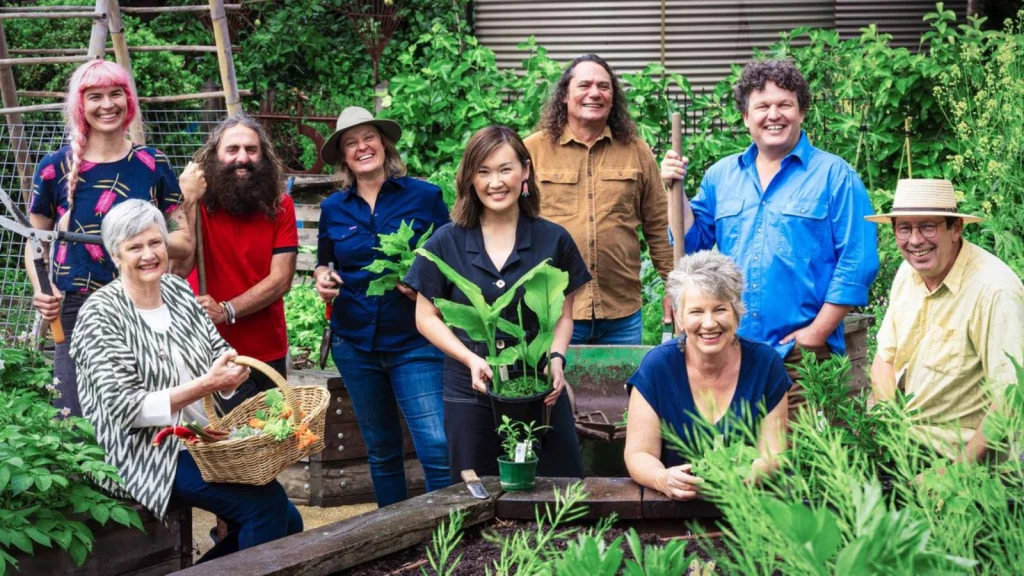
Gardening Australia 2026 Episode 7 arrives at the perfect moment for Australian gardeners, just as autumn transforms the growing season and invites a fundamental rethinking of what a productive, sustainable, and deeply personal garden can be.
This episode covers an extraordinary range of subjects, from an Adelaide cottage garden engineered to combat fierce summer heat, to a subtropical custard apple farm at the foot of the Glass House Mountains, a touching story of recovery and bush food healing in Perth, a plant scientist reshaping how cities integrate greenery, and the remarkable saga of endangered cycads finding a permanent home at the Wollongong Botanic Garden. Across every segment, the recurring theme is urgent and intimate: plants matter not just aesthetically, but ecologically, nutritionally, and emotionally.
Autumn, as both Millie and other presenters make clear across this episode, is far more than a transitional season. It is, emphatically, a season of action. The dropping temperatures that might suggest a slowing garden are, in fact, a signal to plant garlic, save seed, top-dress beds with compost, and prepare the soil for winter crops. This sense of productive urgency runs through every corner of the episode, giving viewers across all climate zones a seasonal set of tasks that are practical, evidence-based, and grounded in years of hands-on gardening experience. Australian gardening, in all its regional diversity, has rarely looked so rich.
Sophie’s visit to Deb Worthley’s Adelaide garden opens the episode with a demonstration of what thoughtful, long-term garden design can achieve. In a city that endures brutal heat, Deb has built something remarkable: a cooling, plant-filled, cottage-style garden that functions as a climate management system as much as a place of beauty. Sustainability is the governing principle, from the straw-bale construction of the house itself, with walls 500mm thick, to the deliberate layering of deciduous trees across the north-facing side of the property. What distinguishes this segment is how it connects structural and horticultural choices into a single coherent vision. Every tree planted, every vine trained, every fruit tree selected serves multiple functions simultaneously.
Further into the episode, guest presenter Thanh Truong — known as the Fruit Nerd — takes viewers to a custard apple farm at the base of the Glass House Mountains, about an hour north of Brisbane. This segment is a deep, authoritative dive into a fruit that most Australians encounter infrequently in supermarkets and rarely think to grow at home.
Thanh’s conversation with farmer Daniel Jackson unpacks the full arc of custard apple cultivation, from the botany and the cultivar choices through to the harvesting rhythms, pest management, and the correct way to ripen fruit on the kitchen bench. It is detailed, practical, and genuinely illuminating. Mark Twain apparently declared custard apples the most delicious fruit in the world, and after watching this segment, it is not difficult to understand why.
Josh’s reconnection with bush-food expert Marissa Verma is, without question, the most emotionally powerful story of the episode. Since Josh last featured her story on Gardening Australia, Marissa — a Noongar woman, cultural consultant, and advocate for the native plants of the Perth region — contracted necrotising fasciitis in June 2023.
The disease progressed with devastating speed, and to save her life, doctors amputated both of her hands. The recovery, which lasted nearly a year in hospital, could have severed her from the Country and the plants that had always defined her work and her identity. Instead, a network of friends, colleagues, and landscape professionals came together to build her a bush food garden at home, bringing Country to her. This segment is both a profound human story and a testament to the healing power of native plants.
Rounding out the episode are two shorter but richly informative threads: Clarence’s visit to the Wollongong Botanic Garden’s newly established cycad collection, and a profile of plant scientist Dr. Claire Farrell, who works at the University of Melbourne’s Burnley campus on woody meadows, green roofs, and the broader question of how cities can use plants more intelligently. Together, these segments broaden the scope of what Gardening Australia 2026 Episode 7 addresses, extending well beyond the home garden into conservation science and urban ecology. It is a genuinely expansive episode, one that rewards attentive viewing across every segment.
Millie’s seasonal guide and Hannah’s tips on herb preservation and fruit tree pruning add a further layer of practical content. These shorter segments function as useful, actionable interludes between longer stories, reinforcing the episode’s dual commitment to inspiration and direct gardening advice. The overall effect is of a programme firing on every cylinder during one of the most important gardening seasons of the year.
The episode, available with full supporting how-to content at the ABC Gardening Australia website, demonstrates exactly what makes this long-running series so enduringly valuable to Australian audiences: the breadth of its subjects, the depth of its expertise, and its genuine respect for the diversity of climates, cultures, and personal circumstances that shape Australian gardening.
Gardening Australia 2026 Episode 7
Gardening Australia 2026 Episode 7 and the Adelaide Cottage Garden Built for Survival
Sophie’s segment in Adelaide opens with an immediate and important point: sustainability in the garden is inseparable from sustainability in the home. Deb Worthley built her house from straw bales specifically because she wanted a structure that worked with the climate rather than against it. The 500mm-thick walls provide thermal mass, keeping the interior cooler in summer without the energy expenditure of air conditioning. Crucially, when the house eventually comes down, those walls can be composted — a detail Deb and Sophie share with evident delight. Truly recyclable. Truly compostable.
The garden surrounding the house embodies the same philosophy. When Deb first moved in, there were no trees at all. She planted deliberately and patiently, selecting deciduous trees that would provide shade in summer while allowing winter sun to penetrate when warmth was needed. The weeping elms, which Deb describes as particularly beautiful in winter for their architectural form, now cover the north side of the house. Combined with wide eaves, they create a passive cooling system that, according to Deb, made a significant difference to the liveability of the house over time.
The pergola in the backyard carries this approach even further. Rather than training vines across it, Deb has trained the weeping elms themselves over the structure. Within a single season, the branches had half-covered the pergola, providing shade where it was needed most. The colour palette of the garden — green and white — reinforces the cooling, restful effect. Combined with a water feature visible from the house, the garden creates a microclimate that feels noticeably cooler than the surrounding suburb.
Food production is woven throughout the design. Deb grows thirteen fruit trees, including a ‘Southworth Dancer’ pear on the north side of the house that provides both significant shade and seasonal produce. A poorman’s orange tree — which Deb explains is essentially a New Zealand grapefruit, with high-pith fruit ideal for marmalade because of its pectin content — honours a family tradition. Deb’s mother made poorman’s orange marmalade, and Deb continues the practice every winter. She has entered the Australian Marmalade Competition, earning runner-up or third place, a result she recalls with genuine pride.
The vegetable garden holds further surprises. What began as a few strawberry plants has grown into a 23-kilogram annual harvest, producing fruit with real flavour — soft, sweet, nothing like what is available in shops. Every corner of the property is cultivated. The front verge is planted with roses and lavender. Deb has even helped her neighbours plant lavender in front of their own house, offering plants from her own overflowing footpath beds. The garden is, in every sense, generous. It overflows into the street and into the lives of those who pass by it.
Custard Apple Farming at the Foot of the Glass House Mountains: Gardening Australia 2026 Episode 7’s Subtropical Deep Dive
Thanh Truong’s segment begins at the foot of the Glass House Mountains, a subtropical landscape about an hour north of Brisbane that is home to commercially grown coffee, tea, macadamias, and pineapples. The subject, however, is custard apples — a fruit Thanh describes as a childhood favourite, and one that remains far less familiar to most Australians than its qualities deserve. Daniel Jackson and his wife Angela bought their 100-acre farm ten years ago, intending to acquire a macadamia property. It came with macadamias, certainly, but the majority of the farm was planted to a fruit Daniel had never encountered before.
The scale of custard apple production on the farm is considerable. Approximately 8 hectares are dedicated to custard apples across a variety of cultivars and trellis trees — around 2,500 trees producing about 80 tonnes of fruit per season. Daniel had no farming background before purchasing the property, having previously worked as an electrician. He learned by joining the industry association and absorbing the knowledge of a neighbour who had been farming custard apples for nearly 40 years.
The botany of custard apples is worth understanding clearly. What Australians know as a custard apple is a hybrid between two species: the cherimoya and the sweetsop, also called the sugar apple. Both parent species are widely grown overseas, and both are prized across Southeast Asia. The common name custard apple can actually refer to six different species within the Annona genus, most of which originate in Central and South America.
In Australian commercial production, two main cultivars dominate: ‘African Pride’ and the ‘Pinks Mammoth’ variety. Within ‘Pinks Mammoth’, the ‘KJ Pinks’ is the industry standard — a self-pollinating variety that sets a consistent crop year on year, which Daniel specifically recommends for backyard growers. The ‘Hilary White’ requires hand pollination, producing larger, export-quality fruit but at the cost of considerably more labour.
Pruning is the most time-consuming element of custard apple farming. Daniel employs eight people for four to six weeks of major pruning each year. Trees are kept at around two metres to allow ground-level picking. Three pruning sessions occur annually: a major autumn prune that removes tops and large branches; a November prune targeting the skirts, which must be kept off the ground to prevent pest and disease entry; and a late December or January session focused on water shoots growing through the centre of the tree to maintain an open vase form. Once pruned, the material is raked to the middle of each row and mulched in place to prevent disease spread.
Pest management has evolved significantly on Daniel’s farm. The fruit’s creviced surface creates perfect hiding spots for citrus mealybug, one of the industry’s most significant pest challenges. Rather than relying heavily on pesticide sprays, Daniel now purchases farmed beneficial insects — specifically green lacewings and Cryptolaemus — and releases them to control mealybug populations. The result has been a dramatic reduction in pesticide use for that pest. Fungal diseases, including anthracnose, remain a challenge, as does root rot in wet seasons and bacterial wilt.
For home gardeners, Daniel’s advice is clear and practical. Custard apple trees are subtropical and will not fruit or flower below four degrees. However, pockets of production exist along the South Australian-Victorian border and just north of Perth, and Sydney-based gardeners can grow them in warm, north-facing, well-protected positions.
Fertilising should be conservative — small, frequent doses rather than heavy applications, with compost and a couple of light applications of chook poo throughout the year. Identifying ripe fruit requires looking for a lightening of the skin colour, a smoothing of the lumpy carpals, and the development of what Daniel describes as stretch marks on the fruit surface. Crucially, custard apples should never be refrigerated or held below eight degrees, as they will suffer chill injury. Left at room temperature for three to five days, they soften enough to tear apart and scoop out with ease.
From the Bush to a Healing Garden: Josh and the Marissa Verma Story in Gardening Australia 2026 Episode 7
Josh’s segment is introduced with a few careful words about an old friend whose life has changed dramatically. What unfolds is one of the most profound stories the programme has told in recent years. Josh had previously filmed with Marissa Verma, a Noongar cultural consultant and bush-food expert from Perth who shared knowledge of the native flora and fauna of her Country, including the peppermint tree, known as wanil, whose leaves clear the sinuses and can be placed in a pillowslip for restorative sleep.
In June 2023, Marissa became seriously unwell. She was diagnosed with necrotising fasciitis — a flesh-eating bacterial disease — while in ICU. The infection moved with terrifying speed. To prevent it reaching her organs, doctors were forced to amputate both of her hands. The recovery stretched across nearly a year in hospital. For a woman whose professional and cultural identity was built around interacting with plants, Country, and community, the loss was profound.
Marissa’s close friend Carol Innes, a Noongar cultural consultant who has worked across numerous Perth civil construction projects, recognised early in the recovery that Marissa would need a space where she could reconnect with Country without being physically able to reach the bush. The solution was to bring the bush to her. Carol reached out to landscape architect Natalie Busch, with whom she had a long professional relationship through Natalie’s design-for-good program. Natalie had never met Marissa before, but the brief was sufficient: build Marissa a garden.
The design prioritised accessibility above all else. Easy pathways allow Marissa to navigate confidently with her walker. The planting was guided entirely by Marissa’s own preferences and knowledge. The garden is filled with bush foods and healing plants: lemon myrtle, river mint, samphire, grass trees (balgas), and kangaroo paws. The macadamia tree brings further edible abundance. Paving contractors and plant suppliers donated labour and materials, with Natalie and her team acting as project managers rather than sole providers.
The result, as Marissa describes it, engages all of her senses. She is in the garden every day. The birds, the air, the scent of flowers — she describes these elements not as pleasant distractions but as active parts of her healing. The ability to show friends and family the plants, and to use the herbs in cooking, extends the garden’s purpose further. The garden is, in Marissa’s own words, a space where the bush came to her when she could not yet get to it. It is also, clearly, working.
Cycads, Conservation, and the Wollongong Botanic Garden Collection
Clarence’s segment at the Wollongong Botanic Garden addresses a project that has been two years in the making. The garden has been developing a cycad display using plants donated from private Aussie collectors, and curator Felicity Skoberne guides Clarence through both the engineering challenges and the extraordinary ecological significance of the collection.
Cycads are among the oldest seed-bearing plants on Earth, dating back to the Jurassic period. They can live for hundreds of years, with some specimens potentially reaching a thousand years. The collection at Wollongong is anchored by a major donation from the Edwards family, whose plants have been gathered from across Asia and South America over decades. Colin, director of the International Palm Society and a longtime acquaintance of the Edwards family, explains that many of the approximately 35 species in the collection are critically endangered in the wild.
The installation required significant engineering. A 300mm drainage layer sits beneath geotextile fabric and a purpose-built soil layer. Cycads demand free-draining, sunny conditions, and receive no supplementary irrigation — only rainfall. Eight-person teams using forklifts manoeuvred the specimens into place. The visible undulation of the garden bed surface reflects the root balls of the cycads themselves, many of which sit partially above ground level.
Colin draws particular attention to Encephalartos sclavoi from Tanzania, of which only 30 individuals remain in the wild. Because cycads are dioecious — requiring separate male and female plants to reproduce — a wild population of just 30 individuals cannot guarantee reproductive viability. The species is listed on an international database so that pollen can be shared between botanic institutions worldwide. A Cycas thouarsii from Madagascar, meanwhile, has remained morphologically unchanged for 130 million years — a fact that prompts Clarence’s comparison with crocodiles, another organism that evolution appears to have concluded was already optimal.
The blue-green colouring of Encephalartos trispinosus from South Africa’s Eastern Cape is explained by Colin as a thick wax coating that prevents transpiration in the plant’s desert habitat. Underneath the wax, the foliage is green. The wax functions as the plant’s natural sunscreen, protecting it from extremes of sun and low rainfall. The Ceratozamia genus from Mexico earns its own distinction as the world’s toughest cycad — survivors of ice ages, volcanic eruptions, black winters, and even the meteor impacts that ended the dinosaurs.
Claire Farrell and the Science of Making Cities More Liveable
Plant scientist Dr. Claire Farrell works at the University of Melbourne’s Burnley campus — which she describes as the home of horticulture in Australia, having taught the discipline for approximately 128 years. Her research focuses on two principal areas: woody meadows and green roofs. Both address the same underlying challenge: how to increase vegetation, biodiversity, and ecological function in urban landscapes that are under increasing pressure.
Woody meadows, as Claire explains them, are transformative alternatives to the monocultures of lomandra or saltbush that currently dominate many low-maintenance public landscapes. A woody meadow uses Australian native trees and shrubs, selected for their ability to recover from stresses such as fire, drought, and disturbance. The species are planted in extremely high density, which drives competition and diversity, and managed through coppicing. The result is a planting that is richer in flowers, more biodiverse, and no more expensive to maintain than a conventional monoculture. Claire has established woody meadows in Melbourne, Perth, Sydney, and Canberra.
The Burnley rooftop hosts a demonstration green roof that was genuinely pioneering when Claire began her research on it. International green roof models, largely developed in temperate climates like Germany and England, could not simply be transplanted to Australia because the plants they relied upon cannot survive Australian drought conditions. Claire’s research identified that the most suitable plants for Australian green roofs come from similar extreme environments — rocky outcrops, grasslands with summer drought — and include succulents from Africa, Mediterranean herbs, and Australian plants from equivalent habitats. Green roofs capture rainfall, reduce storm-water runoff, cool buildings, and provide biodiversity.
Claire’s personal garden in Hawthorn, where she recently moved with her husband and fellow plant scientist Chris Szota, is a deliberate contrast to her professional work. The property arrived with white coarse gravel, rotting camellias, and standard roses — nothing salvageable. Claire and Chris began from scratch. A small backyard bed, roughly one metre by four metres, was planted just two weeks after moving in, with plants from their previous home placed as close as 20 centimetres apart. The front garden features quick-growing annuals and perennials, including Geum ‘Tangerine’ and Leonotis leonurus, with native scaevola providing ground cover. A green wall of half hanging baskets addresses the privacy issue created by overlooking a neighbour’s bedroom.
Claire’s broader philosophical position on garden design is worth noting for its nuance. She believes Australian urban landscapes should contain more native plants, but her own garden is explicitly not about that. For her, the home garden is a place of experimentation and play, working with plants she does not encounter in her professional research. She anticipates a future in which the distinction between native and exotic planting becomes less ideologically freighted, with plant selection driven by fitness for purpose and site rather than origin. Her parallel practice of botanical illustration reinforces this integrative sensibility — the observation of plants through drawing, she argues, is simply another form of taking measurements.
Gardening Australia 2026 Episode 7 and the Autumn Jobs That Cannot Wait
Millie’s seasonal guide is delivered with a sense of genuine urgency. Autumn, she insists, is one of the most important times to be in the garden, and the work done now pays dividends for months ahead. Seed saving tops her list. She demonstrates the process in detail using a standout tomato variety, walking through the fermentation method that removes the gel sac around the seed — a sac that can harbour disease and inhibit germination. The process mirrors what happens naturally when fruit falls and rots in the field. The seed is then sieved, rinsed clean of all flesh, spread on paper to dry evenly, and stored ready for sowing the following spring.
Paper daisies receive equal attention. Millie identifies the disc florets where seed forms, explains the pappus dispersal structure that carries each seed, and demonstrates how to harvest a nearly ripe head by snipping it whole into a bag, where the seeds will continue to ripen and dry. For those with thousands of plants planned for spring — and a daisy head can carry hundreds or thousands of seeds — this is a method worth mastering.
Soil preparation is Millie’s second major theme. As summer soils dry out, their microbial populations decline. The arrival of autumn rain reactivates those organisms, making it the ideal moment to apply a light top-dressing of compost or to build an entirely new garden bed using the no-dig method. Millie demonstrates building on top of an existing lawn: thick sheets of cardboard go down first, followed by fertiliser, chook manure, straw, garden waste, and woodchips. The cardboard smothers the grass below while the layered materials above form a compost that improves the soil and builds a new planting bed simultaneously.
Garlic gets its own dedicated moment. Autumn, Millie emphasises, is the right time to plant garlic — not winter. She soaked the cloves overnight and by morning they were already producing visible root growth. Planting is simple: a hole about two knuckles deep, the clove dropped in root-down, covered, and left to grow.
Hannah’s contributions across the episode add further practical depth. Her preferred fruit tree pruning shape is the open vase, requiring a minimum of three and a maximum of five leader branches, with the lowest branch sitting at least half a metre from the ground to ensure air circulation and allow room for ground cover plants beneath. For herb preservation, she demonstrates two methods using ice cube trays: mint frozen in water, and basil blitzed and frozen in olive oil, producing what she calls flavour bombs ready to drop directly into pasta sauces or pizza bases. The method extends to coriander and chives, and the frozen cubes can be stored in glass jars in the freezer indefinitely.
Costa’s regional weekend job recommendations round out the practical content. Cool temperate gardeners are directed to clear spent summer crops and sow winter vegetables, cure and store pumpkins before the first frost, and plant spring bulbs. Warm temperate and subtropical zones should top up vegetable beds with aged composts and manures, sow green manure crops, plant winged beans as fast-growing edible climbers, and give citrus trees a final feed of blood and bone before winter. In arid zones, April is described as a cracking month: broccoli and cauliflower can be sown now, and everlasting daisy seed scattered over cultivated beds will produce a stunning spring meadow display.
The Broader Vision of Gardening Australia 2026 Episode 7
Across this episode of Australian gardening’s most trusted programme, a coherent argument emerges about what gardens are for. Deb Worthley’s Adelaide cottage shows that sustainability begins with design — that every decision from the thickness of a wall to the choice of a weeping elm has cumulative, measurable consequences. Marissa Verma’s healing garden demonstrates that plants carry cultural knowledge, emotional resonance, and genuine therapeutic value that extends far beyond their ornamental or culinary functions.
Daniel Jackson’s custard apple farm illustrates that niche, labour-intensive crops can be grown at home with the right knowledge, and that biodiversity in Australia’s fruit bowl is worth pursuing. Claire Farrell’s research makes the case that urban greening at scale — through woody meadows, green roofs, and thoughtfully planted home gardens — directly improves the liveability of Australian cities.
The Wollongong Botanic Garden’s cycad collection adds a conservation dimension that grounds the episode in a longer timescale. When Colin notes that the Ceratozamia genus survived ice ages, volcanic eruptions, and the meteor impact that ended the dinosaurs, the implication is inescapable: these plants have outlasted everything the Earth has thrown at them, and yet they now face extinction from habitat loss at a speed that geological time cannot absorb. The Wollongong collection, with its 35 species catalogued on an international database so pollen can be shared across institutions, represents a form of insurance for the planet’s botanical heritage.
Together, these stories make Gardening Australia 2026 Episode 7 one of the richer instalments of a series that has always understood gardening to be about far more than plants in soil. For further how-to detail across several of the topics covered in this episode, the ABC Gardening Australia website provides supplementary resources.
What the episode ultimately demonstrates, across every segment and every presenter’s individual contribution, is that Australian gardening in 2026 is a practice that connects people to their climate, their culture, their communities, and their food. It is technical and emotional, practical and profound, seasonal and timeless. As Marissa says of her bush food garden: all her senses come alive when she is in it. That, distilled, is the argument the episode makes for gardens themselves — and the reason the work Millie urges viewers to do this autumn, without delay, matters as much as it does.
FAQ Gardening Australia 2026 Episode 7
Q: What is Gardening Australia 2026 Episode 7 about?
A: Gardening Australia 2026 Episode 7 covers five distinct stories. Sophie visits a sustainable Adelaide cottage garden, Thanh the Fruit Nerd explores custard apple farming near the Glass House Mountains, Josh reconnects with bush-food expert Marissa Verma, Clarence investigates cycads at the Wollongong Botanic Garden, and plant scientist Claire Farrell discusses woody meadows and urban greening. Additionally, Millie delivers a comprehensive autumn gardening jobs guide.
Q: What makes Deb Worthley’s Adelaide garden special in Gardening Australia 2026 Episode 7?
A: Deb built a straw-bale house with 500mm-thick walls specifically to manage Adelaide’s intense heat. Her garden design layers deciduous trees, including weeping elms and a ‘Southworth Dancer’ pear, across the north-facing side of the property. These trees provide summer shade and allow winter sun to enter. Furthermore, she grows 13 fruit trees and harvests 23 kilograms of strawberries annually, demonstrating that sustainability and productivity coexist beautifully in suburban gardens.
Q: What are custard apples and why does Gardening Australia 2026 Episode 7 feature them?
A: Custard apples are subtropical fruits formed by crossing the cherimoya and the sweetsop, or sugar apple. The famous writer Mark Twain once declared them the most delicious fruit in the world. Guest presenter Thanh the Fruit Nerd visits a Glass House Mountains farm producing 80 tonnes per season from 2,500 trees across 8 hectares. The episode highlights custard apples as an underappreciated Australian crop worth growing at home in suitable climates.
Q: Can home gardeners grow custard apples in Australia?
A: Yes, home gardeners in subtropical and warm temperate regions can grow custard apples successfully. However, trees will not fruit or flower below four degrees Celsius. Farmer Daniel Jackson recommends the ‘KJ Pinks’ cultivar for backyard growers because it self-pollinates and produces consistent crops annually. Plant in a sunny, north-facing, well-protected position. Fertilise conservatively using compost and small doses of chook poo. Additionally, prune three times yearly to maintain an open vase shape and manageable height.
Q: Who is Marissa Verma and what is her story in Gardening Australia 2026 Episode 7?
A: Marissa Verma is a Noongar cultural consultant and bush-food expert from Perth. In June 2023, she contracted necrotising fasciitis and required the amputation of both hands to survive. After nearly a year of hospital recovery, friends and colleagues rallied to build her a purpose-designed bush food garden at home. Landscape architect Natalie Busch created accessible pathways and filled the space with lemon myrtle, river mint, samphire, grass trees, and kangaroo paws. Marissa now gardens daily, describing the experience as genuinely healing.
Q: What autumn gardening jobs does Gardening Australia 2026 Episode 7 recommend?
A: Millie identifies seed saving, soil preparation, and planting as the three essential autumn priorities. She demonstrates fermenting tomato seed to remove germination inhibitors and disease, and harvesting paper daisy seed heads before they disperse. Furthermore, she builds a no-dig garden bed using cardboard, chook manure, straw, and woodchips layered over existing lawn. Garlic planting is strongly recommended now rather than waiting for winter. Autumn rain reactivates soil organisms, making top-dressing with compost particularly effective at this time of year.
Q: What are woody meadows and why does Claire Farrell research them?
A: Woody meadows are diverse plantings of Australian native trees and shrubs that replace monocultures of lomandra or saltbush in low-maintenance public landscapes. Plant scientist Dr. Claire Farrell at the University of Melbourne’s Burnley campus selects species based on their capacity to recover from drought, fire, and disturbance. Plants grow in very high density and are managed through coppicing. The result is a flower-rich, biodiverse planting requiring no greater maintenance input than a conventional monoculture. Additionally, woody meadows now operate in Melbourne, Perth, Sydney, and Canberra.
Q: Why are cycads significant in Gardening Australia 2026 Episode 7?
A: Clarence visits the Wollongong Botanic Garden, where a two-year project has established a collection of approximately 35 cycad species donated by the Edwards family. Cycads are among Earth’s oldest seed-bearing plants, dating to the Jurassic period and capable of living up to a thousand years. Several species in the collection are critically endangered in the wild. Encephalartos sclavoi from Tanzania has only 30 individuals remaining in nature. The collection is listed on an international database so that pollen can be shared between botanic institutions globally for long-term species survival.
Q: How do you identify and ripen a custard apple correctly?
A: Farmer Daniel Jackson explains that ripe custard apples show a lightening of their skin to a paler green or yellowish tone. The lumpy exterior segments, called carpals, smooth out as the fruit matures. Stretch marks may also appear on the skin surface. Never refrigerate custard apples or store them below eight degrees Celsius, as chill injury will result. Instead, leave them at room temperature for three to five days until soft to the touch. At that point, simply tear the fruit apart and scoop out the creamy flesh.
Q: Where can I find the how-to guides from Gardening Australia 2026 Episode 7?
A: The ABC Gardening Australia website publishes detailed how-to content to accompany each episode. Supporting guides for Gardening Australia 2026 Episode 7 cover the key topics from this instalment, including growing and harvesting custard apples, seed-saving techniques, autumn soil preparation, and information on the plants featured across all segments. Furthermore, the Gardening Australia social pages on Facebook and Instagram provide additional tips, behind-the-scenes content, and community engagement for Australian gardening enthusiasts throughout the season.