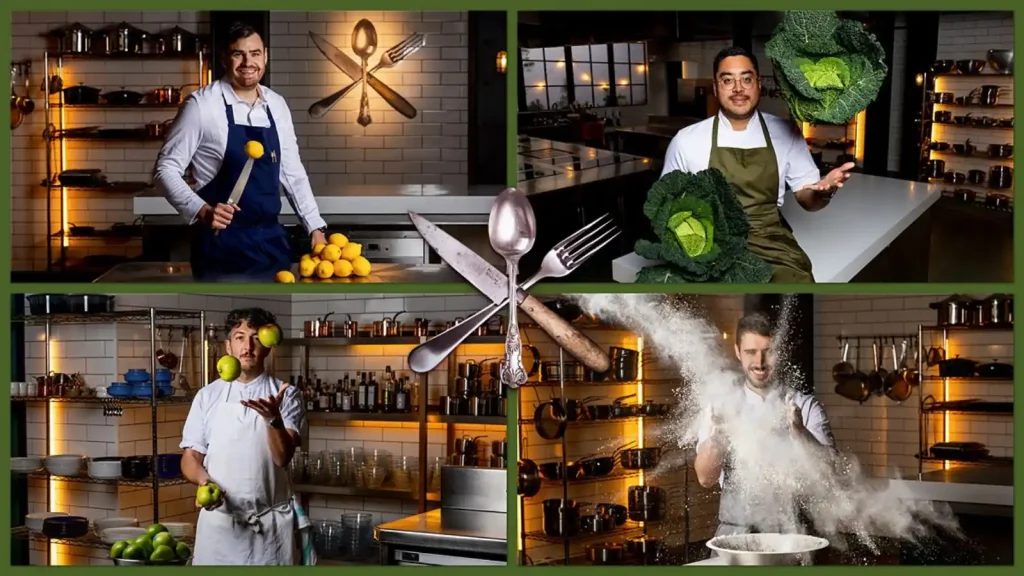
Great British Menu 2026 episode 22 launches the South West England heat with four chefs who carry accolades, ambitions, and deeply personal connections to the region they represent. The competition brief this year asks contestants to draw inspiration from cinema, specifically from British films and cinematic heroes with roots in the South West, and the four chefs who arrive at the competition kitchen bring four sharply different answers to that challenge. From Cornwall to Somerset, from Devon to Bristol Channel shores, these are cooks whose identities are inseparable from their landscapes.
The stakes in Great British Menu 2026 are considerable. The prize, securing a place at the star-studded banquet held at Liverpool’s St George’s Hall, demands more than technical proficiency. It demands storytelling on a plate. Veteran judge Simon Rogan enters the competition carrying nine Michelin stars worldwide, including his famous three-star restaurant in the Lake District. As the most decorated veteran of the 2026 competition, Rogan sets the bar immediately.
He arrives in the kitchen stating that he hopes to see creativity, connection to the brief, and above all, flavour. His presence causes genuine anxiety among the competitors. Martin Baylis admits openly that if Simon Rogan walked in, he would fold like origami. Jeff Robinson describes Rogan as one of the best British chefs who has ever lived, making the task of impressing him feel nearly impossible. Both reactions say everything about the level the chefs understand they must reach.
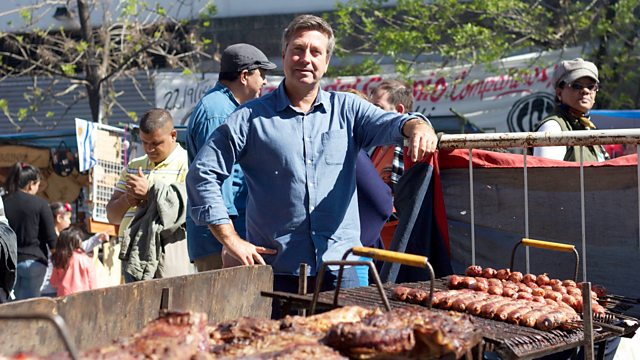
Four chefs compose this week’s lineup in Great British Menu 2026. Jeff Robinson is executive chef at a seafood restaurant in St Ives, Cornwall, a man who grew up in the town with surfing and cooking as his only real career options, and who chose the kitchen without looking back. His menus change daily according to what the boats bring in, and the romance of fresh coastal produce drives everything he does. Ciaran Brennan is head chef at Osip, a Michelin-starred farm-to-table restaurant in the Somerset countryside.
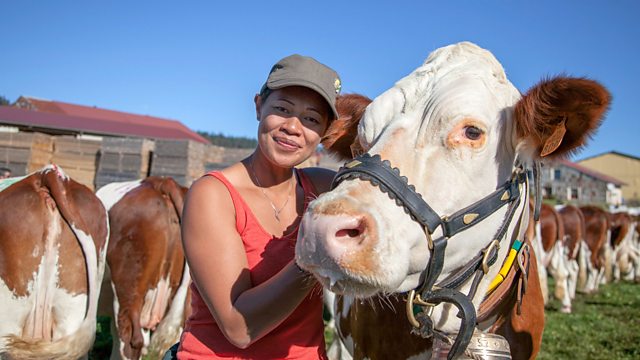
He started working in his local pub at fourteen, and has cooked in no other industry since. His philosophy is one of restraint and respect for the ingredient. Martin Baylis runs Roku, a restaurant in Croyde, North Devon. He grew up in Germany and France before settling in Devon, and his Japanese mother’s heritage shapes his cooking style profoundly, blending Japanese techniques with local ingredients in ways no other chef in the competition replicates.
Mark Tuttiett is head chef at Da Terra, a two-Michelin-starred Brazilian-Italian fusion restaurant in London, trained under the world-famous Alain Ducasse. He grew up in Clevedon, Somerset, and the loss of his mother at a young age gave cooking an emotional significance that extends far beyond technique.
The format of Great British Menu 2026 brings these chefs through a canape round, a vegan starter, and a fish course in this episode, with scores cumulating toward an elimination. The competition runs right down to the wire.
The canape round sets the tone without contributing to the scored total but functions as a potential tiebreaker. Rogan ranks the four offerings after tasting each one. Martin presents a brick pastry tartlet filled with wasabi yoghurt, cured trout, pickled kohlrabi, marinated trout roe, and shredded shiso. Ciaran produces a trout and apple roll wrapped in meat radishes, filled with cured trout, hot-smoked trout belly, and trout roe marinated in apple juice and sake. He describes it as a little taste of Somerset.
Jeff prepares a smoked beef tartare with bone marrow, kohlrabi, onion, and egg yolk. Mark goes furthest in technical complexity, constructing a buckwheat croustade holding a smoked scallop roe emulsion, freshly dressed hand-dived scallop with a barley koji, stout kombucha gel, and fresh sobacha.
Rogan ranks Martin last, citing size and a lack of elegance, though the flavour holds up. Ciaran’s Somerset roll lands third, with a note that the acidity overpowers. Jeff takes second place, praised for the beef flavour and textures but described as not quite reaching the top. Mark wins the canape round, with Rogan calling it very complex, just the right size, and a perfect canape. These rankings, as the host reminds the room, could prove very important later.
Great British Menu 2026 episode 22
Great British Menu 2026 Vegan Starters: Cinema, Creativity, and Complexity
The vegan starter course arrives as the first scored round, and each chef’s approach reveals not just cooking ability but the depth of thought invested in the cinematic brief. The dishes range from the austere and gothic to the romantic and playful, with every chef tying their creation to a specific South West filming location.
Ciaran’s dish is titled Tisane and draws from the film My Cousin Rachel, described by the chef as dark aesthetically, almost Gothic in tone, filmed in Cornwall. The dish centres on a root vegetable tea broth built from extremely heavily roasted celeriac and swede, cooked at low temperature into a clear dashi. Alongside the tea, Ciaran fries parsnips and makes a parsnip and black garlic puree, with a beer vinegar gel providing acidity.
The black garlic, in Ciaran’s view, is essential to capturing the Gothic visual quality of the film, dark and structural within the dish. He adds fried parsnip crisps, tops the composition with a burnt garlic oil, and serves the tea in a cup to be poured at the table. Simon describes the whole preparation as depending entirely on the tisane. If that broth fails to deliver sufficient depth, the entire dish collapses. When it arrives at the pass, the response is warm. Rogan calls it delicious with spices clearly present.
The battered parsnip earns praise for its amazing texture. The parsnip and black garlic puree delivers rich umami. His main criticism focuses on portion size, suggesting pickled mushrooms or a dumpling could strengthen the tea cup itself. The final score from Simon Rogan is seven.
Jeff’s vegan starter is titled Bits and Bytes and references The Imitation Game, a film connected to Alan Turing and filmed partly in the South West. Barbecued beetroot is cut into cylinders to mimic Turing’s codebreaking machine, rolled in a hogweed crumble flavoured with foraged common hogweed mixed with oats, and served alongside a Jerusalem artichoke puree, a Jerusalem artichoke veloute, a burnt apple puree, and deep-fried Jerusalem artichoke peel crisps.
The dish arrives with a crossword card, a nod to one of the methods Turing used to recruit his codebreaking team. Jeff’s central challenge is getting those beetroots properly charred and leathery, since he recognises that merely roasted beetroot would not impress Rogan. The hogweed crumble worries Rogan during prep; he senses a potential gritty, uncooked texture. At the pass, the beetroot is cooked well with some smoky note present, though not as intense as promised. The crumble could have been toasted further. The veloute, Jeff’s admitted weak point, needs more flavour and stability. Rogan scores the dish a six, noting the presentation could have been pushed further.
Martin’s vegan starter carries the longest title in the competition: Crikey That’s Quite A Mouthful. The film is The Guernsey Literary and Potato Peel Pie Society, set on Guernsey during the Nazi occupation of World War II. Filmed largely around the North Devon coast where Martin is from, the film’s wartime scarcity inspires his approach.
During the occupation, the islanders made a pie from potato and potato peel with no butter and no flour. Martin transforms this into a more refined version: a beetroot, onion, and potato rosti at the base, described as the meat of the little pie, topped with confit potato pearls dressed in a leek oil vinaigrette, and finished with an aerated leek and potato veloute and a fried potato peel and seaweed crumble. Martin jokes that he uses everything up just as they would have done in the wartime.
However, Rogan’s assessment during prep identifies a potential problem: the veloute is claggy when tasted in the kitchen. At the pass, the veloute has improved. Rogan praises the rosti for its nice flavour, loves the confit potato pearls, and notes great acidity from the leek oil dressing. His criticisms focus on texture needing more complexity, potato pearls being slightly overcooked, and an absence of real acidity. He scores the dish a six.
Great British Menu 2026 Starter Scores and Simon Rogan’s Assessment
Mark’s vegan starter is the standout of the round. Titled About Thyme, it draws from the Richard Curtis film About Time, with a personal dimension: Mark’s close friend Will Merrick starred in the film and visits the kitchen to offer encouragement. The dish builds a rose-shaped centrepiece from salt-baked celeriac, first salt-baked, then torched to introduce bitterness, then shaped into roses alongside compressed apple. A pillow dough filled with celeriac espuma adds crunch and texture, decorated with a clock face to symbolise the film’s preoccupation with time. A horseradish vegan ice cream brings sharpness and contrast.
Marigold flowers, apple and celeriac juice, and smoked thyme vinegar complete the presentation. The dish is served in a box replicating the restaurant scene from the film, with the story narrated by Will Merrick himself. Mark dims the lights and invites Rogan to open the box. His intention is that each forkful should change the dish: one bite with horseradish ice cream, one without, placing the diner in different emotional mindsets to echo the film’s themes of love and memory.
Rogan praises the presentation, the crispy pillow, the salt-baked celeriac rose’s great texture and taste, and the horseradish ice cream’s spicy, good-twinged quality. His main note is generosity: in a four-course menu, the portions need to be bigger. He scores About Thyme an eight, expressing love for the total commitment to the story.
The starter round results: Mark leads on eight points, Ciaran sits on seven, and both Martin and Jeff hold six points each.
Great British Menu 2026 Fish Course: South West Coastlines Meet Cinema
The fish course produces the most varied cooking of the day, with each chef reaching deep into regional identity and cinematic imagination simultaneously. The collective quality improves noticeably from the starter round, and the chefs themselves acknowledge this: Ciaran describes it as the strongest course as a unit.
Martin draws his fish course inspiration from Operation Mincemeat, the World War II deception operation, titling his dish Rod, Line and Sinker. The key filming location is Saunton Beach in North Devon, around the corner from his restaurant. Martin cures mackerel fillets in salt and steams mussels in white wine, lemon, and garlic, using the mussels as filling for handmade gyozas alongside pork mince, Chinese chives, ginger, and garlic. He makes a dashi broth from rehydrated kelp, dried and fresh shiitake, and fresh ginger.
The gyozas and mackerel are served in briefcases covered in foraged seaweed from Saunton Beach, with dashi poured from a hip flask at the table. Simon reads a mock military dispatch announcing that the mackerel will storm the beach at Saunton as part of Operation Mincemeat. The presentation link between food and film is strong and imaginative. Rogan praises the dashi for bags of flavour, notes the mackerel is seasoned nicely but criticises the skin as floppy and torn. The gyozas need more mussel filling. He suggests sea herbs or another vegetable to complete the dish. The final score is seven, taking Martin to thirteen points overall.
Mark’s fish course is titled Pier at the End of the World and references Never Let Me Go, filmed around Clevedon pier in his hometown. The central fish is Dover sole caught in the Bristol Channel, half of which he turns into a fish mousse set in a pier-shaped mould to symbolise the location, the other half pan-fried as a fillet. A Brazilian moqueca sauce built from peppers, onions, fish bones, and spices with pumpkin and coconut gives the dish its distinctive heat and acidity, reflecting Mark’s cooking background at Da Terra.
Confit pumpkin, a sourdough levain tuile, pickled diced pumpkin, sea borage, and farofa complete the plate. Mark is deeply personal about this dish: Clevedon is where he grew up, and the pier is a location woven into his earliest memories. He also foraged rock samphire from the Clevedon shores himself. The fish mousse draws universal praise for its flavour, texture, and heat. However, the Dover sole fillet itself performs below expectation, with Mark admitting it hasn’t come out the way he expected. Rogan acknowledges that wild fish can occasionally disappoint regardless of the cook’s skill. The moqueca sauce earns praise for great acidity. Rogan scores the fish course an eight, taking Mark to sixteen points.
Great British Menu 2026 Fish Course: Ciaran and Jeff Deliver Their Strongest Work
Ciaran’s fish course is the most visually dramatic of the day. Titled Splendid, it draws its inspiration from Rosie Huntington-Whiteley’s character in Mad Max: Fury Road. Huntington-Whiteley was born in Plymouth, which provides the South West connection. Ciaran designs every element around the film’s orange, yellow, and rust palette: the brutal desert landscape translated directly onto the plate. He brings Crown Prince pumpkins grown on his farm, cured egg yolks for their intense orange colour, tempura scallops dusted with scallop roe powder and chilli, and pan-fried scallops basted in tamarind for a dark, caramelised glaze.
The sauce is a pumpkin satay made by combining roasted pumpkin, peanuts, scallop roe paste, and the scallop skirt stock. The tempura batter covers one scallop in the shell of its cup alongside the pan-fried piece, creating a dual presentation in a single vessel. Midway through prep, Ciaran momentarily loses his scallop rose before locating it again, providing the episode’s most memorable moment of kitchen composure. The satay sauce astonishes Rogan during prep: he describes it as incredible with real depth of flavour, and expresses genuine frustration at his shellfish allergy preventing him from tasting the finished dish. His fellow chefs act as his palate.
The deep-fried scallop is crispy. The egg sauce is rich and seasons everything nicely. The cuisson on the pan-fried scallop is perfect. The tamarind baste delivers exactly the dark, Mad Max effect Ciaran intended. Jeff describes it as the best battered thing he has ever eaten. Martin volunteers a ten out of ten. Rogan scores Splendid a nine, making it the highest-scored dish of the day, and takes Ciaran to sixteen points, level with Mark.
Jeff’s fish course is titled Monkfish from the Minack and draws from the film Fisherman’s Friends, set around the Minack Theatre in Cornwall. The monkfish used in the dish was caught near key filming locations. Jeff forages alexander seeds and sloe berries from the pathway to Pedn Vounder beach, around the corner from the Minack Theatre itself. The dish presents monkfish three ways: a pan-roasted monkfish loin with nduja butter sauce, a cured monkfish preparation with yoghurt, sea herbs, and fermented sloe berry dressing, and a monkfish liver parfait served on savoury alexander seed scones baked fresh from the oven.
Vichy-style braised carrots with alexander seeds replace the more conventional pepper, with a little sea buckthorn adding brightness. A carrot puree completes the plate. The scones prove one of the riskier elements; Jeff watches the oven anxiously as they rise, relieved to find them fine. The monkfish loin is cooked well and earns clean praise. The nduja butter sauce is rich and full of flavour. Rogan describes the scone’s strong flavour of alexander seeds as something he absolutely loves.
His criticism targets the cured monkfish element, which he views as an admirable use of the tail but ultimately feeling like an afterthought, and questions the connection to the film brief as needing to be stronger. However, the cooking itself is firmly praised. Rogan scores the dish an eight, bringing Jeff to fourteen points. The host adds: brilliant use of South West products, that coastline brought to life on the plate.
The Elimination: Martin Baylis Leaves on Thirteen Points
With the starter and fish course scores combined, the standings tell a clear story. Mark leads on sixteen points, Ciaran joins him on sixteen, Jeff sits on fourteen, and Martin is eliminated with thirteen points. The gap is, as Mark notes, tight. The competition remains wide open between the three survivors heading into the next day.
Martin’s departure is generous in spirit. He tells the other chefs he couldn’t have lost to a better bunch. He expresses genuine admiration for the quality of cooking around him, acknowledging the level was higher than anticipated. Rogan describes the week as a bit of a mixed bag during his private assessment, noting a couple of chefs who were not pushing themselves hard enough, but reserves credit for moments of genuine ambition. The elimination of Martin is not a reflection of poor cooking so much as a reflection of exceptional competition.
Martin’s dishes, in retrospect, lacked the complexity and refinement to keep pace. His vegan starter earned six, not because it was poorly conceived but because the execution had texture and seasoning issues, and the concept felt straightforward against the technical ambition of Mark’s About Thyme. His fish course was stronger, earning seven, but the mackerel’s torn skin and the gyoza’s thin mussel presence gave Rogan just enough grounds to prefer the other three.
Cooking Philosophy and Chef Profiles in Great British Menu 2026
The four chefs in this episode represent four distinct philosophies that reflect the South West’s own diversity. Ciaran Brennan’s approach is the most ingredient-led: he began cooking professionally at fourteen, has worked in no other industry, and describes his style as simple, refusing to mess with things too much. He preserves the integrity of the ingredient at the forefront of his dishes. His Tisane demonstrates this perfectly, a dish that stakes everything on extracting maximum flavour from root vegetables. The tisane itself is technically demanding precisely because flavour must come entirely from water.
Mark Tuttiett’s approach is the most emotionally charged. His childhood in Clevedon, the loss of his mother, and his decision to make cooking a way of looking after himself and others all feed directly into his dishes. He wants to put his heart across on the plate and have it stand up among the best. His About Thyme dish captures this completely, a film about love and memory rendered in salt-baked celeriac, thyme-scented air, and a horseradish ice cream that literally changes the character of every bite.
Jeff Robinson represents a different South West tradition: the daily intimacy of a coastal fishing community. He receives a text at 5am detailing what the boats have brought in, and builds menus from there. The monkfish for his fish course was caught around the film locations he references, and his use of foraged alexanders and sloe berries from the pathway to Pedn Vounder turns an ingredient walk into a dish. His cooking is about that romance of eating and the bond between cook and coastline.
Martin Baylis occupies the most multicultural position, with German and French upbringing, a Japanese mother, and a Devon restaurant called Roku where he leans fully into his Japanese heritage while using local ingredients. His gyozas filled with locally foraged mussels and Saunton Beach seaweed briefcases represent exactly this fusion: Japanese form, North Devon substance.
Simon Rogan as Veteran Judge: Standards and Expectations in Great British Menu 2026
Simon Rogan’s approach to judging in Great British Menu 2026 is precise and consistent throughout the episode. His overriding priorities are flavour first, connection to the brief second, and technical excellence throughout. He does not hesitate to praise where praise is due, but his criticisms are specific and constructive. When Ciaran’s crumble tastes slightly uncooked during prep, Rogan identifies it immediately as a texture problem with no other texture on the dish to compensate. When Martin’s veloute arrives claggy at the pass, Rogan acknowledges the improvement but does not forget what he tasted in the kitchen.
His standard for portion size proves a recurring theme. Both Ciaran and Mark receive notes after the vegan starter for insufficient generosity. In a four-course banquet format, Rogan insists that starters must commit to the diner’s experience rather than offering merely elegant minimalism. His preference for depth of flavour over visual simplicity also runs through his feedback on Jeff’s starter, where the smoky note he expected from the beetroot failed to materialise with sufficient intensity.
What makes Rogan particularly demanding in Great British Menu 2026 is his ability to identify the moment a dish’s core idea fails to translate. He understands Ciaran’s tisane theoretically before tasting it, and his anxiety about the broth is articulated clearly: if that flavour does not carry into water, the whole dish will flop. He has the same instinct about Jeff’s nduja sauce during prep, worried it will overpower the monkfish.
In both cases, he processes the actual result against his prediction and adjusts his score accordingly. This quality, the ability to hold the idea of the dish and the reality of the dish in the same critical view, makes him the most decorated veteran of the competition for good reason.
Film Connections and Cinematic Storytelling in Great British Menu 2026
The cinematic brief in Great British Menu 2026 generates a remarkable range of responses in this episode. The Guernsey Literary and Potato Peel Pie Society connects to wartime scarcity and becomes a meditation on potato, its peels, its textures, and its emotional weight as the only ingredient available. The Imitation Game becomes a geometry of cylindrical beetroot mimicking Turing’s machine, with a crossword as serving prop. My Cousin Rachel turns root vegetables into something gothic and deeply coloured, with black garlic and smoked tea conjuring the film’s dark visual tone. About Time inspires a dish designed to evoke memory through smell, the room scented with burning thyme so that the dish enters through the nose before the fork.
Fisherman’s Friends grounds its food firmly in geography: the walk to Pedn Vounder beach becomes a foraging route, and the specific plants found along that Cornish path become the flavour of the dish. Mad Max: Fury Road becomes a colour palette, an argument for orange pumpkin satay, chilli-dusted tempura, and tamarind glaze. Operation Mincemeat becomes a secret dispatch, a hip flask of dashi, and briefcases covered in seaweed from the beach where the film’s landing scenes were shot. Never Let Me Go becomes a fish mousse in a pier-shaped mould, the dish about a specific piece of Victorian ironwork in a small Somerset town.
Collectively, these dishes demonstrate what the Great British Menu 2026 brief demands at its best: that the food should not simply reference a film but embody its emotional core through ingredient, technique, and presentation simultaneously.
Cumulative Scores After Two Courses in Great British Menu 2026
After the canape ranking, vegan starter scores, and fish course scores, the standings heading into the next day’s cooking are as follows. Mark Tuttiett leads on sixteen points, with his About Thyme starter and Pier at the End of the World fish course earning eight each from Rogan. Ciaran Brennan matches him on sixteen points, with his Tisane earning seven and his Splendid fish course earning nine, the highest single score of the episode. Jeff Robinson holds fourteen points, with his starter scored at six and his monkfish dish earning eight. Martin Baylis is eliminated on thirteen points, having scored six for his vegan starter and seven for his fish course.
The closeness of the scores reflects what Simon Rogan describes as a very level competition with top talent in the kitchen. Mark, Ciaran, and Jeff carry different strengths into the following day. Mark has demonstrated emotional depth and technical range across both courses. Ciaran has shown the most spectacular single dish of the episode in his Mad Max scallop preparation. Jeff has brought the coastline to life through ingredient sourcing and cooking precision, despite a rocky starter performance.
Great British Menu 2026’s South West heat is far from decided. With main courses, desserts, and further rounds still to come, all three remaining chefs have the capability to advance. The competition may have reached its first elimination, but the margin between first and fourth was only three points. Every plate that follows will matter.
FAQ Great British Menu 2026 episode 22
Q: What is Great British Menu 2026 episode 22 about?
A: Great British Menu 2026 episode 22 covers the South West England heat, featuring four chefs competing across canape, vegan starter, and fish courses. Each dish must connect to a British film or cinematic hero with South West roots. Veteran judge Simon Rogan, holder of nine Michelin stars worldwide, oversees the competition and scores each course.
Q: Who are the four chefs competing in Great British Menu 2026 South West episode?
A: The four competing chefs are Jeff Robinson, executive chef at a St Ives seafood restaurant in Cornwall; Ciaran Brennan, head chef at Michelin-starred farm-to-table restaurant Osip in Somerset; Martin Baylis, owner-chef at Roku in Croyde, North Devon; and Mark Tuttiett, head chef at two-Michelin-starred Da Terra. All four are first-time competitors on Great British Menu 2026.
Q: Who is the veteran judge on Great British Menu 2026 South West England heat?
A: Simon Rogan serves as the veteran judge for the South West heat. He holds nine Michelin stars worldwide, including his famous three-star restaurant in the Lake District. Rogan is the most decorated veteran judge of the entire 2026 series. His priorities throughout judging are flavour, connection to the cinematic brief, and technical precision.
Q: What film inspires Ciaran Brennan’s vegan starter in Great British Menu 2026?
A: Ciaran bases his vegan starter, titled Tisane, on the gothic Cornish film My Cousin Rachel. The dish centres on a deeply roasted root vegetable tea broth made from celeriac and swede, cooked at low temperature into a clear dashi. Additionally, fried parsnips, parsnip and black garlic puree, and a beer vinegar gel accompany the tisane. Simon Rogan scores it seven.
Q: What dish does Mark Tuttiett cook for his vegan starter, and what score does he receive?
A: Mark cooks About Thyme, inspired by the Richard Curtis film About Time. His friend Will Merrick, who starred in the film, visits the kitchen and narrates the dish presentation. The centrepiece is a salt-baked celeriac rose with horseradish vegan ice cream, celeriac espuma pillow dough, and smoked thyme vinegar. Simon Rogan awards the dish eight points, the highest starter score.
Q: What is Martin Baylis’s potato dish on Great British Menu 2026, and what film does it reference?
A: Martin’s vegan starter is called Crikey That’s Quite A Mouthful, referencing The Guernsey Literary and Potato Peel Pie Society. The film was largely shot along the North Devon coast where Martin grew up. His dish features a beetroot and potato rosti, confit potato pearls in leek oil vinaigrette, an aerated leek and potato veloute, and a fried potato peel and seaweed crumble. Simon scores it six.
Q: What makes Ciaran Brennan’s fish course the standout dish in Great British Menu 2026 episode 22?
A: Ciaran’s fish course, Splendid, draws from Mad Max: Fury Road and Rosie Huntington-Whiteley’s Plymouth birthplace. He designs every element around the film’s orange and rust desert palette using hand-dived scallops two ways: tempura-battered with scallop roe powder, and pan-fried with tamarind glaze. Furthermore, a pumpkin and scallop skirt satay sauce delivers exceptional depth. Simon Rogan scores Splendid nine points, the episode’s highest single score.
Q: How does Jeff Robinson incorporate local Cornish ingredients into his Great British Menu 2026 fish course?
A: Jeff’s dish, Monkfish From The Minack, references Fisherman’s Friends and the Minack Theatre in Cornwall. He forages alexander seeds and sloe berries from the coastal path to Pedn Vounder beach near the Minack. The monkfish is served three ways: pan-roasted loin with nduja butter sauce, cured tail with fermented sloe dressing, and liver parfait on alexander seed scones. Simon Rogan scores it eight points.
Q: Why is Martin Baylis eliminated from Great British Menu 2026 South West heat?
A: Martin finishes with thirteen cumulative points, the lowest total across both scored courses. His vegan starter earns six points due to texture issues and limited complexity. However, his fish course, Rod, Line And Sinker, inspired by Operation Mincemeat and served in seaweed-covered briefcases with dashi from a hip flask, earns seven. The remaining three chefs all score higher overall, making Martin’s elimination the result of a consistently strong field.
Q: What are the final scores after the starter and fish courses in Great British Menu 2026 episode 22?
A: After two scored courses, Mark Tuttiett and Ciaran Brennan both lead on sixteen points. Jeff Robinson holds fourteen points, having recovered strongly with his eight-point fish course after a difficult six-point starter. Martin Baylis exits on thirteen points. Additionally, Mark holds the top canape ranking as a potential tiebreaker. The competition remains extremely close, with only three points separating first and the eliminated chef.