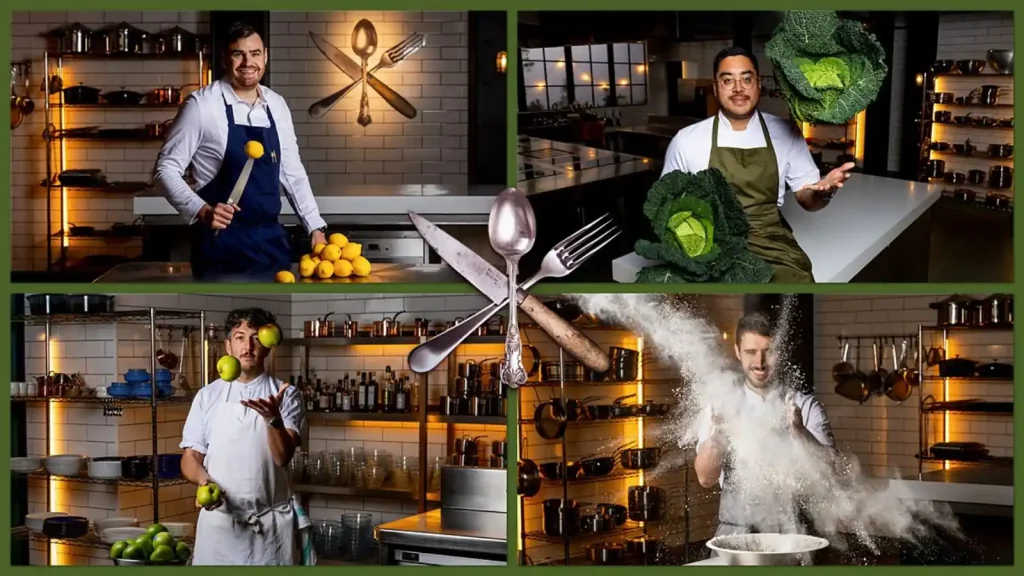
Great British Menu 2026 episode 23 brings the South West England heat into its most critical phase, as three chefs face the unforgiving scrutiny of veteran judge Simon Rogan across the main and dessert courses. The competition has already separated confidence from composure in earlier rounds, and now, with elimination looming, each cook must demonstrate not only technical precision but a genuine emotional connection to the brief. That brief — celebrating the British film industry and films with particular links to the South West — has demanded creativity, regional pride, and storytelling through food in equal measure.
The British film industry carries enormous cultural weight, and the Great British Menu has long used its annual brief to situate cooking within a broader national conversation. This year, the South West heat engages with that legacy directly, asking chefs to translate iconic cinematic moments into edible experiences. The region’s film connections run deep: from the claymation studios of Aardman Animations in Bristol to the sweeping Dorset and Devon landscapes that have stood in for Jane Austen’s fictional world, the South West has contributed more to British cinema than many viewers might immediately recognise. Food, in this context, becomes a medium for storytelling.
Simon Rogan arrives carrying the authority of decades in professional kitchens. His reputation for exacting standards and his commitment to ingredient-led cooking make him an especially demanding presence in the judging room. For these three chefs, his approval is not easily won — and his criticism, when it comes, carries the full weight of experience. Each dish must not only taste exceptional but must visibly, coherently embody its cinematic reference. Halfway through the heat, the chefs already know which of their peers they are up against, and the tension of that knowledge shapes every decision they make at the pass.
The main and dessert courses represent the emotional climax of any competition meal. A starter can tease and intrigue, but a main course must satisfy at a deeper level — it is the dish around which memories of a meal coalesce. The dessert, meanwhile, carries the responsibility of the final impression. Chefs who stumble at either of these stages risk undermining everything that came before, regardless of how well the earlier courses landed. In Great British Menu 2026 episode 23, both courses carry enormous stakes.
The cooking that emerges from this heat reflects the South West’s particular personality: bold, grounded in produce, and quietly confident. These are not chefs who rely on theatrical smoke or extravagant luxury ingredients to make their point. Instead, they build meaning through restraint and precision, allowing the quality of their sourcing and the clarity of their technique to carry the argument. Simon Rogan, whose own cooking philosophy mirrors many of these values, proves both sympathetic and demanding in equal measure.
What unfolds across the main and dessert rounds is a masterclass in the difficulty of cooking to a brief. The film brief imposes a conceptual layer on top of an already demanding technical challenge, requiring chefs to balance flavour, presentation, and reference simultaneously. Some manage this balance with apparent ease. Others find that the conceptual ambition of their dish slightly outpaces the execution. Rogan, characteristically, notices both dimensions.
The competition also forces each chef into a direct and revealing comparison with their peers. At this stage, the differences between the three competitors become starkly visible. Individual strengths and weaknesses, preferences in technique and flavour, and varying levels of comfort with the brief all become apparent as the courses are judged side by side. For viewers watching Great British Menu 2026 episode 23, these contrasts offer some of the most compelling moments of the episode.
By the time Simon Rogan delivers his scores at the end of the day, the shape of the heat begins to crystallise. The gap between the chefs becomes quantifiable, and for one competitor, the day’s results will mark the beginning of the end of their time in the competition. The cooking, the judging, and the scores all converge in an afternoon that rewards both ambition and precision — and punishes the gap between them.
Great British Menu 2026 episode 23
Great British Menu 2026 Episode 23: The Main Course Unfolds
The main course round opens the afternoon session with immediate intensity. Each chef has designed their dish around a specific film reference connected to the South West, and the range of choices reveals the breadth of the region’s cinematic heritage. Among the three dishes, the most immediately striking is a guinea fowl preparation designed to invoke Feathers McGraw, the villainous penguin from the 1993 Wallace and Gromit short film The Wrong Trousers. Aardman Animations, the Bristol studio behind Wallace and Gromit, represents one of the most beloved institutions in British film history, and the decision to honour it through a main course demands both wit and substance.
The guinea fowl dish attempts to bring Feathers McGraw to life on the plate. Guinea fowl as a protein choice is deliberate: the bird’s lean, slightly gamey quality and the visual associations with poultry make it a natural anchor for a dish referencing a cartoon character who is himself a bird. The chef responsible presents a composed plate that attempts to capture the character’s monochrome severity while delivering the warmth and depth expected of a competition main course. Simon Rogan examines the dish with his characteristic scrutiny, weighing the concept against the cooking. His verdict acknowledges the ambition of the reference while subjecting the execution to precise critical analysis.
The other main course entries engage with different corners of the South West’s film landscape. The competition across this course highlights how differently each chef has interpreted the same broad brief. Where one reaches for animation and visual wit, another takes a more classically grounded approach, allowing the quality of the cooking to carry the reference rather than the presentation. Rogan responds to each dish on its own terms, building a comparative picture that will inform his scores at the day’s end.
Scores and Tensions: Great British Menu 2026 Episode 23 Midway Assessment
Simon Rogan’s scoring method throughout the episode reflects his considered and rigorous approach to judging. He does not simply respond to individual dishes in isolation but builds a cumulative picture of each chef’s ability, consistency, and understanding of the brief. As the main course scores are revealed, the relative positions of the three competitors begin to shift. A dish that seemed likely to score well based on its presentation may fall short when Rogan probes the flavour balance or the coherence of the film reference. Conversely, a more restrained presentation may earn higher marks on the strength of its flavour and technical precision.
The scoring after the main course creates a defined hierarchy, though not yet an insurmountable one. The chef currently leading has demonstrated the strongest command of the brief, consistently translating cinematic references into food that functions beautifully as a dish independent of its conceptual layer. The chefs in second and third place are separated by a smaller margin, meaning that the dessert course carries decisive weight. A strong dessert performance could overturn the standings; a weak one could cement a chef’s exit from the competition.
Tension in the kitchen between courses is palpable. The chefs are aware of their standings, at least in broad terms, and the pressure of needing a strong dessert performance shapes their preparation. This is the moment when cooking becomes genuinely nerve-wracking — when the gap between intention and execution can widen under pressure, and when technical certainty is the only reliable defence against the anxiety of competition. Great British Menu 2026 episode 23 captures this atmosphere with uncomfortable clarity.
The Dessert Course: Rum Savarins and Austen’s Legacy in Great British Menu 2026 Episode 23
The dessert round introduces two of the episode’s most discussed dishes, both of which draw on different aspects of the South West’s cultural heritage. The first is a rum-soaked savarin — an elegant, technically demanding preparation that marries classical French patisserie technique with a distinctly regional flavour sensibility. The savarin, a yeast-risen cake soaked in syrup, requires precise fermentation and baking control. This version introduces rum as the dominant soaking liquid, giving the dessert a warmth and complexity that complements the delicate crumb structure.
The second standout dessert pays direct homage to Jane Austen’s Sense and Sensibility, the film adaptation of which was partially shot in the South West’s Devon and Somerset countryside. The dish incorporates an earl grey tea mousse and a milk ice cream, combining refined flavour profiles that evoke the elegance and restraint of Austen’s world. Earl grey’s floral bergamot note and the clean sweetness of milk ice cream create a dessert that is simultaneously subtle and sophisticated. The choice of these flavours is not arbitrary: they reflect the period setting of the novel and its film adaptation, grounding the dish in a recognisable sensory register.
Simon Rogan’s assessment of both desserts is characteristically thorough. He evaluates the technical execution of the savarin — the texture of the crumb, the balance of sweetness and rum intensity, the integration of the dish’s various components. For the Austen-inspired dessert, he considers both the flavour logic and the coherence of the film reference. The earl grey mousse and milk ice cream must function as a unified dish before they can succeed as a tribute, and Rogan’s judging reflects this dual standard. Both desserts receive detailed scrutiny, and the scores that follow reflect the subtle gradations of quality that distinguish competition cooking at this level.
Food as Storytelling: The British Film Brief in South West England
The decision to anchor Great British Menu 2026’s brief in the British film industry creates a particularly rich set of possibilities for chefs whose region has genuine cinematic heritage. The South West’s contribution to British film is both varied and distinguished. Bristol’s Aardman Animations has produced some of the most beloved animated films and characters in British cultural history, from Wallace and Gromit to Shaun the Sheep. The region’s landscapes have served as locations for major productions, including period dramas that have achieved lasting cultural status. This heritage gives the South West chefs specific, resonant material to work with.
However, the film brief also imposes real constraints. A cinematic reference on a plate must be legible — it must communicate its source material clearly enough that a judge who knows the film will recognise the connection — while simultaneously functioning as a coherent, delicious dish. This is a harder balance to achieve than it might appear. References that are too literal can produce dishes that feel gimmicky; references that are too abstract leave the connection invisible. The most successful dishes in this episode achieve the balance through selection of specific, flavour-relevant details from their source films rather than attempting to reproduce visual elements wholesale.
The Feathers McGraw guinea fowl dish exemplifies this challenge. The character himself is defined by visual qualities — his monochrome plumage, his beady menace, his incongruous disguise as a chicken — rather than by any particular flavour profile. Translating that into food requires the chef to make creative interpretive choices that may or may not align with the judge’s reading of the reference. The Austen dessert faces a different version of the same challenge: the film is defined by emotional register and period atmosphere rather than by specific food, meaning the chef must invent a plausible sensory equivalent for the world of the novel. Both approaches are legitimate; both carry risks.
Technical Standards and Simon Rogan’s Judging Philosophy
Simon Rogan’s presence as judge in Great British Menu 2026 episode 23 shapes the entire episode’s dynamic. His cooking philosophy — built around sustainability, hyperlocal sourcing, and rigorous classical technique — means he evaluates competition dishes through a particular lens. He respects ambition but holds execution to an uncompromising standard. A visually striking dish that fails on flavour will not impress him, however creative its concept. Conversely, a technically impeccable dish that lacks conceptual engagement with the brief may receive credit for its craftsmanship while falling short of the highest scores.
Rogan’s verbal feedback across the episode is characteristically precise. He identifies specific failures — an element that is overseasoned, a texture that does not match its intended role, a reference that does not fully land — without gratuitous harshness. His comments function as teaching moments as well as judgments, and the chefs receive them with the mixture of gratitude and frustration that characterises serious competitive cooking. Each score he delivers is a considered verdict, not a reactive response, and the chefs understand this even when the numbers disappoint them.
The judging also surfaces the differences between the three competitors’ culinary philosophies. One chef operates most naturally in a classical mode, building dishes from a foundation of correct technique and high-quality produce. Another leans toward creative interpretation, allowing the conceptual dimension of the brief to drive decisions about flavour and presentation. The third occupies a middle ground, using strong technical skills in service of accessible, emotionally resonant food. Rogan engages with all three approaches, finding merit in each while maintaining his own clear standards.
Great British Menu 2026 Episode 23: The Elimination Decision
As the day’s cooking concludes and Simon Rogan delivers his final scores, the accumulated marks across the fish, main, and dessert courses determine the shape of the heat’s remaining days. The chef with the lowest cumulative score faces elimination from the competition, their journey in Great British Menu 2026 ending at the South West heat stage. The elimination decision carries the weight of the entire day’s cooking — every decision made at the pass, every flavour balance, every presentation choice, all reduced to a number that determines a competitor’s future.
The scores reveal the extent to which the day’s cooking has reshuffled the standings. A chef who entered the main and dessert rounds in a strong position may have consolidated their lead or seen it challenged by a rival’s exceptional performance. The tension of the elimination moment is genuine: in a competition where the margins between chefs are often narrow, a single strong or weak dish can tip the balance decisively. For the chef who leaves the heat, the experience carries both the pain of elimination and the satisfaction of having cooked at a genuinely high level throughout their time in the competition.
Simon Rogan’s final remarks to the departing chef reflect his appreciation for the cooking they produced across the heat, even as the scores delivered an unambiguous verdict. In Great British Menu 2026 episode 23, elimination does not mean failure in any absolute sense — it means that, on this occasion, another chef’s cooking was marginally stronger across the four courses. The margins of competition cooking at this level are fine, and the difference between progression and elimination can be genuinely difficult to quantify in experiential terms even as the numbers make it clear.
The Role of Regional Identity in Great British Menu 2026 Episode 23
The South West England heat demonstrates, with particular force, how regional identity can function as both an asset and a responsibility in competition cooking. The three chefs who compete in this episode carry the weight of representing their region’s food culture, its landscape, and its particular relationship to the brief. The film brief intersects with regional identity in ways that are specific to the South West: Aardman Animations is a Bristol institution; the Austen adaptations are tied to Somerset and Devon landscapes; the region’s food culture — built around dairy farming, fishing, and market gardening — inflects the flavours that appear on each plate.
Regional produce shapes the cooking throughout the episode in ways that are both explicit and subtle. The choice of guinea fowl over a more common protein reflects an awareness of the region’s game and poultry traditions. The use of earl grey and milk in the dessert course connects to the South West’s dairy heritage and its deep association with the ritual of afternoon tea. These choices are not coincidental: they represent deliberate decisions by chefs who understand their region and want their food to speak specifically rather than generically.
The relationship between regional identity and competition success is, however, not straightforward. The judges — and ultimately the banquet guests who will receive the winning dishes — are not evaluating regional pride but culinary excellence. A dish that draws deeply on South West identity must still succeed on universal terms: flavour, technique, coherence, and emotional impact are the measures that matter at the competition level. The most successful chefs in this episode manage to make their regional roots feel like a strength rather than a limitation, using local context to add specificity and depth without sacrificing broader appeal.
Great British Menu 2026 Episode 23: Looking Ahead to the Heat’s Final Day
The conclusion of the main and dessert rounds in Great British Menu 2026 episode 23 sets the stage for the heat’s final competitive day. With one chef eliminated, the two remaining competitors enter the culminating rounds knowing exactly where they stand and what they need to do. The final day will determine which of them earns the right to represent the South West at the judges’ table, cooking their dishes for the established panel whose decisions will determine which recipes make it to the prestigious banquet.
The performances across the main and dessert courses have revealed the particular strengths of each surviving chef. One has demonstrated a consistent command of the brief, producing dishes that combine technical precision with clear conceptual engagement. The other has shown flashes of exceptional cooking but has also revealed vulnerabilities that a rival could exploit. The food that emerges on the heat’s final day will be shaped by the accumulated experience and pressure of the preceding rounds, and both chefs will carry the lessons of the past two days into their final preparations.
For viewers of Great British Menu 2026, the South West heat represents one of the competition’s most compelling regional chapters. The combination of a richly resonant brief, three talented and distinctive chefs, and the exacting presence of Simon Rogan as judge produces cooking of genuine quality and drama. The decisions made over guinea fowl, rum savarins, earl grey mousse, and milk ice cream are, in their way, decisions about what British food can be when it is asked to carry the weight of cultural memory. That is a significant responsibility, and the chefs in this heat carry it with credit.
FAQ Great British Menu 2026 episode 23
Q: What happens in Great British Menu 2026 episode 23?
A: Great British Menu 2026 episode 23 covers the main and dessert courses of the South West England heat. Three chefs present dishes inspired by the British film industry, judged by veteran Simon Rogan. The episode concludes with an elimination, reducing the heat to two remaining competitors.
Q: Who judges the cooking in Great British Menu 2026 episode 23?
A: Veteran judge Simon Rogan assesses the dishes in this episode. Rogan brings decades of professional kitchen experience to the judging role. His philosophy prioritises rigorous technique and ingredient-led cooking, making him an exacting but fair presence throughout the South West heat.
Q: What is the theme or brief that chefs must follow in this episode?
A: The brief asks chefs to celebrate the British film industry, specifically films with links to the South West of England. Dishes must reference recognisable cinematic works while functioning as exceptional food in their own right. The region’s film heritage includes Aardman Animations and Jane Austen adaptation locations.
Q: Which film inspires the guinea fowl main course dish?
A: The guinea fowl dish pays tribute to Feathers McGraw, the villainous penguin from Aardman’s beloved 1993 Wallace and Gromit short film The Wrong Trousers. Aardman Animations is based in Bristol, firmly placing this reference within South West England’s film heritage. The chef uses guinea fowl to echo the character’s avian identity.
Q: What dessert pays homage to Sense and Sensibility in Great British Menu 2026 episode 23?
A: One chef presents a dessert honouring the film adaptation of Jane Austen’s Sense and Sensibility, which was partially filmed across Devon and Somerset. The dish combines a rum-soaked savarin, an earl grey tea mousse, and a milk ice cream. Together, these components evoke the elegance and restraint of Austen’s period world.
Q: How does Simon Rogan evaluate dishes against the film brief?
A: Rogan applies a dual standard to every dish. First, the food must succeed technically on flavour, texture, and balance. Additionally, the cinematic reference must be legible and coherent rather than superficial. He rewards dishes where the film connection enhances rather than overcomplicates the cooking, penalising concept over execution.
Q: What role does regional identity play in the South West heat?
A: Regional identity shapes ingredient choices, flavour profiles, and cinematic references throughout the heat. The South West’s dairy heritage, game traditions, and film landmarks all surface in the cooking. However, regional pride alone does not secure high scores. Dishes must achieve universal standards of flavour and technique to impress Simon Rogan.
Q: How are scores calculated across the Great British Menu 2026 South West heat?
A: Simon Rogan scores each dish individually across the starter, fish, main, and dessert courses. Cumulative totals across all four courses determine each chef’s overall standing. Furthermore, the chef with the lowest combined score at the end of the main and dessert day faces elimination from the competition.
Q: What makes the savarin a technically demanding dessert choice?
A: A savarin is a yeast-risen cake that requires precise fermentation timing and careful baking control to achieve the correct open crumb structure. The chef soaks it in rum syrup, demanding careful balance between sweetness and spirit intensity. Any error in the bake undermines the soaking stage, making recovery during competition conditions extremely difficult.
Q: What does Great British Menu 2026 episode 23 reveal about cooking to a creative brief?
A: The episode demonstrates that cooking to a conceptual brief imposes a dual burden on every chef. Dishes must succeed as food and as storytelling simultaneously. References that are too literal risk feeling gimmicky, while overly abstract connections leave judges unconvinced. The most successful dishes find specific, flavour-relevant details within their chosen films and build outward from there.